RE_Mare at Teatro Belli, December 1 to 6, 2026
https://www.estateromana.com/en/rome/trip-planner/re-mare-at-teatro-belli-december-1-to-6-2026/
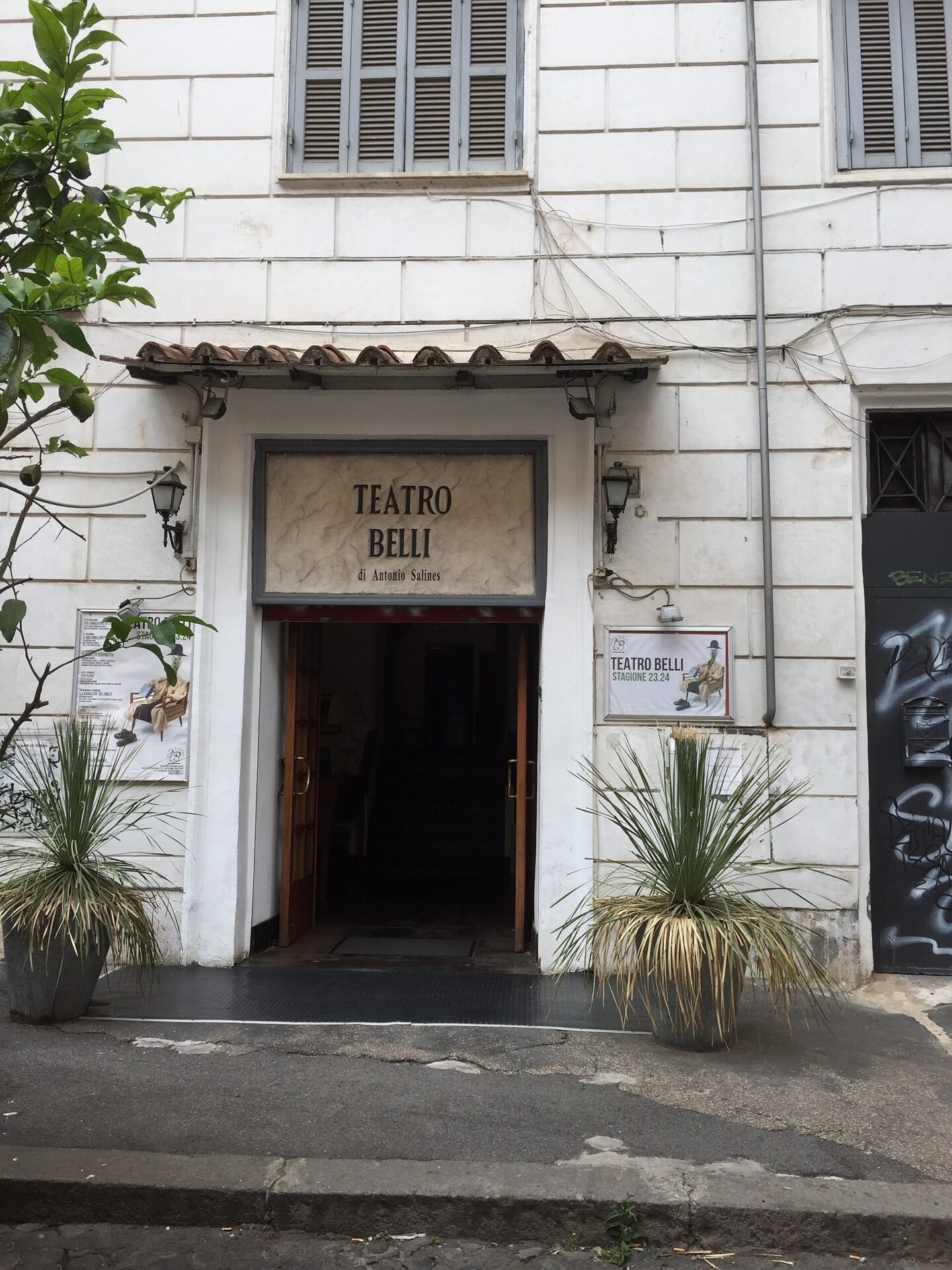
RE_Mare, a show written and performed by Francesco Bonomo and Daniel Dwerryhouse, is on stage at Teatro Belli in Trastevere from Tuesday, December 1 to Sunday, December 6, 2026: Tuesday to Friday at 21:00, Saturday at 19:00, Sunday at 17:30. The theater is at Piazza di Sant'Apollonia 11/a, 00153 Rome, in the lanes between Viale di Trastevere and Piazza di Santa Maria in Trastevere. Viale di Trastevere is served by surface lines that connect the neighborhood to the historic center and to Trastevere station, and you can work out the current route with ATAC's journey planner. The ticket costs 20 euros full price and 15 euros reduced, according to the theater's official page, and you buy it on the official Teatro Belli website, which links to the authorized presale circuit, or at the box office (06 5894875, botteghino@teatrobelli.it), open Tuesday to Sunday before performances.
Language: performed in Italian. No English version or English surtitles are announced.
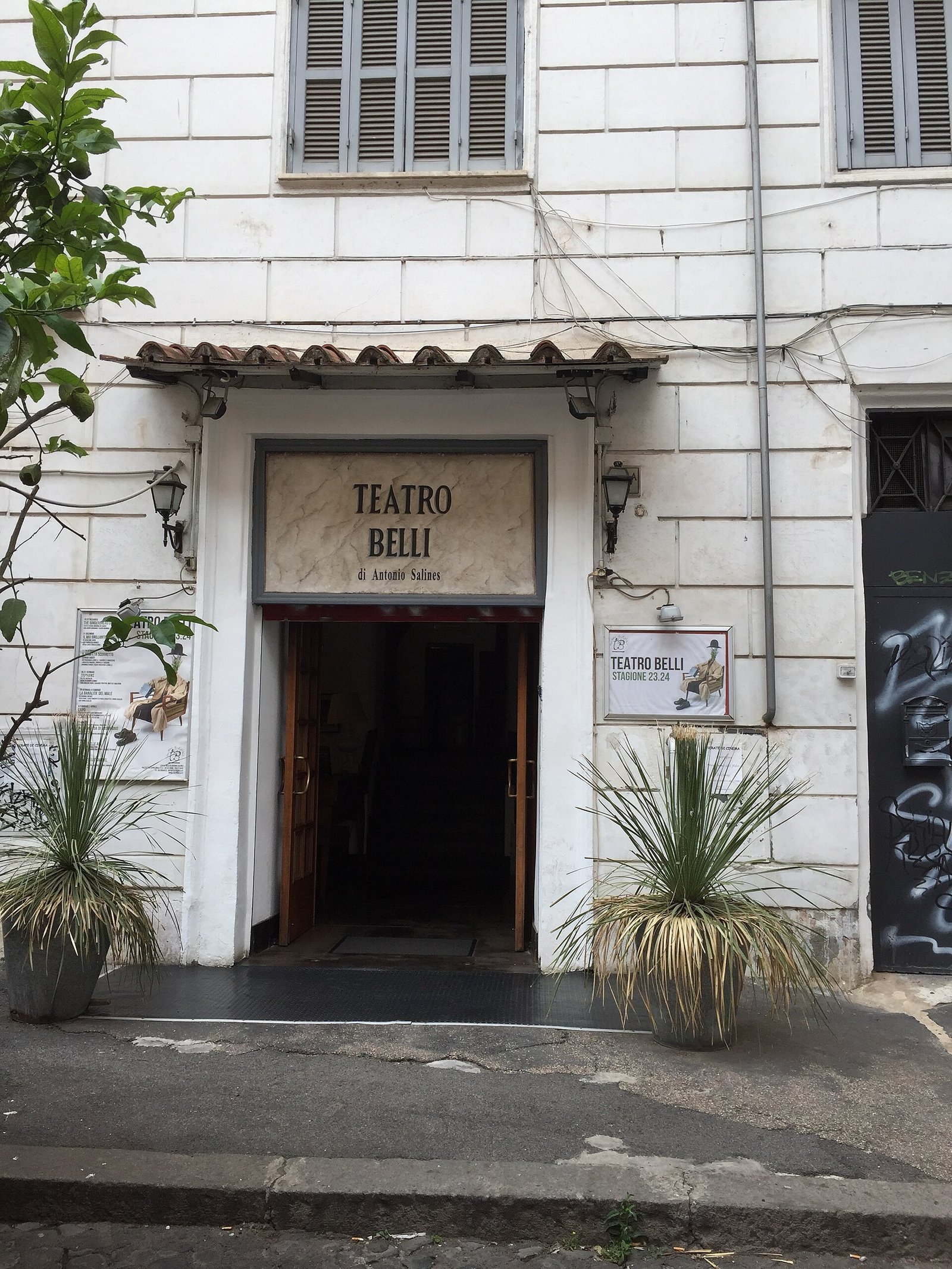
RE_Mare at Teatro Belli at a glance: dates, times, prices
RE_Mare has six performances at Teatro Belli, from December 1 to 6, 2026, with three different times depending on the day. It's one of the December titles in the 2026/2027 season of the venue on Piazza di Sant'Apollonia.
The six performances
Tuesday, December 1, Wednesday, December 2, Thursday, December 3 and Friday, December 4 at 21:00, Saturday, December 5 at 19:00, Sunday, December 6 at 17:30. These are the times published on the show's page on the theater website. The running time isn't given: if you have a train or a commitment after the performance, it's a good idea to ask the box office.
The price
Teatro Belli lists a full-price ticket of 20 euros and a reduced ticket of 15 euros for RE_Mare. Ask at the box office about the conditions for the reduced ticket when you buy. It's the venue's typical price list for guest productions in the season.
Who made the show
RE_Mare is by and with Francesco Bonomo and Daniel Dwerryhouse, with dramaturgical collaboration by Francesca Sarteanesi and artistic collaboration by Leonardo Capuano. Lighting is by Pietro Sperduti, costumes by Andrea Viotti, sound design and music by Emiliano Dunca Barbieri.
The producers
The theater's page lists three producers: Goldenart Production, Collettivo Amori Difficili and Progetti Carpe Diem. In the credits the same production appears as Golden Art, Gli Amori Difficili and Progetti Carpe Diem. Golden Art is a recurring presence in Teatro Belli's program this season, where it is also behind other titles.
What RE_Mare is about
RE_Mare is a show about the sea as a space of crossing: it starts from the fact that the sea covers most of the planet's surface and arrives at the words we use for those who cross it.
A planet called Earth
The theater's presentation begins with a simple paradox: we call this planet Earth, and yet the sea covers most of it. The sea holds the first forms of life, traces routes, separates and joins lands, peoples, languages and imaginations. It's from this almost geographical observation that the show sets off, before moving onto the ground of history and words.
Human beings are not trees
Since the beginning, the synopsis recalls, human beings have crossed the sea to conquer, flee, trade, save themselves, look for a home or simply somewhere else. Human beings move, and always have. RE_Mare short-circuits this obvious fact with an illusion that the presentation calls entirely contemporary: that it's possible to stop, order or even reverse a movement that belongs to the very history of humankind.
Myth and news in the same space
The language chosen is that of apparitions and transformations. Myth and news stories alternate, and very distant centuries end up in the same stage space. It's writing for two actors that changes era without changing stage: a form that suits a small hall like Teatro Belli well, where a gesture or a light is enough to move the audience from an ancient port to a story in today's news.
Saint, hero, invader, migrant
The heart of the text is about names. The same actions, leaving, crossing, landing, can produce a saint, a hero, an invader, a foreigner, a migrant: what decides what a journey is, according to the synopsis, is almost always the one who watches others arrive. Borders, eras, belonging and above all words make the difference, and those names perhaps say more about those who speak them than about those who arrive.
The title: remare
The sea, meanwhile, keeps moving beneath all these names, indifferent to definitions. Hence the title, which plays on the word: RE_Mare, the sea that comes before the one we cross, the sea that tolerates us, and in front of which there's nothing to do but row, remare in Italian. The underscore in the title separates and at the same time binds the two parts, as the sea does with its shores.
The RE_Mare team: authors, performers, collaborators
RE_Mare comes from the work of two actor-authors, Francesco Bonomo and Daniel Dwerryhouse, who sign both text and performance and take it on stage by themselves.
Francesco Bonomo and Daniel Dwerryhouse
The formula "by and with" means that the two performers are also the authors: the text comes out of the rehearsal room, from the work of bodies and voices, more than from a script handed over from outside. Francesco Bonomo's name is among those that Teatro Belli announced for its 2026/2027 program. An official biography of the two actors isn't published on the show's page, which focuses on the project.
Francesca Sarteanesi on dramaturgy
Francesca Sarteanesi collaborates on the dramaturgy. In a show built by two performers on their own stage presence, an outside eye on the writing serves to give shape and rhythm to the material that comes from improvisation and from research on myth and news.
Leonardo Capuano and the artistic eye
Leonardo Capuano is credited with artistic collaboration. It's a role close to a shared direction: someone who watches from outside, suggests, cuts, moves things, in a production where the authors are also on stage.
Lighting, costumes and sound
Lighting is by Pietro Sperduti, costumes by Andrea Viotti, sound design and music by Emiliano Dunca Barbieri. In a show where the sea is the real protagonist, sound and light have the job of evoking it without showing it: waves, routes, landings entrusted to a soundscape and a lighting design more than to a set.
How to prepare for RE_Mare
RE_Mare is theater of words and images for an adult audience, built on the theme of migration and of the names we tell it with.
The theme, without slogans
The theater's presentation doesn't put forward a thesis, but a question: who decides what a journey is. If you come expecting a rally, you'll find instead a work on words and time, which brings distant eras together. It's the kind of show best seen without having read too much beforehand.
Who it's for
For high school students studying the history of the Mediterranean or current affairs, RE_Mare can be an interesting prompt. The theater doesn't give a minimum age. For younger children, in December the venue offers Extrateatro's fairy tales in English, from the 17th to the 20th.
What isn't published
The running time of the show and any intermission aren't given on the show's page. The premiere and earlier performances aren't listed either: the box office is the reference for every detail.
Teatro Belli, home of RE_Mare
Teatro Belli is one of the historic venues of experimental theater in Rome, at Piazza di Sant'Apollonia 11/a in Trastevere. Its official name today is Teatro Belli di Antonio Salines.
From convent church to theater
According to the history published by the theater, the hall occupies what was the church of the monastery of Sant'Apollonia, which gives the square its name, and it was already active as a theater in the second half of the 19th century. In the 1910s it became a movie theater called AMOR. In the 1950s and early 1960s it housed nightclubs, the last of which closed after a violent incident at the entrance.
The 1972 rebirth
In 1969 the actor and director Antonio Salines took over the hall, closed and reduced to a pile of rubble, when there was talk of turning it into a restaurant. He restored it and reopened it to the public in January 1972. For more than 40 years he was its artistic director, making it one of the places of the Italian theatrical avant-garde.
What the hall is like
The technical specifications describe a stage of 9.25 by 5 meters, with a usable space of 8 by 4.54 meters, a proscenium opening of 6 by 4.30 meters, a grid at 6.80 meters and a manual curtain. The theater stresses that every seat is in close contact with the stage: for a two-voice work like RE_Mare it's the right distance.
The season around RE_Mare
RE_Mare comes after Sarfatti, from November 24 to 29, and before Luci rotte, from December 8 to 11. In the fall the program hosted Le statue di sale, Vite da strada, the Théâtre Français de Rome with Je te donnerai une voix, Il calamaro and the company Blucinque. It's a packed program, alternating young productions and guest companies.
Trastevere around Teatro Belli
Piazza di Sant'Apollonia is a small square in the lanes of Trastevere a few steps from Piazza di Santa Maria in Trastevere, the center of the neighborhood's life.
Santa Maria in Trastevere
The Basilica of Santa Maria in Trastevere is the most natural stop before the show: the facade with its mosaics lit up in the evening is the image many people associate with the neighborhood. Going inside depends on the church's opening hours, but looking at it from the square is always possible.
Toward the Tiber
Heading down toward the river you come to Santa Cecilia in Trastevere and, beyond the Lungotevere, Tiber Island. To the north, Ponte Sisto connects the neighborhood to Via Giulia and Campo de' Fiori.
Museums and hills
Museo di Roma in Trastevere, in Piazza di Sant'Egidio, is a few minutes' walk away. If you have Sunday afternoon free before the 17:30 performance, you can climb up to the Janiculum by way of San Pietro in Montorio. For a wider itinerary there's our page on what to see in Trastevere.
How to get to Teatro Belli for RE_Mare
You reach Teatro Belli on foot from the lines that run along Viale di Trastevere or the Lungotevere: from there Piazza di Sant'Apollonia is a few minutes' walk through the lanes.
Public transportation
Viale di Trastevere is the main road served by the surface lines that connect the neighborhood with Largo di Torre Argentina, Piazza Venezia and Trastevere station. In recent years construction work has changed the services in the area several times: work out the current route, especially for the trip back after 23:00, with ATAC's journey planner.
On foot from the center
From Campo de' Fiori you cross Ponte Sisto and in about 10 minutes you reach Piazza di Santa Maria in Trastevere. From there Piazza di Sant'Apollonia is a stone's throw away. It's often the fastest option, because evening traffic on Viale di Trastevere can be heavy.
Car and taxi
Trastevere is largely a limited traffic zone in the evening hours, and parking in the lanes is almost impossible. It's best to leave the car outside the neighborhood and finish on foot. By taxi, ask to be dropped off on Viale di Trastevere or in Piazza Trilussa.
Tickets for RE_Mare at Teatro Belli
The ticket for RE_Mare costs 20 euros full price and 15 euros reduced, according to Teatro Belli's official page.
Where to buy them
From the show's page on the theater website you reach the authorized presale circuit. Alternatively, the box office answers at 06 5894875 and at botteghino@teatrobelli.it, and it's open Tuesday to Sunday before the start of performances.
Which performance to choose
The weekday evenings at 21:00 are the quietest, Saturday at 19:00 leaves dinner free, and Sunday at 17:30 goes well with a walk around the neighborhood. In a small hall, weekend performances fill up first: it's best to book early.
Arrive on time
At Teatro Belli the audience sits right up against the stage: coming in after the show has started disturbs actors and spectators. A quarter of an hour of margin is the simplest rule.
How to plan your RE_Mare evening
RE_Mare at Teatro Belli lends itself to three different evenings depending on the day: after dinner on weekdays, before dinner on Saturday, a full afternoon on Sunday.
Tuesday to Friday
With the 21:00 start you can have dinner before, around 19:30, in one of the neighborhood's restaurants, or after, looking for a place that serves late. In early December Trastevere is less crowded on weekdays than on weekends.
Saturday, December 5
The 19:00 performance leaves dinner for after the show. On Saturday evening the neighborhood fills up: a reservation for 21:15 or 21:30 avoids the wait.
Sunday, December 6
With the 17:30 start, Sunday becomes a Trastevere day: the Janiculum or Santa Cecilia in the early afternoon, the theater, then an early dinner. It's also the best performance for people coming from outside Rome.
Where to eat before or after RE_Mare
Around Piazza di Sant'Apollonia there are trattorias, pizzerias and osterias on every corner: the point isn't finding a place, it's choosing the ones locals go to as well.
Trattorias and pizzerias
In the streets toward Viale di Trastevere and Piazza di San Cosimato you'll find places with more honest prices than on the main square. If you have little time before 21:00, pizza by the slice or supplì are the quickest option.
After the theater
After the evening performances, the lanes between Piazza Trilussa and Santa Maria in Trastevere stay lively until late. For a glass and a few words about the show, it's the right area.
Accessibility and practical tips for RE_Mare
Teatro Belli is set in an old building in the lanes of Trastevere: if you have reduced mobility, it's a good idea to call the box office before buying to arrange access.
The paving
The neighborhood's sampietrini cobblestones are uneven and, after rain, slippery. Comfortable shoes and a little extra time are the most practical advice.
Call ahead
For reserved seats, access needs or information on running time and intermission, Teatro Belli's box office answers at 06 5894875 and at botteghino@teatrobelli.it. It's also the quickest channel to find out who is entitled to the 15-euro reduced ticket.
Cloakroom and coats
In a small hall there's limited space for coats and umbrellas: in December it's best to arrive with little to carry and keep your coat on your lap unless the staff say otherwise.
A curious fact about RE_Mare at Teatro Belli, December 1 to 6, 2026
The most obvious curious fact is in the title. RE_Mare can be read in two ways: as a single word, remare, to row, and as a pair of words separated by an underscore, re and mare, king and sea. The theater's synopsis resolves the game in its last line: in front of the sea, since forever, there's nothing to do but row. The king, in this reading, is the sea itself, which comes before names, routes and borders, and which the presentation describes as the sea that tolerates us. It's a title that works like a small manifesto: power belongs neither to those who arrive nor to those who watch them arrive, but to the element both must cross. The second curious fact concerns the venue. The show talks about landings and about names that change depending on who is watching, and it's staged in a hall that has changed name and function several times: a monastery church, a 19th-century theater, the AMOR movie theater, a nightclub, an experimental theater. Like the travelers in the synopsis, Teatro Belli too has been called different things depending on the era. The third curious fact concerns the form. Just two performers, who are also the authors, take on centuries of sea voyages: the synopsis talks about apparitions and transformations, that is, a theater in which the change of era happens before the audience's eyes, with no scene changes. It's a choice of minimal means that becomes an aesthetic choice.
Something nobody tells you about RE_Mare at Teatro Belli, December 1 to 6, 2026
What nobody says about RE_Mare is that a show like this, at Teatro Belli, is watched almost within breathing distance. The theater stresses that every seat is in close contact with the stage, and the technical specifications describe a usable stage space of 8 meters by just over 4 and a half. In a hall like this, a work for two actors that crosses centuries and registers, from myth to news, lives on details: a look, a pause, a change of light. If you're used to big halls, you'll discover a theater that doesn't need to raise its voice to be heard. The second thing concerns the times. Teatro Belli uses three different times in the same week: 21:00 on weekdays, 19:00 on Saturday, 17:30 on Sunday. Many people only notice on the ticket: on Saturday, whoever arrives at 21:00 out of habit finds the theater emptying out. The third concerns the production. Behind RE_Mare there are three different organizations, including Collettivo Amori Difficili: it's a clue to the kind of theater you'll see, born from independent companies more than from a big producer. If you love contemporary theater, it's a guarantee of freedom. If you're looking for a big TV name, it's good to know beforehand.
My advice for visiting RE_Mare at Teatro Belli, December 1 to 6, 2026
The advice is to choose the Sunday, December 6 performance at 17:30 and turn it into a whole afternoon in Trastevere. Arrive around 15:00 and climb up to the Janiculum by way of San Pietro in Montorio: in early December the sun sets early, and the terrace over the city in the early afternoon has the best light. Then head down toward Piazza di Santa Maria in Trastevere, stop in front of the basilica's facade, and reach Piazza di Sant'Apollonia 20 minutes early. When you come out, shortly after 19:00, the neighborhood is already lit up and you can have dinner without rushing. If you prefer a weekday evening, Tuesday the 1st and Wednesday the 2nd are the quietest dates: fewer people in the neighborhood, and it's easier to find a table after the show. In our view it's best to sit in the central rows, not at the sides: in such an intimate hall, the angle makes more difference than the distance. One last suggestion concerns preparation. The synopsis of RE_Mare talks about saints, heroes, invaders and migrants: before the show it's best not to read reviews and to let yourself be surprised by the shifts between myth and news, which are the heart of the work. Afterward, though, it's worth rereading the theater's presentation: many sentences make more sense once the curtain has come down.
Another well-known fact, yet rarely mentioned
It's well known that Teatro Belli is one of the historic venues of Roman experimental theater. It's less often remembered that it survived by a hair. In 1969, when Antonio Salines took it over, the hall had been closed for a long time and reduced to a pile of rubble, and its conversion into a restaurant seemed settled. Salines, an actor and director, restored it completely and reopened it in January 1972. For more than 40 years he was its artistic director, hosting and producing actors, directors and authors. That's why its official name today is Teatro Belli di Antonio Salines. It's a story typical of 1970s Rome, when cellars, basements and abandoned halls in the center became the places of the new theater: small spaces, carved out of buildings made for something else entirely, with few means and a lot of young audiences. Many of those halls no longer exist. Teatro Belli is among those that have come through the decades staying true to their purpose. A second rarely mentioned fact concerns the theme of RE_Mare. Trastevere is the neighborhood of the Ripa Grande river port, which gives its name to the church of San Francesco a Ripa, a few minutes from the theater, and which was active on the Tiber until the 19th century. A show about landings is staged in a neighborhood that had a port for centuries.
The right photo to take at RE_Mare at Teatro Belli, December 1 to 6, 2026
No photos during the show: in such a small hall the glow of a phone can be seen from the stage, and it disturbs two actors who carry the stage by themselves. The right photo is taken outside, and there are three shots. The first is the theater entrance in Piazza di Sant'Apollonia at dusk, with the sign and the RE_Mare poster: the little square is intimate, the light of the street lamps falls low across the facades, and a horizontal shot with a piece of the paving conveys the idea of a neighborhood theater better than any promotional image. The second is the facade of Santa Maria in Trastevere seen from the fountain, a few steps away: the mosaics lit up in the December dark are one of the most recognizable images of Rome. The third, if you choose Sunday, is the view from the Janiculum in the early afternoon, with the rooftops of the center and the domes. For an image in keeping with the show, if you have time you can walk down to the Lungotevere and photograph the river toward Tiber Island: the Tiber is the waterway that for centuries connected Trastevere to the sea. In independent venues it's common, at the end of the performance, to ask the performers for a photo in the foyer: a livelier memento than the poster.
Some important events that happened here in history
The history of Teatro Belli reads in layers, like that of Trastevere. The first layer is religious: the hall occupies what was the church of the monastery of Sant'Apollonia, which also gave its name to the square. It's an origin the theater recalls in its history, and it explains the intimate shape of the space. The second layer is from the 19th century: in the second half of the century the building was already an active theater, and some of the great names of the Italian stage of the time passed across its boards. The third is the movie era: in the 1910s the hall became a movie theater with the sign AMOR, as happened to many small theaters when silent film was winning over the popular audience. The fourth layer is nocturnal: in the 1950s and early 1960s a series of nightclubs followed one another there, until the last one closed after a violent incident at the entrance. Abandonment followed. The fifth layer begins in 1969, when Antonio Salines took over the ruined building and restored it. The reopening in January 1972 made Teatro Belli one of the places of Roman experimental theater. Since then the hall has welcomed companies, authors and directors for decades. The 2026/2027 season, with independent productions, contemporary circus companies and the Théâtre Français de Rome, continues that vocation for hospitality, and RE_Mare is one of its December chapters.
Who has passed through RE_Mare at Teatro Belli, December 1 to 6, 2026
Between the 19th and early 20th centuries, the stage on Piazza di Sant'Apollonia saw some of the biggest names of the Italian stage. The history published by the theater mentions Gustavo Modena, the great Risorgimento actor who renewed tragic acting, Ermete Novelli, one of the star actors at the turn of the century, Leopoldo Fregoli, the inventor of theatrical quick-change, able to play dozens of characters in a single evening, Lina Cavalieri, soprano and diva of the Belle Époque, and Ettore Petrolini, the Roman comedian who left his mark on 20th-century variety theater. Fregoli's name has a curious echo with RE_Mare: a show in which two actors cross eras, apparitions and transformations demands exactly that speed in changing skin. After the 1972 rebirth, for more than 40 years the hall hosted actors, directors and authors of Italian experimental theater under the direction of Antonio Salines. In the 2026/2027 season, among others, the company Blucinque, the Théâtre Français de Rome, the Golden Art productions and, in November, Sarfatti have come or will come through here. From December 1 to 6 Francesco Bonomo and Daniel Dwerryhouse join them, with Francesca Sarteanesi, Leonardo Capuano, Pietro Sperduti, Andrea Viotti and Emiliano Dunca Barbieri behind the scenes.
Other visits around Piazza di Sant'Apollonia
If you have time before or after the show, within walking distance you'll find the church of San Francesco a Ripa, home to Bernini's Blessed Ludovica Albertoni, Santa Cecilia, Museo di Roma in Trastevere and, beyond Ponte Sisto, Via Giulia and Campo de' Fiori. On Sunday mornings, on the south side of the neighborhood, the Porta Portese market takes place.
Frequently asked questions about RE_Mare
When is RE_Mare on at Teatro Belli?
RE_Mare is on at Teatro Belli from December 1 to 6, 2026: from Tuesday the 1st to Friday the 4th at 21:00, Saturday the 5th at 19:00, Sunday the 6th at 17:30. There are six performances, according to the theater's official page. The running time isn't published and you can ask the box office.
How much are tickets for RE_Mare?
For RE_Mare, Teatro Belli lists a full-price ticket of 20 euros and a reduced ticket of 15 euros. You buy them from the theater website, which links to the authorized presale circuit, or at the box office, open Tuesday to Sunday before performances, phone 06 5894875.
Who is on stage in RE_Mare?
RE_Mare is written and performed by Francesco Bonomo and Daniel Dwerryhouse. Francesca Sarteanesi collaborates on the dramaturgy and Leonardo Capuano on the artistic side, with lighting by Pietro Sperduti, costumes by Andrea Viotti, music by Emiliano Dunca Barbieri. It's produced by Golden Art, Gli Amori Difficili and Progetti Carpe Diem.
What is RE_Mare about?
RE_Mare is about the sea and the people who cross it. According to Teatro Belli's presentation, the show brings myth and news together to show how the same actions, leaving, crossing, landing, produce saints, heroes, invaders or migrants depending on who watches them arrive.
Where is Teatro Belli?
Teatro Belli is at Piazza di Sant'Apollonia 11/a, 00153 Rome, in Trastevere, a few steps from Piazza di Santa Maria in Trastevere. You reach it on foot from Viale di Trastevere or from the historic center by crossing Ponte Sisto.
Is RE_Mare suitable for teenagers?
RE_Mare is meant for an adult audience, but the theme of migration and of the words we use to tell it can interest high school students. Teatro Belli doesn't give a minimum age. For younger children, in December the venue offers Extrateatro's fairy tales in English.
Is there parking near Teatro Belli?
Teatro Belli is in the lanes of Trastevere, largely a limited traffic zone in the evening hours, where parking is very difficult. It's best to arrive by public transportation, on foot or by taxi, asking to be dropped off on Viale di Trastevere or in Piazza Trilussa.
Final advice on RE_Mare
RE_Mare at Teatro Belli is, in our view, the kind of show that makes Rome's small venues worth going to: two actors, a big theme, an old hall that has changed name and function several times and knows how to welcome stories of landings. The advice is the Sunday afternoon performance, preceded by a walk on the Janiculum and followed by dinner in the neighborhood, or a weekday evening if you prefer a quieter Trastevere. Either way, it's best to sit in the center and arrive a quarter of an hour early.
Article written by the editorial team of Tour Leader Pro, contact them for Private/Corporate/V.I.P. Tours and Experiences.
Planning a trip to Rome? The English guides for visiting the city are on ItalyPlanner.com.