Racconti di musica: Beatles vs Rolling Stones, the Endless Duel at Auditorium Parco della Musica, May 30, 2027
https://www.estateromana.com/en/rome/trip-planner/racconti-di-musica-beatles-vs-rolling-stones-the-endless-duel-at-auditorium-parc/
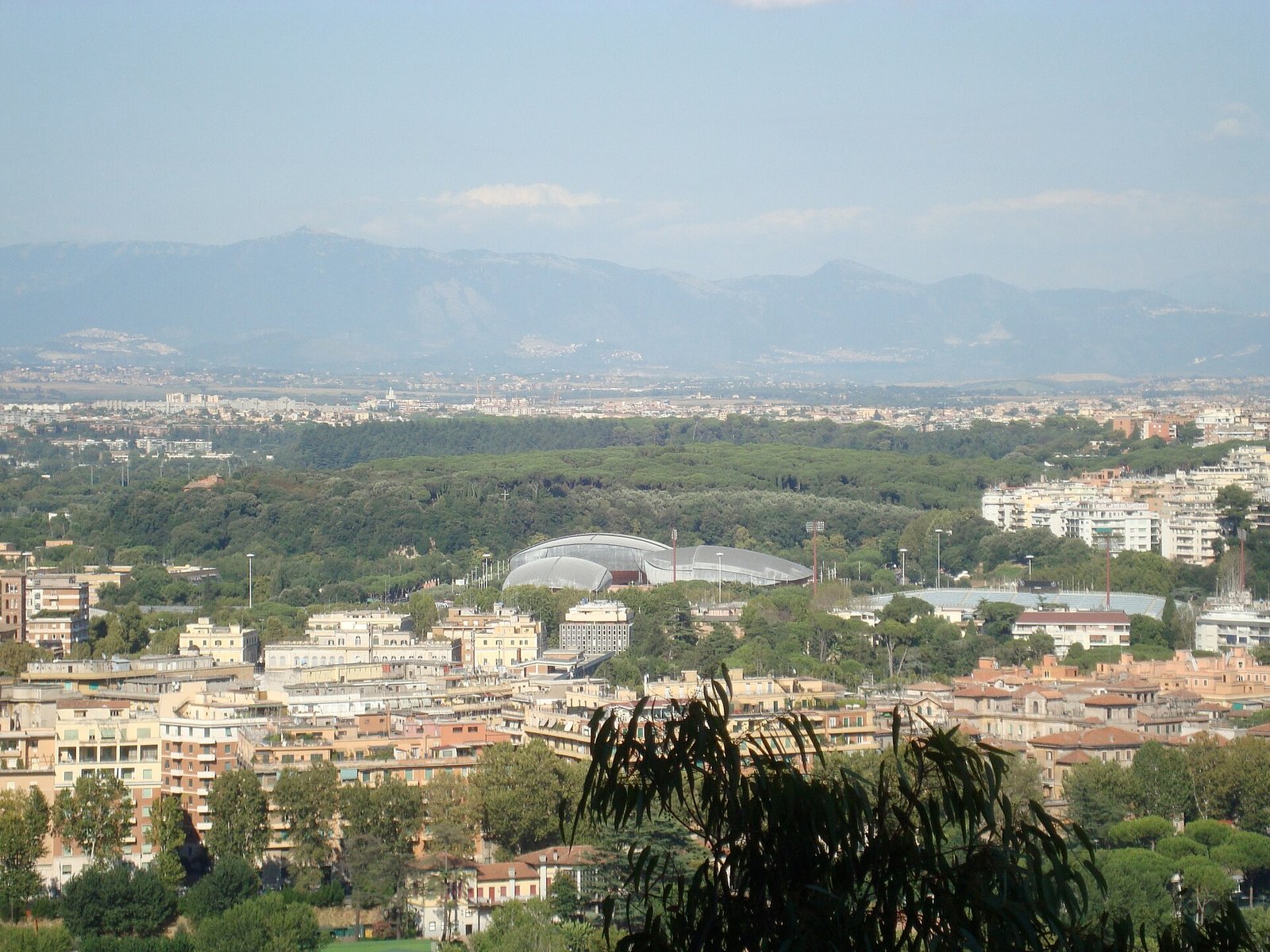
Racconti di musica: Beatles vs Rolling Stones, the endless duel, is scheduled for Sunday, May 30, 2027 at 19:30 at Teatro Studio Gianni Borgna of Auditorium Parco della Musica Ennio Morricone, Viale Pietro de Coubertin 30, in the Flaminio district (00196 Rome). It's the last of the six talks in the new Racconti di musica series organized by Fondazione Musica per Roma. Tickets are general admission and cost €10 plus service fees. You buy them through the presale network authorized by the organizer, linked from the official Auditorium website, or at the box office of the complex. To reach Auditorium, take Metro A to Flaminio and then tram 2 to the Flaminia/Reni or Apollodoro stops, or buses 910, 982 and 53, which stop near the entrance.
Beatles vs Rolling Stones at Auditorium: date, time, hall, tickets
The talk Beatles vs Rolling Stones, the endless duel, takes place on Sunday, May 30, 2027 at 19:30 at Teatro Studio Borgna, the most intimate hall of Auditorium, with a single €10 ticket plus fees.
When
Sunday, May 30, 2027, starting at 19:30. It's a single date, with no repeats announced, and it closes the Racconti di musica calendar, which began on Friday, January 22, 2027. The start time leaves room for dinner after the talk, even on a Sunday.
Where
At Teatro Studio Gianni Borgna, one of the halls of the complex designed by Renzo Piano. Fondazione Musica per Roma presents it as a multipurpose hall with 300 seats: for a talk about music, that means hearing every word and seeing the speaker up close.
How much it costs
The ticket is general admission, full price, at €10, plus the service fees of the sales network. If you're following the whole series, there's a six-talk subscription, on sale from €50 plus fees.
Where to buy
Through the presale network authorized by Fondazione Musica per Roma, linked from the official Auditorium website, or at the box office of the complex, open daily from 11:00 to 20:00 according to the hours published by the venue. From April to October, on Sundays and holidays, it opens earlier, at 10:00.
Who organizes it
The organizer listed on the tickets is Fondazione Musica per Roma, the body that runs Auditorium. The name of the person who will tell the story on stage hasn't been published yet: check the event page on the official Auditorium website in the weeks before.
Racconti di musica, the series
Racconti di musica is a new series of talks at Auditorium Parco della Musica: six evenings at Teatro Studio Borgna, from January to May 2027, all starting at 19:30 with €10 tickets.
The full calendar
Friday, January 22, 2027, The Music of Desire. Wednesday, February 10, 10 Years Without David Bowie. Friday, March 5, Fabrizio De André's Le Nuvole. Monday, March 22, Is the Music Over? The Fate of Music in the Liquid Era. Wednesday, April 28, The 5 Years That Shook Rock, from Live Aid to the fall of the Berlin Wall. Sunday, May 30, Beatles vs Rolling Stones, the Endless Duel.
A thread through the 20th century
The program moves across eras and genres: an anniversary, Bowie's. An album of Italian songwriting, De André's Le Nuvole. A reflection on music today. A season of rock between the mid and late 1980s. The evening on the Beatles and the Rolling Stones goes back to where it all started, the early 1960s, when two English bands redrew popular music.
The subscription
The subscription covers all six talks and costs from €50 plus fees: in practice, the sixth talk comes free with the price of five. If at the end of May you only want the evening on the Liverpool and London duel, the single ticket is still the simplest choice.
The format
Fondazione Musica per Roma presents the series as a set of talks: a story told from the stage, with music as its material. At Auditorium the format has a long tradition, from Lezioni di Rock to Lezioni di Storia.
Beatles vs Rolling Stones, the endless duel
The duel between the Beatles and the Rolling Stones is one of the most debated rivalries in rock history: a clash largely built by 1960s promotion, between two bands that actually respected each other.
A rivalry built on paper
Andrew Loog Oldham, the Rolling Stones' manager from 1963, chose to present them as the anti-Beatles, riding the wave of Beatlemania. The four from Liverpool were the reassuring boys, the five from London the bad ones. Oldham is credited with the publicity line "Would you let your daughter go with a Rolling Stone?", picked up by the press for years.
Admiration behind the scenes
Mick Jagger has said more than once that the Stones greatly admired the Beatles, even seeing them as a model. Members of the two bands had relationships of respect and friendship. The supposed rivalry has remained, to this day, a great excuse for debate among fans.
Two different sounds
Beyond the promotion, the difference was real. The Stones drew on the roots of rock and roll and Chicago blues, with a more aggressive and provocative sound. The Beatles, especially from the middle of the decade, built ever more elaborate songs in the studio. The Rolling Stones took their name from a Muddy Waters song, Rollin' Stone. The Beatles' name was invented by John Lennon and Stuart Sutcliffe, inspired by Buddy Holly's Crickets.
The comparison game
The evening's title, the endless duel, already says a lot: the question of who was greater has no answer, and that's exactly why it has lasted more than 60 years. A storytelling evening is the ideal place to put it back in play, with records, dates and anecdotes in hand.
I Wanna Be Your Man, the song that ties the two bands together
The Rolling Stones' first real hit in the UK, I Wanna Be Your Man, was written by John Lennon and Paul McCartney: it's the clearest evidence of how much the rivalry was, behind the scenes, a relationship between colleagues.
A song finished in a corner
According to the accounts collected over the years, Oldham or the Stones themselves ran into Lennon and McCartney on the street as they were coming back from an awards lunch. On hearing that the band was looking for material for a single, the two went to their session at De Lane Lea Studios in London and finished the song, whose verse they had already sketched, in a corner of the room, in front of the Stones.
The Stones' version
The single came out on November 1, 1963 and was the first Rolling Stones record to enter the British top 20, peaking at No. 12. The recording is marked by Brian Jones's slide guitar and Bill Wyman's bass. Wyman has recalled how the band made the song harder, in the style of Elmore James. On January 1, 1964 the Stones played it on the first episode of the BBC's Top of the Pops: they were the first band to appear on the show.
The Beatles' version
Three weeks later, on November 22, 1963, the song also came out on the album With the Beatles, sung by Ringo Starr. The Beatles played it live until 1966, including their last paid concert at Candlestick Park in San Francisco, on August 29, 1966. Years later Lennon dismissed it as a minor song, noting wryly that they certainly hadn't given their rivals anything great.
A long echo
The song has had a very long life: Ringo Starr kept it in his All Starr Band set list for decades, Keith Richards played it in 1988 with the X-Pensive Winos, and Paul McCartney performed it at Glastonbury in 2022 with Bruce Springsteen as a guest. A song written for the Stones and sung by Ringo has become the perfect symbol of the duel.
The Beatles, from Liverpool to the rooftop on Savile Row
The Beatles were active from 1960 to 1970: John Lennon, Paul McCartney, George Harrison and, from 1962, Ringo Starr, replacing Pete Best. Rolling Stone magazine ranks them first among the 100 greatest artists of all time.
Woolton, July 6, 1957
The story begins at the parish fête of St Peter's Church in Woolton, a Liverpool neighborhood, where the Quarrymen, led by 16-year-old John Lennon, were playing. Ivan Vaughan introduced him to 15-year-old Paul McCartney, who made his mark playing Little Richard's Long Tall Sally and Eddie Cochran's 20 Flight Rock. Soon after came George Harrison, admitted after an audition on a bus.
Hamburg and the Cavern
In Hamburg, between 1960 and 1962, long, loud shows in the clubs of St. Pauli transformed the band's sound: by the end of their German stints the Beatles had racked up about 800 hours on stage. Back in Liverpool they played the Cavern Club on Mathew Street, where they were discovered by Brian Epstein, who became their manager.
Beatlemania
In 1963 success exploded: Please Please Me hit No. 1, and She Loves You became the group's first single to sell more than a million copies. In February 1964 came the landing in the United States and The Ed Sullivan Show, watched by 73 million viewers. On August 15, 1965 they played Shea Stadium in New York in front of 55,000 people.
The studio and the end
After 1966 the Beatles stopped playing live and shut themselves in the studio: Revolver, Sgt. Pepper's Lonely Hearts Club Band, released on June 1, 1967, the 1968 double White Album, and 1969's Abbey Road. Their last public performance was the rooftop concert at Apple, at 3 Savile Row, on January 30, 1969. In 1970 McCartney announced he was leaving the group, and Let It Be came out soon after.
The Rolling Stones, from the Marquee to today
The Rolling Stones debuted on July 12, 1962 at the Marquee Club in London and are still active: today the band is Mick Jagger, Keith Richards and Ronnie Wood.
A meeting on a train
Jagger and Richards, both from Dartford, in Kent, had been childhood playmates. They met again years later on a commuter train: Jagger had a stack of imported rhythm and blues records under his arm, and they discovered a shared passion. In 1962 Brian Jones chose the name, inspired by Muddy Waters. Within a few months Bill Wyman joined on bass and Charlie Watts on drums.
Satisfaction and the golden years
After the covers of their early days, Jagger and Richards started writing their own songs. 1965 was the breakthrough year with The Last Time and above all (I Can't Get No) Satisfaction. Then came Aftermath, their first album of all original songs, Paint It Black with Brian Jones's sitar, and the run of records critics see as the band's peak: Beggars Banquet, Let It Bleed, Sticky Fingers, Exile on Main St.
Losses and changes
Brian Jones died on July 3, 1969. Two days later the Stones played a free show in Hyde Park in front of about 250,000 people, introducing Mick Taylor. Ronnie Wood arrived in 1975. Bill Wyman left the band in 1993, and Charlie Watts died in 2021.
Numbers and honors
The Rolling Stones were inducted into the Rock and Roll Hall of Fame in 1989, and Rolling Stone magazine ranks them fourth among the greatest artists of all time. The famous tongue logo, designed by John Pasche, first appeared on Sticky Fingers, in 1971, the album with the Andy Warhol cover.
Where the Beatles and the Rolling Stones crossed paths
The story of the Beatles and the Rolling Stones is full of crossings: the same record label that turned one down and then signed the other, the same cover photographer, the same friends.
Decca's big no
On New Year's Day 1962 the Beatles auditioned for Decca, which chose another band. The mistake became legendary. A couple of years later the same Decca signed the Rolling Stones, according to accounts on the recommendation of George Harrison.
Sgt. Pepper and Satanic Majesties
In December 1967 the Stones released Their Satanic Majesties Request, which got poor reviews and was long seen as a copy of Sgt. Pepper's. The cover, with a three-dimensional photo of the band, was by Michael Cooper, the same photographer behind the Sgt. Pepper's cover. Over the years the album has been partly reappraised.
The rock circus
In December 1968 the Stones put together the TV special The Rolling Stones Rock and Roll Circus, with guests like John Lennon, Eric Clapton, The Who and Jethro Tull. The program never aired and only saw the light in 1996. A Beatle on the Stones' stage: once again, the rivalry melted into friendship.
Opposite choices
From 1966 the Beatles gave up concerts. The Stones, on the contrary, made the stage their home, with ever bigger tours. It may be the deepest difference between the two stories: one band that shut itself in the studio and broke up in 1970, another that chose the road and is still active.
Teatro Studio Gianni Borgna, the storytelling hall
Teatro Studio Gianni Borgna is the smallest hall of Auditorium Parco della Musica: about 300 seats, cherry wood walls, a stage level with the seating, no curtain.
The name
The hall is named after Gianni Borgna, longtime culture commissioner of the City of Rome and president of Fondazione Musica per Roma, the body that runs Auditorium and organizes the Racconti di musica series.
What it's like
It's a regularly shaped space, with no vertical architectural elements, paneled in cherry wood, with movable acoustic panels and curtains that let the sound be adapted to each kind of show. For a talk where words alternate with listening, it's the right size: the voice comes through clearly, and the recorded music doesn't overpower it.
Like a club
The lack of a raised stage and a curtain creates a club-like closeness, with the acoustics of a theater. For a story that starts in the clubs of Hamburg, the Cavern in Liverpool and the Marquee in London, it's a fitting setting.
Auditorium Parco della Musica Ennio Morricone
Auditorium Parco della Musica, at Viale Pietro de Coubertin 30, is the complex designed by Renzo Piano between the Flaminio district, Villa Glori and the Olympic Village. It opened in 2002, is named after Ennio Morricone, and is presented by Fondazione Musica per Roma as the largest performance venue in Europe.
The halls
The three main halls are separate volumes, arranged like spokes around the open-air cavea: Sala Santa Cecilia, a concert hall with 2,744 seats, Sala Sinopoli, with 1,133, and Sala Petrassi, a multipurpose hall with 673. Cavea holds from 3,000 to 5,000 spectators, Teatro Studio Borgna 300. Above the halls stretch the Claudio Abbado roof gardens, 38,000 square meters of open-air park.
A long wait
Rome had been without a symphony hall since 1936, the year the Augusteo was demolished. The debate went on for decades, until the Olympic Village site was chosen in 1992 and Renzo Piano won the competition in 1993. Construction ran from 1995 to 2002.
The Roman villa
During the works, the remains of a Roman villa came to light, preceded by an archaic-period farm. To save them, the design was changed. The remains are visible between Sala Santa Cecilia and Sala Sinopoli, and the finds are on display in a small museum under the cavea.
Who runs it
Auditorium is run by Fondazione Musica per Roma, which handles its programming of pop, jazz, rock, talks and shows. The symphony season belongs to Accademia Nazionale di Santa Cecilia, which is based there. Racconti di musica is part of Fondazione's programming.
How to get to Auditorium for Beatles vs Rolling Stones
Auditorium Parco della Musica is reached by Metro A to Flaminio and then tram 2 to the Flaminia/Reni or Apollodoro stops, or by buses 910, 982 and 53.
Metro A and tram 2
It's the most reliable combination: get off at Flaminio, in Piazzale Flaminio, take tram 2 along Via Flaminia and from the stop walk a few minutes. On Sundays service can be less frequent: check the times on the Rome transit company's journey planner before you head out.
The buses
Lines 910, from Termini, 982 and 53 serve Auditorium and are handy if you're coming from Parioli, Prati or the center. For the trip back in the evening the same advice applies: check the last Sunday night runs.
By car
Auditorium has a large paid parking lot, with spaces reserved for people with disabilities. A Sunday in late May may coincide with other events in the larger halls or the cavea: arriving early avoids lines at the entrance.
On foot
From Piazza del Popolo you get there along Via Flaminia in a walk of about half an hour. If you're coming from Foro Italico, cross the Tiber on Ponte della Musica.
How to plan your Beatles vs Rolling Stones Sunday
Here's a good way to plan your Beatles vs Rolling Stones Sunday: afternoon in the Flaminio district, arrive at Auditorium around 18:30, a stroll through the halls and roof gardens, the talk at 19:30, dinner after.
The afternoon
MAXXI, the national museum of 21st-century arts, is about 10 minutes away on foot, on Via Guido Reni: an exhibition in the afternoon and then the talk at Teatro Studio make a day devoted entirely to the 20th century and beyond. If you prefer greenery, head up to Auditorium roof gardens, which are open to the public.
Before the talk
If you arrive early, go down to the small archaeological museum under the cavea and walk around the outside of the halls. The bookshop in the complex is a good place to wait, perhaps looking for a Beatles or Stones record to take home.
A month under the sign of the Beatles
Two weeks earlier, on Monday, May 17, 2027, Teatro Olimpico hosts BeatleStory Sgt. Pepper's 60th Anniversary, a show devoted to the 60th anniversary of Sgt. Pepper's Lonely Hearts Club Band. June 1, 2027 is exactly the 60th anniversary of the album's release: the May 30 talk comes two days before that date.
After
A talk that starts at 19:30 usually ends in time for dinner. The Flaminio district has trattorias and pizzerias. For a wider choice there's Milvian Bridge, a few minutes away.
What to see around Auditorium
Auditorium sits in an area where 20th-century and contemporary architecture live side by side: the 1960 Olympic Village, Zaha Hadid's MAXXI, Pier Luigi Nervi's Palazzetto dello Sport.
MAXXI
The museum on Via Guido Reni is the nearest stop and the best fit for an evening devoted to pop culture: the 20th century told through the visual arts, steps away from the 20th century told through music.
Toward the Tiber
Ponte della Musica connects the Flaminio district to Foro Italico. Further north, Ponte Milvio ends the walk with one of the oldest bridges in the city.
Villa Glori and Villa Borghese
Behind Auditorium rises the hill of Villa Glori, a public park created in 1924 as Parco della Rimembranza. If you're coming from the center you can instead cross Villa Borghese and head down toward Via Flaminia: a long late spring walk.
Where to eat near Auditorium
Inside Auditorium there are bars and food stops, listed by the venue in its Food and Shop section. Outside, the Flaminio district and Via Flaminia offer Roman trattorias, pizzerias and neighborhood bars.
Before the talk
With a 19:30 start, the easiest option is an aperitivo at the bar in the complex. Dinner before the talk only works if you eat very early.
After the talk
For dinner after the talk the natural directions are Ponte Milvio and Parioli, where the choice is wide. On Sunday evening some trattorias close early or stay closed: booking is recommended.
Accessibility and audience
Auditorium Parco della Musica is equipped to welcome people with disabilities and has reserved parking spaces. For specific needs at Teatro Studio, write to Fondazione Musica per Roma at info@musicaperroma.it before you buy.
Teatro Studio
The stage at floor level and the regular shape of the hall make Teatro Studio one of the easiest spaces in the complex, including for people with limited mobility.
With teens
A talk about the Beatles and the Rolling Stones is a good way to show a music-loving teen where today's rock and pop come from. The length isn't published. If you're bringing teenagers, a little preparation helps, with some listening at home in the days before.
Late May in Rome, the Racconti di musica season
The May 30, 2027 talk closes the Racconti di musica series at the end of spring, when Auditorium programming starts looking ahead to summer and the cavea.
The weather
In late May Roman evenings are usually mild. When you come out, daylight is fading or just gone: the best moment for a walk in the roof gardens or along the Tiber.
60 years of Sgt. Pepper
June 1, 2027 marks 60 years since the release of Sgt. Pepper's Lonely Hearts Club Band, on June 1, 1967. The May 30 talk comes two days before the anniversary, at a time when the Beatles and Stones duel is naturally back in the spotlight.
A curious fact about Racconti di musica: Beatles vs Rolling Stones, the endless duel at Auditorium Parco della Musica, May 30, 2027
The best curious fact concerns the song that ties the two bands together. When the Rolling Stones played I Wanna Be Your Man on the first episode of Top of the Pops, on January 1, 1964, they became the first band to appear on the BBC show that would accompany British music for decades. On the stage of that first episode, then, the anti-Beatles were singing a song signed Lennon and McCartney. On February 7, 1964 the Stones also performed it on The Arthur Haynes Show, and that recording ended up in the 1995 documentary series The Beatles Anthology: footage of the Stones inside the official history of the Beatles.
A second curious fact, about the name of the evening's venue. Teatro Studio is named after Gianni Borgna, longtime culture commissioner of Rome and president of Fondazione Musica per Roma, the body that organizes the series. The Beatles have been at home at Auditorium for years: on October 5, 2025, in Sala Sinopoli, Fondazione staged a marathon listening of the group's complete work, eight hours from 14:00 to 22:00 with all 210 songs in chronological order, from the first single Love Me Do to The End, which closes Abbey Road. In our opinion the May 30 duel is the natural sequel to that day, with one more question: what about the Stones?
Something nobody tells you about Racconti di musica: Beatles vs Rolling Stones, the endless duel at Auditorium Parco della Musica, May 30, 2027
What almost nobody remembers is that the rivalry between the two bands also runs through a record label's misjudgment. On New Year's Day 1962 the Beatles auditioned for Decca, in London, after a disastrous trip and a bad night. They played the least brilliant part of their repertoire, and Decca chose another band. A couple of years later the same Decca signed the Rolling Stones, according to accounts on the recommendation of George Harrison, and without much conviction, precisely because it remembered the mistake it had made with the Beatles.
Second thing: the Stones' manager, Andrew Loog Oldham, removed pianist Ian Stewart from the lineup for image reasons, because his look didn't match the one he wanted for the band and because six members were considered too many for the public to remember. Stewart still stayed close to the group as road manager and kept playing piano on many songs until his death in 1985. Third thing, a practical one: Teatro Studio has about 300 general admission seats. If you want to sit near the stage, arrive early, because at the same price what counts is the order of entry and availability at the time of purchase.
My tip for Racconti di musica: Beatles vs Rolling Stones, the endless duel at Auditorium Parco della Musica, May 30, 2027
My tip is to arrive at the talk with your ears already trained. In the days before, listen back to back to the two versions of I Wanna Be Your Man: the Stones' one, one minute and 43 seconds with Brian Jones's slide, and the Beatles' one, sung by Ringo Starr on With the Beatles. Then Satisfaction next to Yesterday, both from 1965, and Paint It Black next to Eleanor Rigby, both from 1966. 10 minutes of comparison and you'll follow the talk at Teatro Studio with different ears.
Second tip: pick a side before you go in, and then let the talk change your mind. That's the beauty of the endless duel. Third: arrive an hour early and head up to the Claudio Abbado roof gardens. In late May the evening light on the roofs of the halls is worth the trip on its own. Finally, if you enjoy the talk, consider a subscription to the next edition of the series, if there is one: the €10 ticket format, in a 300-seat hall, is one of the most accessible at Auditorium.
Another well-known fact, yet one rarely mentioned
It's well known that the Beatles played in Italy. Far less often mentioned is that they played in Rome, and where. From June 24 to 28, 1965 the group made a short Italian tour organized by promoter Leo Wächter, with two shows a day, one in the afternoon and one in the evening, each just over half an hour long. The stops were the Velodromo Vigorelli in Milan, the Palasport in Genoa and, in Rome, Teatro Adriano. Opening were Italian acts like Peppino Di Capri, Fausto Leali and the New Dada.
In Rome, in the audience, were a young Carlo Verdone, who years later described the details, and Anna Magnani. And, a fact remembered even less, none of the Italian dates sold out. The Rolling Stones arrived in Italy two years later: the spring 1967 European tour included the band's first shows in Poland, Greece and Italy. Two bands, two different arrivals, and a Rome that saw them both pass through in the 1960s. On May 30, 2027 the duel comes back to the city, this time as a story.
The right photo to take at Racconti di musica: Beatles vs Rolling Stones, the endless duel at Auditorium Parco della Musica, May 30, 2027
The right photo is taken outside, on arrival, from the Claudio Abbado roof gardens: the roofs of the three main halls, curved like shells, catch warm reflections in the late May light around 19:00 that you don't see on winter evenings. The view of the three halls arranged like spokes around the cavea is the most recognizable portrait of Renzo Piano's complex.
Inside, before the talk, the cherry wood hall with the lights on makes a warm photo, more interesting than the empty stage. During the talk your phone stays in your pocket: in a 300-seat hall even one lit screen bothers the people next to you.
For a themed souvenir, a simple idea: photograph your ticket next to two covers, a Beatles record and a Stones record, before you leave home.
Some important events that happened here in history
On April 21, 2002 the Auditorium complex opened with Sala Sinopoli. On December 21 of the same year Sala Santa Cecilia was inaugurated with the Accademia orchestra conducted by Myung Whun Chung. It ended a wait that began in 1936 with the demolition of the Augusteo and went through the choice of the Olympic Village site in 1992 and the competition won by Renzo Piano in 1993. During construction, between 1995 and 2002, the discovery of the remains of a Roman villa and an archaic farm forced changes to the design.
Since 2006 the complex has hosted the Rome Film Fest. In 2020 the City approved naming it after Ennio Morricone. When it comes to the Beatles' music, Auditorium has a specific history: on November 28, 2016 Ernesto Assante and Gino Castaldo told the story of the band's last five years, from Revolver to Let It Be, in one of their Lezioni di Rock. Between 2019 and 2020 the same series revisited With the Beatles, Beatles for Sale and the double White Album, and on July 11, 2020 it was the turn of Beatles 1970, Ultimo atto. On October 5, 2025 the complete listening marathon in Sala Sinopoli presented all 210 of the group's songs. On May 30, 2027, for the first time in this series, the Rolling Stones join the Beatles.
Who has passed through Racconti di musica: Beatles vs Rolling Stones, the endless duel at Auditorium Parco della Musica, May 30, 2027
In more than 20 years, Auditorium Parco della Musica has hosted the great conductors of Accademia di Santa Cecilia, from Myung Whun Chung, who inaugurated the main hall, to Antonio Pappano, and a long list of leading figures in song, jazz and rock hosted by Fondazione Musica per Roma. Luciano Berio, then head of Accademia, gave his name to the cavea, Ennio Morricone to the whole complex, Claudio Abbado to the roof gardens, Gianni Borgna to the hall of this talk.
For the Beatles' music, the complex has welcomed Ernesto Assante and Gino Castaldo with Lezioni di Rock, the tribute band The Beatbox with Revolution The Beatles Musical, in 2017 and 2019, joined in the second edition by the Roma Philharmonic Orchestra, and the show All You Need Is Love, economics explained through the Beatles, in November 2017.
In the May 30 story, ideally, two full lineups will pass through: John Lennon, Paul McCartney, George Harrison, Ringo Starr, with Pete Best and Stuart Sutcliffe from the early days, and Mick Jagger, Keith Richards, Brian Jones, Bill Wyman, Charlie Watts, Ian Stewart, Mick Taylor and Ronnie Wood. And behind the scenes Brian Epstein, George Martin and Andrew Loog Oldham, the three men who did more than anyone to build the duel.
Frequently asked questions about Beatles vs Rolling Stones at Auditorium
When is Beatles vs Rolling Stones at Auditorium Parco della Musica?
Racconti di musica: Beatles vs Rolling Stones, the endless duel, takes place at Auditorium Parco della Musica Ennio Morricone on Sunday, May 30, 2027 at 19:30, at Teatro Studio Gianni Borgna, Viale Pietro de Coubertin 30. It's the last of the six talks in the series organized by Fondazione Musica per Roma.
How much is a ticket for Beatles vs Rolling Stones?
Tickets for Beatles vs Rolling Stones at Auditorium are general admission and cost €10, plus service fees. You buy them through the presale network authorized by Fondazione Musica per Roma, linked from the official Auditorium website, or at the box office of the complex.
What is the Racconti di musica series?
Racconti di musica is a new series of talks at Auditorium Parco della Musica: six evenings at Teatro Studio Borgna between January 22 and May 30, 2027, devoted among others to David Bowie, to De André's Le Nuvole and to rock between Live Aid and the fall of the Berlin Wall. The six-talk subscription starts at €50.
Who is telling the story of the Beatles and the Rolling Stones?
The name of the speaker for Beatles vs Rolling Stones at Auditorium hasn't been published yet on the sales channels. The organizer is Fondazione Musica per Roma. Check the event page on the official Auditorium website in the weeks leading up to May 30, 2027.
Is it a live concert?
Beatles vs Rolling Stones, the endless duel, is presented by Auditorium as part of a series of talks: a story about the history of the two bands, not a tribute band concert. The detailed program of the evening, including any listening or musical guests, isn't published.
How do you get to Teatro Studio at Auditorium?
Teatro Studio Borgna is inside Auditorium Parco della Musica, reached by Metro A to Flaminio and then tram 2 to the Flaminia/Reni or Apollodoro stops, or by buses 910, 982 and 53. The complex also has a large paid parking lot, with spaces reserved for people with disabilities.
Why do people talk about a rivalry between the Beatles and the Rolling Stones?
The rivalry between the Beatles and the Rolling Stones was largely built by the Stones' manager, Andrew Loog Oldham, who presented them as the anti-Beatles to ride Beatlemania. The two bands respected each other: the Stones' first hit, I Wanna Be Your Man, was written by Lennon and McCartney.
Final tip on Racconti di musica: Beatles vs Rolling Stones
In our opinion the May 30 talk is one of the smartest offerings of Rome's musical spring: a subject everyone thinks they know, a 300-seat hall where the story comes straight at you, a €10 ticket. If you grew up with the Beatles you'll see the Stones in a different light, and vice versa. If you only know them by name, in one evening you'll get the map of a decade that changed music. The tip is to buy early, arrive with some listening in your ears and stay afterward to argue in the roof gardens. The duel is endless precisely because nobody wins it.
Article written by the editorial team of Tour Leader Pro, contact them for Private/Corporate/V.I.P. Tours and Experiences.
Planning a trip to Rome? The English-language guides for visiting the city are on ItalyPlanner.com.