Quinto: non uccidere by Massimiliano Civica at Teatro Vascello, November 24 to 29, 2026
https://www.estateromana.com/en/rome/trip-planner/quinto-non-uccidere-by-massimiliano-civica-at-teatro-vascello-november-24-to-29/
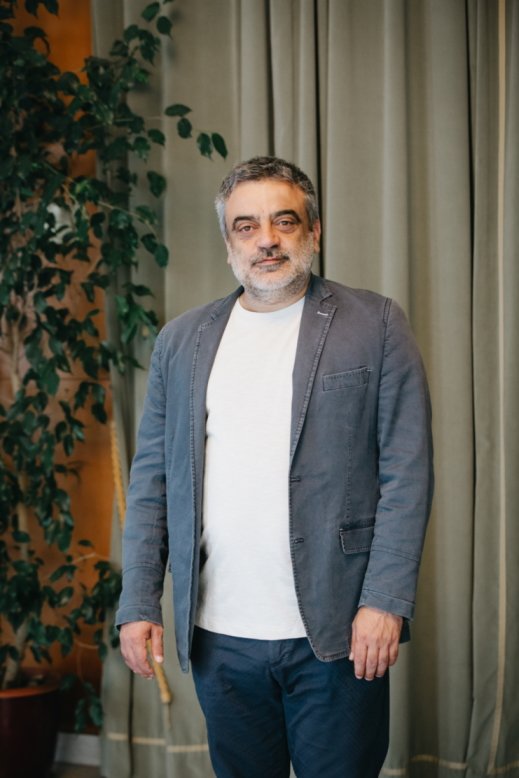
Massimiliano Civica's new show Quinto: non uccidere, produced by Teatro Metastasio di Prato and TPE Teatro Piemonte Europa, is on stage at Teatro Vascello in Monteverde from Tuesday, November 24 to Sunday, November 29, 2026: Tuesday to Friday at 21:00, Saturday at 19:00, Sunday at 17:00, with a running time of 80 minutes. The theater is at Via Giacinto Carini 78, 00152 Rome, in Monteverde Vecchio. Bus 75 stops in front of the entrance, and the theater also lists lines 44, 710, 870 and 871 and Quattro Venti railway station as useful. Prices are published on the theater's official website. Tickets can be bought from the show page on the Teatro Vascello website, which links to the authorized presale circuit, or at the theater's box office.
Language: performed in Italian. No English version or English surtitles are announced.
Quinto: non uccidere at Teatro Vascello at a glance
Quinto: non uccidere (Fifth: Thou Shalt Not Kill) is a show about forgiveness set in the aftermath of World War I, inspired by Ernst Lubitsch's film Broken Lullaby, and it runs at the Vascello for six days with six performances.
The schedule
Tuesday 24, Wednesday 25, Thursday 26 and Friday November 27 at 21:00. Saturday, November 28 at 19:00. Sunday, November 29 at 17:00. It's the Vascello's usual pattern: evenings during the week, an earlier show on Saturday, an afternoon show on Sunday.
Running time
80 minutes, according to the theater's listing. With the 21:00 performance you come out shortly after 22:20, on Saturday around 20:20, on Sunday shortly after 18:20.
Credits
A show by Massimiliano Civica, with Maria Vittoria Argenti, Monica Demuru, Luigi Fedele, Francesco Rotelli, Marcello Sambati and Paola Tintinelli. Collaboration on the text by Maria Vittoria Argenti, sets by Loris Giancola, costumes by Daniela Salernitano, lighting by Gianni Staropoli. Produced by Teatro Metastasio di Prato and TPE Teatro Piemonte Europa. On stage there is a reproduction of a work by Annibale Carracci, by permission of the Ministry of Culture and of the Museo e Real Bosco di Capodimonte.
The story of Quinto: non uccidere
Quinto: non uccidere starts from two questions that the official presentation puts up front: can you ask forgiveness for an irreparable act? Can you forgive someone who killed your son?
Henri and Peter
During World War I Henri, a young French soldier, killed Peter, a German soldier his own age. On the first anniversary of the Armistice, in a Paris in celebration, Henri enters the church of Notre-Dame to ask for absolution. He can't escape the gaze of the man he killed.
The priest's answer
The priest hears his confession and blesses him, telling him he has no crime to be forgiven for: he only did his duty as a soldier. Henri answers with a line the theater's listing quotes: «I came here to find peace. And you didn't give it to me.» He then decides to leave for Germany, to Peter's parents, to ask them for forgiveness.
Peter's family
In Germany Henri meets Peter's elderly parents and his fiancée, Annette. And it's there that he realizes he has gone to ask them for an in-human act, the presentation writes: to repeat the scandal of Jesus forgiving his murderers, of God forgiving mankind for killing his son.
The lie
Faced with this, Henri will hesitate between the need to find peace and the human, all too human, need to tell a lie. The story moves on from here, and the way it resolves is the substance of the show: the listing doesn't reveal it, and it's better not to look it up beforehand.
From Lubitsch's film to the fifth commandment
The show is inspired by Ernst Lubitsch's film Broken Lullaby, from which it takes the starting situation: a soldier who after the war goes looking for the family of the man he killed.
The title
The title chosen by Civica recalls the fifth commandment, thou shalt not kill, and immediately puts the audience in front of the moral knot. The soldier killed obeying an order. The law of war absolves him, religious law absolves him through the priest. What remains is conscience, which doesn't accept absolution.
From film to theater
Bringing a film to the stage means giving up the close-up, which in cinema tells of guilt without words. In the theater, guilt has to pass through the actors' bodies and through the space. It's work that suits a director like Civica, known for a bare-bones theater built on the actor.
The Carracci on stage
The credits include the reproduction of a work by Annibale Carracci granted by the Museo e Real Bosco di Capodimonte in Naples. The listing doesn't say which work it is: finding out in the hall is part of the experience, and the detail points to a staging in which sacred painting has a precise role.
Massimiliano Civica, the director
Massimiliano Civica, born in Rieti on February 27, 1974, is a theater director and artistic director who has won the Premio Ubu for best direction three times.
Training
With a degree in Methodology of Performance Criticism from Sapienza University of Rome, he studied at Eugenio Barba's Odin Teatret and then in the directing course of the Accademia Nazionale d'Arte Drammatica. He worked at the cooperative of Teatro della Tosse in Genoa, alongside Emanuele Luzzati and Tonino Conte.
The youngest artistic director
In 2007 he was appointed artistic director of Teatro della Tosse, becoming the youngest artistic director in Italy, and launched the three-year project Facciamo insieme teatro, which won the Premio ETI.
Three Ubu awards
Shakespeare's The Merchant of Venice earned him the 2008 Premio Ubu for best direction and, the following year, the Premio Vittorio Mezzogiorno. Euripides's Alcestis won the Ubu for direction in 2015, with Daria Deflorian, Monica Demuru and Monica Piseddu and with the collaboration of Daniela Salernitano. Armando Pirozzi's Un quaderno per l'inverno brought him his third Ubu for direction, shared with Massimo Popolizio, and the award for best Italian play.
His productions
His shows include: Andromache, Grand Guignol, Henry Becque's La parigina, Un sogno nella notte dell'estate from Shakespeare, Armando Pirozzi's Soprattutto l'anguria and Belve, Lucian of Samosata's Dialogues of the Gods, Sophocles's Antigone, La stoffa dei sogni at Teatro Metastasio, and Neil Simon's Chapter Two.
Teaching and writing
Civica has taught at Sapienza and at the Accademia di Belle Arti in Genoa, and he teaches directing and acting at the Accademia Nazionale d'Arte Drammatica. With Attilio Scarpellini he wrote La fortezza vuota. Discorso sulla perdita di senso del teatro, published by Edizioni dell'Asino in 2015. From January 2018 he was artistic consultant to the management of Teatro Metastasio di Prato, which produces this show.
The performers and the team
The cast of Quinto: non uccidere brings together six performers, including an actress who has already worked with Civica on one of his most acclaimed shows.
Monica Demuru
Monica Demuru was among the performers of Alcestis, the show that won Civica the Premio Ubu for direction in 2015. Her return alongside the director is a sign of continuity in the company's work.
Maria Vittoria Argenti
Maria Vittoria Argenti is on stage and collaborated on the development of the text: a double role that says a lot about Civica's method, in which the script also grows out of work with the actors.
The other performers
The cast is completed by Luigi Fedele, Francesco Rotelli, Marcello Sambati and Paola Tintinelli. The listing doesn't assign the roles. The story includes at least young Henri, the priest, Peter's parents and his fiancée Annette.
Sets, costumes, lighting
Sets are by Loris Giancola, costumes by Daniela Salernitano, who already worked with Civica on Alcestis, and lighting by Gianni Staropoli.
Teatro Vascello, the experimental theater of Monteverde
Teatro Vascello opened on May 4, 1989, founded by Giancarlo Nanni and Manuela Kustermann with the company La Fabbrica dell'Attore, and the opening was entrusted to Tadeusz Kantor's I Shall Never Return.
From La Fede to the Vascello
Before the Vascello there was Teatro La Fede, at Via Portuense 78, home in the 1970s of Nanni and Kustermann's company, where shows such as A come Alice and Spring Awakening were born, within what was called the Roman school, a theater that put the image before the word.
An officially recognized theater
Since 1998 the Ministry has recognized La Fabbrica dell'Attore as a Teatro Stabile d'Innovazione. In 2004 the Sala Studio opened on the basement floor. After Nanni's death, in January 2010, Manuela Kustermann has been the sole artistic director.
The season
In the 2026 and 2027 season the Vascello has already hosted, among others, Alessandro Serra's Tragudia, Il canto di Edipo and Giorgina Pi's Lemnos. Quinto: non uccidere arrives at the end of November, when the autumn part of the program is in full swing.
Monteverde Vecchio around the theater
Monteverde Vecchio is the upper, residential part of Monteverde, above Trastevere, between the Janiculum and the great historic villas.
The villas
Villa Sciarra, small and full of fountains, and Villa Doria Pamphilj, the large park west of the neighborhood, are the green stops in the area. In late November the gates close early: check the opening hours.
The Fontanone and San Pancrazio
Toward the hill you reach the Acqua Paola Fountain and, a little further on, the Basilica of San Pancrazio: two easy stops before the Sunday afternoon show.
The Janiculum
The Janiculum is a few minutes away: from the lookout the city spreads out below you, and at sunset in late November, very early, the light is just right.
How to get to Teatro Vascello for Quinto: non uccidere
Teatro Vascello is at Via Giacinto Carini 78 and you reach it by bus 75, which stops in front of the entrance. The theater also lists lines 44, 710, 870 and 871.
By bus
The 75 links the area with Termini via the Colosseum and Piramide: if you're coming from the center it's the most direct option. In the evening the waits can be long, so leave with time to spare.
By train
From Ostiense station the commuter train takes you to Quattro Venti station, on Viale dei Quattro Venti, a short walk from the theater. It's convenient if you're coming from metro line B, which at Piramide connects with Ostiense.
By car
The theater suggests parking along Via delle Mura Gianicolensi, about 100 meters away, and points out paid parking at Via Giacinto Carini 43, at Via Maurizio Quadrio 22, which has an agreement with the theater if you show your ticket, and at Via Raffaello Giovagnoli 20.
Tickets for Quinto: non uccidere
Tickets for Quinto: non uccidere at Teatro Vascello can be bought from the show page on the official website, where prices and the link to the authorized presale circuit are published.
Which evening
Six consecutive performances leave plenty of choice. Saturday and Sunday tend to fill up first. Tuesday and Wednesday evenings are the quietest.
Information
For availability, discounts and reserved seats, the point of contact is the theater's box office, whose contact details are published on the official website.
Accessibility and practical information
Teatro Vascello publishes a section on accessibility on its website, to check before buying to find out about entrances and reserved seats.
With teenagers
Quinto: non uccidere talks about war, guilt and forgiveness, with nothing explicit flagged by the production. It's a show suitable for high school students, and a great chance to discuss history and ethics with them.
Punctuality
80 minutes with no intermission: coming in late disturbs everyone. With the evening bus, better allow 15 minutes to spare.
Where to eat before or after the show
Teatro Vascello has an in-house bistro, the Coffee Plant Bistrot, handy for a coffee or a snack before going in.
In Monteverde
The neighborhood has trattorias and pizzerias frequented mostly by locals, with lower prices than in Trastevere: it's the right choice after the 21:00 performance.
In Trastevere
After the Saturday 19:00 show it's worth heading down to Trastevere, where osterias and trattorias stay open until late. The page on what to see in Trastevere helps you choose your route.
A curious fact about Quinto: non uccidere by Massimiliano Civica at Teatro Vascello, November 24 to 29, 2026
The curious fact concerns a line. «I came here to find peace. And you didn't give it to me»: it's Henri's answer to the priest who has just absolved him, and the Vascello's listing quotes it in full. It's a line that overturns every expectation: usually in theater and film confession brings relief. Here it brings the opposite, because forgiveness comes too easily and from the wrong person. The whole story springs from this gap. Henri doesn't want to be absolved by someone who has lost nothing, he wants to be forgiven by those who have lost everything. The second curious fact concerns the place of the confession. Henri confesses in the church of Notre-Dame, on the first anniversary of the Armistice, while outside Paris celebrates: the collective celebration of victory and individual guilt coexist in the same scene. Third curious fact: the show comes from a film, Ernst Lubitsch's Broken Lullaby, and arrives in a Monteverde theater that owes its lineage to a hall, La Fede, where in the 1970s the theater was more about images than words. A talking picture that becomes bare-bones theater, in a hall born from image theater: the shifts in language are part of the story.
Something nobody tells you about Quinto: non uccidere by Massimiliano Civica at Teatro Vascello, November 24 to 29, 2026
Nobody says it, but the heart of the show isn't the war, it's the lie. The presentation hints at it in its last line: Henri will hesitate between the need to find peace and the human, all too human, need to tell a lie. If you go to see Quinto: non uccidere expecting a war drama, you'll find a chamber drama instead, made of a family, a living room, a young foreigner and a truth no one can bring themselves to say. A second thing: Massimiliano Civica is known for a theater that takes away instead of adding. 80 minutes, few props, a reproduction of a painting, six actors: if you're used to big productions you might find it spare, if you love actor-driven theater you'll find it necessary. It's worth knowing beforehand. A third, practical thing: the Vascello is at the top of Monteverde, and late November evenings can be cold and rainy. Bus 75 stops in front of the entrance, but evening waits are unpredictable: if you can, take the train to Quattro Venti or arrange a taxi for the way back. Finally, for those who saw Alcestis: the presence of Monica Demuru and Daniela Salernitano's costumes brings back together part of the team behind that show.
My advice for Quinto: non uccidere by Massimiliano Civica at Teatro Vascello, November 24 to 29, 2026
My advice is not to read anything about the plot of Lubitsch's film before the show. The Vascello's listing deliberately stops halfway, at the moment of the lie, and finding out in the hall how the story resolves is part of the value of the evening. You can, on the other hand, come prepared on the author: reading a few pages of La fortezza vuota, Civica and Attilio Scarpellini's book on theater's loss of meaning, helps you understand why his productions are so bare. As for the performance, in our view Sunday at 17:00 is the best suited to a show about forgiveness, because it leaves the evening free to talk about it over dinner. Saturday at 19:00 is the best alternative if you then want to head down to Trastevere. The weekday evenings at 21:00 usually have the most attentive and quiet audience. In the hall, a central seat not too close to the stage lets you see both actors and set, including the Carracci reproduction. If you arrive early you can have a coffee at the theater's bistro. And if you're coming from outside Rome and want to build a tailor-made weekend around the theater, you can contact Tour Leader Pro, which organizes tailor-made private experiences.
Another well-known fact, yet rarely mentioned
It's well known that Teatro Vascello is one of the key venues of experimental theater in Rome. It's less often mentioned how old its lineage is. Before the Vascello there was Teatro La Fede, at Via Portuense 78, where in the 1970s the saxophonist Steve Lacy, the composer John Cage, the French director Gérard Gelas and the Living Theatre came, and from whose experience Memè Perlini and Giuliano Vasilicò emerged. The Vascello is the direct heir of that season. A second rarely mentioned fact concerns the director. In 2007 Massimiliano Civica was the youngest artistic director in Italy, at Teatro della Tosse in Genoa, where he had worked with Emanuele Luzzati and Tonino Conte. In 2010 his production of Un sogno nella notte dell'estate, produced by Teatro Stabile dell'Umbria, had little success. From there began what is described as an artistic rebirth, culminating in Alcestis and Un quaderno per l'inverno. It's a rare path in Italian theater: a director who, after a failure, changes direction and wins. Third fact: the Vascello's cofounder, Giancarlo Nanni, was in spring 2001 the first Italian invited to work and teach at the Actors Studio in New York.
The right photo to take at Quinto: non uccidere by Massimiliano Civica at Teatro Vascello, November 24 to 29, 2026
No photos during the show: in an intimate work, made of silences and carefully calibrated lighting, a phone screen can be seen from far away and breaks the atmosphere. The right photo is taken before and after. The first is the Vascello's facade on Via Giacinto Carini with the Quinto: non uccidere poster, in the evening, when the sign is lit. The second is taken on the Janiculum, before the Sunday afternoon show: the city seen from above in the low light of late November. It makes sense with this show, which is about someone looking at their own guilt from a distance and trying to get closer. The third, for detail lovers, is the program next to the ticket, with the note on the Carracci reproduction by permission of Capodimonte: a trace of how sacred painting enters the show. If you pass through Trastevere before or after the theater, you can also photograph the facade of San Francesco a Ripa, one of the most beautiful churches in the neighborhood, in Piazza di San Francesco d'Assisi. No flash, ever, and no shots while the actors are on stage, curtain calls included, unless the theater allows it.
Some important events that happened here
The history of Teatro Vascello is measured in evenings. On May 4, 1989 the hall opened with I Shall Never Return by Tadeusz Kantor and the Cricot Theatre of Warsaw: a statement of intent, because Kantor was one of the most radical names on the European stage. In the early 1990s came Raul Ruiz, the Pontedera research center, and American and French contemporary dance. In May 1996 the Extraordinario festival presented 16 young companies from all over Italy. In 1998 La Fabbrica dell'Attore was recognized as a Teatro Stabile d'Innovazione and the Vascello coproduced a show with the Berliner Ensemble. Between 2002 and 2004 the theater ran an inclusive workshop with people with disabilities together with the Municipio, and its final show stayed on the program for three weeks. In 2003 the Premio Valentino Zeichen for poetry was created, and in 2004 the Sala Studio opened. In January 2010 Giancarlo Nanni died and the direction passed entirely to Manuela Kustermann. For more than 20 years, moreover, the Fondazione Romaeuropa has presented part of its festival at the Vascello. Quinto: non uccidere, at the end of November 2026, brings into this history a show produced by two national theaters, Metastasio di Prato and Teatro Piemonte Europa.
Who has passed through Quinto: non uccidere by Massimiliano Civica at Teatro Vascello, November 24 to 29, 2026
Since 1989 the Vascello's stage has seen Tadeusz Kantor with the Cricot, Raul Ruiz, the Pontedera center, Teatri Uniti, Moni Ovadia, Carlo Cecchi, Giorgio Barberio Corsetti, Societas Raffaello Sanzio, Teatro Valdoca and Pippo Delbono, and for dance Enzo Cosimi, Sosta Palmizi, Virgilio Sieni and Wim Vandekeybus. Among the international masters, Bob Wilson and Peter Brook, who presented Beckett's Happy Days at the Vascello with Natasha Parry. Manuela Kustermann, actress and artistic director, is the constant presence in this story. In the 2026 and 2027 season, among others, Alessandro Serra with Tragudia and Giorgina Pi with Lemnos have passed through here. From November 24 to 29 it's the turn of Massimiliano Civica and his performers, Maria Vittoria Argenti, Monica Demuru, Luigi Fedele, Francesco Rotelli, Marcello Sambati and Paola Tintinelli, with Loris Giancola, Daniela Salernitano and Gianni Staropoli. And with them, in spirit, come Ernst Lubitsch, whose film inspired the show, and Annibale Carracci, whose work, in reproduction, comes on stage from a museum in Naples.
Forgiveness on stage: why see the show
Quinto: non uccidere tackles a theme that theater rarely has the courage to face head-on: forgiveness for a guilt that no law punishes.
An open question
The show doesn't offer answers, it asks questions. It's one of those works you come out of talking, and my advice is to go with company.
For schools
For teachers and high school students it's a concrete chance to talk about World War I from a human point of view, not a military one.
For lovers of actor-driven theater
If you know Civica's productions you know what to expect: actors at the center, no superfluous effects. If you don't, it's a great chance to start.
For those who saw Alcestis
Alcestis, which won the Ubu for direction in 2015, was also a story of death, sacrifice and family. Those who saw it will find in Quinto: non uccidere the actress Monica Demuru, Daniela Salernitano's costumes and the same way of leaving space to the actor.
How to prepare for the evening
Quinto: non uccidere is a short, dense show: a few tips help you enjoy it more.
Before
Arriving in Monteverde a bit early lets you change pace: the neighborhood is residential and quiet, and a 10-minute walk between Via delle Mura Gianicolensi and Via Giacinto Carini is enough to leave the traffic of the center behind.
In the hall
80 minutes with no intermission require constant attention. Phone off, not just on silent: in the quietest scenes even a vibration can be heard.
After
The show asks questions that everyone answers differently. It's the kind of evening that ends well at the table, in Monteverde or Trastevere, discussing what Henri should have done.
Late November in Rome
The last week of November is a quiet time for Rome: there are fewer visitors, the evenings are long and the theaters are full of offerings.
The weather
Evenings are cool and often rainy: in Monteverde, up on the hill, you feel the wind more than in the center. A coat and an umbrella are essential.
A week of theater
In the same week Roman theaters offer many titles: if you're coming from out of town you can put together several evenings, from the Vascello to the halls of Trastevere.
Frequently asked questions about Quinto: non uccidere at Teatro Vascello
When is Quinto: non uccidere on at Teatro Vascello?
Quinto: non uccidere is on at Teatro Vascello in Rome from Tuesday, November 24 to Sunday, November 29, 2026. Tuesday to Friday at 21:00, Saturday at 19:00, Sunday at 17:00. The show runs 80 minutes.
What is Quinto: non uccidere about?
Massimiliano Civica's Quinto: non uccidere tells the story of Henri, a French soldier who in World War I killed a German of his own age, Peter, and who after the Armistice goes to Germany to ask the young man's parents for forgiveness. It's inspired by Ernst Lubitsch's film Broken Lullaby.
Who is in the cast?
The cast of Quinto: non uccidere at Teatro Vascello includes Maria Vittoria Argenti, Monica Demuru, Luigi Fedele, Francesco Rotelli, Marcello Sambati and Paola Tintinelli. Direction is by Massimiliano Civica, three-time winner of the Premio Ubu for best direction.
How do you get to Teatro Vascello?
Teatro Vascello, at Via Giacinto Carini 78 in Monteverde, is served by bus 75, which stops in front of the entrance, and by lines 44, 710, 870 and 871. By train, get off at Quattro Venti station, a short walk from the theater.
Where do you buy tickets?
Tickets for Quinto: non uccidere can be bought from the show page on the Teatro Vascello website, which publishes the prices and links to the authorized presale circuit, or at the theater's box office.
Is the show suitable for teenagers?
Quinto: non uccidere is suitable for high school students: it talks about war, guilt and forgiveness with no explicit content flagged by the production. With an 80-minute running time and the Sunday afternoon show at 17:00, it's also easy to organize for a family.
Final advice on Quinto: non uccidere
Quinto: non uccidere at Teatro Vascello is, in our view, one of the most serious shows of late November in Rome: an award-winning director, a theme that allows no shortcuts, a hall that for almost 40 years has hosted the theater that matters. Our advice is to go without knowing how it ends, choose a central seat and keep the evening free to talk about it. Sunday at 17:00 is the ideal performance. If you prefer quiet, Tuesday evening.
Article written by the editorial team of Tour Leader Pro, contact them for Private/Corporate/V.I.P. Tours and Experiences.
Planning a trip to Rome? The English-language guides to visiting the city are on ItalyPlanner.com.