Primavera Unplugged at Auditorium Parco della Musica, April 9, 2027
https://www.estateromana.com/en/rome/trip-planner/primavera-unplugged-at-auditorium-parco-della-musica-april-9-2027/
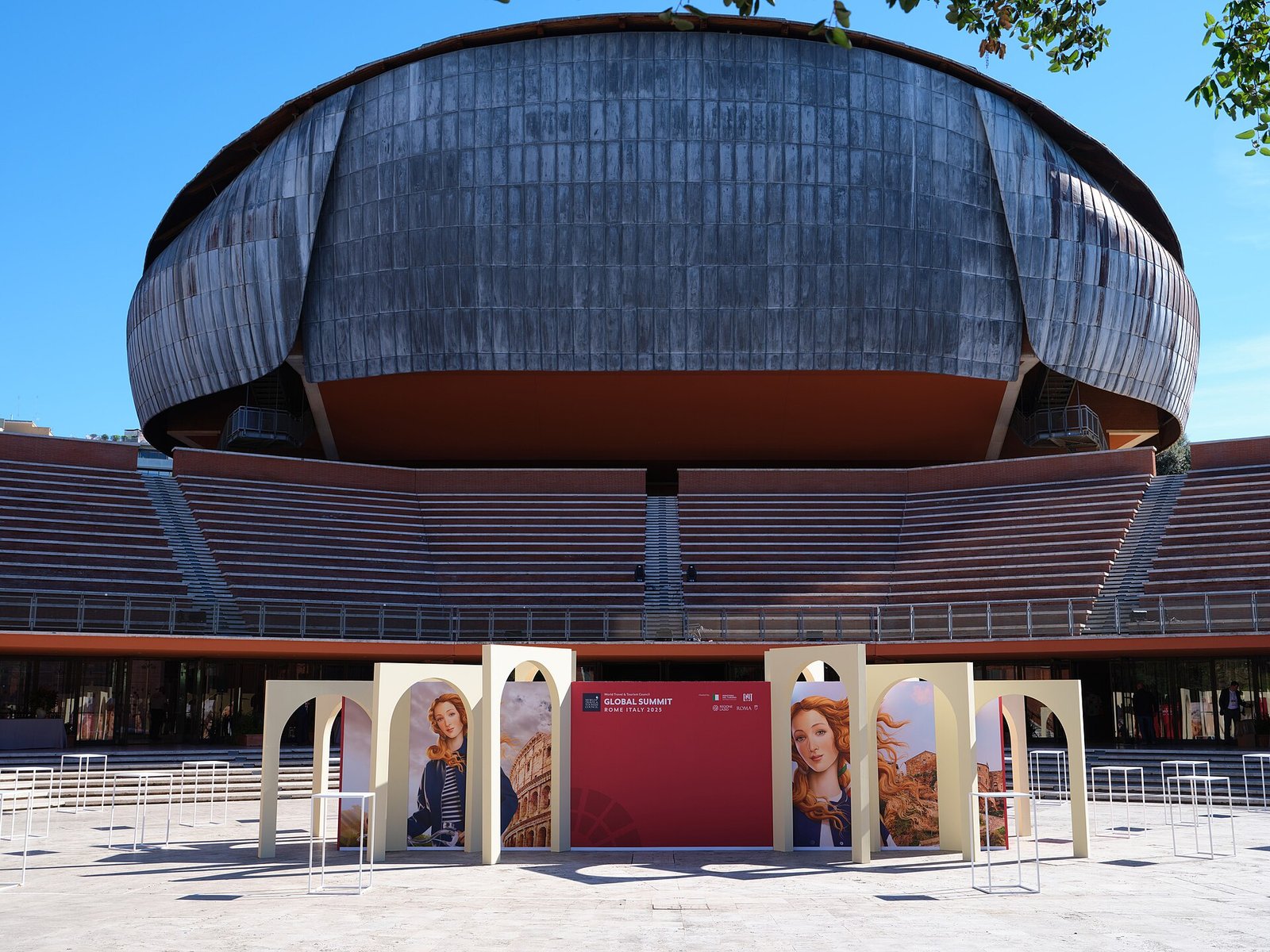
Primavera Unplugged 2027, the evening devoted to emerging singer-songwriters created by Arte2o Music Academy, takes place on Friday, April 9, 2027 at 20:00 in Teatro Studio Borgna at Auditorium Parco della Musica Ennio Morricone, at Viale Pietro de Coubertin 30, 00196 Rome. Young singer-songwriters, men and women, take turns on stage with unreleased songs, and the evening is hosted by Chiara Cami. You get there by Metro Line A to Flaminio and then tram 2 to the Flaminia/Reni or Apollodoro stops, or by bus 910 from Termini and lines 53, 168 and 982. Tickets start at €16 and you buy them from the official event page on the Auditorium website, which links to the authorized presale network, or at the complex's box office.
This is the fifth edition of an event created to give a real stage to people who are just starting out: no chart names, just new voices, songs never released and an audience willing to listen. In 2027 the evening changes hall and moves to Teatro Studio, the most intimate hall at the Auditorium and, in our opinion, the best choice for songs that ask for attention.
Primavera Unplugged 2027: date, time and tickets
Primavera Unplugged 2027 takes place on one evening only, Friday, April 9, 2027 at 20:00, in Teatro Studio Borgna at Auditorium Parco della Musica, with tickets starting at €16.
Where to buy tickets
Tickets are bought with the button on the event page of the official Auditorium website, which links to the authorized presale network, or at the complex's box office. The price of each seat appears on the hall map when you choose.
The price
The official page lists prices starting at €16. For an evening of live music at the Auditorium, it is one of the lowest entry points of the pop season: a good reason to give it a try, even without knowing the names on the lineup.
A Friday night
The 20:00 start on a Friday leaves time to get out of work and cross the city to Flaminio, and after the concert the evening stays open: the weekend begins with new music and a dinner with no clock.
What you hear at Primavera Unplugged
Primavera Unplugged is an evening entirely devoted to emerging singer-songwriters, with unreleased songs and musical encounters: according to the Auditorium's presentation, young singer-songwriters, men and women, take turns on stage with performances born from an intense creative and musical journey.
Unreleased songs
What defines the evening is that you don't know the songs beforehand. People who go to Primavera Unplugged aren't going to hear an album again: they are going to hear songs for the first time, often performed by the people who wrote them. It's a rare experience in a hall like the Auditorium, where you usually hear well-known repertoires.
The unplugged formula
The name already says a lot: an acoustic evening, voice and instruments, without the apparatus of big pop concerts. The lineup and the list of artists are not published on the event page. The formula, built over the years, is one of different voices taking turns in the same evening.
The hosting
The evening is hosted by Chiara Cami, who according to the presentation will guide the audience through music, stories and moments devoted to the artists. Having a host turns the sequence of performances into a story, with time to introduce whoever steps on stage and the path that brought them there.
Atmospheres
The official page speaks of musical encounters able to create unique and engaging atmospheres. In our opinion it is the right description for an evening whose value lies in the unexpected: a voice you didn't know, a song that stays in your head on the way home.
Who organizes it: Arte2o Music Academy
Primavera Unplugged is an event created by Arte2o Music Academy, which the Auditorium presents as a Roman center of excellence in music education, committed for years to paths of artistic growth, music production and live experience for young artists.
From school to stage
The point of the evening is a passage: from the classrooms of a music school to a professional stage. In its presentation of the 2025 edition, the Auditorium explained that the students reached the stage after careful selection by a jury of teachers and steady preparation during the academic year.
Their own songs
This is not an end-of-year recital with covers and standards. The same 2025 presentation spoke of a collection of the students' best unreleased songs: the heart of the evening is the writing, and the performance comes right after.
A live experience
For a young songwriter, playing in front of a paying audience in a hall designed by Renzo Piano is a different test from any classroom. For listeners, it's the chance to hear the Roman music of tomorrow before it becomes a name on a program.
The editions of Primavera Unplugged at the Auditorium
Primavera Unplugged reaches its fifth edition in 2027, after those hosted in previous years by Auditorium Parco della Musica, and each time it has chosen spring as its debut season.
The third edition, 2025
The third edition took place on Wednesday, April 16, 2025 at 21:00 in Sala Petrassi. The Auditorium described it as a celebration of talent that is born, expresses itself through song and is moved by sharing it.
The fourth edition, 2026
The fourth edition took place on Wednesday, April 1, 2026, again at 21:00 and again in Sala Petrassi. Two years in a row in the same hall gave the evening a recognizable identity.
The fifth edition, 2027
In 2027 three things change: the day, which becomes a Friday, the time, moved up to 20:00, and the hall, which goes from Petrassi to Teatro Studio Borgna. A smaller and more intimate hall, in our opinion closer to the acoustic spirit of the formula.
Teatro Studio Borgna, the hall for the evening
Teatro Studio Borgna is the smallest hall at Auditorium Parco della Musica, with about 300 seats, and is named after Gianni Borgna, longtime councilor for cultural policy of the City of Rome and president of the Fondazione Musica per Roma.
Cherry wood
It is a hall with a regular floor plan, lined entirely in cherry wood, with movable acoustic panels and curtains that let the sound be adapted to the type of show. For voice and acoustic instruments, it is an environment that returns every detail.
No curtain
The stage is at the same level as the audience and there is no curtain: whoever sings is a few meters from the audience, and the audience is a few meters from whoever sings. For an evening of newcomers it is a demanding condition, and for that very reason an interesting one.
The hall's program
Throughout the year the Fondazione Musica per Roma programs singer-songwriter music and more intimate pop in Teatro Studio: in the 2026/2027 season, among others, Gaia Banfi, Davide Boosta Dileo, Radici nel Cemento and Boosta's Pianorama. Primavera Unplugged fits the same line.
Sala Petrassi, home of the previous editions
Sala Petrassi, which hosted Primavera Unplugged in 2025 and 2026, is the Auditorium's 673-seat hall, opened on April 21, 2002 together with Sala Sinopoli and named after Goffredo Petrassi, who wanted to be present at the opening.
A shared wood
Like Teatro Studio, Sala Petrassi has walls lined in cherry wood: going from one hall to the other doesn't change the color of the sound, but the size. From 673 to about 300 seats, the evening becomes more intimate.
Why change halls
The 2027 edition page doesn't explain the choice. In our opinion, for an acoustic formula made of young voices, a small hall is an advantage: the audience is closer, the emotion of the debut is passed on more easily, and even a house that isn't full stays warm.
A choice that rewards listening
In Teatro Studio there are no distant seats. For listeners it means seeing the expression of whoever sings up close, for performers hearing the reaction of every row. In an evening of newcomers it is the best condition for both.
A curiosity about Primavera Unplugged at Auditorium Parco della Musica, April 9, 2027
The most interesting curiosity concerns the hall. In the two previous editions, Primavera Unplugged was held in Sala Petrassi, named after Goffredo Petrassi, one of the greatest Italian composers of the 20th century, who in 2002 wanted to be present at its opening. In 2027 the evening moves to Teatro Studio, named after Gianni Borgna, longtime councilor for cultural policy of the City of Rome and president of the Fondazione Musica per Roma. From a composer's hall to the hall of a cultural administrator.
The second curiosity is about the calendar. On Friday, April 9, 2027, at the same time, a few dozen meters away, in Sala Santa Cecilia, Daniel Harding conducts the Orchestra of Santa Cecilia in a program devoted to Ravel and Debussy. In the same complex, at the same time, two very different audiences: the one for the great symphonic repertoire and the one for songs that nobody knows yet.
Third: the evening starts earlier, at 20:00, while the two previous editions began at 21:00. One hour changes the organization: you eat dinner after, not before.
Something nobody tells you about Primavera Unplugged at Auditorium Parco della Musica, April 9, 2027
What is rarely said about evenings of newcomers is that the audience does half the work. In a 300-seat hall, with no curtain and the stage at the same level as the audience, the performers notice right away if the silence is attentive or the chatter is loud. People who go to Primavera Unplugged don't just watch: they take part in a debut, and the way they listen matters.
The second thing that is rarely said is practical. On a Friday night the Auditorium is full: in Sala Santa Cecilia there is Harding's symphonic concert, in a hall of more than 2,700 seats, and the flow toward the entrances, the checks and the coat check is that of the big evenings. Arriving 20 minutes early is not enough for a small hall: better half an hour.
The third concerns the names. The event page doesn't publish the list of artists, and anyone who wants to know who will step on stage has to rely on the channels of the school that organizes the evening. In our opinion, though, the beauty of this formula is precisely arriving without knowing: the best discoveries are the ones you don't look for.
The advice I give you for visiting Primavera Unplugged at Auditorium Parco della Musica, April 9, 2027
My advice is to go with curiosity and a notebook, even just the one on your phone, to check afterward. In an evening of unreleased songs you often hear a song or a voice that strikes you. Writing down the artist's name lets you find them again in the following months, when they release their first single.
Second piece of advice: choose the central rows. In Teatro Studio the distance from the stage is short everywhere, but in the center the balance between voice and instruments is the best, and in an acoustic evening the voice is everything.
Third: stay until the end. In an evening with many artists, the order of the performances says nothing about their value, and surprises often come toward the close.
Finally, if you have friends or family among the young musicians on stage, it's best to buy tickets early: in a hall of 300 seats, an evening like this fills up fast.
Auditorium Parco della Musica Ennio Morricone
Auditorium Parco della Musica Ennio Morricone is the complex designed by Renzo Piano at Flaminio and opened in 2002, with Sala Santa Cecilia, Sala Sinopoli, Sala Petrassi, Teatro Studio Borgna and the open-air cavea.
A city of music
Around the halls there are the cavea named after Luciano Berio, the roof gardens dedicated to Claudio Abbado, the Museum of Musical Instruments of the Accademia di Santa Cecilia and a small archaeological museum with the finds from a Roman villa uncovered during construction.
Music of every genre
The Fondazione Musica per Roma, which runs the complex, offers jazz, singer-songwriter music, pop and rock alongside the symphonic season of Santa Cecilia. Primavera Unplugged is listed in the Pop/Rock section of the program.
The other halls
Besides Teatro Studio, the Auditorium has three large halls: Sala Santa Cecilia, the largest, Sala Sinopoli, with 1,133 seats, named after the conductor Giuseppe Sinopoli, and Sala Petrassi, with 673 seats, which hosted the 2025 and 2026 editions of Primavera Unplugged.
How to get to the Auditorium for Primavera Unplugged
The Auditorium is at Viale Pietro de Coubertin 30: from the center take Metro Line A to Flaminio and then tram 2 to the Flaminia/Reni or Apollodoro stops, from which it is a few minutes' walk.
By bus
From Termini, bus 910 reaches the Auditorium with no transfers. Lines 53, 168 and 982 also stop nearby. For evening schedules, and for the ride back after 22:00, check the Atac route planner.
By train
The Roma-Nord railway stops at Piazza Euclide, from which the Auditorium can be reached on foot or with a short bus ride.
By car
The complex has paid parking, both surface and multi-level, with spaces reserved for people with disabilities. On a Friday night with a symphonic concert at the same time, though, spaces run out early: it's best to arrive ahead of time or choose public transportation.
How to listen to an evening of newcomers
An evening like Primavera Unplugged is heard differently from a concert by an established artist: there is no repertoire to recognize, and the pleasure is in discovery. A few tips help you enjoy it fully.
Listen to the words
In singer-songwriter music the writing matters as much as the voice. In an acoustic hall like Teatro Studio the words come through clearly, and it's worth following them closely: it is often in the lyrics that a young songwriter shows their personality, even before the melody.
Compare the voices
The formula has several artists taking turns in the same evening. It's a rare chance for direct comparison: different styles, different themes, different ways of being on stage. By the end of the evening everyone will have a favorite, and the fun is discussing it on the way out.
Follow the artists afterward
Many young songwriters release their first songs on digital platforms and social media. Writing down names during the evening lets you follow their path in the following months and perhaps find them again in a club or at a festival in the city.
The role of the host
Between one performance and the next, the host introduces the artists and tells their story: these are the moments when you understand where a song comes from. It's best not to treat them as breaks, but as part of the show.
Another well-known fact, yet rarely mentioned
It is well known that Auditorium Parco della Musica is the home of classical music in Rome, with the season of the Accademia di Santa Cecilia. It is mentioned less often how much space the rest of the program takes up alongside the symphonic season: the Fondazione Musica per Roma brings jazz, pop, rock and singer-songwriter music to its halls.
In this picture Teatro Studio has a precise role. It is the hall where the Auditorium hosts its most intimate and youngest projects: singer-songwriters on their first theater tour, album presentations, evenings like Primavera Unplugged. Anyone who thinks of the Auditorium as a solemn and expensive place finds the clearest rebuttal here.
The second rarely mentioned fact is about the hall. Teatro Studio bears the name of an administrator, not a musician: Gianni Borgna, councilor for cultural policy of the City of Rome and president of the Fondazione Musica per Roma. The other halls are dedicated to Petrassi and Sinopoli, the cavea to Berio, the roof gardens to Abbado. The smallest hall instead remembers someone who worked so that music would have a home.
How to organize the evening
A Friday at 20:00 in Flaminio lends itself to a simple evening: out of work, tram or bus, concert, dinner after.
For those coming from outside Rome
Anyone arriving by car can leave it in the Auditorium parking lot and not move it until heading home. Anyone arriving by train at Termini has bus 910, which goes to the complex with no transfers.
For those staying in the center
Tram 2 from Piazzale Flaminio is the simplest solution, going and coming back. On the way out, with two halls emptying almost together, a taxi booked in advance avoids the wait.
When to buy
A hall of about 300 seats and a single evening: in our opinion it's best to buy as soon as you decide, to get a central seat.
The right photo to take at Primavera Unplugged at Auditorium Parco della Musica, April 9, 2027
During the performances the phone stays in your pocket: in a hall of 300 seats a lit screen is seen by the whole audience and distracts whoever is singing. The right moment for a photo is the closing applause of each artist, without flash.
The best photo, before going in, is the one of the cavea at sunset. At the beginning of April, shortly before 20:00, the sky above Renzo Piano's three large halls is still light: from the top of the steps you frame the roofs of the halls against the sky, with the foyer's glass walls lighting up.
Inside Teatro Studio, before the lights go down, it's worth photographing the stage at the same level as the audience, with the guitars and the microphone waiting: an image that tells an acoustic evening well.
On the way out, for anyone with a friend among the artists, the right photo is the one in the foyer, ticket in hand: the proof of having been there on the night when everything began.
Some important events that happened here in history
For more than 60 years Rome remained without a hall built for music: the Augusteo had been demolished in 1936. In 1993 Renzo Piano won the competition for the new complex between Villaggio Olimpico and Stadio Flaminio. The excavations brought to light a Roman villa from the 3rd century BC, built on an archaic farm from the 6th century BC: the project was modified and the finds are now displayed under the cavea.
On April 21, 2002, Rome's birthday, Sala Petrassi and Sala Sinopoli were inaugurated. On December 21 of the same year Sala Santa Cecilia opened, with the Accademia orchestra conducted by Myung Whun Chung. Since 2003 the Auditorium has hosted the Santa Cecilia season, since 2006 the Rome Film Festival. In 2020 it was named after Ennio Morricone.
In the most recent and smallest history there is also Primavera Unplugged: the third edition on April 16, 2025 and the fourth on April 1, 2026 in Sala Petrassi, the fifth on April 9, 2027 in Teatro Studio Borgna. A short history, but built entirely in these halls.
Who has passed through Primavera Unplugged at Auditorium Parco della Musica, April 9, 2027
In more than 20 years the conductors of the Santa Cecilia season, the jazz players of the Roma Jazz Festival, and the leading figures of Italian and international song have passed through the Auditorium's halls. At the opening of Sala Petrassi in 2002, Goffredo Petrassi was present. The inaugural concert of Sala Santa Cecilia was conducted by Myung Whun Chung. Luciano Berio, president of the Accademia in those years, gave his name to the cavea.
Teatro Studio is the singer-songwriters' hall. In the 2026/2027 season, among others, it hosts Gaia Banfi with L'ultima maccaia, Radici nel Cemento and Carlo Molinari, as well as Davide Boosta Dileo with his piano project.
On April 9, 2027 it hosts the young singer-songwriters of Arte2o Music Academy, with their unreleased songs. Who will be on stage that night is not yet a known name: that is exactly the point of the evening.
Accessibility, age and practical information
For accessibility at Teatro Studio Borgna, it's best to write in advance to the Fondazione Musica per Roma, at info@musicaperroma.it, to find out which entrance to use and which seats to choose.
With kids
An evening of unreleased songs by young songwriters is suitable for all ages, and for a teenager who studies music it can be a concrete stimulus: seeing kids only slightly older on the stage of a real hall. The access rules for minors are those the Auditorium indicates at the time of purchase.
Arriving on time
It's best to be in the complex at least half an hour early: the halls are reached by crossing the cavea, and in a hall with no curtain, entering after a performance has started disturbs more than elsewhere.
The coat check
In April the evenings can be cool, and between the tram and the entrance you walk outdoors: a light jacket is enough, and the coat check saves you from holding it on your lap in a small hall.
What's around the Auditorium
The Auditorium is between Villa Glori, Villaggio Olimpico and the Corso di Francia viaduct. A few minutes' walk away is MAXXI, Zaha Hadid's museum of 21st-century arts.
Toward the river
Heading down toward the Tiber you cross Ponte della Musica and reach Foro Italico. Farther north, Milvian Bridge is the neighborhood's evening gathering place, liveliest on Fridays.
Toward the center
Tram 2 takes you in a few minutes to Piazzale Flaminio, where Piazza del Popolo and Villa Borghese begin: a spring afternoon in the park and the evening at the concert is a plan that doesn't require a car.
Where to eat before or after the evening
At the Auditorium there are a bar and a cafe in the foyer and a bar-restaurant with street access too. Between Via Flaminia, Villaggio Olimpico and Piazza Mancini you find trattorias, pizzerias and neighborhood bars.
Before 20:00
To eat dinner first you need to sit down around 18:30, and on a Friday it's best to reserve: with a symphonic concert at the same time, the places near the Auditorium fill up early.
After the evening
At the end of the evening the widest choice is at Ponte Milvio, reachable in a few minutes by taxi or with a walk along the river. On Fridays the places stay open late.
Inside the complex
Anyone short on time can stay at the Auditorium: the foyer bar offers a snack before going into the hall, without leaving the complex and without the risk of arriving late.
April in Rome and at the Auditorium
In early April Rome is in full spring: long days, full parks, mild evenings. Flaminio is pleasant on foot too, between MAXXI, Ponte della Musica and the Tiber embankment.
A week of music
In the same week the Auditorium hosts, on Tuesday, April 6, the concert of Martha Argerich with the Lausanne orchestra and, from April 8 to 10, Daniel Harding with Ravel and Debussy. Anyone who wants to move from the great repertoire to new songs has it all at the same address.
A day in Flaminio
Morning at MAXXI, afternoon between Piazza del Popolo and Villa Borghese, evening at Teatro Studio: a day entirely north of the historic center, without ever taking the car.
Frequently asked questions about Primavera Unplugged 2027
When is Primavera Unplugged 2027?
Primavera Unplugged 2027 takes place on Friday, April 9, 2027 at 20:00 in Teatro Studio Borgna at Auditorium Parco della Musica Ennio Morricone, Viale Pietro de Coubertin 30, Rome. It is a single evening, the fifth edition of the event.
How much do tickets for Primavera Unplugged cost?
Tickets for Primavera Unplugged 2027 start at €16, according to the official Auditorium page. You buy them from the Auditorium website, which links to the authorized presale network, or at the complex's box office.
Who performs at Primavera Unplugged?
Young singer-songwriters, men and women, perform at Primavera Unplugged with unreleased songs, born from a path with Arte2o Music Academy, the Roman school that created the evening. The list of names is not published on the event page. The host is Chiara Cami.
Who organizes Primavera Unplugged?
Primavera Unplugged is an event created by Arte2o Music Academy, presented by the Auditorium as a Roman center of excellence in music education, which follows young artists on paths of artistic growth, music production and live experience.
Which hall hosts the evening?
Primavera Unplugged 2027 takes place in Teatro Studio Borgna, the smallest hall at Auditorium Parco della Musica, with about 300 seats, lined in cherry wood and with no curtain. The 2025 and 2026 editions were held in Sala Petrassi.
How do you get to Auditorium Parco della Musica?
You get to Auditorium Parco della Musica by Metro Line A to Flaminio and then tram 2, stops Flaminia/Reni or Apollodoro, or by bus 910 from Termini and lines 53, 168 and 982. The complex has paid parking.
Does the evening end late?
The official page of Primavera Unplugged 2027 gives the start at 20:00 but not the length of the evening, which depends on the number of artists on the lineup. For the ride home by public transportation, it's best to check the evening schedules of tram 2 and bus 910 in advance on the Atac planner.
Final advice on Primavera Unplugged
A small hall with good sound, songs nobody has heard yet, young songwriters on their first important stage and a €16 ticket: in our opinion Primavera Unplugged is one of the most sincere evenings of the spring at the Auditorium. My advice is to go with no precise expectations, choose the central rows, stay until the last song and write down the name of whoever strikes you: in a few years they might be on the program in the hall next door.
Article written by the editorial team of Tour Leader Pro, contact them for Private/Corporate/V.I.P. Tours and Experiences.
Planning a trip to Rome? The English-language guides to visiting the city are on ItalyPlanner.com.