Otello with Giorgio Pasotti and Giacomo Giorgio at Teatro Ambra Jovinelli, February 24 to March 7, 2027
https://www.estateromana.com/en/rome/trip-planner/otello-with-giorgio-pasotti-and-giacomo-giorgio-at-teatro-ambra-jovinelli-februa/
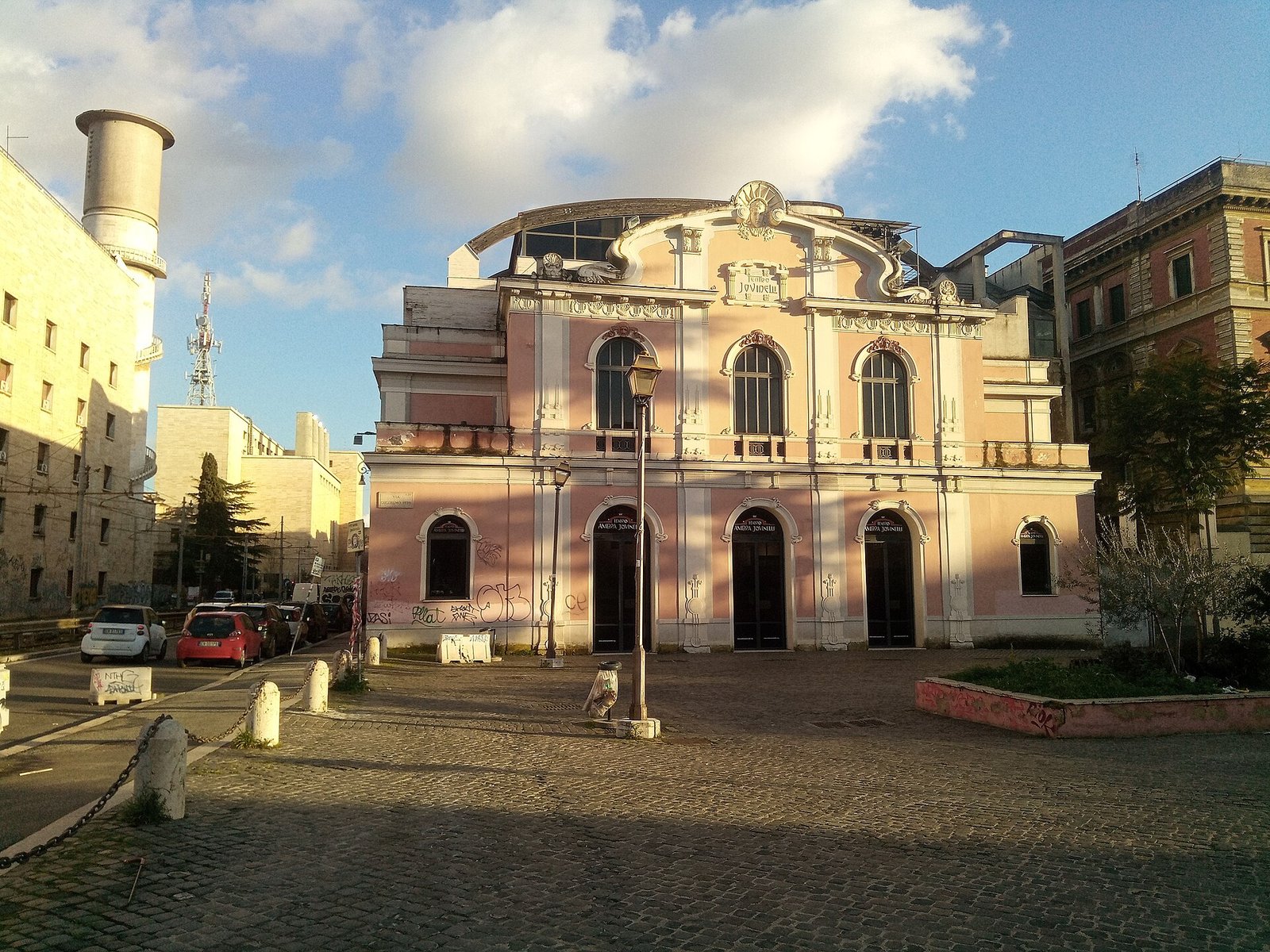
Otello by William Shakespeare, with dramaturgy by Dacia Maraini and direction by Giorgio Pasotti, is playing at Teatro Ambra Jovinelli from February 24 to March 7, 2027, at Via Guglielmo Pepe 43, in the Esquilino district (00185 Rome). The title role goes to Giacomo Giorgio, the actor loved by the general public in the series Mare fuori. On stage with him are Giorgio Pasotti himself, Claudia Tosoni, Gerardo Maffei, Diego Migeni, Salvatore Rancatore, Andrea Papale and Dalia Aly. There are 12 performances, at different times: at 21:00, at 19:30 or, on weekends, in the afternoon. The theater can be reached by metro line A, Vittorio Emanuele stop, a few minutes on foot, or from Termini. Prices are published on the authorized presale network listed by the theater's official website, ambrajovinelli.org, where tickets are sold. They can also be bought at the theater box office.
Language: performed in Italian. No English version or English surtitles are announced.
A love story against the clichés of its time, a foreigner who claims freedom of choice, a jealousy that turns into possession and then into murder. The theater presents this Otello as an urgent show: Giorgio Pasotti asks if a great classic can still speak to young consciences and show, without technological mediation, the pain of lives not respected. The director's answer, according to the presentation, is clear: after five centuries Othello is tragically relevant.
Otello at Ambra Jovinelli in brief
Otello with Giacomo Giorgio and Giorgio Pasotti is at Teatro Ambra Jovinelli in Rome from February 24 to March 7, 2027, 12 performances, with tickets on sale from the theater's official website.
Dates and times
Wednesday, February 24 at 21:00, Thursday, February 25 at 19:30, Friday, February 26 at 21:00, Saturday, February 27 at 16:30 and at 21:00, Sunday, February 28 at 17:00. Tuesday, March 2 at 21:00, Wednesday, March 3 at 19:30, Thursday, March 4 at 21:00, Friday, March 5 at 19:30, Saturday, March 6 at 21:00, Sunday, March 7 at 17:00. There are no performances on Monday, March 1.
Tickets
They are bought from the purchase button on the official show page, which links to the authorized presale network, or at the theater box office on Via Guglielmo Pepe.
Prices
Prices for the different sections are published on the authorized presale network listed by the theater. The show page does not list them.
Where
Teatro Ambra Jovinelli, Via Guglielmo Pepe 43, in the Esquilino district, a short distance from Piazza Vittorio and Termini station.
Pasotti's Otello: the story and the point of view
In the Othello directed by Giorgio Pasotti, Desdemona marries Othello for love, against the clichés of her time, and Othello, the foreigner, the Moor, wants her, claiming freedom of choice and autonomy and fighting with her father so that he accepts him, according to the theater's presentation.
The captain and the husband
Othello is a brave and loyal captain, but an insecure and jealous husband, unable to manage his emotions. Desdemona, perhaps, is too much: too beautiful, too naive, too sure of her love and of his love.
The tragedy
Othello kills her and then takes his own life, out of jealousy and possession. The presentation explicitly links this ending to the men of today who kill women, and asks to educate the new generations so that it does not happen tomorrow.
Violence without a reason
The dramaturgy of Dacia Maraini, the theater says, follows the thread of a violence that grows for no reason at all: the illusion of possession, the murder, the suicide out of stupidity.
Without mediation
Pasotti insists on theater as a direct experience: showing pain without screens, in front of a flesh-and-blood audience. It is an Otello conceived for young people too, in a time when many kids see violence mostly through a phone.
The cast and the artistic team
Otello is by William Shakespeare, with dramaturgy by Dacia Maraini, stage adaptation by Antonio Prisco and direction by Giorgio Pasotti. The title role goes to Giacomo Giorgio.
On stage
Giacomo Giorgio, Giorgio Pasotti, Claudia Tosoni, Gerardo Maffei, Diego Migeni, Salvatore Rancatore, Andrea Papale, Dalia Aly. The casting of roles other than Othello is not listed on the theater's page.
The team
Original music by Patrizio Maria D'Artista, set by Giovanni Cunsolo, images by Thierry Lechanteur, costumes by Sabrina Berretta made by CinquantanoveA, lighting by Marco Palmieri, stage photos by Chiara Calabrò.
Giacomo Giorgio, Othello
Giacomo Giorgio, a Neapolitan actor, is known above all for the role of Ciro Ricci in the television series Mare fuori. In 2025 he became the lead of Otello directed by Giorgio Pasotti.
Training
At six he played Pulcinella in a school play. At 11 he moved from Naples to Milan to study theater, with teachers such as Michael Margotta, Francesca De Sapio and Susan Batson, following the Stanislavski method. At 17 he settled in Rome.
Film
He made his film debut in 2017 with Non c'è campo by Federico Moccia. In 2018 he is in The Happy Prince, directed by and starring Rupert Everett, alongside Colin Firth and Emily Watson. In 2022 and 2023 he is Agent Zeman in the two Diabolik films by the Manetti Bros.
Television
Since 2020 he has been Ciro Ricci in Mare fuori, the juvenile detention inmate who made him popular. Sopravvissuti follows, for which he gains about 15 kilograms, Per Elisa, Il caso Claps, Noi siamo leggenda, Doc, Nelle tue mani, Belcanto and Sara, La donna nell'ombra.
The first series
In 2019 he appears in an episode of the second season of I Bastardi di Pizzofalcone, the Rai series based on the novels of Maurizio de Giovanni. In 2023 he stars in an Autostrade per l'Italia spot on road safety, dedicated to the victims of the accidents of 2022.
Why it matters
In our view the choice of Giacomo Giorgio is the heart of the project: an actor many kids know from Mare fuori, a series set in a juvenile detention center, brings Shakespeare in front of an audience that perhaps would not have come to the theater for a classic.
Giorgio Pasotti, director and actor
Giorgio Pasotti, born in Bergamo on June 22, 1973, is an actor and director. Since November 2020 he has been director of Teatro Stabile d'Abruzzo.
From China to film
Passionate about wushu, in 1992 he moved to China for two years and shot two films there, Treasure Hunt, in which he is a young American who becomes a Shaolin monk, and The Drunken Master III. In 1998 he returned to Italy with I piccoli maestri by Daniele Luchetti and Ecco fatto by Gabriele Muccino.
The films
In 2000 he is among the cast of Muccino's L'ultimo bacio, and in 2010 of the sequel Baciami ancora. In 2006 he works with Mario Monicelli in Le rose del deserto. In 2013 he is Stefano in Paolo Sorrentino's Oscar-winning La grande bellezza.
Television
Popularity came with Distretto di Polizia, in the role of Inspector Paolo Libero. In 2012 he is Giuseppe Garibaldi in Anita Garibaldi on Rai 1.
Historical roles
On television he also plays Lino Zani, John Paul II's ski instructor, in Non avere paura, and a carabiniere fighting against the Germans in A testa alta, I martiri di Fiesole. In 2006 he stars with Neri Marcorè in E poi c'è Filippo.
Directing
He co-directs with Matteo Bini Io, Arlecchino, from 2015, and on his own Abbi fede, from 2020. On stage he made his debut in 2000 with Robert Lepage's Le poligraphe, alongside Stefania Rocca.
Dacia Maraini, the dramaturgy
Dacia Maraini, born in Florence on November 13, 1936, is a writer, poet and essayist.
Childhood in Japan
The daughter of the anthropologist Fosco Maraini and the painter Topazia Alliata, she spent her childhood in Japan. After September 8, 1943, because her parents refused to join the Republic of Salò, the family was interned by the Japanese authorities in a concentration camp, where she suffered hunger.
Bagheria and Rome
In 1945 the family returned to Italy and settled in Bagheria, in the villa of her maternal grandparents, years that the writer recounts in the novel Bagheria. At 18 she moved to Rome, where she became friends with Pier Paolo Pasolini, Elsa Morante, Maria Bellonci and Alberto Moravia.
The first novels
Her first success came with La vacanza, from 1962, followed by L'età del malessere, from 1963, and A memoria, from 1967.
Why see this Otello
In our view this Otello is worth the ticket for three reasons: a young and popular lead, a dramaturgy signed by a great writer, a theme that the news makes more urgent every week.
For those who never go to the theater
Anyone who knows Giacomo Giorgio from Mare fuori has the chance here to see him live in one of the hardest roles in the repertoire. It is a good way to go to the theater for the first time.
For those who know Shakespeare
Anyone who has seen many productions of Othello will find a rewrite, not a traditional staging: Dacia Maraini's signature shifts the emphasis to violence and possession, and the comparison with the classic versions is part of the pleasure.
For families
For parents and teenage children it is a show that opens a conversation. The theater's presentation says it clearly: the urgency is to educate the new generations.
A curiosity about Otello with Giorgio Pasotti and Giacomo Giorgio at Teatro Ambra Jovinelli, February 24 to March 7, 2027
The most interesting curiosity is Giorgio Pasotti's double life. Before becoming the face of the Italian cinema of Muccino and Sorrentino, at 19 he moved to China for two years, driven by his passion for wushu, and shot two martial arts films there: in Treasure Hunt he played a young American who became a Shaolin monk. The director who today directs Shakespeare began as a martial arts film actor in China.
The second curiosity concerns Giacomo Giorgio. His first role, at six, was Pulcinella in a school play: the Neapolitan mask par excellence. Today, in Rome, he is the Moor of Venice. From commedia dell'arte to tragedy, the path of a Neapolitan actor seems made for a theater like Ambra, born for variety shows.
The third concerns Rome. In the same season, in another theater in the city, there is another Otello: the one that played at Teatro Argentina from November 4 to 29, 2026, described in the page on Otello at Teatro Argentina. Two different readings of the same text within a few months.
Teatro Ambra Jovinelli
Teatro Ambra Jovinelli was inaugurated on March 3, 1909 by the impresario Giuseppe Jovinelli, from Caserta, as a luxury variety theater. It is on Via Guglielmo Pepe, in the Esquilino district, and is the only Roman theater built in the Liberty style.
The facade
The project, after contributions from Pietro Chiodelli and Giacomo Radiconcini, was entrusted in 1907 to Ulderico Bencivenga: a two-story facade with wide openings, a crown of arched lines, stucco pilasters decorated with flowers and, at the center of the entablature, a shell with a human face. The horseshoe hall originally held about a thousand seats.
From variety to fire
Before the Great War the Jovinelli was one of the most important variety theaters in the capital. In the 1950s it became a variety cinema with the name Ambra Jovinelli, and in the 1970s an adult cinema. On April 29, 1982 a fire destroyed the structure.
The rebirth
In July 1996 some young artists occupied the abandoned theater. In 1997 the facade was placed under protection by the Ministry. On January 25, 2001 Ambra reopened as a comedy theater, with Serena Dandini as artistic director. Since December 26, 2010 the artistic director has been Fabrizia Pompilio.
The hall today
The restoration rebuilt the look of the early 1900s and tripled the interior volume without touching the exterior: the hall was raised by five meters, and below it were created the Piccolo Jovinelli, a bar and other spaces. The cast-iron columns that held up the boxes now support the two galleries.
Something nobody tells you about Otello with Giorgio Pasotti and Giacomo Giorgio at Teatro Ambra Jovinelli, February 24 to March 7, 2027
What is rarely said is how much this Otello is built for a young audience. The theater's presentation speaks openly about educating the new generations and about young consciences, and the lead comes from a series set in a juvenile detention center. In our view it is a show to see with teenage children, not despite the theme but precisely because of the theme.
The second thing concerns the text. The dramaturgy is by Dacia Maraini, not a simple translation: the writer built a version that puts violence and possession at the center. Anyone who knows Shakespeare by heart will find an Othello reread, not copied.
The third is practical: the start times change almost every day. On Thursday, February 25 and Wednesday, March 3 the show starts at 19:30, and on Friday, March 5 too. On Saturday, February 27 there are two performances, at 16:30 and at 21:00. Checking your ticket twice avoids arriving after the curtain has gone up.
The tip I give you for visiting Otello with Giorgio Pasotti and Giacomo Giorgio at Teatro Ambra Jovinelli, February 24 to March 7, 2027
My tip is to reread the plot before you go. Shakespeare builds Othello on a deception that grows scene after scene, and anyone who remembers the main characters follows Dacia Maraini's rewrite better and catches its choices.
The second tip concerns the performance. For those coming with kids, in our view, the matinees on Saturday the 27th at 16:30 and on Sundays at 17:00 are the most convenient. The 19:30 performances leave time to have dinner afterward.
The third concerns the ticket. For the weekend repeats it pays to buy in advance, especially for the central seats.
Last tip: talk about it on the way out. It is a show that asks to be discussed, and the walk from Via Guglielmo Pepe to Piazza Vittorio is long enough to start.
How to get to Ambra Jovinelli
Teatro Ambra Jovinelli is at Via Guglielmo Pepe 43, a short distance from Piazza Vittorio and Termini station: metro line A, Vittorio Emanuele stop, is the simplest solution.
By metro
From the Vittorio Emanuele stop, Via Guglielmo Pepe is reached on foot in a few minutes. Alternatively you get off at Termini, where lines A and B cross, and continue on foot through the Esquilino district, a quarter of an hour at an easy pace.
By train
Anyone arriving on regional trains can get off at Roma Laziali station, next to Termini, the closest to the theater.
By car
In the evening street parking in the Esquilino district is difficult: it is better to leave the car in a garage around Termini and continue on foot.
Another well-known fact, yet rarely mentioned
It is well known that Ambra Jovinelli is the theater of Roman comedy. Much less often mentioned is that between the 1940s and the 1950s the hall also hosted boxing matches, with the ring set up in the theater, and that in 1910 Ettore Petrolini signed with Giuseppe Jovinelli himself the contract that launched him. A stage born for variety and for the ring now welcomes a Shakespeare tragedy about violence.
A second rarely mentioned fact concerns Giorgio Pasotti and the theater. The general public knows him for film and television, but his theater debut, in 2000, was with Le poligraphe by the Canadian Robert Lepage, one of the masters of the contemporary stage. And since 2020 he has run a stable theater. Otello is not a foray, but a piece of a path.
The third concerns Dacia Maraini: in 1945, back from Japan, the writer lived in Bagheria and then in Rome, where she spent time with Pasolini, Morante and Moravia. The dramaturge of this Otello belongs to the same literary Rome that made the cultural history of the 20th century.
The Esquilino around Ambra Jovinelli
The Esquilino is the district between Termini, Santa Maria Maggiore and Porta Maggiore, with the Umbertine buildings constructed around Piazza Vittorio Emanuele II after Unification: one of the most multiethnic neighborhoods in Rome.
Piazza Vittorio
Piazza Vittorio is a large piazza surrounded by porticoes. In the gardens at the center is the Porta Alchemica, with its enigmatic inscriptions.
The market
A few steps away is the Nuovo Mercato Esquilino, with spices, vegetables and products from half the world: a daytime market, to visit in the morning for those spending the day in the area.
Toward Monti
Going up toward Santa Maria Maggiore and beyond you reach Monti, the district of workshops and small piazzas between the basilica and the Forums. The page on Monti district helps choose a route before or after the show.
Santa Maria Maggiore and Porta Maggiore
At the top of the climb is Santa Maria Maggiore, with the Esquiline obelisk behind the apse. Toward the east you reach Porta Maggiore, the great arch of the ancient aqueducts, which in the evening, lit up, shows all its mass.
The right photo to take at Otello with Giorgio Pasotti and Giacomo Giorgio at Teatro Ambra Jovinelli, February 24 to March 7, 2027
The right photo is taken outside, from the sidewalk opposite: the Liberty-style facade of Ambra Jovinelli, with the pilasters decorated with flowers and the shell with the human face at the center of the entablature. In the evening, lit up, it is one of the most beautiful theater facades in Rome.
During the show your phone stays off: in a tragedy even the light of a screen breaks the tension. At the end, at the applause, a photo of the company on stage is the right souvenir.
The third is taken in Piazza Vittorio, in front of the Porta Alchemica: a stone enigma after a story of deceptions.
Where to eat before or after the show
The Esquilino is the right neighborhood for anyone who wants to eat Chinese, Indian, Bengali, Ethiopian or Middle Eastern food at low prices. For a Roman trattoria it pays to go up toward Santa Maria Maggiore or move to Monti.
With a 21:00 start
For the 21:00 performances there are two ways to go: a long aperitivo around 19:00 and dinner afterward, or an early dinner, around 19:30, at one of the places near the theater.
With a 19:30 start
On February 25, March 3 and March 5 the show starts at 19:30: you are out in time for a real dinner in Monti.
The matinees
Saturday, February 27 at 16:30 and the Sundays at 17:00 leave the evening free: a late lunch in the Esquilino and a dinner when you come out, unhurried.
Some important events that happened here in history
The history of Ambra Jovinelli is read by dates. On March 3, 1909 the theater inaugurates with Raffaele Viviani and his sister Luisella, called by Giuseppe Jovinelli. In 1910 Ettore Petrolini signs with Jovinelli the contract that launches him. The documents of that relationship are kept in the Fondo Petrolini of the Biblioteca e Museo teatrale del Burcardo. Between 1919 and 1921 Totò makes his debut and becomes the audience's favorite, presenting himself as an imitator of Gustavo De Marco.
In the 1950s it becomes a variety cinema with its current name. In the 1970s an adult cinema. On April 29, 1982 the fire. In July 1996 the occupation by young artists, in 1997 the ministerial protection of the facade, on January 25, 2001 the reopening as a comedy theater with Serena Dandini. On December 26, 2010 the management of Fabrizia Pompilio begins.
On March 3, 2027, in the middle of the Otello repeats, the theater turns 118 years since its inauguration: a Shakespeare tragedy marks the anniversary of a stage born to make people laugh.
Who has passed through Otello with Giorgio Pasotti and Giacomo Giorgio at Teatro Ambra Jovinelli, February 24 to March 7, 2027
The stage of Ambra Jovinelli has seen more than a century of Italian entertainment go by. In the Jovinelli family's season there are Raffaele Viviani, Ettore Petrolini, Gustavo De Marco, Totò, and then Gennaro Pasquariello, Romolo Balzani, Claudio Villa, Nino Taranto, Lino Banfi, Franco Franchi and Ciccio Ingrassia, Rita Pavone, Alberto Sordi.
After the reopening in 2001 came Ascanio Celestini, Marco Paolini, Lillo and Greg, Neri Marcorè, Valerio Mastandrea, Sabina and Corrado Guzzanti, Lella Costa, Moni Ovadia, Silvio Orlando, Paolo Rossi. Under Fabrizia Pompilio's management came Stefano Accorsi, Massimo Ranieri, Pierfrancesco Favino, Paola Cortellesi, Elio Germano and the works of Mattia Torre. In the 2026/27 season Luca Bizzarri and Arianna Porcelli Safonov pass through, among others.
From February 24 to March 7, 2027 Giacomo Giorgio, Giorgio Pasotti, Claudia Tosoni, Gerardo Maffei, Diego Migeni, Salvatore Rancatore, Andrea Papale and Dalia Aly pass through Via Guglielmo Pepe, with the text by Dacia Maraini. And with them Othello and Desdemona, whom a stage born for variety welcomes for 12 evenings.
Accessibility, age and practical information
After the restoration the hall of Ambra Jovinelli is five meters above street level: anyone with accessibility needs should contact the theater before buying, to get directions on routes and suitable seats.
With teenagers
Otello is a tragedy with a femicide and a suicide. The presentation explicitly addresses it to the new generations, and in our view it is suitable from age 14 up, better if prepared in the family or at school.
Arriving on time
With start times that change almost every day, it pays to check your ticket twice. The foyer fills up quickly: it is better to be in the theater a quarter of an hour early.
How to plan the evening or afternoon of Otello
With 12 performances in 12 days and changing start times, Otello at Ambra Jovinelli fits almost any schedule: the choice of performance decides the rest of the day.
The 21:00 evening shows
Wednesday, February 24 and Friday, February 26, Saturday the 27th in the evening, Tuesday, March 2, Thursday, March 4 and Saturday, March 6: an early dinner in the Esquilino or an aperitivo and dinner afterward, in Monti.
The 19:30 performances
Thursday, February 25, Wednesday, March 3 and Friday, March 5: the most convenient for those leaving work who want to have dinner afterward without getting home late.
The matinees
Saturday, February 27 at 16:30, Sunday, February 28 and Sunday, March 7 at 17:00: the best suited to those coming with kids or arriving from outside Rome who want to head home in the evening.
A day in the Esquilino
For those who choose a weekend matinee, the morning lends itself to a visit to Santa Maria Maggiore and a walk to Porta Maggiore, before a lunch in the neighborhood.
Late February and early March in Rome
Between late February and early March Rome comes out of the low season: the days get longer and the theaters are in the middle of their season.
The weather
The evenings are still cool and sometimes rainy: an umbrella and a jacket are useful for the walk from the metro to the theater.
A season of Othellos
Anyone who saw the Otello at Teatro Argentina in November can compare the two readings. Anyone who did not will find at Ambra a version conceived for a younger audience.
Frequently asked questions about Otello at Ambra Jovinelli
When is Otello with Giacomo Giorgio playing in Rome?
Otello with Giacomo Giorgio and Giorgio Pasotti is playing at Teatro Ambra Jovinelli in Rome from February 24 to March 7, 2027, 12 performances with start times at 21:00, at 19:30 or in the weekend afternoon. There are no performances on Monday, March 1.
Who plays Othello in Pasotti's show?
In the Otello directed by Giorgio Pasotti the title role is played by Giacomo Giorgio, known for Ciro Ricci in the series Mare fuori. The cast also includes Pasotti himself, Claudia Tosoni, Gerardo Maffei, Diego Migeni, Salvatore Rancatore, Andrea Papale and Dalia Aly.
Who wrote the dramaturgy of this Otello?
The dramaturgy of Otello at Ambra Jovinelli is by Dacia Maraini, with stage adaptation by Antonio Prisco. Shakespeare's text is reread around violence that grows for no reason, the illusion of possession and murder.
Where do you buy tickets for Otello at Ambra Jovinelli?
Tickets for Otello at Ambra Jovinelli are bought from the theater's official website, ambrajovinelli.org, which links to the authorized presale network, or at the theater box office at Via Guglielmo Pepe 43. Prices are published on the network.
Is Otello at Ambra Jovinelli suitable for teenagers?
Otello at Ambra Jovinelli is conceived for the new generations too, according to the theater's presentation, but it tells of a femicide and a suicide: it is suitable for teens from age 14 up, better if prepared.
How do you get to Teatro Ambra Jovinelli?
Teatro Ambra Jovinelli, at Via Guglielmo Pepe 43, can be reached by metro line A, Vittorio Emanuele stop, a few minutes on foot, or from Termini by crossing the Esquilino district in a quarter of an hour.
Who is Giacomo Giorgio?
Giacomo Giorgio is a Neapolitan actor known for the role of Ciro Ricci in the series Mare fuori, since 2020. He has acted in Rupert Everett's The Happy Prince, in the two Diabolik films by the Manetti Bros. and in series such as Sopravvissuti, Doc and Belcanto. At Ambra Jovinelli he is Othello.
The final tip on Otello at Ambra Jovinelli
Otello at Ambra Jovinelli brings a Shakespeare classic, reread by Dacia Maraini, to the audience of Mare fuori, with Giacomo Giorgio as the Moor and Giorgio Pasotti directing. My tip is to reread the plot, choose the performance according to the changing start times, buy early for the weekend and, if you have teenage children, bring them: it is a show built to speak to them. On the way out, the lit-up Liberty-style facade and a dinner in the Esquilino close the evening in the most Roman way possible.
Article written by the editorial team of Tour Leader Pro, contact them for Private/Corporate/V.I.P. Tours and Experiences.
Planning a trip to Rome? The English guides for visiting the city are on ItalyPlanner.com.