Omaggio a Morricone, Musiche da Oscar at Auditorium Conciliazione, April 20, 2027
https://www.estateromana.com/en/rome/trip-planner/omaggio-a-morricone-musiche-da-oscar-at-auditorium-conciliazione-april-20-2027/
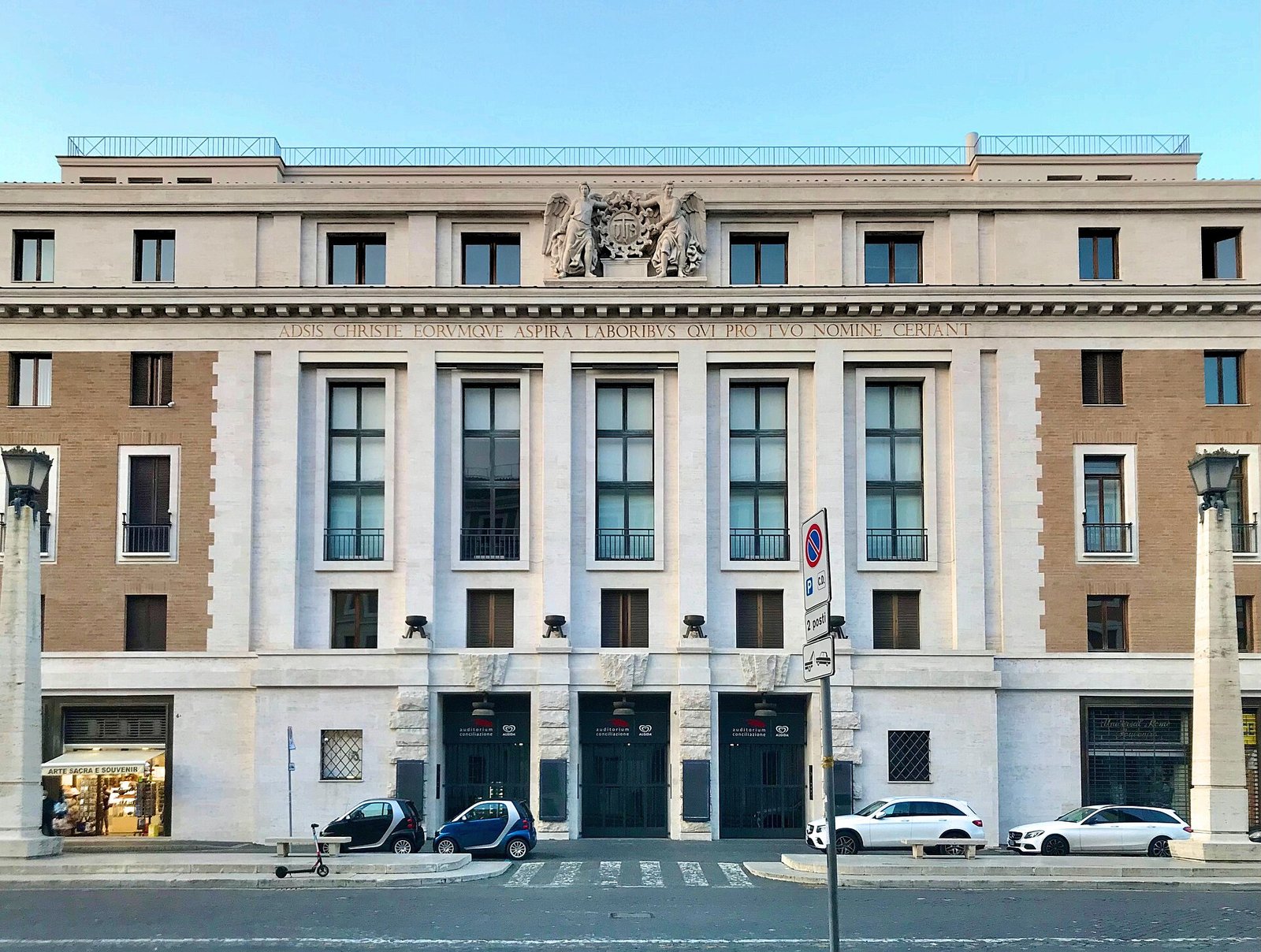
Omaggio a Morricone, Musiche da Oscar, is staged at Auditorium Conciliazione in Rome on Tuesday, April 20, 2027 at 21:00, at Via della Conciliazione 4, 00193 Rome, with Ensemble Le Muse led from the piano by Andrea Albertini and featuring soprano Susanna Rigacci, the voice who for years sang Ennio Morricone's music alongside the composer. The Auditorium is reached by Metro A, Ottaviano or Lepanto stops, about a kilometer on foot, or by bus to the Traspontina stop, a few meters from the entrance. The prices published on the presale network authorized by the organizers range from €39 in the gallery to €69 in Poltronissima Gold, presale fee included and service fees excluded. Tickets are sold on the venue's official website and on the presale network authorized by the organizers.
Omaggio a Morricone at Auditorium Conciliazione: date, time and prices
Omaggio a Morricone, Musiche da Oscar, is scheduled for Tuesday, April 20, 2027 at 21:00 at Auditorium Conciliazione, with tickets from €39 to €69 plus fees. The official network presents the evening with Susanna Rigacci and a choir alongside the ensemble.
Date and time
Tuesday, April 20, 2027, starting at 21:00. It is a single date in Rome, on a spring weeknight: a concert meant as much for Romans as for people in the city on those days.
Prices by section
On the official network Poltronissima Gold costs €69, Poltronissima €57.50 and Poltrona €48. The first, second and third galleries all cost €39. Prices include the presale fee set by the organizer, and service fees are added.
Who organizes it
The organizer listed on the official network is Nuovo Teatro Verdi, a company based in Montecatini Terme. The artistic production of the show, according to the official website, is by Associazione Ritorno all'Opera.
The address
Auditorium Conciliazione, Via della Conciliazione 4, 00193 Rome, in the Borgo district, along the street that connects the Tiber to St. Peter's Square.
Omaggio a Morricone: what you'll hear
Omaggio a Morricone is a concert that retraces Ennio Morricone's most famous soundtracks in arrangements written for an all-female ensemble, Le Muse, with Andrea Albertini at the piano and conducting. The official presentation states its aim: to pay tribute to the maestro in a way different from the usual reworkings of his repertoire.
The published program
The official website lists the pieces on the program. From Sergio Leone's westerns: A Fistful of Dollars from 1964, The Good, the Bad and the Ugly from 1966, Once Upon a Time in the West from 1968, Duck, You Sucker from 1971, and Once Upon a Time in America from 1984. From political cinema: Elio Petri's Investigation of a Citizen Above Suspicion, from 1970, and Giuliano Montaldo's Sacco and Vanzetti, from 1971. Then Roland Joffé's The Mission, from 1986, Giuseppe Tornatore's Cinema Paradiso, from 1988, Malèna, by Tornatore again, from 2000, and Quentin Tarantino's The Hateful Eight, from 2016.
Morricone the songwriter
Alongside the soundtracks, the program features Morricone as a songwriter: Se telefonando, written for Mina, and the presentation also mentions Here's to You, sung by Joan Baez. It is the lesser-known side of the composer, who in the 1960s worked as an arranger for RCA Italiana.
The stories behind the music
Andrea Albertini doesn't just play: according to the presentation, he guides the audience through the maestro's career, telling the stories hidden behind this music. It is a concert with a narrative thread, not a simple sequence of pieces.
The title
Musiche da Oscar refers to Morricone's two Academy Awards: the honorary Oscar for his career in 2007 and the one for the score of The Hateful Eight in 2016. The Tarantino piece is on the program.
Susanna Rigacci, the voice of Morricone
Susanna Rigacci is a soprano born in Nacka, Sweden, on May 16, 1958, and a naturalized Italian citizen. She is best known to international audiences for the vocalizations in the soundtracks of Sergio Leone's films, The Good, the Bad and the Ugly, Once Upon a Time in the West and Duck, You Sucker, which she performed in many live concerts with Ennio Morricone in several countries. Since 2001 she has performed his music in concert and on record.
Training
The daughter of Florentine composer and conductor Bruno Rigacci, she graduated from Conservatorio Luigi Cherubini in Florence and continued her studies with Gina Cigna and Iris Adami Corradetti. In 1985 she won first prize at the Sängerförderungspreis of the Salzburg Mozarteum. She sings in six languages.
The theaters
She has sung at La Scala in Milan, at Maggio Musicale Fiorentino, at La Fenice in Venice, at Teatro dell'Opera di Roma, at San Carlo in Naples, at Teatro Massimo in Palermo and at the Arena di Verona, and abroad at Carnegie Hall and Radio City Music Hall in New York, at the Opéra Comique and the Théâtre du Châtelet in Paris and at the Royal Albert Hall in London, among others.
A vast repertoire
She favors the Italian Baroque, with recordings with Claudio Scimone's Solisti Veneti, and has taken on Donizetti and Rossini. In contemporary music she has sung at the Venice Biennale, performing Webern, Berg, Schönberg, Berio, Nono and Sciarrino, and she starred in the Italian premiere of Henze's The English Cat at Teatro Comunale di Bologna. She sang in Eduardo De Filippo's Padre Cicogna, set to music and conducted by Nicola Piovani, with Luca De Filippo as narrator.
Sanremo and teaching
In 2011 she took part in the Sanremo Festival as second voice in La Crus' song "Io confesso." She teaches vocal technique at Accademia Europea in Florence and opera singing at Scuola di Musica di Fiesole.
Andrea Albertini and Ensemble Le Muse
Andrea Albertini, born in 1966, is the pianist and conductor who created Ensemble Le Muse and writes its entire repertoire. He graduated in piano from Conservatorio Niccolò Paganini in Genoa with Danilo Macchioni and completed his studies in organ and choral conducting at the Scuola diocesana di musica sacra in Tortona.
An all-female ensemble
Le Muse are an all-female instrumental ensemble whose lineup ranges from a quartet to a full symphonic orchestra. The musicians trained at conservatories in northern Italy, Milan, Turin, Genoa and Parma, and continued their studies at academies such as Fiesole, Santa Cecilia in Rome and Chigiana in Siena. Many have worked for Carlo Felice in Genoa, Teatro Regio in Turin, La Fenice and La Scala.
The project
The MUSE project was born in 2007 from an idea by Albertini, who writes the arrangements for the ensemble's entire repertoire. The official presentations recall concerts at the Ankara Conservatory Auditorium and at Palazzo Venezia in Istanbul for the opening of the Italian presidency of the European Union, a concert at the Italy Pavilion at Expo Milano 2015 and a concert at Teatro Mohamed V in Rabat, Morocco, during which the show received the High Patronage of the President of the Italian Republic.
The solo voice
The official website lists Angelica Depaoli as the show's solo voice, while the sales network for the Rome date presents the evening with Susanna Rigacci and a choir. Check the final cast for the night on the official channels.
Ennio Morricone, the Roman composer
Ennio Morricone was born in Rome on November 10, 1928 and died in Rome on July 6, 2020. A composer, conductor and arranger, he wrote the music for more than 470 films and TV series, as well as works of contemporary music, and he is considered one of the most important and influential film composers in history.
Santa Cecilia and RCA
The son of a professional trumpet player, he studied at Conservatorio di Santa Cecilia, where he earned diplomas in trumpet in 1946, in band instrumentation in 1952 and in composition with Goffredo Petrassi in 1954. As an arranger for RCA Italiana, then based in Rome, he helped shape the sound of the 1960s with songs like Sapore di sale, Il mondo, Se telefonando and Gianni Morandi's hits.
Westerns and Hollywood
International fame came with the spaghetti western and his collaboration with Sergio Leone, from the Dollars Trilogy to the Once Upon a Time Trilogy. From the 1970s he also worked for American cinema, with John Carpenter, Brian De Palma, Barry Levinson, Terrence Malick, Roland Joffé, Oliver Stone, Roman Polański and Quentin Tarantino.
The awards
On February 25, 2007 he received the honorary Oscar for his career, after five nominations without a win. On February 28, 2016 he won his second Oscar for The Hateful Eight. He also won Grammys, Golden Globes, BAFTAs, 10 David di Donatello awards, 11 Nastri d'argento, a Golden Lion for lifetime achievement and the Polar Music Prize, and he sold more than 70 million records.
A curious fact about Omaggio a Morricone, Musiche da Oscar at Auditorium Conciliazione, April 20, 2027
The most obvious curious fact is the presence of Susanna Rigacci. The vocalization of Once Upon a Time in the West, the one the audience recognizes from the first notes, is the one she sang for years in the live concerts conducted by Morricone. Hearing her in a tribute to the maestro, in Rome, the city where Morricone was born and died, means hearing one of the voices he himself had chosen for his music.
The second curious fact concerns Se telefonando. The song Mina made a hit is on the program next to The Mission and Once Upon a Time in America, and it reminds you that the Morricone of great cinema is the same man who in the 1960s arranged songs for RCA Italiana. For many in the audience it's a discovery: the same hand behind Leone's westerns and a classic of Italian song.
The third concerns the evening itself. On Tuesday, April 20 the same organizer, Nuovo Teatro Verdi, also brings Michele Mezzanotte's show Tutto ok to Nuovo Teatro Orione, on the other side of the city. Two very different offerings, a soundtrack concert a short walk from St. Peter's and a psychology monologue in Appio Latino, at the same hour.
Finally, a Roman curiosity: Morricone was a full member of the Accademia Nazionale di Santa Cecilia, the institution at whose conservatory he had graduated. His tribute is played in Rome, the city where he studied, worked and lived all his life.
Auditorium Conciliazione: the concert hall
Auditorium Conciliazione, opened in 1950, is at number 4 Via della Conciliazione, in the Borgo district, and has a main hall that can hold 1,756 people. The venue presents itself as a place open to contemporary culture in all its forms: dance, music, visual arts, cinema and conferences.
Sala Grande
Sala Grande, where the concert takes place, is presented by the venue as fully renovated, with carefully designed acoustics. The official photographs show wooden panels worked in a diamond-point pattern, a covering that is both decorative and acoustic: it breaks up flat surfaces and spreads the sound.
The Foyer
The Foyer measures almost 800 square meters and can hold up to a thousand people standing. It's the space where you wait for the hall to open: on busy nights it's best to arrange to meet inside, not on the sidewalk.
Chorus Cafè and the other spaces
Next to the Foyer the venue lists Sala del Lucernario, the Buvette and Chorus Cafè, the in-house bar and restaurant. For a 21:00 concert it is a handy spot for an aperitivo or a dish before the start.
The venue page
If you want to learn more about the history and architecture of the venue, you'll find the full page on Auditorium Conciliazione.
Something nobody tells you about Omaggio a Morricone, Musiche da Oscar at Auditorium Conciliazione, April 20, 2027
What you don't read in the presentations is that the official sources don't fully agree on the vocal cast. The show's website lists Angelica Depaoli as solo voice and Susanna Rigacci as special guest, while the sales network for the Rome date bills the evening with Susanna Rigacci and a choir. If you are buying a ticket to hear one voice in particular, check the cast published by the venue in the days before the concert.
The second thing concerns the repertoire. Omaggio a Morricone is not a performance of the original scores for large orchestra: it is a program of arrangements written by Andrea Albertini for an ensemble of variable size. The choice is stated and intentional, and it gives the concert a more intimate atmosphere, which the presentation describes as intimate and dreamy. If you expect the symphonic sound of the concerts conducted by Morricone, you'll find something else.
The third is that, for tickets for people with disabilities, the venue asks you to write to its email address, info@auditoriumconciliazione.it, when the show page gives no specific instructions. Writing ahead of time is the prudent choice.
My tip for Omaggio a Morricone, Musiche da Oscar at Auditorium Conciliazione, April 20, 2027
My first tip is to choose your seat with chamber music in mind more than a big concert. With a small ensemble and a piano at the center, Poltrona and Poltronissima give the best sound. The galleries, at €39, are a sensible choice if you want to save, with an overall view of the stage.
The second is to arrive in good time and go through the Foyer. The hall is large and the audience arrives all at once: around 20:15 you can find a spot at Chorus Cafè for something before the concert, and go in without rushing.
The third is to listen again, in the days before, to a couple of the soundtracks on the program in their original version: Once Upon a Time in the West and The Mission are the best suited. Comparing them with Albertini's arrangements is one of the pleasures of the evening.
The fourth is to keep 10 minutes after the concert for Via della Conciliazione. Coming out at 23:00 and finding the lit dome of St. Peter's in front of you, with the street almost empty, is the natural finale of an evening devoted to a Roman composer.
How to get to Auditorium Conciliazione
To reach Auditorium Conciliazione the venue recommends Metro A, getting off at Ottaviano or Lepanto: from the Ottaviano stop to the entrance at Via della Conciliazione 4 it is about 900 meters, from Lepanto about a kilometer.
By metro
Ottaviano is the most convenient: you head down toward Piazza del Risorgimento and continue along Borgo Pio to Via della Conciliazione, a flat walk of a quarter of an hour at a relaxed pace. Lepanto is slightly farther and has you cross Prati by way of Piazza Cavour.
By bus
The nearest stop is Traspontina, on Via della Traspontina, about 70 meters from the entrance, equipped for wheelchair access. Other useful stops are those in Piazza Cavour and on Via Crescenzio in Prati. Check the lines serving each stop, and the evening frequencies, on the day itself with the Atac route planner.
By tram
The nearest tram stop is Ottaviano, next to the metro station: from there the same walking route and times apply.
From the airports and Termini
From Fiumicino the venue suggests the Leonardo train to Roma Termini and then Metro A toward Battistini to Lepanto or Ottaviano. From Ciampino, the shuttles to Termini and then the same route.
Another well-known fact, yet one rarely mentioned
It's well known that Ennio Morricone won the Oscar. Less often remembered is how long he waited for it. He was nominated five times between 1979 and 2001 without ever winning, and received his first award only on February 25, 2007, an honorary Oscar for his career. The second, for Tarantino's The Hateful Eight, came on February 28, 2016, when the composer was 87. The Musiche da Oscar in the title are therefore the fruit of a very long career, recognized by the Academy only in its final phase.
The second little-mentioned fact is the composer's training. Morricone earned his Santa Cecilia diploma in trumpet, like his father, even before composition, and he started out playing in Rome orchestras. In a tribute that goes through the Dollars Trilogy, with its themes given to the brass, it's worth remembering.
The third is Roman: Morricone was born and died in Rome, and on February 26, 2016 he received star number 2574 on the Hollywood Walk of Fame. A Roman composer, a Santa Cecilia graduate, who made it to the most famous sidewalk in Los Angeles.
Tickets for Omaggio a Morricone in Rome: prices and information
Tickets for Omaggio a Morricone at Auditorium Conciliazione cost from €39 to €69, presale fee included and service fees excluded, on the venue's official website and on the presale network authorized by the organizers.
Choosing a section
Between Poltronissima Gold, at €69, and the galleries, at €39, there is a €30 difference. Poltrona, at €48, is in our view the best compromise for a concert of this kind: in the orchestra, close enough to the stage, at a middle price.
Buying safely
My advice is to buy only on the official channels listed by the venue and the organizer. Tickets resold by third parties on unauthorized platforms may not be valid.
Fees and refunds
Service fees are not refundable, and in case of cancellation the organizer may decide not to refund the presale fee: standard conditions, worth knowing before you pay.
The right photo to take at Omaggio a Morricone, Musiche da Oscar at Auditorium Conciliazione, April 20, 2027
The right photo is taken on Via della Conciliazione, before or after the concert, with the dome of St. Peter's at the end of the view. In the evening the street empties, the basilica is lit, and the pale stone facade of the Auditorium lines up with the other buildings. It's the image of a concert devoted to a Roman composer, in the most recognizable spot in the city.
The second photo is of the Auditorium facade: looking up you see, on the crowning, a sculpture with two winged figures on either side of a coat of arms and, below, a Latin inscription in capitals. It's a detail almost nobody looks at, because the eye always goes to the dome.
Inside, take the photo before the start, from your seat: the piano at the center, the ensemble's music stands, the hall filling up. During the concert the rules of the venue and the organizer must be respected: in music made of pianissimos and voice, a lit screen disturbs everyone.
The Borgo district and the area around the Auditorium
Auditorium Conciliazione is in the Borgo district, between the Tiber and the Vatican, on Via della Conciliazione, a few minutes' walk from St. Peter's Square and Castel Sant'Angelo.
St. Peter's
At the end of the street open up St. Peter's Square and St. Peter's Basilica, and not far away is the entrance to the Vatican Museums. If you arrive in the afternoon you can combine a visit with the concert, checking the day's opening hours.
Castel Sant'Angelo and the Passetto
At the other end of the street is Castel Sant'Angelo, and among the houses of the district runs the Passetto di Borgo.
Prati and Borgo
To the north you enter Prati, with Piazza Cavour and Via Cola di Rienzo. For a full itinerary of the area there is the page on Prati and Borgo.
Some important events that happened here in history
Auditorium Conciliazione opened in 1950 at number 4 Via della Conciliazione, in the Borgo district, and since then it has been one of the great halls of central Rome, a short walk from the Vatican. The venue describes itself as a place that has moved from culture to embracing contemporary life in all its forms.
Because of its location and size, the hall is also a conference center: a main hall of 1,756 seats, flexible meeting rooms and a Foyer of almost 800 square meters, a short distance from Fiumicino airport, the stations and the hotels. A double nature reflected in the program, where conferences alternate with shows.
In recent years the venue has broadened its program: Sala Grande, renovated and brought to 1,756 seats, hosts singer-songwriter concerts, musicals, comedians, dance and magic shows, as well as conferences and conventions. Omaggio a Morricone has already been here in previous seasons, and it returns in 2027 with the same formula: a Roman composer celebrated a short walk from the Vatican.
On April 20, 2027 the hall adds to its history an evening devoted to soundtracks: the music Morricone wrote for Italian and international cinema, performed a short walk from the basilica, in the city where the composer was born.
Who has passed through Omaggio a Morricone, Musiche da Oscar at Auditorium Conciliazione, April 20, 2027
In the 2026 and 2027 season very different artists pass through Auditorium Conciliazione: singer-songwriters like Brunori Sas, with TUTTOBRUNORI in November 2026, musicals like Gloria, and international companies like Shen Yun. It is a hall used to different audiences, and the April 20 concert adds another: soundtrack lovers.
Susanna Rigacci's career includes some of the biggest names in music: Ennio Morricone, with whom she sang all over the world, Claudio Scimone and the Solisti Veneti, Nicola Piovani and Luca De Filippo for Padre Cicogna, and the stages of La Scala, La Fenice, Teatro dell'Opera di Roma, Carnegie Hall and the Royal Albert Hall.
Through the evening's program pass, ideally, the directors who worked with Morricone: Sergio Leone, Elio Petri, Giuliano Montaldo, Roland Joffé, Giuseppe Tornatore and Quentin Tarantino. And Mina, for Se telefonando, and Joan Baez, for Here's to You. On April 20, on the Auditorium Conciliazione stage, Andrea Albertini and the musicians of Le Muse tell all these encounters through music.
Where to eat near Auditorium Conciliazione
Around Via della Conciliazione many places are aimed at visitors to St. Peter's. To eat well before or after the concert it's better to move a few streets away, toward Borgo Pio or toward Prati.
Before the concert
With a 21:00 start, dinner beforehand is possible if you book for 19:15 or 19:30. Borgo Pio, a few steps away, has trattorias and osterias. Alternatively, Chorus Cafè inside the Auditorium lets you eat something without leaving the building.
After the concert
On Tuesday night, after 23:00, many kitchens in the area are closed. Prati, between Piazza Cavour and Via Cola di Rienzo, offers a few more options for a dish or a glass after the concert.
Accessibility and practical information
For tickets for people with disabilities the venue asks you to write to info@auditoriumconciliazione.it, when the page of the individual show gives no specific instructions. The Traspontina bus stop, about 70 meters from the entrance, is equipped for wheelchair access.
With kids
The concert also suits kids who study music or love movies: Morricone's soundtracks are often the first doorway into instrumental music. The rules for minors are those given by the organizer at the time of purchase.
Rome in April
Mid-April is one of the busiest times of the year around St. Peter's. The day after the concert, April 21, is the Natale di Roma, the city's birthday.
Frequently asked questions about Omaggio a Morricone in Rome
When is Omaggio a Morricone at Auditorium Conciliazione?
Omaggio a Morricone, Musiche da Oscar, is scheduled at Auditorium Conciliazione in Rome on Tuesday, April 20, 2027 at 21:00. It is a single date, with Ensemble Le Muse led from the piano by Andrea Albertini and featuring Susanna Rigacci.
How much are tickets for Omaggio a Morricone?
Tickets for Omaggio a Morricone at Auditorium Conciliazione cost €69 in Poltronissima Gold, €57.50 in Poltronissima, €48 in Poltrona and €39 in the first, second and third galleries, presale fee included and service fees excluded.
Who sings in Omaggio a Morricone?
The sales network presents Omaggio a Morricone in Rome with Susanna Rigacci, the soprano who for years sang Morricone's music in the concerts conducted by the composer, and a choir. The show's website also lists the solo voice Angelica Depaoli.
Which pieces will be played?
The published program of Omaggio a Morricone includes the music of A Fistful of Dollars, The Good, the Bad and the Ugly, Once Upon a Time in the West, Duck, You Sucker, Once Upon a Time in America, The Mission, Cinema Paradiso, Malèna, The Hateful Eight, Sacco and Vanzetti, Investigation of a Citizen Above Suspicion and Se telefonando.
How do you get to Auditorium Conciliazione?
Auditorium Conciliazione, at Via della Conciliazione 4, is reached by Metro A at the Ottaviano or Lepanto stops, about a kilometer on foot, or by bus to the Traspontina stop, 70 meters from the entrance.
Who is Susanna Rigacci?
Susanna Rigacci is a soprano born in Sweden in 1958 and a naturalized Italian citizen, famous for the vocalizations of Sergio Leone's soundtracks sung in live concerts with Ennio Morricone. Since 2001 she has performed his music in concert and on record.
Is the concert performed by a symphony orchestra?
No, Omaggio a Morricone is performed by Ensemble Le Muse, an all-female instrumental group whose lineup ranges from a quartet to a full symphonic orchestra, with arrangements written by Andrea Albertini, who plays the piano and conducts. It is not a performance of the original scores for large orchestra.
My final tip on Omaggio a Morricone at Auditorium Conciliazione
My advice is to go to Omaggio a Morricone for two specific reasons: the voice of Susanna Rigacci, who sang that music alongside the composer, and the chance to hear Morricone in a more intimate form, with the arrangements of a chamber ensemble and the stories told from the piano. In our view it's best to choose Poltrona, arrive in time for an aperitivo in the Foyer, check the cast in the days before and leave at leisure along Via della Conciliazione, with the lit dome at the end. For lovers of Italian cinema it's an evening that speaks of Rome twice: through the music and through the place.
Article written by the editorial team of Tour Leader Pro, contact them for Private/Corporate/V.I.P. Tours and Experiences.
Planning a trip to Rome? The English-language guides for visiting the city are on ItalyPlanner.com.