Oasis in Rome 2027: the three dates at Stadio Olimpico
https://www.estateromana.com/en/rome/trip-planner/oasis-in-rome-2027-the-three-dates-at-stadio-olimpico/
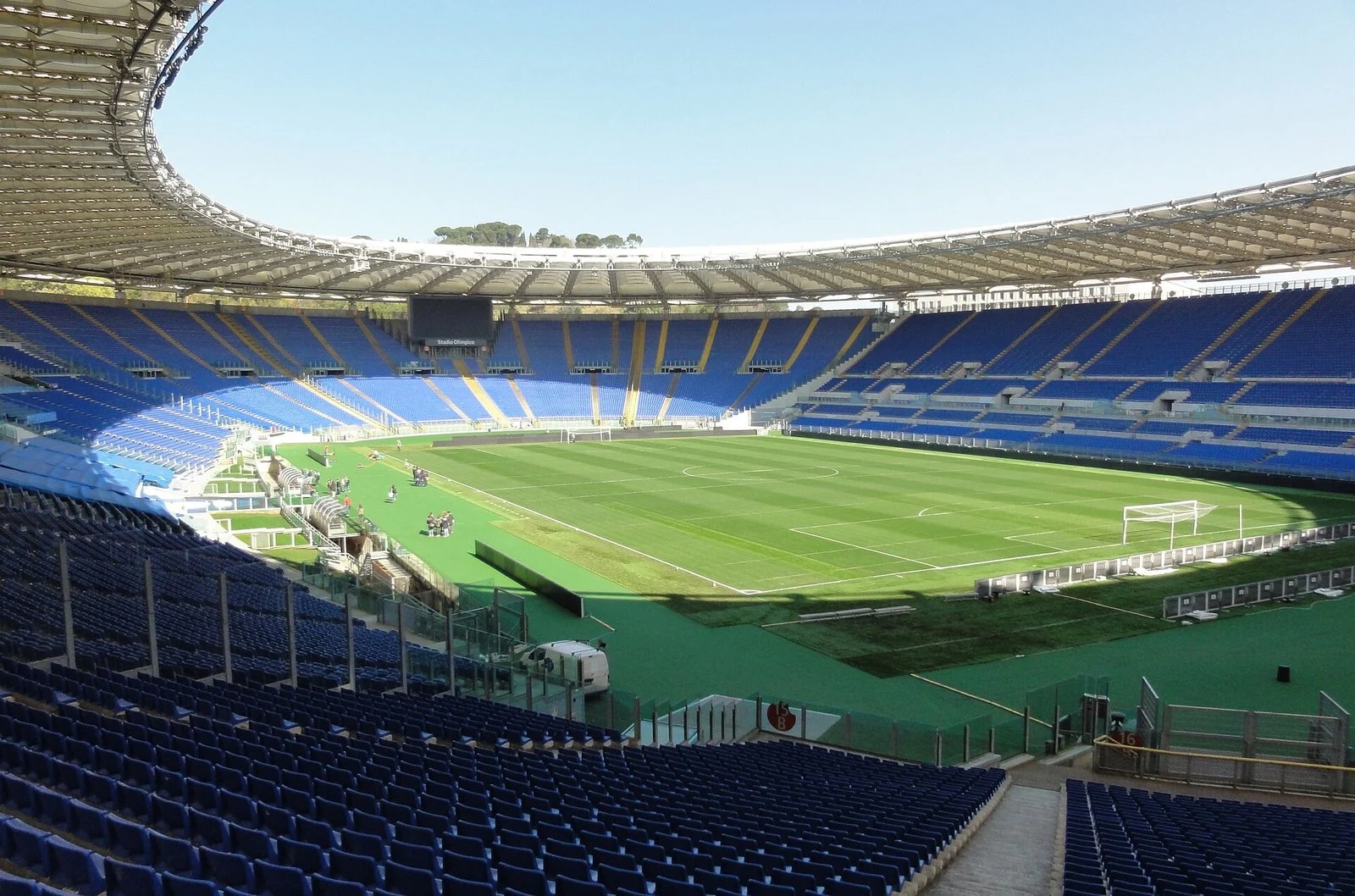
Oasis play at Stadio Olimpico in Rome in July 2027 and there are three dates, not two. The band's official calendar lists July 26, 29 and 30, 2027: the third date, the 26th, came after the others and caught plenty of people off guard who had already booked trains and hotels around the weekend. The source check is dated September 25, 2026.
Rome is the only Italian stop on the tour. There are no concerts in Milan, Bologna or Naples: anyone who wants to see the Gallagher brothers in Italy has to come to the Foro Italico, in the basin between Monte Mario and the Tiber where the stadium has stood for 70 years. These are three evenings that will bring more than 200,000 people to the city in five days, in the middle of July, with the city already full of tourists.
This page puts together what appears in the official sources as of the date given above: dates, sales system, published prices, how to get to the stadium without getting stuck, how an evening at the Olimpico works and what to expect from hotels on those nights. Where a piece of data hasn't been published, this page says it hasn't been, instead of an invented number.
The confirmed dates at Stadio Olimpico
The band's official site lists three concerts for Rome at Stadio Olimpico: Monday, July 26, Thursday, July 29 and Friday, July 30, 2027. The first two announced were the 29th and the 30th, communicated with the full tour calendar in mid-September 2026. July 26 was added on September 23, 2026, together with other additions for Munich and Knebworth.
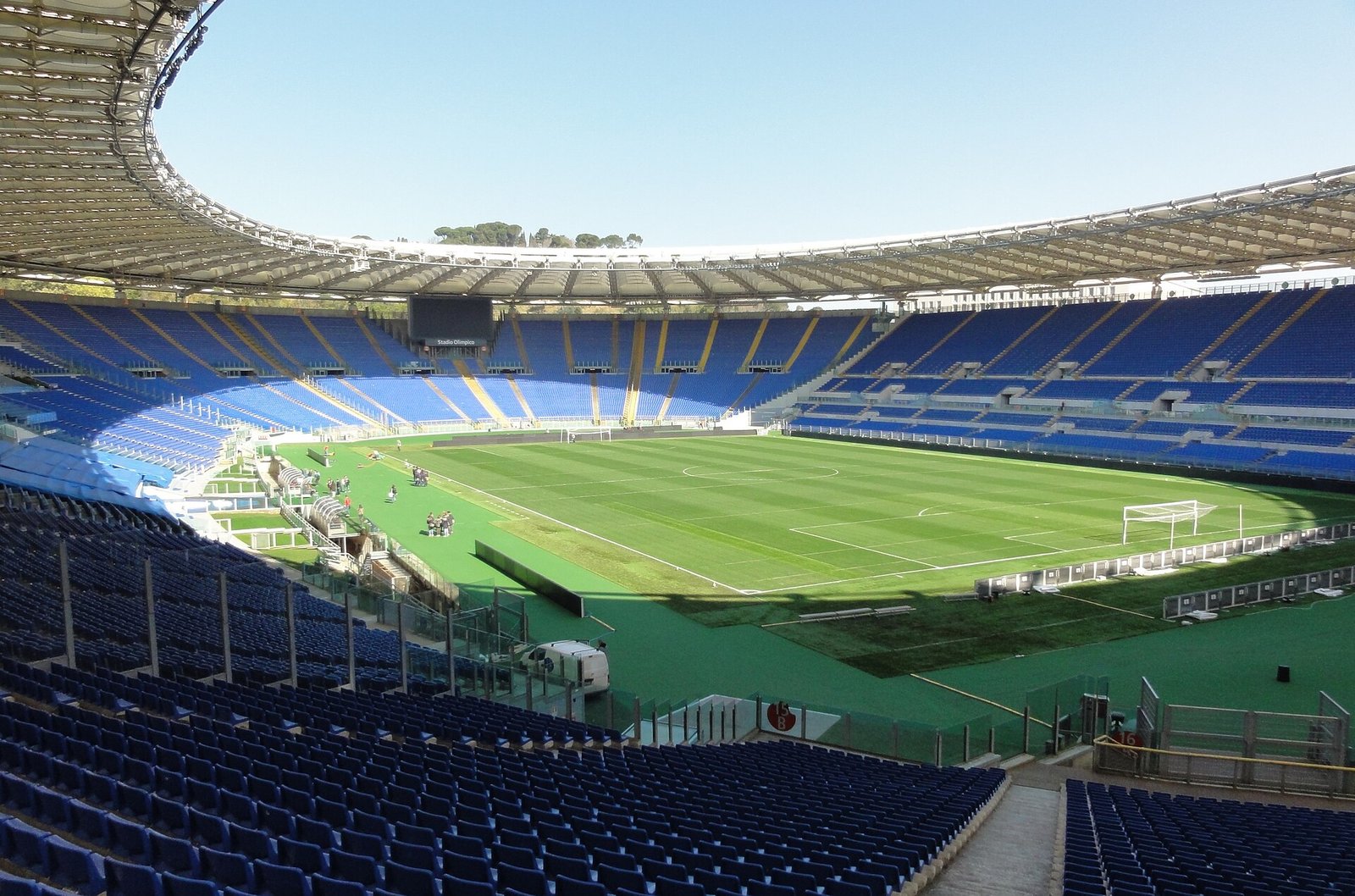
The gap between the 26th and the 29th is a logistical choice, not a whim. Three consecutive evenings at the same stadium in July, with the turf below and the stage structure above, are hard to sustain: the two-day jump serves to dismantle less and let the venue breathe. For those coming from out of town, however, it means the complete package of the three dates costs five nights in the city.
Anyone reading different dates elsewhere isn't reading an up-to-date source. In the first days of September 2026 several Italian newspapers had reported July 24 and 25 as likely, before the official announcement: those figures were superseded by the calendar published by the band. The dates page of the official site remains the only place where the calendar can be checked without intermediaries.
The 2027 tour reaches Rome after Glasgow, Manchester, Munich, Barcelona, Amsterdam and Paris, and after Rome it goes to the United States before closing in Ireland and England in September. Rome is therefore the last continental stop before the jump overseas, which makes a change of dates unlikely: the arrangements before and after are already fixed.
The context: the reunion, the 2025 tour, the silence of 2026
The Oasis reunion was announced on August 27, 2024, after 15 years of separation between Liam and Noel Gallagher. The announcement produced a rush for tickets that was debated across half of Europe, with virtual queues of millions of people and with dynamic pricing coming under review by the British consumer protection authorities. That precedent explains many of the rules adopted for 2027.
The Live ’25 tour ran between July 4 and November 23, 2025, with 36 concerts across the United Kingdom, Ireland, North America, Mexico, South Korea, Japan, Australia and South America. Italy was outside the calendar, and this absence fueled rumors throughout 2025 about a second European leg. The declared attendance figures exceed 2 million spectators overall.
2026 was a year without concerts. Over the course of the year Liam Gallagher repeatedly denied the possibility of dates in 2026, leaving open instead that of a return in 2027. On the question of a new record the public position has been negative: no new album, so as not to expose themselves to comparison with the catalog of the 1990s. The sources on this point report statements, not official announcements from the band.
The announcement of the 2027 tour came on September 14, 2026 with the full calendar. In Rome the communication also went through a drone show over the Foro Italico, which drew the band's logo in the sky: a promotional stunt that went around social media even before the dates came out. The support act announced for the Roman evenings is Richard Ashcroft.
How to buy tickets
For the Roman dates no general public sale in the classic sense was planned. Access to purchase went through a mandatory registration on the band's site, closed in September 2026, with the indication of up to three preferred cities. The organizers then assigned a personal code to some of the registered people, sent by email between September 24 and 27, 2026.
How the code works
The code is tied to the email address used for registration, is not transferable and is valid only for the assigned city. Whoever receives it enters a preset purchase window and can buy at most four tickets. The official communication was explicit on a point that many misread: the code gives the chance to try to buy, it doesn't guarantee there will still be tickets when your turn comes.
The sales windows for Rome were set between September 25 and 27, 2026, in time slots spread through the day so as not to crash the system. The mechanism follows the buyer verification programs already used elsewhere: it serves to take ground away from automated purchases, not to create tickets that don't exist. The gap between demand and availability remains what it is.
The official reseller
The authorized channel for the Roman concerts is Ticketmaster Italia. The artist's page on the reseller's site is the place to check remaining availability, any reopenings and the purchase conditions: Oasis on Ticketmaster Italia. Any other platform offering tickets for these three dates should be viewed with suspicion, even when the site looks serious and appears at the top of search engines.
In Italy, admission tickets for events with a capacity above 5,000 people are named by law, and resale at an inflated price by unauthorized parties is prohibited. This means two practical things: there is a name on the ticket, and that name must match an ID at the check. A change of name, when allowed, is done only through the official circuit.
The published prices
The price ranges for Rome were made public, fees included. Seats start from about €92 and go up to about €277 depending on the sector. Standing places on the floor fall on two levels, around €221 and €277. Packages with additional services start from about €437 and go above €650.
These numbers apply to the official sale in the assigned windows and say nothing about what you find afterward. On the secondary market the figures have no cap and no guarantee: a ticket bought there can be canceled at the check, and in that case the evening ends outside the gates. No resale price is given here, because there is no verifiable price list.
For seats reserved for people with disabilities a separate procedure was indicated, with a request by email to the organization and presentation of the certification. Companions also need an admission ticket. Anyone in this situation should write early, because the equipped seats at the Olimpico are limited in number and for three consecutive evenings they sell out quickly.
A curiosity about Oasis in Rome 2027
The curiosity is that Oasis had never played in an Italian stadium before this tour. In the band's golden period, between 1995 and 2009, Italy was territory for arenas and festivals: Milan, Bologna, a few summer dates, never the 70,000 seats of a venue like the Olimpico. The jump in scale comes 30 years after the release of the record that made them huge.
Then there's the detail of the day of the week. July 26, 2027 falls on a Monday, which for a stadium concert in Italy is an unusual choice: headline dates normally concentrate between Thursday and Saturday. Anyone aiming for that evening finds on average less competition for hotels and trains than for the 29 and 30 weekend.
Third curiosity, less known: Stadio Olimpico for a concert isn't the same venue as for a match. The declared capacity for soccer exceeds 70,000 seats, but with the stage set up on one curve a part of the seats disappears behind the structure and isn't put on sale, while the field becomes a floor for the standing audience. The final count changes by several thousand.
Stadio Olimpico as a place
The Stadio Olimpico was inaugurated on May 17, 1953 to a design by Annibale Vitellozzi, inside the sports complex that the regime had begun building in the 1930s. It hosted the Olympic Games of 1960, was almost entirely rebuilt for the 1990 World Cup with the Teflon and fiberglass roof you see today, and touched up in 2008.
The current approved capacity is about 70,600 spectators, second in Italy only to that of San Siro. The venue has 33 access gates distributed along the perimeter, and this number is the reason why the screening machine, when it works, clears tens of thousands of people in an hour and a half. When it doesn't work, the bottleneck forms on the bridges, not at the turnstiles.
The sectors and how to read them
The Olimpico sectors are five names that anyone in Rome knows by heart. Tribuna Monte Mario is the west side, the covered one and the highest in price, with the press and the television positions. Tribuna Tevere is the east side, opposite. Distinti are the two corners between the stands and the curves. Curva Nord and Curva Sud close the ends.
For a concert the geography changes. The stage is normally set up on one of the two curves, which as a result isn't sold or is sold only in part. The field is turned into a floor with one or two price levels, the one near the barriers and the one behind. The side stands remain the most stable in terms of view, even if far away, and the Distinti behind the stage disappear.
How to read a ticket
On the admission ticket there are five pieces of information that really matter: the name of the holder, the sector, the gate or entrance number, the row number and the seat number. The one to look for first is the gate, because that's where you enter: walking around the stadium looking for the right entrance, in the middle of the crowd, is half an hour lost that nobody gives back.
Floor tickets have no row or seat, but they still have an assigned gate. Whoever enters through the wrong gate is sent back by the stewards, and the detour can be long because the outer perimeter is fenced one-way on evenings of heavy attendance. The photo of the ticket on the phone should be taken before leaving the house, with a charged battery.
Something nobody tells you about Oasis in Rome 2027
What nobody writes is that the real problem of an evening at the Olimpico isn't getting in: it's getting out. At the end of the concert, shortly after midnight, 50,000 or 60,000 people pour simultaneously onto two pedestrian bridges and a handful of stops. The complete outflow takes between 40 minutes and an hour and a half, and in July it's done standing, in the heat, with no shade.
The second thing that goes unsaid concerns noise. The Foro Italico is surrounded by inhabited buildings, and the noise limits imposed by the City translate into a rigid closing time. Concerts at the Olimpico end by midnight, period. Anyone who arrives late thinking the band will play until two anyway misses parts of the setlist that don't come back.
Third thing, the most concrete: in that area, after the concert, nothing is open. The Foro Italico is a sports complex, not a neighborhood of venues. The only options on foot are Milvian Bridge to the north, where something stays open late, and Piazza Mancini across the river, which however is a bus terminus, not a gathering square.
Fourth thing: bottles. At the entrance caps and rigid containers are taken away, and inside water is bought at the stands with long lines. On a Roman July evening, with the floor reaching 35 degrees at sunset, dehydration is the number one reason for rescue interventions during summer concerts. Drinking beforehand, a lot, is more useful than any advice on clothing.
How you really get there
Stadio Olimpico is one of the few big European venues without a metro stop of its own. This is the first thing to know, because it changes the whole planning of the evening. The existing lines pass at distances between one and three kilometers, and the last stretch is done on foot or by road. Anyone who knows Rome takes it for granted, anyone arriving from outside almost never.
Metro A and tram 2, the most reliable route
The combination that works best is Metro Line A to Flaminio, then tram 2 toward Piazza Mancini. The tram takes about 15 minutes and the terminus is 10 minutes on foot from the stadium, crossing the Ponte Duca d’Aosta. On event evenings tram 2 runs full and the times stretch: between the metro and the turnstiles it's best to allow an hour.
The advantage of this route is that Flaminio is a central station, served by the whole of Line A and facing Piazza del Popolo. The disadvantage is that on the way back tram 2 becomes the bottleneck: 20,000 people going down the same avenue toward the same terminus. Anyone with legs and the will can walk down along the Tiber to the MAXXI and pick up the metro at Flaminio on foot.
Metro A at Ottaviano or Lepanto and then a bus
From Ottaviano, on Line A, bus 32 leaves and goes up Viale Angelico to Piazzale Maresciallo Giardino, at the foot of the Foro Italico, near Piazzale della Farnesina. It's the most direct route between the Vatican area and the stadium and serves well anyone sleeping in Prati. On concert evenings the line clogs: anyone getting off at Lepanto has the same chances with a bit more walking.
From Termini station bus 910 reaches the area without changes, leaving from Piazza Indipendenza. It's convenient on paper and slow in reality, because it crosses half the city on the surface at a time when Roman July traffic is unforgiving. It's fine for going well ahead of time, much less for coming back. The other lines serving the Foro Italico are 69, 280, 446 and 910.
Anyone with time and comfortable shoes can walk from Ottaviano in a bit under half an hour, two and a half kilometers along Viale Angelico, on the flat. In July at 19:00 the avenue is shaded on one side and the walk is less bad than it sounds. On the way back it's the route I recommend to anyone who can't stand the crush: you get out of the flow in five minutes.
The boosted service on event evenings
For big events at the Olimpico the public transport company has applied a fixed scheme for years: metros extended until 1:30 at night and additional runs on the surface lines serving the Foro Italico, generally 69, 280, 446 and 910. The measure must be confirmed evening by evening on the city mobility channels, because it isn't automatic.
There is no, and it's worth saying, shuttle dedicated to the concert in the sense of a free service organized by the promoter. There are commercial coaches sold separately by private operators that leave from other Italian cities, and those are something else. What the City arranges is the boosting of the ordinary lines, with the staging parking lots relocated toward Piazzale Clodio and Viale XVII Olimpiade.
By car: why it's better to forget it
Arriving by car at Stadio Olimpico for a concert is the choice that generates the most cursing in Rome. Viale dei Gladiatori and the roads inside the Foro Italico are closed hours before, the available parking spaces are a few hundred against tens of thousands of spectators, and the permitted parking areas are as far from the stadium as a metro stop. The gain compared to public transport is zero.
Anyone who really has to use the car should leave the vehicle in a park-and-ride on Line A, for example Anagnina or Cornelia, and do the rest by metro. The mobility plan for events at the Olimpico is published every season by the City and provides for extended parking bans with forced removal across the whole quadrant: the car left wherever on the night of the concert is gone the night after.
Taxis and chauffeured cars work for going and are an illusion for coming back. At a quarter past midnight, with 60,000 people looking for a ride in the same quadrant closed to traffic, the wait easily exceeds an hour and the dynamic fares of the apps multiply. The complete picture of Roman transport is in our guide on how to get around Rome.
My advice for visiting Oasis in Rome 2027
The advice is to treat the evening as a whole day, not as two hours of concert. Arrive in the area in the late afternoon, around 17:00, when the gates open, and use the time before opening to see the Foro Italico calmly: the Stadio dei Marmi, the Ponte Duca d’Aosta, the Rationalist complex that almost everyone crosses in a hurry without looking at it. It's the only occasion on which you'll be there anyway.
Second tip: eat beforehand, and not in the stadium area. Stop at Milvian Bridge or in the upper part of Prati around 16:00, then head up. Inside the venue there are only stands with sandwiches and drinks at stadium prices, and the lines at the stands during the interval between the opening act and the main concert are 20 minutes long.
Third: choose the sector based on what you want to take home. On the floor you hear the mass and see little, except in the first rows, so you have to get in early and stand for hours. In the Monte Mario or Tevere stands you see the whole, you're seated and you get out better. The two experiences are not comparable and cost almost the same.
Fourth: factor in the next evening. Anyone who comes to Rome for one date only loses the best part of the trip, because the city in July has a very dense evening calendar among arenas, festivals and outdoor concerts. The overview of the summer festivals is in the page on Estate Romana, and the outdoor evenings in Rome at night.
Fifth and last: the phone. With 60,000 people in the same place the cell network saturates, digital tickets don't load and messages don't go out. Download the admission ticket to memory before leaving, set a physical meeting point with whoever is with you and choose it far from the gates, for example at the start of the Ponte Duca d’Aosta or in front of the Stadio dei Marmi.
The schedule of an evening at the Olimpico and the rules
The scheme of a stadium evening in Rome is always the same. The gates open around 17:00, the opening act goes on stage between 19:00 and 20:00, the main act around 21:00 and the evening ends by midnight because of the municipal noise limits. For the Roman dates of Oasis the official indication puts opening at 17:00 and closing at midnight.
The opening time isn't the time to show up, unless you're aiming for the first rows of the floor. In that case the line begins in the morning, with organized lines and fan-run lists that at the Olimpico are an established tradition, and it means 10 or 12 hours standing in the July sun. Those who do it know it, those who don't know it shouldn't.
What you can't bring in
The stadium's usage rules and the police headquarters' requirements for big events prohibit bottles and rigid containers, cans, umbrellas, poles, helmets, blunt objects, fireworks and smoke flares, selfie sticks, professional cameras with interchangeable lenses, bags and backpacks beyond a reduced size. Plastic bottles are in many cases admitted only without the cap, and the rule changes from event to event.
The entry check includes metal detectors and bag inspection, and in Italy for events of this size a random identity check against the name printed on the admission ticket is provided. Carrying a valid ID is not a formality: without it, the named ticket may not be enough. It applies to every member of the group, minors included, each with their own ticket in their name.
There are no declared age limits for these dates, but a stadium concert with a full floor is not a place for small children. For minors the general rules on accompaniment apply and each needs their own admission ticket, even on a lap. Earplugs, for those bringing kids, are the only precaution that really matters: in front of the speakers you exceed 100 decibels.
Another well-known fact, yet rarely mentioned
That Stadio Olimpico has hosted concerts for decades everyone knows. What is rarely mentioned is how contested it is. The Foro Italico is surrounded by homes, and the residents' associations of Villaggio Olimpico and Farnesina have for years contested the number of music events authorized per season, with complaints about noise, waste and traffic. The annual cap on concerts is a matter of constant negotiation among the City, the operators and the committees.
The second aspect rarely mentioned concerns the turf. Every concert involves covering the grass with rigid panels for days, and this, in the hot season, ruins it. The two Roman soccer teams and the rugby federation protest regularly, and the summer window in which concerts are allowed is narrow precisely for this reason: between the end of the leagues and the start of preseason.
Third fact: the Olimpico doesn't belong to those who play there. The venue belongs to the Italian National Olympic Committee through the company that manages public sports facilities, and the teams use it under concession. This ownership structure explains why decisions on concerts go through an institutional table and not through a commercial choice by whoever organizes the evening.
Eating nearby
It has to be said right away: around Stadio Olimpico and the Foro Italico the food offer is extremely thin. The complex is made of sports facilities, federation offices and tree-lined avenues, with no commercial fabric. On event evenings mobile stands with sandwiches and drinks appear along the access routes, and that's it. Anyone counting on dining a step from the stadium before the concert is left empty-handed.
The real options begin a kilometer away. To the north is the Ponte Milvio area, which has bars, pizza-by-the-slice places and evening venues and can be reached on foot in a quarter of an hour from the Farnesina side. To the south you go down onto Viale Angelico and the upper part of Prati, a residential neighborhood with local dining that works for Romans and not for concerts.
The risk, for those arriving from out of town, isn't so much in the stadium area as in the center where you spend the afternoon. The signs of a place to avoid are always the same and are easy to read. The first is the menu with photos of the dishes, in several languages, displayed on the sidewalk: it serves someone who doesn't understand the language and doesn't know what they're ordering.
The second sign is the woman rolling out the pasta sheet in the window or right on the sidewalk. It's a scenic lure built for the photograph, not a clue to the kitchen: the pasta that reaches the plate is almost never that. The third is the person at the entrance who stops passersby and invites them to sit down. A place that has to hook customers in the street has no regulars.
Fourth sign: the kitchen open without a break from morning to late at night. In Rome kitchens close in the afternoon, because the people cooking work two services and prep in between. Whoever serves at any hour is reheating. Fifth sign, the most expensive: in front of famous monuments the price lists adapt to the customer, with items with no price, inflated cover charges and different prices between the inside counter and the outside tables.
Then there are the chains with a repeated sign that in the center of Rome have multiplied identical places a step from one another. I don't name them, and there's no need: you recognize them by the fact that the decor and the menu are identical at five different addresses. They work as a tourist attraction and as reassurance, and Romans don't go. Without snobbery: they're something else compared to a trattoria.
The criterion that always works is just one and requires no apps or reviews. Look at who is seated at the tables and in what language they order. If at 20:00 the place is full of people speaking Italian and ordering without looking at the menu, you're in the right place. If it's full at 18:30 of people with backpacks, you're in a place built for you.
To get your bearings without wandering, Daniele keeps a list of Roman addresses checked one by one, updated over time and available here: the addresses where to eat in Rome. The complete reasoning on traps and how to choose places is in the page where to eat in Rome, which applies to the whole city.
Last practical note for the three July evenings. Roman kitchens at concert hours are a problem: if the gate opens at 17:00 and you want to be inside early, dinner is at 16:00 in the afternoon, when almost nobody serves in Italy. The solution is a slice of pizza or a supplì before heading up, and the real dinner the next day.
The right photo to take at Oasis in Rome 2027
The photograph worth taking isn't made inside the stadium. Inside, with a phone, you get a distant stage and a blur of lights that looks like anyone else's. The photograph to take home is made outside, on the Ponte Duca d’Aosta, looking toward the stadium with the river below and the flow of people going up: from there you grasp the scale of the evening.
The second spot is the Stadio dei Marmi, 60 statues of athletes in Carrara marble arranged in a ring, a step from the Olimpico. At July sunset the light hits them from the side and the stone turns orange. It's a public place, walkable, and in the hours before the concert it fills with people waiting: a good backdrop, with Monte Mario behind.
Inside the venue, if you really want to try, the rule is one: turn the phone toward the audience, not toward the stage. A whole curve with the lights on and 60,000 people standing tells the evening better than any digital zoom. Cameras with interchangeable lenses don't get in, so the question solves itself.
Where to stay and the question of prices
Roman hotel rates for the concert period have already gone up in the months following the announcement. The September 2026 surveys showed standard rooms near the stadium between €120 and €200 a night, with peaks above €400 in some properties, against an average around €100 in the preceding week of the same July. The gap is documented by the comparison sites.
A more curious phenomenon has also occurred: properties showing no availability precisely on the nights between July 28 and 31, 2027, while showing free rooms for the rest of the year and for other high-season periods. The most reasonable reading is revenue management, with inventory held back awaiting being put back on sale at higher rates, not a real sellout.
The practical consequence is that it's best not to search within the stadium's radius. The Foro Italico area has no real accommodation offer and what little there is applies event rates. With Metro Line A and tram 2 the served quadrant is wide: Prati, Piazza di Spagna area and the whole line toward San Giovanni remain convenient.
Groups traveling together find better value outside the historic center, for example toward Testaccio or Trastevere, accepting one more change of transport. The zone-by-zone reasoning, with real connection times and the trade-offs of each neighborhood, is in the page where to stay in Rome, which is worth reading before you book.
One last warning about arrival transport. Anyone landing on the evening of the concert itself is taking a big risk: from Fiumicino to the center it takes between 40 minutes and an hour and a half depending on the mode and the time, and in July flight delays are the norm. The options from the airports are summed up in the page on Rome's airports. Arriving the day before costs less stress.
What else to do nearby in the hours before
The quadrant between the Foro Italico and Flaminio is one of the densest in things to see outside the classic tourist circuit. 20 minutes on foot to the south are the MAXXI by Zaha Hadid and the Auditorium Parco della Musica by Renzo Piano, with its archaeological collection and the Museo Aristaios.
Going up instead toward the west you reach Monte Mario, which is the highest hill in Rome. At the top are the Monte Mario Nature Reserve and the Astronomical Observatory, with the terrace from which you see the whole city. The climb is steep and in July it should be done early in the morning or toward evening, never in the afternoon.
To the south, along the river, you walk down in half an hour to Piazza del Popolo and the Flaminian Obelisk, or you cut through Villa Borghese, which in July is the only real shade in the quadrant and hosts evening programs such as the Teatro Ettore Scola.
The other big stadium dates in 2026 and 2027
2027 at the Olimpico is a packed season. Besides Oasis, the evenings of Vasco Rossi in residence in June and of Laura Pausini have been announced, and on the younger Italian front the stadium hosts Olly, the Pinguini Tattici Nucleari and Achille Lauro. The concentration of dates in a few weeks is one of the reasons for the tensions with the quadrant's residents described above, and it makes the Foro Italico the music construction site of the Roman summer.
Anyone looking for music in Rome in a less gigantic format has alternatives in the same period. The Cavea of the Auditorium hosts the Roma Summer Fest, the Baths of Caracalla the opera festival and the Jazz & Image series, and the riverside the Lungo il Tevere series.
Some important events that happened here in history
Stadio Olimpico was inaugurated on May 17, 1953 with a double-header day: the arrival of a stage of the Giro d'Italia and a match between Italy and Hungary. Seven years later it hosted the ceremonies and the track and field of the 1960 Olympic Games, the Games that changed Rome's image in the world and that ended with the marathon of Abebe Bikila, run barefoot on the Appian Way.
On July 8, 1990 the field hosted the World Cup final between West Germany and Argentina, in a structure just rebuilt for the occasion. The stadium has also hosted four finals of the top European club competition, in 1977, 1984, 1996 and 2009: the first two when it was still called the European Cup, the other two in the Champions League era.
Since 2012 the stadium has been the home of the Italian national rugby team for the Six Nations, with an audience different from soccer's and with fans of the two teams seated mixed together. In 2021 the Olimpico hosted the opening match of the European Football Championship, with reduced capacity because of health restrictions still in force.
On the music side the history is as long as the sports one. From the 1980s on the Olimpico has hosted the concerts remembered by name in Rome: the big international dates of the 1990s and 2000s and, in recent years, the multiple residencies of Italian artists who fill the stadium for three or four nights in a row. The model of consecutive dates was born here before elsewhere in Italy.
The Foro Italico around the stadium has a history of its own, a more uncomfortable one. Born in the 1930s as Foro Mussolini to a design by Enrico Del Debbio and then Luigi Moretti, it preserves the monolithic obelisk with its original inscription, the mosaics of the square and the overall layout of regime architecture. The debate on how to treat these signs is open and every so often returns to the newspapers.
Who has passed through Oasis in Rome 2027
The name announced next to Oasis for the Roman evenings is Richard Ashcroft, formerly the voice of The Verve, who opens the European dates of the tour. It's a choice of continuity with 2025, when Ashcroft accompanied the band on the first leg of the reunion together with Cast. The opening set list hadn't been made public at the time of the source check.
The Oasis lineup for the 2027 tour doesn't match any of the band's historic lineups. Next to Liam and Noel Gallagher are musicians who have already played with them in the group's latest incarnations and in the two brothers' solo careers. The band has never presented this return as a reconstitution of the original 1994 lineup.
On the Olimpico stage, over the years, practically everything that fills a stadium has passed. English-language international artists have played there since the 1980s, and the list of Italians who have done multiple dates here includes the names that anyone in Rome associates with the stadium. The series of concerts announced for 2027 adds four or five new names to the list.
On the field, instead, have passed the protagonists of two Olympics, of a World Cup final, of four European Cup finals and of 15 editions of the Six Nations. It's the only Italian venue that has hosted Olympic track and field, top-level international soccer and top-tier rugby, and this layering is the reason why in Rome it's simply called the stadium.
Frequently asked questions
How many dates do Oasis play in Rome in 2027?
The dates at Stadio Olimpico in Rome are three: July 26, 29 and 30, 2027. The 29th and 30th were announced with the full tour calendar in mid-September 2026, while the July 26 date was added on September 23, 2026. Rome is the only Italian city on the Live ’27 tour.
Are there other Italian dates besides Rome?
No other Italian cities appear in the tour's official calendar. Milan, Bologna, Turin and Naples are outside the 2027 European run, and the three Roman evenings are the only chance in Italy. In Europe the tour touches Glasgow, Manchester, Munich, Barcelona, Amsterdam, Paris and Rome, then moves to the United States and closes between Ireland and England.
How much do tickets cost?
The published ranges for Rome, fees included, go from about €92 to about €277 for seats and fall around €221 and €277 for standing places on the floor. Packages with additional services start from about €437. These figures apply to the official sale and not to the secondary market, which has no price list.
Can you still buy tickets?
The sale took place through personal codes assigned to registered fans, in windows set between September 25 and 27, 2026, with no general public sale. Any remaining availability or reopenings appear on the official reseller's page. Those who didn't receive a code have no guaranteed alternative channels: unauthorized resale platforms expose you to the risk of cancellation.
Is the ticket named?
Yes. In Italy admission tickets for events with a capacity above 5,000 spectators are named by law, and the name on the ticket must match a valid ID. A change of name, when the organizer provides for it, is made only through the official sales circuit, within the deadlines that the circuit itself publishes.
How do you get to Stadio Olimpico without a car?
The most reliable route is Metro Line A to Flaminio and then tram 2 to Piazza Mancini, with 10 minutes on foot over the Ponte Duca d’Aosta. Alternatively, from the Ottaviano stop leaves bus 32, which reaches Piazzale Maresciallo Giardino. From Termini there's line 910, direct but slow. Lines 69, 280 and 446 complete the picture.
What time does the concert start and end?
The official indication for the Roman dates puts the gates opening at around 17:00 and the closing by midnight. The opening act goes on stage in early evening and the main concert around 21:00. The closing time depends on the municipal noise limits and is not exceeded: those who arrive late miss part of the setlist.
What can't you bring in?
Left outside are bottles and rigid containers, cans, umbrellas, poles, helmets, smoke flares, selfie sticks, cameras with interchangeable lenses, backpacks and bags beyond a reduced size. Plastic bottles, when admitted, go in without the cap. ID should always be carried, because the check requires it together with the named ticket.
Is it worth booking the hotel now?
Roman rates for those nights rose right after the announcement and several properties in the area already show no availability. Searching near the stadium makes little sense, because the Foro Italico has no real accommodation offer. It's best to widen the radius along Metro Line A and along tram 2, accepting 20 more minutes of travel.
Who wrote this page
The editorial team behind this page is that of Tour Leader Pro, a Rome-based office that designs and coordinates visits, itineraries and cultural events in Rome and Lazio. Dates, prices and rules given here come from the official sources indicated in the text as of the check date: since it's an event announced recently and already changed once, recheck before buying trains and hotels.
Anyone who has to build a Roman stay around a stadium date, making work opening hours that change in summer, travel on transport that behaves differently on event evenings, distances that look short on the map and aren't under the July sun, and groups to keep together in the middle of a crowd, will find planning tools on Tour Leader Pro.
For the overall picture on rail connections, rentals, airports and destinations in Lazio outside central Rome, from the Castelli to the lakes and on to the coast, a useful resource is Italy Planner.