Non si sa come by Pirandello at Teatro Quirino, November 10 to 15, 2026
https://www.estateromana.com/en/rome/trip-planner/non-si-sa-come-by-pirandello-at-teatro-quirino-november-10-to-15-2026/
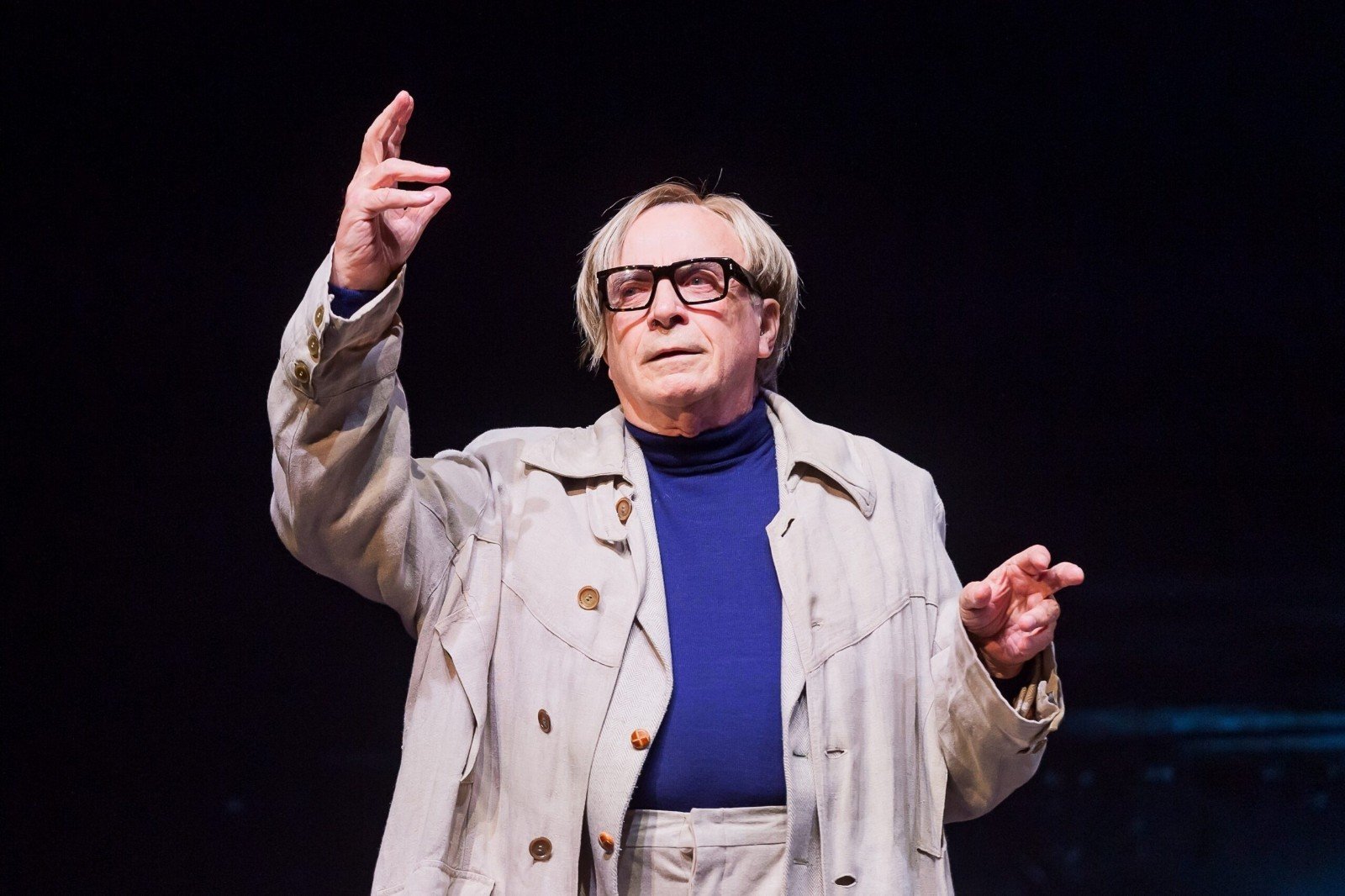 Immagine dalla pagina di Non si sa come sul sito del Teatro Quirino.
Non si sa come, the last completed play by Luigi Pirandello, is on at Teatro Quirino Vittorio Gassman, at Via delle Vergini 7, in the Trevi district, from November 10 to 15, 2026, starring Franco Branciaroli and directed by Paolo Valerio. The official calendar lists six performances: Tuesday, November 10 and Wednesday, November 11 at 21:00, Thursday the 12th at 17:00, Friday the 13th at 21:00, Saturday, November 14 and Sunday, November 15 at 17:00. The cast also includes Alessandro Albertin, Valentina Violo, Ester Galazzi and Emanuele Fortunati, with sets and costumes by Marta Crisolini Malatesta, lighting by Gigi Saccomandi, stage movement by Monica Codena and video by Alessandro Papa. The show is presented by Teatro Stabile del Friuli Venezia Giulia, Teatro de gli Incamminati, Centro Teatrale Bresciano and Teatro Biondo of Palermo. The running time is not given. Quirino's single ticket prices for the 2026/2027 season, booking fee included, are 32 euros in the orchestra, 26 in the first balcony, 21 in the second balcony and 15 in the gallery from Tuesday to Thursday, and 36, 30, 25 and 19 euros from Friday to Sunday, and the discounts for under-26s and over-65s apply only on weekdays. Tickets are sold at the theater's box office, on the corner of Via Minghetti, by phone at 06 6794585 (Monday to Friday, 10:00-13:00 and 14:00-18:00) and online through the channel indicated on the website teatroquirino.it. For public transport the ATAC journey planner is the best option, and the district is a limited traffic zone.
Language: opera sung in its original language; no English surtitles are announced, so check with the theater.
Non si sa come: the drama of innocent crimes
At the center of the play is Count Romeo Daddi, a serious and respectable man, who loves his wife Bice and is a close friend of the naval officer Giorgio Vanzi. And yet, almost without realizing it, he betrays them both with Ginevra, Giorgio's wife. It isn't falling in love: it's an instinctive act, committed, precisely, non si sa come, nobody knows how. The count can no longer free himself from this discovery about himself.
The Quirino presentation starts from a line in the second act, in which Romeo states that the things we know no longer mean anything. It's the line that sums up the play's unsettling effect: a world of irreproachable people who discover inside themselves an irrational side, populated by what the listing calls innocent crimes, unconfessed or unconfessable actions in which instinct overcomes self-control and ethics.
The childhood memory
During a confrontation with the other characters, Romeo recalls an event from his childhood: in a pointless fight with a boy his age he hit him with a stone, killing him, and lived the episode as a repressed nightmare. The present betrayal reveals to him that the impulse never went away.
The ending
Convinced he must answer for the consequences of his instinctive self, the count decides to have himself punished and pushes his friend Giorgio to kill him. Giorgio too acts, in the end, without really knowing how. The circle of innocent crimes closes with an act that neither of them had truly chosen.
The characters
The main characters are Count Romeo Daddi, his wife Donna Bice, Giorgio Vanzi, his wife Ginevra and Marquis Nicola Respi. The Quirino page doesn't say which character each actor plays, apart from the lead role given to Branciaroli.
The origins of the play
Non si sa come is a three-act play written in 1934. It derives from three Pirandello short stories: Nel gorgo, from 1913, Cinci, from 1932, and La realtà del sogno, from 1914. It's a typical example of Pirandello's method, which takes up and reworks for the stage themes and situations already explored in his fiction.
Written for Moissi
The play had been conceived for Alessandro Moissi, an Austrian actor of Italian-Albanian origin, who however died on March 23, 1935, before it was staged. The death of the performer for whom the text had been imagined changed the fate of the premiere.
The premiere at Teatro Argentina
The first performance was held on December 13, 1935 at Teatro Argentina in Rome, with Ruggero Ruggeri's company. Ruggeri was one of the two great interpreters of Pirandello's work and in 1925 had been among the founders, with Marta Abba, of the Compagnia del Teatro d'Arte di Roma. The page on Teatro Argentina tells the story of the theater that hosted that premiere.
Ruggeri and Marta Abba
Marta Abba was Pirandello's closest collaborator and his muse, leading actress of the Teatro d'Arte company. Ruggeri and Abba were thus two decisive figures in spreading Pirandello's theater: it's significant that the author's last completed play was staged by Ruggeri's company.
The last completed work
Quirino presents Non si sa come as Pirandello's last completed work. The playwright died in Rome on December 10, 1936, a year after the premiere, leaving I giganti della montagna unfinished. Non si sa come is therefore the last work he finished for the stage.
An anniversary and a date to clarify
The Quirino presentation ties the show to an anniversary: 90 years since its publication, in 1935, when the author, according to the listing, received the Nobel Prize. On this point the listing is inaccurate: Pirandello received the Nobel in 1934, for his bold and ingenious revival of dramatic and scenic art, and wrote the play in 1934, and its Italian premiere was in December 1935.
The meaning of the anniversary
Beyond the exact date, the play belongs to the years of Pirandello's international recognition. It's a text written by an already famous author, who returns forcefully to his most radical themes: identity as fiction, the abyss that opens beneath social conventions, responsibility for actions we don't understand.
Pirandello in Rome
Pirandello, born in Agrigento on June 28, 1867, died in Rome. If you want to get to know his places you can visit the Casa Museo Pirandello, checking the opening hours.
Franco Branciaroli
Franco Branciaroli was born in Milan on May 27, 1947. He enrolled in the Piccolo Teatro school in 1968 and debuted there in 1970 in a play by Tankred Dorst directed by Patrice Chéreau. Since then he has become one of the great actors of Italian theater, versatile, as the Quirino presentation puts it, in moving from Shakespearean and Goldonian roles to the moral and psychological torments of a text like this one.
Carmelo Bene and Testori
In the 1970s Branciaroli worked with Carmelo Bene, alternating with him in the roles of Faust and Mephistopheles in Faust Marlowe Burlesque and performing in his Romeo and Juliet of 1976. From the 1980s until the writer's death, in 1993, he had a long partnership with Giovanni Testori, many of whose texts he performed and directed.
Ronconi and the awards
With Luca Ronconi he worked on several productions, including La torre in 1980, Medea in 1996, performed more than 200 times, and La vita è sogno in 1999. He has won several Ubu awards as best actor, for Confiteor in the 1986/87 season, for Testori's Exitu and Verbò and Eliot's Cocktail Party in 1988/89, for La vita è sogno in 1999/2000, and the Premio Flaiano in 2009 for Don Chisciotte.
An actor who also directs
With his company, Teatro de gli Incamminati, Branciaroli has staged and performed many classics: Peer Gynt, Ghosts, Hamlet, Macbeth. More recently he was Pirandello's Enrico IV in 2014 and Shylock in The Merchant of Venice between 2022 and 2024. He has rarely appeared in films, among them Michelangelo Antonioni's Il mistero di Oberwald and Roberto Faenza's I Viceré.
Directed by Paolo Valerio
According to the Quirino presentation, Paolo Valerio chose Non si sa come to continue, through the language of the stage, a line of research into psychology and the human soul that began in 2023 with La coscienza di Zeno, starring Alessandro Haber. The move from Svevo to Pirandello thus stays within the territory of the contradictions of consciousness.
A refined setting
The listing describes a refined setting, in which the characters appear as irreproachable representatives of an upper-class society. It's against this elegant background that Pirandello's analysis brings to light their frighteningly irrational side.
Sets, lighting and video
Sets and costumes are by Marta Crisolini Malatesta, lighting by Gigi Saccomandi, stage movement by Monica Codena. The presence of a video designer, Alessandro Papa, indicates that the show also uses projected images: an element that can help make visible the dimension of memory and nightmare, central to the play.
The show's journey
The show is a co-production of four theaters: Stabile del Friuli Venezia Giulia, Teatro de gli Incamminati, Centro Teatrale Bresciano and Biondo of Palermo. Before Rome it was on stage, among other places, at Teatro Biondo in Palermo from May 9 to 17, 2026, according to the Balarm portal.
The Palermo stop
In Palermo, according to Balarm, the show had eight performances at Teatro Biondo, with times varying between 17:00 and 21:00, and prices from 10 to 27 euros. Moving through several public theaters is the natural consequence of a four-way co-production: each theater hosts the show in its own season.
A well-tested show
Arriving in Rome after months of performances, the show has a well-established rhythm. For the audience it's a guarantee: the company has had time to refine its work on a complex text, in which the balance between the characters is delicate.
The cast
Alongside Branciaroli are Alessandro Albertin, Valentina Violo, Ester Galazzi and Emanuele Fortunati. The roles are not given on the official page: the program will be the source for knowing who plays Giorgio, Bice, Ginevra and Marquis Respi.
How to watch Non si sa come
The play is built in three acts and rests almost entirely on dialogue. There are no spectacular twists: the tension comes from the lead character's gradual confession and the reactions of the other characters, who see the certainties of an orderly world begin to crack.
Listening for the key line
The Quirino presentation points to a line in the second act as the key to the whole text: the one where the count states that the things we know no longer mean anything. It's worth waiting for it and listening carefully, because it marks the point where the play stops being a story of adultery and becomes a reflection on self-knowledge.
Watching the elegance
The direction, according to the listing, places the characters in a refined setting, as irreproachable representatives of the upper class. Looking at Marta Crisolini Malatesta's costumes and set with this in mind helps you catch the intended contrast: the more composed the outside world appears, the sharper the gap with the irrationality that emerges.
The theme of responsibility
The moral heart of the play is a simple and dizzying question: are we responsible for what we do without knowing how? Pirandello gives no comforting answer, and the ending proves it. It's a question the audience carries out of the theater, and it's perhaps the reason the presentation calls the text highly topical and ferocious.
Who the show is for
Non si sa come is a text for those who love Pirandello and want to get to know a work staged less often than Six Characters or Enrico IV. It's also a chance to see one of the great Italian actors on stage, in a role the presentation calls highly topical and ferocious.
For students
For high school and university students it's an example of Pirandello's mature theater, with the themes of identity and the unconscious. The Thursday the 12th performance at 17:00 is the best suited to a school audience, and Quirino offers discounts for schools through the promotion office.
If you don't know Pirandello
If you don't know the author you can go in without worry: the story is clear and the lead character's moral conflict is understandable even without knowing the rest of his work. Reading the plot beforehand helps you follow the dialogue, which is dense and tight.
Tickets and performances
The six performances have different times: evenings at 21:00 on Tuesday, Wednesday and Friday, afternoons at 17:00 on Thursday, Saturday and Sunday. If you prefer the afternoon there's plenty of choice.
The prices
Quirino's price list separates midweek performances, Tuesday to Thursday, from weekend ones. The former cost less: 32 euros in the orchestra versus 36, 15 euros in the gallery versus 19. The discounts for under-26s and over-65s apply only on weekdays and are suspended on weekends and public holidays.
Cards and rules
If you want to see several shows of the season there are open cards for six or eight shows and fixed-date subscriptions. The rules state that tickets and cards, once issued, cannot be exchanged or canceled.
Schools, groups and bonuses
For schools, affiliated organizations and groups Quirino offers discounts to be requested from the promotion office, at 06 6783042 (extensions 2 and 3) or at promozione@teatroquirino.com. The same office handles the use of culture bonuses, accepted for subscriptions and tickets after contacting them. For a class studying Pirandello, the Thursday afternoon performance is the simplest to organize.
Teatro Quirino at a glance
Quirino is one of Rome's historic drama theaters, in the Trevi district, a short walk from the Trevi Fountain. Founded in 1871 at the wish of Prince Maffeo Sciarra, renovated several times, including by Marcello Piacentini, it has borne the name of Vittorio Gassman since 2004. The company that runs it gives a capacity of 850 seats. The page on Teatro Quirino follows its season.
The management
After the long management of the Ente Teatrale Italiano, from 1946 to 2009, and that of Gitiesse Artisti Riuniti, the theater passed to a private company formed by people from the industry, with artistic direction by Guglielmo Ferro and administrative management by Rosario Coppolino.
A curious fact about Teatro Quirino
A few steps from the box office, on the corner of Via Minghetti, hides another project by the same patron and the same architect as the theater. It's Galleria Sciarra, the covered courtyard that Prince Maffeo Barberini Colonna di Sciarra had built between 1885 and 1888 to connect his properties, designed by Giulio De Angelis, the same architect as the Quirino.
The glorification of women
The walls of the gallery are decorated by Giuseppe Cellini, following an iconographic program by the man of letters Giulio Salvatori, on the theme of the glorification of women: figures of female virtues and scenes of middle-class life of the time. The female figures are a tribute to the prince's mother, Carolina Colonna Sciarra, and a legend has it that the man depicted in the scene of the Conversazione galante is Gabriele D'Annunzio. For a show that takes apart the appearances of elegant society, it's a perfect neighbor.
Something nobody tells you about Teatro Quirino
The Quirino has a WhatsApp information service that few people know about. According to the website, the number 337 1021094 is active Monday to Friday from 11:00 to 17:00: you turn it on by sending the message QUIRINO ON and turn it off with QUIRINO OFF. The messages go out as a broadcast, and the number doesn't answer calls or text messages: it's for receiving updates, not for booking.
The app and the school
The theater also has a free official app for iOS and Android, which lets you browse the show pages, read the news and buy tickets, and through which discounts are offered. And it has its own theater school, the Officine Quirino, a sign of activity that goes beyond the season's program.
My tip for visiting Teatro Quirino
My tip is to choose one of the three afternoon performances at 17:00 and arrive an hour early to walk through Galleria Sciarra, which is a private courtyard open to the public during office hours, and so is easier to visit on weekdays. Thursday, November 12 is the ideal date: performance at 17:00, gallery open, midweek prices.
Then the Trevi Fountain
Leaving the theater around 19:00, the Trevi Fountain is a few minutes away: the page on the Trevi Fountain helps you look at it calmly. The page on the Trevi district, what to see suggests a wider itinerary.
Reading the stories
If you want to prepare, reading one of the three short stories the play comes from, Nel gorgo, Cinci or La realtà del sogno, is a way to step into Pirandello's workshop and understand how a narrative idea becomes theater.
Another well-known fact, yet rarely mentioned
Many people guess that the name Quirino recalls the Quirinale. Less often mentioned is that the name, according to the theater's website, ties together Rome's place names and its mythology: the Quirinal Hill and the god Quirinus, one of the city's oldest deities. From the theater, Piazza del Quirinale can be reached on foot.
A theater for the center east of the Corso
The theater's website adds a detail on the reasons for its founding: the Quirino was born to make up for the lack of performance spaces in the central area east of Via del Corso. The first shows were puppets and popular farces, attended by a large and educated audience, and other sources speak of Pulcinella farces and operettas for a middle-class audience. The page on Via del Corso tells the story of the street the theater originally faced.
The right photo to take at Teatro Quirino
For an unusual photo, the best choice is Galleria Sciarra, a short walk from the box office: the painted walls offer an image of Umbertine Rome that few tourists know, because the passage, despite being close to the Trevi Fountain, is little used. The gallery's main door is considered one of the four wonders of Rome.
The theater's sign
On the way out, the canopy over the entrance with the lit sign and the poster of Non si sa come is the simplest image to remember the evening. In the theater, during the show, photography isn't allowed.
Some important events that happened here in history
1871: a theater in a day
The first Quirino, made entirely of wood, is built in a single day, within the property of Prince Sciarra.
1885-1888: Galleria Sciarra
The same prince has De Angelis build the covered gallery connecting his properties, a few steps from the theater.
1898: velvets and stucco
At the end of the renovation work, the theater's interiors are decorated with drapes, velvets and gilded stucco, creating an elegant and intimate atmosphere, and opera and ballet enter the program.
1914: Secession forms
Marcello Piacentini renovates the theater, simplifying its forms in a Secession style, as the Quirino website recalls, and adds a retractable roof.
1946-2009: the Ente Teatrale Italiano
For more than 60 years the theater is run by the ETI, which also sets up its own offices there during Piacentini's second renovation, opened on October 13, 1955.
June 29, 2004: the name of Gassman
The historic name is joined by that of Vittorio Gassman, one of the actors the theater's website lists among the protagonists of its history.
Who has passed through Teatro Quirino
The theater's website mentions, among the artists tied to its history, Ettore Petrolini, Eduardo De Filippo, Vittorio Gassman, Carmelo Bene, Giorgio Strehler, Paolo Stoppa and Luca Ronconi. For a show with Branciaroli it's a significant coincidence: two of the masters he worked with, Carmelo Bene and Luca Ronconi, are on that list.
Pirandello and the Quirino
The play was not born at the Quirino but at Teatro Argentina, where it opened on December 13, 1935 with Ruggero Ruggeri's company. Bringing it to the Quirino 90 years later means bringing it back to the center of Rome, not far from the site of the premiere.
The season
A Midsummer Night's Dream directed by Daniele Salvo comes before Non si sa come in the program, from November 3 to 8: two classics in two weeks, Shakespeare and Pirandello, both built on the border between reason and instinct.
Galleria Sciarra up close
If you follow the tip of walking through Galleria Sciarra before the show you'll find a place full of history and detail.
A courtyard of the palace
The gallery was born as the outermost courtyard of Palazzo Sciarra Colonna di Carbognano, and it connects Piazza dell'Oratorio with Via Marco Minghetti. Giulio De Angelis, its architect, is also known for the building of the La Rinascente department store and for the headquarters of the newspaper Il Popolo Romano.
Newspapers and magazines
The gallery housed the editorial offices of the daily La Tribuna and of the magazine Cronaca Bizantina, a place of cultural life in late 19th-century Rome. The initials of Carolina Colonna Sciarra, the prince's mother to whom the female figures are dedicated, appear on the shields at the entrance.
When to visit it
It's a covered pedestrian passage, a private courtyard open to the public during office hours: that's why it's best to walk through before the afternoon performances on weekdays, like the one on Thursday, November 12.
Before or after the show: between Trevi and the Corso
The Quirino is between Via del Corso and the Trevi Fountain. A few minutes away are Piazza Colonna and Galleria Alberto Sordi, on Via del Corso.
Dinner after 21:00
The 21:00 evening performances on Tuesday, Wednesday and Friday end late: it's best to have dinner before or book ahead in the neighborhood. The afternoon ones, on the other hand, leave the whole evening free.
The Quirinale
Walking up toward the hill you reach Piazza del Quirinale: a short route that ideally closes a day devoted to a theater named after that hill.
Frequently asked questions about Non si sa come at the Quirino
When is Non si sa come on at Teatro Quirino?
From November 10 to 15, 2026. The performances are on Tuesday the 10th and Wednesday the 11th at 21:00, Thursday the 12th at 17:00, Friday the 13th at 21:00, Saturday the 14th and Sunday the 15th at 17:00. The calendar is the one published on the show's official page on the Quirino website. Three performances out of six are in the afternoon, a useful option if you'd rather not get home late.
How much are tickets?
Single ticket prices for the 2026/2027 season, booking fee included, are 32, 26, 21 and 15 euros (orchestra, first balcony, second balcony, gallery) from Tuesday to Thursday, and 36, 30, 25 and 19 euros from Friday to Sunday. The discounts for under-26s and over-65s apply only on weekdays.
What is the play about?
Count Romeo Daddi, a respectable man, betrays his wife and his friend Giorgio Vanzi with Giorgio's wife, Ginevra, on an instinctive impulse. The act brings back the memory of a killing he committed as a boy in a fight. Convinced he must be punished for his instinctive self, he pushes his friend to kill him. It's the drama of innocent crimes.
Who is the lead actor?
Franco Branciaroli, born in Milan in 1947, trained at the Piccolo Teatro school and with a long career alongside Carmelo Bene, Giovanni Testori and Luca Ronconi. He has won several Ubu awards as best actor and the Premio Flaiano in 2009. He had already taken on Pirandello as Enrico IV in 2014.
When was it first performed?
On December 13, 1935 at Teatro Argentina in Rome, with Ruggero Ruggeri's company. The play, written in 1934, had been conceived for the actor Alessandro Moissi, who died in March 1935 before it was staged. Pirandello died a year after the premiere, on December 10, 1936, and Non si sa come is considered his last completed work.
How long is the show?
The running time is not given on the official page and does not appear to be published. If you have timing needs you can ask the box office phone service, at 06 6794585, open Monday to Friday from 10:00 to 13:00 and from 14:00 to 18:00, or write to biglietteria@teatroquirino.com.
Where is the theater and how do you get there?
Teatro Quirino Vittorio Gassman is at Via delle Vergini 7, in the Trevi district, between Via del Corso and the Trevi Fountain, and the box office is on the corner of Via Minghetti. The district is a limited traffic zone: it's best to arrive on foot or by public transport, working out the route with the ATAC journey planner.
Who produces the show?
The show is presented by four theaters: Teatro Stabile del Friuli Venezia Giulia, Teatro de gli Incamminati, Centro Teatrale Bresciano and Teatro Biondo of Palermo. It's directed by Paolo Valerio, who with this text continues a line of work on human psychology that began in 2023 with La coscienza di Zeno starring Alessandro Haber.
The final tip on Non si sa come
Non si sa come is Pirandello at his most restless, the one who doesn't play with theater within theater but digs into the instinct that respectable people prefer to ignore. Giving it to Franco Branciaroli, who has worked through Bene, Testori and Ronconi, means giving it a voice able to carry its torments. My tip is to choose the Thursday the 12th performance at 17:00, to walk through Galleria Sciarra first, where the elegant society of Umbertine Rome portrays itself in frescoes, and to enter the theater ready to watch that same society fall to pieces.
Article written by the editorial team of Tour Leader Pro, contact them for Private/Corporate/V.I.P. Tours and Experiences.
Planning a trip to Rome? The English guides for visiting the city are on ItalyPlanner.com.