Nomadi at Auditorium Parco della Musica, January 29, 2027
https://www.estateromana.com/en/rome/trip-planner/nomadi-at-auditorium-parco-della-musica-january-29-2027/
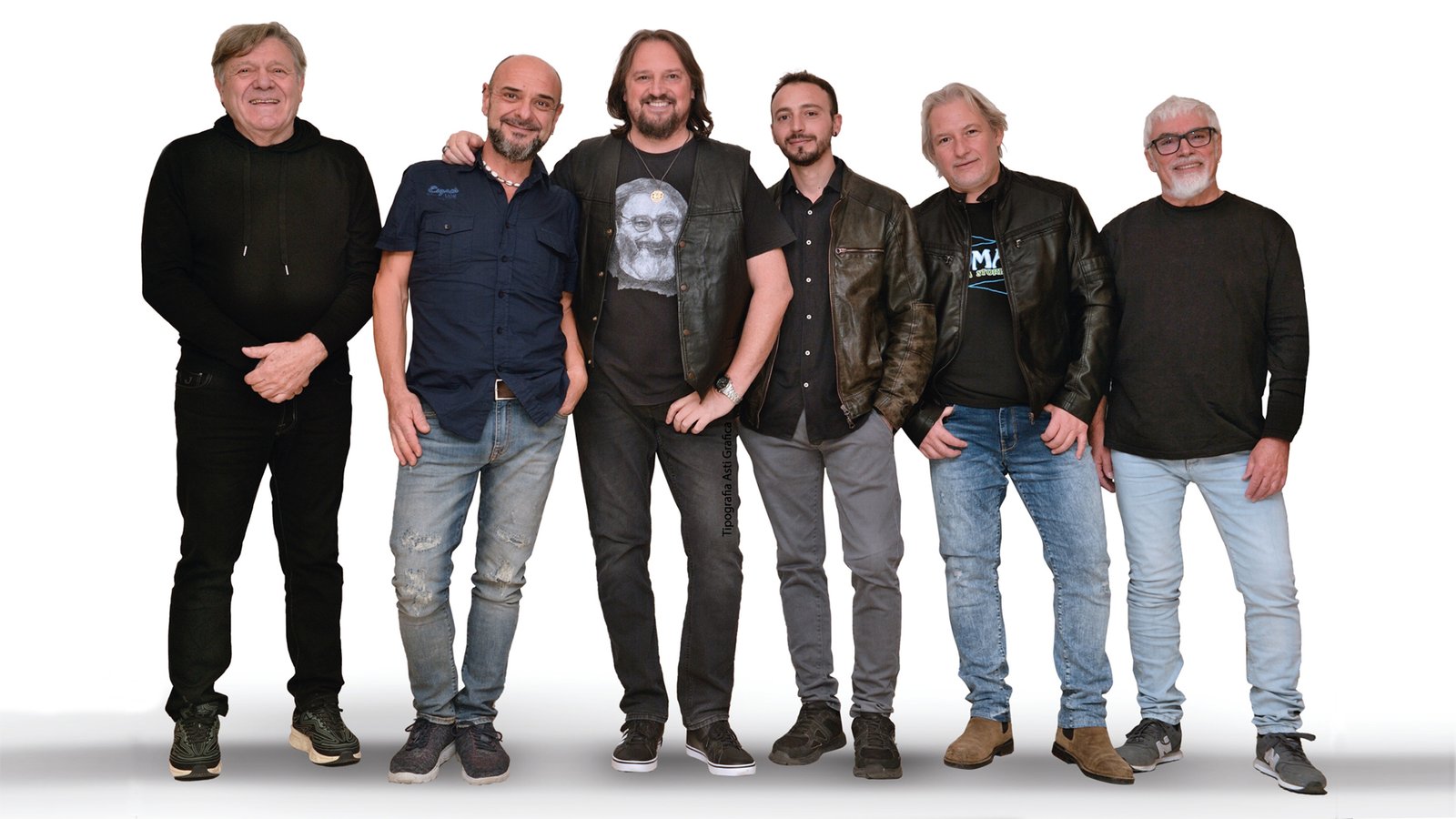
On Friday, January 29, 2027 at 21:00 the Nomadi play live in Sala Sinopoli at Auditorium Parco della Musica Ennio Morricone, at Viale Pietro de Coubertin 30 (00196 Rome). You get there on Metro A to Flaminio and then on tram 2 to the Flaminia/Reni or Apollodoro stops, or on buses 910 from Termini, 53, 982 and 168. According to the official event page tickets start at 36 euros, they are bought on the authorized presale circuit linked from the same page and at the Auditorium box office, open every day from 11:00 to 20:00.
The Nomadi have been playing since 1963. They are the longest-lived Italian group and, according to the Auditorium, in the world only the Rolling Stones precede them. They have changed singers, bassists, drummers, record labels, they lost their historic voice, Augusto Daolio, in 1992, and they have never stopped. In Rome they return to a real concert hall, with seats, on a winter Friday: the right setting to hear songs that have crossed 60 years of Italian history.
The Nomadi at the Auditorium: the evening of January 29
The Nomadi concert at Auditorium Parco della Musica is scheduled for Friday, January 29, 2027 at 21:00 in Sala Sinopoli, in the Pop/Rock series of the Fondazione Musica per Roma, with tickets starting at 36 euros.
A return
The Auditorium presents the date as a return: the Nomadi have already been guests at the Parco della Musica and come back in 2027 too. It is the sign of a relationship built over time with the Roman audience, which over the years has followed the group in theaters, arenas, suburban squares and party festivals.
A hall with seats
The Nomadi are a square-and-ballfield band: most of their summer concerts take place outdoors, in town, in front of a standing audience. In winter the group plays theaters instead, and Sala Sinopoli is a concert hall with seating. The sound is more refined, the songs are heard better, and the audience stands up anyway at the right moments.
A Friday evening
Friday is the most convenient evening for those who work and the most crowded for Roman traffic. With the start at 21:00 there is time to eat beforehand, provided you move early: Flaminio on a Friday evening is slow, and the Auditorium parking is limited.
Nomadi: the story of Italy's longest-lived band
The Nomadi are a musical group founded in Novi di Modena in 1963 by the keyboardist Beppe Carletti and the singer Augusto Daolio, in the thick of the Italian beat movement. The Auditorium counts 52 recordings among studio albums, live albums and compilations, for over 15 million copies sold.
From Monelli to Nomadi
The first nucleus was born in 1963 under the name I Monelli, around Beppe Carletti. With the arrival of an older saxophonist the group took the name of an Ischia band that had just stopped playing: I Nomadi. Shortly after, the guitarist Franco Midili introduced Carletti to a singer from Novellara, Augusto Daolio, who was taken on after a kind of audition on the stage of a dance night. In the summer of 1963 the band was hired by the Frankfurt Bar in Riccione.
The name, a bit by chance
The Auditorium tells it like this: the name was chosen a bit by chance, but it marked the group's spirit. The Nomadi's tours have always reached small towns and big city stages without distinction, and the group is almost always on the road: on average 130 concerts a year, with peaks, in the 1980s, of over 200.
Guccini and censorship
After two years of dance halls, the first single came out in 1965. Success came in 1966 with Come potete giudicar, at the Cantagiro. The producer Dodo Veroli then entrusted the group to a young, still-unknown songwriter, Francesco Guccini, who wrote for them Noi non ci saremo, Dio è morto, Per fare un uomo, Canzone per un'amica. The first album, Per quando noi non ci saremo, came out in 1967. Dio è morto was censored by Rai and broadcast instead by Vatican Radio, which grasped its meaning. In those years Mogol offered the Nomadi a song by a young Lucio Battisti, on condition they leave Guccini: the group refused.
The 1970s
In 1971 the Nomadi took part in the Sanremo Festival for the first time, with Mal. In 1972 Io vagabondo (che non sono altro) reached the final at Un disco per l'estate and sold a million copies: it would become the group's anthem. Then came Un giorno insieme, Crescerai, Tutto a posto, six consecutive finals at Un disco per l'estate, and a trip to the United States with six concerts among Boston, Philadelphia, New York and Albany. In 1975 Gordon came out, the first album of all-original material, in 1979 the Album concerto recorded live with Guccini.
Self-production
The 1980s are difficult: a road accident that stops the group for six months in 1982, the end of contracts with the major labels, self-produced records such as Ci penserà poi il computer and Quando viene sera. In 1989 the fans' national gathering, the Raduno nazionale, was born in Casalromano, and in the same year an internal quarrel led, in 1990, to the departure of Chris Dennis and Paolo Lancellotti.
The death of Augusto Daolio
In 1990 Daniele Campani joined on drums and Cico Falzone on guitars, Solo Nomadi and Gente come noi came out, with Gli aironi neri. 1992 is the hardest year: on May 14 the bassist Dante Pergreffi dies in a road accident, on August 8 at Masone the last concert with Augusto Daolio takes place, and he dies on October 7 at 45. The live album Ma che film la vita, with the singer's last performances, sold 104,000 copies in 15 days and earned four platinum records.
The second life
Beppe Carletti, the only founder left, decides to carry on. In 1993 two singers joined, Danilo Sacco and Francesco Gualerzi, and the season of solidarity trips began: Chile with Inti-Illimani, Cuba, Tibet at the invitation of the Dalai Lama, Chiapas with Jovanotti, Albania, Cambodia. In 2002 Amore che prendi amore che dai is the group's first album to reach number one on the chart. In 2006, with Dove si va, the Nomadi came second at the Sanremo Festival and won the Premio della sala stampa radio e tv.
The third life
In 2012 Danilo Sacco left and Cristiano Turato arrived, in 2017 the voice passed to Yuri Cilloni. The group self-produced, then signed with BMG: Terzo tempo, recorded in London, Nomadi dentro with a song written by Guccini, Milleanni, Solo esseri umani in 2021 and Cartoline da qui in 2023, for the 60th anniversary, with the title song written by Luciano Ligabue. On June 3, 2023 in Novellara the 60th-anniversary party, with Danilo Sacco back on stage after 13 years.
The Nomadi lineup today
The current Nomadi lineup includes Beppe Carletti on keyboards and accordion, Cico Falzone on guitars, Massimo Vecchi on bass, Sergio Reggioli on guitars and violin, Yuri Cilloni on vocals and Domenico Inguaggiato on drums.
Beppe Carletti
Carletti has been in the Nomadi since 1963: he is the founder, the only one left from the first lineup, and the group's memory. In 2005 President Carlo Azeglio Ciampi named him a Knight of the Italian Republic, in 2013 he told his life story in the book Io vagabondo, written with Andrea Morandi. He is the one who holds together 60 years of history and decides, every time, to go on.
A long-standing band
Cico Falzone has played in the Nomadi since 1990, Massimo Vecchi and Sergio Reggioli since 1998: they are musicians who have lived through three seasons of the group. Reggioli brought the electric violin, which since 1999 has given the Nomadi sound a folk color. Yuri Cilloni has sung with the group since 2017, after leading a Nomadi cover band, and Domenico Inguaggiato joined in 2023, after Daniele Campani's 33 years.
Over 20 members, one message
Over their history the Nomadi have changed more than 20 members. What has not changed is the relationship with the audience, the "nomad people": the messages, banners and gifts sent up on stage and read between one song and the next, the choruses taken up two or three times. It is a liturgy that repeats itself even in a concert hall.
The Nomadi songs: what to expect
The setlist of the concert at the Auditorium is not published, the Nomadi's best-known songs, which rarely go missing live, are Io vagabondo, Dio è morto, Noi non ci saremo, Un pugno di sabbia, Canzone per un'amica, Io voglio vivere and Dove si va.
Io vagabondo
Released in 1972, a finalist at Un disco per l'estate, a million copies sold: Io vagabondo is the Nomadi song par excellence, the one the group sang with Claudio Baglioni in front of 150,000 people at Italia Loves Emilia in 2012 and with Gianluca Grignani at the Wind Music Awards. If there is a moment when Sala Sinopoli rises to its feet, this is it.
Canzone per un'amica
Written by Guccini and released in 1968 on the B side of Ho difeso il mio amore, with the title In morte di S.F., Canzone per un'amica has since always been played live in memory of Dante Pergreffi, the bassist who died in 1992. Those who know it feel its weight, those who do not know it understand right away that it is not a song like the others.
The songs of commitment
The Nomadi repertoire is full of songs tied to people and places: Salvador for Salvador Allende, Ricordati di Chico for the Brazilian union leader Chico Mendes, Uno come noi for Tiananmen Square, Primavera di Praga for Jan Palach, and live Hasta siempre by Carlos Puebla. It is a message of denunciation and social commitment, never too politicized, that is part of the group's identity.
The latest albums
Alongside the classics, recent concerts make room for the albums of the 2020s, Solo esseri umani and Cartoline da qui, and for the song Nomadi written by Guccini in 2013 and recorded on Nomadi dentro. The longtime audience welcomes them with respect, the moment of the choruses, however, remains reserved for the songs of the 1960s and 1970s.
Sala Sinopoli, where the Nomadi play
Sala Sinopoli is the middle-sized one of the three concert halls of the Auditorium Parco della Musica Ennio Morricone and was the first to open, on April 21, 2002. It bears the name of the conductor and composer Giuseppe Sinopoli.
Renzo Piano's first hall
When Sala Sinopoli was inaugurated, the rest of the complex was still under construction: Sala Santa Cecilia opened only on December 21, 2002. For a few months, then, Rome's Auditorium was this hall. The composer Goffredo Petrassi wanted to be present at the opening to hear the first performance, in the new space, of his Ouverture da concerto of 1931.
A hall for popular and classical music
More intimate than Sala Santa Cecilia, the Sinopoli hosts the chamber season of the Accademia Nazionale di Santa Cecilia, pop and rock concerts, jazz and shows. It is a hall built for listening: for a group that alternates guitars, violin and accordion it is an advantage you do not have in a square.
Renzo Piano's beetles
Seen from outside, the halls are three large lead-clad volumes on a brick base, arranged in a fan around the open-air cavea named for Luciano Berio. Piano won the invitation-only competition in 1993 and worked with the acoustician Jürgen Reinhold of the Müller-BBM firm in Munich and with the landscape architect Franco Zagari. The profile of the complex is on the page about the Auditorium Parco della Musica.
Tickets for the Nomadi at the Auditorium
Tickets for the Nomadi at Auditorium Parco della Musica start at 36 euros, according to the official event page, and are bought on the authorized presale circuit linked from that page and at the Auditorium box office.
The box office
The Auditorium box office, at Viale Pietro de Coubertin 30, is open every day from 11:00 to 20:00, Sundays and holidays too. For those who live in Rome it remains the simplest way to choose your seat looking at the hall map and to avoid service fees.
Buy in time
The Nomadi audience is loyal and organizes itself: fan clubs, groups of friends, families who have gone to the concert for three generations. Sala Sinopoli has an intermediate capacity, and for a single Rome date the central seats go quickly. If you are sure you are going, do not wait until January.
Rules and information
The box office rules are published on the Auditorium website, with the rules on exchanges, refunds and late entry. For information the Fondazione Musica per Roma gives the address info@musicaperroma.it.
How to get to the Auditorium for the Nomadi
Auditorium Parco della Musica Ennio Morricone is reached on Metro A to Flaminio and then tram 2, stops Flaminia/Reni or Apollodoro, or on buses 910, 53, 982 and 168. The metro does not go all the way to the entrance.
Metro A and tram 2
From Piazzale Flaminio tram 2 climbs Via Flaminia toward Piazza Mancini. You get off at Flaminia/Reni or Apollodoro and walk a few minutes toward Viale Pietro de Coubertin, through the Olympic Village. It is the simplest route from Piazza del Popolo and the center.
The 910 from Termini
The 910 leaves from Piazza dei Cinquecento, in front of Termini station, and reaches the Auditorium without changes. For those arriving by train from outside Rome, and the Nomadi audience often comes from outside, it is the line to choose.
The other lines
The 53 links Piazza Mancini and the center, the 982 comes from the area around Viale XVII Olimpiade and from Quattro Venti station, the 168 from Tiburtina station. In the evening frequencies thin out: for the ride home it is best to check the times on the transit company's website.
By car
The stretch of Viale Pietro de Coubertin in front of the Auditorium is closed to traffic. The complex has paid parking with limited spaces, on Friday evening cars flood the streets of the Olympic Village. Drive only if there is no alternative, and early.
How to organize the evening with the Nomadi
For the Nomadi concert at 21:00 it is best to arrive at the Auditorium around 20:15: ticket pickup, checks and entry into the hall take time, and the Nomadi audience arrives early.
Before the concert
The foyer shared by the halls hosts a bar, a coffee shop and a large bookstore with records and music books. From the terrace that runs around the buildings you can see the remains of the Roman villa discovered during construction, and the lit cavea is a good meeting point with friends.
For those coming from out of town
Many Nomadi fans come to Rome on purpose, from Emilia, Tuscany, the South. With the concert ending around 23:00, returning by train the same night is almost impossible: better to book a night in the city and devote Saturday to a visit.
Listening before you go
For those who know the Nomadi only for Io vagabondo, two records are enough: Ma che film la vita, the 1992 live album with Augusto Daolio's last performances, and Cartoline da qui from 2023. In between lie 30 years, and you can hear the difference.
Accessibility, families and practical information
The Auditorium Parco della Musica is a modern complex, for seats reserved for people with disabilities and for assistance it is best to contact the Fondazione Musica per Roma before purchase.
Arriving early
The halls are built on a raised level, because the remains of a Roman villa emerged underground. For those with mobility difficulties, arriving an hour early and asking staff right away for the route avoids the bottleneck of the minutes before the start.
Three generations
A Nomadi concert is one of the few where you see grandparents, parents and children together. For a curious teenager it is a way to hear live songs he knows from his parents' radio, for those who were there, it is an appointment with their own history. With the youngest, an evening that ends at 23:00 is demanding: better to weigh it.
The neighborhood around the Auditorium
The Auditorium occupies an area of about 55,000 square meters between Villa Glori, the Olympic Village, the Corso di Francia viaduct and Viale Maresciallo Pilsudski: a piece of twentieth-century Rome, where contemporary architecture coexists with greenery.
MAXXI and the Olympic Village
A few minutes on foot, toward Via Guido Reni, is Zaha Hadid's MAXXI: with the Auditorium it forms the most important pair of contemporary architecture in the city. If you arrive in Rome on Friday afternoon you can visit an exhibition and then walk to the concert.
Toward the Tiber
From the Auditorium you go down to the Ponte della Musica, the footbridge linking Flaminio to the Foro Italico. Farther north is Milvian Bridge, in the evening one of the most frequented meeting points in northern Rome.
Toward the center
With tram 2 you return to Piazzale Flaminio, at the gates of Villa Borghese and the Tridente. Along Via Flaminia is the Etruscan Museum of Villa Giulia, to pair with Saturday for those staying in the city.
Where to eat before or after the concert
Inside the Auditorium there are a bar and coffee shop in the foyer and a bar-restaurant with access from the street too: the most convenient option for those arriving from work on Friday.
In the neighborhood
Between the Olympic Village, Via Flaminia and Piazza Mancini there are pizzerias, trattorias and neighborhood bars, frequented more by residents than by tourists. On Friday evening it is best to book and eat early, around 19:30.
Ponte Milvio and the center
For after the concert the widest choice is at Ponte Milvio, reachable in a few minutes, where the places stay open late. In the opposite direction, toward Piazzale Flaminio and Piazza del Popolo, the choice is that of the historic center, with historic-center prices.
A curiosity about Nomadi at Auditorium Parco della Musica, January 29, 2027
The Nomadi's name was not born in Emilia. When the group, then called I Monelli, looked for a new name, they took it from an Ischia band that had just announced its breakup. For a while, with the arrival of Augusto Daolio and six members in the lineup, they were called I Sei Nomadi, then, down to five, they went back to I Nomadi. A name borrowed from a Campania group became that of Italy's longest-lived band.
The second curiosity concerns Lucio Battisti. In the mid-1960s Mogol presented the Nomadi with a young songwriter and asked them to record Non è Francesca, the condition was to abandon Guccini's songs and devote themselves only to the Mogol and Battisti pair. The Nomadi liked the song but refused. It is one of the boldest choices in Italian popular music, and it decided their identity.
The third is televisual. Mille e una sera, the B side of the 1970 single Ala bianca, became the theme of the Saturday-night program of the same name devoted to cartoons from all over the world, Voglio ridere, in 1973, was the closing theme of Mike Bongiorno's Rischiatutto. Generations of Italians know the Nomadi without knowing it.
One thing nobody tells you about Nomadi at Auditorium Parco della Musica, January 29, 2027
Rome, in the Nomadi's history, is also the city of a theft. In 1975, while the group was in the capital for a radio broadcast, the truck with all their equipment was stolen. For some of the following concerts the Nomadi had to play rented instruments. It is a minor episode, but it says something about the life of a band always on the road, with the van as home.
Second little-told thing: Sala Sinopoli is a hall the Nomadi know. The Auditorium presents the 2027 concert as a return, and in recent years the group has chosen to move through theaters and concert halls for its winter dates. Whoever thinks of the Nomadi as a town-square festival band will find here a different concert, more attentive to the sound.
Third: in the hall the ritual of the messages is never missing. Banners, notes, small gifts reach the stage and are read between one song and the next. If you have something to say to the group, bring it written down: it is a tradition that has lasted for decades, and in an intimate hall like the Sinopoli it works better than in a square.
The advice I give you for visiting Nomadi at Auditorium Parco della Musica, January 29, 2027
It is best to choose a central seat in the middle of the hall, and not the front rows. The Nomadi audience stands on the classics, and from the front rows you end up watching the backs of the people in front. In the middle of the hall you see the whole band, hear Reggioli's violin and Carletti's accordion, and stand when everyone stands.
Second piece of advice: learn the choruses. At Nomadi concerts the audience sings, and certain verses are taken up two or three times. Io vagabondo, Io voglio vivere, Dio è morto: whoever arrives knowing the words lives the evening from the inside.
Third, the organization. A Friday evening at Flaminio, with thousands of people arriving at the same time, is a small undertaking. Come by public transport, arrive early, eat in the area. For fan club groups, companies or families who want an evening organized from arrival to return, Tour Leader Pro builds custom programs.
Another well-known fact, yet rarely mentioned
It is known that Dio è morto was censored by Rai. It is less remembered that Guccini's song, whose subtitle is "if God dies, it is for three days, then he rises again", was instead broadcast by Vatican Radio, which understood its meaning and authorized its broadcast. The same song considered scandalous by state television was defended, in essence, by the Pope's radio. And in 2016 the Nomadi sang it at World Youth Day in Kraków.
It is also known that the Nomadi are a band of commitment. It is less remembered how concrete that commitment has been: school supplies brought to Cuba, a medical center built in Meulaboh, Sumatra, after the 2004 tsunami, concerts for Emilia after the 2012 earthquake, with Beppe Carletti as promoter of the Concerto per l'Emilia at the Dall'Ara stadium in Bologna, funds for Abruzzo and for Sardinia. In 1992 some members of the group founded the association Augusto per la Vita, which raises funds for scholarships for cancer research. Behind the songs is work that has lasted 30 years.
The right photo to take at Nomadi at Auditorium Parco della Musica, January 29, 2027
In a concert hall the phone should be used with restraint: the flash disturbs those around and gives a flat image. The right photo is the one taken from the center of the hall, without flash, during Io vagabondo, when the audience is on its feet and the lights come up on the whole hall.
The classic subject is Beppe Carletti on keyboards or accordion: the founder, 60 years later, still on stage. The most interesting photo puts him in the same frame as the audience's banners, because it tells the relationship that has kept the group going for six decades.
Outside, before the concert, the photo to take is the Auditorium's cavea in the evening, with Renzo Piano's three lit beetles and the lead reflecting the lights. In January it gets dark early, and at 20:00 the light is right.
Some important events that took place here in history
The ground on which the Auditorium stands has a much longer history than the complex. During construction the remains of a Roman villa of the 3rd century BC emerged, built on the site of a small archaic farm of the 6th century BC. The discovery forced Renzo Piano to modify the project, moving two of the three beetles westward. The finds are displayed in a small museum under the cavea.
The modern history begins with a demolition. In 1936 the Augusteo, Rome's great concert hall, was torn down, and for more than 60 years the capital was left without an auditorium built for music. Only in 1992 did the city council choose the Olympic Village area, and in 1993 Piano won the competition.
On April 21, 2002 Sala Sinopoli opened, the first in the complex, on December 21, 2002 Sala Santa Cecilia. Since 2003 the Auditorium has been the permanent home of the Accademia Nazionale di Santa Cecilia's season, since 2006 it hosts the Rome Film Festival, and in 2020 the city council approved naming it for Ennio Morricone. In that same 2002 when Sala Sinopoli opened, on April 21, the Nomadi presented in Rome with a concert the album Amore che prendi amore che dai, the first of their history to reach number one on the chart.
Who has played at Nomadi at Auditorium Parco della Musica, January 29, 2027
Through Sala Sinopoli pass every season the chamber music of the Accademia di Santa Cecilia and the best popular music. In the 2026/2027 season the Quatuor Ebène play there with the complete Beethoven quartets, Jordi Savall, Sol Gabetta, Mikhail Pletnëv, Igor Levit, in the same autumn Kyle Dixon and Michael Stein with the music of Stranger Things. At the 2002 opening was Goffredo Petrassi, who came to hear his Ouverture da concerto.
In the Nomadi's history, then, many names have passed. Francesco Guccini, the author who marked their identity. The Inti-Illimani, traveling companions in Chile. The Dalai Lama, met in Bologna and then in India. Jovanotti, in Chiapas. Zucchero, with Hey Man, Ivana Spagna, Paolo Belli, Irene Fornaciari, Gianluca Grignani, Roberto Vecchioni at the 2006 Festival, Claudio Baglioni at Italia Loves Emilia, Luciano Ligabue author of Cartoline da qui.
And in Rome they have passed more than once: the concert of April 21, 2002, the Teatro Tendastrisce on April 7, 2009 for the presentation of Allo specchio, the Christmas Concert of December 2012 at the Auditorium Conciliazione, where they sang Domenico Modugno's Buon Natale a tutto il mondo with Stadio. On January 29, 2027 they add another date to the list.
Frequently asked questions about the Nomadi at the Auditorium
When do the Nomadi play in Rome in 2027?
The Nomadi play in Rome on Friday, January 29, 2027 at 21:00 in Sala Sinopoli at Auditorium Parco della Musica Ennio Morricone, at Viale Pietro de Coubertin 30. The concert is part of the Fondazione Musica per Roma's Pop/Rock programming.
How much do tickets for the Nomadi at the Auditorium cost?
Tickets for the Nomadi at Auditorium Parco della Musica start at 36 euros, according to the official event page. They are bought on the authorized presale circuit linked from that page and at the Auditorium box office, open every day from 11:00 to 20:00.
Who sings in the Nomadi today?
The Nomadi's voice since 2017 is Yuri Cilloni. Playing with him are Beppe Carletti, founder of the group in 1963, Cico Falzone, Massimo Vecchi, Sergio Reggioli and the drummer Domenico Inguaggiato, who joined in 2023. Augusto Daolio, the historic voice, died in 1992.
How many years have the Nomadi been playing?
The Nomadi have played since 1963, when Beppe Carletti and Augusto Daolio founded the group between Modena and Reggio Emilia. With over 60 years of activity they are the longest-lived Italian group, according to the Auditorium, in the world only the Rolling Stones precede them.
How do I get to Auditorium Parco della Musica?
Auditorium Parco della Musica is reached on Metro A to Flaminio and tram 2 to the Flaminia/Reni or Apollodoro stops, or on bus 910 from Termini and lines 53, 982 and 168. The complex's parking lots are few and paid.
What songs do the Nomadi play in concert?
The setlist of the Nomadi concert at the Auditorium is not published. Live the group usually plays the best-known songs, from Io vagabondo to Dio è morto, from Canzone per un'amica to Io voglio vivere and Dove si va, alongside pieces from the latest albums.
How long does the Nomadi concert last?
The Auditorium gives the start at 21:00 for the Nomadi and does not publish the running time. A concert with the classics and the recent songs ends late: it is best to plan the ride home taking into account the last services from Flaminio.
In closing
Many historic Italian groups have turned into a cover band of themselves. The Nomadi have avoided that fate in a simple way: they never stopped, they kept writing, and they changed musicians without changing audience. Take a seat in the middle of Sala Sinopoli, learn the choruses, bring someone in the family who listened to them as a kid. When Io vagabondo starts you will understand why, after 60 years, the hall is still full.
Article written by the editorial team of Tour Leader Pro, contact them for Private/Corporate/V.I.P. Tours and Experiences.
Planning a trip to Rome? The English guides to visiting the city are on ItalyPlanner.com.