Noemi in concert in Rome, December 22, 2026
https://www.estateromana.com/en/rome/trip-planner/noemi-in-concert-in-rome-december-22-2026/
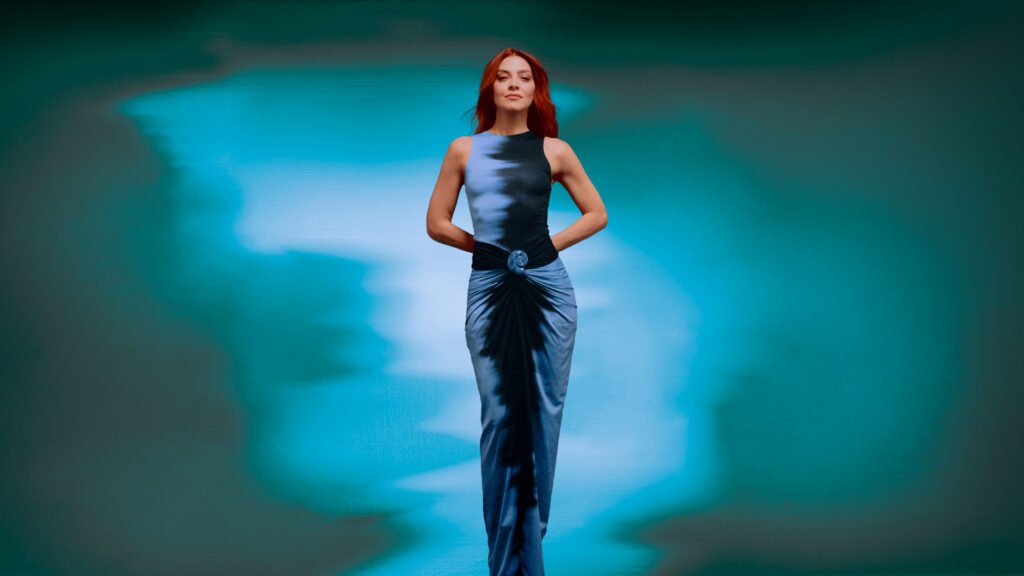
The event. Noemi closes the year in Rome with a concert in the Sala Santa Cecilia at the Auditorium Parco della Musica Ennio Morricone, on Tuesday, December 22, 2026. It is an evening built around her hits and her most recent songs, in the largest hall of the complex, the one with more than 2,700 seats that Renzo Piano designed with the symphony orchestra in mind and that for 20 years has hosted everything else as well.
I'll say it up front, because it's the first thing that matters: December 22, 2026 is the date going around for this event, but it is still a long way off on the calendar, and the schedules of Rome's concert halls shift, double up, and sometimes change rooms. Before you buy a ticket or book a train, look for confirmation on the official channels of the Auditorium and of the artist. That said, the rest of what you read below does not depend on the date. It depends on the hall, the neighborhood, who Noemi is, and how an evening in the Flaminio district works in the middle of December. And all of that can be told in full.
Who she is. Noemi is the stage name of Veronica Scopelliti, born in Rome on January 25, 1982, to a family originally from Reggio Calabria. She became known to the general public in 2009 through the second Italian season of X Factor, where she ended up in the Over 25 category led by Morgan, but her story begins much earlier and runs through piano at age seven, guitar at 11, a classical high school, a degree from the DAMS program at Roma Tre, and a master's degree in television and film directing. This isn't a filler biographical detail: it explains why she often appears in her music videos as a screenwriter and sometimes as co-director, and it also explains how she builds her live setlists, which are never a simple list of singles.
The venue. The Sala Santa Cecilia is the largest of the three concert halls of the Auditorium Parco della Musica Ennio Morricone, the complex designed by Renzo Piano between Villa Glori, the Olympic Village, and the Corso di Francia viaduct. It was born for great symphonic music, has always hosted the Orchestra of the Accademia Nazionale di Santa Cecilia, and over the years has learned to welcome pop, rock, jazz, electronic music, readings, book presentations, and concerts of every kind. Going there for a pop concert means walking into a place that wasn't designed for it, and that is exactly why it gives you an evening unlike any arena.
Below, I put it all in order: who Noemi is and what to expect on stage, what the hall you're sitting in is really like, where it's best to sit and where it isn't, how to get there without fighting over parking, what there is to eat and see nearby before and after, the stories that corner of the city carries with it, and the practical matters of a December evening in Rome.
The concert in brief, before everything else
The bare outline is this. Artist: Noemi. Place: Sala Santa Cecilia, Auditorium Parco della Musica Ennio Morricone, Viale Pietro de Coubertin, Flaminio district. Stated date: Tuesday, December 22, 2026. Format: indoor concert, numbered seats, no standing floor.
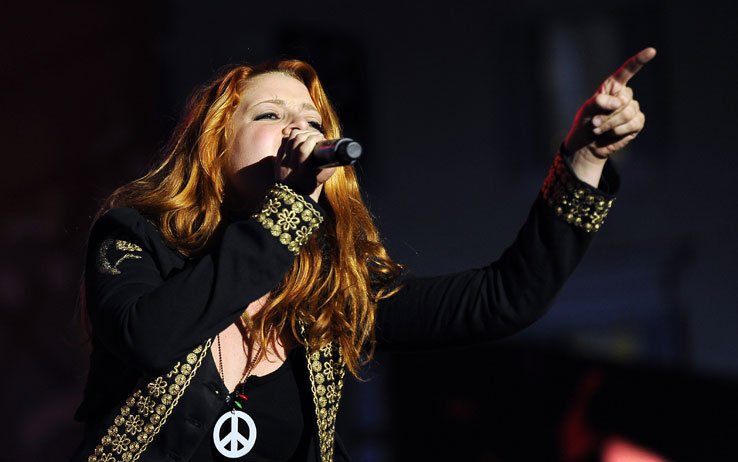
The difference between a concert in a hall and a concert in an arena is enormous, and it helps to have it clear before you pick a ticket. In a hall there is no rush to the front of the stage, no line starting at three in the afternoon, no problem of standing for three hours. What you get instead is something arenas almost never offer: the chance to really hear a voice. The Sala Santa Cecilia is built so that the sound of an acoustic instrument reaches the last row without any electrical help. When you put a sound system and a band inside it, the result is a clarity you rarely hear anywhere else.
The placement of the date is no accident. December 22 falls in the week when Rome slows to a halt: offices close in staggered shifts, schools are already out, and the city fills with people who have come home for the holidays. It's a Tuesday, an evening that in summer nobody would use for a big concert and that in December works very well, because in Christmas week the distinction between weekdays and weekends dissolves. Whoever organizes concerts in Rome has always known this, and it's the reason the second half of December is, after June and July, the busiest period of the year for live music in the city.
Who Noemi really is
If you only know Noemi from the singles played on the radio, you risk picturing an artist much smaller than she is. It's worth setting the record straight, because hers is one of the longest and most consistent careers in Italian pop of the past 15 years, and because you arrive at a concert with a different ear when you know where that voice comes from.
The years before success
Her father, Armando Scopelliti, was a guitarist in a group that took part in the Castrocaro Festival in 1971. It was he who pushed her toward music as a child. She began studying piano at seven and guitar at 11, and already at that stage Noemi was writing and setting her own songs to music, to the point of joining SIAE, the Italian authors' society, very early on. She finished her classical high school diploma in 2001 with top marks, then studied at DAMS at Roma Tre, earning a bachelor's degree in 2004 and a master's in 2006, both with full marks. Her bachelor's thesis had a title that says a lot about the personality, Un corpo per Roger Rabbit, the master's thesis was about postmodern cinema.
From 2003 she began working with the arranger and composer Diego Calvetti, who would remain a constant presence in her discography for a very long time. She recorded demos with covers of Aretha Franklin and Anastacia, sang in English, and played in clubs. In 2007 she made it to the 12 finalists of Sanremolab, though not among the three who advanced automatically to the Festival. It's the kind of path that makes no headlines but builds musicians: six years of paying her dues before the public knew she existed.
X Factor, Briciole, and the first album
In the fall of 2008 she entered the second Italian season of X Factor, in the Over 25 category, on Morgan's team. It was Morgan who convinced her to sing in Italian, she who until then had always preferred English. She was eliminated in the twelfth episode and finished fifth in the final standings, but at the April 2009 Gala she was awarded second place for the Critics' Prize.
On April 10, 2009, Briciole, her first single, came out, reaching number two on the Top Singles chart and entering Billboard's European top 100. Two weeks later the EP Noemi was released. In October came her first album of original material, Sulla mia pelle, which reached number three on the FIMI chart, preceded by the duet with Fiorella Mannoia on L'amore si odia, which hit number one among singles. The deluxe edition of February 2010 passed 140,000 copies and earned a double platinum record.
Her relationship with Fiorella Mannoia is one of the keys to reading Noemi's whole career. Mannoia is the artist she herself names as a model to follow, and Mannoia herself has said she sees herself in her. They have met again on records, on stages, on tour, and at the Arena di Verona for the great singer's 40 years in the business. If you happen to go to a Rome concert by either one, the other is always potentially backstage. Fiorella Mannoia, incidentally, has her own recent history with the same Flaminio complex: her concert at the Auditorium's Cavea is one of the events of Rome's summer 2026.
Eight times at Sanremo
Noemi has competed eight times at the Sanremo Festival, and the sequence tells the story of an artist who has never really stepped out of the center of the Italian pop conversation.
In 2010 she placed fourth with Per tutta la vita, written by Diego Calvetti and Marco Ciappelli. It's the edition in which her exclusion from the podium set off the orchestra's reaction, as the musicians crumpled up their sheet music and hurled it onto the stage: one of those scenes that happen at Sanremo every so often and stay in the collective memory longer than the rankings. The single nonetheless debuted at number one in Italy.
In 2012 she returned with Sono solo parole, written by Fabrizio Moro, and finished third behind Arisa and Emma Marrone, on an all-female podium. The song was certified double platinum and is, to this day, one of her most defining titles.
In 2014 she placed fifth with Bagnati dal sole, in an appearance tied to the album Made in London, recorded in London, naturally. In 2016 she came in eighth with La borsa di una donna, written by Marco Masini, and on cover night she paid tribute to Loredana Bertè with Dedicato. In 2018 she presented Non smettere mai di cercarmi, written together with Diego Calvetti, Massimiliano Pelan, and Fabio De Martino, and finished fourteenth, on duets night she sang it with Paola Turci.
In 2021 she competed with Glicine, again finishing fourteenth, and on the night devoted to the singer-songwriter tradition she performed a duet with Neffa on Prima di andare via. In 2022 she placed fifteenth with Ti amo non lo so dire, and on cover night she made Aretha Franklin's (You Make Me Feel Like) A Natural Woman her own, which is perhaps the gesture most consistent with her musical training that she could have made on that stage.
In 2025, her eighth time, she entered Se t'innamori muori and finished thirteenth, on cover night she performed a duet with Tony Effe on Franco Califano's Tutto il resto è noia. The single anticipates the album Nostalgia, released on February 28, 2025.
The discography, in order
There are seven studio albums: Sulla mia pelle in 2009, RossoNoemi in 2011, Made in London in 2014, Cuore d'artista in 2016, La luna in 2018, Metamorfosi in 2021, and Nostalgia in 2025. To these are added a live album, RossoLive in 2012, and in 2026 a compilation arrived as well, Noemi - Le migliori canzoni.
Within these records are credits that tell the story of an artist who has always worked with writers very different from one another. Vuoto a perdere, from 2011, was written by Vasco Rossi and Gaetano Curreri, and also ended up as the soundtrack to a Fausto Brizzi film. Poi inventi il modo carries the signature of Federico Zampaglione of Tiromancino. On Cuore d'artista, produced by Celso Valli and artistically supervised by Gaetano Curreri, there are lyrics by Curreri himself, by Ivano Fossati, and by Giuliano Sangiorgi. In 2021 came Makumba, with Carl Brave, which became one of her most-streamed songs among younger listeners, and in 2022 the encore with Hula-Hoop.
The present
In recent years she has gone well beyond the role of singer. She hosted the Concerto del Primo Maggio with Ermal Meta in 2024 and 2025, the latter time with BigMama as well. She was a judge on Io canto Family on Canale 5 between September and October 2025, and before that a coach on three seasons of The Voice of Italy between 2013 and 2015 and a judge at the Castrocaro Festival. Since 2025 she has hosted a program on Rai Radio 1 about the history of Italian music. In summer 2026 she co-hosted a summer music show on Italia 1 with Enrico Papi.
On the musical front, on May 29, 2026, she released the single Tu cosa fai questa sera, and 2026 is the year of the Live Noemi Tour 2026. A Rome date at the end of December, in this picture, has an obvious logic: it closes the year in her own city.
One last fact, because it's too good to leave out: on June 21, 2017, on Music Day, Noemi entered the Guinness World Records for the most concerts performed in 12 hours. There were nine. Anyone who sees her on stage as a ballad singer should take that into account.
A curiosity about Noemi in concert in Rome, December 22, 2026
The curiosity concerns the calendar, and for once it isn't a coincidence contrived after the fact: it's simply there, and almost no one notices it.
The Auditorium Parco della Musica was inaugurated in two stages. On April 21, 2002, the Sala Sinopoli, the middle-sized hall, opened. The rest of the complex, and above all the main hall named for Santa Cecilia, was inaugurated on December 21, 2002, with a concert by the Orchestra of the Accademia Nazionale di Santa Cecilia conducted by Chung Myung-whun.
That means a concert on December 22, 2026, in that hall falls exactly the day after the 20-fourth anniversary of its first note. No celebration is planned, no one will mention it from the stage, and it won't appear on the tickets. But when you sit down and look up at those wooden shells, knowing that the hall began to sound in a Roman December, just before Christmas, with a symphony orchestra in front of it, slightly changes the frame of the evening.
There is a second layer to this curiosity, and it's even more Roman. Rome had been left without a real concert hall for more than 60 years. The Augusteo, the hall carved out inside the Mausoleum of Augustus that until the 1930s housed the city's symphonic season, was dismantled when it was decided to restore the mausoleum to its ancient appearance. From then until 2002 the Italian capital lived without a space designed expressly for music: concerts in drama theaters, in basilicas, in arenas, in adapted lecture halls. When people say the Auditorium filled a void, it isn't a rhetorical formula: it's a 60-year void, and the Sala Santa Cecilia is precisely the piece that closes it.
So if on December 22, 2026, you find yourself in that hall listening to a Roman singer closing the year at home, you are inside a hall that reopened a chapter the city had closed for two generations. You don't need to think about it for the whole concert. But for the 10 minutes before the lights go down, it works.
The Sala Santa Cecilia, what it's really like
This is the part that makes the difference between going to a concert and understanding where you've gone. The Sala Santa Cecilia is not simply the big hall: it's an acoustic object designed with very precise criteria, and you feel those criteria on your skin during the evening.
The numbers
The capacity is 2,756 seats. It is the largest of the three concert halls in the complex: the Sala Sinopoli has 1,133, the Sala Petrassi 673. In addition there are the open-air cavea, named for Luciano Berio, which holds about 3,000 spectators, and the Teatro Studio, named for Gianni Borgna, which has 308 seats.
The complex as a whole covers about 55,000 square meters. The three halls are separate bodies, clad on the outside in lead, with a shape that many people compare to a scarab beetle, arranged in a ring around the cavea. A large walkable terrace runs between the halls, and underneath are service areas, recording studios, rehearsal rooms, and offices.
The ceiling, which is the real invention
The thing to look at, as soon as you walk in, is above your head. The ceiling of the Sala Santa Cecilia is made up of 26 shells of American cherry wood, each with an average surface of about 180 square meters. They are not a decorative cladding: they are suspended acoustic mirrors, and they work together with the rest of the hall, which in effect functions as a gigantic soundboard.
The measurable result is a reverberation time of about 2.2 seconds, a value that for a hall of that size is out of the ordinary in Italy. The perceived effect, though, is even more curious: the intensity of the sound seems to drop only up to about the tenth row, and from there on stays essentially constant all the way to the back. In practice, the hall was designed so that a violin in the last row arrives with the same strength as it does in the middle of the orchestra floor.
The reason for this choice lies entirely in its original purpose: unamplified classical music, where the only sound pressure available is what the instruments themselves produce. To fill 2,756 seats without microphones, every square meter of interior surface had to work.
Who built it
The design is by Renzo Piano, who won the invitation-only competition in 1993. On the acoustics he worked in tandem with Jürgen Reinhold of the Müller-BBM firm in Munich, while the outdoor spaces and the urban planning consultancy were entrusted to the landscape architect Franco Zagari. The work was included in the Census of Italian Architecture from 1945 to Today promoted by the Ministry of Culture, and the ministry's entry, covering the period 1994-2002 and attributed to the Renzo Piano Building Workshop, recognizes it as meeting all seven criteria set by the Census methodology. In the category of buildings for cultural promotion, which comprises 79 works in the database, only two meet all seven criteria: the Auditorium in Rome and the renovation of the Lingotto in Turin, both by the same firm.
The name, and when it changed
The complex is now called the Auditorium Parco della Musica Ennio Morricone. The dedication to the Roman composer was approved by Rome's city council in 2020, shortly after his death. Many Romans still say simply Auditorium, or Parco della Musica, and nobody takes offense. But the full name appears on official materials and at ticket offices, and it's worth knowing if you're searching for information online and want to be sure you're looking at the right place.
Something nobody tells you about Noemi in concert in Rome, December 22, 2026
Here it is, and it concerns precisely the fact that this hall was designed for something else.
The Sala Santa Cecilia was born for unamplified symphonic music. Its long reverberation, those 2.2 seconds, is a blessing for an orchestra: it widens the sound, makes it full, and holds the strings together. For an amplified pop concert, though, long reverberation is enemy number one. A sound system pumping out volume in a hall designed to be generous produces mush: the low frequencies hang in the air, the syllables overlap, and at certain volumes the lyrics of a song become unintelligible.
Which means that in this hall, a successful pop concert is almost always a concert played quieter than the same artist would play it elsewhere. The technicians who do good work here keep the overall volume down, cut the bass more than they would in an arena, and let the hall do half the work. If you arrive expecting the wall of sound of a stadium-style show, the first two songs will seem hushed. Then your ear calibrates, and you realize you're hearing things you never hear in arenas: the breath before an entrance, the piano pedal, the difference between two voices in harmony.
For a singer like Noemi, who has a contralto voice and who was formed listening to Aretha Franklin, Amy Winehouse, Billie Holiday, Etta James, and Janis Joplin, this is the right hall and at the same time the most demanding hall. Right because her timbre, which is her main weapon, arrives intact. Demanding because in a hall like this any approximation shows. There are no shortcuts: you can't cover anything with volume.
Then there is a detail you won't find printed on the tickets that nevertheless changes the evening. Around the stage, including the back, runs a gallery with additional seating. These are the seats behind and beside the orchestra, the ones that in the symphonic repertoire are sold as the budget section and offer an extraordinary vantage point, because you see the conductor's face. At a pop concert, though, those seats look at the back of the band and the rear of the speakers. Acoustically they are the least favored in the hall, and this is written even in the technical descriptions of the building. If you buy a ticket online and see a section much cheaper than the others, check where it is before confirming: it could be exactly that one.
One last thing almost nobody tells you, and it concerns not the sound but the body. The Sala Santa Cecilia sits at a very high elevation above ground level, because during construction it wasn't possible to dig as deep as planned. The galleries are reached by only two elevators, and at peak attendance the restrooms and ventilation have historically been the complex's weak point. In practical terms: if you have a seat up high and trouble with your knees, arrive early and take the elevator before the line forms. And if you're someone who heads down at the first chance, know that at the end of the concert the exit from the galleries takes a few minutes longer than you expect.
How to get there, without fighting the neighborhood
The Auditorium is on Viale Pietro de Coubertin, in the Flaminio district, between the Olympic Village and Villa Glori. On paper it is very close to the center. In practice, it is one of the places in Rome where the most people get the approach wrong.
The historic problem: the metro doesn't get there
This is the point that is worth all the others put together. The Olympic Village area was chosen by Rome's city council in 1992 after a very long debate, and one of the main objections was precisely the distance from the metro. The nearest metro stop is Flaminio, on Line A, at Piazzale Flaminio, just outside Porta del Popolo. From there to the Auditorium it's about two kilometers: you can walk it in a good 20 minutes, along Via Flaminia or by way of the Lungotevere, but on a December evening in the cold it isn't the cheeriest choice.
The solutions that work
The first is tram 2, which starts right at Piazzale Flaminio, next to the metro exit, and runs up the whole of Via Flaminia to Piazza Mancini. The stop to use for the Auditorium is Apollodoro, from which it's a five-minute walk. It's the easiest connection to explain to someone who doesn't know Rome: get off Metro Line A at Flaminio, exit, board the tram, get off at Apollodoro. On concert nights the tram fills up, so it's best to allow a few extra minutes.
The second is buses. Lines 910, 982, 168 (weekdays), and 53 stop in front of the entrance. The 910 in particular is convenient because it links Termini with the area, crossing half of the northern center. On nights with very crowded concerts the flow of people leaving toward the stops is considerable, so if you have a train to catch, don't count on the first bus that comes by.
The third, for those arriving from the north or from outside Rome, is the regional train to the stations of the Roma Nord railway, which runs parallel to Via Flaminia. It doesn't drop you at the door, but it spares you the traffic on Corso di Francia entirely, which on December evenings is among the worst in the city.
Car and parking: read this part carefully
The Auditorium's own parking lots exist but are few and are considered fairly expensive by the public, which is one of the long-standing and documented criticisms of the facility. The direct, equally documented consequence is that on concert nights cars flood the Olympic Village neighborhood looking for a free spot.
In practical advice: if you absolutely must come by car, leave home much earlier than necessary and allow 20 minutes of circling. If you can avoid it, avoid it. On December 22, with the city in full holiday motion and Corso di Francia pouring traffic toward Flaminio, the car is probably the worst possible choice. And it's worth remembering that Viale De Coubertin was closed to automobile traffic precisely to manage the road layout around the complex: it's not a street where you should hope to find a spot at the last minute.
On foot, if you want to make yourself like it
If the afternoon is clear and you have time, approaching on foot is one of the least-traveled and most interesting walks in Rome. From Piazza del Popolo you leave through Porta del Popolo and take Via Flaminia: you pass Villa Poniatowski, skirt the Ministry of the Navy, cross paths with the MAXXI on Via Guido Reni, and reach the Auditorium from the Olympic Village side. It's a mile and a half of twentieth-century architecture that almost no tourist walks. Alternatively, if you're coming from Prati, you can go up the Lungotevere and cross on the Ponte della Musica, which links the Foro Italico area directly to Flaminio and is pedestrian-only.
The tip I give you for visiting Noemi in concert in Rome, December 22, 2026
The tip is one, and I'll say it without beating around the bush: arrive an hour early and go up to the terrace.
Around the whole group of Auditorium buildings runs a vast walkable terrace, open to the public, that almost none of the audience uses. People arrive 10 minutes before the start, come in through the foyer, look for their seat, and sit down. And they miss the free and best part of the evening.
From the terrace, at night, you see the three halls lit from below, the lead cladding reflecting the light in a way it doesn't during the day, the empty, silent cavea at the center, and in the distance the outline of the neighborhood. In December, with the cold, dry air and darkness falling at five, that terrace has a quality of silence you won't find anywhere else in the city at that distance from the center. You get there by the outside stairs, no ticket needed, no need to ask anyone's permission.
The second part of the tip: while you're up there, find the spot between the Sala Santa Cecilia and the Sala Sinopoli. From there you can see the remains of the Roman villa uncovered during construction. I'll say more about them later, but the right moment to look at them is before the concert, under artificial light, when the contrast between the ancient walls and Piano's volumes is sharpest.
The third part, which is the most mundane and the most useful: eat beforehand. Inside the Auditorium there is a bar, a café, a bar-restaurant with street access as well, and a large bookstore. Everything works, but on a concert night in the Sala Santa Cecilia that bar may have to serve thousands of people in the same quarter hour. If you want to dine well, eat in the area before you arrive, or stop afterward. If instead you just need a coffee and 20 minutes in the warm, the bookstore is the place to wait without standing in line.
The fourth, about the ticket. In a hall with 2,756 seats the difference between one section and another is real. The center orchestra section, from the tenth row back, is the best compromise between sound and view: you're close enough to see faces and far enough that the hall has already blended the sound. The front rows have a close-up view but less balanced sound, because it comes straight from the speakers before the hall has done its work. The upper side sections cost less and work well. Those behind the stage, as noted above, watch the concert from the wrong side.
The fifth, about the season. On December 22 it is cold in Rome, the evening temperature can drop below 40 degrees Fahrenheit, and you can feel the dampness off the Tiber. But inside the hall, with almost 3,000 people, it's warm. Dress in layers, because the coat check on sold-out nights is another point where lines form. A jacket you can hold in your arms without suffering is better than a coat you absolutely have to check.
What's around, before and after the concert
Flaminio is a neighborhood that many Romans know only for the stadium and the Auditorium, and which in fact works very well in the window between six and eight in the evening.
The MAXXI, five minutes away
The MAXXI, on Via Guido Reni, is a few hundred yards away. It's the national museum of 20-first-century arts, designed by Zaha Hadid, and has evening hours on certain days of the week. Even if you don't go in, the museum's plaza is open and can be crossed freely: in recent years it has been redesigned and planted, and has become a real urban space, not a service courtyard. If you arrive early and want to fill an hour indoors, this is your most convenient solution.
Ponte Milvio and Piazza Mancini
A little farther north, where Via Flaminia meets the Tiber, is Milvian Bridge, which is both an ancient monument and one of the liveliest areas of Rome's young nightlife. The small square at the foot of the bridge and the streets around it are full of bars and restaurants, and in December the area stays active late. If after the concert you feel like stopping for a drink without going back to the center, this is the right direction: from the Auditorium you get there in a few minutes by the same tram 2 toward Piazza Mancini, or on foot in a quarter of an hour.
Another well-known fact, yet rarely mentioned
Under the Auditorium there is a Roman villa, and its discovery changed Renzo Piano's design.
It's a known fact, recounted in every serious description of the complex, and yet most people who come to a concert here don't know it. During the excavation for the foundations, the remains of a settlement from the Roman era emerged, and the find was of such size that building as planned became impossible. The practical consequence was a substantial change to the original design: two of the three volumes, the two scarabs, were shifted westward, almost to the point of grazing the Corso di Francia viaduct that cuts the Olympic Village in two. Certain decisions about traffic flow also followed from that shift, including the closure of Viale De Coubertin to automobile traffic.
The remains were neither destroyed nor hidden. They are visible, outdoors, in the space between the Sala Santa Cecilia and the Sala Sinopoli, exactly where anyone crossing the terrace passes. And the movable finds recovered during the excavation are displayed in a small museum built under the cavea, that is, under the 3,000-seat open-air theater that hosts the big concerts in summer.
This layering deserves attention, and not for sentimental reasons. It's how Rome has always worked: you build something new, you find something ancient, and instead of choosing between the two you keep them together by moving the new. The most contemporary complex in the city, the one that brought a concert hall back to Rome after 60 years, had to bend to a villa from 2,000 years ago. And the result is that you are about to hear a 2026 pop concert sitting a few yards from walls that saw imperial Rome.
If you arrive early, as suggested above, do this route in order: go up to the terrace, look for the remains between the two halls, then walk down toward the cavea and look at the entrance to the small museum. It takes 10 minutes in all and turns the wait from a line into a visit.
And while we're at it: the hall has no organ
This is the other thing every insider knows and no audience member does. In the Auditorium's halls there is no pipe organ. The absence was denounced as early as 2002, before the work was even finished, by the association Italia Nostra, and the controversy had a surprising echo in the press of the time. The music critic Paolo Isotta went so far as to call the Sala Santa Cecilia, for this reason, a living room without a sofa. More than a million euros were allocated and a commission of organists was appointed, but it was dismissed just when a difficult agreement on the instrument's tonal characteristics had been reached. To this day electronic organs with digital sampling and loudspeakers are used, and Rome remains the only European capital without a pipe organ in a concert hall.
The right photo to take at Noemi in concert in Rome, December 22, 2026
Let's start with the rule that always applies and is best stated plainly: inside the hall, during the concert, filming is governed by the hall management and the artist's staff. In Italian concert halls, photography with a phone without flash is generally tolerated for a few shots, while extended video recording and any use of flash are not. A flash in the Sala Santa Cecilia is especially out of place, because the darkness around the stage is part of the evening's design and a sudden light ruins it three rows away. Adjust accordingly, and when in doubt watch what the staff does in the first few minutes.
That said, the best photo of this evening isn't the one of the stage. The best photo you take outside, before going in, and there are three framings that really work.
The first: the ceiling shells
If you can get into the hall while the house lights are still on, that is, in the first minutes after the doors open and before it fills up, raise your phone upward and frame the 26 American cherry shells suspended above the stage. It's the image nobody takes, because everyone points downward, and at the same time it's the one thing in that hall you can't see anywhere else. With the orchestra floor still half empty, the pale wood against the darkness above works very well even with an ordinary phone. Hold the phone as steady as you can and don't use digital zoom.
The second: the lead volumes from the terrace
From the outer terrace, at night, the three halls are lit from below. The lead cladding catches the light in a warm, irregular way, very different from how it looks by day. The best position is the one that puts two halls on a diagonal, one in front and one behind, with the empty cavea in the middle. It's an architecture photo, not a concert photo, and it's the one you'll still be looking at months later. In December you have the advantage of a sky already black at six in the evening, so you don't have to wait until late to get it.
The third: the Roman walls with the Auditorium above
This is the photo that tells the story of the place best of all. Stand in the space between the Sala Santa Cecilia and the Sala Sinopoli, crouch down almost to the level of the Roman villa's remains, and frame the ancient walls in the foreground with the volume of the hall rising behind them. 2,000 years in a single frame, with no need to explain it. It's also the image that, if you post it, explains to anyone who has never been to the Auditorium why this place is different from an ordinary arena.
And a fourth, if the concert allows it
If during the encore the house lights come up on the audience, as often happens in the finale, the photo to take is the one with your back to the stage: 2,756 people lit up inside a hall of pale wood, with the shells above. It's technically harder and turns out well one time in five, but when it does it's the photograph that conveys the scale of the place. Turn around, shoot once, put your phone away, and go back to watching the concert.
Some important events that have happened here through history
The Parco della Musica is barely 20 years old, but the piece of the city it stands on is much older, and the dates that matter are many.
Before the Auditorium: the void left by the Augusteo
To grasp the meaning of this complex you have to start from what wasn't there. Until the 1930s Rome's symphonic season was based at the Augusteo, the concert hall built inside the Mausoleum of Augustus. When that hall was dismantled, Rome was left without a space designed for music for more than 60 years. Everything that has happened in Flaminio since 2002 has to be read within that frame: it is not the opening of one more theater, it is the end of an absence two generations long.
1960: the Olympic Village
The surrounding area was born with the Rome Olympics of 1960. The Olympic Village was built to house the athletes and then converted into public housing, and its urban layout, with buildings raised on pilotis and continuous greenery between the blocks, is still legible today exactly as it was. The Corso di Francia viaduct, which crosses the neighborhood overhead, belongs to that same era.
1992-1993: the choice of the site and the competition
Rome's city council chose the Olympic Village area in 1992, after a debate that lasted years, and the choice didn't convince everyone: people argued about the size, the shape of the terrain, and the distance from the metro and the main public transit routes. In 1993 Renzo Piano won the invitation-only competition.
1995 and 1997: the critical opinions
The path was not straight. In 1995 and 1997 the Higher Council of Public Works issued strongly critical opinions on the project, which were downplayed by the then-mayor Francesco Rutelli, backed on that occasion by the press and by a large part of public opinion. The construction site had a very complicated history: the contract with the winning firm was terminated midway and a new tender was called, with a steep rise in costs that the Court of Auditors focused its criticism on.
April 21, 2002: the first opening
The complex opened in two stages. On April 21, 2002, the birthday of Rome, the Sala Sinopoli was inaugurated, named for the conductor Giuseppe Sinopoli.
December 21, 2002: the Sala Santa Cecilia
Eight months later the rest opened, and with it the main hall named for Santa Cecilia, patron saint of music. The inaugural concert was by the Orchestra of the Accademia Nazionale di Santa Cecilia conducted by Chung Myung-whun. It is the hall in which, if the date holds, the December 22, 2026 concert will take place.
2003: the home of the Accademia
From 2003 the Auditorium became the permanent home of the Concert Season of the Accademia Nazionale di Santa Cecilia, one of the oldest musical institutions in the world, which also brings here its Bibliomediateca and the musical instruments museum tied to its collection. Alongside the Accademia operates the Fondazione Musica per Roma, created in 2004 from the transformation of a joint-stock company established in 1999: legally it was the first conversion of an Spa into a foundation permitted by the reform of corporate law. The City of Rome granted the Foundation the right to use the property for 99 years.
The early years: criticism of the acoustics
In the first months of operation, acoustic problems emerged in more than one hall. The conductor Wolfgang Sawallisch commented the day after the inauguration that the new Auditorium was impressive but that he was not convinced by the hall's stage and acoustics, and there were documented difficulties during a concert by the singer-songwriter Ivano Fossati. In the following years changes were made to optimize how the halls sounded. It's worth remembering because it proves that the hall you walk into today is not identical to the one of 2002: it is the result of 20 years of adjustments.
2006: the Film Festival arrives
Since 2006 the Auditorium has hosted the Rome Film Festival, which every fall turns the complex into one continuous set, with the red carpet laid out on the forecourt and the halls used as movie theaters. In 2026 it reached its 20-first edition. If you come to Flaminio in December, the traces of the Festival have only just passed.
2014-2016: the numbers of success
In 2014 total visitors to the Parco della Musica exceeded 2 million, a figure that confirmed it as the leading cultural facility in Europe by number of visitors and second in the world after Lincoln Center in New York. In 2016 the Fondazione Musica per Roma alone organized 608 events, not counting conference events, for revenue of 9,702,260 euros and 287,109 tickets sold: a record for the facility.
2020: the name of Ennio Morricone
In 2020, after the composer's death, Rome's city council approved naming the complex after Ennio Morricone. In the same year, in the midst of the health emergency, the Auditorium hosted the special edition of the Concerto del Primo Maggio, staged exclusively for television broadcast without an audience. Among the artists who took part was Noemi.
Who has passed through Noemi in concert in Rome, December 22, 2026
In a little over 20 years this hall has hosted an amount of music that is hard to summarize. I'll try to line up what is documented, starting with who played here first and arriving at Noemi herself.
The conductors and the house orchestra
The first name, chronologically, is Chung Myung-whun, who on December 21, 2002, conducted the Orchestra of the Accademia Nazionale di Santa Cecilia in the hall's inaugural concert. Since then Santa Cecilia has been the home of the Accademia's orchestra and chorus, which have held their concert season here since 2003. The Accademia is one of the oldest musical institutions in the world, born as a congregation of musicians and made a foundation in 1998, with an academic body of 70 full members and 30 honorary members among the leading Italian and foreign musicians. The current president-superintendent is Massimo Biscardi, and the music director is Daniel Harding.
Among the conductors who have had a say in the life of this hall is also Luciano Berio, composer and at the time director of the Accademia, who responded publicly to the controversy over the missing organ and for whom the open-air cavea is now named. And there is Wolfgang Sawallisch, who just after the hall opened openly criticized its stage and acoustics: that too is a passage that is part of the place's history.
Popular music and pop
The Sala Santa Cecilia has never been only symphonic. The programming of the Fondazione Musica per Roma has always included rock, pop, jazz, opera, contemporary, electronic, and world music concerts, as well as seasons of theater, dance, circus, literature, and poetry, exhibitions, and meetings with authors. In 2016 alone, as I said, the events organized by the Foundation numbered 608.
Among the documented appearances is that of Ivano Fossati, whose concert in the complex's first months is on record precisely because of the acoustic difficulties encountered. It's a minor episode but one that tells the early phase of the hall well, when people were still learning how to make it sound right for repertoires other than the one it was born for.
Noemi at the Auditorium, before 2026
Noemi already has a history with this complex, and it's worth listing because it shows that December 22, 2026, would not be a debut.
On May 30, 2018, during the tour for the album La luna, she gave a concert at the Auditorium Parco della Musica in which Gaetano Curreri, Fiorella Mannoia, and Paola Turci joined her on stage as guests. Three names that recur constantly in her career: Curreri as writer and producer, Mannoia as her declared model and duet partner since 2009, Turci as partner in one of her Sanremo duets.
In 2020 she took part in the special edition of the Concerto del Primo Maggio, staged right at the Auditorium Parco della Musica exclusively for the television broadcast because of the pandemic. In 2021 she was again at the Concerto del Primo Maggio, again at the Auditorium. Then, in the following years, she crossed to the other side of the microphone: in 2024 and 2025 she hosted the Concerto del Primo Maggio with Ermal Meta, and in 2025 with BigMama as well.
So, if the concert takes place, Noemi will return to a place where she has already been both singer and host, in different years and under very different conditions, including the surreal one of 2020 with an empty hall and the cameras.
Who has been at her side, over her career
Another way to read the question is to ask who has shared the stage with her, because a Noemi concert setlist carries those names inside it even when they aren't physically there.
There is Fiorella Mannoia, with whom she recorded L'amore si odia in 2009 and with whom she has shared stages for years, up to the Arena di Verona. There is Vasco Rossi, who with Gaetano Curreri wrote Vuoto a perdere for her and whose concerts she has opened. There is Fabrizio Moro, author of Sono solo parole and of Se non è amore, with whom she performed a duet at the Palazzetto dello Sport in Rome in 2019. There are the Stadio, with La promessa and a long association. There is Claudio Baglioni, with whom she sang on Quanto ti voglio and who wanted her at the festival he created in Lampedusa. There are Marco Masini, Ivano Fossati, Giuliano Sangiorgi, Tommaso Paradiso, and Dardust among the writers of her songs. There are Fedez, Carl Brave, Gemitaiz, Rocco Hunt, Marracash, and Tony Effe on the front of the most recent duets, and Sarah Jane Morris for the English chapter of her career. There is Loredana Bertè, honored at Sanremo and then hosted on her own record. And there is Morgan, who in 2008 convinced her to sing in Italian, which is probably the single most important decision in this whole story.
Tickets, times, and practical matters
Here I get concrete, with the warning that everything concerning prices and times must be confirmed on the official channels, because months out it changes.
Start time. In the Sala Santa Cecilia evening shows usually start between 8:30 and 9:00 p.m. In Christmas week, with the audience also coming from outside Rome, doors generally open an hour earlier. Showing up half an hour before the start is the bare minimum, an hour before is the right choice.
Length. A pop concert in a hall usually runs between two and two and a half hours, encores included. If you're catching a train home, factor in leaving the hall and getting to the stop: from the last chord to a taxi or a bus, on a sold-out night, takes longer than you'd imagine.
Seats. All numbered, no standing floor. This completely changes the buying strategy compared to an arena: you don't need to arrive early to be at the front, you need to choose the section well when you buy.
Coat check. It exists, and in December you'll need it. But it's also one of the places where the longest lines form on the way out. If you can, keep your coat with you.
Accessibility. The galleries of the Sala Santa Cecilia are reached by only two elevators, because the hall sits at a very high elevation above ground level. Anyone with mobility difficulties should flag it when buying and stick to the lower sections.
Tickets. Sales for events in the Sala Santa Cecilia go through the complex's official channels and authorized box offices. For a pop concert in Christmas week, in a hall with 2,756 seats, the obvious advice is not to wait: year-end Rome dates go fast, because they catch both the local audience and people coming home for the holidays.
December in Rome, around this date
December 22 is not an ordinary evening, and it helps to know the context it falls in, especially if you're coming from out of town and building a trip around the concert.
The second half of December is, for live music, one of the busiest moments of the Roman year. In the same month of 2026 the city hosts quite a few other events: Madame at the start of the month, Tosca the next day, Sergio Cammariere, Irama at the Palazzo dello Sport, Glen Hansard and Mario Biondi at the Brancaccio on the same day, and Anna at the Palazzo dello Sport on the 19th. And at the same Auditorium, between December 26 and 30, a residency by Max Gazzè has been announced. Anyone in Rome that week effectively has a small diffuse festival at their disposal.
On the practical side, the city in those days is full but in a different way from summer. The tourists are there, concentrated in the historic center and around the Vatican, while Flaminio stays relatively quiet until showtime. Public transport still runs on the weekday schedule on December 22, so trams and buses operate regularly. Private traffic, by contrast, is among the worst of the year, especially on the northern radial roads: one more reason to leave the car where it is.
If your afternoon is free, the most natural pairing with an evening at Flaminio is the Pincio and Villa Borghese: from there you walk down toward Piazza del Popolo, take tram 2, and reach the Auditorium without ever setting foot on an underground line. It's a well-constructed Roman afternoon, with sunset from the Pincio around 4:40 p.m. at that time of year.
Frequently asked questions about Noemi in concert in Rome, December 22, 2026
When is Noemi's concert in Rome?
Noemi's concert in Rome is scheduled for Tuesday, December 22, 2026, at the Sala Santa Cecilia of the Auditorium Parco della Musica Ennio Morricone. Evening shows in the Sala Santa Cecilia usually start between 8:30 and 9:00 p.m., but in Christmas week doors generally open an hour earlier.
Where is Noemi's concert in Rome?
The concert takes place in the Sala Santa Cecilia, the main hall of the Auditorium Parco della Musica Ennio Morricone, on Viale Pietro de Coubertin in Rome's Flaminio district. It is an indoor concert, with numbered seats and no standing floor.
How many seats does the Sala Santa Cecilia, where Noemi is playing, have?
The Sala Santa Cecilia, where Noemi's concert in Rome takes place on December 22, 2026, has a capacity of 2,756 seats: it is the largest of the three concert halls of the Auditorium Parco della Musica, ahead of the Sala Sinopoli, which has 1,133.
How much is a ticket for Noemi's concert in Rome?
The ticket price for Noemi's concert in Rome on December 22, 2026, is not a fixed figure announced in advance: it's best to check on the official sales channels, because prices can vary by section of the hall and over time.
Who is Noemi, the artist in concert in Rome on December 22, 2026?
Noemi, born Veronica Scopelliti, is a Roman singer born in 1982, with eight Sanremo Festival appearances behind her and seven studio albums released from Sulla mia pelle in 2009 to Nostalgia in 2025. She has sold more than a million and a half records and holds a Guinness World Record for nine concerts performed in 12 hours.
How do you get to the Auditorium for Noemi's concert?
The Auditorium Parco della Musica is on Viale Pietro de Coubertin in Flaminio, between the Olympic Village and Villa Glori, and it is one of the places in Rome where people most often get the approach wrong, because no metro line arrives directly in front of the entrance.
Should you arrive early for Noemi's concert in Rome?
Yes, the advice is to arrive an hour before Noemi's concert in Rome and go up to the walkable terrace that runs around the whole group of Auditorium buildings, open to the public and used by very few spectators, from which at night you can see the three halls lit up.
Can you take photos during Noemi's concert in Rome?
Inside the Sala Santa Cecilia, during the concert, filming is governed by the hall management and the artist's staff. In Italian concert halls, phone photography without flash is generally tolerated for a few shots, while extended video recording and the use of flash almost never are.
Summary
Noemi, that is Veronica Scopelliti, a Roman born in 1982, with eight Sanremo Festivals behind her, seven studio albums from Sulla mia pelle in 2009 to Nostalgia in 2025, more than a million and a half records sold, and a Guinness World Record for nine concerts in 12 hours, closes 2026 in her own city. The date given is Tuesday, December 22, 2026, in the Sala Santa Cecilia of the Auditorium Parco della Musica Ennio Morricone, in Flaminio.
The hall has 2,756 seats, a ceiling made of 26 American cherry shells of about 180 square meters each, a reverberation of 2.2 seconds, and is the largest of the three halls designed by Renzo Piano, inaugurated on December 21, 2002, with the Orchestra of the Accademia Nazionale di Santa Cecilia conducted by Chung Myung-whun. Outside, between the Sala Santa Cecilia and the Sala Sinopoli, are the remains of the Roman villa that forced two of the complex's three volumes to be moved, and under the cavea is the small museum that holds its finds.
Arrive an hour early, go up to the terrace, look at the ancient walls, choose the center orchestra section from the tenth row back, and avoid the sections behind the stage. Come by tram 2 from Piazzale Flaminio, getting off at Apollodoro, or by the 910, 982, 168, or 53, which stop in front of the entrance, and forget the car. Eat beforehand, dress in layers, keep your coat with you. And remember that the date has to be confirmed on the official channels before you book anything.
If you're building a trip to Italy around an evening like this and want Rome to fit with the rest, you'll find thoughtful guides and itineraries on italyplanner.com, which exists precisely so you don't waste days between one transfer and the next. If instead you run live music and cities for others as a profession, leading groups or organizing visits, the right tool is tourleaderpro.com. We keep telling you here, evening by evening, what happens in Rome, in the cavea in summer and inside the halls in winter.