Mondi Sonori 2026 at the National Museum of Musical Instruments, through December 19, 2026
https://www.estateromana.com/en/rome/trip-planner/mondi-sonori-2026-at-the-national-museum-of-musical-instruments-through-december/
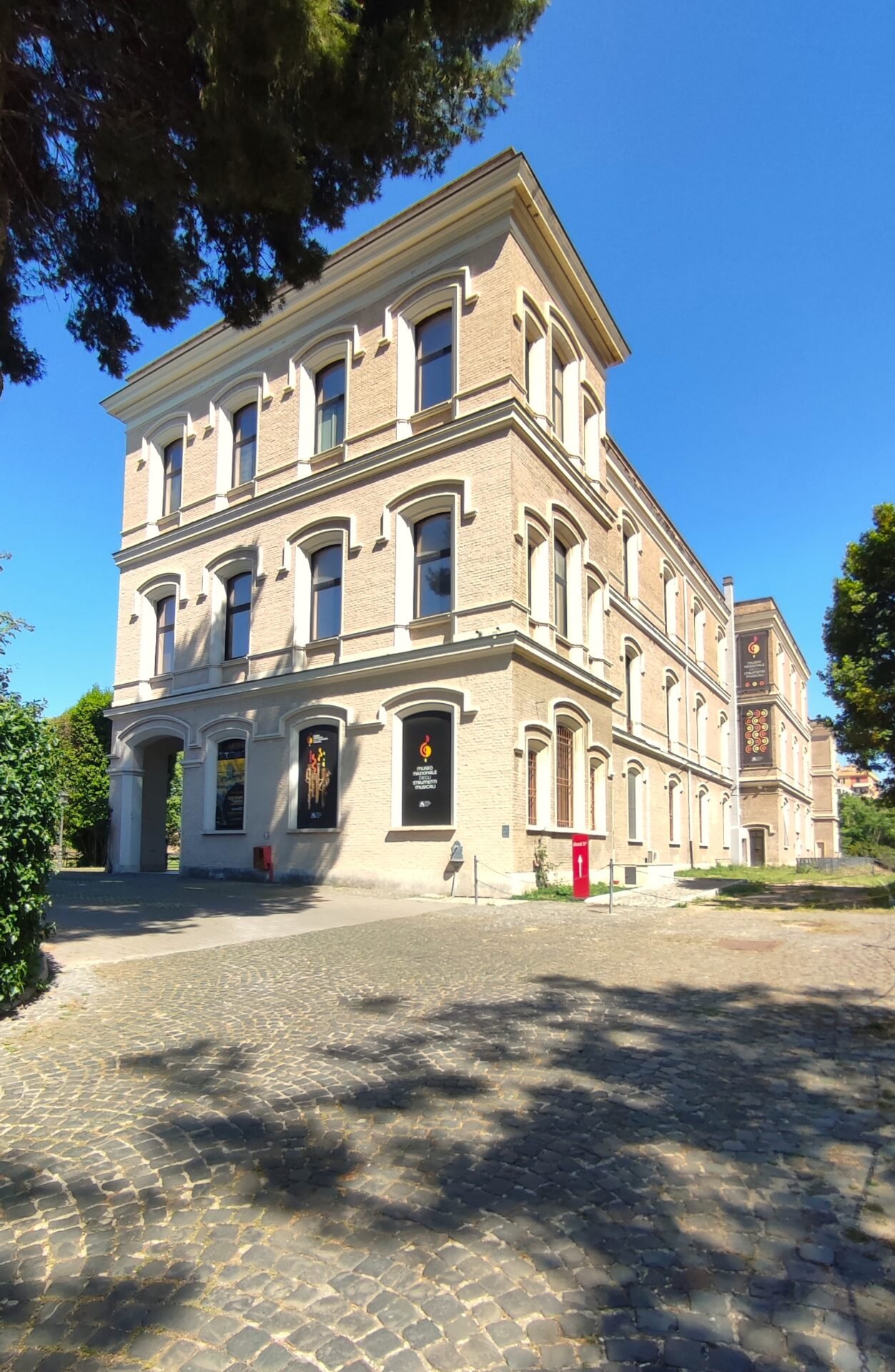
Mondi Sonori 2026, the second edition of the music, theater and literature series of the National Museum of Musical Instruments, is running from September 12 to December 19, 2026. The next date is Saturday, October 31 at 17:30 with Mauro Palmas and Giacomo Verdeu. The museum is at Piazza di Santa Croce in Gerusalemme 9/A, 00185 Rome, in the Palazzina Samoggia, with access next to the basilica of Holy Cross in Jerusalem. You get there by Metro A (San Giovanni and Manzoni stops), by Metro C (San Giovanni and Lodi) or by trams 3, 5, 14 and 19, Piazza di Porta Maggiore stop. The shows in the Scenari Sonori section start at 20:00, the Atlanti Sonori meetings and the Festival Popolare Italiano concerts at 17:30. The museum admission ticket costs 6 euros full price, 2 euros reduced, with free admission as required by law, and lets you visit the exhibition rooms before the show. You buy it at the museum's digital kiosk, which accepts card payment, or on the Musei Italiani portal. The museum is open Tuesday to Sunday from 9:30 to 19:30, with last entry at 18:30, and is closed on Monday. For information: 06 7014796, dms-rm.museostrumenti@cultura.gov.it.
Language: a performance based on dance, music or visual acts; no English version is announced, any spoken parts are in Italian.
14 dates in a little over three months, in a museum that holds one of Italy's most important collections of musical instruments: Mondi Sonori puts live music on stage next to the instruments that made it over the centuries. At the cost of a museum ticket. Below you'll find the full calendar, who the artists are, what the museum is like, how to get there and what to see around, between Santa Croce, Porta Maggiore and San Giovanni.
Mondi Sonori 2026: dates, times and tickets
Mondi Sonori 2026 runs from September 12 to December 19 at the National Museum of Musical Instruments in Rome, with evening shows at 20:00 and afternoon meetings at 17:30. Admission costs the same as the museum ticket: 6 euros full price, 2 euros reduced.
The times
The five Scenari Sonori evenings all start at 20:00. The five Atlanti Sonori meetings and the four Festival Popolare Italiano concerts all start at 17:30. On ordinary days the museum is open from 9:30 to 19:30, with last entry at 18:30, Tuesday to Sunday.
The ticket
According to the official press release, the 6-euro admission ticket also allows, before attending the shows, a visit to the exhibition rooms. The reduced ticket costs 2 euros. Free admission as required by law remains. The ticket is bought at the museum's digital kiosk, which accepts card payment, or on the Musei Italiani portal.
Contacts
The museum answers at 06 7014796 and at dms-rm.museostrumenti@cultura.gov.it. Program updates are published on the museum's official website, in the section devoted to series and meetings.
The Mondi Sonori 2026 calendar from October to December
From late October to December Mondi Sonori offers eight dates still on the program: one Scenari Sonori evening, the one on Saturday, November 21, five Atlanti Sonori meetings and two Festival Popolare Italiano concerts.
October
Already past: Saturday, October 3 with Enrico Lo Verso in «Resta diva. Omaggio a Maria Callas», Saturday, October 10 with Malutempu, Saturday, October 17 with Bronagh Slevin and Thursday, October 29 with Pamela Villoresi in «Mitiche donne. Dalle donne del mito alle nostre vite». Saturday, October 31, 17:30: Mauro Palmas and Giacomo Verdeu, the cantabile lute and Sardinia.
November
Saturday, November 7, 17:30: Maria Mazzotta. Saturday, November 14, 17:30: La Banda del Sud with «Tracce Mediterranee». Saturday, November 21, 20:00: Flo in «Brave ragazze», with Cristiano Califano on guitar. Sunday, November 22, 17:30: Nando Citarella, frame drums and Vesuvian rituals.
December
Saturday, December 5, 17:30: Giuliana De Donno and Gabriella Aiello, the Viggiano harp and Basilicata. Saturday, December 12, 17:30: Mànu Théron and Damien Toumi, Duo Lavoa Lapo, Occitan song. Saturday, December 19, 17:30: Ettore Castagna, the battente guitar, the lira and the tradition of Calabria. It's the date that closes the series.
The dates already past
The series opened on Saturday, September 12 with Massimo Popolizio in «Pilato», from the pages of «The Master and Margarita» by Mikhail Bulgakov, with Stefano Saletti and Barbara Eramo. On Saturday, September 26 it was the turn of Ascanio Celestini with the stories from the novel «Poveri Cristi», together with Danilo Blaiotta on piano.
Scenari Sonori: the word and live music
Scenari Sonori is the evening section of Mondi Sonori: five shows and concerts, all at 20:00, devoted to the relationship between literary text, musical writing and live performance. On stage the actors' words intertwine with the music.
Enrico Lo Verso and Maria Callas
On Saturday, October 3 Enrico Lo Verso was the star of «Resta diva. Omaggio a Maria Callas», with music by Mirko Lodedo. The show retraced Callas's life through the eyes of the men who loved and marked her, from Meneghini to Pasolini and Onassis, in a journey through music, loves, fragility and success. A male actor telling the story of the 20th century's most famous soprano through the men in her life: it's a clear choice of point of view, and in our view the most curious of the program.
Pamela Villoresi and the women of myth
On Thursday, October 29 Pamela Villoresi directed and performed «Mitiche donne. Dalle donne del mito alle nostre vite». Through the words of the great classical heroines, from Medea to Phaedra, Antigone and Cassandra, the recital crossed 2,000 years of literature, questioning the dilemmas and crucial passages of women's existence. The music is composed and performed by Stefano Saletti, with Barbara Eramo on vocals.
Flo and the good girls
On Saturday, November 21 Flo closes Scenari Sonori with «Brave ragazze», with Cristiano Califano on guitar. It's a work of research and reworking of classics from the musical heritage of southern Italy and of pieces from the Mediterranean and Latin area translated into Italian, chosen above all for the female point of view of the authors and performers who brought them success.
Popolizio and Celestini, at the opening
The first two evenings saw Massimo Popolizio give voice to Bulgakov's pages on Pontius Pilate and his meeting in Jerusalem with Yeshua Ha-Notsri, over the sound fabric of Stefano Saletti on oud, bouzouki and electronics and Barbara Eramo on vocals. And Ascanio Celestini with stories of people and lives on the margins, for the first time together with the pianist and composer Danilo Blaiotta.
Atlanti Sonori: the instruments and their territories
Atlanti Sonori, subtitled «Musica e Parole dalla tradizione al contemporaneo», offers five afternoon meetings, all at 17:30, devoted to knowledge of musical instruments, their construction, performance techniques and their history, in relation to the territories and cultures they come from.
The cantabile lute and Sardinia
On Saturday, October 31 Mauro Palmas and Giacomo Verdeu talk about the cantabile lute and Sardinia. It's the first of the five meetings, and opens a path that goes down the peninsula to Calabria.
Nando Citarella's frame drums
On Sunday, November 22 Nando Citarella brings frame drums and Vesuvian rituals. It's the only Sunday date in the section.
The Viggiano harp and Basilicata
On Saturday, December 5 Giuliana De Donno and Gabriella Aiello talk about the Viggiano harp and Basilicata. In a museum that preserves harps from different eras, the meeting touches one of the most interesting threads in the collection.
Occitan song and Calabria
On Saturday, December 12 Mànu Théron and Damien Toumi, the Duo Lavoa Lapo, bring Occitan song. On Saturday, December 19 Ettore Castagna closes with the battente guitar, the lira and the tradition of Calabria.
The Festival Popolare Italiano within Mondi Sonori
Mondi Sonori hosts the 13th edition of the Festival Popolare Italiano, directed by Stefano Saletti, with four dates devoted to the different expressions of popular and contemporary music, all at 17:30. The festival is carried out within the Puglia Sounds 2026 program and with the contribution of Nuovo Imaie.
Malutempu, October 10
Malutempu opened on Saturday, October 10, the project conceived by the multi-instrumentalist and composer Antonio Olivo, which interweaves Calabrian folk tradition, Mediterranean atmospheres and contemporary sensibilities.
Bronagh Slevin, October 17
On Saturday, October 17 it was the turn of Bronagh Slevin, an Irish singer-songwriter and multi-instrumentalist, on voice, cello and piano. Her music, according to the press release, combines Irish roots with Mediterranean sounds.
Maria Mazzotta, November 7
On Saturday, November 7 the protagonist is Maria Mazzotta, presented as one of the most recognized voices of Italian world music, with research that starts from the traditions of southern Italy and the Mediterranean to meet contemporary languages.
La Banda del Sud, November 14
La Banda del Sud closes on Saturday, November 14, a folk music orchestra born from a project supported by the Performing Arts Directorate General of the Ministry of Culture, which brings together musicians, singers and dancers from different regions of the South. With artistic direction by Gigi Di Luca and musical direction by Mario Crispi, it presents «Tracce Mediterranee»: work songs, ritual invocations, archaic dances and new compositions.
A curiosity about Mondi Sonori 2026 at the National Museum of Musical Instruments, through December 19, 2026
The nicest curiosity about Mondi Sonori concerns the price, and what it includes. With 6 euros, the cost of a normal museum admission, you attend a show or a concert with artists like Flo or Nando Citarella and, before it, visit the rooms with one of Italy's most important collections devoted to the history of music. The official press release says so clearly: the ticket also allows, before the shows, a visit to the exhibition rooms.
This turns each evening into a double path. First the silent instruments in the display cases, then the living music in the hall. Anyone attending the Atlanti Sonori meeting on the Viggiano harp, for example, can first look for the harps on display in the museum. Anyone going to Ettore Castagna's concert on the battente guitar can first see the guitars and mandolins of the collections.
There is a second curiosity, concerning the origin of the collection. Most of the instruments come from the collection of Evan Gorga, a tenor and collector who accumulated over 150,000 pieces divided into about 30 different collections, from toys to scales. The musical instruments numbered about 3,000, crammed into 10 apartments at Via Cola di Rienzo 285. The State acquired them on September 27, 1949, committing to pay the collector's debts. A series that has folk music played next to those instruments closes a circle: many of them were born precisely for festivals, processions and the streets.
The National Museum of Musical Instruments, the venue of Mondi Sonori
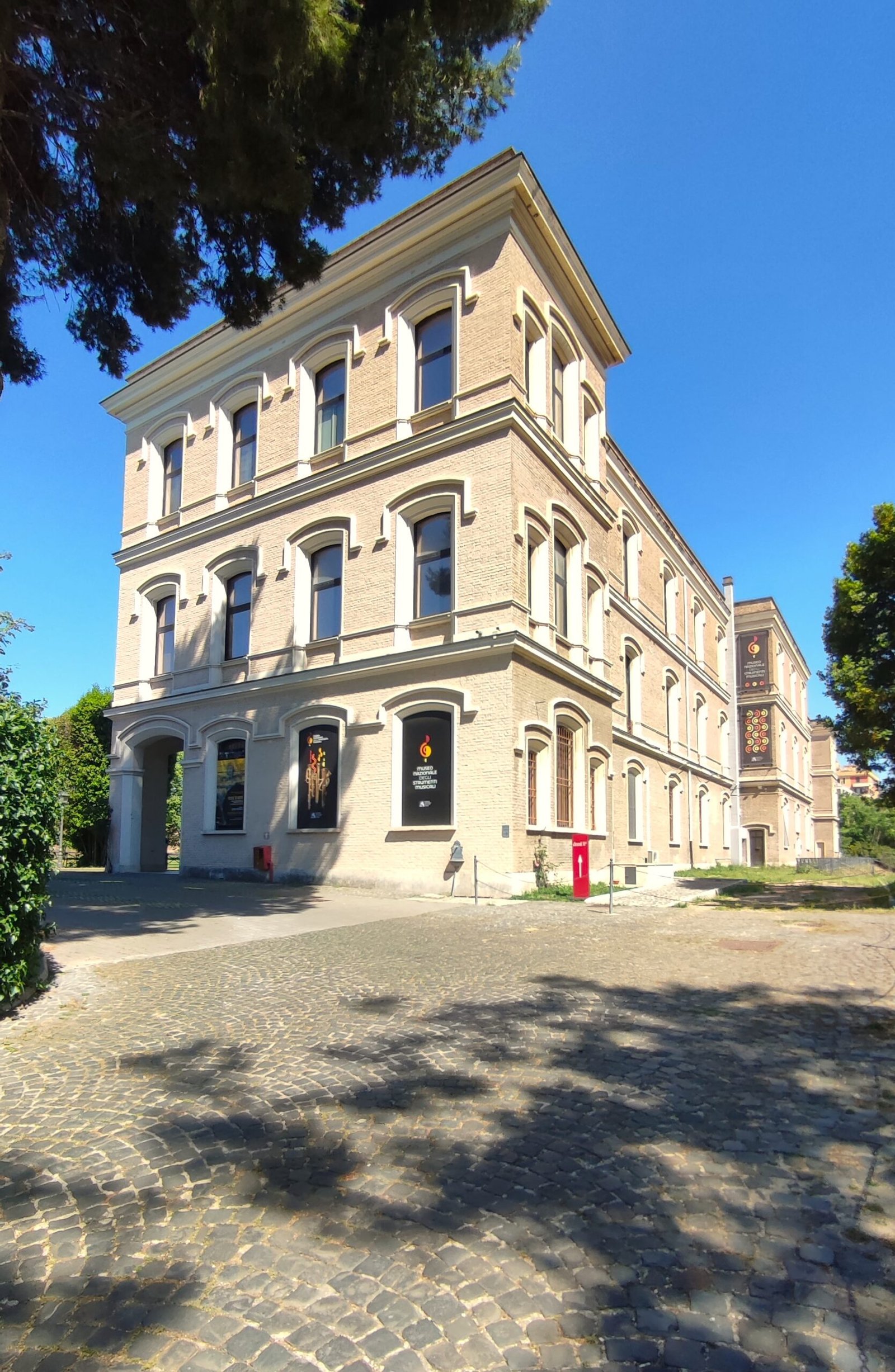
The National Museum of Musical Instruments is in the Palazzina Samoggia, at Piazza di Santa Croce in Gerusalemme 9/A, with access next to the basilica of Santa Croce. It's a state museum, opened in 1964, now part of the Istituto Pantheon e Castel Sant'Angelo, Directorate of National Museums of the City of Rome, directed by Luca Mercuri. The museum's director is Sonia Martone.
From Kircher to Gorga
Among those who devoted themselves to collecting musical instruments in Rome were Athanasius Kircher, the Jesuit collector, and Evan Gorga. Kircher's collection was dispersed with the arrival of the Piedmontese in Rome. Gorga's, born from an omnivorous collecting, passed to the State in 1949. For years the instruments were left without an exhibition venue, until Professor Luisa Cervelli fought for restoration and systematic cataloguing.
The most important pieces
Over time the museum acquired other instruments of great value: the Barberini harp, Bartolomeo Cristofori's piano, Weier's 16th-century cornamuti, the claviciterio. These are the names to look for during the visit before a show.
The route
The route retraces the history of music from antiquity: instruments from excavations, the Middle Ages and the Renaissance, the 1500s and 1600s, the 1600s and 1700s, non-European instruments, folk instruments, the invention of the piano, music on the move and the mechanical instruments of the 1800s and 1900s.
Something nobody tells you about Mondi Sonori 2026 at the National Museum of Musical Instruments, through December 19, 2026
Almost nobody says it, but the evening shows of Mondi Sonori start at 20:00, while the museum's ordinary hours have last entry at 18:30 and closing at 19:30. Anyone who wants to use the ticket also to visit the rooms, as the formula provides, must therefore plan: go in during the afternoon, visit the collection, and stay for the show, or ask the museum how entry is handled on series evenings.
The practical advice is to call 06 7014796 a few days beforehand. The press release doesn't specify if on show evenings the rooms stay open beyond the ordinary hours: it's information worth asking for directly.
The second thing few people know concerns the afternoon meetings. Atlanti Sonori and the Festival Popolare Italiano start at 17:30, that is, in the middle of opening hours. They are the most convenient dates for those who want to see the museum at leisure: you go in early in the afternoon, visit the route from antiquity to the 20th century, and at 17:30 move on to the meeting without having to go out.
Third thing, tied to the location. The museum is next to the basilica of Santa Croce in Gerusalemme, but the entrance isn't on the church's facade: it's in the Palazzina Samoggia, inside the same complex. Anyone arriving for the first time, in the evening, with the square poorly lit, will do well to allow a few extra minutes to find the entrance.
The museum's collections: what to see before the show
The collections of the National Museum of Musical Instruments span over two millennia, from the instruments of Roman and Etruscan antiquity to the music boxes and mechanical organs of the 20th century. Before a Mondi Sonori show it's worth devoting at least an hour to the visit.
Antiquity
In the antiquity room are displayed terracotta whistles, sistra, crotala and rattles, statuettes and oil lamps that depict instruments. A fragment of plaster found at Lucus Feroniae depicts a bichord, a two-string instrument of which it is the only known representation. There is a clay horn still working, attributed by Pico Cellini to the Faliscans between the sixth and fifth century BC, a Roman or Etruscan double tibia, and the copy of an aes thermarum, the gong that announced the opening and closing of the baths.
From the Middle Ages to the 1700s
The museum displays a trumpet from 1461, flutes, small horns, a positive organ with a 16th-century case, pentagonal spinets, a Gothic small harp, lutes. Then harpsichords, a clavichord, psalteries, guitars, Milanese and Neapolitan mandolins. And also chitarroni, theorbos, viols, cellos, bassoons, violins, viole d'amore, transverse flutes, clarinets and oboes.
The world and the people
Among the non-European instruments are a Japanese shamisen and koto, Chinese flutes including a shakuhachi, a pipa, panpipes, nine charangos, a Moroccan rebab, a qanun with 63 strings, a darbuka and an Indian sarangi. Among the folk instruments a 19th-century bronze statuette of a one-man band stands out.
The piano and music on the move
The room devoted to the invention of the piano displays a grand piano by Carlo Arnoldi, built with seven different woods, and 18th-century square pianos by Longman and Broderip, Erard, Morandi, Viola and Scholly. The music-on-the-move section gathers instruments for processions, serenades, hunting and street musicians: a folding harpsichord in three sections, an aeolian harp, hurdy-gurdies, guitar-lyres, a Harmoniflute.
My advice for visiting Mondi Sonori 2026 at the National Museum of Musical Instruments, through December 19, 2026
The advice is to choose an afternoon date at 17:30 and arrive at the museum around 15:30. In two hours you visit the rooms at leisure, from antiquity to the piano, and then move on to the meeting or concert without rushing.
For those who prefer the Scenari Sonori evenings, at 20:00, the strategy changes. It's best to phone the museum first to find out if the rooms can be visited before the show, and in any case to arrive well ahead. The show on Saturday, November 21 with Flo is, in our view, the only Scenari Sonori evening still on the program: anyone who wants a seat will do well to move early.
Second point: pair the show with the object. Before the meeting on the Viggiano harp, look for the museum's harps. Before Ettore Castagna's battente guitar, look for the guitars and mandolins. Before Nando Citarella's frame drums, look for the percussion in the antiquity room. The museum is built for this kind of comparison, and the series makes it possible.
Third point: buy the ticket on the Musei Italiani portal, if you want to avoid the kiosk. The 2-euro reduced rate and the free admissions required by law also apply to the shows.
Fourth point: combine the visit with the basilica of Santa Croce, a few steps away. In one afternoon you can hold together the church, the museum and a folk music concert: one of the richest and least crowded combinations Rome offers in the fall.
How to get to the National Museum of Musical Instruments
The National Museum of Musical Instruments is reached by Metro A, San Giovanni and Manzoni stops, by Metro C, San Giovanni and Lodi stops, and by trams 3, 5, 14 and 19, Piazza di Porta Maggiore stop.
Metro A and Metro C
San Giovanni station is served by both Line A and Line C, and is the most convenient interchange point. The Manzoni stop is on Line A, the Lodi stop on Line C. From each you reach Piazza di Santa Croce in Gerusalemme on foot.
The trams
Trams 3, 5, 14 and 19 stop at Piazza di Porta Maggiore. It's the best solution for those coming from the Termini area, the Pigneto or Prenestino.
The train
The museum can also be reached from Porta Maggiore station. For train and surface transit times it's best to consult the ATAC route planner.
By car
For those arriving by car the reference is Piazza di Santa Croce in Gerusalemme. The area is served by many public transit lines: in the evening, for the 20:00 shows, the trip back by metro or tram remains the simplest choice.
Another well-known fact, yet rarely cited
That the Rome museum devotes an entire room to the invention of the piano is a fact known to enthusiasts. That among its pieces is Bartolomeo Cristofori's piano is a fact cited much less often. The museum keeps it among its most important pieces, together with the Barberini harp, Weier's 16th-century cornamuti and the claviciterio.
The museum devotes an entire room to the invention of the piano, with a grand piano by Carlo Arnoldi and a series of European square pianos of the 1700s: Longman and Broderip, Erard of Paris from 1781, Morandi of Milan from 1795, Viola of Bologna from 1795, and the one by J. M. Scholly, a German who worked in Rome, from 1798. Next to it, an anonymous clavichord from 1690.
A second little-cited fact concerns visits. In 2018 the museum recorded 15,770 visitors. It's a small number for a collection of this level, and explains why a series like Mondi Sonori, which brings well-known actors and drawing-power musicians into the hall, matters to the museum itself. The director Sonia Martone says it in the press release: music, theater and storytelling become tools for experiencing the museum in a new way.
For the visitor the result is a rare advantage in Rome: a leading state museum you visit without lines, with time to look at every display case, and with the chance to end the visit listening to live music.
Stefano Saletti and Sonia Martone: who is behind Mondi Sonori
Mondi Sonori is the idea of the museum's director, Sonia Martone. The artistic supervision of the second edition is by Stefano Saletti, who also directs the Festival Popolare Italiano hosted by the series.
Stefano Saletti on stage
Saletti is not only artistic director. In this edition he is also a musician on stage: he created the sound fabric of the opening evening with Massimo Popolizio, on oud, bouzouki and electronics, with original compositions and music of the Mediterranean and Sephardic Jewish tradition. And he signs and performs the music of «Mitiche donne» with Pamela Villoresi. At his side, on both evenings, the voice of Barbara Eramo.
The museum's vision
According to Sonia Martone the museum preserves one of Italy's most important collections devoted to the history of music and instruments, and projects like Mondi Sonori make it possible to enhance it through the performing arts, connecting collections, spaces and audience. Luca Mercuri, director of the institute, speaks of a museum increasingly open to dialogue with the contemporary world and with different audiences.
Around the museum: Santa Croce, Porta Maggiore, San Giovanni
The National Museum of Musical Instruments is in one of the most layered areas of Rome, between the basilica of Santa Croce in Gerusalemme, Porta Maggiore and St. John Lateran.
Holy Cross in Jerusalem
The basilica of Santa Croce in Gerusalemme is a few steps from the museum entrance, which opens right next to the church. Visiting them together is natural.
Porta Maggiore
Piazza di Porta Maggiore, where trams 3, 5, 14 and 19 stop, is dominated by the monumental gate. Nearby is also the Underground Basilica of Porta Maggiore, one of the most singular places in ancient Rome.
San Giovanni
From the San Giovanni metro station you reach the basilica of San Giovanni in Laterano. In the area also run the Aurelian Walls, which you can follow on foot.
The right photo to take at Mondi Sonori 2026 at the National Museum of Musical Instruments, through December 19, 2026
The right photo isn't taken during the show, but before, in the museum rooms, in front of an instrument that has something to do with the evening. A photo of the Barberini harp before the meeting on the Viggiano harp, or of the Neapolitan mandolins before Maria Mazzotta's concert, tells the logic of Mondi Sonori better than any stage shot.
The museum lends itself: the display cases are arranged by era and by theme, and the most spectacular pieces, like Carlo Arnoldi's grand piano or the music boxes and mechanical organs of the Gorga collection, have a shape that works in photographs. The rules on photos in the rooms are set by the museum, and should be asked at the entrance.
Outside, the photo to take is the Palazzina Samoggia next to the basilica of Santa Croce, in the late autumn afternoon, when the light falls low over the square. It's the image that places the museum in its context, next to the basilica.
During the shows the advice is to keep the phone in your pocket. The museum's rooms aren't theaters, and the light of a screen is seen from every seat. A single photo before the start, with the stage instruments ready, is enough.
For those who like less obvious images: the Japanese shamisen and koto, next to the Andean charangos, tell in one frame the idea of different sound worlds that gives the series its title.
Some important events that happened here in history
The history of the National Museum of Musical Instruments is the history of a collection that looked for a home for decades before finding one.
The 1600s: Athanasius Kircher
The Jesuit Athanasius Kircher, an expert in organology according to historical reconstructions, was among the first great collectors of musical instruments in Rome. His collection was dispersed after the arrival of the Piedmontese in the city.
The 20th century: Evan Gorga
The tenor Evan Gorga put together over 150,000 pieces in about 30 collections. Financial and space problems forced him to cram about 3,000 musical instruments into 10 apartments at Via Cola di Rienzo 285.
1949: the State's acquisition
On September 27, 1949 the Italian State acquired the collection, committing to pay Gorga's debts. The instruments became public heritage, but stayed without a home for years.
1964: the opening
Thanks to Luisa Cervelli's commitment to restoration and cataloguing, the museum opened in 1964 in the Palazzina Samoggia. From December 2014 it was managed by the Polo museale del Lazio, from December 2019 by the Directorate of State Museums of Rome. Today it is part of the Istituto Pantheon e Castel Sant'Angelo.
2025-2026: Mondi Sonori
In 2025 the museum offered the first edition of Mondi Sonori, from June 8 to October 31. In 2026 the second edition, from September 12 to December 19, with the artistic supervision of Stefano Saletti.
Who has come through Mondi Sonori 2026 at the National Museum of Musical Instruments, through December 19, 2026
Through the second edition of Mondi Sonori have already passed Massimo Popolizio, with Bulgakov's pages on Pontius Pilate, and Ascanio Celestini, with the stories of «Poveri Cristi» and Danilo Blaiotta's piano. Enrico Lo Verso, Pamela Villoresi, Bronagh Slevin and Antonio Olivo with Malutempu have also already played or performed. In the coming weeks will come Mauro Palmas, Giacomo Verdeu, Maria Mazzotta, La Banda del Sud, Flo, Nando Citarella, Giuliana De Donno, Gabriella Aiello, Mànu Théron, Damien Toumi and Ettore Castagna.
But the museum was inhabited by great names long before the series. Through its display cases have passed, by way of the instruments, Bartolomeo Cristofori, with his piano. The piano makers of the 1700s, from Erard of Paris to Morandi of Milan, from Viola of Bologna to Scholly, the German who worked in Rome. Carlo Arnoldi, with his grand piano in seven woods. Weier, with the 16th-century cornamuti. And the Barberini family, whose name remains tied to the collection's most famous harp.
Behind them are the collectors and scholars who made the museum possible: Athanasius Kircher, Evan Gorga, Luisa Cervelli. And whoever directs it today, Sonia Martone, who conceived the series.
Seeing actors and musicians of this level in a musical instruments museum, a few yards from the display cases, is a different experience from that of a theater: closer, more intimate.
Accessibility and museum services
For the conditions of access to the rooms and the show spaces the reference is the museum itself, at 06 7014796 or at dms-rm.museostrumenti@cultura.gov.it.
Reduced tickets and free admission
The reduced ticket costs 2 euros. Free admissions are those provided by law for state museums. They also apply to the Mondi Sonori dates, which are included in the admission.
Payment
The museum's digital kiosk accepts card payment. Alternatively, the ticket is bought on the Musei Italiani portal.
Mondi Sonori with children
The Atlanti Sonori meetings, devoted to instruments, their construction and performance techniques, are the dates best suited to children and kids curious about music.
The instruments up close
Seeing a frame drum played by Nando Citarella or a battente guitar in the hands of Ettore Castagna, after seeing similar instruments in a display case, is a concrete way of explaining to a child how a sound is born.
The evenings
The evening shows of Scenari Sonori, at 20:00, are recitals of word and music designed for an adult audience: Maria Callas, the heroines of Greek myth, Bulgakov.
Where to eat near the museum
The area between Santa Croce, San Giovanni and Porta Maggiore is a lived-in neighborhood, with a food offer designed for those who live and work there.
Before the evening shows
With shows at 20:00, it's best to dine after. Before, a light aperitivo in the San Giovanni area, along the streets that lead to the metro.
After the afternoon meetings
The 17:30 meetings end at dinner time. The streets around San Giovanni and Porta Maggiore offer many possibilities.
Mondi Sonori in the fall: the time of year in Rome
Mondi Sonori 2026 covers the Roman fall, from September to December, the season when museums fill up again with Romans and the city's cultural life restarts.
October
October was the densest month of the series, with five dates: Lo Verso, Malutempu, Bronagh Slevin, Villoresi, Palmas and Verdeu. The days are still long and late afternoon is the best moment for Santa Croce square.
November and December
In November and December the dates are concentrated on Saturday afternoon. The last, on December 19 with Ettore Castagna, falls right before the holidays: a different way to begin the Christmas period.
Frequently asked questions about Mondi Sonori 2026
When does Mondi Sonori 2026 take place?
Mondi Sonori 2026 takes place from September 12 to December 19, 2026 at the National Museum of Musical Instruments in Rome. The next date is Saturday, October 31 at 17:30 with Mauro Palmas and Giacomo Verdeu. The last is Saturday, December 19 at 17:30 with Ettore Castagna.
How much does it cost to attend the Mondi Sonori shows?
The Mondi Sonori shows are included in the admission ticket to the National Museum of Musical Instruments: 6 euros full price, 2 euros reduced, with free admission as required by law. The ticket also lets you visit the exhibition rooms before the show.
Where do you buy tickets?
Tickets for the National Museum of Musical Instruments and for Mondi Sonori are bought at the museum's digital kiosk, which accepts card payment, or on the Musei Italiani portal.
What time do the shows start?
The Scenari Sonori shows, the evening section of Mondi Sonori, start at 20:00. The Atlanti Sonori meetings and the Festival Popolare Italiano concerts start at 17:30.
How do you get to the National Museum of Musical Instruments?
The National Museum of Musical Instruments, at Piazza di Santa Croce in Gerusalemme 9/A, is reached by Metro A (San Giovanni, Manzoni), by Metro C (San Giovanni, Lodi) and by trams 3, 5, 14 and 19, Piazza di Porta Maggiore stop.
What are the museum's hours?
The National Museum of Musical Instruments is open Tuesday to Sunday from 9:30 to 19:30, with last entry at 18:30. It is closed on Monday. For access on show evenings it's best to phone 06 7014796.
Who was on the Mondi Sonori program in October?
In October Mondi Sonori presented Enrico Lo Verso on the 3rd, Antonio Olivo's Malutempu on the 10th, Bronagh Slevin on the 17th, Pamela Villoresi with «Mitiche donne» on the 29th and Mauro Palmas with Giacomo Verdeu, on the cantabile lute and Sardinia, on the 31st.
The final advice on Mondi Sonori 2026
Mondi Sonori is one of the most generous series of the Roman fall: for the price of a museum admission it offers artists like Flo, musicians like Maria Mazzotta and Ettore Castagna, and one of Italy's most important collections of instruments. The advice is to pick at least two dates: one Scenari Sonori evening for the word, one afternoon of Atlanti Sonori or of the Festival Popolare Italiano for the instruments.
And to arrive early, every time, to see the rooms. A silent instrument in a display case and the same instrument played live shortly after: that's the heart of the series, and it's worth the trip to Santa Croce. For the museum the starting point is the page of the National Museum of Musical Instruments. The official program is on the museum's website.
Article written by the editorial team of Tour Leader Pro, contact them for Private/Corporate/V.I.P. Tours and Experiences.
Planning a trip to Rome? The English-language guides to visiting the city are on ItalyPlanner.com.