MAXXI Bvlgari Prize 2026 at MAXXI, from November 6, 2026 to March 7, 2027
https://www.estateromana.com/en/rome/trip-planner/maxxi-bvlgari-prize-2026-at-maxxi-from-november-6-2026-to-march-7-2027/
The MAXXI Bvlgari Prize 2026 exhibition is open from November 6, 2026 to March 7, 2027 at MAXXI, the National Museum of 21st Century Arts, at Via Guido Reni 4/A (00196 Rome), curated by Giulia Ferracci, with works by the three finalists Chiara Bersani, Adji Dieye and Margherita Moscardini. The museum is open Tuesday to Sunday from 11:00 to 19:00, with the ticket office closing one hour earlier. It is closed on Monday, May 1 and December 25. A full ticket costs €15 at the ticket office and €14 online, a reduced ticket €12 at the ticket office and €11 online. There is also an open ticket at €18. Tickets are bought at the museum's ticket desk or on the venue's official website, and MAXXI is part of the Roma Pass circuit. You get there by metro line A to Flaminio and then tram 2 toward Piazza Mancini, or by buses 53, 910, 168 and 982. On Via Guido Reni there is a stop named after the museum.
The fifth edition of the prize that since 2018 has joined MAXXI and Bvlgari to support young artists brings to Rome, for the first time, an all-female trio, with artists born between the 1980s and 1990s. A performer and choreographer, an Italian-Senegalese visual artist who works on archives and identity, an artist who took part in the Quadriennale di Roma: three different languages, one exhibition space, and in the end a winner whose work, made specially for the prize, will enter the museum's collection. In our view it is one of the exhibitions to follow in the Roman winter, also to understand where the youngest Italian art is going.
MAXXI Bvlgari Prize 2026 at a glance
The MAXXI Bvlgari Prize 2026 is the fifth edition of the project supporting and promoting young artists, run by MAXXI and Bvlgari since 2018, with Fondazione Bvlgari as main partner and Giulia Ferracci as curator.
An all-female trio
The museum stresses what is new in this edition: for the first time the trio of finalists, made up of artists born between the 1980s and 1990s, is entirely female. The finalists are Chiara Bersani, Adji Dieye and Margherita Moscardini.
Site-specific works
Each artist creates a site-specific work specifically for the prize. At the end of the project a jury names the winner, and the winning work becomes part of the MAXXI collection.
The dates
The exhibition lasts four months, from November 6, 2026 to March 7, 2027. In previous editions the closing was sometimes extended, and the date of the award was announced during the opening of the exhibition: it's best to follow the updates on the museum's website.
The curator
Giulia Ferracci has curated all the editions of the prize linked to Bvlgari, since 2018, and before that the 2012 Premio Italia and the 2014 and 2016 editions of the Premio MAXXI. She is the living memory of this project.
The three finalists of the MAXXI Bvlgari Prize 2026
The finalists of the MAXXI Bvlgari Prize 2026 are Chiara Bersani, a performer and choreographer awarded an Ubu, Adji Dieye, an Italian-Senegalese artist born in Milan in 1991, and Margherita Moscardini, an artist featured in the 16th Quadriennale di Roma.
Chiara Bersani
Chiara Bersani won the Ubu Award as new actress or performer under 35 in the 2017-2018 season. In the United Kingdom she received the Total Theatre Award for dance with Seeking Unicorns, and she created the Family Tree trilogy, a project in which Riccardo Buscarini also took part. In 2026, at the Arena di Verona, one of her performances was part of the opening ceremony of the Winter Paralympic Games. She also took part as a performer in the 2020 film Siberia and in the Contemporanea festival.
Adji Dieye
Born in Milan in 1991, Adji Dieye is an Italian and Senegalese interdisciplinary artist. She trained at the Brera Academy, with a degree in new technologies for art, and at the Zürcher Hochschule der Künste, with a master's in visual arts. She lives and works between Zurich, Milan and Dakar. She won the FOAM Talent award in 2019 and the Talent award of C/O Berlin.
Margherita Moscardini
Margherita Moscardini is among the artists who took part in the 16th Quadriennale d'arte di Roma, Q16, held at Palazzo delle Esposizioni between October 16, 2016 and January 8, 2017. Her project for MAXXI is presented by the museum on the exhibition page.
The official images
The header image of the exhibition shows the portraits of Chiara Bersani, photographed by Lorenza Daverio, and of Adji Dieye, photographed by Emmanuel Yoro.
Adji Dieye: archives, advertising and postcolonial identities
Adji Dieye's work explores the construction of postcolonial national identities and the way architecture, advertising and archives produce collective and individual identity.
The exhibitions
Her works have been shown at the Lyon Biennale of Contemporary Art in 2022, at the Dak'Art 2022 biennial, at the Rencontres de Bamako 2022, at the FOAM museum and at the Kunsthalle in Vienna in 2020. Her solo shows have been presented, among others, at the Fotomuseum Winterthur and at Fondation H in 2023 and at C/O Berlin in 2021.
Maggic Cube
The Maggic Cube series, begun in 2015 and selected by FOAM in 2020, reflects on the impact of advertising on visual culture: the artist takes up the graphic codes of bouillon cube packaging, citing photographers like Malick Sidibé and Seydou Keïta, to reason about the reduction of styles perceived as African. The video Circuit Fermé completes the series, in which a man sells bouillon cubes in a Milanese market.
Red Fever and Aphasia
In Red Fever the artist investigates the link between communism and Africa through architectural traces and photographic archives. In Aphasia, presented in 2023 at the Fotomuseum Winterthur, two videos set side by side an official speech read in halting French and the voices of Dakar residents speaking in Wolof: a reflection on the power of the colonial language.
Chiara Bersani: the body on stage
Chiara Bersani is a performer, author and choreographer who works between theater and dance: she won the Ubu Award as best new actress or performer under 35 in the 2017-2018 season.
Seeking Unicorns
With Seeking Unicorns, Chiara Bersani won the Total Theatre Award in the United Kingdom in the dance category.
The 2026 Paralympics
In the opening ceremony of the 2026 Winter Paralympic Games, at the Arena di Verona, a performance by the artist and choreographer Chiara Bersani followed the show by the percussionists and dancers, before the entrance of the Italian flag.
From theater to museum
The presence of a performer among the finalists of a visual arts prize says a lot about how MAXXI understands contemporary art today. In previous editions the prize had already welcomed video, sound, robotics and installation. With Bersani the body itself becomes the material of the work.
How to look at the MAXXI Bvlgari Prize exhibition
The MAXXI Bvlgari Prize 2026 exhibition sets three new works in dialogue, conceived for the museum: the best way to look at it is to compare them, as the jury does.
Three languages
The three finalists come from different paths: the theater scene and dance for Chiara Bersani, photography, video and the archive for Adji Dieye, a path that also went through the Quadriennale di Roma for Margherita Moscardini. The comparison between languages is part of the prize.
The juries' reasons
The citations from past editions help to understand what matters to the jury: in 2024 the ability to intervene on the museum's space and to interact with materials, in 2022 the strength in recomposing documents, photographs and films into a new narrative. Keeping them in mind while looking at the exhibition is a good exercise.
The time you need
For the three works, plan on at least an hour, more if they include video or scheduled performances. The calendar of any meetings and talks with the artists is published on the museum's website, as in previous editions.
The history of the prize: from the Premio per la Giovane Arte to the MAXXI Bvlgari Prize
The prize was born in 2000 as the Premio per la Giovane Arte italiana, and it is the starting point of the MAXXI Arte collection. Since 2018, with Bvlgari as partner, it has also opened to foreign artists who have carried out a project in Italy.
The Premio per la Giovane Arte
The prize was born when MAXXI was still in the design phase, to support the debate on Italian art and to acquire works for the future museum. The first edition, in 2000-2001, was held in the Mazzoni wing of Termini station and selected 15 artists out of 500, among them Stefano Arienti, Massimo Bartolini, Vanessa Beecroft, Paola Pivi and Grazia Toderi.
Premio Italia and Premio MAXXI
In 2010, with the opening of the museum, the prize took the name Premio Italia: Rossella Biscotti won, and in 2012 Giorgio Andreotta Calò. In 2014 it became Premio MAXXI and was awarded to Marinella Senatore with Natura dell'emozione. In 2016 it went to Zapruder filmmakersgroup.
The Bvlgari era
In 2018 the partnership with Bvlgari renews the prize and projects it onto the international scene. The 2018 finalists are Talia Chetrit, Invernomuto and Diego Marcon, chosen by a jury including Hans Ulrich Obrist, Yuko Hasegawa and David Elliott. The 2020 edition is presented in London, at the Bulgari Hotel, with the finalists Giulia Cenci, Tomaso De Luca and Renato Leotta.
The last two editions
In 2022 Alessandra Ferrini wins with Gaddafi in Rome: Notes for a Film, ahead of Silvia Rosi and Namsal Siedlecki. In 2024 the finalists are Riccardo Benassi, Monia Ben Hamouda and Binta Diaw. On January 17, 2025 Monia Ben Hamouda wins with Theology of Collapse (The Myth of Past) I-X, and Roberto Fassone receives the first MAXXI Bvlgari Prize for Digital Art with And We Thought.
Zaha Hadid's MAXXI, home of the exhibition
MAXXI is the National Museum of 21st Century Arts, designed by Zaha Hadid in the Flaminio district on the site of the former Montello barracks and opened in 2010. Our listing on MAXXI tells the story of the museum and its collections.
The 1998 competition
In July 1998 the international competition was announced for the new contemporary arts hub: 273 entries, 15 designers admitted to the second phase. At the end of February 1999 the jury chose Zaha Hadid's project, appreciated for its ability to blend into the urban fabric of the district.
An urban campus
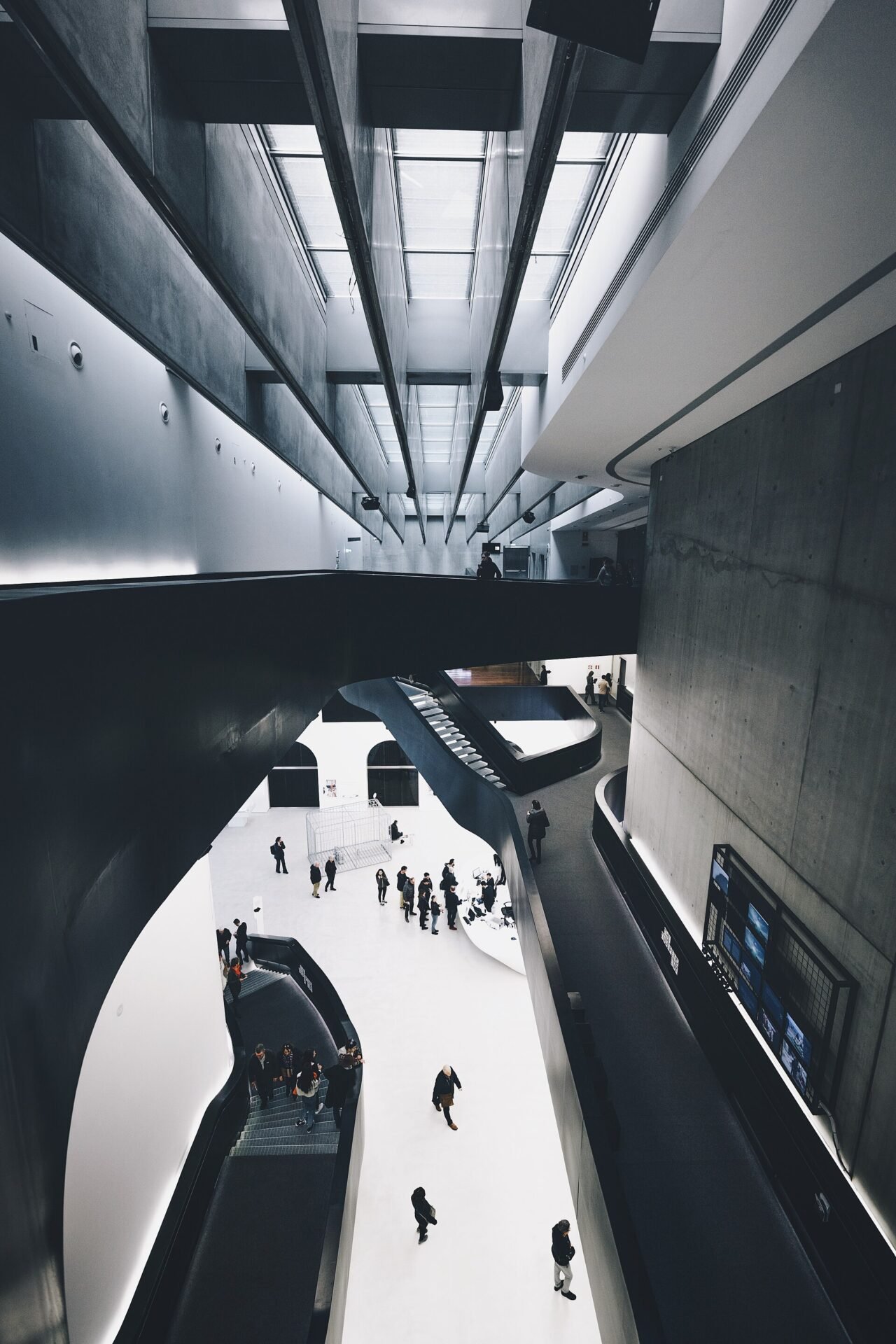
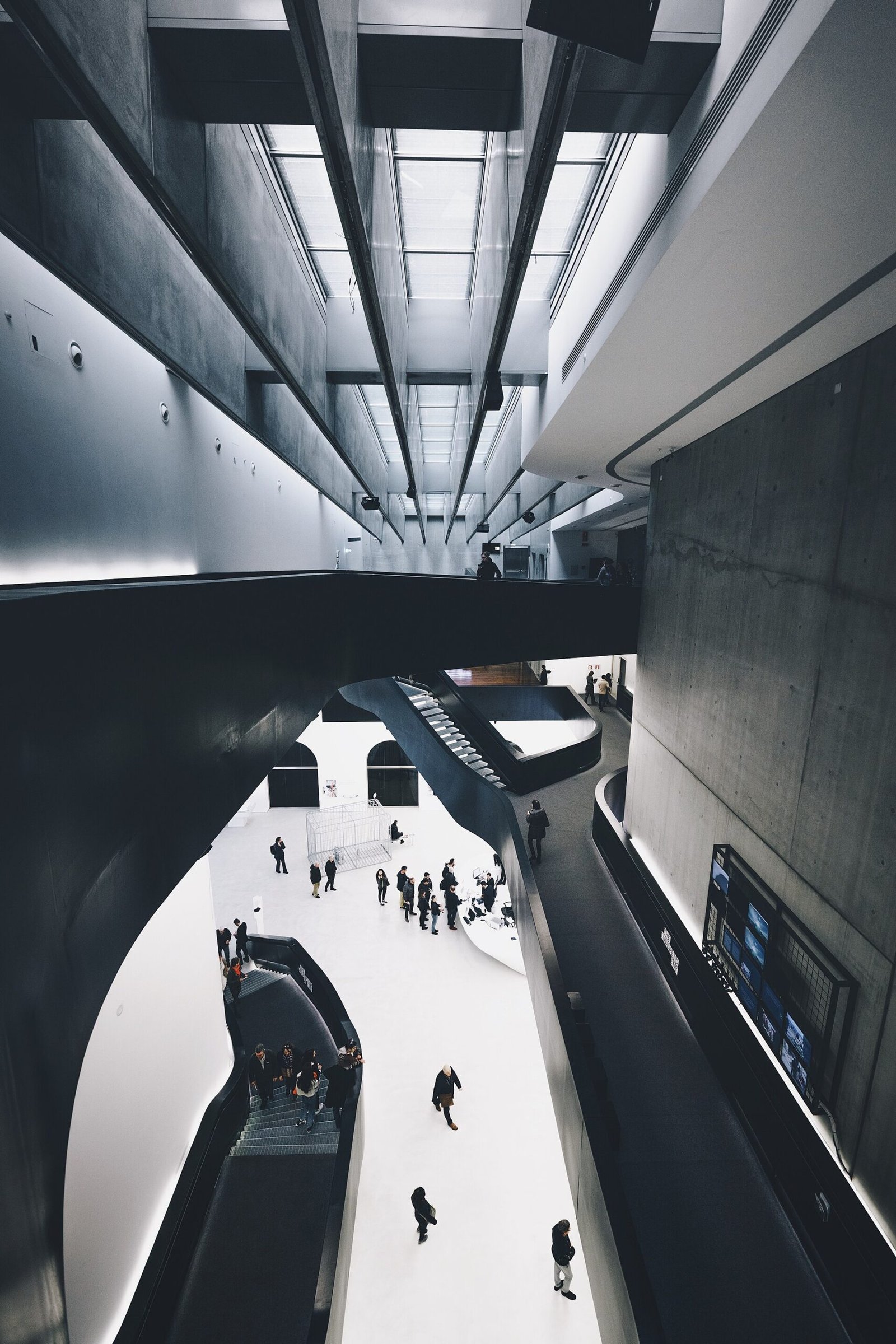
The project is conceived as a campus, in which museums, laboratories, reception spaces, auditoriums and pedestrian paths interweave on several levels. The striped pattern of the roof recalls the sheds of the military buildings that stood there before. Walls and surfaces are in self-compacting concrete, and the roof blades are clad in fiber-reinforced cement.
The works always on view
Alongside the temporary exhibitions, three installations always remain on view at MAXXI: those by Anish Kapoor, Sol LeWitt and Maurizio Mochetti. The square in front of the museum is named after Alighiero Boetti and hosts outdoor works.
MAXXI L'Aquila
Since May 28, 2021 the museum has a branch in L'Aquila, at Palazzo Ardinghelli, dedicated to site-specific works.
A curiosity about the MAXXI Bvlgari Prize 2026 at MAXXI, from November 6, 2026 to March 7, 2027
The most interesting curiosity is that the prize is older than the museum that hosts it. The Premio per la Giovane Arte was born in 2000, when MAXXI existed only on paper, and its first edition was held in the Mazzoni wing of Termini station. The museum itself recalls that the prize is the starting point and birth of the MAXXI Arte collection: the works by the finalists of those years were the first acquired for a museum that would open 10 years later. Anyone visiting the 2026 exhibition therefore sees the latest installment of the project from which the museum's entire art collection was born.
The second curiosity concerns the rooms. The 2018 exhibition was set up in Gallery 4, the 2022 one in Gallery 5, the 2024 one in the Gian Ferrari room, and in 2024 one of the works, by Riccardo Benassi, was placed inside the museum's freight elevator, with two robot dogs performing choreographies. The prize has accustomed the public to look for works in unexpected spaces. Third curiosity: the 2020 edition was presented in London, at the Bulgari Hotel, on October 1, 2019. A Roman prize announced in the British capital: a sign of the international vocation that Bvlgari brought to the project.
Something nobody tells you about the MAXXI Bvlgari Prize 2026 at MAXXI, from November 6, 2026 to March 7, 2027
What few people say is that the prize exhibition changes over the months. In past editions the winner was announced while the exhibition was open: in 2024, for example, the international jury named Monia Ben Hamouda on January 17, 2025, almost three months after the opening, and from that day the museum added the winning work of the digital art prize in the lobby. Whoever visits the exhibition in November sees three finalists in competition, whoever visits in February sees a winner. Going back twice makes sense.
The second thing concerns the hours. MAXXI is open from 11:00 to 19:00, but the ticket office closes one hour earlier: if you arrive at 18:10 you'll find the desk closed. On Monday the museum is closed, and so on December 25. The third is a little-known convenience: through an external service, the museum offers the possibility of leaving your dog at a dog-sitting service during the visit, booking at least 24 hours ahead, at a cost of €10 an hour.
The advice I give you for visiting the MAXXI Bvlgari Prize 2026 at MAXXI, from November 6, 2026 to March 7, 2027
My advice is to visit the exhibition before the award and, if possible, to go back afterward. Seeing the three works without knowing who will win forces you to look at them carefully and form your own idea. Comparing it afterward with the jury's choice is one of the most interesting exercises a museum can offer. For the first visit, choose a weekday, early in the afternoon, when the museum is quieter. The online ticket costs one euro less than the one at the desk.
Second piece of advice: set aside at least half an hour for the works of Adji Dieye and for Chiara Bersani's, taking your time, because they work on archives, languages and bodies, and they ask for time. Then use the same ticket for the museum's other exhibitions: in the same period MAXXI hosts Sophie Calle until February 7, 2027 and Gordon Matta-Clark from November 13 to February 28. Third: the MAXXI audio guide costs €3 and has a route dedicated to Zaha Hadid's building, in Italian and English. In our view it's worth the money, to understand the space in which the three artists built their works.
How to get to MAXXI
You reach MAXXI by metro line A to Flaminio and then tram 2 toward Piazza Mancini, or by bus 910 from Termini, 53 from Largo Chigi, 168 and 982.
Metro and tram
From Piazzale Flaminio, at the exit of metro line A, tram 2 leaves for Piazza Mancini: the useful stop is the one closest to Via Guido Reni. It is also the combination indicated for Auditorium Parco della Musica, about 650 meters as the crow flies from the museum.
Buses
The 910 connects Termini to Piazza Mancini and is the most convenient choice for those arriving from the station. The 53 leaves from Largo Chigi, near Via del Corso. On Via Guido Reni, about 130 meters from the entrance, there is a stop named after the museum, marked as wheelchair accessible.
On foot
The Ponte della Musica, for pedestrians and cyclists, connects Flaminio to Lungotevere Cadorna and to Foro Italico: from there to the museum it is about 650 meters along the axis of Via Guido Reni.
By car
Street parking is difficult, especially on concert or match nights. Auditorium has two paid parking lots with access from Viale Pietro de Coubertin, about a 10-minute walk from MAXXI.
Tickets, hours and services
At MAXXI a full ticket costs €15 at the ticket office and €14 online, a reduced ticket €12 and €11, the open ticket €18. The museum is open Tuesday to Sunday from 11:00 to 19:00.
Purchase and assistance
Tickets are bought at the desk or on the museum's official website. The call center, reachable at 800266300 from Italy and at +39 3512428135 from abroad, answers every day from 10:00 to 19:00. Changing the date is possible until the day before the visit, by 18:00, at a cost of €2.50.
Roma Pass
MAXXI is part of the Roma Pass circuit, the card for visitors that offers savings and services for the capital's museums.
Audio guides and activities
Audio guides cost €3 and offer routes on the building and on the exhibitions in Italian and English. For educational activities the museum lists the number 3386419518, Monday to Friday from 9:30 to 13:00.
Flaminio around MAXXI
MAXXI is in the Flaminio district, between Via Flaminia, the Tiber and the Parioli hill. Auditorium Parco della Musica, the Ponte della Musica and Villa Glori are a few minutes' walk away.
Auditorium
Designed by Renzo Piano and opened in 2002, Auditorium hosts in its foyer a route of neon installations by Maurizio Nannucci and some Cellotex works by Alberto Burri, and in its gardens two sculptures by Keith Haring from 1989. For anyone leaving MAXXI still wanting art, it's a small free itinerary.
Villa Glori
Behind Auditorium rises Villa Glori, opened in 1924 as the Parco della Rimembranza and since 1997 home to installations by contemporary artists, among them Kounellis, Staccioli and Uncini.
Across the Tiber
Crossing the Ponte della Musica you reach Foro Italico. Farther north, along the river, Milvian Bridge.
Where to eat near MAXXI
MAXXI has a cafe and restaurant inside: the most convenient solution for a break during the visit.
In the museum and at Auditorium
In addition to the museum's services, Auditorium Parco della Musica, about a 10-minute walk away, has a bar and restaurant.
In the neighborhood
Flaminio is a residential neighborhood, with dining aimed at those who live and work there. For dinner after the visit you can choose between Parioli and Ponte Milvio, reachable in a few minutes by taxi.
Accessibility
MAXXI is listed by the tourist portal of Roma Capitale as a museum accessible to people with disabilities, with dedicated restrooms. The stop on Via Guido Reni is marked as wheelchair accessible.
Information
For discounts, free admission and interior routes, the reference is the museum, at 06 3201954, or the accessibility page on the official website.
Reserved parking
The two paid parking lots at Auditorium have spaces reserved for people with disabilities.
Another well-known fact, yet rarely mentioned
Anyone who follows contemporary art knows that the MAXXI Bvlgari Prize is one of the most important prizes for young artists in Italy. It is less often remembered that since 2018 the prize is no longer reserved for Italians: the partnership with Bvlgari opened it to foreign artists who have carried out a new project in Italy in the last two years, in public institutions or private organizations. That is why among the finalists of recent editions there are artists born abroad or with a dual identity, like Talia Chetrit in 2018 and, in 2026, Adji Dieye, who lives between Zurich, Milan and Dakar.
The second fact concerns the juries, which change with every edition and bring together museum directors from around the world. In 2018 there were Hans Ulrich Obrist of the Serpentine in London and Yuko Hasegawa of the MOT in Tokyo. In 2020 Manuel Borja-Villel of the Reina Sofía, Emma Lavigne of the Palais de Tokyo and Victoria Noorthoorn of the Museo de Arte Moderno in Buenos Aires. In 2022 Hoor Al Qasimi of the Sharjah Art Foundation, Chiara Parisi of the Pompidou-Metz and Dirk Snauwaert of WIELS in Brussels. A finalist of the prize passes, in a few months, under the eyes of some of the most influential curators in the world.
The right photo to take at the MAXXI Bvlgari Prize 2026 at MAXXI, from November 6, 2026 to March 7, 2027
The right photo is taken in MAXXI's big hall, looking down from above at the suspended black stairs that cross the white space: it is the image that tells the story of Zaha Hadid's architecture better than any other, with the small people below giving the scale of the building. The overhead light that comes down from the striped roof changes during the day, and on a winter early afternoon it is soft and even.
Inside the exhibition, the rules on photography are set by the museum, and for site-specific works that often include video, sound or performance it's best to ask at the entrance. The second photo is in Piazza Alighiero Boetti, with the museum's overhanging volume above your head. The third is for those who come back after the award: the winning work photographed on the day it symbolically enters the museum's collection.
Some important events that happened here in history
The history of MAXXI begins with a military area. In 1997 the large complex of workshops and halls of the former Montello barracks at Flaminio, unused for years, is identified as the site of the new contemporary arts hub. In July 1998 the international competition receives 273 entries. At the end of February 1999 Zaha Hadid wins. In July 1999 a law establishes the Center for the documentation and promotion of contemporary arts, which takes the name MAXXI. Meanwhile, in 2000, the Premio per la Giovane Arte is born, and its first edition is held at Termini station. In 2010 the museum opens, and the prize, which has become the Premio Italia, finally finds its home.
In 2012 Giorgio Andreotta Calò wins, in 2014 Marinella Senatore, in 2016 Zapruder filmmakersgroup. In 2018 the partnership with Bvlgari begins. On October 1, 2019 the 2020 edition is presented in London. On May 28, 2021 MAXXI L'Aquila opens. In 2022 Alessandra Ferrini wins. On January 17, 2025 Monia Ben Hamouda. On November 6, 2026 the fifth edition opens, with the first all-female trio in the history of the prize.
Who has come through the MAXXI Bvlgari Prize 2026 at MAXXI, from November 6, 2026 to March 7, 2027
Many of the names of Italian art of the last 25 years have come through the prize. In the first edition, among others, Mario Airò, Stefano Arienti, Massimo Bartolini, Vanessa Beecroft, Liliana Moro, Paola Pivi and Grazia Toderi. Then Lara Favaretto, Loris Cecchini, Roberto Cuoghi, Nico Vascellari, Rosa Barba, Rossella Biscotti, Adrian Paci, Yuri Ancarani, Marinella Senatore, Adelita Husni-Bey. In the Bvlgari era Talia Chetrit, Invernomuto, Diego Marcon, Giulia Cenci, Tomaso De Luca, Renato Leotta, Alessandra Ferrini, Silvia Rosi, Namsal Siedlecki, Riccardo Benassi, Monia Ben Hamouda, Binta Diaw and Roberto Fassone.
Through the museum have come Zaha Hadid, who designed it, and the artists of the works always on view, Anish Kapoor, Sol LeWitt and Maurizio Mochetti. The square bears the name of Alighiero Boetti. Among the jurors of the prize have come Hans Ulrich Obrist, Yuko Hasegawa, David Elliott, Manuel Borja-Villel, Emma Lavigne, Victoria Noorthoorn, Hoor Al Qasimi, Chiara Parisi and Dirk Snauwaert, with Hou Hanru and Bartolomeo Pietromarchi for MAXXI. From November 6, 2026 they are joined by Chiara Bersani, Adji Dieye and Margherita Moscardini, with the curator Giulia Ferracci.
From November to March: the period of the exhibition
The MAXXI Bvlgari Prize 2026 spans the whole Roman winter, from November 6, 2026 to March 7, 2027: four months in which museums go back to being the natural place for an afternoon.
November and December
The first weeks are the quietest. On December 25 the museum is closed. In the holiday weeks Rome's museums fill up with families and visitors on vacation.
January and February
After Epiphany the museum finds a slow rhythm. It is also the period in which, in past editions, the award came: check the museum's calendar.
The last weeks
The closing is set for March 7, 2027. In 2024 the exhibition was extended by a few days: any changes will be announced by the museum.
Frequently asked questions about the MAXXI Bvlgari Prize 2026
When can you see the MAXXI Bvlgari Prize 2026?
The MAXXI Bvlgari Prize 2026 exhibition is open at MAXXI from November 6, 2026 to March 7, 2027, Tuesday to Sunday from 11:00 to 19:00, with the ticket office closing one hour earlier. The museum is closed on Monday and on December 25.
How much does a ticket to MAXXI cost?
A MAXXI ticket, which also gives access to the MAXXI Bvlgari Prize 2026 exhibition, costs €15 full price at the ticket office and €14 online, €12 reduced at the ticket office and €11 online. The open ticket costs €18. The museum is part of the Roma Pass circuit.
Who are the finalists of the MAXXI Bvlgari Prize 2026?
The finalists of the MAXXI Bvlgari Prize 2026 are Chiara Bersani, Adji Dieye and Margherita Moscardini, artists born between the 1980s and 1990s. It is the first time the prize's trio is entirely female. The exhibition is curated by Giulia Ferracci.
What does the winner of the prize win?
At the end of the MAXXI Bvlgari Prize 2026 a jury names the winner, and her work, made site-specific for the prize, becomes part of the MAXXI collection. In 2024 the prize went to Monia Ben Hamouda.
How do you get to MAXXI?
MAXXI, home of the MAXXI Bvlgari Prize 2026, is at Via Guido Reni 4/A, in the Flaminio district. You get there by metro line A to Flaminio and then tram 2 toward Piazza Mancini, or by buses 910, 53, 168 and 982.
Since when has the prize existed?
MAXXI's prize has existed since 2000, when it was born as the Premio per la Giovane Arte, then became the Premio Italia and the Premio MAXXI. Since 2018, with Bvlgari as partner, it has been called the MAXXI Bvlgari Prize. 2026 is the fifth edition of this new phase.
Are there audio guides for the exhibition?
MAXXI offers audio guides at €3, in Italian and English, with routes dedicated to Zaha Hadid's building and the museum's exhibitions. They are bought at the ticket office and listened to on your own device via QR code.
Final advice on the MAXXI Bvlgari Prize 2026
The MAXXI Bvlgari Prize 2026 is an exhibition to see twice: before the award, to form an idea of the three competing works, and after, to compare it with the jury's choice. My advice is to buy the ticket online, go on a weekday early in the afternoon and combine the visit with the museum's other exhibitions. In our view, the first all-female trio of a prize that built the MAXXI collection is a good reason to cross Rome to Flaminio.
Article written by the editorial team of Tour Leader Pro, contact them for Private/Corporate/V.I.P. Tours and Experiences.
Planning a trip to Rome? The English guides to visiting the city are on ItalyPlanner.com.