Marina Abramović at Galleria Nazionale d’Arte Moderna, November 18, 2026 to April 4, 2027
https://www.estateromana.com/en/rome/trip-planner/marina-abramovic-at-galleria-nazionale-darte-moderna-november-18-2026-to-april-4/
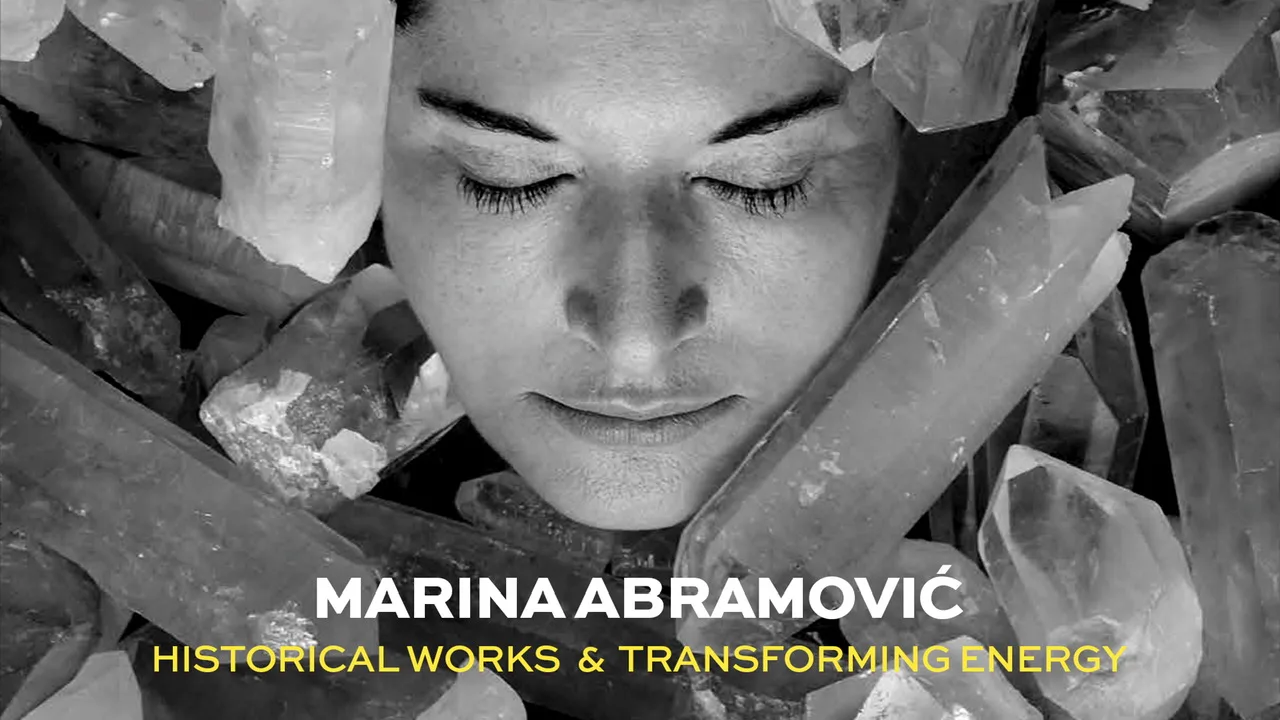
Marina Abramović: Historical Works and Transforming Energy is on from November 18, 2026 to April 4, 2027 at Galleria Nazionale d'Arte Moderna e Contemporanea (GNAMC), Viale delle Belle Arti 131, 00197 Rome. The museum is open Tuesday through Sunday from 9:00 to 19:00, with last entry at 18:15, is closed on Monday and on December 25, and until December 17 is also open on Thursday evenings, from 19:00 to 23:00. The tram stops a few steps from the entrance (Galleria Arte Moderna stop). Flaminio metro station is a little over half a kilometer away as the crow flies. The exhibition is included in the museum admission ticket, which costs €17 full price and €2 reduced for European Union citizens between 18 and 25. Under 18s get in free. Tickets are bought at the museum box office or online through the presale network authorized by the organizer, reachable from the venue's official website. The exhibition is curated by Shai Baitel and Andrea Tarsia.
Galleria Nazionale is one of the right museums for anyone who thinks they have already seen everything. This time the reason is specific: for Marina Abramović's 80th birthday, some of the works that made the history of performance arrive in Valle Giulia, together with a series of works that you don't just look at, you use. You lie down, you sit, you stay still. For a state museum it is a bold choice, and for the visitor it is an experience that changes the rhythm of the day. Below you will find everything you need: what is on show, who the artist is, the history of the building, hours, tickets, tram, accessibility, children, where to eat and how to combine the visit with Villa Borghese.
Marina Abramović at GNAMC: what you see in Historical Works and Transforming Energy
The Roman exhibition of Marina Abramović brings together two distinct cores: a selection of historic works that marked the history of performance art, and a selection of the Transitory Objects, the series of objects in stone and minerals that the artist has been working on for over 30 years. The Gallery describes the itinerary as a passage through different moments of Abramović's research, built to connect the performative dimension of the body with that, slower and deeper, of matter.
The two souls of the itinerary
The title already tells you the structure. Historical Works is the part devoted to the historic works. Transforming Energy is the central core, built around the Transitory Objects. The first block looks back, to the years when the artist's body was the instrument and the measure of the work. The second brings the visitor inside the work, because without the body of whoever enters the room those works remain, by the Gallery's own declaration, incomplete. It is a convincing approach: instead of a chronological retrospective, two different ways of understanding presence set side by side.
An exhibition for the artist's 80th birthday
The occasion is the 80th birthday of Marina Abramović, born in Belgrade in 1946. The Gallery presents it as the thread that holds together the choice to bring together works far apart in time: works from the 1970s, 1990s and 2000s next to the works with minerals, to show continuity and transformations of themes like presence, duration, the body, energy and the relationship with the public.
From Venice to Rome, in an expanded version
Before Rome the exhibition was presented at the Gallerie dell'Accademia in Venice, on the occasion of the 61st International Art Exhibition of the Venice Biennale. At Valle Giulia it arrives in an expanded version. Those who saw it in the lagoon will therefore find a different itinerary, and those who didn't have almost five months in Rome: 137 calendar days, from November 18 to April 4.
Historical Works: Marina Abramović's historic works on show
The Historical Works section, curated by Andrea Tarsia, includes among others three works that the Gallery calls iconic: Imponderabilia from 1977, Balkan Baroque from 1997 and The Artist is Present from 2010. Three dates, three decades, three ways of putting the body in front of the public. Through these works, the official presentation explains, the itinerary restores the centrality that Abramović has attributed to the body, presence, duration and the relationship with those who look, elements that over the decades have turned performance into a space of experience and exchange.
Imponderabilia (1977)
Imponderabilia is a work from 1977 made with Ulay, as the Gallery's biographical note recalls. It is the oldest of the three works cited by the official presentation and belongs to the season in which Abramović, from the 1970s, built actions marked by a radical physical and temporal exposure.
Balkan Baroque (1997)
Balkan Baroque is from 1997: it was presented at the Venice Biennale and awarded the Golden Lion, again according to the official biographical note. It is the work that links the Roman exhibition most directly to the artist's Venetian history, and the move of this exhibition from Venice to Rome makes it even more fitting.
The Artist is Present (2010)
The Artist is Present is from 2010 and was made at the Museum of Modern Art in New York. The title already says a lot: the artist's presence as the work. Finding it again in an Italian state museum, a few steps from the 19th-century rooms, has a certain effect, and helps explain why the Gallery chose precisely the words presence and duration to describe the whole exhibition.
Transforming Energy and Marina Abramović's Transitory Objects
At the center of the exhibition is Transforming Energy, a core that includes a selection of the Transitory Objects: stone beds, structures and sculptural forms made with quartz, amethyst, agate and other minerals. They are conceived as devices: the visitor lies down, sits or pauses on the different structures, and so activates what the artist calls a process of energy transmission. The work, the Gallery writes, is not exhausted in its sculptural dimension but is completed by the presence and physical experience of whoever passes through it.
Stone beds, quartz, amethyst, agate
The word that matters is participation. Before the Transitory Objects the classic role of the visitor, the one who looks from a safe distance, is overturned. Here the distance is zero. It is the part of the exhibition that divides people most: some lie down and stay for 10 minutes in silence, and some watch others do it and find in that gaze the real work. It is worth trying.
Geological time
With the Transitory Objects, Abramović's research on the body confronts a different conception of time: the geological time of minerals and the Earth. The materials used are the result of natural processes developed over several geological eras, and they bring into the relationship with the body a time scale very far from that of human experience. The body, the official presentation concludes, becomes the meeting point between different times, energies and forms of matter. It is an interesting reading because it connects the duration of the historic performances, made of hours and days, to the duration of minerals, made of eras.
The Great Wall, 1988
The artist's interest in crystals and in their relationship with energy and the human body develops in particular after the journey she made along the Great Wall of China in 1988. During that experience, the Gallery tells us, Abramović comes into contact with some principles of traditional Chinese medicine, which orient her reflection on the relationship between body, energy and matter. In the following decades the Transitory Objects become a significant component of her practice: starting in the 1990s, the biographical note specifies, the research on body, energy and matter finds in this very series one of its main expressions.
Who Marina Abramović is
Marina Abramović was born in Belgrade in 1946 and is considered among the most important and influential figures of international performance art. Since the 1970s she has developed a body of research centered on the body, presence, duration and the relationship between artist and public. With actions often marked by a radical physical and temporal exposure, according to the biographical note published by the Gallery, she has helped redefine the boundaries of performance and the role of the spectator in the artistic experience.
Belgrade, 1946
The date of birth explains the occasion for the exhibition: 1946 leads to the 80 years that the Gallery celebrates with this show. The city of birth explains instead a part of the itinerary: Belgrade and the Balkans return in the title of one of the best-known works on show, Balkan Baroque. Over the course of her career the artist has made performances and works in many international museums and institutions, dealing with themes tied to physical endurance, consciousness, spirituality and interpersonal relationships.
The body as instrument and measure
The best formula is offered by the exhibition's own presentation: from the actions in which the body becomes the instrument and measure of the performance to the Transitory Objects, where the body meets matter and the deep time of the Earth. In between there are 50 years of work. The merit of this exhibition, in our view, is making that line readable even to those who know little about performance: it starts from documented historic works and arrives at works in which the visitor becomes part of the process.
The Marina Abramović Institute
The Gallery's biographical note also recalls the founding of the Marina Abramović Institute (MAI), an organization devoted to the preservation, presentation and development of performance and long-duration practices. It is a detail that says a lot about the artist: besides her own works, Abramović has concerned herself with how performance can be handed down, a serious problem for an art that by definition happens once and then disappears. Her work continues to be presented in the leading international institutions.
The curators of the Marina Abramović exhibition: Shai Baitel and Andrea Tarsia
The exhibition has two curators with two different tasks. Shai Baitel, artistic director of the Modern Art Museum (MAM) in Shanghai, curated the show in close collaboration with the artist, and describes Transforming Energy within the broader development of Marina Abramović's research. Andrea Tarsia curated the Historical Works section, the one with the historic works.
Why the double curation matters
The division is not a colophon detail: the visitor passes through two viewpoints, one built alongside the artist on the most recent part of her work, the other devoted to works that have entered the history of art. The historic rooms are to be read, those of the Transitory Objects are to be lived.
What the artist, the minister and the director say about the exhibition
The official presentation quotes three voices. Minister of Culture Alessandro Giuli calls the artist's birthday an occasion to pay tribute to a "pioneer of performance art." Renata Cristina Mazzantini, director of GNAMC, speaks of "an innovative and disruptive exhibition in the Roman context." And Marina Abramović explains that bringing together works from different moments of her practice "allows the public to see how the ideas behind my work have developed over time."
The artist's word as a key to reading
Of the three statements, the artist's is the most useful for the visitor, because it points to the method: not a sequence of masterpieces, but the development of an idea. The exhibition, the Gallery concludes, invites us to recognize a development made of continuity and transformations, in which the work becomes again first of all an experience to be lived. Coming from a museum that holds about 20,000 works including paintings, sculptures, installations and photographs, it sounds like a statement of intent.
A curiosity about Marina Abramović at Galleria Nazionale d'Arte Moderna, November 18, 2026 to April 4, 2027
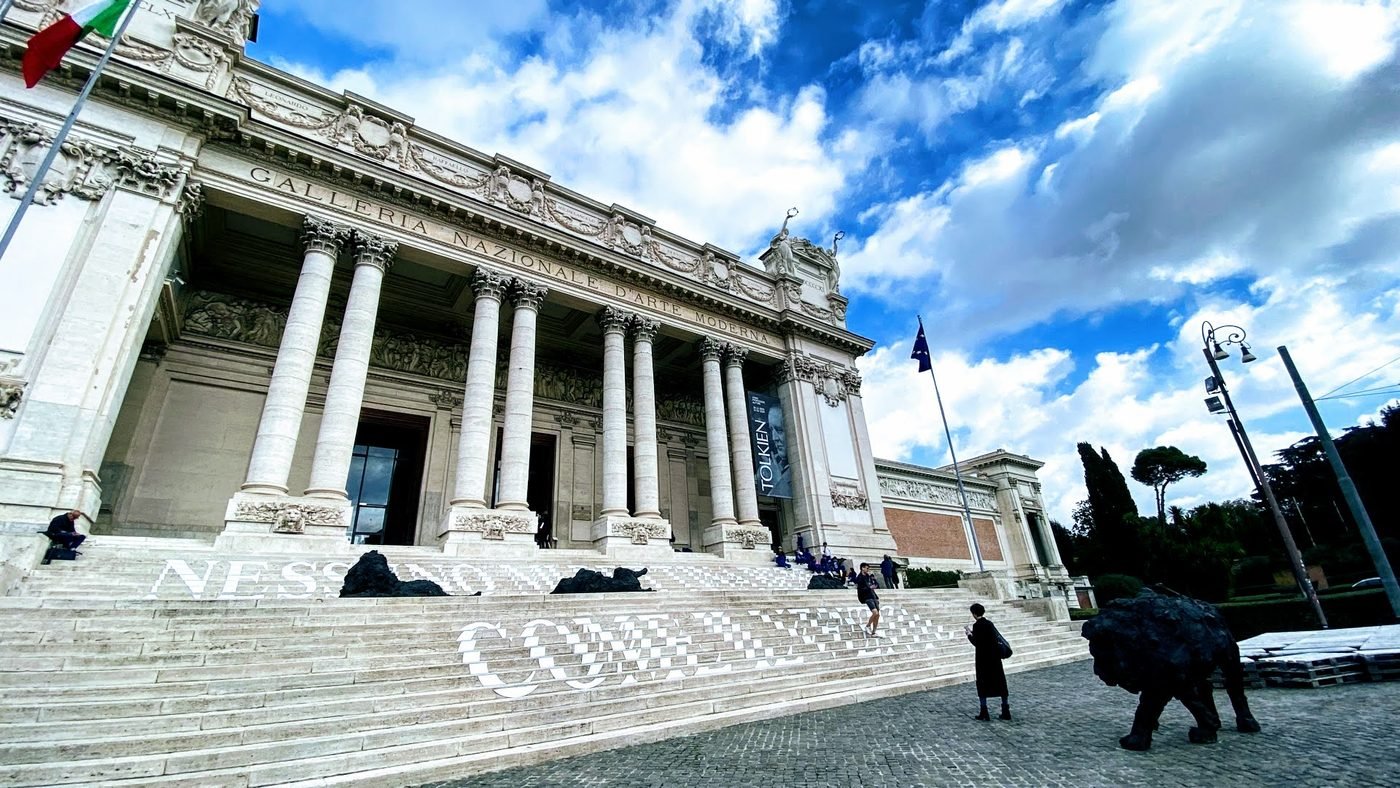
The nicest curiosity concerns the building, even before the exhibition. The building that now hosts Abramović was designed and built by the architect Cesare Bazzani between 1908 and 1911 for the International Art Exhibition organized for the 50th anniversary of the proclamation of the Kingdom of Italy. It was born, that is, as a pavilion of a great exhibition, a place conceived for showing, and only in 1915 was the Gallery moved here, having been housed until then in the Palazzo delle Esposizioni on Via Nazionale.
The museum, in fact, is older than its building. It was established by Royal Decree no. 1526 of July 26, 1883, with the mission of collecting the works of art of the new unified state, and opened to the public in 1885. For 30 years, then, Galleria Nazionale d'Arte Moderna lived in another location, and still today the Palazzo delle Esposizioni is one of the city's great exhibition halls.
There is also a second detail that few people know. In 1939, with law no. 823, the museum took the name Galleria Nazionale d'Arte Moderna e Arte Contemporanea, confirming, as the Gallery itself writes, its attitude as a museum of the present. Hosting in 2026 a living artist who asks the public to lie down on her works is the coherent consequence of that choice made almost 90 years ago. Whoever enters from the staircase on Viale delle Belle Arti enters a building born for international exhibitions, in a museum born for the art of its own time: Abramović, in this sense, is a guest in the right place.
Galleria Nazionale d'Arte Moderna e Contemporanea: the exhibition venue
Galleria Nazionale d'Arte Moderna e Contemporanea is at Viale delle Belle Arti 131, in the valley of the Academies at the edge of Villa Borghese, in a building by Cesare Bazzani completed in 1911. It is a museum of significant national interest and a general-level managerial office of the Ministry of Culture, with organizational, financial and accounting autonomy. The special autonomy dates to the 2014 regulation.
Cesare Bazzani's building
About 15,000 square meters of the structure are devoted to exhibition spaces and public services, and the exhibition proper occupies about 10,000 square meters. All the spaces are air-conditioned. In practice: it is a big museum, where you walk a lot, and you have to choose before going in.
The extensions: Bazzani, Cosenza, Botta
A first extension, overseen by Bazzani himself, was built between 1933 and 1934. The two wings of the building were completely restored between 1995 and 1999. A second extension, designed by the engineer Luigi Cosenza, was only partly completed and stayed open to the public from 1989 to 1998. Today the Cosenza Wing is undergoing restoration and adaptation works to a design by the architect Mario Botta: it will become a hub of over 2,000 square meters for training, education and research, meant to house the library and the archives.
A museum born in 1883
The Gallery was born in 1883 to collect the best of contemporary artistic production. With the reform of the statute in 1912 it began to acquire works from the first half of the 19th century as well. Today it holds, according to the Service Charter, the largest collection in the country of Italian and international art from the 19th to the 21st century, and the museum calls it the most important in the world for Italian works of the last two centuries. The museum's full entry is at La Galleria Nazionale d'Arte Moderna e Contemporanea.
Library and archives
The Study Center, under construction, brings together library and archives. The library, specialized in 19th and 20th century art, has about 60,000 volumes, 1,500 periodicals between current and discontinued and about 40,000 items between miscellanies and pamphlets. The archives hold 1,500 linear meters of documents in barely 400 square meters. Both are temporarily closed to the public for adaptation works, pending the move to the Cosenza Wing.
Beyond Abramović: the permanent collection of Galleria Nazionale
The ticket that opens the Marina Abramović exhibition also opens the permanent collection, about 20,000 works including paintings, drawings, sculptures, installations, design objects, films and photographs. The Gallery cites among others Vincent van Gogh, Amedeo Modigliani, Gustav Klimt, Jackson Pollock, Giacomo Balla, Lucio Fontana, Marcel Duchamp, Antonio Canova, Gustave Courbet, Andy Warhol, Giorgio de Chirico, Claude Monet, Alberto Burri, Maurizio Cattelan, Rudolf Stingel and Cy Twombly. It would be a mistake to leave without having seen at least a part of it.
The nine masterpieces named by the Gallery
The museum offers a selection of masterpieces that makes a good thread for a short visit: Sogni by Vittorio Corcos (1896), The Three Ages by Gustav Klimt (1905), After the Bath by Edgar Degas (circa 1886), the Portrait of Hanka Zborowska by Amedeo Modigliani (1917), Mobile by Alexander Calder (1958), The Gardener by Vincent van Gogh (1889), Coppa Chimerica by Hans Arp (1947-1950), Dynamic Expansion + Speed by Giacomo Balla (circa 1913) and Hector and Andromache by Giorgio de Chirico (1924). The Three Ages by Klimt is an oil on canvas measuring 171 by 171 centimeters: on its own it is worth the detour.
Design in the rooms
Since April 2026 the collection itinerary has been in dialogue with design: iconic seating, sculptural objects, wall coverings and drapes made with companies like Cassina, Kartell, Poltrona Frau, Molteni&C, Zanotta, Flexform, Cappellini and others. The museum's stated goal is to make the rooms more comfortable and familiar and to invite visitors to inhabit them. For those coming from the Abramović exhibition, where the visitor's body is part of the work, it is a surprisingly coherent step: in the collection too, you can sit down.
Marinella Senatore, artist of the year 2026
Until December 31, 2026 the Gallery devotes a room to Marinella Senatore, chosen as artist of the year in the program that each year hosts a leading figure of contemporary Italian art. In the room there are more than 40 works including drawings, collages and tapestries, among them the four large tapestries The Theatre of Commons, made with the Chanakya School of Craft in Mumbai, and the light sculpture Remember The First Time You Saw Your Name. Senatore works on participatory art and on the body as an instrument of knowledge: between November and December the two artists coexist in the same museum, and the comparison deserves the extra half hour.
Something nobody tells you about Marina Abramović at Galleria Nazionale d'Arte Moderna, November 18, 2026 to April 4, 2027
The Galleria Nazionale ticket is valid for three hours. It is not a bureaucratic detail: the museum explains it as control of the number of visitors present, for fire safety and crowding index purposes, and asks you to enter within the three-hour window chosen at the time of purchase. Within those three hours you can also leave and re-enter, but the Gallery expressly provides for this for those who want to go to Caffè delle Arti.
Why does it matter for this exhibition in particular? Because the Transitory Objects ask for time. They are not works to see in a line, they are works you lie down on or sit on, and the experience, as the artist describes it, makes sense if you stay. If you add the historic section, Marinella Senatore's room until the end of December and at least one pass through the collection, three hours go by quickly. The advice is simple: choose the early morning entry slot, do the exhibition first, then the coffee, then the collection.
There is a second aspect that almost nobody considers. In the rooms you can only bring bags smaller than 25 by 30 by 12 centimeters. Backpacks, large bags, umbrellas and helmets must be left at the cloakroom, which is free. For an exhibition where you stretch out on a stone bed, arriving light is almost a requirement: nobody wants to lie down with a backpack on their shoulders.
Hours of the Marina Abramović exhibition at Galleria Nazionale
The exhibition follows the museum's hours: Tuesday through Sunday from 9:00 to 19:00, with last entry 45 minutes before closing, that is, at 18:15. On Monday the Gallery is closed, and among the annual closing days December 25 is listed, which in 2026 falls on a Friday.
Regular hours
Nine hours of opening a day leave some margin, but the three-hour ticket validity suggests not arriving too late: anyone who enters at 17:00 will have a scant two hours before closing. The ticket office, according to the Service Charter, is open from 9:00 to 18:15 and accepts credit cards and debit cards.
Thursday evenings until December 17
From September 10 to December 17, 2026 the Gallery is also open every Thursday evening, from 19:00 to 23:00, with a ticket at €10, subject to the free admissions provided by law. The museum stays open without a break from the daytime hours to the evening ones, and the evening rate starts after 18:15. During the exhibition period there are five useful evenings: November 19 and 26, December 3, 10 and 17. For the last evening entry it is best to arrive by 22:00.
Special closings and openings
The schedule of evening openings may change: for the end-of-year holidays it is best to check the Gallery's official website before setting out.
Tickets for Marina Abramović: prices, discounts and free admission
The Marina Abramović exhibition is included in the admission ticket to Galleria Nazionale d'Arte Moderna e Contemporanea: there is no separate ticket. Full price costs €17, reduced €2. Tickets are bought at the ticket office in the museum's atrium, on the day of the visit, or online through the presale network authorized by the organizer, which you reach from the venue's official website.
Full and reduced
The €2 reduced ticket is reserved for European Union citizens between 18 and 25. The museum's Italian page adds that the same concessions apply to citizens of non-EU states on condition of reciprocity. There is also the Galleria Borghese reduced ticket, called From Canova to Canova: anyone with a Galleria Borghese ticket enters Galleria Nazionale for €10, on the same day.
Free admission and first Sundays
Entry is free under 18, and free also, among others, for people with disabilities and a companion, tour guides, ICOM members, journalists with a valid card, Ministry employees and teachers and students of certain faculties listed by the museum. On the first Sunday of every month admission is free with mandatory reservation and respect of the time slot. During the exhibition, if the rule stays the same, the dates are December 6, 2026 and January 3, February 7 and March 7, 2027. They are crowded days: great for the wallet, less so for the Transitory Objects.
Memberships and groups
The individual annual membership costs €50 and is valid for 365 days from the first entry. The 1+1 formula, with a different guest each time, costs €80. It is personal and is activated at the ticket office. For those who live in Rome and want to come back several times, it is worth doing the math. Groups that buy 10 full-price tickets in a single purchase pay €150 in total, that is, €15 per person.
The three-hour validity
The ticket is valid for one entry within the three-hour slot chosen at the time of purchase. On free admission days online reservation is mandatory. The Service Charter also notes the agreement with the Roma Pass, the city's tourist and cultural card.
My advice for visiting Marina Abramović at Galleria Nazionale d'Arte Moderna, November 18, 2026 to April 4, 2027
It's best to go on a Thursday evening in November or December. Until December 17 the Gallery stays open from 19:00 to 23:00 with a €10 ticket, and there are five useful evenings during the exhibition: November 19 and 26, December 3, 10 and 17. An exhibition about presence, duration and energy is better lived when the museum empties of the rhythm of the day, when it's dark outside and time slows down inside. It is also the moment when people who work can afford to stay three hours without looking at the clock.
Second tip, valid at any hour: start with the historic works and finish with the Transitory Objects. The order is not indifferent. Imponderabilia, Balkan Baroque and The Artist is Present prepare the eye and the body: they show what it means for Abramović to expose oneself, to endure, to stand in front of someone. When you then reach the stone beds and the structures of quartz, amethyst and agate, you know why you are there and what is being asked of you. Done in reverse, the itinerary works much less.
Third tip: lie down. I know that for many it is embarrassing, especially in front of strangers, but the Gallery is clear in saying that the work is completed through the presence and physical experience of whoever passes through it. Looking at a Transitory Object without using it is like reading the menu without ordering. Pick a moment when the room is quiet, leave your backpack and coat at the cloakroom, turn off your phone, and give yourself a few minutes. Then go out, have a coffee, and if you still have time walk through the collection to Klimt's Three Ages. It is a well-built day.
How to get to Galleria Nazionale d'Arte Moderna for the Marina Abramović exhibition
Galleria Nazionale d'Arte Moderna e Contemporanea is at Viale delle Belle Arti 131, in the Pinciano neighborhood, at the edge of Villa Borghese. The most convenient way is the tram, which stops a few steps from the museum at the Galleria Arte Moderna stop of the ATAC network. Alternatively, get off at Flaminio metro station and continue on foot.
By tram
The Galleria Arte Moderna stop is a few meters from the entrance on Viale delle Belle Arti. A little farther west, on Piazzale delle Belle Arti, is the Belle Arti stop, served by trams and buses. The lines in service and the schedules change with works and seasons: before setting out it is best to check them on the website of ATAC, the Roman public transport company. The tram remains the most practical solution anyway, especially in the rain.
By metro and train
Flaminio metro station, also listed as Piazza del Popolo, is a little over half a kilometer from the museum as the crow flies. On foot the route is a bit longer. Next to it is the Piazzale Flaminio station of the regional railway run by ASTRAL. If you arrive from the historic center you can continue on foot from Piazzale Flaminio, or cross Villa Borghese.
On foot from Piazza del Popolo and Villa Borghese
From Piazza del Popolo the museum is less than a kilometer away as the crow flies. From Galleria Borghese it is a little less. It is a pleasant walk on dry days, through the greenery of Villa Borghese. On winter evenings, leaving at 23:00 after a Thursday at the Gallery, prefer the tram or a taxi.
By car and car sharing
On Viale delle Belle Arti there is a car sharing station of Roma Servizi per la Mobilità, listed under the name Belle Arti. For those arriving with a private car the Gallery doesn't mention its own parking: better to come by public transport.
Another well-known fact, yet rarely cited
Many people know it, and almost nobody says it: Galleria Nazionale d'Arte Moderna hosted one of the first exhibitions that brought fashion into a museum in Italy. On October 5, 1985, in its rooms, the exhibition wanted by Karl Lagerfeld to celebrate the first 20 years of the collaboration between FENDI and the designer was inaugurated, a collaboration destined to last until Lagerfeld's death in 2019. The exhibition was titled Un percorso di lavoro and illustrated the steps from conception to design to production of the garment.
40 years later, from July 10 to October 25, 2026, the museum and FENDI revived that exhibition with After Un percorso di lavoro. Fendi / Karl Lagerfeld 1985, conceived by Maria Grazia Chiuri and curated by Maria Luisa Frisa. The new exhibition follows as faithfully as possible in the footsteps of the one in 1985, in the same museum but in different spaces, with the sections Tavolette, Caleidoscopio, Matrici Progettuali, Teatro, Pettine, Video, Schizzi and Computer, and closes with a selection of the press coverage of the time. On July 9, 2026 the rooms devoted to the 20th century hosted the Fendi Couture show.
Why recall this when talking about Abramović? Because it explains the vocation of the place. Director Renata Cristina Mazzantini has called the Gallery a pioneer in hosting fashion, anticipating a multidisciplinary curatorial vision. Fashion in 1985, design in the rooms since 2026, performance and works to be used with the body at the end of 2026: Galleria Nazionale has a habit of opening its doors to languages that other museums keep out. Anyone who imagines it as a dusty museum of 19th-century paintings has an idea that is many decades old.
Accessibility of Galleria Nazionale for the Marina Abramović exhibition
Galleria Nazionale d'Arte Moderna e Contemporanea declares full accessibility for people with disabilities, thanks to an external ramp, elevators and internal platform lifts. There are restrooms for people with disabilities and an area with a changing table. People with disabilities and a companion enter free.
The entrance on Via Gramsci
The accessible entrance, with a ramp, is on Via Gramsci. The museum also provides wheelchairs, which can be used independently: best to ask for them at the ticket office on arrival.
Tactile tours and inclusive routes
For tactile tours the Gallery lists a dedicated contact on the visit information page, and in the Education and Inclusion section it presents its accessibility projects. For an exhibition like this one, where physical contact with the Transitory Objects is part of the work, it is best to write in advance to understand how the route is organized and which structures can be used safely.
Room rules: bags, photos, food and phones
You can enter the Gallery's rooms only with bags smaller than 25 by 30 by 12 centimeters. Helmets, umbrellas, large bags, backpacks and suitcases must be left at the free cloakroom. Food and drinks may not be brought in, except liquids, aerosols and gels for medical purposes or special diets, and animals are not allowed, with the exception of guide dogs.
Photographs
Photos are allowed without flash, and amateur videos are allowed, but without tripods, selfie sticks or professional equipment. For professional or commercial filming, written authorization from the museum is required. In an exhibition devoted to presence, it is worth photographing little and being there a lot. And not photographing strangers lying on the Transitory Objects: for them it is a private moment.
Behavior in the rooms
The museum asks you to keep your phone on silent, to keep your voice low, not to touch the works and to supervise minors, preventing them from running in the rooms. It goes without saying that for the Transitory Objects the exhibition's specific instructions apply: touching is expected, but always follow the instructions of the room staff.
The right photo to take at Marina Abramović at Galleria Nazionale d'Arte Moderna, November 18, 2026 to April 4, 2027
The right photo, for me, is taken outside, before going in. The facade of the Gallery on Viale delle Belle Arti, with its staircase, is the image the museum itself uses to present itself, and it is the most eloquent frame to remember the visit: the building put up by Cesare Bazzani for the 1911 International Exhibition that welcomes, more than a century later, the artist who made the body her own material. It was on that staircase that in the spring of 2026 three large sculptures by Pablo Atchugarry had been placed: the space is made to be looked at.
Stand on the opposite sidewalk, let the tram go by, and frame the whole staircase: the people climbing it give the measure of the building. On Thursday evenings until December 17, when the museum stays open until 23:00, the same shot completely changes character.
Inside, the rules are clear: photos without flash, no tripods or selfie sticks. If you want a keepsake of the exhibition, the advice is just one: have the person with you photograph you while you are on a Transitory Object, if it is allowed in the room and if the person next to you doesn't end up in the frame. Not a postcard photo, but a proof of participation. It is the only image truly consistent with what Abramović asks of the public: to be there, with the body. And then put your phone back in your pocket, because the best part of the experience can't be photographed.
Marina Abramović with children: tips for families
At Galleria Nazionale people under 18 enter free, and the museum organizes tours and workshops for families tied to the current exhibitions, to the collection or to a specific technique. The activities generally require payment. The workshops for children from 6 to 11 published in autumn 2026 cost €10 per child, last 90 minutes and must be booked in advance.
An exhibition suited to the youngest?
For children the Transitory Objects part can be surprisingly suitable: you touch, you sit, you stay still. Asking a child to stay motionless on a stone bed for a few minutes is a small challenge that many take seriously. The historic works are more demanding instead: you decide, knowing your children, how long to stay in those rooms. The museum asks you to supervise minors and keep them from running.
Workshops and programs
The calendar of family activities changes from season to season and is published on the museum's website in the Education and Inclusion section. In the same section the Gallery lists summer camps for children from 5 to 11. For the Abramović exhibition it is reasonable to expect dedicated offerings: check before setting out. A few steps away, the Bioparco di Roma (Rome Zoo) is about 350 meters away as the crow flies: a combination that saves days with children.
Guided tours and groups at the Marina Abramović exhibition
Galleria Nazionale asks groups, with or without a guide, to book at least seven days ahead, stating the number of participants and the expected time. During guided tours the use of audio guides is mandatory, available for rent at €2 per person with a disposable earpiece. Groups under 10 people, school groups and groups authorized by the management are exempt.
The museum's tours
The museum offers guided tours of an hour and a half for groups of up to 25 participants, with prices per group that are added to the admission ticket. The rates for general tours, schools and foreign languages are published on the museum's website. The tours are also available in English, French, German and Spanish.
Advice for groups
With a group, for this exhibition, there is one rule: split up. The historic works can be told together, the Transitory Objects cannot. Give everyone the time to try them alone, give a meeting point and time, and resume the story afterward. A group of 25 people standing in a tight cluster in front of a stone bed sees nothing and keeps others from experiencing the work.
Some important events that happened here in history
The history of Galleria Nazionale d'Arte Moderna can be read in a series of precise dates. On July 26, 1883 Royal Decree no. 1526 established the museum, with the task of collecting the works of art of the new unified state. In 1885 the Gallery opened to the public, housed in the Palazzo delle Esposizioni. Between 1908 and 1911 Cesare Bazzani designed and built in Valle Giulia the building for the International Art Exhibition of the 50th anniversary of Unification.
In 1912 the reform of the statute opened acquisitions to works from the first half of the 19th century as well. In 1915 the Gallery moved to its current home. Between 1933 and 1934 Bazzani signed a first extension. In 1939 law no. 823 changed the museum's name to Galleria Nazionale d'Arte Moderna e Arte Contemporanea. On October 5, 1985 the Karl Lagerfeld exhibition for FENDI opened, among the first to bring fashion into a museum in Italy. From 1989 to 1998 the wing designed by Luigi Cosenza, only partly completed, stayed open to the public. Between 1995 and 1999 the two wings of the building were completely restored.
In 2014 the museum became an institute with special autonomy within the Ministry of Culture. 2026 is a packed year: in April design enters the collection rooms. From April to December Marinella Senatore is artist of the year. In May and June Pablo Atchugarry shows 55 sculptures and donates to the museum the marble work Splendore. On July 9 the 20th-century rooms host the Fendi Couture show, and from the next day the 1985 exhibition reopens, revisited. On September 26, for the European Heritage Days, the museum opens in the evening with a symbolic ticket of one euro. On November 18 Marina Abramović arrives, for her 80th birthday. It's a good year to come back.
Around Galleria Nazionale: Valle Giulia and Villa Borghese
Galleria Nazionale is in the valley of the Academies, at the edge of Villa Borghese: within a radius of a kilometer there are some of Rome's most important museums. It is the reason why it's worth giving the Abramović exhibition half a day and not an hour, and building a walk around it.
Villa Giulia and the Bioparco
The National Etruscan Museum of Villa Giulia is less than 400 meters away as the crow flies, the Bioparco about 350. The leap from the Etruscans to performance art is dizzying, and that is exactly why it works: whoever has time for two museums in a day finds here the most unusual pairing in the city.
Galleria Borghese and the From Canova to Canova ticket
The Galleria Borghese is less than 900 meters away as the crow flies, across the park. Whoever visits it on the same day enters Galleria Nazionale with the €10 reduced ticket, the formula the museum calls From Canova to Canova. Closer, a little over 400 meters away, is the Museo Carlo Bilotti in the Aranciera at Villa Borghese, and about 800 meters away the Casa del Cinema.
Toward Piazza del Popolo, the Pincio and Flaminio
Heading south you reach Piazza del Popolo and the terrace of the Pincio. To the north, almost two kilometers away, is the MAXXI, the other great state museum of the contemporary in Rome: for those who want a day entirely devoted to today's art, the two visits complement each other. And the Palazzo delle Esposizioni, the Gallery's first home from 1885 to 1915, is the ideal stop for those who want to close the circle of the museum's history.
Where to eat near Galleria Nazionale d'Arte Moderna
Inside Galleria Nazionale there is Caffè delle Arti, a café and restaurant open Tuesday through Sunday from 8:00 to 20:00, reachable from inside the museum or directly from outside at Via Gramsci 73. In the atrium there is also a refreshment point.
Caffè delle Arti
The advantage of Caffè delle Arti is logistical: within the ticket's three-hour window you can leave the rooms and re-enter precisely to go to the café. For an exhibition that asks for slowness it is a natural pause between the historic section and the collection. Watch the hours: the café closes at 20:00, so on Thursday evenings, when the museum stays open until 23:00, you have to plan differently.
Outside the museum
Around Valle Giulia the choice is concentrated toward Flaminio and Parioli: neighborhood bars, trattorias and pizzerias. For dinner after Thursday evening the most convenient solution is to head down toward Piazzale Flaminio and the center. For a light lunch, Caffè delle Arti remains the most practical choice.
Rome between November and April: when to visit the exhibition
The Marina Abramović exhibition covers Rome's cold season, from November 18 to April 4. These are months of short days and museums full on weekends and holidays. For Galleria Nazionale, which you reach by crossing a park, the weather matters more than usual.
November and December
The first weeks are the most interesting: the exhibition has just opened, the Thursday evenings are still on the calendar until December 17, and Marinella Senatore's room can be visited until December 31. During the Christmas period remember that on December 25 the museum is closed. If I had to choose a single date, I would choose a Thursday evening in late November.
January to April
January and February, after the holidays, are the quietest months for Roman museums, and for the Transitory Objects calm is a real advantage. March brings the first bright days, and the walk from Villa Borghese becomes pleasant. The last weeks, until April 4, will probably be crowded with those who put it off: don't make the same mistake.
How to organize the visit to Marina Abramović: three plans
The Marina Abramović exhibition at Galleria Nazionale is visited in a three-hour slot, and the best way to organize it depends on the time you have and who is with you. Here are three recommended plans.
The long morning
Enter at 9:00, at opening. First the historic works, then the Transitory Objects at an easy pace, while the rooms are still empty. Coffee at 10:30 at Caffè delle Arti, then an hour in the collection: Klimt, Van Gogh, Balla, de Chirico. At noon you go out, cross Villa Borghese and have lunch in the center. It is the most balanced plan.
Thursday evening
Arrive at 19:00, evening ticket at €10, until December 17. Abramović exhibition first, then Marinella Senatore's room, then a quick pass through the collection. Out around 22:00, tram or taxi toward Piazzale Flaminio and dinner. It is the plan I recommend to those who work and to those who want to experience the exhibition without crowds.
The Valle Giulia day
Morning at the National Etruscan Museum of Villa Giulia or at Galleria Borghese, light lunch, afternoon at Galleria Nazionale with the From Canova to Canova reduced ticket if you come from Borghese. Exhibition, collection, and out at sunset in the park. It is the richest day, but it asks for good legs and a Borghese reservation made in good time.
Who has passed through Marina Abramović at Galleria Nazionale d'Arte Moderna, November 18, 2026 to April 4, 2027
The first name is Cesare Bazzani, the architect who between 1908 and 1911 designed and built the building for the International Art Exhibition, and who returned between 1933 and 1934 for the first extension. After him the engineer Luigi Cosenza, author of the second extension open to the public from 1989 to 1998, and today the architect Mario Botta, who signs the restoration and adaptation project of the Cosenza Wing meant for the library and archives.
In 1985 Karl Lagerfeld passed through here, with the exhibition celebrating the first 20 years of collaboration with FENDI and bringing fashion into an Italian museum among the first cases. In 2026 his work returned to the same rooms thanks to Maria Grazia Chiuri, who conceived the new exhibition, and to Maria Luisa Frisa, who curated it.
That same 2026 brought to Valle Giulia the sculptor Pablo Atchugarry, born in Montevideo in 1954, with the exhibition Scolpire la Luce curated by Gabriele Simongini: 55 sculptures, three of them on the museum's staircase, and four placed in the permanent collection next to works by Jean Arp, Lucio Fontana, Alberto Giacometti and Henry Moore. It brought Marinella Senatore, born in Cava de' Tirreni in 1977, who met students of the Academy of Fine Arts of Rome here in the workshop Io contengo moltitudini.
And in the rooms, for over a century, the masterpieces of Klimt, Van Gogh, Modigliani, Degas, Balla, de Chirico and Burri have passed. From November 18, 2026 the historic works and the Transitory Objects of Marina Abramović are added, with the exhibition's two curators, Shai Baitel and Andrea Tarsia. And another presence is added, the one this exhibition puts at the center more than any other: the public, called to lie down, sit, pause.
Frequently asked questions about Marina Abramović at GNAMC
When can you see the Marina Abramović exhibition in Rome?
The exhibition Marina Abramović: Historical Works and Transforming Energy is on at Galleria Nazionale d'Arte Moderna e Contemporanea from November 18, 2026 to April 4, 2027. The museum is open Tuesday through Sunday from 9:00 to 19:00, with last entry at 18:15. It is closed on Monday and on December 25. Until December 17, every Thursday, it is also open in the evening from 19:00 to 23:00.
How much is the ticket for Marina Abramović at Galleria Nazionale?
The Marina Abramović exhibition is included in the admission ticket to Galleria Nazionale d'Arte Moderna e Contemporanea: €17 full price, €2 reduced for European Union citizens between 18 and 25. Under 18s get in free. On Thursday evenings, until December 17, the evening ticket costs €10. On the first Sunday of the month admission is free with mandatory reservation.
Where is Galleria Nazionale d'Arte Moderna?
Galleria Nazionale d'Arte Moderna e Contemporanea is at Viale delle Belle Arti 131, 00197 Rome, in the valley of the Academies at the edge of Villa Borghese. The tram stops a few steps from the entrance, at the Galleria Arte Moderna stop. Flaminio metro station is a little over half a kilometer away as the crow flies, and Piazza del Popolo less than a kilometer.
Which works by Marina Abramović are in the exhibition?
In the Historical Works section of the Marina Abramović exhibition there are, among others, Imponderabilia (1977), made with Ulay, Balkan Baroque (1997), awarded the Golden Lion at the Venice Biennale, and The Artist is Present (2010), made at MoMA in New York. The Transforming Energy core presents a selection of the Transitory Objects, stone beds and structures in quartz, amethyst and agate.
Can you lie down on Marina Abramović's works?
In the Marina Abramović exhibition at GNAMC the Transitory Objects are made precisely to be used: the public is invited to lie down, sit or pause on the structures of stone and minerals to activate what the artist calls a process of energy transmission. Always follow the instructions of the room staff and leave bags and backpacks at the free cloakroom.
How much time do you need to visit the exhibition?
The Galleria Nazionale d'Arte Moderna ticket is valid for three hours, and for the Marina Abramović exhibition it's best to use almost all of them. For the historic works and the Transitory Objects allow at least an hour and a half, more if you want to try the stone beds at a leisurely pace. With a pass through the permanent collection and a coffee, three hours go by quickly.
Is Galleria Nazionale wheelchair accessible?
Galleria Nazionale d'Arte Moderna e Contemporanea declares full accessibility thanks to an external ramp, elevators and platform lifts. The accessible entrance is on Via Gramsci. The museum provides wheelchairs, also for independent use, and has accessible restrooms. People with disabilities and a companion enter free.
Can you take photos at the Marina Abramović exhibition?
At Galleria Nazionale d'Arte Moderna photos are allowed without flash, along with amateur videos, but without tripods, selfie sticks or professional equipment. For professional or commercial filming, written authorization is required. In the Marina Abramović exhibition the instructions of the room staff apply: respect whoever is experiencing the Transitory Objects and don't photograph them.
Who are the exhibition's curators?
The Marina Abramović exhibition at GNAMC is curated by Shai Baitel and Andrea Tarsia. Shai Baitel, artistic director of the Modern Art Museum in Shanghai, curated it in close collaboration with the artist. Andrea Tarsia curated the Historical Works section. The exhibition was first presented at the Gallerie dell'Accademia in Venice and arrives in Rome in an expanded version.
We close with a clear piece of advice: don't treat this exhibition as a visit to squeeze in between two appointments. Go on a Thursday evening before December 17 or on a Tuesday morning in January, go in light, start with the historic works and finish lying on a stone. If you leave Galleria Nazionale feeling you have wasted time, it means you have looked. If you leave feeling you have found it again, it means Abramović has done her job.
Article written by the editorial team of Tour Leader Pro, contact them for Private/Corporate/V.I.P. Tours and Experiences.
Planning a trip to Rome? The English guides to visiting the city are on ItalyPlanner.com.