Maria Arnal at Monk, November 28, 2026
https://www.estateromana.com/en/rome/trip-planner/maria-arnal-at-monk-november-28-2026/
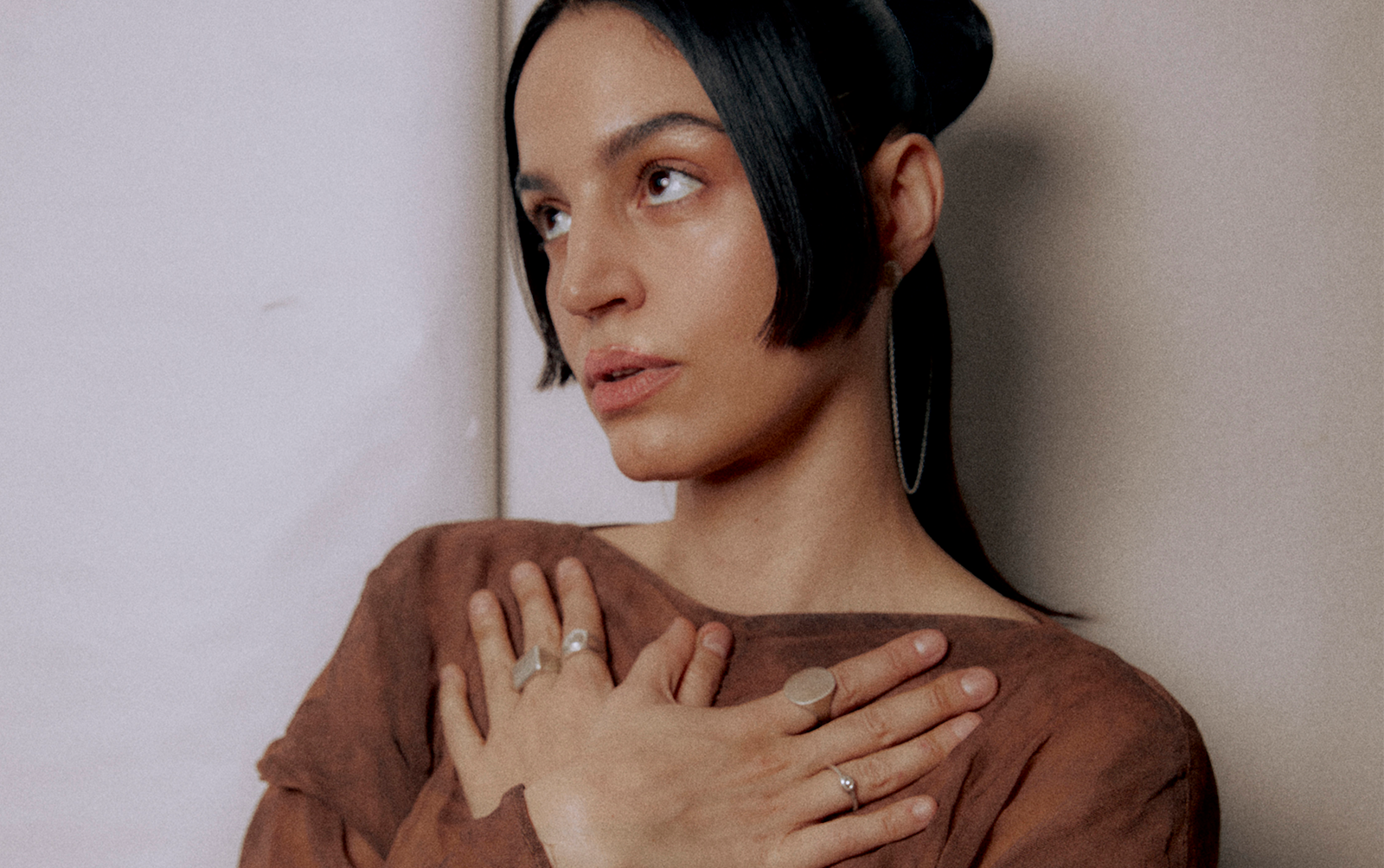
On Saturday, November 28, 2026, Catalan singer and composer Maria Arnal plays Monk, at Via Giuseppe Mirri 35 (00159 Rome), in the Casal Bertone neighborhood, for Manifesto Fest, as announced by DNA Concerti, the Roman agency handling the date. The time hasn't been published yet. Monk is less than a kilometer from Tiburtina station, served by metro B and by regional trains FL1, FL2 and FL3. By bus you get there on lines 163, 409 and 545. Tickets will go on sale soon, according to DNA Concerti, on the authorized presale circuit indicated by the organizers. Monk's ticket page and the agency's page are the references to follow for prices and times.
Maria Arnal is one of the most original voices in recent Spanish music: Iberian folk song, traditional polyphony, electronics and pop, with projects that take the voice into contemporary art and technology, from the Venice Architecture Biennale to a tower in Barcelona. She won the Gaudí award for best score and, in 2026, released a new album, AMA.
Maria Arnal at Monk: the evening of November 28
Maria Arnal's concert at Monk is scheduled for Saturday, November 28, 2026: the artist's page on the DNA Concerti website says Rome, Monk, Manifesto Fest, with tickets available soon. The time of the evening isn't published.
Manifesto Fest
The Rome date is part of Manifesto Fest. The full program of the festival isn't published on the official pages of the agency and of Monk: it's best to follow the official channels to find out which other events will accompany it.
Times and prices
The time and price of the evening aren't published. The reference for both is the program page on Monk's website and the artist's page on the DNA Concerti website, to be checked before you go.
The hall
At the end of November Monk's program takes place indoors, in the Teatro hall, one of the club's two farmhouses. It's a modestly sized hall, suited to music made of voice, electronics and details.
Who Maria Arnal is: the biography
Maria Arnal Dimas was born in Badalona, in Catalonia, on February 8, 1987: artist, singer, composer and producer, she combines pop, electronics and traditional polyphonic music with projects that experiment with sound, technology and art.
Childhood in Badalona
She grew up in Badalona, the daughter of primary and secondary school teachers. From an early age she was interested in music and dance and took part in school choir competitions. As a teenager she began playing piano and guitar and writing her first songs.
Languages, Lisbon and Italian
At university she studied Translation and Interpreting and Literature, first with Japanese and then with Italian, French and Portuguese. She lived for two years in Lisbon, where she came into contact with traditional Portuguese music. Back in Barcelona she attended the MOIET master's in performing arts, organized by the Autonomous University, Pompeu Fabra University and the Institut del Teatre, where she now teaches.
Teatre Lliure and Alan Lomax's archive
In those years she alternated teaching with working as an usher at Teatre Lliure in Barcelona, where, she says, she saw the same shows so many times that she formed her own aesthetic judgment. It was in the theater that she broke her femur: during her recovery she went back to music and singing, discovered the archive of musicologist Alan Lomax and decided to start a music project of her own.
The Badalona school and Marcel Bagés
She studied at the modern music school in Badalona, where her singing teacher encouraged her to build a repertoire from Lomax's field recordings and traditional Iberian songs. She went on with private lessons with Jasmin Martorell. That's how the repertoire came about with which she began working with musician Marcel Bagés and the label Fina Estampa.
The discography: from 45 cerebros y 1 corazón to AMA
Maria Arnal has released 45 cerebros y 1 corazón and ARIA in 2017, Clamor in 2021, the soundtrack Polvo serán in 2024 and the album AMA in 2026, as well as the EP AIRE, created for the Venice Biennale.
45 cerebros y 1 corazón, 2017
The debut, composed with Marcel Bagés and produced by David Soler, explores the idea of memory in traditional music, starting from the mass graves of the Spanish Civil War not yet restored to dignity. It combines original compositions and versions of traditional songs and received wide recognition from Spanish critics, with awards such as best album, song of the year, best emerging artist and best pop album. The tour presenting it counted 150 concerts on four continents.
Clamor, 2021
The second album explores the idea of the end of the world, starting from stories about the climate crisis. Composed again with Marcel Bagés and produced by David Soler, with artistic direction by José Luis de Vicente, it has important international collaborations: Kronos Quartet plays on the track Jaque, and producer Holly Herndon is behind El Cant de la Sibil·la, an arrangement of the 1,000-year-old liturgical drama with synthetic voices generated by artificial intelligence. The tour reached the main Spanish festivals, with a concert at Sónar 2022 together with the women's choir of the Orfeó Català.
ARIA, 2017
In the same year as the debut ARIA also came out, the second title of her discography: 2017 is the year in which the project with Marcel Bagés won over Spanish critics.
Polvo serán, 2024
The soundtrack for the film Polvo serán earned her the Gaudí award for best original score.
AMA, 2026
AMA is the new studio album, released in 2026: her first full-length entirely as a solo artist after the years with Marcel Bagés. It will likely be at the center of the Rome concert, but the setlist isn't published.
Maria Arnal's awards
In 10 years Maria Arnal has received a long series of awards, from the Ciutat de Barcelona award in 2016 to the Gaudí for best original score for Polvo serán.
The debut years
The 2016 Ciutat de Barcelona award was followed by recognition as emerging artist at the 2017 Premis Arc, artist of the year at The Creative awards and the 2018 Altaveu award. The same year the MIN awards for Spanish independent music gave her best national album, the Ojo Crítico award, the title of breakthrough artist, best pop album and best national song. Mondosonoro magazine chose her album as album of the year.
From Clamor to today
With Clamor came the Ruido award for best album of 2021, the award for best concert at the 2022 MIN and the 2022 Premis Alícia. In 2023 Cada capa de l'atmosfera received two nominations at the Ondas awards. In 2024 Spain's public broadcaster in Catalonia gave her the Continuarà award. Then the Gaudí for Polvo serán.
Maria Arnal between art, science and technology
Alongside her records, Maria Arnal has created sound projects for art and architecture institutions, often devoted to the climate crisis and to the relationship between voice and data.
AIRE, Venice Architecture Biennale, 2021
For the 2021 Venice Architecture Biennale she created with producer John Talabot a sound piece for 45 speakers on air pollution and the climate emergency, in a project curated by Olga Subirós. The work gave rise to the EP AIRE, released by the label Hivern.
Sirena, Torre Glòries, 2022
With John Talabot she composed Sirena, a generative choral piece that reacts in real time to data from the city of Barcelona and is permanently installed in Jean Nouvel's Torre Glòries. It responds to more than 150 variables, from sea temperature to air pollution to the solstices, and never repeats itself.
Cada capa de l'atmosfera, 2023
With José Luis de Vicente she directed a sound project produced by Barcelona's CCCB on sound awareness as a way to face the climate crisis, with artists, scientists and philosophers such as Suzanne Ciani and Timothy Morton. The project received two nominations at the Ondas awards.
The solstice Sibil·la
Since 2021 she has directed every year, on the night of the solstice, the show El cant de la Sibil·la, in a different place: in 2021 in the Sala Oval of the National Art Museum of Catalonia, in 2022 in the church of Sant Felip Neri, both in Barcelona. In the same years she began performing as a DJ and wrote the soundtrack for the documentary Alteritats, by Alba Cros and Nora Haddad.
A curious fact about Maria Arnal at Monk, November 28, 2026
The most surprising curious fact concerns the beginning of her music career. Maria Arnal didn't start from a conservatory or a stage, but from an accident. She was working as an usher at Teatre Lliure in Barcelona, a theater where, she has said, she had seen the same shows so many times that she built up her own taste. That's where she broke her femur. During her recovery she went back to singing, discovered the archive of Alan Lomax's field recordings and decided to start a music project of her own. Her first repertoire was born precisely from those recordings and from traditional Iberian songs, on the advice of her singing teacher in Badalona.
The second curious fact is linguistic, and it closely concerns the Roman audience. Before music, Maria Arnal studied translation and literature, with Japanese, French, Portuguese and Italian. Anyone listening to her at Monk is listening to a singer who knows the language of the hall.
The third concerns technology: on her second album one of the voices isn't human. El Cant de la Sibil·la, produced by Holly Herndon, uses synthetic voices generated by artificial intelligence for a liturgical chant from a thousand years ago.
What you'll hear at Monk
At Monk you'll hear music that combines folk song and traditional polyphony with pop and electronics. The setlist for the evening isn't published.
The voice at the center
All of Maria Arnal's work starts from the voice: the school choirs of her childhood, Lomax's field recordings, traditional polyphonies, the generative choirs of Sirena. In an intimate hall like Monk's Teatro, the voice is the thread to follow.
The award for best concert
Among the awards she has received is the one for best live concert at the MIN awards for Spanish independent music, in 2022, the year of the Clamor tour. It's a hint of how her projects work in front of an audience.
To listen to beforehand
To prepare, three listens are enough: 45 cerebros y 1 corazón, for the roots in traditional song. Clamor, for the encounter with electronics and with Kronos Quartet. AMA, the most recent album, to know what she'll play today.
Monk: the cultural club in Casal Bertone
Monk is at Via Giuseppe Mirri 35, at the end of the street, in the Casal Bertone neighborhood, less than a kilometer from Tiburtina station, and has been active since 2014. The name is a tribute to jazz pianist Thelonious Sphere Monk. The venue's page is the one on Monk.
Two farmhouses in a park
The club occupies two farmhouses, about 500 square meters in all, and two outdoor areas inside a one-hectare park. The official website describes it as a small rural world in a densely populated neighborhood: you arrive between apartment blocks and railway tracks and find yourself in an unexpected green space.
A broad program
Big and small concerts, theater, workshops, presentations, festivals, markets and family activities, with a bar and kitchen. In November Monk's stage hosts, among others, Marlene Kuntz on the 17th, Roberto Colella on the 19th and Henge and Mark The Hammer on the 21st.
Barrier-free
Monk states that its spaces are free of architectural barriers and open to all ages: important practical information for anyone using a wheelchair or a stroller.
Something nobody tells you about Maria Arnal at Monk, November 28, 2026
What's rarely said is that Maria Arnal is, even before being a pop singer, an artist who works with contemporary art and science institutions. She has taken her voice to the Venice Architecture Biennale, in an installation for 45 speakers about the air we breathe. She has written a choral piece that plays forever inside a tower in Barcelona, changing with sea temperature and pollution. She has directed a CCCB project with Suzanne Ciani and philosopher Timothy Morton. If you come to Monk expecting a concert of songs you'll find songs, but built by an artist who thinks of the voice as material for installations, archives and data. It's one more reason to hear her in a small hall, where the details of the electronics and polyphonies come through without being lost.
The second thing rarely said concerns memory. Her first album comes from the theme of the mass graves of the Spanish Civil War not yet restored to dignity: folk music that becomes civic memory.
The third is practical: at the time of the announcement, times and prices aren't published. It's best to sign up for updates from Monk or DNA Concerti.
Tickets for Maria Arnal at Monk
Tickets for Maria Arnal at Monk aren't on sale yet: the artist's page on the DNA Concerti website says they'll be available soon. Prices and times will be published by the organizers.
Where to buy them
Monk publishes a ticket page on its website, which gives access to the authorized presale circuit for the club's evenings. DNA Concerti will indicate its own sales point on the artist's page. It's best to buy only from the channels indicated by the organizers.
Information
For questions on tickets, accessibility and services Monk gives the address info@monkroma.it. DNA Concerti is based at Via Palestro 91, in Rome, and publishes its contact details on its official website.
My advice for seeing Maria Arnal at Monk, November 28, 2026
My advice is to watch for sales to open and buy early. The Teatro hall at Monk has a limited capacity, and an artist with this profile, little known to the general Italian public but closely followed by people into electronic and experimental music, could sell out the hall in a few days.
Second point: listen to Clamor beforehand. It's the album that best tells the story of the encounter between voice, tradition and electronics, and it includes the collaborations with Kronos Quartet and Holly Herndon. If you only know the first album you might find a concert different from what you expect. If you've listened to AMA you'll already know where she's heading today.
Third: arrive early and have dinner at the club. Monk has a kitchen, and a Saturday night in Casal Bertone is better spent at a table in the park than rushing over from another part of the city. Then it's best to take a spot mid-hall, where voice and electronics blend best.
Fourth: plan the trip home. On Saturday night metro B and the trains from Tiburtina have schedules to check, and if you live far away a taxi remains the most convenient solution.
How to get to Monk for Maria Arnal
Monk can be reached on metro B or on regional trains FL1, FL2 and FL3 to Tiburtina station, less than a kilometer away, or on bus lines 163, 409 and 545 indicated by the official website.
By metro and train
From Tiburtina station to Via Giuseppe Mirri it's about 10 minutes on foot. From Termini metro B reaches Tiburtina in a few minutes. For the return trip it's best to check the time of the last train beforehand.
By bus
Lines 163, 409 and 545 serve the area. For the exact route from your starting point, ATAC's journey planner is useful, as it takes into account evening frequencies on the weekend.
By car and taxi
Casal Bertone is outside the ZTL, but on Saturday night parking in the nearby streets is less easy than during the week. On the way back, late in the evening, a taxi is often the most convenient solution.
Another well-known fact, yet rarely mentioned
It's well known that Maria Arnal's music is rooted in traditional Iberian songs. It's less often mentioned how much her work owes to an archive: Alan Lomax's field recordings. Her first repertoire was born precisely from listening to those recordings, on the suggestion of her singing teacher. Traditional Iberian music, in short, reached her through an archive.
The second rarely mentioned fact concerns film. The Gaudí award for best original score, received for the soundtrack of Polvo serán, also places Maria Arnal among the composers of Spanish cinema.
The third concerns places. Her best-known concerts have taken place in unconventional spaces: the Sala Oval of the National Art Museum of Catalonia, the church of Sant Felip Neri, Sónar with the choir of the Orfeó Català. A farmhouse in a park in Casal Bertone is, for this artist, an entirely fitting hall.
The right photo to take at Maria Arnal at Monk, November 28, 2026
During the concert the phone should stay in your pocket. Music made of voice, polyphonies and electronics lives on details and silences, and a lit screen in an intimate hall is more distracting than you'd think. If you really want a memento of the stage, take it in the first few minutes and then switch off.
The right photo, though, is taken outside. On late November evenings Monk's park is dark, and the two lit farmhouses among the trees, with the city around them, are an image few halls in Rome can offer. It's best to shoot from Via Mirri entrance, looking toward the farmhouses, with the hall's lights on behind the windows.
The third, if you arrive by train, is Tiburtina station at night, with the tracks that mark the neighborhood: Monk was born between the railway and the houses, and a photo of the tracks tells the story of the place well.
Casal Bertone and the area around Monk
Casal Bertone is a neighborhood in the eastern part of Rome, between the Tiburtina railway, Via Prenestina and Portonaccio: a dense, working-class area that grew up next to the rail yard. Monk presents itself as born between Casalbertone and Portonaccio.
The Verano and San Lorenzo
Beyond the railway, to the west, are the Verano Cemetery and the basilica of San Lorenzo fuori le Mura. The San Lorenzo neighborhood, with its university life and nightlife, is a few minutes away by bus or taxi.
Villa Torlonia
To the north, along Via Nomentana, Villa Torlonia with the Casino Nobile and the Casina delle Civette: an afternoon at the park goes well with an evening concert at Monk.
Some important events that happened here in history
Monk's history is recent: the club opened in 2014 at the end of Via Giuseppe Mirri, in two farmhouses surrounded by a one-hectare park, in an area squeezed between the Tiburtina railway, the Prenestina and Portonaccio. The official website describes the original idea as a small rural world inside a densely populated neighborhood, and the name pays tribute to pianist Thelonious Sphere Monk.
Since then Monk has become one of the reference spaces for live music in Rome, with a program that in summer takes place in the garden and in winter in the Teatro hall. Today it includes a kitchen, family activities, markets and festivals, and an accessibility policy that provides free entry for children up to 12 with an adult holding a ticket and, on some evenings, Woojer Vest 3 vibrating vests for deaf people.
The surrounding neighborhood has a longer history. Casal Bertone grew in the 20th century next to the railway, between the Prenestina and Portonaccio. Not far away, beyond the tracks, the Verano and the basilica of San Lorenzo fuori le Mura tie this corner of the city to the ancient history of Rome. On November 28, 2026, the club adds Maria Arnal's voice to its program.
Who has passed through Maria Arnal at Monk, November 28, 2026
Some decisive names in international experimental music have passed through Maria Arnal's story. Kronos Quartet, with whom she recorded the track Jaque after taking part in their album dedicated to Pete Seeger. Holly Herndon, who produced El Cant de la Sibil·la with voices generated by artificial intelligence. John Talabot, her partner for AIRE and Sirena. Suzanne Ciani and Timothy Morton, involved in Cada capa de l'atmosfera. And, even earlier, Alan Lomax, whose archive gave her her first repertoire, Marcel Bagés, her partner on the first two albums, David Soler and José Luis de Vicente.
In just the weeks around November 28, Monk's stage hosts Marlene Kuntz with Il vile, Roberto Colella, Henge and Mark The Hammer, and in early December Desire and Modena City Ramblers: a program that holds together the Italian and international scenes.
On November 28 it's Maria Arnal's turn, with the songs of AMA and the memory of Iberian polyphonies. And so is the Roman audience for electronic and experimental music, who for one evening cross the Tiburtina tracks to hear a Catalan voice in a farmhouse on the outskirts.
How to plan the evening with Maria Arnal
A late November Saturday at Monk is planned around three moments: the afternoon in the city, dinner at the club, the trip home.
Before
An afternoon at Villa Torlonia or a walk in San Lorenzo goes well with an evening concert on Via Mirri. If you're coming from outside Rome you can take advantage of nearby Tiburtina station and leave the next day.
After
The concert ends late on a Saturday evening. If you feel like a last drink, San Lorenzo and Pigneto are a few minutes away. For everyone else it's best to plan the trip home before going into the hall.
Where to eat at Monk and nearby
Monk has its own kitchen with food trucks: having dinner at the club before the concert is the most practical solution.
The club's kitchen
The menu published on the website includes burgers, supplì, falafel, parmigiana and other dishes, with vegan and gluten-free options. If you have serious allergies, let the staff know.
Nearby
Between Casal Bertone and Portonaccio there are neighborhood trattorias and pizzerias. The widest choice is in San Lorenzo and Pigneto, a few minutes away by taxi or bus.
Accessibility, children and practical information
Monk states that its spaces are free of architectural barriers and publishes a page devoted to accessibility, with the rules for children and minors and the services for deaf people.
With children
Children up to 12 get in free with an adult holding a ticket, one per adult. Minors can attend only with a parent or with an adult relative holding a signed authorization.
Vibrating vests
For some events flagged in the program Monk provides Woojer Vest 3 vibrating vests. To find out if the service is available on November 28, write to info@monkroma.it.
Late November in Rome
At the end of November the evening is cold and often damp, and between Via Mirri entrance and the hall you cross the park outdoors: a heavy jacket and a folding umbrella avoid surprises.
Frequently asked questions about Maria Arnal in Rome
When does Maria Arnal play Rome?
Maria Arnal plays Rome on Saturday, November 28, 2026, at Monk, at Via Giuseppe Mirri 35, in the Casal Bertone neighborhood, for Manifesto Fest. The date is announced by DNA Concerti. The time hasn't been published yet.
How much are tickets for Maria Arnal at Monk?
The ticket price for Maria Arnal at Monk hasn't been published yet: DNA Concerti says tickets will be available soon. Prices and sales points will appear on the artist's page on the agency's website and on Monk's ticket page.
Who is Maria Arnal?
Maria Arnal is a Catalan singer, composer and producer born in Badalona in 1987. She combines pop, electronics and traditional polyphony. She has released 45 cerebros y 1 corazón, Clamor and, in 2026, AMA, and won the Gaudí award for the soundtrack of Polvo serán.
Where is Monk?
Monk is at Via Giuseppe Mirri 35, 00159 Rome, in the Casal Bertone neighborhood, less than a kilometer from Tiburtina station. You get there on metro B and on trains FL1, FL2 and FL3 to Tiburtina, or on buses 163, 409 and 545.
What kind of music does Maria Arnal make?
Maria Arnal's music combines pop, electronics and traditional polyphonic music, with projects that experiment with sound, technology and art. She has worked with Kronos Quartet, Holly Herndon and John Talabot, and has created sound installations for the Venice Biennale and for Barcelona.
Can children go to Maria Arnal's concert at Monk?
At Monk children up to 12 get in free with an adult holding a ticket, one per adult. Minors attend only with a parent or an adult relative with an authorization. The time of Maria Arnal's evening hasn't been published yet.
What is Manifesto Fest?
Manifesto Fest is the festival in which DNA Concerti places Maria Arnal's date at Monk on November 28, 2026. The festival's full program isn't published on the official pages of the agency and of Monk.
Final advice on Maria Arnal at Monk
A Catalan voice raised on Alan Lomax's recordings, who has been through the Venice Biennale, Kronos Quartet and Holly Herndon, awarded for film work and back in 2026 with a new album, in a farmhouse in Casal Bertone: in our view it's one of the most original evenings of late November in Rome, for lovers of electronic music and lovers of folk song alike. It's best to watch for sales to open, listen to Clamor before going out, have dinner at the club and take a spot mid-hall.
Article written by the editorial team of Tour Leader Pro, contact them for Private/Corporate/V.I.P. Tours and Experiences.
Planning a trip to Rome? English guides for visiting the city are on ItalyPlanner.com.