Marco Goldin, Monet. Una vita a colori at Teatro Brancaccio, November 23, 2026
https://www.estateromana.com/en/rome/trip-planner/marco-goldin-monet-una-vita-a-colori-at-teatro-brancaccio-november-23-2026/
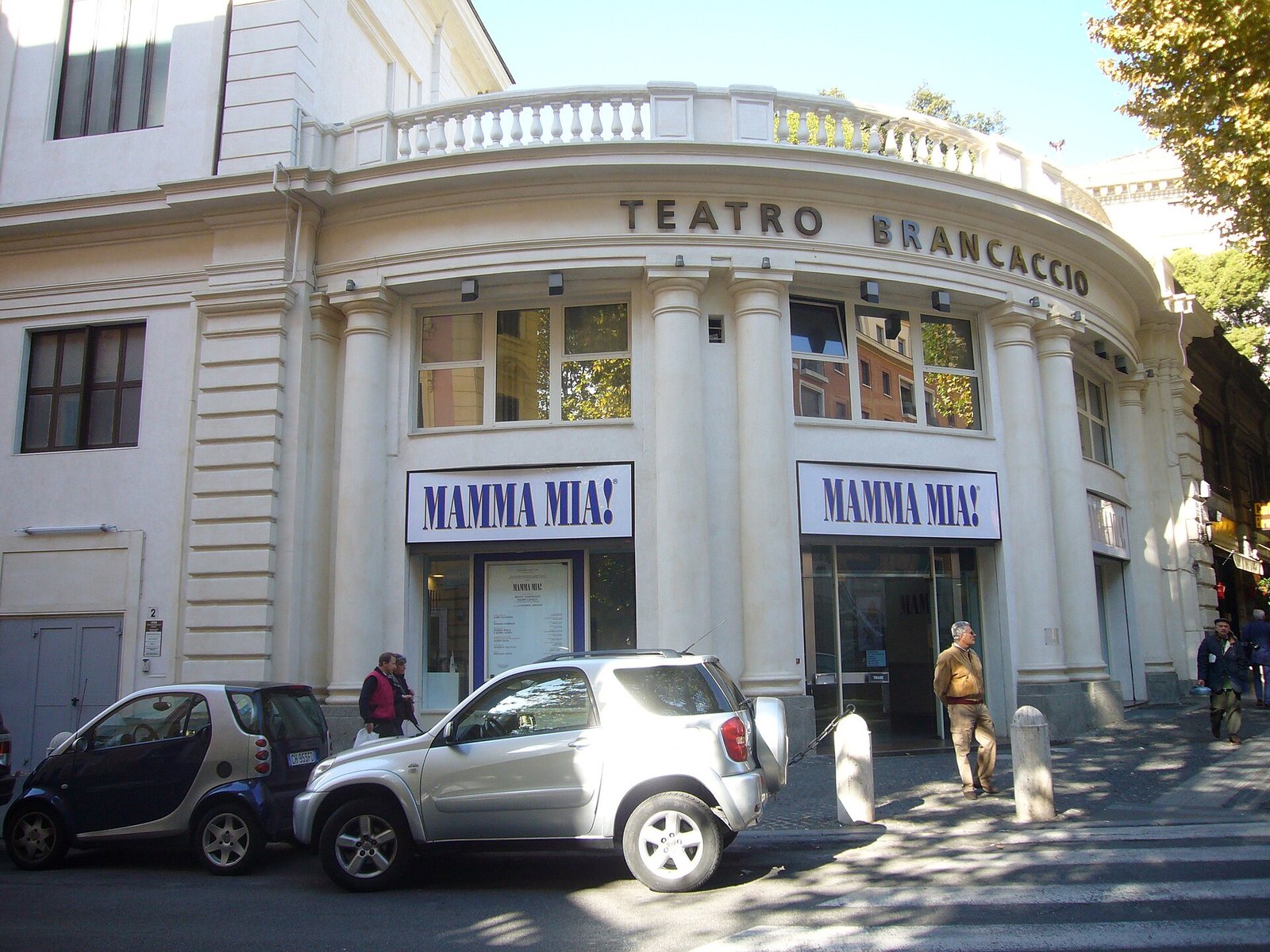
Monet. Una vita a colori, the show written, directed and performed by art historian Marco Goldin for the centenary of Claude Monet's death, comes to Teatro Brancaccio on Monday, November 23, 2026 at 21:00, at Via Merulana 244 (00185 Rome), in Esquilino. On stage with Goldin, playing live, are Remo Anzovino, composer of the original music, on piano and Daniela Savoldi on cello and vocals. The show lasts about 90 minutes with no intermission. Prices published by the theater range from 28 euros in the second balcony to 46 euros in the premium orchestra. Tickets can be bought from the theater's official website, which links to the authorized presale circuit, or at the box office, which is closed on Mondays. The nearest stop is Vittorio Emanuele on metro A. Buses 16, 75, 714, 717 and C3 run along Via Merulana, and the night bus N10 also stops at Labicana/Merulana.
Language: performed in Italian. No English version or English surtitles are announced.
Monet. Una vita a colori at Brancaccio in brief
Marco Goldin brings Monet. Una vita a colori to Teatro Brancaccio on Monday, November 23, 2026 at 21:00, a 90-minute theatrical narrative with live music and images, with tickets from 28 to 46 euros.
Date and time
A single Rome night, Monday, November 23 at 21:00. The show lasts about 90 minutes with no intermission: you'll be out around 22:30.
Prices
The theater publishes these full prices: premium orchestra 46 euros, orchestra 40 euros, first balcony A 40 euros, first balcony B 34 euros, second balcony A 28 euros.
Tickets
You buy them from the show page on the official Teatro Brancaccio website, which links to the authorized presale circuit. The box office at Via Merulana 244 is open Tuesday to Saturday from 16:00 to 19:00 and is closed on Mondays: for a Monday night it's best to buy in the days before.
The production
The show is produced by International Music and Arts (IMARTS) and Fondazione Teatro Due, in collaboration with Linea d'ombra. The main partner is CentroMarca Banca.
Monet. Una vita a colori: what you see on stage
Monet. Una vita a colori tells the life of Claude Monet in six seamless moments, in which Marco Goldin's narration weaves together with Remo Anzovino's original music, played live, and with a large setup of images.
The centenary
Claude Monet died in Giverny on December 5, 1926. December 5, 2026 marks the centenary, and under the banner Monet 100 the show presents itself as a special event conceived to celebrate one of the most loved and influential artists in the history of art. The Rome date comes 12 days before the anniversary.
The meaning of the project
The goal stated by the production is to convey, in an engaging and modern language, the poetic and revolutionary meaning of Monet's life and work. Compared with Goldin's previous tours, the new project puts more emphasis on technology and stage machinery.
Images shot in France
The visual setup gives stage form to the masterpieces and to the key places of the artist's life, with many images shot mostly in France in recent years. If you know Monet's paintings, you'll find on stage the real landscapes they came from.
The six chapters of Monet's life
Goldin's narrative follows Monet's life in six stages, from the forest of Fontainebleau to the garden at Giverny, according to the structure published by the production.
Fontainebleau and Normandy
The first moment is his beginnings, in the 1860s, between the forest of Fontainebleau and the beaches of Normandy.
Argenteuil and Vétheuil
The second is the golden age of Impressionism, in the 1870s, between the villages of Argenteuil and Vétheuil.
The cliffs
The third fragment, at the beginning of the 1880s, is devoted to the key period on the cliffs of Normandy.
The great journeys
The fourth tells of his painting journeys: the Mediterranean of Bordighera and Antibes, the tulip plains of Holland, the snow in Norway. Bordighera, in Liguria, also brings Monet to Italy.
London and Venice
The fifth chapter is devoted to his stays and the paintings made in London and Venice: the second Italian stage of the painter's life.
Giverny
The sixth is the apotheosis, the enchanted garden at Giverny, where Monet lived the last part of his life and where he died in December 1926.
The set: rotating platforms and a 10-meter screen
The set of Monet. Una vita a colori is designed by Goldin himself: the two musicians play on rotating platforms built for the purpose, with curved, double-sided LED walls behind them, in front of a screen 10 meters by six.
The platforms
One of the two platforms, the one Daniela Savoldi plays on, also moves vertically, rising and descending during the show. It's an element that makes the music a visible part of the scene, not a background hidden in the pit.
The big screen
The backdrop is a screen 10 meters long and six high, which carries the whole visual narrative: the paintings, the places, the images shot in France.
The bench
In front of the screen there's a bench. At times Goldin sits on it and listens to Monet's words as they arrive on stage, in a dialogue the production describes as surprisingly real, between present and memory, voice and painting, light and color.
The animations
The production's sources don't agree on the name of the person responsible for the video animations: the credits on the theater's page list Luca Attili for animations and editing, while the presentation text credits animations and editing to Alessandro Trettenero.
Who Marco Goldin is
Marco Goldin, born in Treviso, is an art historian, curator and storyteller: for 25 years he has studied the life and work of Van Gogh, and on Monet he has curated many exhibitions, both monographic and thematic.
The curator
Goldin is the curator of the exhibitions organized by Linea d'ombra, the Treviso company that also collaborates on this show. In the presentation of the show he recalls having curated many exhibitions on Monet with great public success and having brought hundreds of his masterpieces to Italy over 30 years.
Van Gogh
According to his publisher's profile, Goldin has devoted to Van Gogh six large exhibitions, essays, catalogs, theater shows and film stories. In 2020 he published what the publisher presents as the first true Italian-language biography of the painter, built on rereading and partly retranslating the entire correspondence.
The writer
With Solferino he published his first novel in 2018, I colori delle stelle, about the friendship between Van Gogh and Gauguin, and in 2022 Gli ultimi giorni di Van Gogh.
The storyteller on stage
Monet. Una vita a colori is Goldin's third theater tour, after Storia dell'impressionismo in 2018 2019 and Gli ultimi giorni di Van Gogh in 2022 2023. The production recalls the public success of the two previous ones, with sold-out theaters and tens of thousands of spectators all over Italy. The new show, according to Goldin, had been in preparation for four years, since the months of work on Van Gogh.
Remo Anzovino and Daniela Savoldi, the live music
The original music of Monet. Una vita a colori is by Remo Anzovino, a composer and pianist born in Pordenone in 1976, who plays it live on piano with Daniela Savoldi on cello and vocals.
From puppet theater to art films
Anzovino started out writing music for puppet theater and playing live to silent film screenings, before making his name as a composer of soundtracks for film and the visual arts. His style combines jazz, contemporary classical music and pop.
Monet, before this show
His link with Monet doesn't start here: in 2019 Anzovino wrote the soundtrack for the film Water Lilies Monet, The Magic of Water and Light, released by Nexo Digital and Sony Masterworks in the Art Film Music box set together with the music for films on Van Gogh, Gauguin, Frida Kahlo and degenerate art.
The records
Anzovino's albums include Dispari from 2006, Tabù from 2008, Igloo from 2010 with Franz Di Cioccio, Gabriele Mirabassi, Enzo Pietropaoli and Bebo Ferra, Viaggiatore Immobile, Nocturne for Sony Classical in 2017 and the live Atelier for Decca in 2024. He has written music for films on Napoleon, Pompeii, Queen Elizabeth II, Borromini and Bernini.
Daniela Savoldi
Daniela Savoldi plays cello and sings. On stage hers is the platform that rises and descends: the voice that joins the piano and the narration.
A curious fact about Marco Goldin, Monet. Una vita a colori at Teatro Brancaccio on November 23, 2026
The most interesting curious fact is about the calendar. In the presentation Goldin says he marked the 2026 date on his work calendar a long time ago, because it's the year of the centenary of Monet's death, and that he started imagining the show while he was still preparing the one on Van Gogh, four years ago. Monet. Una vita a colori is a project announced a decade in advance and built over four years.
The second curious fact is about Italy in Monet's life. Two of the six chapters of the show touch Italy: Bordighera, on the Ligurian coast, in the chapter on the Mediterranean journeys, and Venice, in the chapter that pairs it with London. If you see the show in Rome, you'll find two Italian landscapes in the painting of the master of Impressionism.
The third is about the composer. Remo Anzovino had already written the soundtrack for the film Water Lilies Monet in 2019, devoted to the water lilies. For him this show is a return to the same painter, seven years later, this time live and with a narrative that covers the whole life.
And a fourth, about stagecraft: the bench. Amid curved LED walls, rotating platforms and a 60-square-meter screen, the simplest object on stage is the one Goldin sits on to listen to Monet's words. In our view it's the finest directing idea of the show.
Teatro Brancaccio, the venue of the show
Teatro Brancaccio, at Via Merulana 244, is one of the largest theaters in Rome: since 1937 it has had two foyers, a large orchestra and two balcony levels, for about 2,000 seats at the time. Today it's home to Viola Produzioni and alternates musicals, plays, concerts and storytelling shows.
Why a big hall
For a show with a screen 10 meters by six, LED walls and rotating platforms, you need a wide stage and a hall that lets you see the image as a whole. Brancaccio has the right scale: in our view, for this show, the front rows of the balcony offer the best view of the whole screen.
Orchestra and balconies
The orchestra is divided into premium orchestra and orchestra. Above are the first balcony, in sections A and B, and the second balcony. The balconies can only be reached on foot, with no elevators.
The Brancaccio complex
The hall is part of a complex that includes Brancaccino, a theater of about 100 seats, a training area and a terrace on Via Merulana. For the full profile of the place there's the page on Teatro Brancaccio.
Something nobody tells you about Marco Goldin, Monet. Una vita a colori at Teatro Brancaccio on November 23, 2026
What people rarely say is that a show like this isn't a lecture with slides. Goldin is a curator, and the audience of his exhibitions knows him as the voice of the audio guides and the author of catalogs. In the theater, though, he's director, set designer and actor of himself, inside a stage machine made of moving platforms, screens and live music. If you expect an art history lesson you'll find a show. If you expect a musical you'll find a narrative. It's a hybrid form, and it should be taken for what it is.
The second thing is about the day. The show is on a Monday, the day the Brancaccio box office is closed. If you plan to buy your ticket at the last minute, in person, you may not be able to: it's best to buy it in the days before, at the box office Tuesday to Saturday or from the official website.
The third thing is that November 23 comes 12 days before the actual centenary, December 5. If you want to experience the Monet centenary fully, the Rome show is a good start: in the following weeks the painter's name will be everywhere, between exhibitions, books and anniversaries.
My advice for Marco Goldin, Monet. Una vita a colori at Teatro Brancaccio on November 23, 2026
My advice is to choose your seat based on the screen. In a show where the image is half the story, sitting too close to the stage means seeing only part of the projected paintings. The central rows of the orchestra, not the front ones, and first balcony A let you take in the 10-meter screen without turning your head.
The second piece of advice is to arrive prepared on Monet's geography. A few minutes are enough to review the names of the places in the six chapters, from Fontainebleau to Giverny: on stage they go by quickly, and recognizing them makes the story richer.
The third piece of advice is about the music. If you want to get into the mood, you can listen to the soundtrack of Water Lilies Monet, written by Remo Anzovino in 2019: it's not the music of the show, but it's the same composer on the same painter.
Last piece of advice: buy your ticket in advance, because the box office is closed on Mondays, and arrive with an hour to spare, as the theater's rules ask. Once the show has started, you can't get in.
How to get to Teatro Brancaccio
Teatro Brancaccio is at Via Merulana 244, in Esquilino, less than a kilometer from Termini station and a short walk from the Vittorio Emanuele stop on metro A.
Metro
The nearest stop is Vittorio Emanuele, line A: you exit onto Piazza Vittorio Emanuele II and in a few minutes you're on Via Merulana. Alternatively there's Cavour, on line B, with a longer walk. From Termini you can also walk, passing Santa Maria Maggiore.
Bus
The theater lists three stops. On Via Merulana, at Merulana/Brancaccio and Merulana/Mecenate, lines 16, 75, 714, 717 and C3 stop. At the Labicana/Merulana stop, lines 3, 53, 75, 85, 87, 186, 571, 810, C3 and the night bus N10 stop, useful for getting home after 22:30.
Taxi
The stands listed by the theater are in Largo Brancaccio, in Piazza Vittorio Emanuele II at number 113, on Via Principe Amedeo 138, on Via Giolitti 6 and on Via Venosta.
Car
The theater doesn't list partner parking. On Monday evenings parking in Esquilino is still difficult: better to leave the car near a metro station and continue by public transportation, checking times on the Atac journey planner.
Another well-known fact, and yet not often mentioned
It's well known that Monet is the painter of the water lilies at Giverny. It's mentioned much less how much he traveled: the structure of the show follows him from Normandy to Argenteuil, from the Liguria of Bordighera to Antibes, from the Holland of tulips to the snow of Norway, all the way to London and Venice. The painter of the enclosed garden was, first, a painter on the move, and Giverny is the landing place of a life of travel.
The second rarely mentioned fact is about the music. Remo Anzovino started out playing live to silent film screenings: a job in which the music has to follow a moving image without overpowering it. That's exactly what he does in this show, with the piano in front of a 60-square-meter screen.
The third fact is about Brancaccio. Everyone knows it as the theater of musicals. Fewer remember that from 1985 to 2000 it was home to the Fondazione dell'Opera di Roma. A hall used to the great stage machinery of opera now hosts Goldin's stage machine.
The right photo to take at Marco Goldin, Monet. Una vita a colori at Teatro Brancaccio on November 23, 2026
No photos during the show: Brancaccio's rules ban photography and filming, even with a phone. The right photo is taken before, with the curtain open if the set is already visible: the 10-meter screen, the two platforms with the piano and the cello, the bench in the middle. It's the image that tells the shape of the show better than any close-up.
The second is the theater facade on Via Merulana, in the evening, with the title of the show. My advice is to shoot from the opposite sidewalk with a wide lens, so that a stretch of the street fits in too. At 20:00 at the end of November it's already fully dark.
The third, if you love Monet, is taken the next day or in the following days: a 19th-century painting in a Roman museum, to take home a bit of that light after the show.
Around Brancaccio: Esquilino, Via Merulana and Monti
Teatro Brancaccio is on Via Merulana, between the Basilica of Santa Maria Maggiore and the Basilica of San Giovanni in Laterano, in the Esquilino neighborhood.
The basilicas
Via Merulana links Santa Maria Maggiore and St. John Lateran. If you arrive early you can walk from one basilica to the theater.
Art along the street
Along Via Merulana is Palazzo Merulana: if you're going to a show about painting, a museum on the same street is the most fitting visit of the afternoon, during opening hours. A little farther is the Auditorium of Maecenas, a hall from Roman times.
Piazza Vittorio and Monti
To the north, Piazza Vittorio Emanuele II with the Porta Alchemica. To the west the Monti district, with the page devoted to Rione Monti.
Some important events that happened here in history
The history of Teatro Brancaccio begins in January 1916, when the hall opened as Teatro Morgana, against the embankment of the gardens of the palace of the Field Brancaccio, the family that takes its name from Isabella Field, married to Prince Brancaccio. The link with the nearby Palazzo Brancaccio is physical before it's a matter of name.
In 1937 the hall took on its current layout, with two foyers, a large orchestra and two balconies for about 2,000 seats, and took the name Teatro Brancaccio. From 1985 to 2000 it was home to the Fondazione dell'Opera di Roma. Then the City entrusted its direction to Gigi Proietti until 2007. Then came Maurizio Costanzo until 2010 and Stage Entertainment Italia until 2012. Since September 2012 the artistic director has been Alessandro Longobardi.
On December 5, 1926, in Giverny, Claude Monet died: 11 years before Brancaccio took its current name. A hundred years later, on November 23, 2026, the hall on Via Merulana hosts the show that celebrates his centenary, in the middle of a tour that since October has crossed Italy with dozens of dates.
Who has performed at Marco Goldin, Monet. Una vita a colori at Teatro Brancaccio on November 23, 2026
Some of the great names of entertainment have crossed the Brancaccio stage: Totò, Anna Magnani, Aldo Fabrizi, Gigi Proietti among the actors. Fabrizio De André, Louis Armstrong, Jimi Hendrix among the musicians. For 15 years the Rome Opera passed through here.
In the same November 2026 the hall hosts, among others, Michele Bravi and, the day before Goldin, Sunday the 22nd, the family show Arriva Lucilla. The season also includes Frida, opera musical and Gaber, mi fa male il mondo: a program in which art and artists' biographies come up often.
With Monet. Una vita a colori, the places and people of the painter's life ideally pass through Brancaccio: Fontainebleau, Argenteuil, Vétheuil, the Normandy cliffs, Bordighera, Antibes, Holland, Norway, London, Venice, Giverny. On stage, Marco Goldin, Remo Anzovino and Daniela Savoldi. Behind the scenes, the productions IMARTS and Fondazione Teatro Due with Linea d'ombra.
Brancaccio house rules: what to know
Teatro Brancaccio's rules apply to every night: arrive at least an hour early, no entry once the show has started, no photos or filming, no food in the house.
Bags and coat check
The theater has a coat check and a bar. Umbrellas aren't allowed in the house. Plastic bottles over half a liter, glass containers, helmets, professional cameras, tripods and selfie sticks aren't allowed.
Seats and dress
You sit only in your assigned seat. As for dress, the theater asks for clothing appropriate to the decorum of the hall, with no real dress code.
Accessibility at Teatro Brancaccio
Teatro Brancaccio states that it has no architectural barriers for access to the orchestra: there's a ramp, an area for wheelchairs and an accessible restroom on the ground floor, reachable from the foyer.
Reserved seats
For nights organized by the management, the theater provides, while they last, orchestra seats for wheelchair users and people with walking difficulties. The balconies can't be reached because there are no elevators. Seats are booked by writing to the box office with the required form and documentation.
Visual and hearing disabilities
For audience members with visual and hearing disabilities there are orchestra seats by reservation. In a show made of images and music, it's best to mention your needs when booking.
How to plan the Monet Monday night
With the start at 21:00 and the exit around 22:30, the Monet. Una vita a colori night shapes up as an afternoon in Esquilino, an early dinner and the show.
The afternoon
If you have time, you can walk from Santa Maria Maggiore along Via Merulana, stopping at Palazzo Merulana during opening hours. At the end of November the light goes early: do the walk by 17:00.
The ticket
The box office is closed on Mondays: buy your ticket beforehand, at the box office Tuesday to Saturday or from the theater's official website, which links to the authorized circuit. On the day of the show it's best to have the digital ticket already on your phone.
Getting home
You're out around 22:30. Metro A at Vittorio Emanuele is a few minutes away. If you're heading home later, the night bus N10 stops at Labicana/Merulana. The Atac journey planner helps you choose.
If you've seen the previous shows
If you've seen Storia dell'impressionismo or Gli ultimi giorni di Van Gogh, you'll find the same formula, with narration, live music and images. The production promises a more immersive experience, with more technology and stage machinery: the difference will be mostly in the staging, with the rotating platforms and the big screen.
Where to eat before the show
Around Brancaccio there are the spots on Via Merulana, cuisines from many countries around Piazza Vittorio and, a 15-minute walk away, the trattorias and wine bars of the Monti district.
Before or after
With the start at 21:00 and arrival requested at 20:00, move dinner up to 19:00. On Mondays some restaurants are closed: it's best to check and book.
Frequently asked questions about Monet. Una vita a colori in Rome
When is Marco Goldin's Monet show in Rome?
Marco Goldin's Monet. Una vita a colori is at Teatro Brancaccio in Rome on Monday, November 23, 2026 at 21:00, at Via Merulana 244. The show lasts about 90 minutes with no intermission.
How much are tickets for Monet. Una vita a colori?
Tickets for Monet. Una vita a colori at Teatro Brancaccio cost 46 euros in the premium orchestra, 40 euros in the orchestra and first balcony A, 34 euros in first balcony B and 28 euros in second balcony A. You buy them on the theater's official website or at the box office.
Who is on stage with Marco Goldin?
With Marco Goldin, in Monet. Una vita a colori, Remo Anzovino, composer of the original music, plays piano live and Daniela Savoldi plays cello and sings. The set is completed by a big screen and LED walls with images shot mostly in France.
Why a show about Monet in 2026?
Monet. Una vita a colori celebrates the centenary of the death of Claude Monet, who died in Giverny on December 5, 1926. The show is presented under the banner Monet 100 and has been touring all over Italy since October 2026.
What are Marco Goldin's other theater shows?
Before Monet. Una vita a colori, Marco Goldin toured Storia dell'impressionismo in 2018 2019 and Gli ultimi giorni di Van Gogh in 2022 2023, with sold-out theaters and tens of thousands of spectators according to the production.
Is the Brancaccio box office open on the day of the show?
The Teatro Brancaccio box office is closed on Mondays, the day of Monet. Una vita a colori: it's open Tuesday to Saturday from 16:00 to 19:00. It's best to buy your ticket in the days before or from the theater's official website.
How do you get to Teatro Brancaccio?
You reach Teatro Brancaccio by metro A, Vittorio Emanuele stop, a few minutes' walk away. Buses 16, 75, 714, 717 and C3 run along Via Merulana, and for the late trip home there's the N10 at the Labicana/Merulana stop.
Final advice on Monet. Una vita a colori
12 days before the centenary of Monet's death, Marco Goldin's show brings to Brancaccio an entire life in 90 minutes: six places, a piano, a cello, a 10-meter screen and a bench. My advice is to treat it as a story more than a lesson: buy your ticket in time, since the box office is closed on Mondays, choose a central seat or one in the first balcony to see the whole screen, arrive at 20:00 after an early dinner. And, in the following weeks, look for Monet in museums and books: the centenary has just begun.
Article written by the editorial team of Tour Leader Pro, contact them for Private/Corporate/V.I.P. Tours and Experiences.
Planning a trip to Rome? The English guides for visiting the city are on ItalyPlanner.com.