Malia, Neapolitan musical salon of the 1800s at St Andrew’s Church of Scotland, November 1 and 22, 2026
https://www.estateromana.com/en/rome/trip-planner/malia-neapolitan-musical-salon-of-the-1800s-at-st-andrews-church-of-scotland-nov/
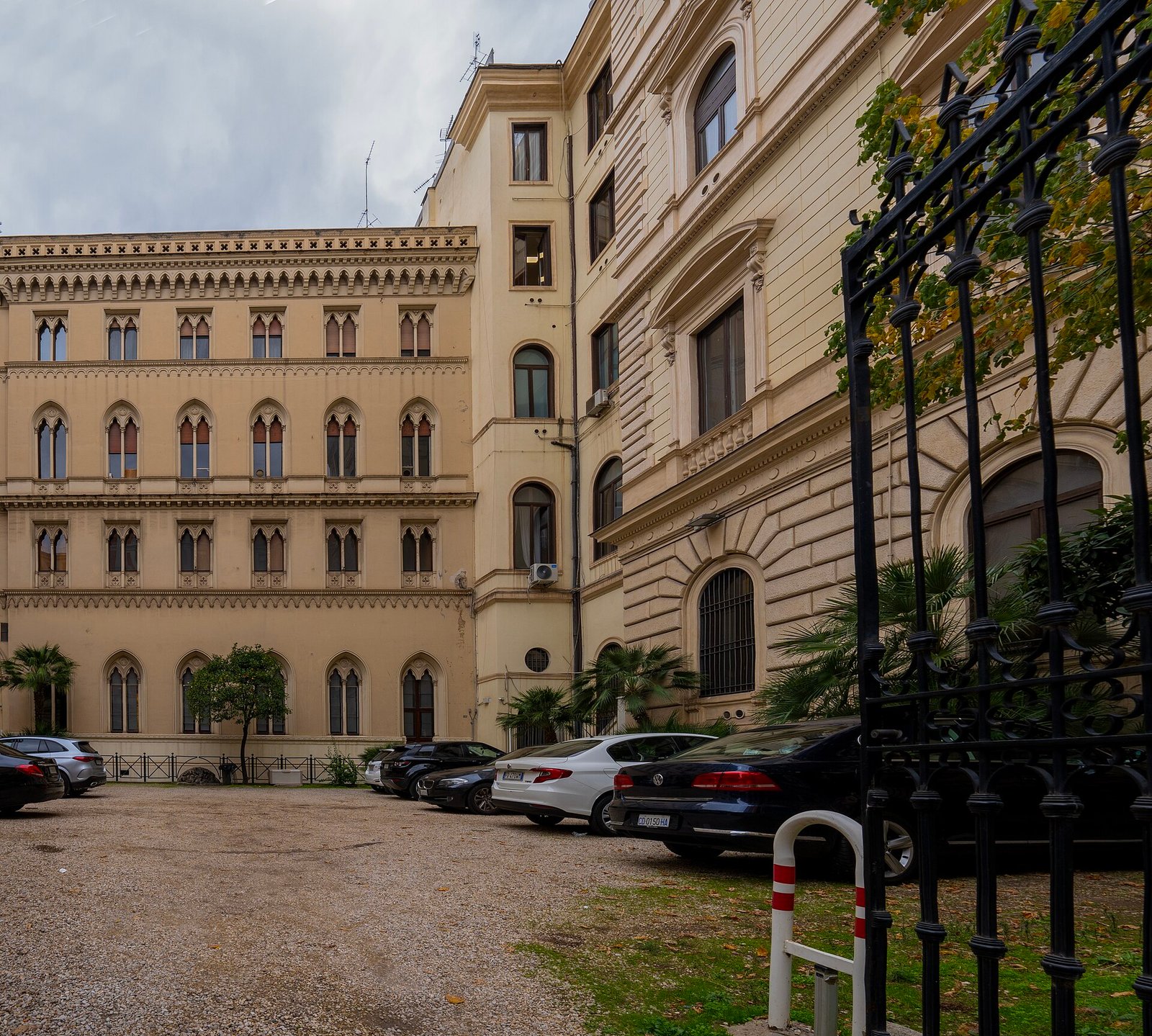
Malia, Neapolitan musical salon of the 1800s, the costume concert-show by the Associazione Musicale Reggina Domenico Scarlatti, returns to St Andrew's Church of Scotland, Rome's Scottish church at Via XX Settembre 7, 00187 Rome, on Sunday, November 1 and Sunday, November 22, 2026 at 19:30. The box office and audience entrance open at 19:00. The single ticket for the show only costs 12 euros, 10 euros each for groups of at least four. The package with a guided walking tour and show costs 30 euros, membership card included, meeting at 17:15 in front of the church. Tickets are sold through the presale networks listed by the association on its official website or at the box office, with mandatory booking by email or phone. At the box office you pay in cash only. The church is in the Trevi district, halfway between Piazza della Repubblica and the Quirinale: for the route by public transportation, use the ATAC journey planner. Information at info@amrds.it and at 333 5219956.
Malia at Rome's Scottish church: dates, times and tickets
Malia is a show of about an hour, in an intimate setting, designed for lovers of the salon romance and Neapolitan art song. The practical information is that published by the organizing association.
The dates
The performances on the calendar are Sunday, November 1 and Sunday, November 22, 2026, both at 19:30. A first date was held on Sunday, September 27. The association announces that new dates will be available soon.
Times
The box office opens at 19:00, and audience entry begins at the same time. The show starts at 19:30. For the show-only package the association gives the time slot from 19:30 to 20:30.
Prices
Show only: single ticket 12 euros, group promotion for four or more people 10 euros per ticket. Discounted prices apply if you pay in advance with the online payment system indicated by the association: 10 euros for the single ticket, 9 euros each for groups. Package with guided tour and show: 30 euros, including the membership card, with mandatory booking.
Where to buy tickets
The association lists the authorized presale networks on its official website. A limited number of tickets is available at the box office, with mandatory booking by email or phone. For organizational reasons, only cash is accepted at the box office.
Malia: what you hear and see
Malia, the 19th-century Neapolitan musical salon, is a costume concert-show devoted to Francesco Paolo Tosti's finest salon arias and to Neapolitan art songs. The idea is to recreate the atmosphere of the bourgeois and aristocratic salons of 19th-century Naples, with voices, violins and piano, waltzes and readings.
A salon on stage
The association's presentation describes an evening built as a plunge into the past: the singers take turns as guests of the salon, the musicians play in period dress, and a hostess guides the audience between pieces with historical notes on the music. Not a concert of pieces in a row, but a small piece of theater.
The repertoire
The program alternates chamber arias and salon romances, waltzes, Neapolitan art songs and readings of poems and literary passages. The common thread is Tosti, the composer of romances that went around the world, together with the classics of Neapolitan song.
Lightness and quality
The organizers call Malia an evening of lightness and refinement, created to give shape to the moods, by turns passionate, sad, cheerful and hilarious, evoked by the setting and the situation. It's a tone you grasp at once: you laugh, you listen, you go back to the 1800s without solemnity.
Who created the show
Malia was created by Alberto Vitolo and Tiziana Pizzi, who also perform in it: Vitolo on violin, Pizzi among the contraltos. The show is protected as an original work and produced by the Associazione Musicale Reggina Domenico Scarlatti.
The performers of Malia: voices from the Santa Cecilia Chorus
The singers of Malia are professionals from the Chorus of the Accademia Nazionale di Santa Cecilia, who take turns in the different performances as guests of the salon. It's a detail that makes a difference: behind the light atmosphere is the craft of voices used to the great symphonic choral repertoire.
The voices
Sopranos: Bruna Tredicine, Loretta Venditti, Costanza Fontana and Marta Vulpi. Contraltos: Tiziana Pizzi and Eva Maria Ruggieri. Tenor: Antonio Sapio. Baritones: Massimo Simeoli and Luciano Miotto. Bass: Alessio Potestio.
The instruments
On violin Emilia Nigro, Gabriele Durante and Alberto Vitolo take turns, on piano Mirco Roverelli, Ida Iannuzzi and Tatiana Chiarini.
The hostess
The historical notes on the pieces are entrusted to Claudia Simonetti, in the role of the hostess. She's the figure who turns the concert into a salon: she welcomes, introduces, tells stories.
The association
The Associazione Musicale Reggina Domenico Scarlatti has been organizing concerts in the Scottish church on Via XX Settembre for some time. In the same venue it has presented, in collaboration with IOLM Insieme oltre la Musica and the Roman ensemble ArchiinCanto, the program Vivaldi Sacro e Profano, devoted to the sacred and secular music of the Red Priest.
The association's other program: Vivaldi Sacro e Profano
If you enjoy Malia, you can also keep an eye on the other show the association has presented in the same church, Vivaldi Sacro e Profano, a journey through the music of the Red Priest: the Sinfonia in B minor RV 169 Al Santo Sepolcro, the Concerto in B minor for four violins Op. 3 No. 10 RV 580, the introduction to the Miserere Filiae Maestae Jerusalem RV 638, the cantata Cessate, omai cessate RV 684 for contralto, and La Follia Op. 1 No. 12, the musical form tackled by Corelli, Geminiani, Scarlatti, Handel and Bach.
Francesco Paolo Tosti, the composer of the salons
Francesco Paolo Tosti was born in Ortona on April 9, 1846 and died in Rome on December 2, 1916. A composer and singer, he is known as the author of famous salon and chamber romances: more than 500 works for voice and piano, which are the heart of Malia's repertoire.
From Ortona to Naples
The fifth of the five surviving children of an Ortona merchant, Tosti studied with Saverio Mercadante at the Conservatorio di San Pietro a Majella in Naples, where he earned his diploma in violin and composition in 1866. So Naples is the city where he trained, and the link with Neapolitan song is no random pairing.
Rome and Queen Margherita
After his first jobs, organizing shows for employees of the Adriatic railway, Tosti moved to Rome and began performing as a singer, making use of his tenor voice. He became a celebrity, entered the capital's high society and was hired as singing teacher to Margherita of Savoy, the future queen of Italy. In Rome he became friends with two other natives of Abruzzo, Gabriele D'Annunzio and the painter Francesco Paolo Michetti.
London and the English court
In the late 1870s Tosti moved to London, where in 1880 he joined Queen Victoria's court as singing teacher. He kept the post under Edward VII too, who in 1908 made him a Knight Commander of the Royal Victorian Order. In 1906 he had accepted British citizenship. After the king's death, in 1910, he returned to Italy for good, to Rome, where he died at the Hotel Excelsior in 1916.
The romances
The lyrics of his romances were written by, among others, Antonio Fogazzaro, Rocco Pagliara, Naborre Campanini and Gabriele D'Annunzio, and they have been sung by Enrico Caruso, Beniamino Gigli, Tito Schipa, Giuseppe Di Stefano, Alfredo Kraus, Jussi Björling, Luciano Pavarotti, Milva, Mina, Andrea Bocelli and José Carreras. Among the most performed are L'alba separa dalla luce l'ombra, Malìa, Vorrei morir, Non t'amo più, L'ultima canzone, Ideale, 'A vucchella and Marechiare. The last two, with lyrics by D'Annunzio and Salvatore Di Giacomo, have become classics of Neapolitan song.
A curious fact about Malia, the 19th-century Neapolitan musical salon at the Scottish church of St Andrew, November 1 and 22, 2026
The show's title is the title of a romance. Malìa, with the accent on the i, is one of Francesco Paolo Tosti's most performed works, listed among his most famous pieces alongside Ideale, Vorrei morir and L'ultima canzone. So anyone who goes to the show hears, among other things, the song that gives it its name: a play of cross-references typical of the 19th-century salon, where music was quoted, borrowed and repeated.
There's a second, less obvious curious fact. For years Tosti was singing teacher at the English court, first to Queen Victoria and then to Edward VII, and in 1906 he took British citizenship. The show celebrating his romances takes place today in a Presbyterian church of the Church of Scotland, built for Rome's British and American community and opened in 1885, in the very years when Tosti was in London. The coincidence isn't intended by the organizers, but it's a pleasant one: a composer from Abruzzo turned British subject, sung in a Scottish church in the center of the Italian capital.
Finally, the link with Naples. Tosti trained at the Conservatorio di San Pietro a Majella, a student of Saverio Mercadante, and two of his songs, 'A vucchella and Marechiare, have become classics of Neapolitan song. Malia's Neapolitan salon isn't a disguise: it's the city where Tosti learned his craft.
St Andrew's Church of Scotland, the Scottish church on Via XX Settembre
St Andrew's Church of Scotland is the Rome home of a Church of Scotland congregation, part of the Church's international presbytery. It's at Via XX Settembre 7, in the Trevi district, and Sunday worship is held at 11:00, in English.
A community born in the 1860s
The congregation was born in the early 1860s from a small group of Scots and American Presbyterians who met in Piazza di Spagna area. A first building opened in 1871 near Porta Flaminia. The current building, halfway between Piazza della Repubblica and the Palazzo del Quirinale, was inaugurated in early 1885.
A church that wasn't supposed to look like a church
Building permission was granted on one condition: that from the outside the building should not look like a church. That's why its architecture recalls that of the ministries lining the same street. The building is set back from the street, with an enclosed courtyard, and rises over four levels.
The interior
The church occupies the whole ground floor. On the upper floors there are offices, the minister's residence and a large roof terrace with a view toward Vatican City. The interior follows the Presbyterian tradition, with the pulpit in the center and decoration kept to a minimum. The pews are movable, so the space adapts to concerts as well as worship.
The memorial
In a prominent position is a memorial to the Scottish soldiers who died in the Italian campaign. The congregation, which today brings together worshippers from all over the world, is known for the welcome it gives both to those who live in Rome and to those just passing through.
Something nobody tells you about Malia, the 19th-century Neapolitan musical salon at the Scottish church of St Andrew, November 1 and 22, 2026
What nobody tells you is that at the Malia box office you can pay in cash only. The association says so clearly, in Italian and English: for organizational reasons the box office accepts only cash payments, and the only form of online payment is the one indicated by the association for advance purchase. If you arrive on Via XX Settembre at 19:15 expecting to pay by card, you risk being left outside, or having to look for an ATM at the last minute.
The second thing to know is that the box office isn't open to anyone passing by. The tickets available on site are limited in number, and the association requires mandatory booking by email or phone even for those who intend to pay at the desk. The practical advice is to book a few days in advance, or to buy through the presale networks listed on the official website.
The third concerns the price. The difference between purchase channels isn't negligible: 12 euros for the single ticket, 10 euros with the advance payment indicated by the association, 10 euros each for groups of at least four, 9 euros with the same system. For a family or a group of friends it pays to get organized beforehand. And for the package with guided tour, at 30 euros with membership card, booking is mandatory in any case.
My advice for attending Malia, the 19th-century Neapolitan musical salon at the Scottish church of St Andrew, November 1 and 22, 2026
My advice is to choose the full package, guided tour plus show. The association offers, with the guides of Arte al popolo, a route titled La Roma dell'Ottocento (19th-century Rome), which starts at 17:15 in front of the Scottish church and crosses the neighborhood among sculptures, paintings, architecture, music and curiosities: from Bernini's Ecstasy of Saint Teresa to Piazza Barberini, passing hidden drinking fountains, Baroque paintings, monumental fountains and historic palazzi. The tour ends at 19:00 back in front of the church, half an hour before the show.
It's a well-built evening: first you walk through the Rome Tosti knew as a young singer, then you sit down to listen to his romances. The tour is led in Italian by a licensed tour guide, and the association asks you to bring your own earphones to connect to the guide's audio system. A detail not to overlook: the churches on the route have precise closing times, and for this reason the organizers insist on absolute punctuality at 17:15.
If you choose the show only, arrive at 19:00 anyway, when the box office opens. Arriving early means choosing calmly where to sit in a hall where the pulpit is in the center and the pews are movable. Bring cash, and leave dinner until after 20:30.
Getting to the Scottish church on Via XX Settembre
St Andrew's Church of Scotland is at Via XX Settembre 7, in the Trevi district, halfway between Piazza della Repubblica and the Palazzo del Quirinale. The building is set back from the street, behind an enclosed courtyard, and from the outside it doesn't look like a church: look for the street number.
By public transportation
Via XX Settembre links Piazza della Repubblica area with the Quirinale and is served by Rome's public transportation. Check stops, lines and times on the ATAC journey planner, entering Via XX Settembre 7 as your destination.
On foot
From Piazza della Repubblica you get there in a few minutes walking along Via XX Settembre toward the Quirinale. From Piazza Barberini you can walk there by way of the Quattro Fontane intersection.
By car
The area is central and busy, and parking is scarce. If you come by car, leave it in a paid garage and continue on foot, or take a taxi.
For the 17:15 tour
The meeting point for the guided tour is in front of the church, at number 7. Arrive a few minutes early: the tour leaves on time.
Another well-known fact, yet one that is rarely mentioned
Everyone knows that Via XX Settembre is a street of ministries. It's less often remembered that, among those government buildings, there's a Scottish Presbyterian church designed on purpose to blend in with them. The reason is documented: building permission was given on condition that the building should not look like a church from the outside, and so its architecture echoes that of the ministries on the same street.
There's an even less known detail. According to the same source, the second and third floors of the building were in the past occupied by the Italian military intelligence services. A Scottish church on the ground floor, military intelligence on the upper floors: it's hard to imagine a more curious coexistence.
The result, for those going to Malia, is a surprise. From the outside you see a sober, almost bureaucratic building, set back behind a courtyard. Inside you discover a bare hall, with the pulpit in the center and movable pews, perfect for a chamber concert. It's perhaps the most fitting place in Rome for a musical salon: a space that outside pretends to be something else, and inside becomes, for an hour, a 19th-century Neapolitan home.
The right photo to take at Malia, the 19th-century Neapolitan musical salon at the Scottish church of St Andrew, November 1 and 22, 2026
During the show your phone stays in your pocket: it's a chamber concert, and the light of the screen disturbs those listening. The official photos of the show are by Cochise Gozzer, and if you want a keepsake of the stage you can find them on the association's website.
The right photo is taken before or after. At 19:00, when the box office opens, the enclosed courtyard in front of the church, with the sober facade imitating the street's ministries, is an unusual image of Rome: a church that doesn't look like a church, lit up in the evening, on one of the city's most official streets. It's a photo that tells the building's story better than any caption.
If you choose the package with guided tour, you get a better chance. The route passes Bernini's Ecstasy of Saint Teresa and reaches Piazza Barberini: in the late November afternoon, with the light fading early, the piazza lights up with streetlamps and floodlights. A photo of the fountain in the middle of the piazza, between 18:30 and 19:00, is the perfect keepsake of a 19th-century evening. Always ask the guide when to stop for a photo: the tour runs to a tight schedule, and being on time at 19:00 in front of the church matters.
Around the Scottish church: what to see in the neighborhood
The church on Via XX Settembre is in one of the areas richest in monuments between the Quirinale and Termini station, and it's the ideal starting point for a walk before the show.
Santa Maria della Vittoria and the Ecstasy of Saint Teresa
A few steps away is the church of Santa Maria della Vittoria, with Bernini's Ecstasy of Saint Teresa, the first stop of the tour offered by the association.
The Quattro Fontane and the Quirinale
Continuing toward the Quirinale you come to the Quattro Fontane intersection, and a little farther on the Quirinal Palace.
Piazza Barberini and Via Veneto
Going down toward Piazza Barberini you reach the Triton Fountain and the start of Via Veneto.
Piazza della Repubblica
On the other side, toward Termini, opens Piazza della Repubblica, with the basilica of Santa Maria degli Angeli built inside the Baths of Diocletian.
Some important events that happened here in history
The history of Rome's Scottish church begins in the early 1860s, when a small group of Scots and American Presbyterians began meeting in Piazza di Spagna area.
In 1871 the congregation opened its first building near Porta Flaminia. Later it was decided to build a new home, on Via XX Settembre, among the ministry buildings. Permission came with an unusual condition: the building must not look like a church. In early 1885 the new St Andrew's opened its doors.
The 20th century left its mark. In a prominent position in the church is a memorial to the Scottish soldiers who died in the Italian campaign, and for a period the Italian military intelligence services were housed on the building's upper floors. Today the congregation welcomes worshippers from all over the world and holds worship on Sunday at 11:00. The movable pews make it possible to turn the hall into a concert hall.
It's in this setting that the Associazione Musicale Reggina Domenico Scarlatti has brought its shows, from Vivaldi Sacro e Profano to Malia. In the same years the church was inaugurated, Francesco Paolo Tosti was living in London, singing teacher at Queen Victoria's court: Malia's 19th century and the church's 19th century touch.
Who has passed through Malia, the 19th-century Neapolitan musical salon at the Scottish church of St Andrew, November 1 and 22, 2026
St Andrew's Church of Scotland has a history made above all of community: Scots and Americans who in the 1860s met near Piazza di Spagna, then generations of worshippers from all over the world. Today the congregation is led by the Reverend Tara Curlewis, who is also responsible for relations with the Reformed ecumenical office in Rome.
In recent years the hall has also become a place for music. Here the Associazione Musicale Reggina Domenico Scarlatti brought the musicians of the ensemble ArchiinCanto, with contralto Federica Paganini and Alberto Vitolo on violoncello da spalla, for the program Vivaldi Sacro e Profano. And here, for Malia, come the voices of the Chorus of the Accademia Nazionale di Santa Cecilia: Bruna Tredicine, Loretta Venditti, Costanza Fontana, Marta Vulpi, Tiziana Pizzi, Eva Maria Ruggieri, Antonio Sapio, Massimo Simeoli, Alessio Potestio and Luciano Miotto, with the violins of Emilia Nigro, Gabriele Durante and Alberto Vitolo and the pianos of Mirco Roverelli, Ida Iannuzzi and Tatiana Chiarini.
And then there's the great absentee who is also the great protagonist: Francesco Paolo Tosti. The composer lived in Rome twice, as a young singer and singing teacher to Margherita of Savoy, and then in his last years, until his death at the Hotel Excelsior in 1916. His romances, sung by Caruso, Gigli, Schipa and Pavarotti, ring out again a few minutes' walk from the places of his Roman life.
Accessibility and visiting with children
The church occupies the ground floor of the building, behind an enclosed courtyard. For information on wheelchair access, contact the association at info@amrds.it before the evening.
With children
Malia is a light show, with costumes, waltzes and familiar songs, suitable also for young people who love music. For the youngest, the evening time and the length of about an hour should be weighed in advance.
For non-Italian speakers
The association also presents the show in English on its website, and the repertoire, made of music and songs, is accessible even to those who don't know the language. The guided tour, however, is in Italian.
How to plan the evening at Malia
Malia lends itself to a full evening in the Trevi district and Via XX Settembre area, with a walk, the show and dinner.
Where to eat
Between Piazza della Repubblica, Via XX Settembre and Piazza Barberini there are restaurants, trattorias and bistros for every budget. With the show ending around 20:30, dinner afterward is the natural choice. The streets around Via Veneto and Piazza Barberini offer the widest choice.
November in Rome
Both performances fall on a Sunday, in November. The evening is cool and darkness comes early: for the 17:15 tour, dress in layers and bring an umbrella.
November 1
The Sunday, November 1 performance coincides with All Saints' Day. It's a public holiday, and the city is often full of visitors: booking in advance is even more important.
In a group
For groups of at least four the association offers a reduced price. It pays to book together and pay in advance with the system indicated on the official website.
Frequently asked questions about Malia at Rome's Scottish church
When is Malia on in Rome?
Malia, the 19th-century Neapolitan musical salon, is on at St Andrew's Church of Scotland, Via XX Settembre 7, on Sunday, November 1 and Sunday, November 22, 2026 at 19:30. The box office and audience entrance open at 19:00, and the association announces new dates.
How much is a ticket for Malia?
The single ticket for Malia costs 12 euros, 10 euros each for groups of at least four. With the advance payment indicated by the association prices drop to 10 and 9 euros. The package with guided tour and show costs 30 euros, membership card included.
Can you pay by card at the box office?
No: at the Malia box office, according to the Associazione Musicale Reggina Domenico Scarlatti, only cash is accepted, and booking by email or phone is mandatory even for purchases on site. Alternatively, buy through the networks listed on the official website.
What music is played at Malia?
At Malia you hear Francesco Paolo Tosti's salon arias and Neapolitan art songs, with waltzes and readings, performed in costume by singers of the Chorus of the Accademia Nazionale di Santa Cecilia accompanied by violins and piano.
What is the guided tour before the show like?
The Malia guided tour, La Roma dell'Ottocento, starts at 17:15 in front of the Scottish church and takes in Bernini's Ecstasy of Saint Teresa, Piazza Barberini, fountains and historic palazzi. It's in Italian, requires your own earphones and ends at 19:00.
Where is Rome's Scottish church?
Rome's Scottish church, St Andrew's Church of Scotland, is at Via XX Settembre 7, in the Trevi district, between Piazza della Repubblica and the Quirinale. The building is set back behind a courtyard and from the outside doesn't look like a church.
Who organizes Malia?
Malia is produced by the Associazione Musicale Reggina Domenico Scarlatti and was created by Alberto Vitolo and Tiziana Pizzi. Information and bookings at info@amrds.it and at 333 5219956.
Final advice on Malia
It pays to take the full package, with the 17:15 guided tour, and to book in advance: it's the best way to turn a concert into an evening. The advice is to bring cash, be on time and not expect a concert hall: the Scottish church is a sober, almost austere hall, and that's exactly why Tosti's romances sound as they would in a real salon. Of the two dates, in our view, November 22 is preferable: less crowded than All Saints' Day, and with Rome already deep in autumn.
Article written by the editorial team of Tour Leader Pro, contact them for Private/Corporate/V.I.P. Tours and Experiences.
Planning a trip to Rome? The English guides for visiting the city are on ItalyPlanner.com.