Maledetto Stanislavskij at Teatro Trastevere, December 8 to 13, 2026
https://www.estateromana.com/en/rome/trip-planner/maledetto-stanislavskij-at-teatro-trastevere-december-8-to-13-2026/
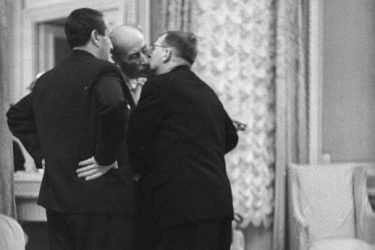
Maledetto Stanislavskij (Damn Stanislavski), Miranda Angeli's show on the relationship between Anton Chekhov and Konstantin Stanislavski, plays at Teatro Trastevere in Rome from December 8 to 13, 2026, Tuesday to Sunday, in the theater's 2026 and 2027 season. The hall is at Via Jacopa de' Settesoli 3, 00153 Rome, next to the church of San Francesco a Ripa. For buses, trams and trains the reference is the Rome transit company's route planner, while on foot it takes 10 minutes from Testaccio across the Ponte Sublicio. The times of the individual performances aren't given on the season page: ask the theater, on 06 5814004 or at info@teatrotrastevere.it. For the 2026 and 2027 season the theater lists a full-price ticket of 13 euros, plus the membership card of 2 euros. Tickets are bought online from the theater's official site, which links to the authorized presale network, or at the hall.
Language: performed in Italian. No English version or English surtitles are announced.
The starting point is one of the most famous texts of modern theater, The Seagull, and one of the most celebrated quarrels in its history: the one between the author and the director who brought it success.
Maledetto Stanislavskij at Teatro Trastevere: dates, times and tickets
Maledetto Stanislavskij stays at Teatro Trastevere for six days, from December 8 to 13, 2026, from Tuesday, the Immaculate Conception holiday, to Sunday.
The dates
The season calendar lists the dates from December 8 to 13. The period includes the holiday of December 8 and the weekend of the 12th and 13th: three convenient opportunities for those who work during the week.
The times
The season page doesn't give the performance times. The advice is to check them when buying online or by calling the theater, on 06 5814004 or the mobile 328 3546847.
The price
For the 2026 and 2027 season Teatro Trastevere lists a full-price ticket of 13 euros and a membership card of 2 euros. The card is listed next to the season price: the theater is run by a cultural association, and the card is the condition for attending shows. The theater also offers the possibility of signing up for the card online.
Where to buy
Teatro Trastevere's official site has an online purchase button that links to the authorized presale network. In a hall of 99 seats, six performances sell out fast: better not to wait for the last day.
What you'll see: author versus director
Maledetto Stanislavskij tells of the relationship between Anton Chekhov and Konstantin Stanislavski, and the clashes that arose between the two around the staging of The Seagull, according to Teatro Trastevere's presentation.
An author who came to hate his text
The presentation starts from a paradox: The Seagull is one of the most famous texts of modern theater, but its author came to hate it. The reason, according to the show, was Stanislavski's direction, which Chekhov judged terrible. The text says so with a touch of irony: terrible in his view.
Two great masters
The show stages the relationship between these two masters of the theater, with the clashes and challenges that came of it. On one side the playwright, jealous of the nuances of his own text. On the other the director, determined to turn that text into a finished show according to his own vision.
A question for today
The presentation widens the discussion: the challenges Chekhov and Stanislavski faced are the same that any author and any director still face today, when they have to work together. The tone is ironic, and suggests a comedy about the theater more than a historical reconstruction.
The official site
The cast, direction and running time aren't published on the season page. To know who is on stage the reference is the Teatro Trastevere site or the box office.
Chekhov's The Seagull: a flop and a triumph
The Seagull is a drama in four acts written by Anton Chekhov in 1895 and first performed the following year at the Alexandrinsky Theatre in Saint Petersburg, where it was a resounding failure.
The Saint Petersburg premiere
The evening at the Alexandrinsky Theatre has gone down in theater history as one of the great flops. Vera Komissarzhevskaya, who played Nina, was so intimidated by the audience's hostility that she lost her voice. Chekhov left the stalls and spent the last two acts behind the scenes.
Moscow, 1898
In 1898 Konstantin Stanislavski and Vladimir Nemirovich-Danchenko, who the previous year had founded the Moscow Art Theatre, staged a new version of the work. This time it was a triumph. It is this production, the one that saved The Seagull from failure, that is at the center of the quarrel told by the show.
The characters
The Seagull revolves around the young Nina, the actress Irina and the writer Trigorin, characters played around the world by the greatest theater actors. It is one of Chekhov's best-known plays and one of the most performed of all.
The paradox
The paradox on which Maledetto Stanislavskij rests is all here: the director who turned a flop into a triumph is the same one the author, according to the show, complained about. It's a paradox anyone who has worked in theater knows well.
Konstantin Stanislavski
Konstantin Sergeyevich Stanislavski, pseudonym of Konstantin Sergeyevich Alekseyev, born in Moscow on January 5, 1863 and died in Moscow on August 7, 1938, was a Russian, later Soviet, actor, theater director and teacher, a theater theorist and the creator of the method that bears his name.
The Moscow Art Theatre
With Vladimir Nemirovich-Danchenko he founded the Moscow Art Theatre, which the following year staged The Seagull with the success that was missing at the Saint Petersburg premiere.
The method
Stanislavski's name is tied above all to the method, the system of actor training that made him one of the masters of 20th-century theater. Anyone who has attended an acting school has met it: that's why the title Maledetto Stanislavskij sounds familiar, and a little provocative, to many actors.
A stage name
Stanislavski wasn't his surname: it was Alekseyev. The pseudonym with which he went down in history became so well known as to indicate, on its own, an entire way of understanding acting.
Anton Chekhov, the author
Anton Chekhov is the author of The Seagull, written in 1895, one of his best-known and most performed plays.
A demanding playwright
The presentation of Maledetto Stanislavskij describes an author who came to hate his own text because of a direction he didn't share. It is the portrait of a demanding playwright, who had lived through the Saint Petersburg flop and who didn't fully recognize himself even in the Moscow triumph.
The Seagull in the world
Despite the quarrel, or perhaps thanks to it, The Seagull has become one of the most performed texts in the theater. Its characters have been played by the greatest actors in the world, in memorable stagings.
Miranda Angeli, the author
Maledetto Stanislavskij is signed by Miranda Angeli, according to Teatro Trastevere's program.
A dramaturgy about theater
Miranda Angeli's text belongs to a precise vein: theater that tells about theater, with its jealousies, its conflicts, its masters. Choosing Chekhov and Stanislavski means choosing the most famous pair of author and director, and using it to talk about a problem that concerns every company.
The tone
The presentation, with that terrible in his view in parentheses and the unfortunately referring to authors and directors forced to work together, suggests an ironic tone. In our judgment it's a promise of intelligent comedy, aimed as much at enthusiasts as at those who have never seen The Seagull.
The biography
The author's biography isn't published on the season page. For information on the company and the performers the reference is the theater.
Author and director: the show's question
Maledetto Stanislavskij poses a question that concerns every show: who does a text belong to when it goes on stage, to the one who wrote it or to the one who puts it on its feet?
The author's point of view
For the one who writes, the text is a finished work, with its silences and its intentions. Seeing it transformed by someone else can be painful, even when the result pleases the audience. The show's presentation attributes to Chekhov exactly this feeling: the most famous text turned, through a direction, into a hated text.
The director's point of view
For the one who directs, the text is material to transform on stage: rhythm, light, bodies, voices. Stanislavski had seen what happened in Saint Petersburg, and had the task of making a drama already rejected work in Moscow. In our judgment the show's strength lies precisely in the fact that both sides are right.
An everyday question
The presentation says it with an unfortunately: authors and directors still have to work together today. In a hall like Teatro Trastevere, which hosts contemporary dramaturgy, workshops and young companies, the question isn't theoretical: it's the one many of the artists who pass through that stage ask themselves every night.
An off-theater evening in Trastevere
Teatro Trastevere belongs to the network of small Roman halls that work on contemporary dramaturgy, with low prices and an audience of enthusiasts.
The ticket
With a 13-euro ticket and a 2-euro card, an evening at the theater costs less than a movie in many of the city's theaters. It's one of the reasons Roman off-theater has a loyal audience, often made up of actors, students and the curious.
The proximity
With 99 seats there are no distant seats: every spectator sees the faces and hears the pauses. For a show about acting and directing it's the best condition, because it lets you see up close the very actor's work that Stanislavski tried to codify.
A curiosity about Maledetto Stanislavskij at Teatro Trastevere, December 8 to 13, 2026
The strongest curiosity concerns the premiere of The Seagull. At the Alexandrinsky Theatre in Saint Petersburg, the year after it was written, the show was such a flop that the lead actress, Vera Komissarzhevskaya, lost her voice out of fear of the hostile audience, and Chekhov left the stalls to take refuge behind the scenes during the last two acts. Two years later, in Moscow, the same text triumphed thanks to Stanislavski and Nemirovich-Danchenko. The director the author, according to the show, lashed out against is therefore the same one who saved him from failure.
The second curiosity concerns the name. Stanislavski is a pseudonym: the real surname was Alekseyev. The show's title therefore damns a stage name, which has however become synonymous with an entire method of acting.
The third is Roman. Teatro Trastevere stands on Via Jacopa de' Settesoli, a street named after a noblewoman who was a friend of Francis of Assisi. In a hall that calls itself the place for ideas, the quarrel between two Russian masters of the late 19th century arrives in a corner of Trastevere tied to Franciscan history.
Teatro Trastevere, the place for ideas
Teatro Trastevere is a 99-seat hall at Via Jacopa de' Settesoli 3, born in 2009 from the recovery of an old Trastevere movie theater by the cultural association Teatro Trastevere.
From movie theater to theater
The theater tells its birth as the work of a small group of artists, long active in the Roman theater scene, who decided to recover a historic Trastevere hall abandoned for years, once a movie theater, and give it back a cultural role.
Off theater and training
The subtitle the theater has given itself is The place for ideas. It presents itself as a reference point for off theater and contemporary dramaturgy, with a strong focus on training: alongside the season there are workshops and series such as Dopamina, Germogli, La città di tutti and Trastevere Comedy. The artistic director is Marco Zordan.
The hall
The technical sheet speaks of 99 seats and a stage of about 7 meters by 5. For a show about theater like Maledetto Stanislavskij it's an ideal size: the audience is a few meters from the actors, almost inside the rehearsal room in which the clash between author and director is imagined.
The Facciamo Storie season
The 2026 and 2027 season is titled Facciamo Storie and opened on October 6, 2026. In the first part, from October to January, the program included, among others, Il Belvedere by Aldo Nicolaj. Before Maledetto Stanislavskij, from December 4 to 6, Ludovica Bei's Anche quando puoi is on stage. Afterward, from January 8 to 10, comes Mamma me lo diceva sempre directed by Mario Parruccini.
Something nobody tells you about Maledetto Stanislavskij at Teatro Trastevere, December 8 to 13, 2026
What the program doesn't say is that to enjoy Maledetto Stanislavskij you don't need to have read The Seagull. It's enough to know three things: that the text was a flop at the Saint Petersburg premiere, that it triumphed two years later in Moscow with Stanislavski directing, and that Chekhov, according to the show, didn't like that direction. The stage tells the rest. Those who do know the text will find extra pleasure in the references to Nina, Irina and Trigorin.
The second thing concerns the audience. Shows about the craft of theater attract many actors, students and enthusiasts, and Teatro Trastevere has a strong vocation for training, with workshops and series. In the hall you're likely to find people who studied that method: sometimes the laughter arrives ahead of the punchlines.
The third is practical: the ticket requires the membership card. Getting it online before you arrive saves time at the entrance.
The advice I give you for visiting Maledetto Stanislavskij at Teatro Trastevere, December 8 to 13, 2026
The first piece of advice is to book early. In a 99-seat hall six performances mean fewer than 600 spectators in all, and the evenings of the Immaculate Conception long weekend and the weekend are the most in demand.
The second concerns preparation. Anyone with a free hour in the days before can read the plot of The Seagull: the main characters, Nina, Irina and Trigorin, and the story of the young woman who dreams of the theater. Understanding what was at stake for Chekhov makes the contrasts told by the show more flavorful.
The third concerns the times: since they aren't published on the season page, it's best to check them when buying. The fourth: arrive 15 minutes early, with the card already done, because in a small hall whoever comes in late is noticed.
How to get to Teatro Trastevere
Teatro Trastevere is at Via Jacopa de' Settesoli 3, next to the church of San Francesco a Ripa, in the part of Trastevere that looks toward the Tiber and Porta Portese.
By public transport
The metro doesn't reach Trastevere. The surface lines that run along Viale di Trastevere and the Lungotevere pass a few minutes from the theater, and Roma Trastevere railway station is just to the south. Lines, stops and evening and holiday times should be checked on the Rome transit company's route planner.
On foot
From Testaccio you cross the Ponte Sublicio and reach the theater in about 10 minutes. From the Tiber Island it takes about 15. It's often the simplest solution.
By car and taxi
Trastevere is largely a limited traffic zone in the evening hours, and parking is difficult. It's best to leave the car outside the neighborhood. A taxi drops you in front of the entrance.
Another well-known fact, and yet rarely mentioned
It's well known that Stanislavski is the father of the method, the system that trained generations of actors in the 20th century. It's less often mentioned that his fame is inseparably tied to an author who, according to the show's account, detested him as a director. The Moscow Art Theatre, founded by Stanislavski and Nemirovich-Danchenko the year before, turned the Saint Petersburg flop into a triumph in 1898.
A second well-known and little-cited fact concerns Vera Komissarzhevskaya, the first Nina in history. It was she who bore the hostility of the Alexandrinsky audience, to the point of losing her voice.
The third fact concerns the structure: The Seagull is a drama in four acts, and Chekhov, at the premiere, saw only two of them from the stalls. The other two he spent behind the scenes, away from the audience.
The right photo to take at Maledetto Stanislavskij at Teatro Trastevere, December 8 to 13, 2026
The right photo, for a show about theater, is the one of the empty stage before the house lights go down: the set ready, the seats filling up, the wait. In a 99-seat hall it's an intimate image, which tells Roman off theater better than any poster. During the show the advice is not to shoot: in so small a hall the screen can be seen from the stage.
The second photo is taken outside, a few steps away: the facade of the church of San Francesco a Ripa on the square of San Francesco d'Assisi, lit in the evening. It's the theater's most illustrious neighbor.
The third is for enthusiasts: a photo of the poster at the theater's entrance, with the title that damns the master of the method. For those studying acting it's a perfect souvenir.
Some important events that happened here in history
The corner of Trastevere where Teatro Trastevere stands has an eight-century history. Where the church of San Francesco a Ripa now stands there was a hospice for the poor dedicated to San Biagio, where Francis of Assisi stayed during his visits to Rome between 1209 and 1223, thanks to the intercession of Jacopa de' Settesoli, the noblewoman who gives her name to the theater's street. In 1229 the complex was donated to the Friars Minor.
From 1603 Onorio Longhi rebuilt the church, and between 1681 and 1701 Mattia de Rossi completed the reconstruction. Between 1671 and 1675 Gian Lorenzo Bernini sculpted the Blessed Ludovica Albertoni for the church. The area takes its name from the river port of Ripa Grande. Since 1992 the church has housed the remains of the painter Giorgio de Chirico.
In the 20th century the hall that now houses the theater was a movie theater, then stayed abandoned for a long time. In 2009 a group of artists gathered in the cultural association Teatro Trastevere began its recovery, turning it into one of the halls of Roman off theater. On October 6, 2026 the Facciamo Storie season opened, and from December 8 to 13 Maledetto Stanislavskij arrives.
Who has passed through Maledetto Stanislavskij at Teatro Trastevere, December 8 to 13, 2026
Through this corner of Trastevere have passed figures few theaters have had as neighbors. Francis of Assisi, first of all, a guest of the hospice of San Biagio during his trips to Rome between 1209 and 1223. Jacopa de' Settesoli, the Roman noblewoman and Franciscan tertiary who offered him hospitality. Onorio Longhi and Mattia de Rossi, who rebuilt the church. Gian Lorenzo Bernini, author of the Blessed Ludovica Albertoni. Giorgio de Chirico, buried at San Francesco a Ripa since 1992.
Since 2009, in the hall on Via Jacopa de' Settesoli, have passed the artists of Roman off theater, the students of the workshops and the companies of the series Dopamina, Germogli, La città di tutti and Trastevere Comedy, under the artistic direction of Marco Zordan. In the Facciamo Storie season have passed, among others, Il Belvedere by Aldo Nicolaj and Ludovica Bei's Anche quando puoi.
From December 8 to 13, 2026 two giants of Russian theater arrive, through Miranda Angeli's text: Anton Chekhov and Konstantin Stanislavski, with the shadow of Nina, Irina and Trigorin.
San Francesco a Ripa and Trastevere around the theater
Via Jacopa de' Settesoli is a short street next to the church of San Francesco a Ripa, in the part of Trastevere that looks toward the river port of Ripa Grande.
Who Jacopa de' Settesoli was
The street bears the name of Giacoma Frangipane de' Settesoli, known as Jacopa, a Roman noblewoman born around 1190 and died in Assisi around 1239, a Franciscan tertiary and supporter of Francis of Assisi.
The church of San Francesco a Ripa
A few steps from the theater rises the church of San Francesco a Ripa, with Bernini's Blessed Ludovica Albertoni in the Paluzzi Albertoni chapel. If the church is open before the show, the sculpture deserves a stop.
Trastevere on foot
From the theater you can walk to Santa Cecilia in Trastevere, the Museo di Roma in Trastevere and, in a quarter of an hour, Santa Maria in Trastevere. The page on what to see in Trastevere helps you put together the afternoon. On Sunday morning, right next door, the Porta Portese market is held: those who choose the Sunday, December 13 performance can combine the two.
Where to eat before or after the show
Around San Francesco a Ripa and along the streets toward Viale di Trastevere and Piazza di San Cosimato you find trattorias, pizzerias and bars frequented mostly by Romans.
Before
An early dinner or an aperitivo in the streets around the theater is the most convenient solution. The San Francesco a Ripa area is quieter than the tourist heart of the neighborhood, and prices are generally more honest.
After
After the show, the alleys toward Santa Maria in Trastevere and Piazza Trilussa stay lively until late. On the evenings of the long weekend and the December weekend it's best to book.
Accessibility and practical information
For the accessibility of Teatro Trastevere to people in wheelchairs the reference is the theater itself, on 06 5814004: the conditions of the hall aren't described in detail on the site.
With teenagers
Maledetto Stanislavskij is a show about the craft of theater, in a tone the presentation hints is ironic. In our judgment it suits high school students interested in theater, and is valuable for anyone attending an acting workshop.
The card
The ticket comes with the membership card of 2 euros, listed by the theater for the 2026 and 2027 season. Those who already hold the card can ask the box office if it's still valid.
December in Rome: the Immaculate Conception long weekend at the theater
The performances of Maledetto Stanislavskij begin on Tuesday, December 8, the Immaculate Conception holiday, and end on Sunday the 13th, in the first weekend of the Christmas period. In those days Rome offers many shows: in the same area, at Teatro Belli in Piazza di Sant'Apollonia, Barbara Giordano's Luci rotte is on stage from December 8 to 11. Those who love off theater can build a small Trastevere itinerary between two historic halls of the neighborhood. In early December the evening is cool and often damp: a coat and comfortable shoes for the sampietrini are the right gear.
Frequently asked questions about Maledetto Stanislavskij in Rome
When is Maledetto Stanislavskij on at Teatro Trastevere?
Maledetto Stanislavskij is on at Teatro Trastevere in Rome from December 8 to 13, 2026, according to the season program. The performance times aren't given on the season page and should be checked with the theater, on 06 5814004.
How much is a ticket for Maledetto Stanislavskij?
For the 2026 and 2027 season Teatro Trastevere lists a full-price ticket of 13 euros plus the membership card of 2 euros. Tickets are bought online from the theater's site or at the hall.
Who wrote Maledetto Stanislavskij?
Maledetto Stanislavskij is by Miranda Angeli, according to Teatro Trastevere's program. The show tells the relationship between Anton Chekhov and Konstantin Stanislavski around the staging of The Seagull.
What is Maledetto Stanislavskij about?
Maledetto Stanislavskij is about the relationship between Chekhov and Stanislavski and the clashes born from the direction of The Seagull, which the author, according to the show, detested. It draws an ironic reflection on the challenges authors and directors still face today when they work together.
Do you need to know The Seagull to understand the show?
To follow Maledetto Stanislavskij at Teatro Trastevere you don't need to have read The Seagull. It's enough to know that Chekhov's text was a flop in Saint Petersburg and a triumph in Moscow in 1898 with Stanislavski directing. Those who know the play will catch a few more references.
How do you get to Teatro Trastevere?
Teatro Trastevere is at Via Jacopa de' Settesoli 3, next to San Francesco a Ripa. You get there on foot from Testaccio across the Ponte Sublicio or with the surface lines of Viale di Trastevere, to be checked on the Rome transit company's planner.
How many seats does Teatro Trastevere have?
Teatro Trastevere has 99 seats and a stage of about 7 meters by 5, according to the technical sheet published by the theater. It's an intimate hall: for the evenings of the Immaculate Conception long weekend and the weekend it's best to book in advance.
The final advice on Maledetto Stanislavskij at Teatro Trastevere
The advice is to book early, get the card online, check the time of the chosen performance and arrive at Via Jacopa de' Settesoli 15 minutes early, perhaps after a stop in front of Bernini's work at San Francesco a Ripa. Maledetto Stanislavskij takes the most famous quarrel between an author and his director and brings it into a 99-seat hall, where theater talks about itself a few meters from the audience. In our judgment it's the right evening for those who love theater and know its toils, and for those who want to discover, laughing, why The Seagull had two such different premieres.
Article written by the editorial team of Tour Leader Pro, contact them for Private/Corporate/V.I.P. Tours and Experiences.
Planning a trip to Rome? The English guides for visiting the city are on ItalyPlanner.com.