Lucio Corsi at Palazzo dello Sport in Rome, Palasport 2026
https://www.estateromana.com/en/rome/trip-planner/lucio-corsi-at-palazzo-dello-sport-in-rome-palasport-2026/
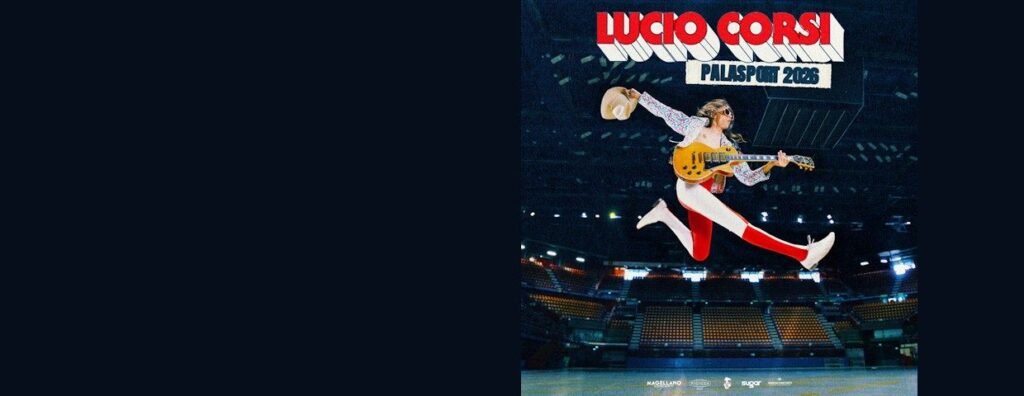
Lucio Corsi comes to Palazzo dello Sport in Rome on Saturday, December 5, 2026, with the start announced for 21:00. It's the Rome date of the Tuscan singer-songwriter's arena tour, and it comes after two years that completely changed the scale of his audience: second place at Sanremo 2025 with Volevo essere un duro, taking part in Eurovision and the move from clubs and theaters to large indoor arenas. If you saw him in a 500-person room, you'll struggle to recognize the setting, but not the artist.
Palazzo dello Sport is the city's largest indoor venue, in EUR, served by Metro line B. For big event nights it's best to arrive well ahead, because security checks at the entrances take time and the line forms long before the gates open. Below you'll find everything you need to plan the evening: who Lucio Corsi is and why his repertoire works in a particular way in an enclosed hall, what the Palaeur is like and what its geometry means for those listening to amplified music, how to get there, where to park, what to do in the two hours of waiting before the show and what happens at the exit when thousands of people head for the same turnstile at the same time.
What the December 5, 2026, concert is
It's the Rome date of Lucio Corsi's arena tour, set for Saturday, December 5, 2026, at Palazzo dello Sport in Rome, with the start listed at 21:00. The address is Piazzale dello Sport 1, in the EUR district, in the southern part of the city. Some listings put the venue on Piazzale Pier Luigi Nervi, named after the engineer who designed it: it's the same place, and in the city everyone simply calls it Palaeur, a word that as an address is as good as the street number.
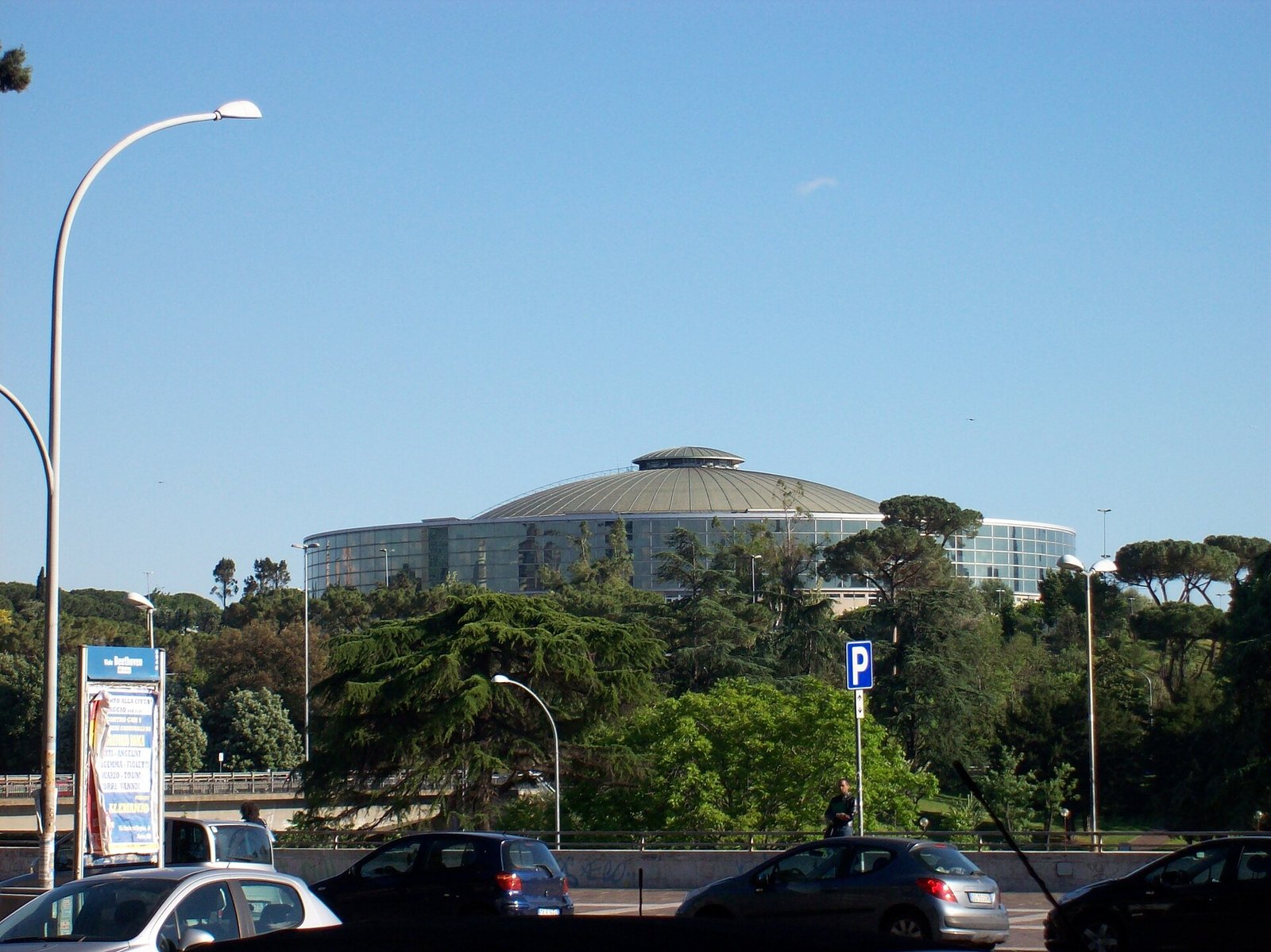
Its place on the calendar isn't random and it's worth reading for what it is. December 5, 2026, falls on a Saturday, and that Saturday opens the busiest stretch of the whole Roman December: the next day is Sunday, December 8 falls on a Tuesday and is a holiday, which means very many people will also take Monday the 7th off. For those coming from outside Rome it's the ideal window, because it lets you turn the concert into a long weekend instead of a hit-and-run trip. For those who live in Rome it means something else: the city in those days is full, transit is crowded, restaurants around the center need to be booked and the Cristoforo Colombo in the late afternoon is anything but smooth.
It's worth making the scope of what follows clear right away, because it's the quickest way not to waste anyone's time. No official setlist for the Rome evening appears to have been published. No guests appear to have been announced. The full lineup of musicians who will accompany the singer on stage hasn't been communicated, nor has the show's staging. No prices, price ranges, remaining availability or information on which sections are sold out are given. This is information that press offices release late, sometimes never, and that in most cases you discover only when the house lights go down.
What can be told precisely is everything else, and that's a lot. Who Lucio Corsi is and where his music comes from. Why an artist who until recently filled theaters now finds himself facing 11,000 seats, and what really changes in that move. What kind of building Palazzo dello Sport is, who designed it, what it's like inside and why its circular plan produces some practical consequences the audience usually blames on bad luck. How to get there, how long the metro takes, where to get off on the way back. And what's around it, because EUR is one of the few Roman neighborhoods where the wait before a concert can become part of a visit instead of a gap to fill sitting at a bar.
One last piece of context, which applies to anyone buying a ticket for this evening. December in Rome is a month of transition: the days are the shortest of the year, darkness comes before 17:00, evening temperatures in EUR often drop below 10 degrees and the district, being open and windy, feels colder than the historic center. When you leave the concert, around 23:30, the difference between the temperature inside the hall and in the plaza can exceed 12 or 13 degrees, and you cover the 200 meters between the venue and the metro sweaty. A real jacket, not a sweatshirt, makes the difference between going home happy and going home with a sore throat.
Who Lucio Corsi is and why everyone's talking about him
Lucio Corsi was born in 1993 in the Maremma, in the Castiglione della Pescaia area, in the province of Grosseto: a part of Tuscany that has almost nothing to do with postcard Tuscany. No neat hills, no rows of cypresses, no farm stays overlooking the vineyards. The Maremma is low land, reclaimed, with Mediterranean scrub reaching down to the sea, horses, drained marshes and a relationship with animals and woods you can hear in every one of Corsi's records. If you try to explain his imagery starting from Bowie and stopping there, you miss the most interesting half of the story, because that half is geographic before it's musical.
His discography starts with Bestiario musicale in 2017, a title that already says it all: songs populated by animals, creatures, figures halfway between fairy tale and ballad. It continues with Cosa faremo da grandi? in 2020, the record that made him known to a wider audience and placed him in the orbit of the most literary Italian songwriting, and with La gente che sogna in 2023, where the sound widens and glam takes more space. Then comes Volevo essere un duro, in 2025, and at that point the biography splits in two: there's a before and an after, and the dividing line runs exactly across the Ariston stage.
At Sanremo 2025 Lucio Corsi showed up with the song that gives the record its title and finished the competition in second place, behind Olly. It's a result almost nobody had predicted, because his is music that on paper has nothing of the festival song: there's no chorus built for applause, no power-voice ballad, no dance track. Instead there's a young man at the piano singing about not having managed to become the tough guy he wanted to be, with self-deprecating lyrics and a melody that seems to come from 30 years earlier. In the same edition he received the Premio della Critica Mia Martini, the award the festival gives when the press room wants to point out something the televote ranking doesn't fully capture.
That edition's covers night has become a small piece of TV history. Corsi chose Nel blu dipinto di blu and sang it as a duet with Topo Gigio, the puppet of 1960s Italian television. Put like that it sounds like a gimmick. Seen, it's anything but. It works because it's consistent with all the rest of his work, where the line between childish play and adult melancholy is very thin and is crossed constantly. And that's the moment a part of the Italian public understood what kind of artist he is: not an eccentric character, but someone who uses the repertoire of childhood to say things that adults can't manage to say.
Right after came Eurovision. The festival winner gave up his spot, and the Italian entry passed to Corsi, who took Volevo essere un duro to the stage in Basel in front of a continental-scale TV audience. The result was fifth place, which for a song in Italian, on piano, without choreography and without effects, is a remarkable outcome. The performance, with the harmonica played in the middle of the song, circulated for weeks and gave Corsi an international audience he didn't have before.
The jump to arenas comes from there. It's not a gradual step: it's the direct consequence of 12 months in which a niche artist became a name known even to people who listen to music absentmindedly. Those who have followed his path from the start remember concerts in small rooms, with the audience sitting on the floor and the voice carrying effortlessly. December 5, 2026, at the Palaeur will necessarily be something else, and the really interesting question of the evening is precisely this: what happens to music built on detail and intimacy when it's put inside an 11,000-seat building.
A curious fact about Lucio Corsi at Palazzo dello Sport in Rome, Palasport 2026
The curiosity is about the piano, and it's one of those things you notice only if you listen to the repertoire in sequence instead of in scattered songs. Lucio Corsi almost always works on a deliberately simple harmonic framework, with chord progressions a beginner pianist recognizes immediately and could reproduce. It's not a technical limit: it's a precise choice, and it belongs to a clearly identifiable tradition of Italian song, the one where complexity is moved entirely onto the lyrics and the arrangement, leaving the harmonic structure the job of staying transparent and memorable on first listen.
The paradox is that this simplicity, live, becomes the hardest thing to handle. In an arena, where the room's reverb stretches every note and the audience sings along, an elementary chord progression offers nowhere to hide. A complicated melody covers mistakes, a simple melody exposes them. That's why artists who build their sound on subtraction, when they reach the big halls, have two paths: either they fill it up, adding instruments and volume until the songs turn into something else, or they stick with subtraction and bet that 11,000 people in silence make more of an impact than 11,000 people screaming.
The second curiosity is about the harmonica. The instrument heard at Sanremo and then at Eurovision isn't a stage affectation added for TV: it has belonged to Corsi's language for much longer, and it has a precise function in his songs, that of opening a space the voice alone can't fill. The harmonica is an instrument that in Italy has been used very little in songwriting over the last 20 years, while it's central to the American tradition and to English folk: finding it in the hands of a Tuscan in his thirties in 2025 is a small historical anomaly, and it's one of the reasons his music sounds old and new at the same time.
Third curiosity, and it concerns the Rome evening directly. An artist who has built his identity on rural, animal and provincial imagery finds himself playing inside the most urban, geometric and rational district Rome has. EUR is marble, straight axes, closed vistas, absolute symmetry: exactly the opposite of the Maremma woods. It's not a contradiction to resolve, it's a contrast worth noticing as you walk toward the entrance, because it makes the evening more interesting than it seems. No other Italian arena produces this kind of short circuit between the music you're about to hear and the landscape you hear it in.
What to expect from the show
A necessary premise: the setlist doesn't appear to have been published, and any list of songs circulating before the date should be considered a guess, not information. That said, there are some things that can be said with reasonable confidence because they follow from the type of repertoire and the type of hall, not from leaks.
The first is that a Lucio Corsi show isn't a concert built on power. His material alternates piano songs, almost spoken, with tracks with electric guitar and an approach closer to 1970s rock, with the references he has always stated: David Bowie, early 1970s British glam, and on the other side the most visionary Italian songwriting, the line that runs through Rino Gaetano, Lucio Dalla and Ivan Graziani. The live result moves in waves, with moments of almost total silence followed by explosions. If you expect a concert with constant energy from start to finish, you've got the wrong genre.
The second is that the visual component matters, and matters a lot. Corsi's world has a stated figurative dimension, made of makeup, costumes, theatrical lighting and imagery drawn from fairy tales and the circus more than from stadium rock. In an arena, where the distance between the stage and the last row exceeds 40 meters, this component needs to be amplified by the lighting design and the screens. It's one of the points where the quality of a production is measured, and one of the reasons it's worth watching the show as a whole instead of keeping your eyes only on the singer.
The third is about the audience, and it's maybe the most curious thing about these nights. Lucio Corsi's audience after Sanremo has become almost unusually broad: there are 20-year-olds who discovered him with the festival song, there are songwriting fans over 40 who have followed him since the earlier records, and there are children, brought by their parents, who have a direct, unmediated relationship with his imagery. In an arena this mix produces an atmosphere different from that of a pop concert, with part of the room singing by heart and another listening in silence. If you're coming with children, keep this in mind when choosing your section, and I'll come back to that later.
The fourth and last: running time. An arena concert of this kind usually lasts between two hours and two hours and a quarter, often preceded by an opening set. With a 21:00 start, this means getting out between 23:00 and 23:30, which is very useful information if you have to catch a train or plan a trip back outside Rome. Metro line B on weekdays closes around 23:30, while on Friday and Saturday service is extended: December 5 falls on a Saturday, and that solves most of the problems of getting back, but still check the updated service times in the days before.
Something nobody tells you about Lucio Corsi at Palazzo dello Sport in Rome, Palasport 2026
What nobody tells you is about silence. In a full arena silence never really exists: there's always the background murmur of 11,000 people, the noise of cups, the chatter from the side corridors, the hum of the ventilation systems that in a building that size never switch off. For most concerts this doesn't matter at all, because the volume from the stage covers everything. For an artist who builds half his show on songs sung almost in a whisper at the piano, though, it matters a great deal, and it's the real technical risk of an evening like this.
The practical consequence is counterintuitive and worth knowing before choosing where to be. In the whispered moments the best spot isn't the one closest to the stage, because the floor under the stage is also where the noisiest part of the crowd concentrates, the part that sings, moves and talks between songs. The best spot for those moments is the central first ring, raised above the floor, where the sound arrives already blended by the main system and where the audience is seated and still. Those who have seen many concerts in the same hall know it. Those going for the first time instinctively buy the floor, thinking closer is better.
Then there's a second thing, about the relationship between the hall and this kind of repertoire in general. Italian arenas were almost all built for sport, not for music, and their natural acoustics are designed to contain the noise of a crowd, not to render the detail of a piano. Every production that comes into the Palaeur has to hang panels, aim speakers and recalibrate everything from scratch, because there's no permanent audio configuration in the hall. The result is that sound quality in this venue varies noticeably from night to night and from production to production: two concerts in the same hall a week apart can sound very different, and it doesn't depend on the hall, it depends on who's working on it.
Third thing, less technical and more concrete. The audience for this kind of concert tends to arrive later than for a rock concert, because a sizable part considers the opening set optional. It's a costly mistake, because the line at the turnstiles doesn't spread out evenly: it all concentrates in the half hour before the start, and if you arrive at 20:40 thinking you'll get in comfortably, you end up inside with the show already started. On an 11,000-person night, security checks are the bottleneck of the evening, and there's no way to speed them up from outside.
My tip for Lucio Corsi at Palazzo dello Sport in Rome, Palasport 2026
My main tip is just one and it's worth more than all the others put together: arrive early, and I don't mean half an hour before. I mean two hours before. Not for the line, even though the line is a good reason, but because EUR is the only neighborhood in Rome where the wait before a concert can turn into something worth having done. Getting off at EUR Fermi instead of EUR Palasport, you reach the venue in 10 or 12 minutes on foot, passing through a part of the district most of the audience never sees, and at 18:00 in December, with darkness already fallen and the lights on, that walk is the best thing about the evening before the concert starts.
Second tip: dress in layers and don't bring a heavy coat if you can avoid it. Inside the arena, with 11,000 people and the stage lights, the temperature rises fast, and a down jacket becomes a weight to carry in your arms for two hours. Coat checks in Italian arenas are limited, often paid and always with a line at the exit that adds 20 minutes to the end of the evening. The solution is simple: a top, a light sweatshirt, a thin windbreaker that rolls up. The EUR cold in December hits you at the exit, not at the entrance, and a packable jacket solves both problems.
Third tip, about choosing your section, and here I try to be really useful. If you're coming to sing, to stand and to be close, the floor is the right choice and there's no discussion. If you're coming to listen, if you care about the sound and your favorite songs are the piano ones, the first ring in the central part facing the stage is clearly better, usually costs less than the floor and spares you two hours on your feet. If you're coming with children or elderly people, the numbered stands are the only reasonable option: assigned seat, the chance to step out without losing your spot, closeness to the restrooms.
Fourth tip, about transportation. Don't come by car if you can avoid it. Palazzo dello Sport has parking areas nearby, but for an 11,000-person event the capacity is far from enough and the outflow at the end of the show is the worst part of the evening: you can sit still in the lot for as long as 40 minutes before managing to get onto the main roads. Metro line B arrives practically under the venue, the trip from Termini takes about 25 minutes, and for a Saturday night date the extended service takes care of getting back. If you really must come by car, do one thing: park far away, even a kilometer, and walk. 10 minutes on foot on the way there are worth 40 minutes saved on the way back.
Fifth and last tip, about afterward. December 5 is a Saturday and there's nothing to do the next Sunday: it's the right night not to rush home. EUR has some places to eat around the lake and along the main axes, but if you want a good dinner after a concert the best choice is to ride the metro back toward Piramide, San Paolo or straight to the center, where at 23:30 on a Saturday the city is still fully open. The metro ride back after the show is crowded for the first 20 minutes and then empties out: waiting a quarter of an hour instead of rushing to the turnstile is a strategy that always works.
How to get to Palazzo dello Sport
The easiest way is Metro line B, toward Laurentina, EUR Palasport stop. The station exit opens a few dozen meters from the venue, which makes the trip trivial on the way there and problematic on the way back, because at the end of the show the whole audience converges on the same point in the same quarter of an hour. From Termini the trip takes about 25 minutes, from Piramide around 15, from Circo Massimo a little under 20. If you're coming from line A, change at Termini, which is the worst node of the network in the evening but still the fastest option.
The previous stop, EUR Fermi, is the card played by those who really frequent the Palaeur. It's 10 or 12 minutes on foot from the venue, slightly downhill toward the arena, and on the way back it lets you completely avoid the crush at the main station. Leaving the concert, walking a quarter of an hour in the cold December air and taking a half-empty metro at EUR Fermi is almost always faster than standing in line at the EUR Palasport turnstile, as well as infinitely more pleasant.
By car the natural route is the Cristoforo Colombo, which takes you from the center to EUR in a straight line and which in the late afternoon of a Saturday in December is anything but smooth, especially on the stretch between the Marconi area and the district. If you're coming from the Grande Raccordo Anulare, exit at EUR and take Viale dell'Oceano Pacifico or Viale America. Parking areas near the venue exist but fill up well before the start time, and parking on the district's streets is regulated. The recommendation is the one already given: park away from the immediate perimeter and walk the last stretch.
Taxis and car services work well on the way there and very badly on the way back, for the most obvious reason in the world: at the end of the show demand explodes all at once and the pickup points jam. If you want to use them, set your pickup point five or 10 minutes' walk from the venue, on a side street, instead of in front of the entrance. It's a precaution that seems minor and can save half an hour.
A last logistical point, about trains. If you're coming from outside Rome for a Saturday night date, you have to reckon with the time of the last connection to your city, and a show that ends between 23:00 and 23:30 leaves a tight margin to reach Termini or Tiburtina. Do the math before buying your concert ticket, not after: from the venue exit to the platform at Termini, with normal outflow, you realistically need 40 or 45 minutes, not 25.
Another well-known fact, yet rarely mentioned
The well-known fact is that Palazzo dello Sport was built for the 1960 Olympics and that during those Games it hosted the basketball and boxing tournaments. Many people know it, it appears in any description of the building and gets repeated every time it's mentioned. What almost nobody mentions is the practical consequence of that origin on how music is heard in there today. A venue designed also for boxing has its focal point at the geometric center of the hall, not on one side. The stands face the center, not one end. The result is that at concerts with an end stage, which are the vast majority, a portion of the seats is structurally to the side of the stage.
This explains something the audience usually blames on bad luck. The sections behind and beside the stage are normally excluded from sale or sold as limited view, and the sections right next to them stay on sale despite a steep angle. It's not an opportunistic commercial choice: it's the geometry of the building that doesn't match the geometry of the show. Knowing in advance that the Palaeur is a venue designed for the center, and not for one side, helps you read the seating map with different eyes and understand why two seats at the same distance from the stage can be worth very different amounts.
There's a second fact just as well known and just as rarely explored: the dome. Everyone knows the roof is a concrete shell and that it bears the signature of Pier Luigi Nervi, one of the most important Italian structural engineers of the 20th century, who in the same years also built in Rome the Palazzetto dello Sport in the Flaminio area and the roofs of other Olympic venues. Less often is it said that this shell is also the reason why in this venue sound-absorbing panels and speaker systems are hung and recalibrated for every production. A curved surface reflects sound toward the center, concentrating it instead of dispersing it, and that's the technical reason a domed hall is a difficult environment for amplified music.
The third rarely mentioned element concerns the numbers. Palazzo dello Sport's capacity is around 11,000 seats, but in concert configurations the number actually available varies depending on the stage setup, the depth of the floor and the sections excluded for visibility. The figures circulating in generic descriptions should be read as orders of magnitude and not as valid data for every evening. It's a detail with a concrete consequence for buyers: the seating map for the specific date is the only source that counts, and it can differ noticeably from that of an event held in the same hall the previous month.
One last fact worth knowing that almost nobody connects to the building: for about 20 years, after the renovation in the early 2000s, the venue carried a sponsor's commercial name, and it entered Romans' language under that name. If you look for old posters, old tickets or memories of concerts, you'll find the same place under two or three different names depending on the year. It's a detail that confuses many people trying to reconstruct the hall's musical history, and it explains why in conversations among Romans the same building is called different things by people of different ages.
Tickets and entry
The December 5, 2026, date is sold through the official channels of the organizer and the venue. Prices, ranges, remaining availability or information on which sections are sold out aren't given here: they're data that change from day to day and make sense only if read in real time on the official sales platform. Any figure given on a descriptive page would be outdated the next day, and that would be worse than not giving it at all.
It's worth being explicit, instead, on a point that concerns buyer safety. For high-demand evenings, unauthorized resale channels regularly appear, with inflated prices and tickets that turn out to be invalid when checked. Italian law prohibits the resale of tickets at a markup by unauthorized parties, and the entry control systems at arenas read the ticket code and detect duplicates. A ticket bought outside the official channels may simply not open the turnstile, and at that point there's no remedy at the entrance.
Many events of this size require named tickets, that is, the person's first and last name printed on the ticket and ID requested at the entrance. Where named tickets apply, there's also an official name change procedure, handled by the sales platform within a set deadline, precisely to let you give away or transfer a ticket without problems. If you buy for a group of friends and someone drops out, you should know that procedure and its terms from the moment you buy, not the night before.
On physical entry: checks take time and are the main reason to arrive well ahead. ID at hand, ticket already open on your phone screen with the brightness up, bags kept to a minimum. The scanner struggles with dark screens and anti-glare films, and every ticket that isn't read on the first try holds up the line behind. On an 11,000-person night these details make the difference between a moving line and a stalled one.
A last note on entry rules, which in Italian arenas are fairly uniform but are still set by the organizer for each event. As a rule, rigid containers, bottles with caps, long umbrellas, backpacks above a certain size and professional photo equipment aren't allowed. Small bags get through, large ones are turned away and there isn't always a storage area that can take them. If you arrive straight from the station with a rolling suitcase, you have a serious problem, and the solution has to be found beforehand, leaving the luggage at a storage service in the center instead of counting on the entrance.
The right photo to take at Lucio Corsi at Palazzo dello Sport in Rome, Palasport 2026
The right photo isn't taken inside. It's taken outside, before going in, and the spot is the outdoor staircase of Palazzo dello Sport seen at three-quarters, with the curve of the roof cutting the sky and the entrance lights on. In December darkness comes very early and at 17:30 you have exactly the best conditions: the sky still deep blue and not black, artificial lights already on, a contrast between the two that no hour of a summer day can reproduce. It's the 20-minute window photographers call the blue hour, and in December in EUR it falls just as the audience starts arriving.
The second spot, less obvious and much more Roman, is reached with a quarter-hour walk north: the Palazzo della Civiltà Italiana, which everyone calls the Square Colosseum, lit up in the evening. Its arches produce a repetitive geometry that works very well in photos and immediately gives the sense of the district. A picture taken there, before heading down to the arena, tells where you are much better than a close-up of the stage taken with a phone from 40 meters away.
Third spot: the EUR lake, which in winter has a quality it doesn't have in summer. The still water reflects the lights of the surrounding buildings, the light mist of damp December evenings softens the outlines, and the cypresses on the edge give a depth that reads well in a night photo. It's not the kind of image you associate with an evening at an arena, and that's exactly why it's worth it: everyone will have the photo of the stage, very few will have the one of the lake at 18:00 in December.
Then there's a subject tied directly to this artist, and it's worth more than all the others if you want an image that means something. Lucio Corsi's visual world is made of animals, woods, creatures and figures halfway between fairy tale and dream: the exact opposite of EUR's rationalism. A photo that brings the two together, for example a tiny human figure in front of the geometric bulk of the arena, or a detail of nature, a branch, a cypress, a reflection on the water, with the architecture in the background, tells the contrast of the evening better than any caption. It's a simple idea and it almost always works.
Inside the hall, on the other hand, the rule is restraint. In an arena, phones take mediocre photos of the stage and excellent photos of the crowd. The best subject isn't the artist 40 meters away, it's the thousands of people around with their arms raised and the hall lit by the side lights. A wide shot taken from the top of the second ring, including the curve of the stands and the small stage at the far end, conveys the scale of the event and holds up over time. A grainy, blurry close-up of the singer doesn't.
Two practical warnings. The first: extended video recording and the use of professional photo equipment are normally forbidden, and the rules are set by the organizer for each event, so check them before showing up with a long lens. The second, which is about courtesy more than rules: a lit screen held at arm's length in front of the face of the person in the next row ruins someone's entire evening. At a concert built partly on whispered moments, the raised phone is the only object that divides instead of uniting.
What's around EUR
EUR is Rome's most unusual district and the most misunderstood. It was born as the site of the Universal Exposition planned for 1942, which the war prevented from taking place, and remained for years an interrupted building site before being completed and turned into an office district in the 1950s and 1960s. The result is a piece of city with a formal coherence that exists nowhere else in Rome: straight axes, vistas closed off by monumental buildings, travertine, wide spaces, silence. If you arrive two hours before the concert, you have plenty of time to walk through it.
The Square Colosseum is the building everyone recognizes, even those who don't know its name. The official name is Palazzo della Civiltà Italiana, and its six rows of nine arches have become over the years a symbol of Italian rationalism and one of the most photographed subjects in the city after those of the historic center. You reach it in about 20 minutes on foot from the arena, slightly uphill, and it's the logical first stop if you want to turn the wait into a walk instead of a stop at a bar.
The EUR lake is the green center of the district, with a pedestrian path along its perimeter and a footbridge across it. Around it are lawns, cypresses and some places to eat. In winter it's little visited, and this makes it, in the evening, one of the quietest places in the whole city. Not far away is also the EUR Social Park, the equipped area that hosts activities and events during the year.
In contemporary architecture the district's most debated episode is the Fuksas Cloud, the convention center that since 2016 has occupied a block along Viale Europa with its glass case and the structure suspended inside. Like it or not, it's the only EUR building built this century that holds its own against those of the 1930s, and in the evening, lit up, it's one of the strongest photo subjects in the area. It's along the natural route between the EUR Fermi stop and the arena, so it requires no detour.
Then there's the Piscina delle Rose, the district's historic swimming facility, also tied to the Olympic season and to the period when EUR was being completed. In winter it's not the destination of an evening walk, but it's part of the district's story and it's worth knowing it exists. The same goes for Ninfeo Village, the space that in summer turns this part of the city into one of the hubs of Roman nightlife and that is closed in December: if you come for the winter concert, you see EUR in its quietest version, which is also the most photogenic.
On eating, an honest note. EUR isn't a dining district: it's an office district, and its evening options are limited compared with any other area of the city. Near the lake and along Viale Europa there are bars and places that fill up immediately on event nights and that on a Saturday in December are the bottleneck of the whole area. If you want dinner before the show, book, or eat something quick and move the real dinner to after the concert, heading back toward the center. If you want to stay nearby, the alternative is Garbatella or Ostiense, two stops away on the same line, where the choice is incomparably wider and the prices more reasonable. The Nuovo Mercato Testaccio, a little farther north, is also a classic option if you arrive in the city early in the afternoon.
Some important events that happened here in history
The first event is the one the building exists for. In June 1960 Palazzo dello Sport was inaugurated, a few weeks before the opening of the Games of the XVII Olympiad. During the Rome Olympics it hosted the basketball and boxing tournaments, two disciplines that in that edition produced significant pages of sports history. It's the moment when Rome presented itself to the world with a series of venues designed by some of the best Italian designers of the time, and the EUR arena is among the most successful.
The second event changed the building's meaning. In 1970 the Rolling Stones played Palazzo dello Sport, and with that concert the venue entered the circuit of major international music events. It hadn't been built for music, but the combination of capacity, roof and metro connection made it in the following years the reference hall for indoor concerts in Rome, a role it has essentially kept to this day despite competition from other spaces.
The third concerns international sport, which has come back here regularly over the decades. The Palaeur hosted the volleyball world championships in 1978 and again in 2010, the European volleyball championships in 2005 and 2023, and the European basketball championships in 1991. It's a rare continuity for an Italian venue of that age, and it shows that the structure has kept meeting international standards for over 60 years.
The fourth event is the renovation at the turn of the 1990s and 2000s, which brought the venue up to contemporary standards and handed it over to its current phase. The reopening of the renovated space was marked in 2003 by a Carlos Santana concert, and it's in that period that the building took on the sponsor's commercial name that would stay with it for about 20 years in Romans' language and on posters.
The fifth event is of a different nature and concerns how this hall is used today. In recent years the Palaeur has gradually turned from a hall for single concerts into a hall for residencies: no longer one date per artist, but series of three, four, six, eight consecutive nights of the same show. It's a change in the economic model of Italian concerts that can be read with particular clarity at Palazzo dello Sport. Lucio Corsi's single date sits exactly on the opposite side: an artist on his first run in the big halls, with a single Rome night, in a calendar dominated by those who multiply their nights.
Who has passed through Lucio Corsi at Palazzo dello Sport in Rome, Palasport 2026
Palazzo dello Sport has hosted live music for over half a century, with a leap forward in 1970, when the Rolling Stones played there, bringing an event of international scale to that hall for the first time. At the end of the renovation, in 2003, it was Carlos Santana who inaugurated the renewed space. They're the two documented names that mark the venue's two eras, the original and the contemporary one, and on their own they tell the distance between the Olympic arena and today's concert hall.
In the most recent phase the hall's calendar reads like a catalog of mainstream Italian music, alternating historic names and artists from younger generations. In the same season Lucio Corsi comes, there are Giorgia, Pooh, Gigi D'Alessio and Marco Masini: artists with an audience that grew up with them, who fill an arena on the strength of an established catalog more than a new record.
Alongside them, the same venue welcomes names that draw a completely different audience in age and language: Shiva, Nayt, Irama and Anna. The week after Corsi's, on December 12, the same hall hosts Irama, and a week later still Anna: three consecutive nights on three December Saturdays, three audiences that don't resemble each other at all. The coexistence in the same calendar of such distant generations and languages is one of the most interesting features of this hall, and explains why the Palaeur remains the city's most used indoor venue.
The following January, then, sees one of the longest residencies ever scheduled at this venue, with a series of consecutive nights of the same show spread across the second half of the month. If you think in terms of a season and not a single night, the picture is clear: between October 2026 and January 2027 Palazzo dello Sport concentrates the densest part of Rome's indoor music calendar, and Lucio Corsi's date is the moment when the generation of singer-songwriters coming out of recent festivals enters that calendar.
Keep in mind, too, that Rome's calendar doesn't end indoors. At the Stadio Olimpico the following summer will see, among others, Vasco Rossi, Laura Pausini, Pinguini Tattici Nucleari, Olly and Achille Lauro. Olly's name, in particular, closes a circle that starts right from the 2025 festival: the one who won that competition reaches the stadiums, the one who came second reaches the arenas, and the two careers look at each other from two different sides of the same city.
Accessibility
Palazzo dello Sport has spaces reserved for people with disabilities and their companions, with access through dedicated gates and routes that avoid the outdoor staircases. The booking procedure for these spots is separate from that for regular tickets and is normally done through a specific channel indicated by the organizer for each event, in advance and with documentation. It's not a formality that can be sorted out at the entrance on the night itself, and for a high-demand evening these spots sell out early.
The reserved area in a circular-plan arena has features worth knowing beforehand. It's usually a raised platform to the side of the stage, which guarantees a view over the heads of the standing crowd but doesn't offer a front-on angle. For a concert where the staging and the visual side matter a lot, this is something to factor in: the view is guaranteed, the centrality isn't. When booking, ask explicitly where the platform is placed for that evening's specific configuration.
The EUR Palasport metro station has step-free access facilities, but the actual availability of elevators and stairlifts in Rome's network stations can vary because of maintenance. If you use a wheelchair, check the status of the service in the days right before, and plan an alternative with road transportation. The reserved parking area near the venue exists but is limited, and on event nights it fills up very early.
December in Rome, around this date
December 5, 2026, falls on one of the busiest weekends of the Roman year, and it's worth knowing before booking your trip. The historic center, in the days between December 1 and 8, takes on its Christmas look: the lights are on, Via del Corso is hard to walk in the afternoon, markets and seasonal installations occupy several squares and museums record higher-than-average attendance for the season. If you're coming from outside with the idea of sightseeing in the afternoon and the concert in the evening, scale back your expectations about travel times.
The smartest solution, if you're coming from outside Rome, is to flip the day. Sightsee early in the morning, when the center is still empty and the December light is the best of the year for photos, have a slow lunch, spend the afternoon in EUR at your leisure, concert in the evening. It's the opposite of what almost everyone does, and it works much better. Alternatively, devote all of Sunday, December 6, to the city and use Saturday only for arriving and the concert: with December 8 a holiday on Tuesday, many will stay through Monday, and Sunday in the center is still more manageable than Saturday afternoon.
Quick questions
When is the concert? Saturday, December 5, 2026, at Palazzo dello Sport in Rome, in EUR, with the start announced for 21:00. The gates usually open a couple of hours earlier, but the exact time is announced by the organizer in the days before.
How long is it? An arena concert of this kind usually lasts between two hours and two hours and a quarter, with a possible opening set. With a 21:00 start you'll reasonably be out between 23:00 and 23:30.
What's the setlist? No official setlist appears to have been published. Any list circulating before the date should be considered a guess and not verified information.
Will there be guests? No guests appear to have been announced for the Rome evening. Same as for the setlist: until the organizer announces anything, there's nothing to report.
How do you get there? Metro line B, EUR Palasport stop, toward Laurentina. From Termini the trip takes about 25 minutes. The previous stop, EUR Fermi, is 10 or 12 minutes on foot and is often better for the way back.
Is it worth going by car? No, if there's an alternative. Nearby parking areas fill up early and the outflow at the end of the show can cost you 40 minutes standing still. If you must use it, park away from the venue's perimeter and walk the last stretch.
How many seats does Palazzo dello Sport have? Around 11,000, but in concert configurations the number available varies depending on the stage and floor setup. The seating map for the specific date is the only source that counts.
Floor or stands? The floor if you want to sing standing up and be close to the stage. The central first ring if you're after the best sound, which with a repertoire like this makes a real difference. The numbered stands if you're coming with children or elderly people.
Is it a concert suitable for children? Lucio Corsi's imagery is much loved by young children too, and you see quite a few at his concerts. The drawbacks are the volume, the time and the crush at the exit, not the content. If you're coming with children, choose a numbered section near an exit and plan to leave the hall a few minutes before the end.
How much are tickets? Prices and availability change constantly and should be read on the official sales channels. No figure given on a descriptive page would stay valid long enough to be useful.
Are tickets in your name? For events of this size named tickets are common. Where they apply, there's an official name change procedure with a deadline: find out when you buy.
Are there spaces for people with disabilities? Yes, with reserved spaces and a companion, bookable through a dedicated channel indicated by the organizer. Availability is limited and sells out early.
What can you see before the concert? The Square Colosseum, the EUR lake, the Nuvola di Fuksas and the sequence of rationalist buildings along the district's axes. Two hours are enough for a complete walk.
Why did Lucio Corsi go to Eurovision if he came second at Sanremo? Because the winner of that edition gave up his spot, and the entry passed to the runner-up. In Basel, in 2025, Corsi finished the final in fifth place with the same song he brought to the festival.
Frequently asked questions about Lucio Corsi at Palazzo dello Sport in Rome, Palasport 2026
When is Lucio Corsi's concert in Rome?
Lucio Corsi's concert at Palazzo dello Sport in Rome is set for Saturday, December 5, 2026, with the start listed at 21:00.
Where is the concert?
The concert is at Palazzo dello Sport in Rome, at Piazzale dello Sport 1, in the EUR district, in the southern part of the city.
What time does it start?
The announced start time is 21:00. The gates usually open a couple of hours earlier, but the exact time is announced by the organizer in the days before.
How do you get to Palazzo dello Sport?
The easiest way is Metro line B, toward Laurentina, EUR Palasport stop: the station exit opens a few dozen meters from the venue. From Termini the trip takes about 25 minutes.
Where do you buy tickets?
The December 5, 2026, date is sold through the official channels of the organizer and the venue. Prices and availability change from day to day and should be checked in real time on the official sales platform.
Is Palazzo dello Sport accessible to people with disabilities?
Yes, Palazzo dello Sport has spaces reserved for people with disabilities and their companions, with access through dedicated gates and routes that avoid the outdoor staircases.
How long is the concert?
An arena concert of this kind usually lasts between two hours and two hours and a quarter, including a possible opening set.
To sum up
The December 5, 2026, evening is interesting for a reason that goes beyond the single concert. It's the moment when an artist built on a small, handcrafted and deliberately sideways dimension enters the city's biggest hall, with everything that implies in terms of technical compromises and a changed relationship with the audience. It can work very well or it can half work, and either way it will be an evening worth having been part of, because an artist's change of scale happens only once and isn't repeated.
The rest is decided by practical things, which are always the same and always make the difference: arrive early, choose the right section for the kind of evening you want, dress so you don't have to hold a coat for two hours, use the metro, don't rush to the exit turnstile with everyone else. Five simple rules that turn a tiring evening into a successful one, and that in an 11,000-seat venue are worth more than any musical advice.
If you organize transfers, groups or escorted trips around an event like this, the professional tools of TourLeaderPro are designed exactly for this kind of logistics. And to build the rest of your trip in Italy, from transfers to free days before and after the concert, the starting point is ItalyPlanner.