Luci rotte at Teatro Belli, December 8 to 11, 2026
https://www.estateromana.com/en/rome/trip-planner/luci-rotte-at-teatro-belli-december-8-to-11-2026/
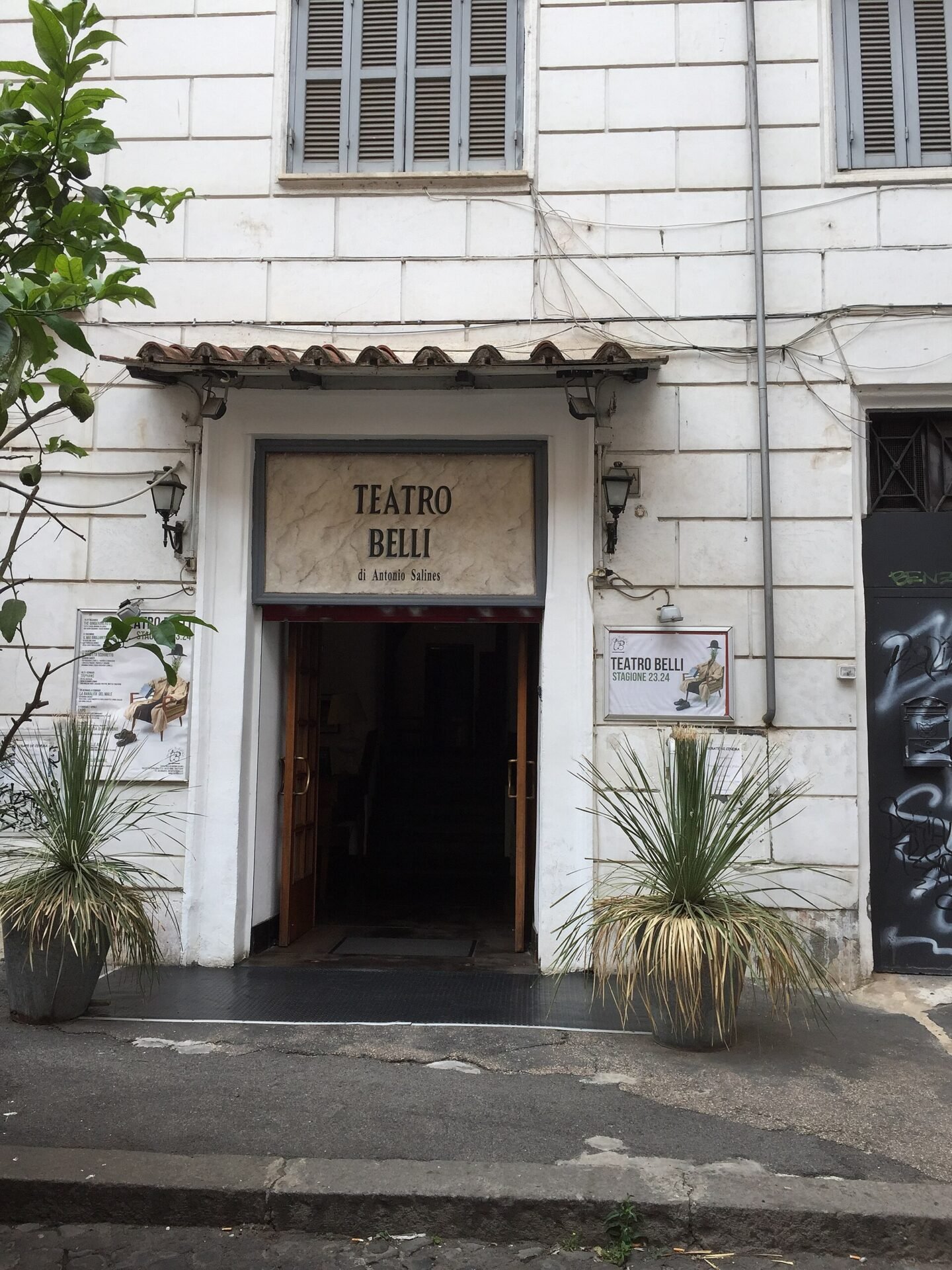
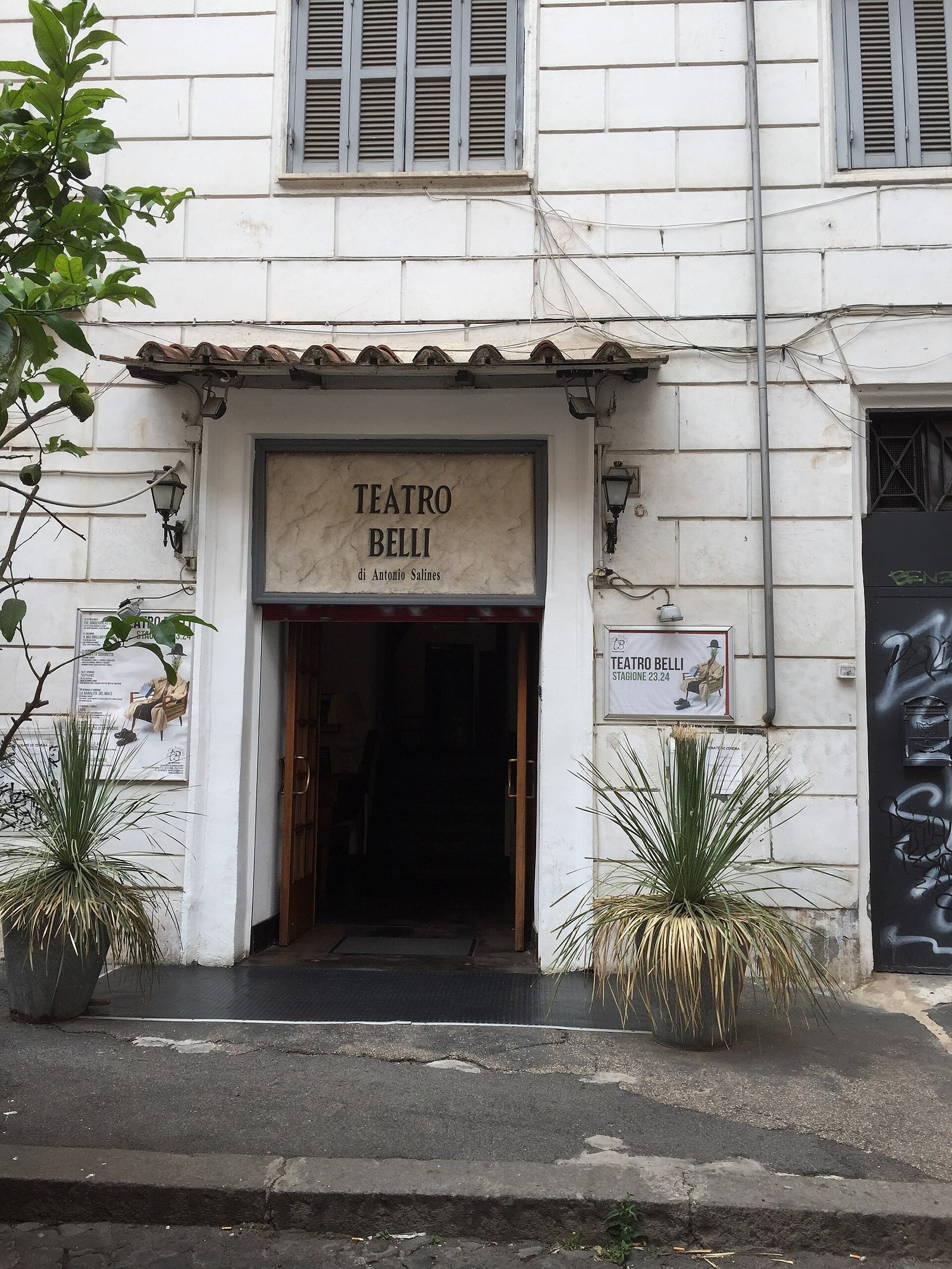
Luci rotte, written by and starring Barbara Giordano and directed by Daniele Muratore, produced by Compagnia Mauri Sturno, is on at Teatro Belli in Rome from December 8 to 11, 2026, Tuesday to Friday, always at 21:00. The theater is at Piazza di Sant'Apollonia 11/a, 00153 Rome, among the lanes of Trastevere, a few steps from Piazza di Santa Maria in Trastevere. For buses and trams the reference is the lines that run along Viale di Trastevere and the Lungotevere, to be checked on the Rome transport company's route planner. According to the listing published by the theater, the full ticket costs 20 euros and the reduced one 15 euros. You buy on the authorized presale network indicated by the Belli's official site or at the box office, open Tuesday to Sunday before performances, on 06 5894875 or at botteghino@teatrobelli.it.
Language: performed in Italian. No English version or English surtitles are announced.
It's a Christmas story told from an unusual point of view: that of a spruce that for 17 years has lived with a Roman family and that, on the eve of its last Christmas, reconstructs what it has seen. The music is by Vanja Sturno, the set by Anna Cingi, the costumes by Laura Giannisi.
Luci rotte at the Belli: dates, times and tickets
Luci rotte stays at Teatro Belli for four consecutive evenings, from Tuesday, December 8 to Friday, December 11, 2026, starting at 21:00.
Four evening performances
The first performance falls on Tuesday, December 8, the day of the Immaculate Conception. Wednesday the 9th, Thursday the 10th and Friday, December 11 follow, all at 21:00. There are no afternoon performances or weekend ones: anyone who wants to see the show has to choose a weekday evening, or the evening of the holiday.
Full and reduced
The full ticket costs 20 euros, the reduced one 15 euros, according to the show's official listing. The conditions for the reduced ticket aren't detailed on the page: it's best to ask at the box office when you buy.
Where to buy
Teatro Belli's site links to the authorized presale network for online purchase. Alternatively you can call the box office, on 06 5894875, or write to botteghino@teatrobelli.it. In an intimate venue like the Belli there aren't many seats: for the evening of December 8, a holiday, the advice is to book in advance.
The running time
The running time of the show isn't published in the theater's listing. With a 21:00 start it's prudent to expect to get out no earlier than 22:30 and organize the return accordingly.
The plot: 17 years seen by a tree
Luci rotte tells the story of a spruce that for 17 years has lived in the home of the Amato family, according to the presentation published by Teatro Belli.
A tree chosen by a little girl
The spruce was bought to fulfill the wish of Luce, a little girl who had picked it out among all those for sale. Since then it has spent 11 months a year on the balcony and every December in the family living room, covered in decorations, lights and memories. It's a real tree, planted in a pot, that grows along with the family and becomes a witness to it.
The last Christmas
Now the tree is old, crooked, almost bare. The house has been sold, and this will be its last Christmas. Before leaving, it reconstructs its own story and that of the human beings who have lived around it for years: it's the starting point of the tale.
The Amato family
Around the tree move the grandparents Nevio and Celestina, the daughters Margherita and Viviana, and then Ruggero, Caterina, Rizwana. The presentation describes a noisy, funny, exasperating family that seems similar to many others, and that every Christmas repeats the same rituals as if repeating them could hold everything together.
The lights that break
In the tree's memories something keeps coming back to break: the lights. Through its naive gaze, unable to fully understand human behavior but also unable to forget it, what looked like a family comedy slowly changes shape. One night the tree sees something that nobody should have allowed, and tries, with the only tool it has, to shed more light.
Luce's return
17 years later Luce returns to the house of her childhood. Objects are divided, memories handed out, the family goes on telling itself its own version of the story. Luce doesn't want photographs, clothes or keepsakes: she wants only the tree. Taking with her that uprooted being, silent witness of her childhood, she finally chooses which roots to save.
Luci rotte: a title with a double bottom
The title Luci rotte plays on two levels: the Christmas tree lights that fail, and the name of the protagonist, Luce.
The little lights
Anyone who has decorated a tree knows the moment when a string of lights stops working. In Barbara Giordano's text that domestic failure becomes the sign that something in the family has broken. The lights that keep breaking in the tree's memories are the warning light of an unease nobody names.
Luce
The little girl who picks the spruce is called Luce. The plural of the title can refer to her too, and to the other lives that house has seen crack. When the tree, one night, tries to shed more light, the wordplay becomes the moral center of the story: illuminating what has been hidden.
The roots
The presentation ends with another plant image: Luce chooses which roots to save. A potted tree, uprooted by definition, becomes the metaphor for a family that has to decide what to keep of its past.
Barbara Giordano, Daniele Muratore and the artistic team
Luci rotte is written and performed by Barbara Giordano, directed by Daniele Muratore and produced by Compagnia Mauri Sturno.
Barbara Giordano
The formula "by and with" indicates that Barbara Giordano writes the text and brings it to the stage. It's the typical condition of author's theater in small halls: whoever writes knows every pause of their own dramaturgy and delivers it in the first person. The number of performers on stage isn't given in the listing: the Amato family has many characters, and the tree's point of view leaves several staging solutions open.
Daniele Muratore, the direction
The direction is by Daniele Muratore. His task, in a text narrated by a tree, is to decide how to make that point of view visible: through voice, light, set. The theater's listing adds no details on the directing approach, which you discover in the hall.
Music, set and costumes
The music is by Vanja Sturno, the set by Anna Cingi, the costumes by Laura Giannisi. In a show that spans 17 years of Christmases, set and costumes have the job of marking the passing of time without changing place: the living room stays the same, it's the people and the tree that age.
Compagnia Mauri Sturno
Compagnia Mauri Sturno, which produces Luci rotte, was founded in 1981 by the actors Glauco Mauri and Roberto Sturno, bound by a long artistic partnership.
Glauco Mauri
Glauco Mauri, born in Pesaro on October 1, 1930 and died in Rome on September 28, 2024, was an actor, theater director and voice actor. In 1977 he lent the Italian voice to Governor Tarkin, played by Peter Cushing in Star Wars, and dubbed Laurence Olivier in several films. With the company that bore his name and Sturno's he staged a vast repertoire of classical authors.
Roberto Sturno
Roberto Sturno, born in Rome in 1946 and died in Tagliacozzo on September 22, 2023, was a stage actor, known mainly as cofounder and leading actor of the Mauri Sturno company.
A repertoire of classics
Over the years the company has tackled Sophocles, Shakespeare, Molière, Goethe, Chekhov, Pirandello and Brecht, along with contemporary authors. The production of a new text like Luci rotte, written by an author who is also an actress, shows a company that keeps working after the passing of its founders.
Teatro Belli, a historic hall in Trastevere
Teatro Belli is at Piazza di Sant'Apollonia 11/a, in Trastevere, and today carries the official name Teatro Belli di Antonio Salines, in homage to the actor and director who reopened it in 1972.
From church to stage
According to the history published by the theater, the hall occupies what was the church of the Sant'Apollonia monastery, which gives the square its name, and was already active as a theater in the second half of the 19th century. In the 1910s it became a cinema with the sign AMOR. In the fifties and early sixties it housed nightclubs.
The 1972 rebirth
In 1969 Antonio Salines took over the Belli, closed and reduced to rubble, when there was talk of turning it into a restaurant. He restored it and reopened it in January 1972, remaining its artistic director for over 40 years. Since then the hall has been one of the places of Roman experimental theater.
A small stage box
The technical sheet describes a stage 9.25 meters wide and 5 deep, with a usable space of 8 meters by 4:54 and a proscenium opening of 6 meters by 4:30. The theater's site stresses that every seat is in close contact with the stage. For an intimate text like Luci rotte, set in a family living room, it's the right size: the audience is almost inside the room.
A curiosity about Luci rotte at Teatro Belli, December 8 to 11, 2026
The nicest curiosity concerns the narrator, or rather the narrating being: a tree. In the theater it's rare for the voice that tells the story to be that of an object, or of a living thing that doesn't speak. In Luci rotte the Amato family's spruce reconstructs 17 years of Christmases with a naive gaze, one that doesn't fully understand human behavior but can't forget it. It's a device that lets you watch the family from outside and from inside at the same time: the tree is in the living room, sees everything, and nobody pays attention to it.
The second curiosity is about the calendar. The first performance of Luci rotte falls on Tuesday, December 8, the day of the Immaculate Conception, the holiday that opens the Christmas period. Going to see the story of a tree living its last Christmas right at the start of the holidays gives the evening a particular flavor.
The third concerns the protagonist's name. Luce is the little girl who picks the tree, and the title, Luci rotte, contains her name in the plural. The wordplay runs through the whole text up to the last image: the tree trying to shed more light.
Trastevere around Teatro Belli
Piazza di Sant'Apollonia is a widening among the lanes of Trastevere, a short walk from Piazza di Santa Maria in Trastevere, the square of the basilica and the fountain.
Santa Maria in Trastevere
The Basilica of Santa Maria in Trastevere is the most natural stop before the show: the facade with its mosaics, lit up in the evening, is the backdrop many Romans associate with the neighborhood.
Toward the Tiber
Going down toward the river you come to Santa Cecilia in Trastevere and, beyond the Lungotevere, the Tiber Island. Toward the north, Ponte Sisto connects the neighborhood to Via Giulia and Campo de' Fiori.
Museums and hills
The Museo di Roma in Trastevere, in Piazza di Sant'Egidio, is a few minutes' walk away. For anyone with a free afternoon before the performance, the climb up the Janiculum via San Pietro in Montorio is the most beautiful walk in the area. The page on what to see in Trastevere helps you put together the rest of the day.
Something nobody tells you about Luci rotte at Teatro Belli, December 8 to 11, 2026
What the Christmas poster doesn't say is that Luci rotte isn't a Christmas comedy in the usual sense. The presentation is clear: what looks like a family comedy slowly changes shape, and one night the tree sees something nobody should have allowed. The text starts from the funny, noisy rituals of an ordinary family and descends, little by little, toward something more painful. Anyone looking for a light evening for the holidays should know it. Anyone looking for theater that uses Christmas to look inside families will find the right show.
The second thing concerns the audience. Precisely because of this turn, in our judgment Luci rotte is a show for adults and older kids, not for small children, despite the tree and the little lights. The theater's listing gives no age limits: if in doubt it's best to ask the box office.
The third is practical: performances are evenings only, at 21:00, and only Tuesday to Friday. Anyone who works during the week has only one holiday evening available, December 8, and it's probably the one that sells out first.
The advice I give you for visiting Luci rotte at Teatro Belli, December 8 to 11, 2026
The first piece of advice is to book early, especially for the evening of December 8. The Belli is an intimate hall, and four weekday performances leave few alternatives to anyone who arrives late.
The second concerns attitude. Luci rotte begins as a family comedy and changes course: the advice is to let yourself be carried by the tree's point of view, naive and stubborn, without expecting the happy ending of Christmas stories. The ending, according to the presentation, is a choice: Luce decides which roots to save. It's an ending open to the future, more than a consolation.
The third concerns the evening. With the 21:00 start it's best to eat dinner beforehand, early, in a trattoria in the neighborhood, or to have an aperitivo and eat afterward, when the lanes of Trastevere are still full. The fourth: in a hall where every seat is in contact with the stage, arriving late means disturbing people. Better to show up 15 minutes early.
How to get to Teatro Belli
Teatro Belli is at Piazza di Sant'Apollonia 11/a, between Piazza di Santa Maria in Trastevere and Viale di Trastevere, and is reached on foot from the historic center or by the lines that run along Viale di Trastevere.
By public transport
Several surface lines run along Viale di Trastevere and the Lungotevere. Lines, stops and evening times often change because of roadworks and detours: the Rome transport company's route planner is the safest way to choose, especially on the evening of December 8, a holiday.
On foot from the center
From Campo de' Fiori you cross Ponte Sisto and in about 10 minutes you reach Piazza di Santa Maria in Trastevere. From there Piazza di Sant'Apollonia is a short step. It's often the quickest solution, because in the evening traffic on Viale di Trastevere can be heavy.
By car and taxi
Trastevere is largely a limited traffic zone in the evening hours and parking in the lanes is almost impossible. It's best to leave the car outside the neighborhood and finish on foot. By taxi, have yourself dropped on Viale di Trastevere or in Piazza Trilussa.
Another well-known fact, and yet rarely mentioned
It's well known that Glauco Mauri was one of the great actors of Italian theater, an interpreter of Shakespeare and the classics for over half a century. It's less often mentioned that his voice was heard by millions of moviegoers without many knowing it: in 1977 he was the one who dubbed into Italian Governor Tarkin, Peter Cushing's character in Star Wars, and he also lent his voice to Laurence Olivier in several films. The company that produces Luci rotte thus comes from an actor who frequented the stage and the dubbing studio with the same seriousness.
A second fact, known and little cited, concerns Teatro Belli. It's known to be a historic hall in Trastevere. It's less remembered that for a period, in the 1910s, it was a cinema called AMOR, and that before that it was the church of a monastery. Few Roman theaters have changed function so many times without losing their link to performance.
The third fact concerns the company: Mauri Sturno was founded in 1981, and for over 40 years it has staged Sophocles, Shakespeare, Molière, Goethe, Chekhov, Pirandello and Brecht. A contemporary text by an author who is also an actress, like Luci rotte, fits into a catalog of classics.
The right photo to take at Luci rotte at Teatro Belli, December 8 to 11, 2026
The right photo, for a show about a Christmas tree and lights that break, is taken outside the theater. Leaving the Belli after 22:30, Piazza di Sant'Apollonia and the lanes around it are lit by the holiday lights. A photo of the theater entrance with the neighborhood's decorations around it is the simplest way to remember the evening.
The second is taken a few steps away, in Piazza di Santa Maria in Trastevere: the basilica's facade with its lit mosaics, the fountain and the square on December evenings. It's the most recognizable image of the neighborhood.
Inside the hall, the advice is not to shoot during the show: in a theater where every seat is in contact with the stage, a phone screen is visible from the stage and disturbs the actors. At the final applause, if the theater allows it, a photo of the stage with Anna Cingi's set is the best souvenir.
Some important events that happened here in history
The history of Teatro Belli reads in layers, like that of Trastevere. The first layer is religious: the hall occupies what was the church of the Sant'Apollonia monastery, which also gave the square its name. It's an origin the theater recalls in its official history and that explains the intimate shape of the room.
The second layer is from the 19th century: in the second half of the century the building was already an active theater, and some of the great names of the Italian stage passed through its stage. The third is the cinema: in the 1910s the hall became a movie house with the sign AMOR. The fourth is nocturnal: in the fifties and early sixties nightclubs followed one another there, until the last one closed after a bloody incident at the entrance. Abandonment followed.
The fifth layer begins in 1969, when Antonio Salines took over the ruined building, destined to become a restaurant, and restored it. The reopening of January 1972 made the Belli one of the places of Roman experimental theater. In the 2026 and 2027 season, with independent productions, the Théâtre Français de Rome and historic companies like Mauri Sturno, the hall continues that vocation.
Who has passed through Luci rotte at Teatro Belli, December 8 to 11, 2026
The stage in Piazza di Sant'Apollonia saw, between the 19th and early 20th centuries, some of the greatest names of Italian theater pass through. The history published by the theater cites Gustavo Modena, the great actor of the Risorgimento. Ermete Novelli, among the star performers of the stage between the 19th and 20th centuries. Leopoldo Fregoli, the inventor of theatrical quick-change. Lina Cavalieri, soprano and diva of the Belle Époque. Ettore Petrolini, the Roman comedian who marked 20th-century variety.
After the 1972 rebirth, for over 40 years the hall hosted actors, directors and authors of Italian experimental theater under the direction of Antonio Salines. In autumn 2026 the program brought to the Belli La figlia di Kioto Zhang and Le statue di sale, and then Vite da strada, the Théâtre Français de Rome, Il calamaro, Sarfatti and Re_Mare.
From December 8 to 11 it's the turn of Barbara Giordano, author and performer, director Daniele Muratore, Vanja Sturno for the music, Anna Cingi for the set and Laura Giannisi for the costumes, with Compagnia Mauri Sturno, heir to the work of Glauco Mauri and Roberto Sturno.
How to watch Luci rotte: three keys to reading it
Luci rotte lends itself to more than one reading, and coming into the hall with a few questions in mind helps you catch its layers.
The mute witness
The first level is that of point of view. The tree sees everything and can't intervene: it doesn't speak with the Amatos, can't leave the living room, can't tell what it knows. Its only weapon, the presentation says, is light. In our judgment the strength of the text lies entirely in this helplessness, which resembles that of many family witnesses, children included, faced with what happens at home.
The Christmas ritual
The second level is the ritual. The family repeats the same gestures every year, as if repeating them could hold everything together. Anyone who has spent the holidays in a large family will recognize the arguments, the absences, the usual phrases. The show starts from this recognition to move the gaze elsewhere.
What gets saved
The third level is the final choice. When the house is emptied and the memories divided, Luce gives up photographs and keepsakes and takes only the tree. The gesture says that a family's memory doesn't coincide with its objects, and that saving your roots can mean carrying them elsewhere. It's a question the show hands to the audience on the way out.
How to organize the evening
The evening of Luci rotte at Teatro Belli begins at 21:00, Tuesday to Friday: a weekday evening in December in Trastevere.
Before the show
Anyone coming from work has time for a walk between Piazza di Santa Maria in Trastevere and the lanes and for an early dinner, around 19:30. On the evening of December 8, a holiday, the afternoon can include the Janiculum or the Museo di Roma in Trastevere.
Arrival
Arriving around 20:45 lets you pick up tickets at the box office and sit down calmly. The Belli opens its box office before performances.
Afterward
On the way out, the lanes between Piazza Trilussa and Santa Maria in Trastevere are still lively: it's the moment for a glass and for talking about the show, which in our judgment leaves many questions open.
Where to eat before or after the show
Trastevere is one of the areas of Rome with the most trattorias, pizzerias and osterie, and around Piazza di Sant'Apollonia you find them on every corner. The problem is avoiding the ones that live off passing tourists.
Trattorias and pizzerias
In the streets toward Viale di Trastevere and toward Piazza di San Cosimato you find the places Romans go to, with more honest prices than on the main square. A slice of pizza or a supplì before the 21:00 performance is the quickest solution.
After the theater
After the performances the lanes between Piazza Trilussa and Santa Maria in Trastevere stay full until late. In the holiday period the places fill up early: for the evening of December 8 it's best to book.
Accessibility and practical information
Teatro Belli is a historic hall carved out of an old building among the lanes of Trastevere: anyone with reduced mobility needs does well to phone the box office, on 06 5894875, before buying to arrange access.
The neighborhood's paving
The sampietrini of Trastevere are uneven and, after rain, slippery. In December comfortable shoes and a folding umbrella are the most practical advice.
With kids
Luci rotte is a text that starts as a family comedy and gradually gets harder: it suits older kids used to theater, less so small children. For them, in the second half of December, the Belli offers Extrateatro's shows in English.
December at Teatro Belli
Teatro Belli's 2026 and 2027 season proceeds by short runs, each on stage for a few days, following the hall's typical formula.
Before Luci rotte
From December 1 to 6, Re_Mare by Francesco Bonomo and Daniel Dwerryhouse is on stage. Luci rotte comes right after, December 8 to 11.
After Luci rotte
From December 17 to 20 the hall offers Extrateatro's fairy tales in English, designed for the youngest. The Belli thus closes the year with two different ways of telling Christmas: an adult text about the family and fairy tales for children.
Other Christmases in Rome
Anyone looking for more ideas for the holidays will find markets, nativity scenes and lights in the overview of Christmas in Rome.
Frequently asked questions about Luci rotte in Rome
When is Luci rotte on at Teatro Belli?
Luci rotte is on at Teatro Belli in Rome from December 8 to 11, 2026, Tuesday to Friday, always at 21:00. The theater is at Piazza di Sant'Apollonia 11/a, in Trastevere.
How much do Luci rotte tickets cost?
Tickets for Luci rotte at Teatro Belli cost 20 euros full price and 15 euros reduced, according to the theater's official listing. You buy online on the network indicated by the Belli's site or at the box office, on 06 5894875.
Who wrote Luci rotte?
Luci rotte is written and performed by Barbara Giordano, directed by Daniele Muratore, with music by Vanja Sturno, set by Anna Cingi and costumes by Laura Giannisi. The production is by Compagnia Mauri Sturno.
What is Luci rotte about?
Luci rotte tells 17 years in the life of the Amato family seen by a spruce, bought for little Luce. In its last Christmas, with the house sold, the tree recalls the family's rituals and the lights that keep breaking, until one night it sees something nobody should have allowed.
Is Luci rotte suitable for children?
Luci rotte at Teatro Belli starts as a Christmas family comedy but changes tone and takes on painful themes: it's better suited to adults and older kids. The theater's listing gives no age limits. If in doubt, ask the box office.
How do you get to Teatro Belli?
You get to Teatro Belli, at Piazza di Sant'Apollonia 11/a, on foot from the center by crossing Ponte Sisto, or by the surface lines that run along Viale di Trastevere, to be checked on the transport company's planner. By car, the neighborhood is largely a limited traffic zone.
What is Compagnia Mauri Sturno?
Compagnia Mauri Sturno, which produces Luci rotte, was founded in 1981 by Glauco Mauri and Roberto Sturno and has staged Sophocles, Shakespeare, Molière, Goethe, Chekhov, Pirandello and Brecht, as well as contemporary authors.
The final advice on Luci rotte at Teatro Belli
The advice is to book early, eat in Trastevere before 21:00 and arrive at the Belli without expecting a Christmas fairy tale. Luci rotte uses a tree, its little lights and the rituals of a Roman family to tell what in homes often goes unsaid, in a hall where the audience is a step from the Amatos' living room. In our judgment it's one of the December shows best suited to anyone who wants to live the holidays with a less predictable gaze.
Article written by the editorial team of Tour Leader Pro, contact them for Private/Corporate/V.I.P. Tours and Experiences.
Planning a trip to Rome? The English guides for visiting the city are on ItalyPlanner.com.