L’ostaggio with Edoardo Pesce at Teatro Vascello, by Valentina Esposito, May 27 to 30, 2027
https://www.estateromana.com/en/rome/trip-planner/lostaggio-with-edoardo-pesce-at-teatro-vascello-by-valentina-esposito-may-27-to/
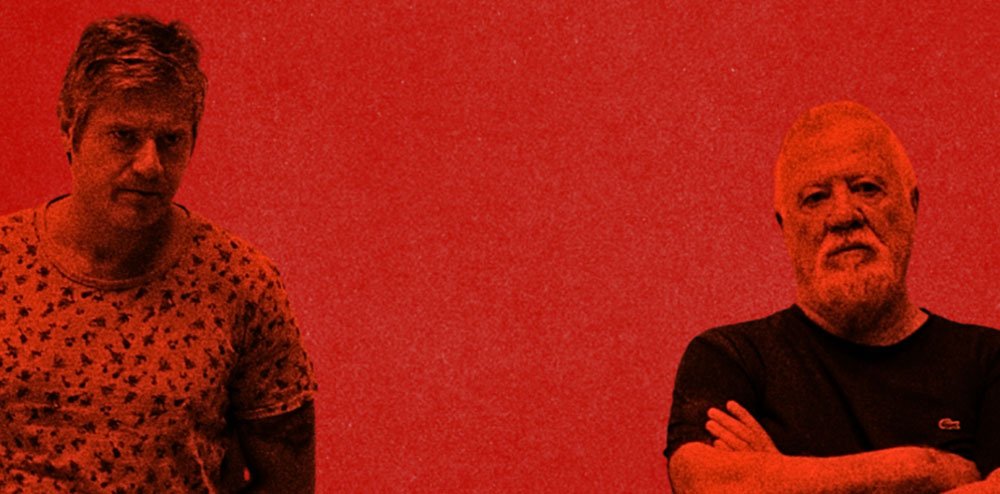
L'ostaggio with Edoardo Pesce and Giancarlo Porcacchia, a show written and directed by Valentina Esposito, is staged at Teatro Vascello, Via Giacinto Carini 78 in Monteverde, from Thursday, May 27 to Sunday, May 30, 2027. Performances are Thursday and Friday at 21:00, Saturday at 19:00 and Sunday at 17:00. The show lasts an hour and a quarter. It's produced by Fort Apache Cinema Teatro and La Fabbrica dell'Attore, Teatro Vascello, with the support of the Ministry of Culture and the Lazio Region. The original music is by Luca Novelli and Mokadelic, the costumes by Mari Caselli. Prices are published on the official Teatro Vascello website, where tickets are sold through the authorized presale network. The theater is reached by bus 75, which stops in front of the entrance, or by train to Quattro Venti station, a few steps away.
Language: performed in Italian. No English version or English surtitles are announced.
L'ostaggio at Teatro Vascello: dates, times and tickets
L'ostaggio closes Teatro Vascello's 2026 and 2027 season with four performances, from May 27 to 30, 2027, with a running time of one hour and 15 minutes.
The calendar
Vascello lists these times: Thursday, May 27 and Friday, May 28 at 21:00, Saturday, May 29 at 19:00, Sunday, May 30 at 17:00.
Tickets
Tickets are sold online from the show's page on Teatro Vascello website, which links to the authorized presale network. Prices are shown at the time of purchase.
The last title of the season
In the calendar published by Vascello, L'ostaggio is the last show of the 2026 and 2027 season, after Notti on May 25 and 26: the last chance to see theater on Via Giacinto Carini before the summer break.
The running time
An hour and a quarter: a compact length, which leaves time for dinner after the 21:00 performance and for a full evening after the weekend matinees.
L'ostaggio: a man, his jailer, a noose
L'ostaggio puts two men on stage in an empty space: a young one, who tells of a life lived ferociously in crime, and an older one, who watches him, judges him and holds him prisoner.
The synopsis
According to Vascello's presentation, the young man lives and tells an escalation of violence and perdition, between dream and remorse, pleasure and pain, anger, resentment, deep loneliness. The other is on him like a hungry mastiff, a dog of war: he holds him hostage, stops him from falling all the way to the bottom, but doesn't let him save and redeem himself either.
A two-way bond
The old man forces, but he's forced in turn, dragged along by the other's desire and frenzy. Between the two hangs a rope noose swinging like a warning, the sign of an omen that binds them in a single fate.
A true story
The show is declared freely inspired by a true story. The theater doesn't say which: the story stays open, and the audience is called to engage with the events more than with the news.
Valentina Esposito's director's notes
In the director's notes published by Vascello, Valentina Esposito describes L'ostaggio as the portrait of a man alone, wrestling with himself and his past, in the prison of his inner self.
Memory on stage
Memory fills the space, filtered through subjectivity, with its distortions and projections. The conflict finds a voice, the torment becomes visible, the torture of the soul becomes matter.
The double
On stage the person generates his double: a character takes shape from memory, forced to play the person, and the soliloquy becomes dialogue. The two actors on stage can also be read as two parts of the same man.
Beyond realism
The dreamlike and archetypal dimension, according to the director, distorts the realism of the situations and the language. The man on stage would like only silence, but silence doesn't come, while, devoted to the altar of money, he signs his own sentence.
Fort Apache Cinema Teatro and Valentina Esposito
Fort Apache Cinema Teatro is, according to Teatro Vascello, the only permanent theater company in Italy and Europe made up of former inmates who have become professional film and stage actors.
The company
The company stages the work of actors who have been through prison and today act professionally. It also makes films and works with Sapienza University of Rome on research and training projects. It's a working model that combines the artistic and the educational, and brings to the stage life experiences that theater rarely hosts first-hand.
Valentina Esposito
Valentina Esposito directs the company. She's a writer and director, who has run theater activities inside and outside Italian prisons for almost 20 years. L'ostaggio is written and directed by her.
A coproduction with Vascello
The show is coproduced by La Fabbrica dell'Attore, the company that has run Teatro Vascello since 1989: the link with the Monteverde venue is therefore also a production one, not just hosting.
Music and costumes
The original music is by Luca Novelli and Mokadelic, the costumes by Mari Caselli. In a show on a bare stage, music and costumes are among the few elements that build the atmosphere.
Edoardo Pesce, from Romanzo criminale to Dogman
Edoardo Pesce, born in Rome on September 12, 1979, is an Italian actor who in 2019 won the David di Donatello for best supporting actor for Matteo Garrone's Dogman.
Training
Pesce attended Enzo Garinei's Ribalte school and then Teatro Azione school of Isabella Del Bianco and Cristiano Censi. Fame came with the two seasons of the series Romanzo criminale, between 2008 and 2010, in the role of Ruggero Buffoni.
Television
He acted in Ultimo, l'occhio del falco alongside Raoul Bova, in Squadra antimafia, Palermo oggi, in I Cesaroni, in Il cacciatore as Giovanni Brusca, and since 2022 he has starred in the series Christian on Sky Atlantic. In 2020 he played Alberto Sordi in Luca Manfredi's TV film Permette? Alberto Sordi, which he also cowrote.
Film
In film he has worked with Massimiliano Bruno, Edoardo Falcone, Sergio Castellitto in Fortunata, Roberto De Paolis in Cuori puri, Fulvio Risuleo. With Dogman, a film shown in competition at Cannes in 2018, he won the Nastro d'argento for best leading actor and the David di Donatello for best supporting actor.
Theater
On stage he has acted in Tracy Letts's Killer Joe directed by Massimiliano Farau, in Patrizio La Bella's Vento e pioggia, in Dario D'Amato's Spregevole, and he wrote I Was Born in Tor Bella Monaca with Francesco Staach.
Giancarlo Porcacchia and the duet
Alongside Edoardo Pesce, in L'ostaggio, is Giancarlo Porcacchia: two performers for the two men bound by the noose.
Two generations
The synopsis speaks of a young man and an older one: the age gap between the characters is part of the story, a confrontation between the one who has lived and the one who judges.
A theater of bodies
In an empty space, with no set described, everything goes through the physical presence of the two actors: the postures, the distances, the weight of the bodies under the noose.
The mirror
The director's notes suggest that the old man's character is born from the young man's memory, forced to play the person: the jailer is perhaps the protagonist's own conscience. Watching the two actors as two halves of a single figure is one of the possible readings, and in our opinion the richest. From this perspective the noose isn't just an external threat, but the sign of a bond neither of them can break alone.
Edoardo Pesce, a Roman actor
Edoardo Pesce was born in Rome, and much of his work, from film to television to theater, tells the story of the city and its outskirts.
Tor Bella Monaca
Among his theater works is I Was Born in Tor Bella Monaca, written with Francesco Staach: the title alone says the link with one of the most talked-about neighborhoods on Rome's outskirts.
Alberto Sordi
In 2020 he played Alberto Sordi in the TV film Permette? Alberto Sordi directed by Luca Manfredi, which he also cowrote.
The Magliana of Dogman
Matteo Garrone's Dogman, the film that won him the David di Donatello, is inspired by the case of the Canaro della Magliana, a Roman crime story. In L'ostaggio, freely inspired by a true story, he once again confronts real events.
How to prepare for L'ostaggio
L'ostaggio is a show that asks for attention and openness: knowing its nature in advance helps you experience it better.
A non-realistic theater
The director's notes warn that the dreamlike and archetypal dimension distorts the realism of the situations and the language. If you expect a naturalistic prison drama, you'll find instead a more symbolic language, made of images, doubles and obsessions.
Two actors, an empty space
There are no scene changes or big effects: everything plays out in the relationship between the two performers and the noose hanging between them. Focus on the bodies and the voices.
After the show
An hour and a quarter goes by fast, but leaves a lot to think about. In our opinion it's one of those shows worth talking about right afterward, over dinner or on a walk.
Teatro Vascello, an experimental venue in Monteverde
Teatro Vascello was inaugurated on May 4, 1989 on Via Giacinto Carini by Giancarlo Nanni and Manuela Kustermann, with the company La Fabbrica dell'Attore.
The roots at Teatro La Fede
Before Vascello there was Teatro La Fede, at Via Portuense 78, where in the 1970s Nanni and Kustermann worked within what was called the Roman school, a theater that put image before word.
Teatro Stabile d'Innovazione
In 1998 the Ministry recognized La Fabbrica dell'Attore as a Teatro Stabile d'Innovazione. In 2004 Sala Studio opened. After Nanni's death, in January 2010, the artistic direction passed to Manuela Kustermann.
A venue that produces
La Fabbrica dell'Attore doesn't just host: it coproduces shows, like L'ostaggio, and every year welcomes part of the Romaeuropa Festival.
A curious fact about L'ostaggio with Edoardo Pesce at Teatro Vascello, by Valentina Esposito, May 27 to 30, 2027
The strongest curious fact concerns the link between the show's themes and the path of its lead performer. Edoardo Pesce became known to the general public with the series Romanzo criminale, in the role of Ruggero Buffoni. He played Giovanni Brusca in Il cacciatore. He won the David di Donatello for Matteo Garrone's Dogman, a film inspired by the case of the Canaro della Magliana. A large part of his career, in short, has gone through characters of criminals and lost lives. In L'ostaggio the theme returns, but reversed: no longer criminal action told from outside, but the aftermath, the judgment, the remorse, the inner prison of a man looking back on his life. The second curious element is the company producing the show. Fort Apache Cinema Teatro is, according to Vascello, the only permanent theater company in Italy and Europe made up of former inmates who are now professionals. An actor famous for criminal roles in film, in a show about guilt produced by a company of former inmates: the short circuit between fiction and reality is evident, and it's probably one of the reasons for the project's strength. In our opinion it's exactly this density of experience, on and off stage, that makes L'ostaggio one of the most interesting titles of the end of the Roman season.
Something nobody tells you about L'ostaggio with Edoardo Pesce at Teatro Vascello, by Valentina Esposito, May 27 to 30, 2027
What's rarely said about theater born in prisons is that it isn't social theater in the reductive sense of the term. If you think of rehabilitation workshops, of shows to see out of solidarity, you're missing the mark. Valentina Esposito's work, almost 20 years of theater activity inside and outside Italian prisons, has produced a professional company, films, collaborations with Sapienza, and shows that deal with the themes of guilt and punishment in a precise artistic language. The director's notes for L'ostaggio show it: they speak of a dreamlike and archetypal dimension, of distorted realism, of a soliloquy that becomes dialogue, of a character born from memory. These are categories of art theater, not of crime news. A second rarely mentioned aspect concerns the cast. L'ostaggio is a duet, and alongside an actor as well known as Edoardo Pesce there's Giancarlo Porcacchia: in a show of this kind the balance between the two performers is everything, because the old man and the young one are built as mirrors of each other. Finally, a practical detail: the Saturday performance is at 19:00 and the Sunday one at 17:00. If you don't know Vascello's habits and plan to go at 21:00, you risk finding the hall already empty.
My tip for L'ostaggio with Edoardo Pesce at Teatro Vascello, by Valentina Esposito, May 27 to 30, 2027
My tip is to prepare for an intense, short show with no concessions. An hour and a quarter, two actors, an empty space, a noose: L'ostaggio isn't a light evening, and anyone going should know it. That's exactly why you should choose the time carefully. The Thursday, May 27 and Friday, May 28 performances at 21:00 are ideal if you want to experience the show and then have time to talk about it over dinner, perhaps in Monteverde. Saturday at 19:00 lets you come out at aperitivo time and walk down to Trastevere. Sunday at 17:00 is the choice if you prefer the afternoon and want to pair the show with a walk on the Janiculum. If you know Edoardo Pesce only through film and television, seeing him on stage, a few meters away, in a play that works on guilt and the double, is a different experience: my advice is to choose a seat in the front rows to catch the physical work of the two actors. Buy tickets in advance on Vascello's website, because there are only four performances. Finally, arrive with a few minutes to spare: in such a compact show, coming in late means missing the build-up of the opening tension.
How to get to Teatro Vascello for L'ostaggio
Teatro Vascello is at Via Giacinto Carini 78, in Monteverde Vecchio, and is reached by bus 75, which stops in front of the entrance.
By bus
The 75 is the most direct line from the center. The theater also lists lines 44, 710, 870 and 871 as useful, linking Monteverde to Trastevere and the western neighborhoods. For evening times, use the Rome transit company's journey planner.
By train
From Ostiense station the commuter train takes you to Quattro Venti station, a short walk from the theater: the fastest route if you're coming on Metro B, which connects to Ostiense at the Piramide stop.
By car
The theater suggests parking along Via delle Mura Gianicolensi, about 100 meters away. There are paid garages at Via Giacinto Carini 43, at Via Maurizio Quadrio 22, which offers a discount with your theater ticket, and at Via Raffaello Giovagnoli 20.
Another well-known fact, yet one rarely mentioned
It's well known that Teatro Vascello is one of the most important experimental venues in Rome, tied to Romaeuropa Festival and to the big names of the international stage, from Tadeusz Kantor to Peter Brook. Less often remembered is that Vascello is also a place of production, and that its history comes from an idea of theater built on image before word. In the 1970s Giancarlo Nanni and Manuela Kustermann worked at Teatro La Fede, on Via Portuense, within what critics called the Roman school: a visual theater that also included Memè Perlini and Giuliano Vasilicò. When they opened Vascello in 1989, they brought that calling with them, inaugurating the hall with Kantor's Qui non ci torno più, the Polish master. In 2001 Nanni was the first Italian invited to work and teach at the Actors Studio in New York. La Fabbrica dell'Attore, the cooperative that runs the hall, has been recognized since 1998 as a Teatro Stabile d'Innovazione and keeps coproducing shows. L'ostaggio is one of them: a production shared with Fort Apache that brings to the Monteverde stage a theater of memory and the double, with an empty stage and a language that distorts realism. In our opinion it's a fitting way to close a season in a hall born under the sign of Kantor.
The neighborhood around Teatro Vascello: Monteverde Vecchio
Monteverde Vecchio is the upper, residential part of Monteverde, above Trastevere, between the Janiculum and the great historic villas.
The Janiculum
The Janiculum is a few minutes away: in late May the sunset view is one of the best in the city.
The villas
Villa Sciarra and Villa Doria Pamphilj are the neighborhood's big green stops, good for a walk before the Sunday matinee.
Il Fontanone
Heading up the hill you reach the Acqua Paola Fountain, with the city at your feet.
Trastevere
At the foot of Monteverde lies Trastevere, with the Basilica of Santa Maria in Trastevere.
The right photo to take at L'ostaggio by Valentina Esposito with Edoardo Pesce at Teatro Vascello, May 27 to 30, 2027
The right photo, for L'ostaggio, is taken before or after the show, because filming isn't allowed during the performance and, in such a tense duet, any light in the hall would break the concentration of actors and audience. At the entrance of Vascello, on Via Giacinto Carini, the show poster with the names of Edoardo Pesce and Giancarlo Porcacchia is the simplest souvenir of the evening. If you choose the Sunday matinee at 17:00 you have the late May light: heading up to the Janiculum before the show you can photograph Rome from above, with the domes and rooftops of the center. On Saturday, coming out of the 19:00 performance shortly after 20:15, you reach the lookout in time for the sunset, which comes late at the end of May: it's the moment when the city turns orange and the light gets softer. The image that, in our opinion, speaks best to the show is another one, though: a detail of rope, of empty space, of shadow, something that recalls the noose hanging between the two characters and the inner prison the director talks about. The advice is not to look for the postcard, but for the image that stays with you.
Where to eat before or after L'ostaggio
Teatro Vascello has an in-house bistro, Coffee Plant Bistrot, handy for a coffee or a snack before the show.
In Monteverde
The neighborhood has trattorias and pizzerias used mostly by residents, with fairer prices than Trastevere: the right choice after the 21:00 performances.
In Trastevere
After the Saturday performance at 19:00 it's worth walking down to Trastevere, where osterias and trattorias stay open late. On Saturday night, book ahead.
On Sunday
The Sunday, May 30 matinee ends at aperitivo time: a drink in Monteverde and then a relaxed dinner is the most natural way to end the day.
Some important events that happened here in history
The history of Teatro Vascello is told in dates. On May 4, 1989 the hall opens with Qui non ci torno più by Tadeusz Kantor and the Cricot Theatre of Warsaw: a statement of intent, because Kantor was one of the most radical names on the European stage. In the early 1990s Raul Ruiz, the Pontedera research center, and American and French contemporary dance pass through. In May 1996 the Extraordinario series presents 16 young companies from all over Italy. In 1998 the Ministry recognizes La Fabbrica dell'Attore as a Teatro Stabile d'Innovazione, and the same year Vascello coproduces a show with the Berliner Ensemble. In spring 2001 cofounder Giancarlo Nanni is the first Italian invited to work and teach at the Actors Studio in New York. In 2003 the Premio Valentino Zeichen for poetry is founded, and in 2004 Sala Studio opens. In January 2010 Nanni dies and the direction passes to Manuela Kustermann. For more than 20 years Fondazione Romaeuropa has brought part of its festival to Vascello, and in fall 2026 the season offered, among others, Tragudia, Il canto di Edipo by Alessandro Serra and L'orologio americano by Elio De Capitani. At the end of May 2027 the season closes with L'ostaggio, a coproduction of La Fabbrica dell'Attore with Fort Apache Cinema Teatro.
Accessibility, age and practical information
Teatro Vascello publishes an accessibility section on its website, worth checking before you buy to learn about entrances, reserved seats and services.
Who it's for
L'ostaggio deals with themes like crime, violence, guilt and inner torment, with strong images like the noose on stage. It's a show for adults and older teens, ideally prepared for the subject.
Being on time
In a show of an hour and a quarter, built on the tension between two characters, coming in late disturbs everyone. Leave with time to spare, especially if you're taking the bus.
Late May in Rome
In late May Roman evenings are mild and the days very long: the walk back between the theater and the bus stop or train station is pleasant even after 22:00.
Who has passed through L'ostaggio by Valentina Esposito with Edoardo Pesce at Teatro Vascello, May 27 to 30, 2027
Some of the most important names in contemporary theater have passed across the stage of Vascello and, even before that, through the history of the company that founded it. To Teatro La Fede, the first home in the 1970s, came saxophonist Steve Lacy, composer John Cage, French director Gérard Gelas and the Living Theatre. Memè Perlini and Giuliano Vasilicò came out of the Nanni and Kustermann company. Since 1989 Vascello has hosted Tadeusz Kantor with the Cricot, Raul Ruiz, the Pontedera center, Teatri Uniti, Moni Ovadia, Carlo Cecchi, Giorgio Barberio Corsetti, Societas Raffaello Sanzio, Teatro Valdoca and Pippo Delbono, and for dance Enzo Cosimi, Sosta Palmizi, Virgilio Sieni and Wim Vandekeybus. Among the international masters are Bob Wilson and Peter Brook, who presented Beckett's Happy Days here with Natasha Parry. Manuela Kustermann, actress and artistic director, is the constant presence in this story. From May 27 to 30, 2027 come Valentina Esposito and Fort Apache Cinema Teatro, with Edoardo Pesce, David di Donatello winner for Dogman and the face of Romanzo criminale and Christian, and Giancarlo Porcacchia, with music by Luca Novelli and Mokadelic and costumes by Mari Caselli. And with them, ideally, all the former inmate actors who in almost 20 years have turned prison into a stage.
Frequently asked questions about L'ostaggio
When is L'ostaggio with Edoardo Pesce on in Rome?
L'ostaggio with Edoardo Pesce is on at Teatro Vascello in Rome from Thursday, May 27 to Sunday, May 30, 2027: Thursday and Friday at 21:00, Saturday at 19:00, Sunday at 17:00, according to the theater's website.
How long is L'ostaggio?
L'ostaggio by Valentina Esposito runs an hour and a quarter, according to the official Teatro Vascello page. It's a compact show, with two actors on stage.
Who is in L'ostaggio at Teatro Vascello?
L'ostaggio at Teatro Vascello stars Edoardo Pesce and Giancarlo Porcacchia. The text and direction are by Valentina Esposito, the original music by Luca Novelli and Mokadelic, the costumes by Mari Caselli.
What is L'ostaggio about?
L'ostaggio tells of a young man who has lived a life of crime and an older man who watches over him, judges him and holds him prisoner, bound by a noose hanging between them. The show is freely inspired by a true story.
What is Fort Apache Cinema Teatro?
Fort Apache Cinema Teatro is, according to Teatro Vascello, the only permanent theater company in Italy and Europe made up of former inmate actors who are now professionals. It's directed by Valentina Esposito and works with Sapienza.
How do you get to Teatro Vascello?
Teatro Vascello is at Via Giacinto Carini 78, in Monteverde Vecchio. Bus 75 stops in front of the entrance. Alternatively, the train from Ostiense takes you to Quattro Venti station, a short walk from the theater.
Where do you buy tickets for L'ostaggio?
Tickets for L'ostaggio are sold on the official Teatro Vascello website, from the show's page, which links to the authorized presale network. Prices are shown at the time of purchase.
Final tip on L'ostaggio
L'ostaggio is a short, intense show that closes the Vascello season with a duet on guilt, memory and the double. With Fort Apache Cinema Teatro, Valentina Esposito brings to the stage an experience built over almost 20 years of theater work inside and outside prisons. Edoardo Pesce, after playing so many criminals in film and on television, takes on the theme from the side of remorse, alongside Giancarlo Porcacchia. In our opinion it's the right choice if you're looking for theater that doesn't console, if you want to see a film actor at work a few meters from the audience, and if you follow theater born in prisons. The tip is to buy your ticket early, because there are only four performances, choose a seat near the stage, remember that on Saturday and Sunday the show starts at 19:00 and 17:00, and after the show treat yourself to a walk on the Janiculum or dinner in Monteverde to let what you've seen sink in.
Article written by the editorial team of Tour Leader Pro, contact them for Private/Corporate/V.I.P. Tours and Experiences.
Planning a trip to Rome? The English-language guides for visiting the city are on ItalyPlanner.com.