Lorenzo Viotti and Lisa Batiashvili at Auditorium Parco della Musica, February 18, 19 and 20, 2027
https://www.estateromana.com/en/rome/trip-planner/lorenzo-viotti-and-lisa-batiashvili-at-auditorium-parco-della-musica-february-18/
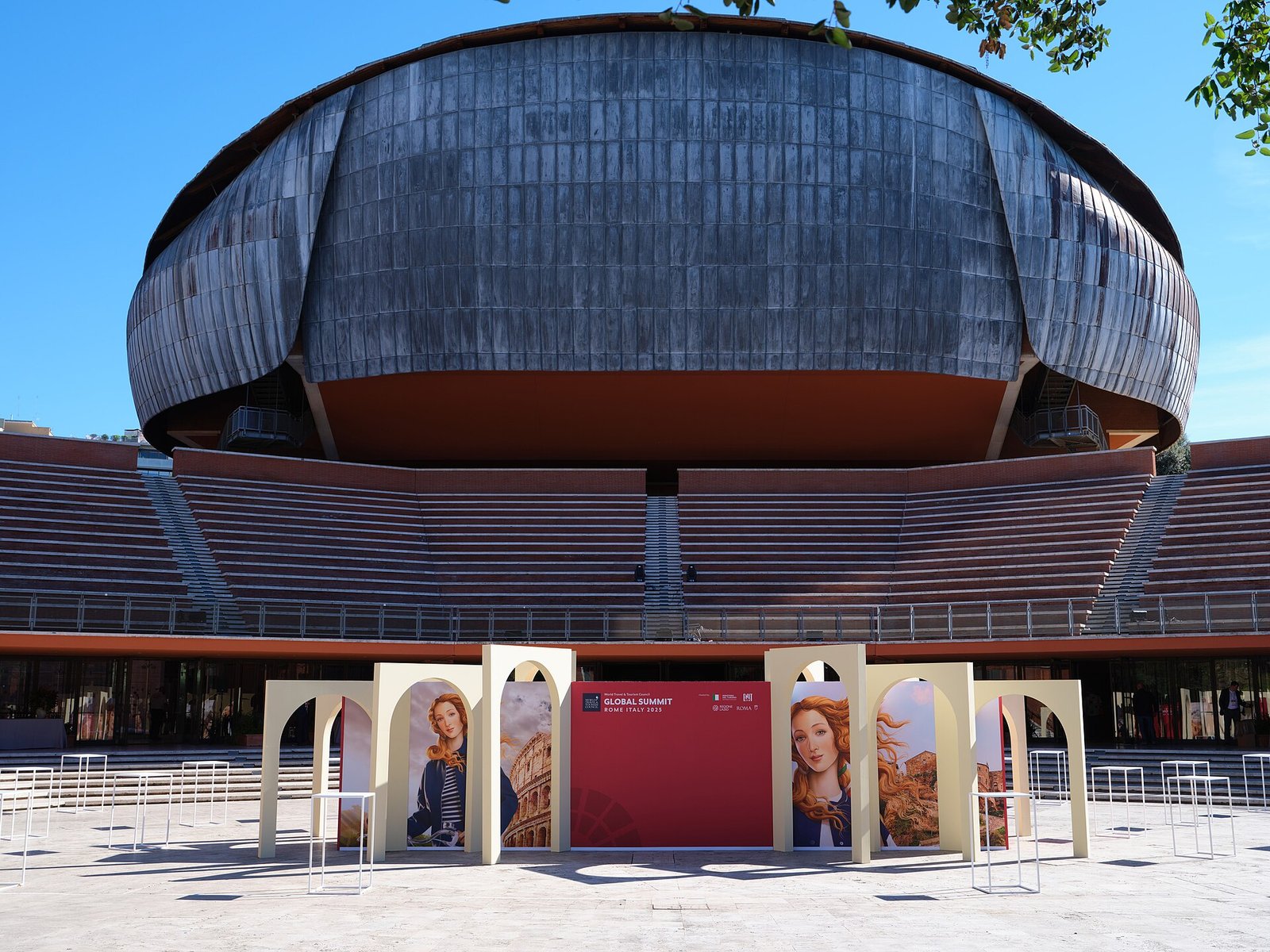
Viotti and Batiashvili at Santa Cecilia: Swiss conductor Lorenzo Viotti and violinist Lisa Batiashvili join the Orchestra of the Accademia Nazionale di Santa Cecilia on Thursday, February 18, 2027 at 19:30, Friday, February 19 at 20:00 and Saturday, February 20 at 18:00 in Sala Santa Cecilia of Auditorium Parco della Musica Ennio Morricone, Viale Pietro de Coubertin 30. The program: Prelude and Isolde's Death from Wagner's Tristan and Isolde, Szymanowski's Violin Concerto No. 1 and Stravinsky's The Rite of Spring. To get to the Auditorium, take metro A to Flaminio and then tram 2, stops Flaminia/Reni or Apollodoro, or buses 910 from Termini, 53, 982 and 168. Tickets cost from €23 to €54 depending on the section and can be bought at the Auditorium box office, at the one on Via Vittoria 6 and on the presale circuit authorized by the Accademia, reachable from the official concert page.
A conductor who as a boy played drums and percussion, including with the Wiener Philharmoniker, and who has programmed the most rhythmic score of the twentieth century. A Georgian violinist who was artist in residence at Santa Cecilia and who brings to Rome one of the first modern violin concertos. Three pieces that, each in its own way, changed music.
Viotti and Batiashvili at Santa Cecilia: the three evenings
The concert of Lorenzo Viotti and Lisa Batiashvili is scheduled three times in Sala Santa Cecilia: Thursday, February 18, 2027 at 19:30 (series G), Friday, February 19 at 20:00 (series V) and Saturday, February 20 at 18:00 (series S), in the Accademia's 2026/2027 symphonic season.
Three different times
The program is identical on the three evenings. Thursday at 19:30 suits those getting off work, Friday at 20:00 is the full-evening performance, and Saturday at 18:00 leaves the evening free and is the most convenient choice for those in Rome for the weekend.
The last symphonic concert before March
Viotti's concert closes the block of concerts on sale since September 10, 2026, which runs until February 27, 2027. Tickets for concerts from March to the end of the season are on sale from January 12, 2027.
A program in crescendo
The evening proceeds by growing intensity: Wagner's harmonic ecstasy, Szymanowski's violin virtuosity, and finally the rhythmic violence of the Rite. In our view it is one of the most coherent programs of the season: three groundbreaking scores, lined up from the oldest to the most recent.
The program: Wagner, Szymanowski, Stravinsky
The concert of Viotti and Batiashvili opens with Prelude and Isolde's Death from Richard Wagner's Tristan and Isolde, continues with Karol Szymanowski's Violin Concerto No. 1 op. 35 and closes with Igor Stravinsky's The Rite of Spring.
Wagner, Prelude and Isolde's Death
The Accademia describes the opening piece as the one in which the search for ecstasy is entrusted to extreme harmonic tension. They are the beginning and the end of the opera, joined in concert without the voices: the Prelude that opens Tristan and the final scene in which Isolde dies over the body of her beloved.
Szymanowski, Concerto No. 1
Szymanowski's First Violin Concerto, written in 1916 and dedicated to the violinist Paul Kochański, is considered one of the first modern violin concertos, for its exploratory harmonic writing and orchestral texture. The Accademia stresses the solo virtuosity that is interwoven with writing rich in oriental and impressionistic suggestions.
Stravinsky, The Rite of Spring
The Rite, the Accademia writes, was composed for the Ballets Russes company in 1913 and is one of the scores that most deeply transformed the musical language of the twentieth century, with its ancestral rhythms and its innovations in tone color. The subtitle is Pictures from Pagan Russia in two parts.
The ritual
The scenario, developed by the painter Nikolai Roerich from an idea of Stravinsky's, depicts primitive rites celebrating the arrival of spring, at the end of which a young girl is chosen as the sacrificial victim and dances to her death. The premiere, at the Théâtre des Champs-Élysées in Paris on May 29, 1913, with choreography by Vaslav Nijinsky, caused a sensation.
Who Lorenzo Viotti is
Lorenzo Viotti is a Swiss conductor born in Lausanne on March 15, 1990, son of the conductor Marcello Viotti. From the 2026/2027 season he is music director of the Tokyo Symphony Orchestra, and from 2028 he will be Generalmusikdirektor of the Zurich Opera.
Percussionist and drummer
He studied piano, voice and percussion in Lyon. In Vienna he attended Georg Mark's conducting class and played as a percussionist in several orchestras, including the Wiener Philharmoniker. He completed his conducting studies in Weimar with Nicolás Pasquet in 2015. As a boy he played drums in funk and jazz, and he even played in his sister's death metal band, the singer Marina Viotti, to have the widest possible musical vocabulary.
The awards
In 2012 he won first prize at the Cadaqués Orchestra international conducting competition. In 2015 he won the Nestlé and Salzburg Festival Young Conductors Award, and in 2016 the conducting competition of the MDR Sinfonieorchester. In 2017 he was named "Newcomer of the Year" at the International Opera Awards. His professional debut dates from July 2014, with the Tokyo Symphony Orchestra.
Lisbon and Amsterdam
From 2018 to 2021 he was music director of the Gulbenkian Orchestra of Lisbon, of which he then became principal guest conductor. From the 2021/2022 season through 2024/2025 he was simultaneously principal conductor of the Netherlands Philharmonic Orchestra, the Netherlands Chamber Orchestra and the Dutch National Opera.
Tokyo and Zurich
In August 2024 the Tokyo Symphony Orchestra, the same one as his debut, named him music director from the 2026/2027 season. In December 2025 the Zurich Opera announced his appointment as Generalmusikdirektor from the 2028/2029 season.
Who Lisa Batiashvili is
Lisa Batiashvili is a Georgian violinist born in Tbilisi on March 7, 1979, one of the leading performers of her time. She has been artist in residence of the New York Philharmonic, the Berliner Philharmoniker and, in the 2017/2018 season, the Accademia Nazionale di Santa Cecilia.
From Tbilisi to Hamburg
The daughter of a violinist and a pianist, she began the violin with her father at four. In 1991, at 12, she left Georgia with her family to settle in Germany. She studied at the Hochschule für Musik und Theater in Hamburg with Mark Lubotsky, a pupil of David Oistrakh, and then with Ana Chumachenco.
The Sibelius at 16
In 1995, at 16, she placed second at the Jean Sibelius International Competition in Helsinki. From 1999 to 2001 she was among the first BBC Radio 3 New Generation Artists, and in 2000 she made her debut at the BBC Proms. In 2018 she was the soloist of the Nobel Prize concert.
Conductors and partners
She has played with conductors such as Daniel Barenboim, Mariss Jansons, Klaus Mäkelä, Yannick Nézet-Séguin, Antonio Pappano, Kirill Petrenko, Simon Rattle, Esa-Pekka Salonen, Christian Thielemann and Tugan Sokhiev. Her chamber partners include her husband, the oboist François Leleux, Jean-Yves Thibaudet, Gautier Capuçon and Jörg Widmann.
Music written for her
Magnus Lindberg dedicated his Violin Concerto to her, which she premiered at Avery Fisher Hall in New York on August 22, 2006. With Leleux she commissioned from the Georgian composer Giya Kancheli the double concerto Broken Chant, presented in 2008 with the BBC Symphony Orchestra. After a contract with Sony Classical in 2007, she records for Deutsche Grammophon.
A curiosity about Lorenzo Viotti and Lisa Batiashvili at Auditorium Parco della Musica, February 18, 19 and 20, 2027
The most surprising curiosity is about the conductor. Before stepping onto the podium, Lorenzo Viotti was a percussionist, including with the Wiener Philharmoniker, and as a boy he played drums in funk, in jazz and even in his sister Marina's death metal band. Conducting The Rite of Spring, the score of ancestral rhythms, for a musician with this background is almost a homecoming.
The second is about the soloist. Lisa Batiashvili knows Sala Santa Cecilia well: in the 2017/2018 season she was artist in residence of the Accademia, and among the conductors she has worked with is Antonio Pappano. She comes to Rome not as a passing guest, but as a performer the Accademia's audience has already followed for an entire season.
Third curiosity: Szymanowski's Concerto and Stravinsky's Rite are almost contemporaries, 1916 and 1913. Two composers from Eastern Europe, in the same years, arrived by different roads at breaking with the language of the nineteenth century: one with blurred and sensual harmonies, the other with rhythm. The program puts them side by side, after the harmonic tension of Tristan.
Sala Santa Cecilia, a hall for large ensembles
With its 2,756 seats, Sala Santa Cecilia is the largest of the three halls of Auditorium Parco della Musica. Renzo Piano designed it for symphonic music, it opened on December 21, 2002 and since 2003 it has been the permanent home of the Accademia's season.
Wood and reverberation
26 American cherry shells, of about 180 square meters each on average, form the ceiling. The hall works like a great sound box, with a reverberation time of 2.2 seconds. For the Rite, with its ancestral rhythms and its innovations in tone color, a volume like this lets the sound explode without becoming muddy.
Where to sit
For Batiashvili's violin, the central stalls or the front gallery are best, avoiding the first rows. In the hall the sound intensity seems to fall until the tenth row and then stay constant. For the Rite, the galleries behind the orchestra let you see Viotti from the front and follow the orchestra up close.
Outside
The three halls are lead-clad volumes on a brick base, arranged around the open-air cavea dedicated to Luciano Berio. Piano, winner of the 1993 competition, worked with the acoustician Jürgen Reinhold of the Müller BBM studio in Munich and with the landscape architect Franco Zagari.
Something nobody tells you about Lorenzo Viotti and Lisa Batiashvili at Auditorium Parco della Musica, February 18, 19 and 20, 2027
Almost nobody remembers that the famous "riot" at the premiere of the Rite, in Paris in 1913, is in part a later construction. The evening caused a sensation, but the word riot, or near riot, appeared only in reviews of performances from 1924, more than 10 years later. The myth grew with time, as often happens.
The second thing is that Nijinsky's original choreography was seen very little. After a first season met with mixed reactions and a short tour in London, the ballet was not performed again until the 1920s, when Léonide Massine's version replaced the original, which had counted barely eight performances. The Rite established itself above all as a concert piece, like the one you hear in Rome.
The third is practical: the Accademia closes the doors at the exact time, and latecomers follow the concert from the listening rooms, while seats last. With Wagner opening, and the violin concerto right after, being late costs a good part of the first half.
My advice for visiting Lorenzo Viotti and Lisa Batiashvili at Auditorium Parco della Musica, February 18, 19 and 20, 2027
My advice is to listen to Szymanowski's Concerto first. The Rite and Tristan are famous pieces that many have heard at least once. Szymanowski's First Concerto is less often played, and knowing its outline lets you appreciate in the hall Batiashvili's work on a nuanced piece of writing, far from showy virtuosity.
Second piece of advice: for the Rite, read two lines first about the plot of the ballet. Knowing that the second part ends with the sacrificial dance of a young girl chosen as the victim transforms the listening. The finale becomes a story, and its impact doubles.
Third: choose your seat with the second half in mind. A score like the Rite is enjoyed best with a bit of distance, in the front or side gallery, or behind the orchestra to see the conductor.
Finally, for those following the season, February offers three symphonic concerts in a row: Peltokoski with Chamayou and the "Leningrad", Pappano with Lisiecki and Shostakovich's Eighth, and this one. For anyone choosing only one, in our view, this has the most varied program.
Tickets for Viotti and Batiashvili: prices and discounts
Tickets for the Viotti and Batiashvili concert cost €54 in section I, €47 in II, €37 in III, €35 in IV, €30 in V and €23 in VI. They are sold only by retailers authorized by the Accademia: the box office of Auditorium Parco della Musica, the one on Via Vittoria 6 and the points of sale of the presale circuit indicated on the official website.
The two box offices
The Auditorium box office, in the greenhouse space, is open every day from 11:00 to 20:00. The one on Via Vittoria 6, between Via del Corso and Piazza del Popolo, is open Monday to Friday from 11:00 to 19:00 and on Saturday from 11:00 to 14:00. Payment is by electronic means only.
Online
From the official concert page, under each date, the purchase button leads to the event page on the authorized circuit. The Accademia is not responsible for surcharges applied by unauthorized resellers.
Young people and kids
For the symphonic season, under 26s get a 30% discount and children under 14 together with an adult pay €3, only at the box offices and while promotional seats last. The discounts cannot be combined. Information at santacecilia.it/giovani, at the infoline 06 8082058 or at biglietteria@santacecilia.it.
How to get to the Auditorium for Viotti and Batiashvili
For the Viotti and Batiashvili concert at Auditorium Parco della Musica, the simplest route is metro A to Flaminio and then tram 2 to Flaminia/Reni or Apollodoro. There are also buses 910, 53, 982 and 168.
By tram
From Piazzale Flaminio tram 2 runs up Via Flaminia toward Piazza Mancini. From the Flaminia/Reni and Apollodoro stops, a few minutes on foot through the Villaggio Olimpico lead to Viale Pietro de Coubertin.
By bus
The 910 goes directly from Piazza dei Cinquecento, in front of Termini, to the Auditorium. The 53 goes through Piazza Mancini, the 982 through Viale XVII Olimpiade, and the 168 comes from Tiburtina station. For evening schedules, use the Rome transport company's route planner.
By car
In front of the entrance Viale Pietro de Coubertin is closed to traffic. The Auditorium's paid parking lots have limited spaces, and on busy evenings the Villaggio Olimpico fills up quickly.
Another well-known fact, yet rarely mentioned
It is well known that The Rite of Spring is one of the most influential works of the twentieth century. Less often mentioned is that Stravinsky, when Diaghilev called him to write for the Ballets Russes, was a young and almost unknown composer. The Rite was the third major project for the company, after The Firebird in 1910 and Petrushka in 1911. In three years a newcomer changed the history of music.
Also rarely mentioned is the fate of the score: conceived for the stage, with passages tied to specific characters and actions, the Rite has won equal or greater recognition as a concert piece. That is how most of the audience hears it, and that is how Viotti conducts it in Rome.
On the violin, a fact known to specialists: Szymanowski's 1916 Concerto is often cited as one of the first modern violin concertos, and it was dedicated to Paul Kochański, a Polish violinist and friend of the composer. Bringing it into a program with the Rite means setting side by side two different ways of inventing the twentieth century, a few years apart.
How to organize the evening
For the Viotti and Batiashvili concert it is best to be at the Auditorium 40 minutes before the start. In a hall of more than 2,700 seats, ticket pickup, checks and the coat check take time.
Before going in
The foyer houses a bar, a cafe and a large bookshop of records and music books. From the terrace between Sala Santa Cecilia and Sala Sinopoli you can see the remains of the Roman villa discovered during the works, and the complex also includes the Aristaios museum with Giuseppe Sinopoli's collection and the Accademia's Museum of Musical Instruments.
The length
The overall length is not indicated on the concert page: two pieces in the first half and the Rite in the second make up a full symphonic concert. If you have a train after the concert, leave yourself plenty of time.
Afterward
On leaving, the cavea is the right place to let the crowd thin out. The exits onto the side streets of the Villaggio Olimpico are always slow in the first minutes.
The right photo to take at Lorenzo Viotti and Lisa Batiashvili at Auditorium Parco della Musica, February 18, 19 and 20, 2027
No photos in the hall during the concert. The right photo is the one at intermission, when the stage is prepared for the Rite and fills up with music stands and chairs. It is the image that tells the scale of the orchestra required by the second half.
The second is taken before the start, from the top of the gallery: the full hall, the stage ready, the cherry shells of the ceiling opening above the orchestra. In a hall of 2,756 seats it is a shot that takes your breath away.
Outside, on Thursday and Friday it is already dark on arrival and Renzo Piano's three beetles are lit up. From the cavea you can frame all three. On Saturday, with the start at 18:00, you catch the last light of a late February afternoon on arrival.
At the final applause, without flash, the orchestra standing after the sacrificial dance: the moment when the phone bothers no one.
Some important events that happened here in history
Under the Auditorium lies a history of more than two and a half millennia: in the 6th century BC a small archaic farm, in the 3rd century BC a Roman villa. The remains emerged during the works and forced Renzo Piano to move two of the three halls to the west, almost to the Corso di Francia viaduct. The finds are displayed in the archaeological museum under the cavea.
The musical history begins with an absence: in 1936 the demolition of the Augusteo left Rome without a symphony hall. In 1992 the city council chose the area of the Villaggio Olimpico and in 1993 Piano won the competition. On April 21, 2002 Sala Sinopoli opened, with Goffredo Petrassi listening to the first performance of his Concert Overture. On December 21, 2002 came Sala Santa Cecilia, with the Accademia orchestra conducted by Myung Whun Chung.
Since 2003 the Auditorium has been the permanent home of the Accademia, since 2006 it has hosted the Rome Film Festival, and in 2020 the city council approved its naming after Ennio Morricone.
Who has been through Lorenzo Viotti and Lisa Batiashvili at Auditorium Parco della Musica, February 18, 19 and 20, 2027
Myung Whun Chung conducted the inaugural concert of Sala Santa Cecilia in 2002. Antonio Pappano was its music director from 2005, and today Daniel Harding opens the 2026/2027 season with Wagner's Siegfried. Wagner thus returns in February, with Viotti's Tristan, after having opened it in October.
Lisa Batiashvili passed through here as artist in residence in the 2017/2018 season. Among the guests of the current season are Kirill Petrenko, who in November stars in the concert with Benjamin Bernheim, and Evgeny Kissin, who returns in a duo with András Schiff, as the page on the Kissin and Schiff concert tells.
Luciano Berio, Goffredo Petrassi and Giuseppe Sinopoli give their names to the cavea and the other two halls of the complex. In the weeks of February, Tarmo Peltokoski, Antonio Pappano and Lorenzo Viotti step onto the podium of Sala Santa Cecilia one after another: three generations of conductors in three weeks.
Accessibility and children
The Accademia reserves for people with disabilities who can walk and hold the Disability Card a 15% discount on two tickets, to be bought at the box office. Wheelchair users pay €10 and their companion enters free, while the dedicated seats last.
Booking
For people who cannot walk, booking is mandatory, from 15 days before the concert until the day before, at 06 8082058 or at biglietteria@santacecilia.it. For the February 18 performance, booking opens on February 3.
In the hall
The hall is raised above ground level and the galleries have only two elevators. It is best to arrive an hour early and ask the staff straight away for the route. The Accademia's Courtesy Service is present from one hour before subscription concerts.
With kids
The Rite of Spring is a score that strikes even a teenager at a first concert: rhythm, power, a story of rites and sacrifices that is easy to tell beforehand. With €3 for children under 14 at the box offices, Saturday at 18:00 is the right performance to bring a kid.
The neighborhood of the Auditorium
The Auditorium's roughly 55,000 square meters lie between Villa Glori, the Villaggio Olimpico, the Corso di Francia viaduct and Viale Maresciallo Pilsudski, in a quadrant of northern Rome where twentieth-century architecture, contemporary architecture and greenery alternate.
The MAXXI
Toward Via Guido Reni, a few minutes on foot, is Zaha Hadid's MAXXI. With the Saturday afternoon concert, an exhibition before the Auditorium completes the day.
The bridges
The Ponte della Musica connects the Flaminio to the Foro Italico. Milvian Bridge, farther north, is one of the busiest evening gathering points in the area.
The center
With tram 2 you go back to Piazzale Flaminio, at the gates of Villa Borghese and Piazza del Popolo.
Where to eat before or after the concert
In the Auditorium there are the foyer bar and cafe and a restaurant bar with access from the street too: convenient for those arriving on Thursday or Friday straight from work.
Around
Between the Villaggio Olimpico, Via Flaminia and Piazza Mancini there are pizzerias, trattorias and neighborhood bars, frequented mostly by people who live in the area. With the start at 19:30 or 20:00, it is best to eat something light beforehand and have dinner afterward.
Saturday
With the 18:00 concert, it is dinner time on the way out: the widest choice is at Ponte Milvio. On Saturday night in the area, it is better to book.
Late February in Rome
The second half of February is still low season in Rome: less crowded museums, lower prices, music and theater seasons in full swing. The days get longer and, with a bit of luck, you start to see the spring that the Rite celebrates.
Organizing the weekend
The calendar of holidays should be checked in advance. Anyone planning a Roman weekend in February finds the city quieter than in spring, but with museums and archaeological sites open on winter hours.
The weather
February evenings can be cold and damp. At the Auditorium you walk outdoors between the halls: leave your coat at the coat check and bring a folding umbrella.
Frequently asked questions about Viotti and Batiashvili at Santa Cecilia
When do Viotti and Batiashvili play in Rome?
Lorenzo Viotti and Lisa Batiashvili perform with the Orchestra of the Accademia Nazionale di Santa Cecilia on Thursday, February 18, 2027 at 19:30, Friday the 19th at 20:00 and Saturday the 20th at 18:00, in Sala Santa Cecilia of Auditorium Parco della Musica Ennio Morricone, Viale Pietro de Coubertin 30.
What is the program of the concert?
The Viotti and Batiashvili concert includes Prelude and Isolde's Death from Wagner's Tristan and Isolde, Szymanowski's Violin Concerto No. 1 with Batiashvili as soloist and Stravinsky's The Rite of Spring, written in 1913 for the Ballets Russes.
How much do tickets cost?
Tickets for Viotti and Batiashvili cost €54, €47, €37, €35, €30 and €23 from section I to VI. Under 26s get a 30% discount and children under 14 with an adult pay €3, only at the box offices and while promotional seats last.
Where can you buy tickets?
Tickets for the Viotti and Batiashvili concert can be bought at the box office of Auditorium Parco della Musica, open every day from 11:00 to 20:00, at the box office on Via Vittoria 6 and on the authorized presale circuit, reachable from the official concert page on the Accademia's website.
Who is Lorenzo Viotti?
Lorenzo Viotti is the Swiss conductor born in Lausanne in 1990, son of the conductor Marcello Viotti, a former percussionist, formerly principal conductor of the Dutch National Opera and from 2026/2027 music director of the Tokyo Symphony Orchestra. From 2028 he will be Generalmusikdirektor of the Zurich Opera.
Who is Lisa Batiashvili?
Lisa Batiashvili is the Georgian violinist born in Tbilisi in 1979, second at the Sibelius Competition at 16, artist in residence of the New York Philharmonic, the Berliner Philharmoniker and, in 2017/2018, the Accademia Nazionale di Santa Cecilia. She records for Deutsche Grammophon.
How do you get to Auditorium Parco della Musica?
You get to Auditorium Parco della Musica by metro A to Flaminio and then tram 2, stops Flaminia/Reni or Apollodoro, or by buses 910 from Termini, 53, 982 and 168. In front of the entrance the street is closed to traffic.
The final advice on Viotti and Batiashvili at Santa Cecilia
A conductor who comes from percussion tackling the most rhythmic score of the twentieth century, a violinist the Accademia has known for years, a rarely played violin concerto and Tristan to open: in our view it is the most varied program of the Roman symphonic February. My advice is to listen to Szymanowski first, tell yourself the plot of the Rite, arrive 40 minutes early and choose the gallery to enjoy the second half.
Article written by the editorial team of Tour Leader Pro, contact them for Private/Corporate/V.I.P. Tours and Experiences.
Planning a trip to Rome? The English guides to visiting the city are on ItalyPlanner.com.