Lettera di una sconosciuta at Teatro India, by Davide Sacco, April 13 to 18, 2027
https://www.estateromana.com/en/rome/trip-planner/lettera-di-una-sconosciuta-at-teatro-india-by-davide-sacco-april-13-to-18-2027/
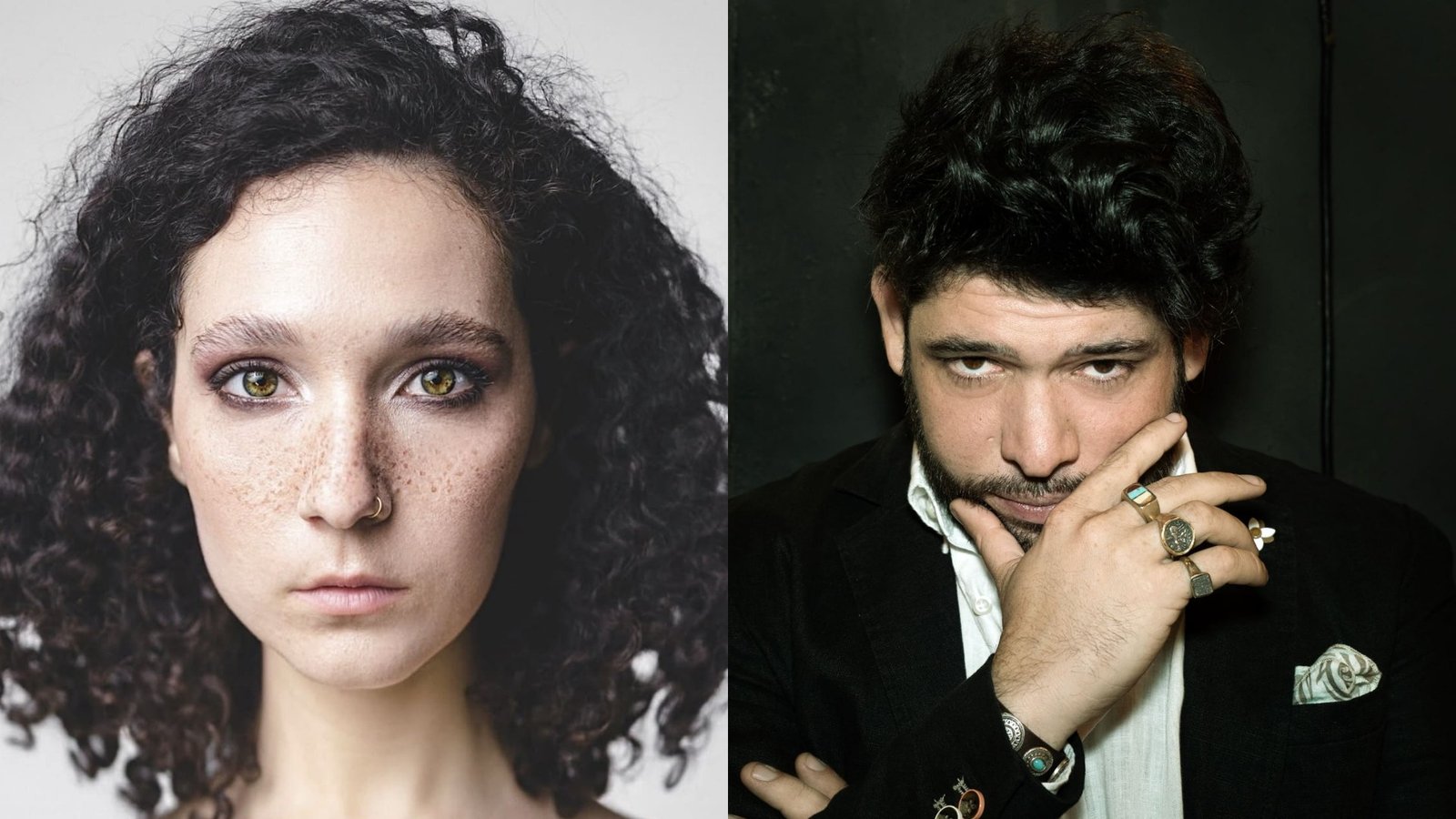
Lettera di una sconosciuta at Teatro India: Stefan Zweig's story, with text and direction by Davide Sacco and starring Giordana Faggiano, runs in Rome from Tuesday, April 13 to Sunday, April 18, 2027, at Lungotevere Vittorio Gassman 1, at the corner of Via Luigi Pierantoni, between Testaccio, Ostiense and Marconi. There are six performances, one a day from Tuesday to Sunday. Start times are published by Teatro di Roma on the show page and on the foundation's sales network. It is a production of Teatro di Roma, Teatro Nazionale, with LVF and Teatro Manini in Narni, part of the 2026/2027 season Il teatro è vita. You reach Teatro India by Metro B to Garbatella and then about a kilometer on foot across Ponte dell'Industria, by train to Roma Trastevere station, about 700 meters away, or by buses 170, 766, 775, 780 and 781, which stop in Piazza della Radio. Prices are published on the official Teatro di Roma website, and tickets are sold on the foundation's official website or at its box offices. All the information is on the official show page.
Language: opera sung in its original language; no English surtitles are announced, so check with the theater.
The starting point is one of the most famous short stories of 20th-century Europe: a woman who was never recognized writes a famous writer the letter of a lifetime. Davide Sacco moves the confession to a hospital bathroom, a sterile, suspended space in which memory takes shape. Below are the dates, the content of the show, the history of the story and of the film that made it famous, the biographies of Zweig and the director, the history of Teatro India, how to get there, what's nearby, where to eat and the most frequently asked questions.
Lettera di una sconosciuta at Teatro India: dates and essential information
Lettera di una sconosciuta has six performances at Teatro India, from Tuesday, April 13 to Sunday, April 18, 2027. The calendar published by Teatro di Roma lists one performance a day for the whole week.
The dates
Tuesday, April 13, Wednesday, April 14, Thursday, April 15, Friday, April 16, Saturday, April 17 and Sunday, April 18, 2027. A single week of performances in Rome, in mid-spring: if you want to choose your preferred night, don't wait until the last moment.
The times
Start times don't appear in the short calendar on the show page: Teatro di Roma gives them on its sales network. Check the time for your chosen date when you buy, because it may differ between weeknights and Sunday.
Who made the show
Text and direction are by Davide Sacco, from Stefan Zweig's story, and Giordana Faggiano is on stage. Sets are by Luigi Sacco, lighting by Luigi Della Monica, costumes by Luciana Donadio and music by Arturo Annecchino. The assistant director is Enrico Spelta, and the production manager is Luigi Cosimelli.
The production
The show is produced by Teatro di Roma, Teatro Nazionale, together with LVF and Teatro Manini in Narni, the Umbrian theater of which Davide Sacco is co-director. It is therefore an in-house production: it was born inside the foundation that runs Argentina, India and Teatro di Villa Torlonia.
What Lettera di una sconosciuta is about
Lettera di una sconosciuta tells of an absolute, unseen love: on his birthday a famous writer receives a long anonymous letter, written by a woman who wove her whole life around him without ever being recognized. That is how Teatro di Roma presents it.
The letter
In the letter the woman goes back over everything: her teenage infatuation, the love never declared, the waiting, the sacrifice, a motherhood lived in secret. A feeling kept in the shadows for years, which finds a voice only at the end, after the death of her son and when her own life is also drawing to a close. The confession thus becomes extreme, with nothing left to lose.
The hospital bathroom
The boldest directing choice is the setting. Davide Sacco sets the confession in a hospital bathroom, a sterile, suspended space in which the past resurfaces like a theater of the mind. Not the elegant room of the writer who receives the envelope, then, but the place the letter comes from: the point of view is reversed, and the audience is with the one who writes.
An act of liberation
In Teatro di Roma's reading the letter is no longer just a last message, but an act of liberation: the attempt, perhaps for the first time, to entrust the story of a love that stayed invisible to the world. It's an important shift of emphasis from tradition, which has often read the story as that of a victim.
The themes
Teatro di Roma speaks of an intimate and heartrending story about the strength and fragility of love, about identity and about the blindness with which we often pass through other people's lives. In our view it is this last theme that keeps the text relevant: the difficulty of truly seeing the person beside us.
One performer on stage
The official credits list a single performer, Giordana Faggiano. The natural form of a letter is the voice of the person writing it, and the show seems built around this voice, with Luigi Sacco's sets, Luigi Della Monica's lighting and Arturo Annecchino's music shaping the space of memory.
Stefan Zweig's story: Brief einer Unbekannten
Lettera di una sconosciuta, in German Brief einer Unbekannten and in English Letter from an Unknown Woman, is a story published by Stefan Zweig in 1922, the same year as Amok. With these two novellas, and with the collection Confusion of Feelings in 1927, the Viennese writer's great success began.
1922
1922 was a decisive year for Zweig. Besides Amok and Letter from an Unknown Woman, Fantastic Night and The Eyes of the Eternal Brother came out. The writer was then living in Salzburg, where he had settled after World War I with his first wife Friderike, and he was building the fame that in the following years would make him one of the most widely read authors in Europe.
The Italian translations
In Italy the story has circulated for almost a century. The first translation, by Berta Burgio Ahrens, came out from Sperling e Kupfer in 1932, also under the title Lettera d'una sconosciuta, in a volume together with Leporella. Then came the translations by Emilio Picco and Luisa Coeta for Frassinelli in 1993, by Ada Vigliani for Adelphi in 2009, by Silvia Montis for Newton Compton in 2013 and by Chicca Galli for Garzanti in 2014.
Why it is still read
The story is short and rests on a simple mechanism: a letter, a single voice, a recipient who doesn't remember. It's a device that lends itself naturally to the stage, because it puts the reader, and so the spectator, in the position of the man who reads and discovers, page after page, that he never saw the person who was close to him.
Letter from an Unknown Woman: Max Ophüls' 1948 film
From Zweig's story Max Ophüls made the 1948 film Letter from an Unknown Woman, released in Italy as Lettera da una sconosciuta, with Joan Fontaine and Louis Jourdan. In 1992 the film was selected for preservation in the National Film Registry of the Library of Congress.
The production
The film, in black and white, runs 86 minutes. The screenplay is by Howard Koch, the producer was John Houseman, the cinematography is by Franz Planer and the music by Daniele Amfitheatrof. Distributed by Universal, it premiered in New York on April 28, 1948.
The differences
Ophüls sets the story in early 20th-century Vienna and makes the protagonist a pianist, Stefan Brand, played by Louis Jourdan. The woman has a name, Lisa Berndle, and is played by Joan Fontaine. In Zweig's story, and in Sacco's show, the recipient is instead a writer, and the woman remains nameless until the end.
The film's ending
In the film the letter reaches the pianist the night before a duel. After reading it, the man asks his mute servant John if he remembers the woman's name, and John writes it on a sheet of paper. It's one of the most quoted endings of Hollywood melodrama, and it helped fix Zweig's story in the public imagination.
Who Stefan Zweig was: the author's biography
Stefan Zweig, born in Vienna on November 28, 1881 and died in Petrópolis, Brazil, on February 22, 1942, was an Austrian writer, playwright, journalist, biographer and poet, a naturalized British citizen, known above all for his novellas and biographies.
His education in Vienna
The son of industrialist Moritz Zweig and Ida Brettauer, who was born in Ancona, he grew up in a wealthy Jewish family in the artistic climate of late 19th-century Vienna. Through his mother he felt close to Italian culture, which he considered a second home. He studied philosophy in Vienna and Berlin and graduated in 1904 with a thesis on Hippolyte Taine.
Europe as homeland
He traveled widely, stayed for long periods in Paris and London, met Émile Verhaeren, Georges Duhamel, Auguste Rodin and Hermann Hesse, and was a friend of Romain Rolland. During World War I he spent the last years of the conflict in Switzerland, between Zurich and Geneva, in contact with Hesse, James Joyce and Ferruccio Busoni.
The Salzburg years
After the war he settled in Salzburg and began a long commitment to pacifism. These were the years of his great successes: the 1922 novellas, Confusion of Feelings in 1927, Decisive Moments in History, which reached a print run of 250,000 copies, and the great biographies, from Fouché in 1929 to Marie Antoinette in 1932, his biggest success, up to Erasmus of Rotterdam and Mary Stuart.
Exile
In 1933 his books were burned by the Nazis in Germany. In 1934 he left Austria for London, and in 1938 he obtained British citizenship. In 1939 he married Lotte Altmann and in 1940 moved to New York, then in 1941 to Petrópolis, Brazil. There he wrote The Royal Game and completed his autobiography The World of Yesterday, published posthumously in 1944. He died in Petrópolis in February 1942, together with his wife.
Zweig and the theater
Zweig was also a playwright: he wrote Jeremiah, finished in 1917, which he considered his most personal work, adapted Ben Jonson's Volpone in 1926 and wrote the libretto of The Silent Woman for Richard Strauss. The stage, then, is not foreign territory for his work.
Who Davide Sacco is: the director's biography
Davide Sacco, born in Torre del Greco in 1990, is a theater director and writer, and since September 2021 he has been co-director of Teatro Manini in Narni together with Francesco Montanari.
Training
He studied piano and drums. In 2008 he graduated from Michele Monetta's I.C.R.A. Project as a mime and actor, and he earned a degree in Arts and History of Performance from Sapienza University of Rome.
The assistant director years
He worked as assistant director alongside Massimo Popolizio, Geppy Gleijeses, Tato Russo, Lello Arena, Livio Galassi, Vincenzo Cerami, Gigi Savoia and Luciano Melchionna. As a director he then directed actors such as Francesco Montanari, Massimo Venturiello, Gianmarco Saurino and Maria Pia Calzone.
The writer
As a writer he works with Amnesty International, Teatri Molisani, Asti Teatro, Napoli Teatro Festival and EU Collective Plays. He wrote the script for Ma.Ma Le voci di un sogno, devoted to Nelson Mandela and Miriam Makeba. He directs texts he has written: L'uomo più crudele del mondo with Francesco Montanari and Guanciale, Napoleone. La morte di Dio again with Guanciale, and Sesto Potere with Montanari and Caccamo.
The curator
For Teatro di Roma he curated the exhibition on Peter Stein, Nato a Berlino nel '37, staged at Teatro Valle. He curates the new-writing series Quinta Armata for Teatro Marconi in Rome and, for Teatro Parioli, the project Grammatiche teatrali on audience education. He runs the Lunga Vita Festival in Rome and the Narni Città Teatro festival.
Shakespeare in Verona
At the Festival del Teatro Romano in Verona he presented his own version of Shakespeare's Hamlet, with Francesco Montanari, Franco Branciaroli, Sara Bertelà and Francesco Acquaroli. Lettera di una sconosciuta marks his encounter with Zweig, in a production linking Rome and Narni.
Teatro India: the history of the venue
Teatro India is the second venue of the Fondazione Teatro di Roma, alongside Teatro Argentina and Teatro di Villa Torlonia, and it opened on September 7, 1999 in the spaces of the former Mira Lanza factory, on the right bank of the Tiber. It is the last theater to open in Rome in the 20th century.
A factory on the river
At the beginning of the 20th century this was the site of the Mira factory, devoted to chemical production, with its first brick buildings designed by engineer Giulio Filippucci. In 1913 the plant passed to the City of Rome and produced glycerin during World War I. Then, partly because it was close to the Testaccio slaughterhouse, it switched to making soap.
From Mira Lanza to a scenery warehouse
Competition with Unione Stearinerie Lanza and the arrival of Henkel and Procter and Gamble pushed the two companies to merge into Mira Lanza. With World War II the decline began. The plant closed in 1952, and the sheds became the warehouses of the Rancati company, a supplier of theater and film props.
The name
In spring 1999 the City bought part of the area. The name was chosen by Mario Martone, then director of Teatro di Roma: India, the name of a country like Argentina, and at the same time a metaphor for travel.
What it's like
Three naves, exposed dark brick, sloping roofs, wooden and iron beams, red velvet seats. The halls are adaptable, with circular layouts, on several levels or as walk-through spaces. There are scenery workshops, and in summer the outdoor spaces host film and music arenas, as described in the page on India Città Aperta 2026. For an intimate show like Lettera di una sconosciuta, the closeness between stage and audience is an advantage.
A curious fact about Lettera di una sconosciuta by Davide Sacco at Teatro India, April 13 to 18, 2027
The most interesting curious fact concerns the place where the director chose to set the letter. In Zweig's story the woman writes after the death of her son, while illness is consuming her. In Ophüls' film the final note comes from the nuns of the hospital where she died. The hospital, then, has always been in the background of the story, but nobody had put it at the center. Davide Sacco does, and chooses the most anonymous room of all: the bathroom, a sterile, tiled space where nobody stops. It is there that the woman remembers, and there that the past resurfaces like a theater of the mind. A second curious fact concerns the venue. Teatro India was born in a former soap factory, whose sheds for decades held the props of the Rancati company: a place that has already known the transformation of a workplace into a space of fiction. Hosting a show that turns a hospital bathroom into a theater of memory is a happy coincidence. The third curious fact is about publishing: the first Italian translation of the story, by Berta Burgio Ahrens for Sperling e Kupfer, came out in 1932, 10 years after the original, in a volume that paired it with another Zweig story, Leporella.
Something nobody tells you about Lettera di una sconosciuta by Davide Sacco at Teatro India, April 13 to 18, 2027
What the presentations tend not to say is that many spectators know this story from the movies and not from the book. Max Ophüls' 1948 film changed a lot: the recipient becomes a pianist, the woman has a name, Lisa, there is a duel at dawn and a mute servant who writes that name on a sheet of paper. If you come to Teatro India with those images in mind, you should know that Davide Sacco's show starts from Zweig's story: the recipient is a writer, the letter arrives on his birthday, and the woman remains nameless. My advice is to reread the story beforehand, or at least to set the film aside. The second thing nobody says concerns the length of the text: it's a short story you can read in an evening, and this lets the direction work on the detail of the voice without drastic cuts. The third concerns the tone. Teatro di Roma speaks of an act of liberation: the letter as an attempt to hand the world a story that stayed invisible. In our view it's a key that changes how you listen: the woman is not only the victim of a distracted man, but someone who, in the end, takes the floor. Finally, a practical tip: Teatro India isn't on the way to anywhere, and in a show built on a single voice, arriving after the performance has started means losing the thread.
My tip for Lettera di una sconosciuta by Davide Sacco at Teatro India, April 13 to 18, 2027
My advice is to choose a weeknight, between Tuesday, April 13 and Thursday, April 15, and walk to Teatro India from Garbatella metro across Ponte dell'Industria. In April the days are already long: leaving early, you walk along the river in the evening light, with the Gazometro behind you and the sheds of the former Mira Lanza ahead. It's a quarter-hour walk that puts you in the right frame of mind for an intimate show. Before going it's worth reading Zweig's story, available in several Italian translations, from Ada Vigliani's for Adelphi to Chicca Galli's for Garzanti: it's short, you can read it in an hour, and it lets you follow the director's choices closely, starting with moving the scene to a hospital bathroom. If you only know Ophüls' film, set it aside for one evening. At the weekend, Saturday, April 17 and Sunday, April 18, book ahead: six performances are few, and a Teatro di Roma production draws the subscribers. For the evening, finally, my advice is to keep an hour free after the show: dinner in Testaccio or Ostiense is the best way to talk about it.
How to get to Teatro India for Lettera di una sconosciuta
Teatro India is at Lungotevere Vittorio Gassman 1, once Lungotevere dei Papareschi, at the corner of Via Luigi Pierantoni, opposite the Gazometro. It is not a historic-center theater and getting there takes a little planning, especially in the evening.
Metro
The nearest Metro B stop is Garbatella, about a kilometer away. Exit toward Via Ostiense, cross the Tiber on Ponte dell'Industria and reach the theater along the river: about 12 minutes at a normal pace.
Train
Roma Trastevere station, served by the FL1, FL3 and FL5 regional lines, is about 700 meters away. If you are coming from Fiumicino airport or from neighborhoods served by the regional lines, it's often the fastest option.
Bus and tram
Lines 170, 766, 775, 780 and 781 stop in Piazza della Radio, a few minutes' walk away. Tram 8 serves the area around Trastevere station. Before leaving, check routes and evening times with the Atac route planner.
By car
Teatro India is outside the historic center's limited traffic zone. Between Viale Marconi and the Lungotevere parking is generally easier than in Trastevere, but at the weekend allow an extra quarter of an hour.
Another well-known fact, yet one rarely mentioned
It's well known that Stefan Zweig was one of the most widely read writers in Europe between the wars. Less often mentioned is that his success began precisely with Letter from an Unknown Woman: it was the publication, in 1922, of the novellas Amok and Letter from an Unknown Woman, followed in 1927 by the collection Confusion of Feelings, that opened the period in which Zweig became an author of huge print runs. The Teatro India show thus stages the text that made its author famous. A second fact known to enthusiasts and seldom remembered by the general public concerns Zweig's tie to Italy: his mother, Ida Brettauer, was born in Ancona, and the writer considered Italian culture a second home. During World War I, when in Austria everything Italian was viewed with hostility, he published an article in the Neue Freie Presse in homage to Benedetto Croce, which he himself later recalled in his autobiography. A third fact concerns the film: Max Ophüls' Letter from an Unknown Woman, now considered a classic, was added in 1992 to the United States National Film Registry, the register of works the Library of Congress considers worth preserving for their cultural value. A Viennese story from 1922, then, also became part of America's film heritage.
Around Teatro India: Ostiense, Testaccio and the Gazometro
Teatro India is at the point where Testaccio, Ostiense and Marconi meet, along the stretch of the Tiber that best tells the story of 20th-century industrial Rome.
The Gazometro and Ostiense
Across the river rises the Gazometro, the metal structure that has become the symbol of the neighborhood. Teatro di Roma writes that it watches over the theater. Ostiense is also the neighborhood of street art and of Centrale Montemartini, where ancient sculptures from the Capitoline Museums are displayed among turbines and boilers.
Testaccio
To the north you reach Testaccio, with the Ex Mattatoio, Monte dei Cocci, the Nuovo Mercato di Testaccio and the Pyramid of Cestius. The thread linking the Mattatoio to the old Mira factory, which made soap partly thanks to its closeness to the slaughterhouse, is one of the most curious in this landscape.
San Paolo and Porta Portese
Farther south is the Basilica of San Paolo fuori le Mura, one metro stop from Garbatella. To the north, along the right bank, you go up toward Porta Portese and Trastevere.
The right photo to take at Lettera di una sconosciuta by Davide Sacco at Teatro India, April 13 to 18, 2027
During the show your phone stays off: in a show built on the voice of a single performer, one lit screen is enough to break the concentration of the hall. The photo is taken outside, and Teatro India offers at least three. The first is the one with the Gazometro: from the theater's outdoor space the metal structure stands out beyond the Tiber. In April, arriving early, you can shoot in the evening light, when the Gazometro's iron turns dark against the Ostiense sky. The second is taken from Ponte dell'Industria, if you come from Garbatella: the girders in the foreground, the river below, the sheds of the former Mira Lanza on the opposite bank. The third is a detail that speaks to the show: the tall windows of the old plant, with light filtering out from inside. A building born for work that became a place of memory is a fitting image for a story about a love that stayed behind glass, visible and never seen. If you like detail photography you can look for the textures of the exposed dark brick, the same material as the three naves inside. If you want a souvenir of the evening, the official poster at the entrance is also a simple and legitimate subject.
How to plan your evening at Lettera di una sconosciuta
Lettera di una sconosciuta is an intimate show in a hall outside the historic center: the evening works best if you plan arrival, show and dinner as a single route.
Before the show
If you arrive early you can stop by Centrale Montemartini, across the river, or walk among the murals of Ostiense. In April the days are long and the walk along the Tiber is pleasant even after sunset.
After the show
A story like this leaves you wanting to talk about it: dinner in Testaccio or Ostiense, a quarter of an hour's walk away, is the natural follow-up.
The Teatro di Roma season
If you want to put together a theater itinerary, check the foundation's season, described in the page on Il teatro è vita, which in April also offers other titles. In the same season, in November 2026, Teatro Argentina hosted Otello.
Where to eat before or after Lettera di una sconosciuta
Around Teatro India the options divide between the Ostiense and Testaccio bank, livelier, and the Marconi side, more of a neighborhood feel.
Ostiense
Across the bridge, along Via Ostiense and in the streets around the Gazometro and Garbatella, there are restaurants, pizzerias and places frequented by students and people who work in the area. It's the liveliest side in the evening.
Testaccio
Testaccio is the neighborhood of Roman "quinto quarto" offal cooking, born around the Mattatoio: coda alla vaccinara, tripe, rigatoni con la pajata. The trattorias between Piazza Testaccio and Via Marmorata are a quarter of an hour's walk away.
Marconi and Trastevere
On the theater's side, toward Viale Marconi and the station, there are neighborhood pizzerias and trattorias, not very touristy. If you prefer Trastevere, take tram 8 after the show.
Some important events that happened here in history
The history of the place can be told in a few dates. At the beginning of the 20th century, on the right bank of the Tiber, the Mira factory was born, with the first brick buildings by engineer Giulio Filippucci. In 1913 the plant passed to the City of Rome and produced glycerin through the years of World War I. After the war, taking advantage of its closeness to the Testaccio slaughterhouse, the factory switched to soap and grew. Then came the years of competition with Unione Stearinerie Lanza, until the merger that created Mira Lanza, in the face of the arrival of the multinationals. World War II marked the start of the decline, due to the lack of labor and the spread of synthetic detergents. In 1952 the plant closed, and the spaces became a warehouse for the Rancati company, specializing in theater and film props. In spring 1999 the City bought part of the area, and on September 7 of the same year Teatro India opened, the second venue of Teatro di Roma and the last theater to open in the city in the 20th century. Since then seasons of contemporary theater, scenery workshops and summer film and music arenas have followed one another here. In autumn 2026 the hall hosted Francesca Astrei's Gli elefanti nella stanza, and in April 2027 comes the voice of Stefan Zweig's nameless woman, in a production born inside the same foundation. A curious coincidence: Zweig's story dates from 1922, the years when the factory on the Tiber was living its most intense industrial period.
Tickets, accessibility and practical tips
Tickets for Lettera di una sconosciuta are sold on the official Teatro di Roma website and at the foundation's box offices. Prices are published on the official website. The show is part of the 2026/2027 season, for which the subscription campaign is open.
Accessibility
Teatro di Roma devotes a section of its website to the accessibility of its halls. For wheelchair spaces or other needs, contact the box office before the performance.
Punctuality
Teatro India isn't on the way to anywhere, and entry after the performance has started may not be allowed. Work out your timing carefully, especially if you come by metro and on foot.
With kids
Zweig's story is about love, motherhood and death, in an intense tone. It suits teenagers studying 20th-century literature. For younger children, ask the Teatro di Roma box office for advice.
Who has passed through Lettera di una sconosciuta by Davide Sacco at Teatro India, April 13 to 18, 2027
The first name linked to this place is that of engineer Giulio Filippucci, who designed the first brick buildings of the Mira factory. For decades the men and women workers of Mira Lanza passed through here, then the prop makers of the Rancati company, who supplied props to theaters and film sets: a soap factory that became a warehouse of fictions, even before becoming a theater. The theater's name comes from Mario Martone, a director and then head of Teatro di Roma, who oversaw the birth of the new venue in 1999. In its years of activity Teatro India has been the foundation's place for experimentation, with Italian and foreign companies, workshops and summer series. From April 13 to 18, 2027 Davide Sacco comes through Teatro India, a director born in Torre del Greco, trained as a mime and actor and grown as an assistant director alongside Massimo Popolizio and Geppy Gleijeses, today co-director of Teatro Manini in Narni with Francesco Montanari. With him are Giordana Faggiano, the only performer listed in the credits, and the creative team: Luigi Sacco on sets, Luigi Della Monica on lighting, Luciana Donadio on costumes and Arturo Annecchino on music. And with them, ideally, Stefan Zweig, who published the story in 1922, in his Salzburg years, and Joan Fontaine, who in 1948 gave her face to the woman of the letter in Max Ophüls' film.
Frequently asked questions about Lettera di una sconosciuta
When is Lettera di una sconosciuta on in Rome?
Davide Sacco's Lettera di una sconosciuta is at Teatro India from Tuesday, April 13 to Sunday, April 18, 2027, with one performance a day. Start times are published by Teatro di Roma on its sales network.
Who performs in Lettera di una sconosciuta?
In Lettera di una sconosciuta at Teatro India the performer listed in the official credits is Giordana Faggiano. Text and direction are by Davide Sacco, from Stefan Zweig's story. The music is by Arturo Annecchino and the sets by Luigi Sacco.
What is Lettera di una sconosciuta about?
Lettera di una sconosciuta tells of the long anonymous letter a famous writer receives on his birthday: a woman he never recognized confesses a love that lasted her whole life, through waiting, sacrifice and a motherhood kept secret.
Is the show based on Ophüls' film?
No, Davide Sacco's Lettera di una sconosciuta starts from Stefan Zweig's 1922 story. Max Ophüls' 1948 film, with Joan Fontaine, is a different adaptation, in which the recipient of the letter becomes a pianist.
Where is Teatro India?
Teatro India is at Lungotevere Vittorio Gassman 1, at the corner of Via Luigi Pierantoni, between Testaccio, Ostiense and Marconi. You reach it on foot from Metro B Garbatella, from Trastevere station or by the buses that stop in Piazza della Radio.
Where do you buy tickets for Teatro India?
Tickets for Teatro India are sold on the official Teatro di Roma website and at the foundation's box offices. Prices and times for Lettera di una sconosciuta are published on Teatro di Roma's official channels.
Who is Davide Sacco?
Davide Sacco is a theater director and writer born in Torre del Greco in 1990. Since 2021 he has been co-director of Teatro Manini in Narni with Francesco Montanari, and he runs the Narni Città Teatro festival.
My final tip on Lettera di una sconosciuta
Lettera di una sconosciuta is a short text with an enormous question: how little we see of the people who live beside us. Davide Sacco brings it to Teatro India in an intimate form, with a single performer and a strong staging choice, the hospital bathroom the letter comes from. In our view it's best to choose a weeknight, walk in from Ponte dell'Industria, read Zweig's story first and leave the memory of the film at home. Six performances are few: my advice is to book early.
Article written by the editorial team of Tour Leader Pro, contact them for Private/Corporate/V.I.P. Tours and Experiences.
Planning a trip to Rome? The English-language guides for visiting the city are on ItalyPlanner.com.