La rivolta della gioia with Silvia Gallerano at the Auditorium Parco della Musica, December 18 to 20, 2026
https://www.estateromana.com/en/rome/trip-planner/la-rivolta-della-gioia-with-silvia-gallerano-at-the-auditorium-parco-della-music/
La rivolta della gioia, the new work by Cristian Ceresoli performed and sung by Silvia Gallerano, plays at the Teatro Studio Borgna of the Auditorium Parco della Musica Ennio Morricone, at viale Pietro de Coubertin 30 (00196 Rome), for three performances: Friday, December 18, 2026 at 8:00 p.m., Saturday, December 19 at 8:00 p.m. and Sunday, December 20 at 6:00 p.m. You get there by Metro A to Flaminio and then tram 2 (stops Flaminia/Reni or Apollodoro), or by bus 910 from Termini. Tickets start at 20 euros, according to the Auditorium's official page, and are bought on the venue's official website, which links to the presale circuit authorized by the organization, or at the complex's box office.
Language: performed in Italian. No English version or English surtitles are announced.
The presentation defines it as a revolutionary gospel in the form of a song: a musical show in which a band of kids, with their enthusiasm, rebels against the squalor of wars by setting off a worldwide party. After almost a thousand performances around the world of their previous show, La Merda, Gallerano and Ceresoli return to the Auditorium, where La rivolta della gioia debuted.
La rivolta della gioia in Rome: dates, times and tickets
La rivolta della gioia plays at the Teatro Studio Borgna on December 18, 19 and 20, 2026, according to the official pages of the Auditorium Parco della Musica Ennio Morricone, which place it in the theater programming of the Fondazione Musica per Roma.
The three performances
Friday, December 18 at 8:00 p.m., Saturday, December 19 at 8:00 p.m., Sunday, December 20 at 6:00 p.m. The Sunday afternoon performance is the most convenient for those coming from outside Rome or wanting to get home early.
The price
The event page indicates tickets starting from 20 euros. Any higher tiers appear on the seat map at the time of purchase, in a hall of about 300 seats the differences in view are minimal.
Where to buy
From the purchase button on the Auditorium's official website you go through to the authorized presale circuit, each performance has its own page. The complex's box office, at viale Pietro de Coubertin 30, is open from October to March from 11 a.m. to 8 p.m., also on Sundays and holidays.
The show: a gospel in the form of a song
La rivolta della gioia is a musical show in which, according to the presentation, the bodies of those listening are the ones that dance: the audience lets itself be carried along by the story of a band of kids who rebel against wars with a worldwide party that, for a moment, seems truly to change history.
A revolt against wars
The chorus, the presentation says, invites the audience to sing against all the wars that come crashing down on children. In Ceresoli's biography published by Produzioni Fuorivia the work is described as a rebellious musical in which girls and boys, with their enthusiasm, try to stop the war in Palestine and change history, setting off a sung party.
Poetry as a score
It's a writing in which, according to the presentation, poetry is composed as if it were music and literature becomes a score for singing, with the force of a concert. The text is conceived from the start to be sung: the word becomes flesh, and the revolt is listened to.
Jesus Christ Superstar, Dario Fo, Bregović
At its debut at the Auditorium Parco della Musica, the presentation recalls, critics and audience hailed the show as the meeting of Jesus Christ Superstar, Dario Fo's Mistero buffo and the music of Goran Bregović. Three references that set the tone: sacred and profane, jester and Balkan party.
The patronage
The show is under the High Patronage of the European Parliament, as the official page states.
On stage: the company and the musicians
La rivolta della gioia is written by Cristian Ceresoli, with music by Gianluca Casadei, Cristian Ceresoli, Stefano Piro and A. Pizzicato, the lead voice is Silvia Gallerano's.
The voices
Alongside Silvia Gallerano sings Fabio Monti. Nicola Ceresoli writes and performs Alle lettere di un bambino a Dio, the Coretto della gioia is formed by Lara Ceresoli, Francesca Risoli and Federica Ugolini. The presentation speaks of the adolescents Nicola and Lara Ceresoli on stage next to the actress, with an exceptional cast and a chorus.
The music
Gianluca Casadei plays the accordion, Stefano Piro handles the musical direction. The technical side is by Giorgio Gagliano, formerly technical director of La Merda.
The production
The show is a production of the migrant people of Spin Time and of Frida Kahlo Productions, in collaboration with Mismaonda and with the contribution of Teatro di Dioniso, Produzioni Fuorivia, Teatro de Gli Incamminati and the community of the Scuola Di Donato in Rome.
Who Silvia Gallerano is: biography
Silvia Gallerano is the first Italian actress to have won The Stage Award as Best Solo Performer, in 2012 at the Edinburgh Fringe, for Cristian Ceresoli's La Merda: a show she has performed for 14 years in Italian and English around the world.
Extraordinary and sublime
The Guardian called her performance extraordinary and sublime, as reported by the biography published by Produzioni Fuorivia. For more than 14 years La Merda has been welcomed with ovations, from the peripheries to the great international festivals.
Svelarsi and Arrampicarsi
Between 2022 and 2023 she wrote and produced with an all-women team Svelarsi, a show and happening with sold-out dates in Italy since 2024. For Swiss Radio Television she created with Ceresoli a radio score, Arrampicarsi, first study for a new international work, a solo musical.
Cinema and television
She has worked in successful productions such as Bang Bang Baby, The Beast, Il miracolo, Riccardo Goes to Hell, Asino vola, Baby and Chiamami ancora amore. Marco Giusti called her an absolute discovery for cinema.
Theater and literature
In France she is part of the research team of the Fabrique Autonome des Acteurs, a center of study and production on the performing arts. In theater she has worked, among others, with Serena Sinigaglia, Veronica Cruciani, Francesco Micheli and Oscar De Summa, she has collaborated with writers such as John Berger, Suad Amiry and Assia Djebar.
Who Cristian Ceresoli is: biography
Cristian Ceresoli is an independent Italian writer and poet, author of La Merda (2012), the work that earned him the Fringe First Award for Writing Excellence at the Edinburgh Fringe and that has been translated into many languages.
La Merda
The text, called extraordinary, brutal and revolutionary by The Times, El País and Folha, has been translated into English, Russian, Greek, Danish, Czech, Spanish, Galician, Portuguese, Norwegian, Swedish, French and German. It was published in a bilingual Italian and English edition by Bloomsbury in London in 2012 and in Italy by Gallucci in 2017.
A style between poetry and prose
His writing fuses poetry and prose, and his works, according to the official biography, have entered contemporary pop culture, often challenging social norms and opening discussions.
The other works
Happy Hour debuted in 2019 in Denmark and Italy and toured Europe. Ceresoli wrote Le favolose, the film directed by Roberta Torre presented at the 79th Venice Film Festival. Since 2013 he has collaborated with Richard Jordan Productions, a production house that is a winner of Olivier, Tony and Emmy awards.
La Merda, the show that preceded La rivolta
La Merda is Cristian Ceresoli's monologue performed by Silvia Gallerano since 2012: a winner at the Edinburgh Fringe, it has passed 700 dates worldwide, to become, according to the presentation, a poetic manifesto denouncing patriarchy welcomed like a rock concert.
The cities
The show has played London (Soho Theatre), the Adelaide International Festival, the Maxim Gorki Theatre in Berlin, the KVS in Brussels, the Festival de Otoño in Madrid, the Teatro Goldoni in Venice, and then Copenhagen, Manchester, Rio de Janeiro, São Paulo, Vancouver, Oslo, Vilnius, Moscow and the Faroe Islands. And Rome, at the Auditorium Parco della Musica Ennio Morricone.
The text
The presentation describes it as a stream of consciousness in poetry: the public confession of a young woman who tries with stubbornness and courage to open a path for herself in society. At its base is the cultural genocide that Pier Paolo Pasolini wrote about as the consumer society was emerging.
From there to joy
After a monologue about solitude, La rivolta della gioia puts on stage a chorus, kids, an accordion and an audience that sings. It's the collective reverse of the work that made the two authors famous.
How to organize the evening at the Auditorium
For La rivolta della gioia it's best to arrive at the Auditorium at least half an hour before the start: the Teatro Studio has its own entrance and the complex, on December weekends, is very busy.
Before the show
The foyer common to the halls has a bar, a café and a large bookstore. Those who arrive early can take a turn around the cavea and the terrace, from which you see the remains of the Roman villa discovered during construction.
The ticket
The box office rules, published on the venue's website, warn that tickets bought on unauthorized secondary platforms may not be valid. Each performance has its own sales page: checking the date before paying avoids mistakes, since the three evenings have two different times.
After the show
Tram 2 takes you back to piazzale Flaminio and Metro A. Those with time can walk down via Flaminia to piazza del Popolo, with the holiday lights on: after a show that ends with a sung party, it's a quiet way to return to the center.
A curiosity about La rivolta della gioia with Silvia Gallerano at the Auditorium Parco della Musica, December 18 to 20, 2026
The most interesting curiosity concerns the family. On stage, next to Silvia Gallerano, are Nicola and Lara Ceresoli, whom the official presentation indicates as adolescents: Nicola writes and performs Alle lettere di un bambino a Dio, Lara is part of the Coretto della gioia. A show telling of a band of rebel kids is acted and sung also by real kids, and the surname is that of the text's author. Gallerano and Ceresoli's theater is, in this sense too, a shared enterprise.
The second curiosity concerns La Merda's audience. The official biography recalls that the show was welcomed like a rock concert from age 13 up: an unusual age range for a research-theater monologue. La rivolta della gioia goes a step further, and asks the audience to sing.
The third concerns language. Silvia Gallerano performs La Merda in both Italian and English, and will be the lead singer of La rivolta della gioia in Spanish too: the biography published by Produzioni Fuorivia announces a South American tour between 2026 and 2027. The Roman December performances thus arrive in the middle of a journey that also looks to the other shore of the Atlantic.
The Teatro Studio Borgna, the show's hall
The Teatro Studio Borgna is the smallest hall of the Auditorium Parco della Musica Ennio Morricone: about 300 seats, no curtain, with the stage almost at audience level. It's the complex's space designed for smaller-scale productions, next to the three large concert halls.
Cherry wood and movable panels
The walls are covered in cherry wood, like the Sala Petrassi, and the movable acoustic panels let the hall be adapted to theater, music or meetings. For a show of voice and accordion, the wood gives warmth to the sound.
The name
The hall is named after Gianni Borgna, formerly Rome's councilor for cultural policy and president of the Fondazione Musica per Roma, the foundation that manages the complex.
A party up close
A show that asks the audience to sing works better in an intimate hall: with 300 seats the chorus on stage and the one in the stalls blur together. It's the right size for a revolt that wants to be a party.
Something nobody tells you about La rivolta della gioia with Silvia Gallerano at the Auditorium Parco della Musica, December 18 to 20, 2026
What few say is that La rivolta della gioia isn't just watched: you take part. The presentation speaks of a show in which the bodies of those listening are the ones that dance and of a chorus that invites the audience to sing. Whoever arrives expecting a monologue like La Merda, to be listened to motionless in the dark, will find the opposite. It's worth knowing, and choosing the seat accordingly: near the stage for those who want to get involved, farther back for those who prefer to observe.
Second thing rarely said: the three performances don't have the same time. Friday and Saturday start at 8 p.m., Sunday at 6. Whoever buys the Sunday ticket and shows up at eight in the evening finds an empty hall. The Auditorium's rules allow entry up to five minutes before the start.
Third: the text has an explicit civic dimension, against the wars that strike children, and the author's biography openly cites the war in Palestine. It's a show that takes a stand. Those looking only for Christmas entertainment must take that into account, those looking for theater that speaks of the present will find what they're looking for.
My advice for seeing La rivolta della gioia with Silvia Gallerano at the Auditorium Parco della Musica, December 18 to 20, 2026
The advice is to choose the performance based on the evening you want to have. Friday and Saturday at 8 p.m. are the fullest evenings, with the Auditorium animated by other events and the chance to finish with dinner at Ponte Milvio. Sunday at 6 p.m. is the quietest performance, suited to those coming from outside Rome or wanting to be home for dinner, on the second-to-last weekend before Christmas.
The second piece of advice concerns the seat. In a show that involves the listener, in our view the front rows of the Teatro Studio are the best: you see the kids on stage up close, hear the accordion unfiltered, get into the party. The ticket starts at 20 euros, and with 300 seats per evening it's best not to wait until December.
The third concerns preparation. Those who don't know Gallerano and Ceresoli can look up some excerpts of La Merda or read the text, published in Italy by Gallucci: understanding where the two authors come from makes the leap to a choral, sung show clearer.
Getting to the Auditorium for La rivolta della gioia
The Auditorium Parco della Musica Ennio Morricone is reached by tram 2, stops Flaminia/Reni or Apollodoro, and by buses 910, 53, 982 and 168. The nearest metro station is Flaminio, on line A.
Metro A and tram 2
From piazzale Flaminio tram 2 goes up via Flaminia toward piazza Mancini. From the Flaminia/Reni or Apollodoro stops you reach viale Pietro de Coubertin on foot, through the Villaggio Olimpico.
Bus 910
The 910 leaves from piazza dei Cinquecento, in front of Termini station, and reaches the Auditorium without changes. The 53 connects piazza Mancini with the center, the 982 and 168 also run through the area, and the Roma Nord railway arrives at piazza Euclide.
On Sunday
For the Sunday 6 p.m. performance it's best to check holiday schedules on Atac's route planner: surface transport frequencies on Sunday may differ from weekdays.
By car
The complex has paid internal parking, with limited spaces, on Friday and Saturday evenings they fill early.
Another well-known fact, yet rarely cited
It's well known, among those who follow contemporary theater, that La Merda won at the Edinburgh Fringe in 2012. Less often remembered is where its original production started: Frida Kahlo Productions of Milan with Produzioni Fuorivia of Alba and Richard Jordan Productions of London, in collaboration with Edinburgh's Summerhall and with the Teatro Valle Occupato of Rome. A part of that show's story thus passes through Rome, and through an experience of self-managed theater.
La rivolta della gioia continues along a similar road. The production is credited to the migrant people of Spin Time, together with Frida Kahlo Productions, and among the supporters is the community of the Scuola Di Donato in Rome. It's a theater that also arises outside traditional circuits and then arrives in institutional halls, like those of the Fondazione Musica per Roma.
The third rarely cited fact concerns censorship. According to Produzioni Fuorivia's presentation, La Merda had enormous audience and critical success around the world despite censorship, from Europe to Brazil and from Australia to North America. A title hard to print on posters that went around the world all the same.
The right photo to take at La rivolta della gioia with Silvia Gallerano at the Auditorium Parco della Musica, December 18 to 20, 2026
In a show with kids on stage and the audience singing, the phone should stay in your pocket: the house rules ask for it, and a chorus is lived, not filmed. The right photo in the hall is at most one, without flash, at the final applause, when the company is on stage and the stalls are on their feet.
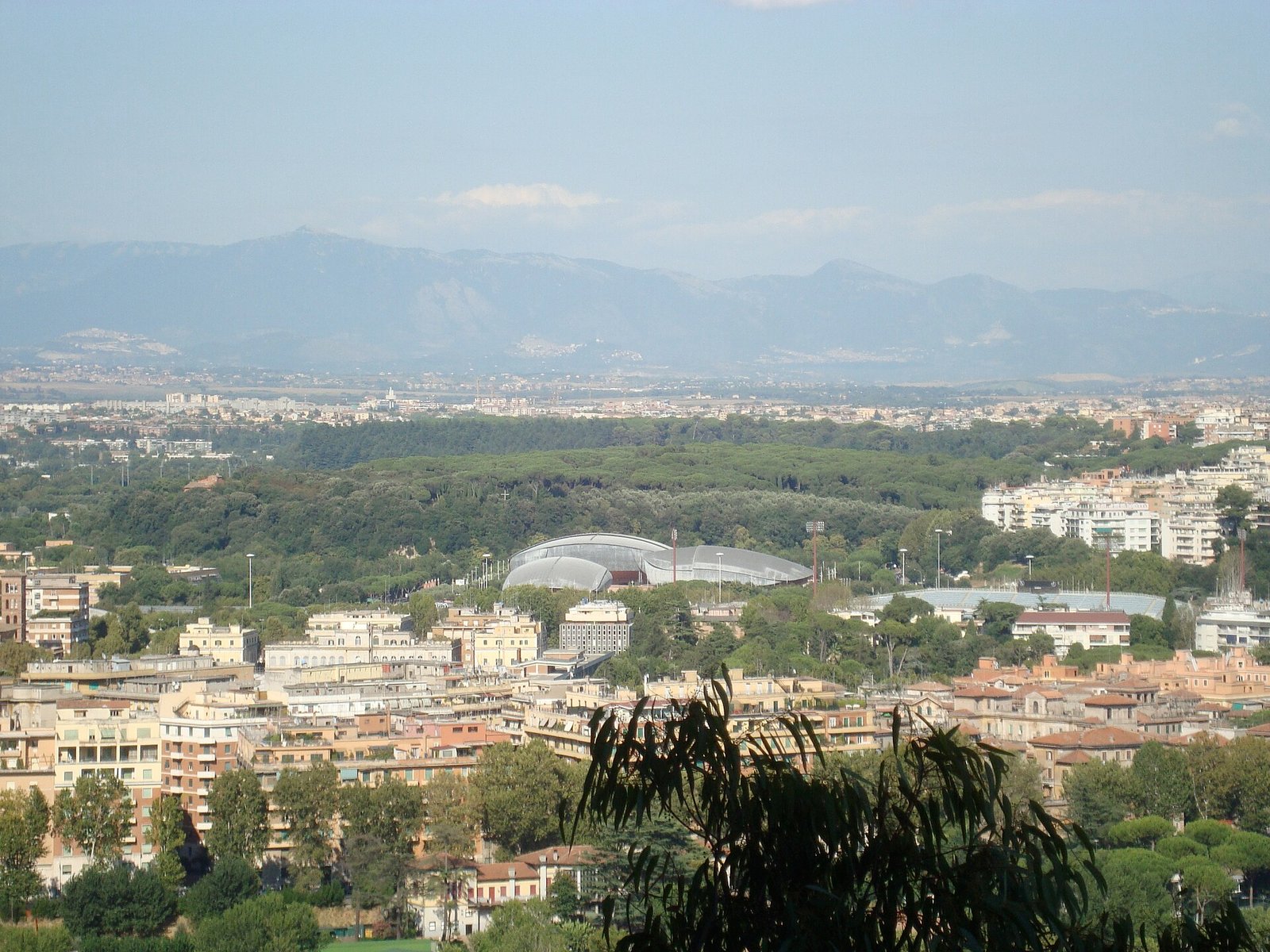
The second photo is taken outside, before going in. The subject is Renzo Piano's Auditorium, with the lead-covered shells of the three large halls arranged around the cavea named after Luciano Berio. On Friday and Saturday at 7 p.m. it's already dark and the lit halls are the complex's most recognizable image, on Sunday, arriving around 5, you catch the last light of the December sunset.
The third is for those who arrive early: from the terrace between the halls you frame the remains of the Roman villa that emerged during the excavations. A revolt against wars told above the ruins of 2,000 years ago: the shot speaks for itself.
Some important events that happened here in history
The Auditorium's ground holds an ancient history: during construction the remains of a Roman villa of the 3rd century BC emerged, built on the site of an archaic farm of the 6th century BC. The discovery forced Renzo Piano to modify the design, and the finds are displayed in a small museum under the cavea.
The modern story begins with the demolition of the Augusteo in 1936, to free the Mausoleum of Augustus: for 60 years Rome was left without a real concert hall. On April 21, 2002, Rome's birthday, the Sala Sinopoli and the Sala Petrassi were inaugurated, on December 21 of the same year the Sala Santa Cecilia, with the Academy Orchestra conducted by Myung-whun Chung. Since 2003 the Auditorium has been the home of the Accademia Nazionale di Santa Cecilia's season, since 2006 it hosts the Rome Film Festival and in 2020 it was named after Ennio Morricone.
In the complex's recent history there is also Gallerano and Ceresoli's theater: La Merda was hosted at the Auditorium Parco della Musica during its world tour, and La rivolta della gioia debuted there, welcomed by critics and audience as the presentation recalls. The December 2026 performances are a return to the place where the show was born in front of an audience.
Who has come through La rivolta della gioia with Silvia Gallerano at the Auditorium Parco della Musica, December 18 to 20, 2026
Through the Auditorium have passed the greats of music since day one: Myung-whun Chung conducted the inaugural concert of the Sala Santa Cecilia, Goffredo Petrassi wanted to be present at the opening of the Sala Sinopoli and heard the first performance in the new hall of his Ouverture da concerto of 1931, Luciano Berio gave his name to the cavea. Alongside music, the Fondazione Musica per Roma has made room for spoken and research theater, especially at the Teatro Studio.
In the world of La rivolta della gioia pass names of half a century of culture. Dario Fo and Goran Bregović, evoked by critics at the debut, Pier Paolo Pasolini, declared reference of La Merda, John Berger, Suad Amiry and Assia Djebar among the writers Gallerano has collaborated with, Serena Sinigaglia, Veronica Cruciani, Francesco Micheli and Oscar De Summa among the directors, Roberta Torre, who directed Le favolose written by Ceresoli, London's Richard Jordan Productions.
In the same week, at the Auditorium, Chiara Galiazzo plays on December 17 and Antonio Scurati on the 21st, with another show of civic commitment, at the end of the month come the concerts of Max Gazzè.
The neighborhood around the Auditorium
The Auditorium stands on an area of about 55,000 square meters between Villa Glori, the Villaggio Olimpico and the corso di Francia viaduct, a part of modern Rome with a lot of greenery.
MAXXI and the Teatro Olimpico
A few minutes away is MAXXI, the national museum of 21st-century arts, toward the Tiber the Teatro Olimpico. The page on the Auditorium Parco della Musica tells the history of the complex and its halls.
The river and Ponte Milvio
The Ponte della Musica crosses the Tiber to the Foro Italico. Farther north is Milvian Bridge, the evening meeting point in northern Rome.
The center
Tram 2 takes you back to piazzale Flaminio and piazza del Popolo, from where you climb toward Villa Borghese.
Where to eat before or after the show
Inside the Auditorium there are a bar and a café in the foyer and a restaurant bar with street access too, as well as a large bookstore.
In the neighborhood
Between the Villaggio Olimpico, via Flaminia and piazza Mancini there are neighborhood pizzerias and trattorias. For the 8 p.m. performances, dinner beforehand works by booking around 6:30 p.m.
After the show
Ponte Milvio has the widest offer after Friday and Saturday performances. On Sunday, with the show ending around 8, there's time for an unhurried dinner.
Accessibility, age and practical information
The Auditorium is a modern complex with routes between the halls that are also outdoors. For accessibility needs at the Teatro Studio it's best to write in advance to the Fondazione Musica per Roma, at the address info@musicaperroma.it published on the official website.
Parking
The complex's paid parking has spaces reserved for people with disabilities.
Kids
The venue's rules provide that minors under 16 enter with an adult holding a ticket, in a ratio of one adult for every two minors. A recommended age for the show is not published, with kids on stage and a chorus that invites singing, for teenagers it can be a first encounter with a theater different from the school kind.
Three evenings before Christmas
The performances fall on the second-to-last weekend before Christmas, when Rome is lit up and full of events. For the other events of the season there is the page devoted to Christmas in Rome.
Weather
December evenings are cool and damp, the stretch from the tram to the Auditorium is outdoors. A coat to leave at the coat check and a folding umbrella are enough.
A weekend
Those coming from out of town can combine the Saturday evening performance with a Sunday morning at MAXXI, or choose Sunday afternoon after a walk between piazza del Popolo and the Pincio.
Frequently asked questions about La rivolta della gioia in Rome
When does La rivolta della gioia play at the Auditorium?
La rivolta della gioia plays at the Teatro Studio Borgna of the Auditorium Parco della Musica Ennio Morricone on Friday, December 18, 2026 at 8:00 p.m., Saturday, December 19 at 8:00 p.m. and Sunday, December 20 at 6:00 p.m., at viale Pietro de Coubertin 30.
How much do tickets for La rivolta della gioia cost?
Tickets for La rivolta della gioia at the Auditorium Parco della Musica start at 20 euros, according to the show's official page. They are bought from the venue's website, which links to the authorized presale circuit, or at the complex's box office.
What is La rivolta della gioia about?
Cristian Ceresoli's La rivolta della gioia tells of a band of kids who with their enthusiasm rebel against wars and set off a worldwide party. It's a musical show in which the chorus invites the audience to sing against the wars that strike children.
Who is on stage in La rivolta della gioia?
In La rivolta della gioia Silvia Gallerano and Fabio Monti sing, with Nicola Ceresoli and the Coretto della gioia of Lara Ceresoli, Francesca Risoli and Federica Ugolini. Gianluca Casadei plays the accordion, Stefano Piro handles the musical direction.
Who are Silvia Gallerano and Cristian Ceresoli?
Silvia Gallerano and Cristian Ceresoli are the actress and the author of La Merda, the monologue awarded at the Edinburgh Fringe in 2012 with the Fringe First Award and The Stage Award, performed all over the world. La rivolta della gioia is their new work.
How many seats does the Teatro Studio Borgna have?
The Teatro Studio Borgna is the smallest hall of the Auditorium Parco della Musica, with about 300 seats, cherry-wood walls and movable acoustic panels. It is named after Gianni Borgna, formerly president of the Fondazione Musica per Roma.
How do you get to the Auditorium Parco della Musica by public transport?
The Auditorium Parco della Musica is reached by Metro A to Flaminio and then tram 2, stops Flaminia/Reni or Apollodoro. From Termini there is bus 910 without changes, lines 53, 982 and 168 also run nearby.
Final advice on La rivolta della gioia at the Auditorium
An actress awarded in Edinburgh, an author translated in half of Europe, an accordion, kids on stage and an audience called to sing: in our view La rivolta della gioia is one of the most singular shows of the Roman December, and the Teatro Studio is the right hall to experience it up close. The advice is to choose the performance with attention to the time, Sunday is at 6 p.m., buy a front-row seat early and arrive wanting to take part, not just to watch.
Article written by the editorial team of Tour Leader Pro, contact them for Private/Corporate/V.I.P. Tours and Experiences.
Planning a trip to Rome? The English-language guides to visiting the city are on ItalyPlanner.com.