La poésie de la résistance by Jan Fabre at Teatro Vascello, April 13 to 17, 2027
https://www.estateromana.com/en/rome/trip-planner/la-poesie-de-la-resistance-by-jan-fabre-at-teatro-vascello-april-13-to-17-2027/
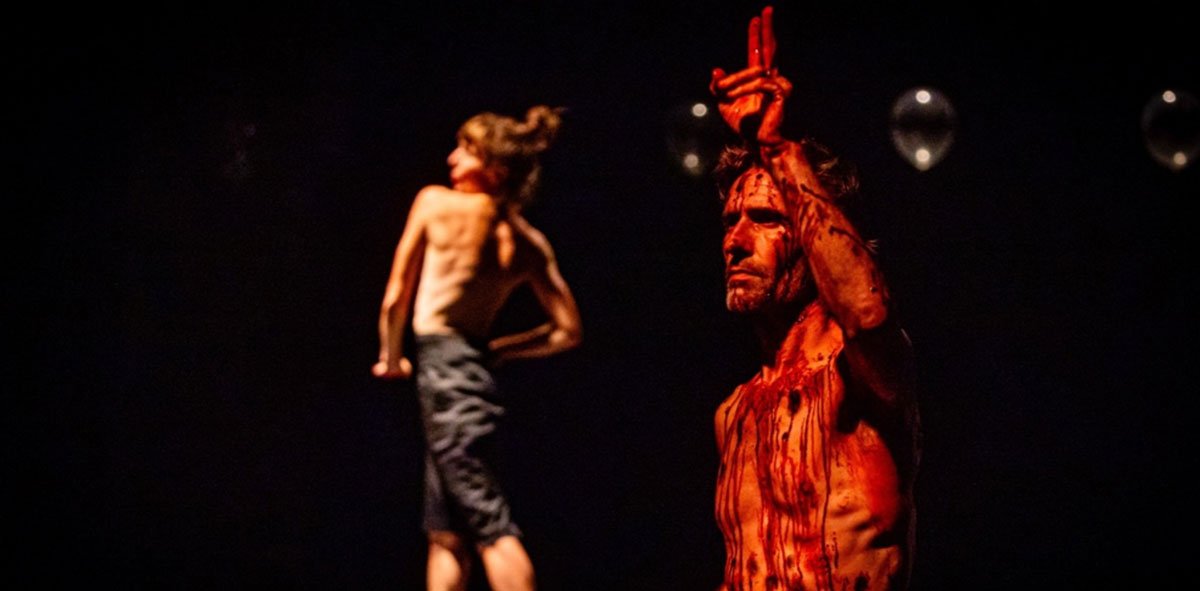
La poésie de la résistance by Jan Fabre, who wrote and directed it, with the Belgian company Troubleyn, is on stage at Teatro Vascello in Rome from April 13 to 17, 2027, at Via Giacinto Carini 78, in Monteverde Vecchio. There are five performances: Tuesday, April 13 to Friday, April 16 at 21:00, and Saturday, April 17 at 19:00. The show lasts one hour, is performed in French with Italian surtitles (translation by Franco Paris) and stars Annabelle Chambon and Cédric Charron, with horn improvisations by Gustav Koenigs. Vascello is reached by bus 75, which stops in front of the entrance, or by lines 44, 710, 870 and 871. By train, from Ostiense station get off at Quattro Venti, a few steps from the theater. Tickets are sold from the official show page on the Teatro Vascello website, which links to the authorized presale network, or at the theater box office. Prices are published on the venue's official channels.
Language: a performance based on dance, music or visual acts; no English version is announced, any spoken parts are in Italian.
La poésie de la résistance is a theater manifesto written by Fabre in 2024: two performers present themselves as members of an artistic resistance movement that fights censorship and conformism without violence, they are executed again and again, and each time they get back up. Below you'll find dates and times, the content of the show, its literary sources, the biography of Jan Fabre and the Troubleyn company, the performers, the history of Teatro Vascello, how to get there, where to eat and the most frequently asked questions.
La poésie de la résistance at Teatro Vascello: dates, times and length
La poésie de la résistance has five performances at Teatro Vascello, from April 13 to 17, 2027, each lasting one hour.
The calendar
Tuesday, April 13, Wednesday, April 14, Thursday, April 15 and Friday, April 16 at 21:00. Saturday, April 17 at 19:00. There are no Sunday performances.
Length
Exactly one hour, according to the theater's presentation: the evening performances end around 22:00, the Saturday one around 20:00, a convenient time if you want to have dinner afterward without staying out late.
Who made the show
Concept, text and direction by Jan Fabre, Italian translation by Franco Paris, on stage Annabelle Chambon and Cédric Charron, dramaturgy by Miet Martens, music with horn improvisations by Gustav Koenigs, lighting and technical design by Wout Janssens.
The production
The production is by Troubleyn/Jan Fabre with Carnezzeria. The Troubleyn/Jan Fabre company, the official page notes, is sponsored by the Belgian company Katoen Natie.
Language
The show is in French, with Italian surtitles by the same Franco Paris who translated the text.
What Jan Fabre's La poésie de la résistance is about
In La poésie de la résistance two performers declare themselves members of an artistic resistance movement that fights censorship, suppression and conformism nonviolently. Their bodies and their words, says Vascello's presentation, become weapons of beauty, love and creativity.
A poetic, rhythmic manifesto
The text is built like a manifesto, with a rhythmic flow and an insistent use of repetition. There's no plot in the traditional sense: there's a declaration of principles spoken by two bodies on stage, which turns back on itself, grows stronger and transforms with every return.
Executed, and back on their feet
The central image is as theatrical as it gets. The performers are executed over and over, by revolvers, rifles and machine guns, and each time they get back up, turning violence into movement and poetry. Resistance, in this show, is first of all a physical fact: falling and standing up again.
The body as canvas
A recurring motif is the act of tattooing a name on the body, presented as a living canvas, a tool of defiance that thinks and feels. From the feet to the tongue, from the heart to the brain, every part of the body bears the mark of love, memory and struggle.
A single name
The name engraved again and again is always the same: Liberty. The presentation closes with an idea that sums up the whole work: true freedom lives in art and in those who keep dreaming, dancing, speaking and loving, even while the bullets keep coming.
Hessel and Eluard: the sources of La poésie de la résistance
La poésie de la résistance is inspired by Stéphane Hessel's pamphlet Indignez-vous! and Paul Eluard's poem Liberté, as the show's official page states.
To create is to resist
Vascello opens its presentation with a sentence from Indignez-vous!: "Créer, c'est résister. Résister c'est créer," to create is to resist, to resist is to create. It's the key to the whole show, which overturns the usual relationship between art and politics: creation itself becomes an act of opposition.
Liberté
The other source is Liberté, Paul Eluard's poem. The link with the show is clear in the structure itself: a name, always the same, written on every possible surface, which on stage becomes the bodies of the two performers, tattooed part by part.
How to prepare
My advice is to read Eluard's poem before the show, in the original or in translation: it takes only a few minutes and makes the mechanism of repetition on which Fabre builds the text immediately recognizable.
Who Jan Fabre is: artist, director, choreographer
Jan Fabre, born in Antwerp on December 14, 1958, is a Belgian artist who works across theater, dance, visual arts and writing. In 1986 he founded the company Troubleyn/Jan Fabre.
Training in Antwerp
He studied in Antwerp, at the Institute of Decorative Arts and the Royal Academy of Fine Arts. From a young age he was fascinated by the world of insects, influenced by the writings of French entomologist Jean-Henri Fabre: a passion that runs through his sculptures and drawings. Fabre has said he is the entomologist's great-grandson, but the kinship is not confirmed by other sources.
The first performances
Between 1976 and 1980 he wrote his first plays and made his first solo performances. In 1977 he renamed the street he lived on Jan Fabre Street and put up a commemorative plaque on his parents' house, modeled on Van Gogh's on the same street. In 1978 he drew with his own blood in the performance My body, my blood, my landscape. In 1980, in The Bic-Art Room, he had himself shut for three days and three nights in a white cube drawing with blue ballpoint pens.
The theater of marathons
From 1980 he began working as a director and set designer. In 1982 This is theatre like it was to be expected and foreseen, eight hours from sunset to dawn, challenged the conventions of the European stage. In 1984 The power of theatrical madness, five hours long, went to the Venice Biennale. In 2015 Mount Olympus, a 24-hour marathon with 27 performers devoted to Greek tragedy, became one of his best-known works, and in 2023 Peak Mytikas, eight hours long, continued his exploration of the house of Thebes.
Choreographer and writer
As a choreographer he created, among other works, The Dance Sections in 1987 and The Sound of One Hand Clapping in 1990 for Ballett Frankfurt. In 2005 he was associate artist of the Avignon Festival, where he presented Histoire des larmes in the Cour d'Honneur. Since 1978 he has kept his Night Diaries, which together with his plays have been translated into more than 15 languages and are the basis of The Night Writer, the show performed in several European national theaters by actors speaking their own language.
Visual arts
In the visual arts he is known for works made with the iridescent wing cases of a metallic-sheened beetle, including the ceiling Heaven of Delight in the Royal Palace of Brussels, from 2002. In 2008 the Louvre hosted the exhibition The Angel of Metamorphosis, and in 2017 in Venice he showed Glass and Bone Sculptures 1977-2017, 40 sculptures on the pairing of life and death.
Honors and legal case
Belgium named him Grand Officer of the Order of the Crown in 2004 and Commander of the Order of Leopold II in 2007, and France made him an Officer of the Order of Arts and Letters in 2017. In September 2018, 20 former members of Troubleyn accused him of harassment and abuse of power. On April 29, 2022 the Antwerp court gave him an 18-month suspended sentence for violations of workplace well-being rules and for an indecent assault. Fabre did not appeal, and about 175 current and former collaborators publicly came out in his defense.
Troubleyn, Jan Fabre's company
Troubleyn/Jan Fabre is the theater company founded by Fabre in 1986, based in Antwerp and with intense international activity.
The company's soloists
Over his career Fabre has written many solos for Troubleyn's leading performers, almost always on his own texts: Elle était et elle est, même for Els Deceukelier, Angel of Death for Ivana Jozić, Drugs kept me alive for Antony Rizzi and Resurrexit Cassandra for Stella Höttler.
Recent years
In recent years the company has produced Io sono un errore, I'm sorry and I believe in the legend of love in 2024, then Una tribù, ecco quello che sono and La poésie de la résistance, which the list of productions places in 2025. Una tribù, ecco quello che sono is also in Vascello's 2026/2027 season.
A link with Italy
Fabre often works with Italian performers and partners: Simona, the gangster of art with Irene Urciuoli, Resurrexit Cassandra in the version with Sonia Bergamasco, and now the coproduction with Carnezzeria and Franco Paris' translation.
Annabelle Chambon and Cédric Charron, the performers
Annabelle Chambon and Cédric Charron are two longtime Troubleyn performers, for whom Fabre has written two solos in the past.
Annabelle Chambon
For her Fabre created Preparatio mortis, presented in 2005 and revived in 2010: a solo about death and metamorphosis, themes that return in La poésie de la résistance with its repeated executions and rebirths.
Cédric Charron
For him Fabre wrote Attends, Attends, Attends... (Pour mon père), from 2014, a solo dedicated to his father. Seeing him on stage again alongside Chambon means watching together two bodies that have known the company's physical language for years.
Gustav Koenigs' horn
Alongside the two performers there is music, with horn improvisations by Gustav Koenigs: a live sound that talks with the words and with the shots of the weapons evoked on stage.
Teatro Vascello, an experimental venue in Monteverde
Teatro Vascello was inaugurated on May 4, 1989 on Via Giacinto Carini by Giancarlo Nanni and Manuela Kustermann, with the company La Fabbrica dell'Attore.
The roots at Teatro La Fede
The story begins earlier, at Teatro La Fede on Via Portuense 78, where in the 1970s Nanni and Kustermann worked within the so-called Roman school, a theater that put the image before the word. A calling that explains well why a visual artist and performer like Fabre finds a natural home at Vascello.
Teatro Stabile d'Innovazione
In 1998 the Ministry recognized La Fabbrica dell'Attore as a Teatro Stabile d'Innovazione. In 2004 the Sala Studio opened in the basement. After Nanni's death in January 2010, artistic direction passed to Manuela Kustermann.
A hall open to Europe
From the very first night, with Tadeusz Kantor, Vascello has hosted the international scene: for more than 20 years Fondazione Romaeuropa has brought part of its festival here, and in the 2026/2027 season the program includes, among others, two Troubleyn productions.
A curious fact about La poésie de la résistance by Jan Fabre at Teatro Vascello, April 13 to 17, 2027
The nicest curious fact concerns Fabre's relationship with Rome, which is older than you might think. According to his biography, as early as 1987 Fabre presented Das Glas im Kopf wird vom Glas, one of his first dance works, at the Romaeuropa Festival, and in 2019 the same festival hosted The Night Writer, Giornale notturno, the Italian version of the show based on his diaries. In the meantime Rome has also seen Fabre the visual artist: The Years of the Hour Blue and Maskers at the Magazzino gallery, in 2015 and 2017, The Rhythm of the Brain at Palazzo Merulana, and Allegory of caritas at Galleria Mucciaccia in 2022. A second curious fact is personal. In 1977, barely out of his teens, Fabre renamed the street he lived on after himself and hung a plaque on his parents' house, like the one dedicated to Van Gogh on the same street: the gesture of an artist who from the start treated his own life as material for art. In La poésie de la résistance the same principle shifts to the performers' bodies, on which a name is tattooed, again and again. A third curious fact concerns the clock: after the eight- and 24-hour marathons that made him famous, this show lasts just one hour. It's perhaps the simplest way to approach Fabre if you've never seen him.
Tickets for La poésie de la résistance at Vascello
Tickets for La poésie de la résistance are sold on the official Teatro Vascello website, which links to the authorized presale network, or at the theater box office at Via Giacinto Carini 78.
Online
From the show page, the online purchase button takes you to the presale. Vascello's website explains that this way tickets, subscriptions and cards arrive directly on your phone.
Cards and subscriptions
The theater offers cards for the 2026/2027 season, to be bought at least 24 hours before first use: if you plan to see both Troubleyn productions on the program, they're worth considering.
Prices
Prices are published on Vascello's official channels and on the authorized network.
Something nobody tells you about La poésie de la résistance by Jan Fabre at Teatro Vascello, April 13 to 17, 2027
What nobody tells you is that Fabre, famous for excess, works here by subtraction. If you know his name for the eight- or 24-hour marathons, the big companies on stage and the visual provocations, you'll find one hour of performance, two performers and a horn. The text is a manifesto, and like every manifesto it lives on short, repeated, hammered-home sentences: the power comes from accumulation, not from spectacular sets. My advice is to arrive ready to listen, even before watching. The second thing concerns the language. The show is in French with surtitles: if you don't speak French, sit where the surtitle screen and the stage both stay in your field of vision, without having to turn your head at every line. Repetition, luckily, helps: the key sentences come back several times, and after the first few minutes you start recognizing them even without reading. The third thing concerns the weapons. The official page speaks of executions by revolvers, rifles and machine guns, repeated several times: if you are sensitive to loud noises or to depicted violence, even symbolic, it's good to know before going in. Finally, Fabre's presence on the program brings with it his 2022 legal case: it is a matter of public record, and everyone weighs it as they see fit.
My tip for La poésie de la résistance by Jan Fabre at Teatro Vascello, April 13 to 17, 2027
My advice is to choose the night based on how you want to spend the time after. The 21:00 weekday performances end around 22:00: perfect if you live in Rome and want to go home with the show still on you, or stop for a drink in Monteverde. Saturday, April 17 at 19:00 is the chance for those coming from outside: you're out at 20:00 with the whole evening ahead to go down to Trastevere. Before going it's worth reading Eluard's Liberté, which takes a few minutes, and perhaps a few pages of Hessel's Indignez-vous!, the pamphlet that gives the sentence opening the show's presentation. If you don't know Fabre you can look at a few images of his visual work, from the beetles to the sculptures: the same imagery of metamorphosis, death and rebirth returns on stage with the bodies of Chambon and Charron. If you follow experimental theater, put the show in a broader itinerary: over the years Wim Vandekeybus and other leading figures of the European scene have passed through Vascello, and the same season includes a second Troubleyn title. In our view, if you've never seen Fabre live, an hour this concentrated is the ideal way in. Booking early is wise: there are only five performances.
How to get to Teatro Vascello for La poésie de la résistance
Teatro Vascello is at Via Giacinto Carini 78, in Monteverde Vecchio, and is reached by bus 75, which stops in front of the entrance.
By bus
The 75 is the most direct line from the center. The theater also lists lines 44, 710, 870 and 871, which connect Monteverde with Trastevere and the neighborhoods to the west. For evening times, especially on the way back after 22:00, use the Atac route planner.
By train
From Ostiense station the commuter train takes you to Quattro Venti station, a few steps from the theater: the fastest route if you arrive on Metro B, which connects to Ostiense at the Piramide stop.
By car
The theater suggests parking along Via delle Mura Gianicolensi, about 100 meters away. There are paid parking lots at Via Giacinto Carini 43, at Via Maurizio Quadrio 22, which has a deal with the theater when you show your ticket, and at Via Raffaello Giovagnoli 20.
Another well-known fact, yet one rarely mentioned
Anyone who frequents museums and festivals knows Jan Fabre is one of the best-known Belgian artists in the world. Less often mentioned is that his visual work is also in public places, and not just in galleries: the ceiling of the Royal Palace in Brussels, Heaven of Delight, is covered with 1.6 million beetle wing cases. In Leuven, in Ladeuze Square, Totem has stood since 2004, a large insect skewered on a steel needle more than 20 meters tall. In the former church of St. Augustine in Antwerp, now AMUZ, there are three permanent altarpieces by him. A second fact known to insiders and rarely told: the series The Great European Stage Directors, edited by theater historian Simon Shepherd, opens with Stanislavski and closes with Fabre, in the same volume as Pina Bausch and Romeo Castellucci. A third fact concerns his method. Fabre calls himself an artist of consilience, a concept that comes from philosopher William Whewell and biologist Edward O. Wilson: the unity of knowledge, the idea that entomology, art, theater, medicine and religion can shed light on each other. In La poésie de la résistance the principle shows in the body treated as canvas, weapon and archive, all at once.
The neighborhood around Teatro Vascello: Monteverde Vecchio
Monteverde Vecchio is the upper, residential part of Monteverde, above Trastevere, between the Janiculum and the great historic villas.
The Janiculum
The Janiculum is very close: in mid-April sunset comes late enough to allow a walk to the lookout before the Saturday performance.
The villas
Villa Sciarra and Villa Doria Pamphilj are the area's two green stops, pleasant in spring in the afternoon.
The Fontanone and San Pancrazio
Going up the hill you reach the Acqua Paola Fountain and, a little farther on, the Basilica of San Pancrazio.
Trastevere
At the foot of Monteverde lies Trastevere, with the Basilica of Santa Maria in Trastevere.
The right photo to take at La poésie de la résistance by Jan Fabre at Teatro Vascello, April 13 to 17, 2027
No photos during the show: in a work that lives on bodies, rhythm and a horn improvising live, a lit screen breaks the concentration of performers and audience. The right photo is taken before and after. The first is the Vascello facade on Via Giacinto Carini with the show's poster: Fabre's name on the bill in Monteverde is already a small record of the season. The second is an image that speaks to the theme: the word Liberty, tattooed on stage part by part on the performers' bodies, can become the subject of a detail shot, for example the ticket or the program with the title in the foreground, photographed on your hand. The third is taken on the Janiculum, before the Saturday, April 17 performance at 19:00: Rome from above in the April evening light, with the domes and rooftops. If you like architectural photography you can look instead, along the Mura Gianicolensi, for the contrast between the residential neighborhood and the historic walls, a few steps from the theater. A rule that always applies: no flash, no video, no shots during the applause while the performers are on stage, unless the theater says otherwise.
Where to eat before or after La poésie de la résistance
Teatro Vascello has an in-house bistro, Coffee Plant Bistrot, useful for a coffee or a snack before the show.
In Monteverde
The neighborhood has trattorias and pizzerias frequented mostly by residents, with fairer prices than Trastevere: the right choice after the 21:00 performances, which end around 22:00.
In Trastevere
After the Saturday 19:00 show, go down to Trastevere, where osterias and trattorias stay open late. On a spring Saturday night, booking is almost essential.
Before the show
A one-hour show also allows the reverse formula: a light aperitivo beforehand, in Monteverde or at the theater's bistro, and a leisurely dinner after.
Some important events that happened here in history
The history of Teatro Vascello can be told in dates. On May 4, 1989 the hall opened with Qui non ci torno più (I Shall Never Return) by Tadeusz Kantor and the Cricot Theatre of Warsaw: a statement of intent, because Kantor was one of the most radical names on the European stage, and his idea of a theater made of images, objects and bodies is, in our view, a close relative of Fabre's. In the early 1990s came Raul Ruiz, the Pontedera research center and American and French contemporary dance. In May 1996 the Extraordinario series presented 16 young companies from all over Italy. In 1998 the Ministry recognized La Fabbrica dell'Attore as a Teatro Stabile d'Innovazione, and the same year Vascello coproduced a show with the Berliner Ensemble, the theater founded by Brecht. In spring 2001 co-founder Giancarlo Nanni was the first Italian invited to work and teach at the Actors Studio in New York. In 2003 the Premio Valentino Zeichen for poetry was born: a poetry prize in a theater that in 2027 hosts a show named after the poetry of resistance. In 2004 the Sala Studio opened. In January 2010 Nanni died and direction passed to Manuela Kustermann. For more than 20 years Fondazione Romaeuropa has brought part of its festival to Vascello, the same festival that in 1987 presented one of Fabre's first works in Rome. In autumn 2026 the season featured, among others, Alessandro Serra's Tragudia, Il canto di Edipo.
Accessibility, language and practical information
Teatro Vascello publishes a section on accessibility on its website, to check before buying to find out about entrances, reserved seats and services.
Surtitles
The show is in French with Italian surtitles: a good opportunity also for people studying the language, who can follow the original text and the translation together.
With kids
The themes, censorship, gun violence depicted symbolically, the body as canvas, make the show suited to an adult audience and older teenagers. For age guidance, contact the theater directly.
Punctuality
In a one-hour show, arriving late means missing a large part of the work and disturbing the performers. Leave with some margin, especially if you use the bus in the evening.
April in Rome
Mid-April is one of the best times for Rome: long days, mild temperatures, evenings still cool. A light sweater for the way back is always a good idea.
Who has passed through La poésie de la résistance by Jan Fabre at Teatro Vascello, April 13 to 17, 2027
Some of the most important names in contemporary theater have crossed the Vascello stage and, even earlier, the history of the company that founded it. At Teatro La Fede, the first home in the 1970s, came saxophonist Steve Lacy, composer John Cage, French director Gérard Gelas and the Living Theatre, and from that experience came Memè Perlini and Giuliano Vasilicò. At Vascello, since 1989, there have been Tadeusz Kantor with Cricot, Raul Ruiz, the Pontedera center, Teatri Uniti, Moni Ovadia, Carlo Cecchi, Giorgio Barberio Corsetti, Romeo Castellucci's Societas Raffaello Sanzio, Teatro Valdoca and Pippo Delbono, and for dance Enzo Cosimi, Sosta Palmizi, Virgilio Sieni and Wim Vandekeybus. Among the international masters were Bob Wilson and Peter Brook, who presented Beckett's Happy Days here with Natasha Parry. Manuela Kustermann, actress and artistic director, is the constant presence in this story. From April 13 to 17, 2027 Jan Fabre and his company Troubleyn come to Vascello, with Annabelle Chambon and Cédric Charron on stage, Gustav Koenigs on horn, dramaturg Miet Martens, lighting designer Wout Janssens and translator Franco Paris. And with them, ideally, Stéphane Hessel and Paul Eluard, the two voices the text is born from, and that word, Liberty, which on stage is written on bodies until there's nothing left to say.
Frequently asked questions about La poésie de la résistance at Teatro Vascello
When is La poésie de la résistance on at Teatro Vascello?
Jan Fabre's La poésie de la résistance is at Teatro Vascello from April 13 to 17, 2027: Tuesday, April 13 to Friday, April 16 at 21:00, and Saturday, April 17 at 19:00. The show lasts one hour and there are no Sunday performances.
Is the show in Italian?
La poésie de la résistance is performed in French, with Italian surtitles. The translation of the text and surtitles is by Franco Paris. The structure of the text, based on repetition, helps you follow it even if you don't know French.
Who performs in La poésie de la résistance?
La poésie de la résistance stars Annabelle Chambon and Cédric Charron, longtime performers of the Troubleyn company, with horn improvisations by Gustav Koenigs. Concept, text and direction are by Jan Fabre, dramaturgy by Miet Martens.
What is La poésie de la résistance about?
La poésie de la résistance is about two performers, members of a nonviolent artistic resistance movement, who are executed again and again and always get back up. A single name, Liberty, is tattooed on their bodies over and over. The text is from 2024.
What inspired Jan Fabre's show?
La poésie de la résistance is inspired by Stéphane Hessel's pamphlet Indignez-vous!, from which comes the idea that to create is to resist, and by Paul Eluard's poem Liberté, with its repetition of a single name.
Where do you buy tickets?
Tickets for La poésie de la résistance are sold from the show page on the Teatro Vascello website, which links to the authorized presale network, or at the box office at Via Giacinto Carini 78. Prices are on the theater's official channels.
How do you get to Teatro Vascello?
Teatro Vascello, at Via Giacinto Carini 78 in Monteverde Vecchio, is reached by bus 75, which stops in front of the entrance, by lines 44, 710, 870 and 871, or by train from Ostiense to Quattro Venti station.
My final tip on La poésie de la résistance
La poésie de la résistance is Fabre concentrated: one hour, two longtime company performers, a horn, a text built like a manifesto. In our view it's best to go after reading Eluard's Liberté, choosing a seat where surtitles and stage stay in view together, and knowing that the weapons evoked on stage are part of the show's language. Book early, with only five performances, and give yourself some margin getting to Monteverde: Chambon and Charron do the rest.
Article written by the editorial team of Tour Leader Pro, contact them for Private/Corporate/V.I.P. Tours and Experiences.
Planning a trip to Rome? The English-language guides for visiting the city are on ItalyPlanner.com.