La mente in scena by Stefania Andreoli at Teatro Brancaccio, February 5, 2027
https://www.estateromana.com/en/rome/trip-planner/la-mente-in-scena-by-stefania-andreoli-at-teatro-brancaccio-february-5-2027/
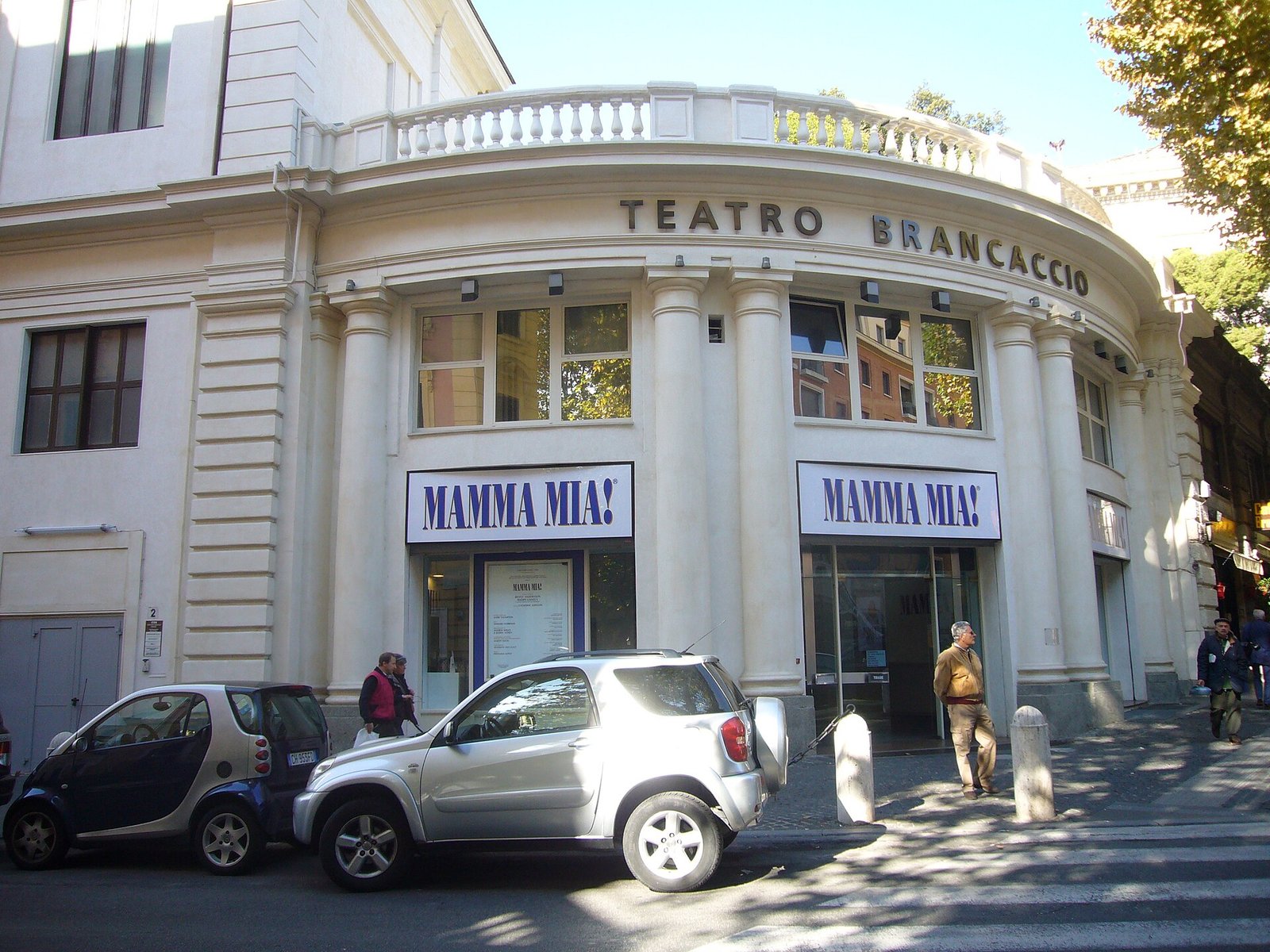
La mente in scena, the show by psychotherapist Stefania Andreoli written and directed by Luca Stano with actress Alice Redini, plays at Teatro Brancaccio, at Via Merulana 244 (00185 Rome), on Friday, February 5, 2027 at 21:00, for one night only. The stated running time is 120 minutes and the production advises against it for audiences under 16. The theater is reached by Metro Line A, Vittorio Emanuele stop, a few minutes' walk away, or by the buses that run along Via Merulana. The theater's price list runs from 30 to 52 euros: Poltronissima A 52 euros, Poltronissima B 49 euros, Poltrona A 46 euros, Poltrona B 38 euros, first balcony A 42 euros and B 38 euros, second balcony A and B 30 euros. Tickets are bought on the official Teatro Brancaccio website, with the purchase button that links to the presale network authorized by the organizer, or at the box office on Via Merulana, open Tuesday to Saturday from 16:00 to 19:00.
Language: performed in Italian. No English version or English surtitles are announced.
La mente in scena at the Brancaccio: date, time and prices
La mente in scena by Stefania Andreoli is scheduled at Teatro Brancaccio in Rome on Friday, February 5, 2027 at 21:00, on a single date, with tickets from 30 to 52 euros and a running time of 120 minutes.
One night only, on a Friday
The theater's calendar lists a single performance, on Friday evening. The Brancaccio places the show in its 2026/2027 season under the labels Popular Science and One Man/Woman Show: a definition that describes well a hybrid genre, halfway between theater and clinical language.
Orchestra prices
In the orchestra the price list has 52 euros for Poltronissima A, 49 euros for Poltronissima B, 46 euros for Poltrona A and 38 euros for Poltrona B. Between the first and last rows of the orchestra there is a difference of 14 euros.
Balcony prices
In the first balcony, section A costs 42 euros and section B 38 euros. In the second balcony both sections cost 30 euros. Note that first balcony A costs less than Poltrona A: for a spoken-word show, where the voice counts more than visual detail, it is a tier worth considering.
Where to buy
The show page on the Teatro Brancaccio website has a purchase button linked to the presale network authorized by the organizer. Alternatively, you can buy at the box office at Via Merulana 244, open to the public Tuesday to Saturday from 16:00 to 19:00. It is closed on Monday, and on Sunday it opens only during show hours.
La mente in scena: what you will see
La mente in scena is a monologue for two voices inspired by a true story about borderline personality disorder. On stage Stefania Andreoli plays herself, the psychotherapist, and Alice Redini gives body and voice to the mind of the protagonist, Hélène, and to the people she met during her psychiatric hospitalizations.
A true story
The show tells the true story of a young woman with borderline personality disorder. According to the presentation, Andreoli strongly wanted to give a chance to a text she came across 20 years ago and that remained unpublished. The text is signed by Luca Stano and by Andreoli herself, who handled the scientific supervision.
Clinical language and theatrical language
The presentation insists on the originality of the form: a dialogue between clinical language and theatrical language, between introspection, emotional truth and freedom of the stage. Hélène and the Doc, as the therapist is called, invite the audience to a tight and poetic exchange on the themes of fragility, resilience and hope.
Fragile relationships
At the center are relationships and their most delicate balances: what happens when the need to be loved and recognized becomes so deep that it turns into dependence, manipulation or control. The show goes through themes such as famine of love and love bombing, and the way the search for affection can shape choices, behavior and identity.
Pain that cannot be seen
The story lingers on the sufferings that most easily escape the eyes of others: those of people who live their pain in silence and slowly sink into isolation. Delusion is described there as an extreme response to inner dynamics that are often invisible, not only as a fracture of the mind.
The message
Andreoli summed up the meaning of the evening in a clear message: no one is alone, and everyone can find the strength to face illness without staying silent. The presentation closes with an idea that is also a statement of method: understanding with loving humanity is the only contribution truly possible.
Luca Stano, Alice Redini and the production
La mente in scena is written by Luca Stano and Stefania Andreoli, directed by Luca Stano, performed by Alice Redini with Andreoli herself, and produced by Stefano Francioni Produzioni with organization by Gianluca Bonanno and Vincenzo Berti for Ventidieci.
Luca Stano, text and direction
Luca Stano signs the text and the direction. The presentation names him as the author of a show that inaugurates a new genre: an unpublished and original text, built to stage a patient's mind alongside the voice of the person treating her.
Alice Redini, Hélène
Alice Redini is the actress who brings Hélène to the stage and, together with her, the men and women met in the wards. It is a role that asks for many voices in one body: the protagonist, the fellow patients, the figures that populate her mind.
The production
Organization and production are by Gianluca Bonanno and Vincenzo Berti for Ventidieci and by Stefano Francioni Produzioni. After selling out in many Italian cities, the tour has added new dates for 2027, and the Brancaccio is the Roman stop.
A new genre
The presentation speaks of a new and original form of show, which places clinical language beside theatrical language and finds new words to interpret the soul and the mind. In our view the definition is correct: it is neither a lecture with acted interludes nor a drama with scientific consulting behind it, but a real dialogue between two languages.
Who Stefania Andreoli is: her biography
Stefania Andreoli, born in Busto Arsizio on June 1, 1979, is a psychologist, psychotherapist, university lecturer and author of hugely successful books. For years she has worked with teenagers, families and schools, and she is one of the best-known popularizers in Italy on the themes of growing up and relationships.
Her training
After her classical high school diploma in Busto Arsizio, she earned a degree in Clinical and Community Psychology at the University of Milano Bicocca in 2003, with a thesis on the young adult and identity problems. She specialized in psychoanalytic psychotherapy at the Ruolo Terapeutico in Milan, under the guidance of Sergio Erba. In 2015 she earned a master's in the care and protection of minors, and in 2022 a second master's in psychoanalysis, anthropology and ethnopsychiatry of migration.
The Alice Association and prevention
In 2010 she became president of the Associazione Alice, which brings together psychologists and psychotherapists expert in developmental age. In 2012 she designed with her team RispettaMI, the first national primary prevention project against femicide aimed at high schools. Since 2013 she has been a member of the Control Committee of the Istituto di Autodisciplina Pubblicitaria, where she deals with the protection of women and minors in advertising.
Popularizing
The public came to know her after Maurizio Costanzo's invitation to Bontà loro on Rai 2. Three years of appearances on Mattino Cinque and three seasons on Non è l'arena on La7 followed. She writes for the blog La 27ª ora and for Corriere della Sera, has a column on Radio Deejay in the program Catteland, and in 2024 created the column Scomodati for Sky. She has given two TED talks, in 2020 and 2021, on adolescence and young adults.
Books
For Rizzoli she published Mamma, ho l'ansia in 2016, Papà, fatti sentire in 2018, Mio figlio è normale? in 2020, Lo faccio per me in 2022, Perfetti o felici in 2023 and Io, te, l'amore in 2024, devoted to relationships in the age of narcissism. She edited children's series for Fabbri and Giunti and wrote the Fiabe prudenti, read by Anna Foglietta in a podcast.
Animated film
She handled the scientific supervision of the Italian adaptation of Disney Pixar films such as Inside Out, Soul and Red, and collaborated on the Italian version of Inside Out 2. From 2020 to 2022 she was an honorary judge at the Juvenile Court of Milan.
Theater before La mente in scena
Her relationship with theater did not begin with this show. In 2013, with her scientific consulting, the playwright Giulia Donelli wrote Figli per sempre, staged at the Piccolo Teatro Grassi in Milan. With La mente in scena Andreoli takes a further step: she goes on stage and plays herself.
A curiosity about La mente in scena by Stefania Andreoli at Teatro Brancaccio, February 5, 2027
The most interesting curiosity concerns the origin of the text. La mente in scena comes from a text that Stefania Andreoli came across 20 years ago and that stayed unpublished until today. In the meantime Andreoli has become one of the most listened-to voices on identity and relationships, the same themes as her degree thesis on the young adult. The text waited for the right moment and the right form to reach the stage.
The second curiosity concerns the therapist character. On stage Andreoli does not play an invented doctor. She plays herself, and the character is simply called the Doc. It is a rare choice in Italian theater, where experts who go on stage usually give lectures. Here the psychotherapist becomes a character, and her clinical knowledge becomes dialogue.
The third curiosity is a thread that ties Andreoli to a figure of Roman theater and television. The general public came to know her thanks to an invitation from Maurizio Costanzo to Bontà loro. Costanzo was also, between 2007 and 2010, at the head of Teatro Brancaccio. On February 5, 2027 Andreoli steps onto the stage of a hall that Costanzo directed.
Teatro Brancaccio, the hall on Via Merulana
Teatro Brancaccio, at Via Merulana 244, is one of the largest halls in Rome. In its 1937 configuration it has two foyers, a wide orchestra section and two balcony levels, for about 2,000 seats at the time.
The hall
The orchestra is divided into the Poltronissima and Poltrona sections, with tiers A and B. Above are the first balcony, divided into A and B, and the second balcony. The balconies are reached on foot, without an elevator.
A big stage for two voices
A monologue for two voices in a hall of this size asks for attention from the audience. It is a spoken-word show, intense, with no declared big stage effects: the silence of the hall counts as much as the performers' voices. For this reason, in our view, it is best to choose a central seat not too far from the stage.
Via Merulana complex
The main hall is part of a complex that includes the Brancaccino, a theater of about 100 seats, a training area and a terrace on Via Merulana. The full page about the venue is on our page dedicated to Teatro Brancaccio.
One thing nobody tells you about La mente in scena by Stefania Andreoli at Teatro Brancaccio, February 5, 2027
What is not said is that La mente in scena is not a light evening. Audiences who know Andreoli from television and radio, where she talks about parents and children in a direct and often ironic tone, might expect a sparkling conversation. The show instead speaks of borderline disorder, psychiatric hospitalizations, isolation and pain, and does so for two hours. The production advises against it under 16.
The second thing concerns those who carry a personal history with them. The story touches on themes such as emotional dependence, manipulation and the wish not to live when one is unable to. For someone going through a difficult time, or who has someone close going through one, it can be a very intense evening. It is best to go with a trusted person and allow time to talk about it afterward.
The third thing is practical: 120 minutes is a lot, and the presentation does not mention an intermission. Arriving well in advance, using the restrooms before the start and choosing a comfortable seat helps you stay focused to the end.
How to get to Teatro Brancaccio
Teatro Brancaccio is at Via Merulana 244, in the Esquilino district, less than a kilometer from Termini station and a few steps from the Vittorio Emanuele stop of metro line A.
Metro
The nearest stop is Vittorio Emanuele, on Line A. You exit onto Piazza Vittorio Emanuele II and reach Via Merulana in a few minutes. Alternatively there is the Cavour stop on Line B, with a longer walk.
Bus
The theater lists three stops. On Via Merulana, at the Merulana/Brancaccio and Merulana/Mecenate stops, lines 16, 75, 714, 717 and C3 pass. At the Labicana/Merulana stop, lines 3, 53, 75, 85, 87, 186, 571, 810, C3 and the night line N10 pass, useful for the trip home after an evening that ends late.
Taxi
The taxi stands listed by the theater are in Largo Brancaccio, in Piazza Vittorio Emanuele II at number 113, at Via Principe Amedeo 138, at Via Giolitti 6 and in Via Venosta. With a two-hour show that starts at 21:00, the exit is around 23:00. Booking the ride avoids the wait.
Car
The theater does not list affiliated parking, and parking in the Esquilino in the evening is difficult, especially on Friday. It is better to leave the car near a Metro station and continue by Metro, checking the schedules first on the Atac route planner.
The advice I give you for visiting La mente in scena by Stefania Andreoli at Teatro Brancaccio, February 5, 2027
My advice is to choose a central seat in the orchestra or in first balcony A. La mente in scena is a show of voices: the therapist and the patient, clinical language and theatrical language. First balcony A, at 42 euros, costs less than Poltrona A and offers an overview of the stage. Poltronissima, at 49 or 52 euros, brings you closer to the performers' faces, which count for a lot in a show like this.
The second piece of advice concerns preparation. You do not need to know what borderline personality disorder is to follow the show, which is designed for anyone willing to listen. If you want to arrive with a few more tools, you can read one of Andreoli's books, in particular Io, te, l'amore, devoted to relationships in the age of narcissism, which touches on many of the themes of the evening, from love bombing to emotional dependence.
The third piece of advice is not to be in a hurry afterward. A show that ends at 23:00 on themes this intense deserves a walk or a drink to talk about it. Via Merulana at night is quiet, and a 10-minute walk to the lit Santa Maria Maggiore is a good way to let the evening settle.
Another well-known fact, yet rarely mentioned
It is well known that Stefania Andreoli is one of the best-known psychotherapists in Italy, author of successful books for Rizzoli and a frequent guest on television and radio. Much less is said about the work she did behind the scenes of animated film: the scientific supervision of the Italian adaptation of Inside Out, the Pixar film set right inside the mind of a girl, and then of Soul, Red and Inside Out 2.
It is a detail that casts a different light on the show's title. Inside Out staged, literally, the mind and emotions of a preteen, with characters representing her joy, sadness and anger. La mente in scena does something similar for an adult audience: an actress lends her body to the mind of a young woman, and to the voices that populate it. The step from cartoon to theater, for a specialist in developmental age, is consistent.
Another little-cited fact is Andreoli's experience as an honorary judge at the Juvenile Court of Milan, between 2020 and 2022. Someone who goes on the Brancaccio stage to talk about psychological pain knows suffering from that point of view as well, that of families and young people in difficulty.
Brancaccio house rules: what to know
The rules of Teatro Brancaccio apply to every evening: arrive well ahead of time, no entry once the show has started, no photos or filming, no food in the hall.
Bags, umbrellas and coat check
The theater has a coat check and a bar. Umbrellas are not allowed in the hall and must be left at the coat check. Plastic bottles over half a liter, glass containers, motorcycle helmets, professional cameras, tripods and selfie sticks are not allowed.
Silence
In a spoken-word show on such delicate themes, the phone should be turned off, not just silenced. A vibration or a lit screen in the dark of the hall disturbs those sitting nearby and those on stage.
Age
The production advises against the show for audiences under 16. The theater's rules also provide that children under 14 enter only with an adult.
The right photo to take at La mente in scena by Stefania Andreoli at Teatro Brancaccio, February 5, 2027
No photos during the show: the Brancaccio rules forbid photographing and filming, even with a cell phone, and in a show like this the rule also carries a reason of respect for what is being told. The right photo is taken before and after.
The first is the theater's facade on Via Merulana, in the evening, with the show's title lit up. The advice is to cross the street and shoot from the opposite sidewalk, so that both the front of the theater and a stretch of the street are in the frame.
The second photo is taken afterward, on foot. Via Merulana runs straight between two basilicas: leaving the theater and turning north you see Santa Maria Maggiore at the end, to the south the Basilica of San Giovanni in Laterano. At night, with the street almost empty, it is an image of calm that fits with the ending of a show about hope.
The third possibility is the Porta Alchemica in Piazza Vittorio, a few minutes from the theater, one of the most photographed corners of the Esquilino, which in the evening has a mysterious air.
Around the Brancaccio: Esquilino, Monti and Via Merulana
Teatro Brancaccio is on Via Merulana, between the Basilica of Santa Maria Maggiore and the Basilica of San Giovanni in Laterano, in the Esquilino district.
An ancient auditorium
Along Via Merulana is Palazzo Merulana and, a little further on, the Auditorium of Maecenas, the hall from Roman times that bears the name of the patron of Horace and Virgil.
Piazza Vittorio
Toward the north, beyond the metro stop, is Piazza Vittorio Emanuele II, the heart of the multiethnic Esquilino. The Nuovo Mercato Esquilino is its mirror, but it is a daytime market.
The Monti district
To the west the street descends into the Monti district, with its downhill streets toward the Forums. Our page on the Monti district helps you discover it before the show, while there is still light.
Some important events that took place here in history
The history of Teatro Brancaccio begins in January 1916, when the hall was inaugurated under the name Teatro Morgana, right next to the gardens of the Field-Brancaccio palace, the family that takes its name from Isabella Field, married to Prince Brancaccio.
In 1937 the hall was inaugurated in its present configuration, with two foyers, a wide orchestra section and two balconies for about 2,000 seats, and took the name Teatro Brancaccio. In 1985 it became the home of the Fondazione dell'Opera di Roma, which stayed there until 2000: for 15 years Via Merulana hosted the capital's opera and ballet.
After the Opera, the Comune di Roma took over, entrusting the direction to Gigi Proietti until 2007. This was followed by the management of Maurizio Costanzo until 2010 and that of Stage Entertainment Italia until 2012. Since September 2012 the artistic direction has been in the hands of Alessandro Longobardi, who turned the theater into a cultural hub with the Brancaccino, the training area and the academies. In this history, a popular-science show on mental health is something new: a sign of a program opening to new forms of storytelling.
Who has played La mente in scena by Stefania Andreoli at Teatro Brancaccio, February 5, 2027
Some of the biggest names in entertainment have passed through the Brancaccio stage. The theater remembers several: Totò, Anna Magnani, Aldo Fabrizi and Gigi Proietti among the actors, and Fabrizio De André, Louis Armstrong and Jimi Hendrix among the musicians.
They are names that tell of a theater used to welcoming different languages, from variety to jazz, from songwriter music to rock. In recent years the program has also opened to popular science, and La mente in scena is an example: a form that did not exist when Totò stepped onto that stage, but which shares with great popular theater the ambition to speak to everyone.
Among the figures who have led the theater is also Maurizio Costanzo, the same one who brought Stefania Andreoli before the large television audience with Bontà loro. On February 5, 2027 the psychotherapist steps onto that stage with Alice Redini, with text and direction by Luca Stano, to tell a true story that for 20 years stayed in a drawer.
Accessibility at Teatro Brancaccio
Teatro Brancaccio declares that it has no architectural barriers for access to the orchestra level: there is a ramp, an area reserved for wheelchairs and an accessible restroom on the ground floor, reachable from the foyer.
Wheelchairs and reduced mobility
The theater provides, while available, orchestra seats for people in wheelchairs and with walking difficulties. The balconies cannot be reached in a wheelchair, because there are no elevators. Seats are booked by writing to the box office with the appropriate form and the required documentation.
Visual and hearing disabilities
For spectators with visual and hearing disabilities the theater reserves, on request, orchestra seats while they last. Anyone with a service dog can ask the box office to enter the hall with the animal.
Who La mente in scena is for
La mente in scena, says the presentation, is addressed to anyone willing to listen, and in particular to those touched by disorders of the mind and those who live beside them.
Families and caregivers
The show also speaks to the loved ones around someone who is suffering: parents, partners, friends. For them it can be a way of seeing from the outside dynamics lived every day, and of finding new words to name them.
Professionals and students
For psychologists, doctors, educators and students of the caring disciplines, the dialogue between clinical language and theatrical language offers an unusual look at their own work.
Young audiences
The production advises against the show under 16. For older teenagers, 16 and up, the themes of relationships, love bombing and emotional dependence are very close to their experience, and the evening can open an important conversation.
Where to eat before the show
Around the Brancaccio there are three options: the neighborhood bars and venues on Via Merulana, suited to a quick meal. The multiethnic Esquilino around Piazza Vittorio, with cuisines of many countries and modest prices. And the Monti district, a quarter of an hour on foot away, with trattorias, osterias and wine bars.
Before
With a 21:00 start and two hours of show, it is best to have dinner around 19:00, without eating too heavily: you need attention and concentration.
After
On Friday night Monti stays lively until late. If you want to talk about the show over a drink, you will find places open after 23:00, but it is best to book.
February in Rome: the Brancaccio week
At the beginning of February Roman theaters are in the middle of the season, and the Brancaccio lines up, in the same week, very different evenings.
The weather
February evenings are cold and often damp: a coat and an umbrella are essential, and the umbrella has to be left at the theater's coat check.
The week on Via Merulana
The evening before, Thursday, February 4, the Brancaccio hosts Filippo Caccamo with Fuori di tela. The evening after, Saturday, February 6, PFM with On the Road Again. If you want to stay in the register of reflection, the city's same season also has other popular-science events, such as Paolo Crepet at Auditorium Conciliazione. The full program is on the official website of Teatro Brancaccio.
Frequently asked questions about La mente in scena at the Brancaccio
When does La mente in scena by Stefania Andreoli play in Rome?
La mente in scena by Stefania Andreoli plays at Teatro Brancaccio in Rome, at Via Merulana 244, on Friday, February 5, 2027 at 21:00, on a single date. The running time stated by the production is 120 minutes.
How much do La mente in scena tickets cost?
Tickets for La mente in scena at Teatro Brancaccio cost from 30 to 52 euros: Poltronissima A 52 euros, B 49 euros, Poltrona A 46 euros, B 38 euros, first balcony A 42 euros, B 38 euros, second balcony 30 euros. They are bought on the theater's website or at the box office.
What is La mente in scena about?
La mente in scena is a monologue for two voices inspired by the true story of a young woman with borderline personality disorder. Stefania Andreoli plays herself, the therapist. Alice Redini gives voice to the protagonist, Hélène, and to the people met during psychiatric hospitalizations.
Who is on stage in La mente in scena?
In La mente in scena the performers are Stefania Andreoli, as herself, and actress Alice Redini. The text is by Luca Stano and Stefania Andreoli, the direction by Luca Stano, the production by Stefano Francioni Produzioni with organization by Ventidieci.
Is La mente in scena suitable for teenagers?
The production of La mente in scena advises against the show for audiences under 16, because of the themes it deals with: borderline disorder, hospitalizations, isolation, emotional dependence. At Teatro Brancaccio, moreover, children under 14 enter only with an adult.
Who is Stefania Andreoli?
Stefania Andreoli is a psychotherapist born in Busto Arsizio in 1979, an expert on adolescence and relationships, author of books for Rizzoli such as Mamma, ho l'ansia, Perfetti o felici and Io, te, l'amore. She handled the scientific supervision of the Italian edition of Inside Out and writes for Corriere della Sera.
How do I get to Teatro Brancaccio?
Teatro Brancaccio, at Via Merulana 244, is reached by metro line A, Vittorio Emanuele stop, a few minutes on foot. Lines 16, 75, 714, 717 and C3 run along Via Merulana. At the Labicana/Merulana stop the night line N10 also runs, useful for the return.
The final advice on La mente in scena
One night only, a Friday in February, to see in a large Roman theater a psychotherapist who goes on stage to play herself beside an actress who lends her body to the mind of a patient. My advice is to arrive knowing it will not be a light evening, to choose a central seat so as not to miss either voice, to go with a person you can talk about it with afterward, and to allow yourself a walk along Via Merulana on the way out: two hours of pain told with humanity call for a few minutes of silence before going home.
Article written by the editorial team of Tour Leader Pro, contact them for Private/Corporate/V.I.P. Tours and Experiences.
Planning a trip to Rome? The English guides to visiting the city are on ItalyPlanner.com.