Jordi Savall conducts Vivaldi at Auditorium Parco della Musica, December 9, 2026
https://www.estateromana.com/en/rome/trip-planner/jordi-savall-conducts-vivaldi-at-auditorium-parco-della-musica-december-9-2026/
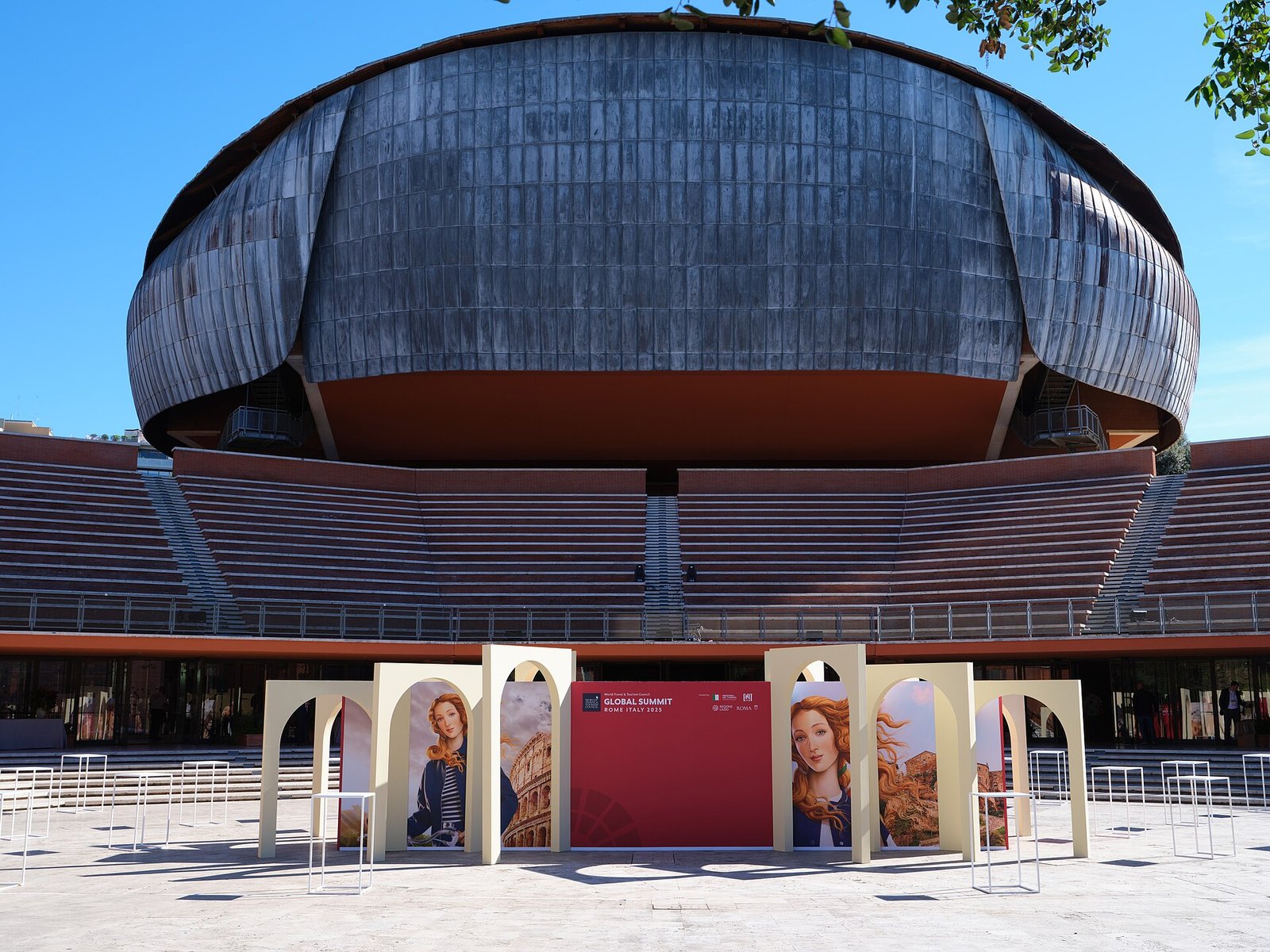
Jordi Savall conducts an all-Vivaldi program on Wednesday, December 9, 2026 at 20:00 in Sala Sinopoli at Auditorium Parco della Musica Ennio Morricone, at Viale Pietro de Coubertin 30 (00196 Rome), in the 2026/2027 season of the Accademia Nazionale di Santa Cecilia. On stage are La Capella Reial de Catalunya and Les Musiciennes du Concert des Nations, with the Magnificat RV 611, Concerto No. 2 RV 279 from the collection La Stravaganza and the Gloria. You get there on Metro A to Flaminio and then tram 2 (Flaminia/Reni or Apollodoro stops), or on bus 910 from Termini. The prices published by the Accademia are 38 euros in the stalls, 26 euros in the gallery section II and 18 euros in the gallery section III. Tickets are bought at the Auditorium box office, at the Accademia's box office at Via Vittoria 6 and on the authorized presale circuit indicated by the official Santa Cecilia website.
It's the December concert of the Santa Cecilia season, and it has a title that says it all: Vivaldi, with no adjectives. Conducting it is one of the fathers of the early music revival, a Catalan viola da gamba player and conductor who for more than 50 years has been bringing the European repertoire from the Middle Ages to the 18th century back to light with ensembles he founded himself. For baroque lovers it's the event of the month. For those who know the Gloria only from film soundtracks, it's the chance to hear it as it probably sounded in the 18th century.
Jordi Savall in Rome: date, time and tickets
Jordi Savall's concert is scheduled for Wednesday, December 9, 2026 at 20:00 in Sala Sinopoli, according to the calendar published by the Accademia Nazionale di Santa Cecilia on the event page. It's a single date, with no repeat performances.
Prices
The Accademia publishes three price bands: stalls 38 euros, gallery section II 26 euros, gallery section III 18 euros. These are modest prices for a conductor of this caliber, and the cheapest gallery makes the concert accessible even to first-timers. For young people the Accademia has a page dedicated to discounts, available on its official website.
When to buy
Presales for the 2026/2027 season are divided into two periods: from September 10, 2026 for concerts from October 14, 2026 to February 27, 2027, and from January 12, 2027 for later ones. Savall's concert falls in the first period, so tickets are already on sale.
Where to buy them
The Accademia lists as the only authorized sellers the presale circuit linked to the purchase button on the official page, the Auditorium Parco della Musica box office and the one at Via Vittoria 6, in the historic center. It also warns against buying from unauthorized sellers, because it isn't responsible for any markups. For information the info line is 06 8082058, with the addresses info@santacecilia.it and biglietteria@santacecilia.it.
The program: Magnificat, La Stravaganza and Gloria
The program of Jordi Savall's concert includes three compositions by Antonio Vivaldi: the Magnificat RV 611, Concerto No. 2 RV 279 from the collection La Stravaganza and the Gloria. They're two sacred works for chorus and orchestra, with an instrumental concerto in between.
The Magnificat RV 611
The Magnificat opens the evening. It's the least known sacred work on the program, and for that reason the most interesting for those who already know the Gloria. The RV abbreviation indicates the number in the Ryom catalog, the reference used to identify Vivaldi's works: RV 611 is the number of this Magnificat. In a December concert, on the eve of Christmas, a sacred Latin text for chorus and orchestra finds its natural moment.
La Stravaganza, Concerto No. 2 RV 279
Between the two choral works there's an instrumental concerto: the second in the collection La Stravaganza, catalogued as RV 279. The title of the collection is already a program, promising invention and surprise. In an evening built on voices, the concerto is the moment when the orchestra is alone on stage and shows what it can do.
The Gloria
The Gloria closes the evening. Vivaldi wrote at least three, of which two have come down to us: RV 588 and RV 589, both in D major. RV 589, composed between 1713 and 1714, is the composer's most popular sacred work, for orchestra, two female soloists, soprano and contralto, and four-part chorus. It lasts about half an hour and is divided into 11 or 12 numbers. The concert page gives only the title, Gloria, without the catalog number.
The Gloria number by number
The Gloria RV 589 opens with the Gloria in excelsis Deo, an allegro for chorus, and continues with Et in terra pax, Laudamus te for two sopranos, Gratias agimus tibi and Propter magnam gloriam, Domine Deus for soprano, Domine Fili unigenite, Domine Deus Agnus Dei for contralto and chorus, Qui tollis, Qui sedes ad dexteram Patris for contralto, Quoniam tu solus sanctus and the final Cum Sancto Spiritu. It's a sequence that alternates choral outbursts and intimate moments, and it's easy to listen to even without knowing Latin.
The performers: La Capella Reial de Catalunya and Le Concert des Nations
The performers are La Capella Reial de Catalunya, the vocal ensemble founded by Jordi Savall in 1987, and Les Musiciennes du Concert des Nations, a group tied to the orchestra Le Concert des Nations, created at his initiative in 1989.
La Capella Reial de Catalunya
Savall and the soprano Montserrat Figueras founded La Capella Reial de Catalunya in 1987, inspired by the great royal chapels of the Iberian kingdoms of the Middle Ages and the Renaissance. Its main repertoire is early Spanish music, from the Mozarabic era to the Siglo de Oro, with a discography of more than 25 CDs, from the Cantigas of Alfonso el Sabio to the Cancioneros. Bringing this choir to Vivaldi means applying to Venetian baroque the philological care developed on the older repertoire.
Le Concert des Nations
Le Concert des Nations was founded in 1989 and takes its name from François Couperin's Les Nations. The ensemble has worked with musicians such as Ton Koopman, Andrew Lawrence-King and Fabio Biondi, and performs the works of the great European composers with period instruments and practice. Its first recordings include music for the orchestra of Louis XIII, works by Marc-Antoine Charpentier, Bach and Vivaldi and the complete suites of Marin Marais.
Vivaldi in Savall's path
Vivaldi isn't a new composer for Savall. Besides his recordings with Le Concert des Nations, in 2014 he conducted the opera Farnace at the Gran Teatre del Liceu in Barcelona, with Sara Mingardo. The Rome concert is part of a relationship with the Venetian composer that has lasted for decades.
Who Jordi Savall is: his biography
Jordi Savall i Bernadet is a Spanish viola da gamba player, cellist, conductor and musicologist, born in Igualada, in Catalonia, on August 1, 1941. He is one of the leading figures of the revival of early European music and has founded three ensembles and a record label.
His training
He began studying music as a child in his town's children's choir, then moved on to the cello, graduating from the Barcelona Conservatory, the Liceu Musical, in 1964. In the mid-1960s he taught himself the viola da gamba and early music, often playing with the ensemble Ars Musicae. In 1968 he enrolled in the advanced courses of the Schola Cantorum Basiliensis in Basel.
Basel and Hespèrion
In 1973 he succeeded August Wenzinger as director of the Schola Cantorum Basiliensis ensemble and began teaching, with courses and master classes. In 1974, with Montserrat Figueras, Lorenzo Alpert and Hopkinson Smith, he founded the ensemble Hespèrion XX, renamed Hespèrion XXI from 2000, devoted to the music of Mediterranean Europe from antiquity to the 18th century. The name comes from Hesperia, the Latin term for the region that included Italy, the Iberian peninsula and southern France.
Mediterranean traditions
With Hespèrion XXI Savall recorded medieval manuscripts such as the Llibre Vermell de Montserrat and the Cancionero de Palacio, and Spanish, French, English, German and Italian Renaissance and baroque music. The ensemble later opened up to the Sephardic tradition, the Arab tradition, the villancicos of Latin America and the repertoires of countries linked to the Mediterranean, such as Turkey.
Alia Vox and film
Since 1998 his recordings have come out on Alia Vox, the label he founded himself, whose Latin name means other voice. In 1991 he handled the soundtrack of Alain Corneau's film Tous les matins du monde, which made him known to a far wider audience than the concert halls', followed by the musical direction of Véra Belmont's Marquise, in 1997, and of Secret défense, in 1998.
His family
He was married from 1968 until her death in 2011 to the Catalan soprano Montserrat Figueras, the star of many Alia Vox recordings. Their children Arianna, harpist and singer, and Ferran, theorbo player, lutenist and singer, made the album Del Temps y del Instant with their parents in 2005, a sort of musical autobiography of the family.
Awards and honors
The list of honors is long: the Creu de Sant Jordi in 1990, the Victoire de la musique for his career in 2002, his appointment as UNESCO Artist for Peace together with Montserrat Figueras and as European Union ambassador for intercultural dialogue in 2008, the Handel Music Prize in Halle in 2009, a Grammy in 2011 for Dinastia Borja with Hespèrion XXI, the Léonie Sonning Prize in 2012, the Legion of Honor in 2013 and the Medalla d'Or of the Generalitat de Catalunya in 2014.
A curious fact about Jordi Savall conducting Vivaldi at Auditorium Parco della Musica, December 9, 2026
The most surprising curious fact concerns the instrument. Jordi Savall, today one of the most important names in early music, came to the viola da gamba self-taught. A cello graduate in Barcelona in 1964, in the mid-1960s he began studying on his own an instrument that hardly anyone played anymore, and only in 1968 did he reach the Basel courses. In a few years he went from student to director of the school's ensemble, succeeding August Wenzinger in 1973.
The second curious fact concerns film. The film that made Savall famous outside the concert halls is Alain Corneau's Tous les matins du monde, from 1991, whose soundtrack he conducted and supervised. Much earlier, in the 1970s, Savall had already recorded the two French composers for viola da gamba most closely tied to that repertoire: Marin Marais's Pièces de viole in 1975 and Monsieur de Sainte Colombe's Concerts à deux violes esgales in 1976, with Wieland Kuijken. The film's success brought that music, until then reserved for specialists, to a huge audience.
The third is in the orchestra's name. Le Concert des Nations takes its title from François Couperin's Les Nations, a collection that brought together different national styles. It's the same idea of a musical Europe without borders that runs through all of Savall's work, and which at the Rome concert has a Catalan choir singing the Latin of a Venetian priest.
Sala Sinopoli at Auditorium Parco della Musica
Sala Sinopoli is one of the three big halls of Auditorium Parco della Musica Ennio Morricone and has 1,133 seats. It was the first to open, on April 21, 2002, the day of Rome's birthday, together with Sala Petrassi. Sala Santa Cecilia, the largest, was inaugurated on December 21 of the same year.
A hall for baroque music
Just over a thousand seats is a size suited to an ensemble on period instruments and a chamber choir. Baroque instruments have a less powerful sound than modern ones, and in a hall that's too big the details would get lost. In Sala Sinopoli the stalls and galleries stay close enough to the stage that you hear the details of the strings, the entries of the chorus, the bass holding everything up.
Giuseppe Sinopoli, the hall's name
The hall is named after Giuseppe Sinopoli, conductor and composer, principal conductor at Santa Cecilia, one of those who fought hardest for Rome to finally have a hall built for music. The complex's other dedications complete the picture: Goffredo Petrassi, Luciano Berio for the cavea, Claudio Abbado for the hanging gardens, Ennio Morricone for the whole Auditorium.
The acoustics
The Auditorium's acoustic design was handled by Jürgen Reinhold of the Müller-BBM studio in Munich. Sala Sinopoli hosts chamber, jazz and pop concerts, and the fact that it handles all these genres says a lot about its flexibility. For an unamplified concert like this one, the hall's natural sound is decisive.
The complex
For the full history of Renzo Piano's complex, its halls and the cavea, there's our page on Auditorium Parco della Musica.
Something nobody tells you about Jordi Savall conducting Vivaldi at Auditorium Parco della Musica, December 9, 2026
What few people say is that a concert on period instruments sounds different from what many expect. If you know the Gloria from the big recordings with a modern orchestra and a large chorus, you'll find a drier, lighter sound, with tempos often livelier and sharper articulation. It isn't a reduced Vivaldi: it's Vivaldi conceived for the forces the composer had at his disposal. The first bars may surprise you. After a few minutes the ear adjusts and the details emerge.
Second thing rarely mentioned: old instruments are tuned often, and between one piece and the next there may be a longer pause than usual. On a December evening, with the audience coming in from the cold, the hall changes temperature during the concert. Tuning is part of the concert, not an inconvenience.
Third point, a practical one: at the Auditorium the halls are separate volumes, each with its own entrance. The same evening, in the other halls, there may be other shows, and the bars and cloakroom get crowded in the half hour before the start. If you arrive at the last minute and take the wrong route between the cavea and the foyers, you can easily lose five minutes: check the signs as soon as you're inside and ask the staff.
My advice for visiting Jordi Savall conducting Vivaldi at Auditorium Parco della Musica, December 9, 2026
The advice is to choose your seat based on what you want to hear. If you want to see Savall's gestures and follow the dialogue between chorus and orchestra up close, you should be in the stalls, at 38 euros. If you're after the overall balance of the sound, you can go up to the gallery: section II, at 26 euros, is a reasonable compromise, and section III, at 18, is one of the best-value chances of the season to hear a great name in early music.
The second piece of advice concerns preparation. The Gloria is easy to find in many recordings: listening to it once in the days before, preferably in a period-instrument recording, helps you recognize the numbers and appreciate the differences. For the less familiar Magnificat, just read the Latin text with a translation alongside: it's short, and following the words changes the listening.
The third concerns the evening. The concert is on Wednesday at 20:00: it's best to arrive at the Auditorium around 19:15, have something at the foyer bar, pick up your tickets calmly and go into the hall without rushing. And on the way out, if the night is clear, stop for a moment on the cavea: the lit shells of the halls are the right way to end an evening of sacred music.
How to get to the Auditorium for Jordi Savall
Auditorium Parco della Musica Ennio Morricone is at Viale Pietro de Coubertin 30 and is reached on tram 2, Flaminia/Reni or Apollodoro stops, and on buses 910, 53, 982 and 168. The nearest metro station is Flaminio, on line A.
Metro A and tram 2
From Flaminio station you come out on Piazzale Flaminio and take tram 2 along Via Flaminia. Get off at Flaminia/Reni or Apollodoro and walk for a few minutes through the Villaggio Olimpico to the entrance. From the historic center it's the simplest option.
The 910 from Termini
Bus 910 leaves from Piazza dei Cinquecento, in front of Termini station, and stops in front of the Auditorium without changes. If you're arriving by train or staying near the station, it's the most straightforward choice.
The other lines
The 53 links Piazza Mancini with the center, the 982 comes from Viale XVII Olimpiade area and Quattro Venti station, the 168 from Tiburtina station. For evening times, check ATAC's route planner before leaving.
By car and getting back
The stretch of Viale Pietro de Coubertin in front of the Auditorium is closed to cars. The complex has a paid parking lot inside, with limited spaces. After the concert, tram 2 takes you back to Piazzale Flaminio. Alternatively, a taxi booked a few minutes before the end.
Another well-known fact, yet rarely mentioned
It's well known that the Gloria RV 589 is Vivaldi's most famous sacred work. It's less often remembered that the composer didn't start from scratch. The other Gloria that has come down to us, RV 588, largely adopts the layout of a Gloria for two choirs by the Veronese composer Giovanni Maria Ruggieri, dated September 9, 1708: Vivaldi owned the autograph score and wrote his own revisions on it by hand, and two movements, the Qui tollis and the Cum Sancto Spiritu, were copied almost note for note. In the 18th century borrowing a colleague's music was common practice, and Vivaldi's two Glorias show mutual inspiration.
A second rarely mentioned fact concerns places. RV 588 was most likely composed during Vivaldi's work at the Pio Ospedale della Pietà in Venice, an institution known at the time for its particularly advanced choir. As for other choral works, Vivaldi also wrote introductory motets for the Glorias, to be performed before the sacred chant: four exist, including Jubilate, o amoeni cori.
The third fact concerns Savall. Many know him as a conductor. Fewer remember that he is above all a viola da gamba soloist, with a personal discography ranging from Marais to Bach, from the sonatas for viola da gamba and harpsichord recorded with Ton Koopman to Tobias Hume's Musicall Humours. The conductor who steps onto the podium on December 9 is a musician who has spent his life with an instrument in his hands.
The right photo to take at Jordi Savall conducting Vivaldi at Auditorium Parco della Musica, December 9, 2026
No photos during the concert: in a silent hall, with period instruments and a choir singing unamplified, even the click of a phone can be heard. The right photo is taken before or after, outside.
The subject is Renzo Piano's Auditorium, with the halls' great lead-clad shells arranged around the cavea. The best spot is the cavea itself, the stepped square at the center of the complex, from which you see the halls side by side. In December at 19:00 it's already dark, and the lit halls against the dark sky are the image that best conveys arriving at an evening concert.
The second photo is of the hall before the start, from your seat, with the stage set: the orchestra's chairs, the music stands, the few old instruments resting there, the choir risers. At a baroque concert the empty stage is already a portrait of the ensemble. Then the phone goes off, as every concert hall asks, and the music does the rest.
Some important events that happened here in history
The Auditorium area has a history much older than the complex. During the excavations for the foundations, the remains of a 3rd-century BC Roman villa emerged, built on the site of a small archaic farm from the 6th century BC. Renzo Piano had to change the design, moving two of the three halls westward. The finds are displayed in a small museum under the cavea.
The modern story begins with a demolition. In 1936 the hall of the Augusteo, Rome's great concert hall, was torn down, and for more than 60 years Rome was left without an auditorium built for music. In 1992 the city council chose the Villaggio Olimpico area, and in 1993 Renzo Piano won the invited competition.
On April 21, 2002, Sala Sinopoli and Sala Petrassi were inaugurated, and on December 21 of the same year Sala Santa Cecilia, with the Accademia's orchestra conducted by Myung-whun Chung. Since 2003 the Auditorium has been the home of the season of the Accademia Nazionale di Santa Cecilia, the same institution that brings Savall to Rome today, and since 2006 it has hosted the Rome Film Fest. In 2020 the city council decided to name it after Ennio Morricone.
Who has passed through Jordi Savall conducting Vivaldi at Auditorium Parco della Musica, December 9, 2026
The great names of classical music have passed through the Auditorium since day one: the inaugural concert of Sala Santa Cecilia was conducted by Myung-whun Chung, Goffredo Petrassi wanted to be present at the opening of the hall that now bears his name, and Luciano Berio, then head of the Accademia, gave his name to the cavea. In the Accademia's 2026/2027 season alone, Evgeny Kissin and András Schiff, the Quatuor Ebène with the complete Beethoven quartets, Sol Gabetta and Bertrand Chamayou, and Handel's Theodora in Sala Sinopoli pass through the complex's halls.
Musicians who made the history of early music have passed through Jordi Savall's career: Montserrat Figueras, his partner in life and on stage, Hopkinson Smith and Lorenzo Alpert, cofounders of Hespèrion, August Wenzinger, whom he succeeded in Basel, Ton Koopman, Andrew Lawrence-King and Fabio Biondi, collaborators of Le Concert des Nations, Christophe Coin and Wieland Kuijken, companions on many viola da gamba recordings, Sara Mingardo, star of the Barcelona Farnace, and the directors Alain Corneau and Véra Belmont.
On the evening of December 9, the singers of La Capella Reial de Catalunya and the musicians of Les Musiciennes du Concert des Nations pass through Sala Sinopoli. Behind them, invisible but present, is Antonio Vivaldi, and with him the Pio Ospedale della Pietà and the Veronese Giovanni Maria Ruggieri, whose Gloria for two choirs lies at the origin of RV 588.
The neighborhood around the Auditorium
The Auditorium occupies an area of about 55,000 square meters between Villa Glori, the Villaggio Olimpico, the Corso di Francia viaduct and Viale Maresciallo Pilsudski: a piece of modern Rome where contemporary architecture and greenery alternate.
The Villaggio Olimpico and MAXXI
The Villaggio Olimpico is the neighborhood you walk through from the tram. Near the Flaminia/Reni stop is MAXXI, the national museum of 21st-century arts. Not far away is Teatro Olimpico. Inside the Auditorium, if you arrive early, there's the Accademia di Santa Cecilia's Museum of Musical Instruments.
Toward the Tiber and Ponte Milvio
From the Auditorium you head down toward the river and the Ponte della Musica, the footbridge that leads to the Foro Italico. Farther north, beyond Piazza Mancini, is Milvian Bridge, one of the evening meeting spots in north Rome.
Toward the center
Tram 2 takes you back to Piazzale Flaminio and Piazza del Popolo, where Villa Borghese and the Tridente begin. The Accademia's box office at Via Vittoria 6 is a few steps from there, if you'd rather buy your ticket in person in the center.
Accessibility and practical information
The Auditorium is a modern complex spread over several levels between terraces, foyers and halls. For accessibility needs at the concert, it's best to contact the Accademia Nazionale di Santa Cecilia in advance at 06 8082058 or at info@santacecilia.it, to find out which entrance to use and which seats to choose.
The notices
The Accademia publishes on its website a page of notices for concert audiences, with the rules on entering the hall, latecomers and behavior: it's worth reading before the evening. At a sacred music concert, coming in after the performance has started is more disruptive than elsewhere.
With teenagers
The Gloria is one of the baroque works best suited to a first concert: short numbers, a chorus that sings with energy, melodies that stick in your head. For a teenager studying singing or a string instrument, seeing an ensemble on period instruments is a live lesson on the sound of the 18th century.
Where to eat before or after the concert
Inside Auditorium Parco della Musica there's a bar and a café in the foyer and a bar-restaurant also accessible from the street: the most convenient option if you're coming from work.
In the neighborhood
Between the Villaggio Olimpico, Via Flaminia and Piazza Mancini there are neighborhood pizzerias, trattorias and cafés, frequented more by residents than by tourists. For a concert at 20:00, dinner before is only possible if you sit down early, around 18:30.
Ponte Milvio and Flaminio
If you'd rather have dinner after the concert, you'll find the widest choice at Ponte Milvio, a few minutes away, where places stay open until late. Toward Piazzale Flaminio and Piazza del Popolo the choice is that of the historic center.
December in Rome, the season of Advent concerts
December 9 falls the day after the Immaculate Conception, at the start of the Christmas season: the Magnificat and Gloria are works that find their natural context at this time of year. If you want to round out the month with more music, you'll find the full calendar on our page about the 2026/2027 Santa Cecilia season.
Weather and clothing
In December Roman evenings are cool and often damp, and the walk from the tram to the Auditorium is outdoors, through the Villaggio Olimpico. A coat to leave at the cloakroom and a folding umbrella are a good idea. For a sacred music concert there's no dress code, but neat clothing is the norm.
Frequently asked questions about Jordi Savall in Rome
When does Jordi Savall conduct at the Auditorium in Rome?
Jordi Savall conducts the Vivaldi concert at Auditorium Parco della Musica Ennio Morricone on Wednesday, December 9, 2026 at 20:00, in Sala Sinopoli. The concert is part of the 2026/2027 season of the Accademia Nazionale di Santa Cecilia and is a single date.
How much are tickets for Jordi Savall at Santa Cecilia?
Tickets for Jordi Savall's concert at Santa Cecilia cost 38 euros in the stalls, 26 euros in the gallery section II and 18 euros in the gallery section III. They're bought at the Auditorium box office, at the one at Via Vittoria 6 and on the authorized circuit indicated by the Accademia.
What does Jordi Savall play in the Vivaldi concert?
Jordi Savall's concert in Rome includes three works by Vivaldi: the Magnificat RV 611, Concerto No. 2 RV 279 from the collection La Stravaganza and the Gloria. They're two sacred works for chorus and orchestra with an instrumental concerto in the middle.
Who plays with Jordi Savall in Rome?
Playing with Jordi Savall are La Capella Reial de Catalunya, the vocal ensemble he founded in 1987 with Montserrat Figueras, and Les Musiciennes du Concert des Nations, a group tied to the orchestra Le Concert des Nations, founded in 1989. Both use period instruments and performance practice.
Who is Jordi Savall?
Jordi Savall is a Catalan viola da gamba player, cellist, conductor and musicologist, born in Igualada in 1941. He founded Hespèrion XXI, La Capella Reial de Catalunya, Le Concert des Nations and the label Alia Vox, and he handled the music for the film Tous les matins du monde.
How do you get to Auditorium Parco della Musica?
Auditorium Parco della Musica is reached on Metro A to Flaminio and then tram 2, Flaminia/Reni or Apollodoro stops. From Termini there's bus 910, with no changes. Lines 53, 982 and 168 also pass nearby.
When did presales for Jordi Savall begin?
Presales for Jordi Savall's concert began on September 10, 2026, the opening date of sales for all Santa Cecilia concerts from October 14, 2026 to February 27, 2027. Later concerts will go on sale from January 12, 2027.
Final advice on Jordi Savall and Vivaldi
A conductor who has devoted his life to early music, a choir and an orchestra he founded, the Magnificat and Gloria in the week of the Immaculate Conception, in a hall of just over a thousand seats: in our view it's one of the most promising concerts of the Santa Cecilia season on paper, and one of the most accessible, with the gallery at 18 euros. The advice is to listen to the Gloria once in the days before, arrive at the Auditorium three quarters of an hour early and listen with curiosity to the sound of period instruments, lighter and more alive than many remember.
Article written by the editorial team of Tour Leader Pro, contact them for Private/Corporate/V.I.P. Tours and Experiences.
Planning a trip to Rome? The English guides for visiting the city are on ItalyPlanner.com.