Italian Baroque in Dresden at the Napoleonic Museum, September 25, 2026 to January 10, 2027
https://www.estateromana.com/en/rome/trip-planner/italian-baroque-in-dresden-at-the-napoleonic-museum-september-25-2026-to-january/
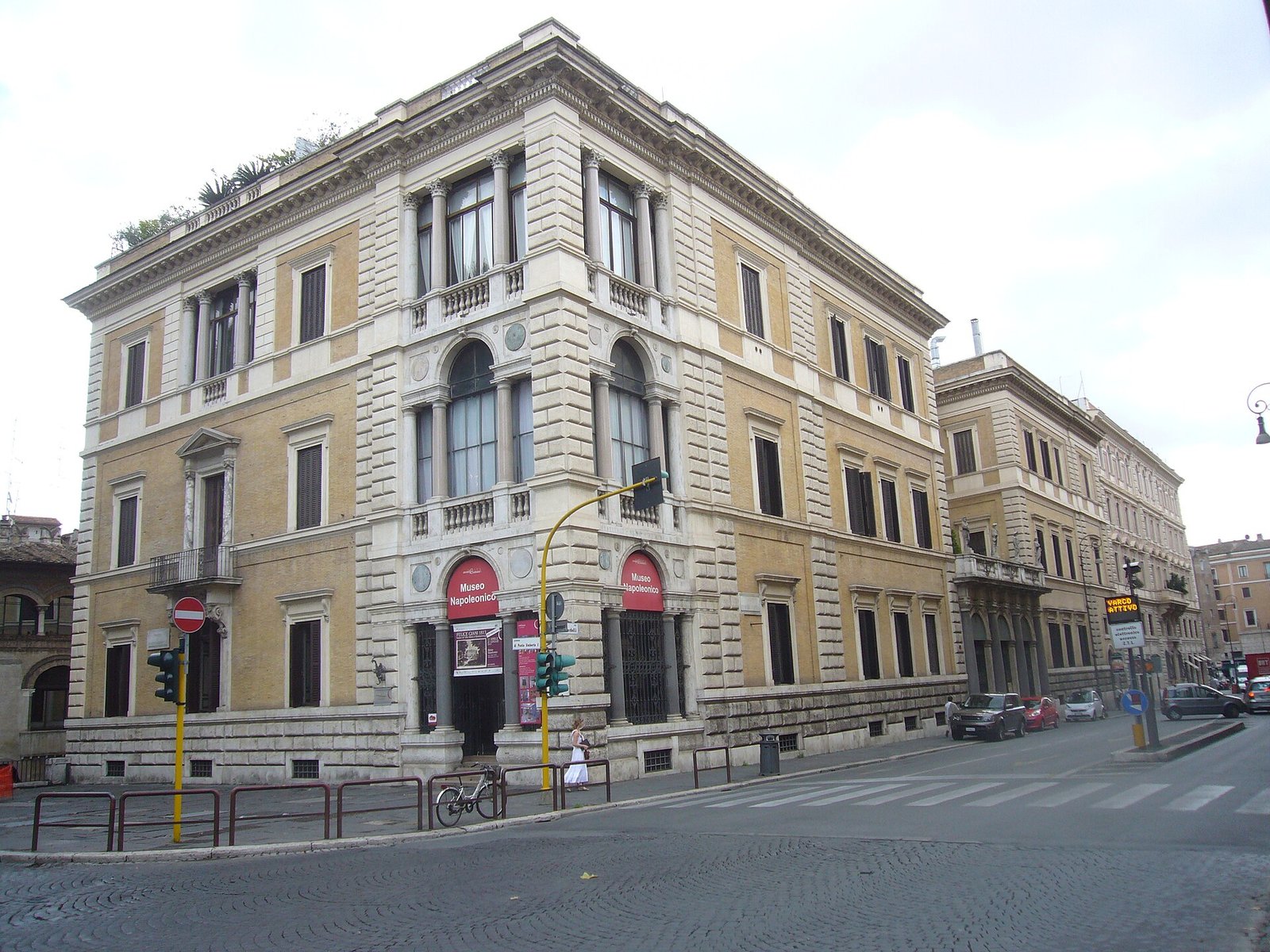
Italian Baroque in Dresden is open at the Napoleonic Museum from September 25, 2026 to January 10, 2027, at Piazza di Ponte Umberto I 1, in the Ponte district, overlooking the Tiber a few minutes from Piazza Navona. The hours are Tuesday to Sunday from 10:00 to 18:00, with last entry at 17:15. On December 24 and 31 the museum opens from 10:00 to 14:00, and it is closed on Monday and on December 25. The exhibition is included in the museum ticket: €7.50 full price and €6 reduced, with free admission for residents of Rome and the Metropolitan City, showing an ID card, and for MIC card holders. The nearest bus stop is Zanardelli, on the road leading to Ponte Umberto I. Lines in service and times can be checked on the ATAC route planner. Tickets are bought at the museum ticket office or through the advance-sales network indicated on the official Musei in Comune website. Information at 060608, every day from 9:00 to 19:00.
Italian Baroque in Dresden at the Napoleonic Museum: the exhibition in brief
Italian Baroque in Dresden brings to Rome a selection of 18th-century architectural drawings and sketches kept in the scientific collection of the Landesamt für Denkmalpflege Sachsen, the regional body for the protection of cultural heritage in Saxony. The subtitle of the official press release is clear: for the first time in Rome after 300 years, a selection of masterpieces of 18th-century European architectural drawing.
Who organizes it
The exhibition is curated and organized by the Landesamt für Denkmalpflege Sachsen, with the support of the Saxon Ministry of Infrastructure and Regional Development. It is promoted by Roma Capitale, Department of Culture and Coordination of the initiatives connected to Holocaust Remembrance Day, and by the Capitoline Superintendency for Cultural Heritage. The museum services are provided by Zètema Progetto Cultura. The press release is dated September 24, 2026.
A two-way exchange
The Roman exhibition has a counterweight in Dresden. While in Saxony a large retrospective is under way on Correggio's paintings that came from Italy, 18th-century architectural drawings from Dresden are arriving in Rome. Among them are sheets made in Rome itself three centuries ago: some works, the museum stresses, return for the first time after almost 300 years to the place where they were drawn.
Why it's worth the visit
Let's be frank: an exhibition of architecture drawings is not for everyone. Those looking for visual impact will be disappointed. Those who instead love understanding how a Baroque church is built, how one architect studies another in order to imitate him, how a project moves from the sheet to the stone, will find here one of the smartest exhibitions of the Roman autumn. And they will find it in a museum that is rarely crowded.
Dresden, the Florence on the Elbe: the context of the exhibition
In the mid-18th century Dresden, capital of Saxony, became one of the main centers of Italian culture north of the Alps, so much so that it earned the nickname Florence on the Elbe for the richness of its artistic treasures. The exhibition's story starts from here.
Augustus III and Maria Josepha
The protagonist is the Elector Frederick Augustus II of Saxony, King of Poland under the name Augustus III, together with his consort Maria Josepha. Enthusiasts of Italy and of opera seria, the two sovereigns did not limit themselves to collecting Italian painting, with names such as Raphael, Correggio, Giorgione and Titian. They called to Dresden composers, singers, instrumentalists, poets, set designers and theater architects from Italy.
A Catholic court in Protestant land
The decisive detail is religious. The Dresden court was Catholic, in a Protestant Saxony: a diaspora, as the official text calls it, in which cultural life was decisively promoted by the Italian Jesuits. The symbol of this Counter-Reformation season is the cathedral of the Holy Trinity, the Catholic court church, inaugurated in 1751 to a design by the Italian architect Gaetano Chiaveri and considered the most Roman building north of the Alps. Damaged in 1945, it still dominates the city's skyline today.
The Augustan age and Bellotto
The splendor of what in Dresden was called the Augustan age attracted Italian painters, stuccoists, musicians, dancers and theater impresarios. Standing out among them is the court painter Bernardo Bellotto, a Venetian, also known as Canaletto, whose views uniquely hand down the appearance of the city at the time. At the same time scholars, painters and architects from Dresden set off on long study trips to the south, and came back with notebooks full of Rome.
The four rooms of the exhibition on Italian Baroque in Dresden
The exhibition is arranged in four rooms, each with a specific theme, for a total of about 40 sheets between drawings and sketches. The route goes from Rome to Dresden and back, and it's best to follow it in order.
Room 1: Rome as a model
The first room presents the city of Dresden and displays six drawings of interior details of Roman churches: Sant'Ivo alla Sapienza, San Carlo alle Quattro Fontane and Trinità dei Monti, as well as Villa Albani. Two particularly imposing sheets are by Julius Heinrich Schwarze, future Saxon chief architect, who in Rome copied Filippo Juvarra's celebrated design for a domed church and carried it to Dresden in a church project of his own. It is the room that explains the exhibition's title better than any panel.
Room 2: the Catholic court church
The second room is devoted to the construction of Dresden's new Catholic court church, designed and built by the Roman architect Gaetano Chiaveri. Besides eight sheets by Chiaveri and other architects involved in the building site, the main work is the color drawing of the altar of the Annunciation in the church of Sant'Ignazio in Rome, made by the circle of Anton Raphael Mengs, which was to serve as a model for an altar in Dresden.
Room 3: the royal palace never built
The third room is also devoted to Chiaveri. 10 drawings, some of exceptionally large format, present the projects for a new royal palace for the Elector of Saxony in Dresden. For those who love drawn architecture, it is the most exciting room: you see an idea of a city at its full scale, on the sheet.
Room 4: the Italians in Dresden
The last room is titled The Italians in Dresden. 12 drawings show the projects of the Italian craftsmen and artists called to Saxony for architecture and decoration, and also their living conditions in the city. To look for are Giuseppe Galli Bibiena's projects for the ceiling decoration of the Catholic court church and the centerpiece of the exhibition: a project by Giovanni Antonio Pellegrini for the painted decorations in the Zwinger in Dresden, considered the largest known drawing by the master.
Gaetano Chiaveri, the Roman architect of Dresden
Gaetano Chiaveri, born in Rome in 1689 and died in Foligno on March 5, 1770, is the architect to whom the exhibition devotes two rooms out of four. He is an exponent of Roman Baroque who built his career almost entirely away from Rome.
A European career
His most important projects belong to the second phase of Dresden Baroque. Besides the Katholische Hofkirche, the Catholic court church now the cathedral of the Holy Trinity, he designed the new wing of the Royal Castle in Warsaw: logical, given that his patron was also King of Poland. Earlier he had supervised the construction of the Kadriorg palace to a design by another Roman, Nicola Michetti. An architect born in Rome, active between Poland and Saxony, and dead in Foligno: a biography that by itself tells how much Roman architecture was an export product in the 18th century.
The most Roman church north of the Alps
The Hofkirche was inaugurated in 1751. The definition of the most Roman building north of the Alps, reported by the exhibition's official text, says a lot: a church designed by a Roman, decorated by Italians, conceived for a Catholic court that wanted to declare itself as such in the heart of Protestant Germany. The Italian artists and craftsmen who worked there later left their mark in other places around Dresden and in Saxony as well.
The palace on paper
The 10 sheets of the third room, with Chiaveri's projects for a new royal palace, are perhaps the most precious part of the exhibition because they document an architecture that remained on paper. It's not the first time that the history of architecture is better understood from unbuilt projects than from finished buildings. Here you can touch it with your hand.
A curiosity about Italian Baroque in Dresden at the Napoleonic Museum, September 25, 2026 to January 10, 2027
The most beautiful curiosity of the exhibition is the circular journey of some sheets. In the first room are displayed drawings of interior details of Roman churches such as Sant'Ivo alla Sapienza and San Carlo alle Quattro Fontane, made by architects and scholars from Dresden during their study trips to Rome. Those sheets left for Saxony in the 18th century, served as models for the court's architecture, entered the collections of the Saxon monument protection office and now return, for the first time after almost 300 years, to the city in which they were drawn.
The case of Julius Heinrich Schwarze is the most eloquent. Future chief architect of Saxony, in Rome he copied Filippo Juvarra's famous design for a domed church and then turned it into a project of his own for Dresden. It's a process we would call knowledge transfer today, and which back then was done with pencil, compass and months of residence in the city.
There is also an irony that is entirely Roman: the drawings return a few steps from Piazza Navona, where many of the architects those visitors studied had worked. On leaving the museum, a walk of a few minutes is enough to see in the flesh some of the architecture that you see on paper in the rooms. For an enthusiast it's an invitation to do the route in reverse: first the sheets, then the churches.
The Napoleonic Museum and Palazzo Primoli
The Napoleonic Museum of Rome is a historical museum devoted to Napoleonic memorabilia, born from the collection of Count Giuseppe Primoli, who donated it to the city in 1927 together with the ground floor of the family palazzo. The museum has been open since 1950 and is part of the Musei in Comune system.
Giuseppe Primoli, a Roman Bonaparte
Giuseppe Primoli, who lived between 1851 and 1927, was the son of Charlotte Bonaparte and Pietro Primoli, Count of Foglia, married in 1848. Charlotte was the daughter of Charles Lucien Bonaparte, Prince of Canino, and Zénaïde Bonaparte, cousins to each other as children of two brothers of Napoleon I, Lucien and Joseph. Primoli's collection was conceived more as the telling of a private family history than as a collection of memorabilia: portraits, objects, memories of the household.
The three sections of the collection
The collections are divided into three parts. The Napoleonic period proper, with large canvases and busts portraying members of the imperial family in lofty poses. The so-called Roman period, from the fall of Napoleon I to the rise of Napoleon III. And the Second Empire, with paintings, sculptures, engravings, furniture and objects of the era. The current arrangement follows, in broad lines, the indications left by Primoli himself.
Ceilings and friezes
The rooms partly preserve the 18th-century ceilings with painted beams. The friezes of Rooms VIII, IX and X date from the first decades of the 19th century, when the palazzo already belonged to the Primoli. Those of Rooms III and V, with the Primoli rampant lion and the Bonaparte eagle, are later than the marriage between Pietro Primoli and Charlotte Bonaparte. They are details to look at by raising your head, because they tell the union of two families better than a family tree.
Two museums in one palazzo
Palazzo Primoli also hosts Fondazione Primoli, created by the count himself, the Primoli Library with about 30,000 volumes and the Mario Praz Museum, a detached section of Galleria Nazionale d'Arte Moderna. Those with time can combine the two visits in the same morning.
One thing nobody tells you about Italian Baroque in Dresden at the Napoleonic Museum, September 25, 2026 to January 10, 2027
What almost nobody says is that the palazzo of the Napoleonic Museum changed its face because of the Tiber. Palazzo Primoli was built in the 16th century, belonged to the Gottifredi until the end of the 18th century, then to the Filonardi, and was bought by Count Luigi Primoli between 1820 and 1828. At the start of the 20th century the construction of the Tiber embankments and of Ponte Umberto I, with the new Via Zanardelli leading to it, upended its relationship with the city.
In 1901 Giuseppe Primoli decided on a radical remodeling and entrusted it to the architect Raffaello Ojetti. The works lasted until 1911: the old facade was demolished and replaced by a loggia, the building was raised and a new monumental entrance was created on Via Zanardelli. The palazzo you see today, then, is at once a 16th-century palazzo and a building of unified Italy, rebuilt to adapt to the embankment walls.
The consequence for the exhibition is subtle but interesting. You go in to look at projects by 18th-century architects who adapted Roman models to a northern city, inside a palazzo that in turn was redesigned to adapt to a city transformed by modern urban planning. Architecture that adapts, in two different eras, under the same roof. It is not the theme of the exhibition, but it is the best way to look at it.
Hours and tickets for Italian Baroque in Dresden
Italian Baroque in Dresden is included in the Napoleonic Museum ticket: €7.50 full price and €6 reduced, with free admission for residents of Rome and the Metropolitan City and for holders of a valid MIC card.
The hours
The museum is open Tuesday to Sunday from 10:00 to 18:00, with last entry at 17:15. On December 24 and 31 the hours are reduced, from 10:00 to 14:00, with last entry at 13:15. It is closed on Monday and on December 25. The museum recommends always checking the notices page before planning your visit.
Residents and MIC card
For Romans the exhibition is effectively free: just show the ID card certifying residence in Rome or the Metropolitan City. Those who are not residents but often visit the civic museums do well to consider the MIC card, which gives free access to the Musei in Comune system.
Where to buy
The ticket is bought at the museum ticket office or online through the advance-sales network indicated on the official Musei in Comune website. Updated discounts and free admissions are published on the system's tickets page, and for any doubt 060608 answers, every day from 9:00 to 19:00.
The advice I give you for visiting Italian Baroque in Dresden at the Napoleonic Museum, September 25, 2026 to January 10, 2027
My advice is to do the exhibition as an itinerary, not as a visit. First go into the Napoleonic Museum and look at the four rooms at leisure, lingering on the first, Rome as a model. Then step out and go see in the flesh at least one of the Roman churches drawn on the sheets: Sant'Ivo alla Sapienza is the closest and can be reached on foot. Comparing the drawing of an interior detail with the original is the experience no catalog can give back.
Second piece of advice: bring a pair of reading glasses if you use them, or a magnifying glass. 18th-century architecture drawings are full of annotations, measurements, small pencil corrections. Many of the most interesting pieces of information are there, a few millimeters from the edge of the sheet. Don't hurry: here slowness is method.
Third: take advantage of the exhibition to visit the permanent museum. Whoever goes in only for the Dresden drawings and walks straight past the Bonaparte portraits loses half the value of the ticket. The two things, after all, speak of the same Europe: courts, dynasties, artists moving between capitals. Count at least an hour and a half for everything.
How to get to the Napoleonic Museum
The Napoleonic Museum is at Piazza di Ponte Umberto I 1, in the Ponte district, at the end of Via Zanardelli toward the Tiber, about 200 meters from Chiostro del Bramante and Palazzo Altemps.
On foot
From Piazza Navona you leave from the north side and in a few minutes reach Via Zanardelli, which leads straight to the museum. Those coming from Castel Sant'Angelo can cross the Tiber on Ponte Umberto I and find the palazzo in front of them. The historic center, here, is easy to get around on foot.
By bus
The nearest stop is Zanardelli, a short distance from the museum. Other useful stops are on Corso del Rinascimento and on Corso Vittorio Emanuele II. The lines in service, the routes and the times should be checked on the ATAC route planner before you leave: in the historic center the routes often change because of roadworks and demonstrations.
By metro
No metro station is nearby: the Spagna and Lepanto stops on line A require a long walk or a change to a bus.
By car and taxi
The district is in the limited traffic zone. Those arriving by car must leave it outside the ZTL and check the access rules beforehand. The taxi is the solution for those who have difficulty walking: ask to be dropped off in Piazza di Ponte Umberto I.
Another well-known fact, yet rarely mentioned
That Dresden was called the Florence on the Elbe many people know, and it is repeated in every guide. Much less often mentioned is the fact that that artistic flowering was born in a Catholic court surrounded by a Protestant country, and that its architectural symbol was designed by a Roman. Gaetano Chiaveri's cathedral of the Holy Trinity, inaugurated in 1751, was the court church of a Catholic Elector, King of Poland, in a Protestant Saxony.
The role of the Italian Jesuits, stressed by the exhibition's official text, completes the picture: Italian culture in Dresden was not just collectors' taste but part of a religious and political strategy. Opera seria, the singers, the set designers, the architects came from Italy also because Italy was the homeland of Baroque Catholicism.
The church's recent fate is also little told in Italy: damaged in 1945, it still characterizes the city's skyline today. Looking at the sheets of Chiaveri and his building site in the exhibition means seeing the origin of a building that went through destruction and came out of it still standing.
Accessibility, children and groups at the Napoleonic Museum
The Napoleonic Museum occupies the ground floor of Palazzo Primoli, and the collection rooms are historic spaces with painted ceilings and friezes.
People with disabilities
Before the visit it's best to call 060608 for updated information on accessible routes, available aids and entry arrangements. Discounts and free admissions for people with disabilities are indicated on the official Musei in Comune tickets page.
With children
An exhibition of architecture drawings is hard for the little ones, but it can work with kids from 11 or 12 up, especially if they have seen some Baroque churches in Rome. The game is simple: recognize in the sheets a church already seen. In the permanent museum, on the other hand, the portraits of the Bonaparte family and the objects of the Second Empire intrigue children too.
Groups and schools
For groups of students of architecture, art history or German, the exhibition is a rare opportunity. Educational visits are booked through the Musei in Comune system, at 060608 or on the official website.
The right photo to take at Italian Baroque in Dresden at the Napoleonic Museum, September 25, 2026 to January 10, 2027
The right photo, here, is made in two stages. The first is inside, in the room of Chiaveri's projects for the royal palace: the large-format sheets, seen at an angle, convey the scale of a project that was never built. Before photographing always ask the staff if it's allowed: exhibitions with loans from foreign institutions often have rules of their own, and flash on old drawings is to be avoided in any case.
The second photo is outside. Step out onto Piazza di Ponte Umberto I and look for the framing that puts together the palazzo's loggia, the Tiber and the bridge: it is the photograph of the Rome that in 1901 forced the Primoli to redo the facade. Those who like contrasts can go out onto the bridge and photograph the palazzo from the opposite bank, with the embankment walls in the foreground.
The third, optional but recommended, is the comparison. If after the exhibition you go to Sant'Ivo alla Sapienza or San Carlo alle Quattro Fontane, photograph the same detail you saw drawn in the first room. Placing the two images side by side, the 18th-century sheet and the stone of today, is the best way to remember this exhibition.
Around the Napoleonic Museum: what to see in the Ponte district
The Napoleonic Museum is in one of the densest areas of monuments in the historic center, between the Tiber and Piazza Navona: within 200 meters there are several short, uncrowded visits.
Chiostro del Bramante and Santa Maria della Pace
The Chiostro del Bramante is about 200 meters away, next to the church of Santa Maria della Pace, north of Piazza Navona. The cloister hosts temporary exhibitions with separate admission.
Palazzo Altemps
Palazzo Altemps, in Piazza di Sant'Apollinare, is also about 200 meters away. For those with a free morning, the Napoleonic Museum and Altemps combine well.
Via dei Coronari and San Salvatore in Lauro
Via dei Coronari, pedestrian, runs west to the Tiber. Along the way you pass the church of San Salvatore in Lauro. Once at the river, you cross over and reach Castel Sant'Angelo.
Mario Praz Museum
In the same palazzo as the Napoleonic Museum is Museo Mario Praz, a detached section of Galleria Nazionale d'Arte Moderna. It's the most natural visit to pair with it: same address, another idea of a private collection.
Some important events that happened here in history
Palazzo Primoli was built in the 16th century and belonged for about two centuries to the Gottifredi family. At the end of the 18th century it passed to the Filonardi, and between 1820 and 1828 it was bought by Count Luigi Primoli, father of Pietro.
In 1848 Pietro Primoli, Count of Foglia, married Charlotte Bonaparte, granddaughter on both her father's and mother's side of two brothers of Napoleon. From that marriage came the friezes with the rampant lion and the imperial eagle that still decorate Rooms III and V today, and in 1851 Giuseppe Primoli was born, the collector to whom the museum is owed.
At the end of the 19th century Rome, as capital, built the Tiber embankments and Ponte Umberto I, with the new Via Zanardelli. In 1901 Giuseppe Primoli entrusted Raffaello Ojetti with the remaking of the palazzo, with works until 1911: new loggia, raising of the building, monumental entrance on Via Zanardelli. In 1927 the count donated to the city the collection and the ground floor of the palazzo, and in 1950 the Napoleonic Museum opened to the public. Since September 25, 2026 its rooms host, for the first time in Rome after 300 years, the 18th-century drawings of the Dresden architects.
Who has passed through Italian Baroque in Dresden at the Napoleonic Museum, September 25, 2026 to January 10, 2027
The first name is Giuseppe Primoli, count, collector, a descendant of the Bonapartes on his mother's side, who lived in this palazzo, transformed it at the start of the 20th century and left it to the city with his collection. With him ideally pass his ancestors: Charles Lucien Bonaparte, Prince of Canino, and Zénaïde Bonaparte, children respectively of Lucien and of Joseph, brothers of Napoleon.
Then the architect Raffaello Ojetti, who between 1901 and 1911 redesigned the palazzo to adapt it to the Rome of the embankment walls. And Mario Praz, whose museum occupies the same building, witness to another form of private collecting that became public.
With the exhibition, through their sheets, the architects of the Baroque between Rome and Dresden enter the rooms: Gaetano Chiaveri, Roman by birth and Saxon by career. Julius Heinrich Schwarze, who copied Filippo Juvarra's project in Rome. The circle of Anton Raphael Mengs, with the drawing for the altar of Sant'Ignazio. Giuseppe Galli Bibiena with the projects for the ceiling of the court church. Giovanni Antonio Pellegrini with his largest known drawing, for the Zwinger. And, in the background, the sovereigns who made all this possible: Augustus III of Poland and Maria Josepha, and their court painter, Bernardo Bellotto.
Where to eat near the Napoleonic Museum
The Ponte district and the area north of Piazza Navona offer many possibilities, but they ask for a little method.
Light lunch
Between Via dei Coronari, Via Zanardelli and the streets toward Piazza Navona you'll find bakeries, bars and small places for a quick lunch. If you combine the exhibition with Altemps or Chiostro del Bramante, stop between one visit and the other for something light.
Trattorias
In the inner streets of the district there are trattorias serving Roman cuisine. The rule I've always used: a short menu, in Italian, changed with the season. Avoid the tables with a direct view of Piazza Navona: you mostly pay for the panorama.
A coffee on the Tiber
Before going in, at 10:00, a coffee at the counter nearby and then inside: in the early hours the rooms are almost empty, and the drawings can be looked at properly.
Autumn and winter in Rome: the exhibition's season
Italian Baroque in Dresden runs through autumn and the Christmas holidays, until January 10, 2027. It's an exhibition that suits short, uncertain days well: indoors, uncrowded, in an area where you can easily move from one museum to another.
The holidays
Keep the special dates in mind: on December 24 and 31 the museum closes at 14:00, and on December 25 it is closed. Between Christmas and Epiphany the historic center fills with families and visitors. The Napoleonic Museum remains a museum that isn't crowded.
The other exhibitions in the civic museums
In the same period the Musei in Comune offer other exhibitions that can be combined. A few minutes away, on Corso Vittorio Emanuele II, the Barracco Museum hosts until November 15 Nikos Floros's portrait statue of Maria Callas, and from October 6 Museo di Roma at Palazzo Braschi presents the large Keith Haring exhibition.
Frequently asked questions about Italian Baroque in Dresden
Until when is the exhibition Italian Baroque in Dresden open?
Italian Baroque in Dresden is open at the Napoleonic Museum in Rome from September 25, 2026 to January 10, 2027. The hours are Tuesday to Sunday from 10:00 to 18:00, last entry at 17:15. On December 24 and 31 from 10:00 to 14:00. The museum is closed on Monday and on December 25.
How much does the ticket for Italian Baroque in Dresden cost?
Italian Baroque in Dresden is included in the Napoleonic Museum admission ticket: €7.50 full price and €6 reduced. Admission is free for residents of Rome and the Metropolitan City, showing an ID card, and for holders of a valid MIC card.
Where is the Napoleonic Museum of Rome?
The Napoleonic Museum is at Piazza di Ponte Umberto I 1, in the Ponte district, on the ground floor of Palazzo Primoli, at the end of Via Zanardelli toward the Tiber. It is a few minutes' walk from Piazza Navona and about 200 meters from Chiostro del Bramante and Palazzo Altemps.
What do you see in the exhibition on the Baroque in Dresden?
The Napoleonic Museum exhibition displays 18th-century architectural drawings and sketches from the collection of the Landesamt für Denkmalpflege Sachsen, in four rooms: Rome as a model, Dresden's Catholic court church, Gaetano Chiaveri's projects for a new royal palace, the Italians in Dresden. The centerpiece is a large drawing by Giovanni Antonio Pellegrini for the Zwinger.
Who was Gaetano Chiaveri?
Gaetano Chiaveri was a Baroque architect born in Rome in 1689 and died in Foligno in 1770. He designed Dresden's Catholic court church, inaugurated in 1751, and the new wing of the Royal Castle in Warsaw. He also supervised the Kadriorg palace to a design by Nicola Michetti. The exhibition devotes two rooms to him.
How long does the exhibition take?
For Italian Baroque in Dresden you need about 45 minutes if you look carefully at the sheets, which are full of details. Adding the permanent collection of the Napoleonic Museum, devoted to the Bonapartes, plan on an hour and a half.
Why does the exhibition say for the first time in Rome after 300 years?
The Napoleonic Museum exhibition includes drawings made in Rome in the 18th century by architects and scholars from Dresden, such as the details of Sant'Ivo alla Sapienza and San Carlo alle Quattro Fontane or Schwarze's copy of a Juvarra design. Taken to Saxony, they now return for the first time after almost 300 years to the place where they were drawn.
Final advice on Italian Baroque in Dresden
In our view it's one of those exhibitions that leave you wanting to walk when you step out of the museum. Look at the sheets slowly, especially the first room, then step out and go to Sant'Ivo alla Sapienza or San Carlo alle Quattro Fontane: you'll see with different eyes what the Dresden architects came to study three centuries ago. And if you're a Roman, remember that with your ID card you get in free: no excuse.
Article written by the editorial team of Tour Leader Pro, contact them for Private/Corporate/V.I.P. Tours and Experiences.
Planning a trip to Rome? English-language guides to visiting the city are on ItalyPlanner.com.