Il giorno della civetta, reading concert at Teatro Vascello, November 11, 2026
https://www.estateromana.com/en/rome/trip-planner/il-giorno-della-civetta-reading-concert-at-teatro-vascello-november-11-2026/
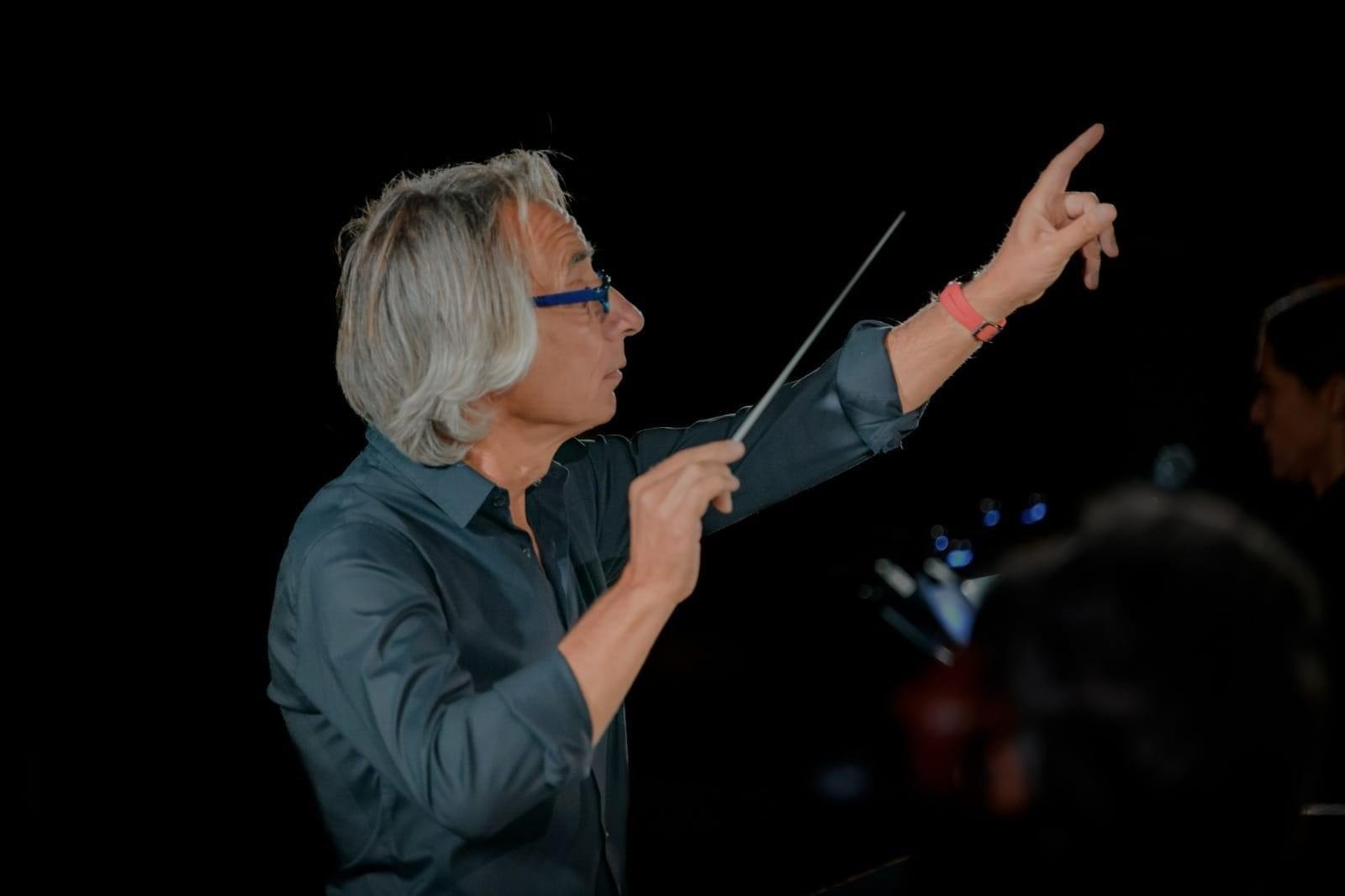
On Wednesday, November 11, 2026, at 21:00, Teatro Vascello hosts Il giorno della civetta (The Day of the Owl), a reading concert with live music inspired by Leonardo Sciascia's novel, conceived by composer Paolo Vivaldi, with Vita Villi as the narrating voice and the ensemble I Solisti dell'Augusteo. The theater is at Via Giacinto Carini 78, in Monteverde Vecchio, above Trastevere and near the Janiculum. Bus 75 stops in front of the entrance and comes from Termini, the Colosseum and Piramide, while the theater also lists lines 44, 710, 870 and 871 and Quattro Venti railway station. The show lasts about 60 minutes. Prices are published on the official website of Teatro Vascello, which gives access to online purchase on the authorized presale network. Tickets are also sold at the theater's box office.
Language: performed in Italian. No English version or English surtitles are announced.
It's a single evening, within the Vascello's 2026/2027 season, and it brings together three languages: Sciascia's civic literature, acting and original music written by one of the most active film and television composers in Italy. In our opinion it's the right occasion to reread, or discover, a novel that in 1961 brought the mafia into Italian literature, in an hour-long show designed for adults and for high school students.
Il giorno della civetta at the Vascello: what a reading concert is
Il giorno della civetta is a reading concert: Vita Villi's narrating voice moves through the most significant pages of Sciascia's novel, while a live ensemble performs the original music of Paolo Vivaldi, who sits at the piano and is the artistic director.
Neither a reading nor a concert
The theater's presentation says it clearly: it isn't a simple reading of the novel nor a traditional concert, but a dramatic and musical journey into Sciascia's moral universe. The music doesn't accompany the words: according to the presentation, it questions them, supports them, illuminates them.
The lineup
I Solisti dell'Augusteo play with a precise lineup: string quintet, drums, clarinet, accordion and piano. It's an unusual group, mixing the chamber sound of the strings with folk colors such as the accordion and the clarinet, and with the rhythm of the drums.
A Sicily without folklore
The score, the theater writes, aims to evoke a Sicily that isn't folkloric but intimate and universal: a land of light and shadow, beauty and unease, memory and wound. The music is described as intense, evocative and cinematic, able to amplify the dramatic breath of the text.
Running time
The show lasts about 60 minutes. With a 21:00 start you come out around 22:00, in time for a late dinner in Monteverde or Trastevere.
What you'll hear: the pages of the novel
The reading concert goes through some of the most emblematic pages of the novel: the murder of Salvatore Colasberna, Captain Bellodi's investigation, the wall of silence and half-truths surrounding the crime, the presence of a criminal power acting in the shadows.
The murder in the square
The novel opens with the killing of Salvatore Colasberna, president of a small building company, as he boards the bus to Palermo. When the carabinieri arrive the passengers slip away one at a time, and nobody saw anything: it's the first image of the omertà that runs through the whole book.
Captain Bellodi
The investigation is entrusted to Captain Bellodi, from Parma in Emilia, a former partisan who stayed in the Carabinieri out of ideals. He's the figure through whom Sciascia looks at Sicily, and the show's presentation insists on his loneliness in front of a system founded on silence and fear.
Don Mariano and the quaquaraquà
In the confrontation between Bellodi and the boss Don Mariano Arena, Sciascia gives the mafioso the famous classification of humanity into men, half-men, little men and quaquaraquà. It's the page that brought that word into everyday language.
The show's questions
The presentation closes with a series of questions put to the audience: who has the courage to tell the truth, how much silence weighs, where prudence ends and complicity begins, what it means to choose justice. These are the questions the novel has been asking for more than 60 years.
Il giorno della civetta by Leonardo Sciascia: the novel
Il giorno della civetta is a long story by Leonardo Sciascia, finished in 1960 and published in 1961 by Einaudi, considered one of the first great works of Italian literature to depict the mafia as a system of power.
The true story
The story takes its cue from the murder of Accursio Miraglia, a communist trade unionist, killed in Sciacca in January 1947. For the character of Bellodi, Sciascia drew on Renato Candida, the Carabinieri commander in Agrigento, whose book on the mafia he had reviewed in 1957.
The first edition
The text was previewed in the magazine Mondo Nuovo on October 9, 1960, and came out in Einaudi's I coralli series with Renato Guttuso's painting Paese del latifondo siciliano on the cover. A final note declared the truth hidden behind the fiction, in an Italy where the mafia was still denied by political bodies and the media.
The 1972 Note
In 1972, for Einaudi's school edition, Sciascia added a Note recalling how in 1960 the government denied the existence of the mafia, even though inquiries and studies had documented it for almost a century. The book was born from the need to confront the state with the facts.
The film and the comic
In 1968 Damiano Damiani made the film of the same name from the novel. In 2025 the film was adapted into a comic by Antonio La Torre Giordano and Fabrizio Di Blasi. The book has been republished several times, by Einaudi and then by Adelphi.
Who Paolo Vivaldi is, the composer
Paolo Vivaldi is a Roman film composer, born on January 20, 1964, who graduated in composition from the Conservatorio di Santa Cecilia in 1985 under Teresa Procaccini.
Arranger and conductor
After graduating he devoted himself to arranging and composing for film and television. He often orchestrates his own music and conducts it during recording sessions: it's a profile that explains the care in the lineup chosen for Il giorno della civetta.
Film
The films he has scored include Claudio Caligari's Non essere cattivo, from 2015, Fabrizio Cattani's Maternity Blues, Cosimo Gomez's Brutti e cattivi, Claudio Amendola's Il permesso, 48 ore fuori, Francesco Falaschi's Quanto basta and Alessandro Tonda's Il nibbio, from 2025.
Television
The list of TV productions is even longer: Liliana Cavani's De Gasperi, L'uomo della speranza and Einstein, Rino Gaetano, Ma il cielo è sempre più blu, Adriano Olivetti, La forza di un sogno, Pietro Mennea, La freccia del Sud, Boris Giuliano, Un poliziotto a Palermo, Rita Levi Montalcini, Filumena Marturano, Maria Corleone, Tina Anselmi.
Awards
He has received the Premio Sonora several times, between 2007 and 2014, and the Colonnesonore.net award in 2012 for Maternity Blues and in 2016 for Non essere cattivo.
The mafia on screen
It's not the first time Vivaldi has written music for stories about the mafia and the rule of law: his TV work includes Boris Giuliano, Un poliziotto a Palermo, Baciamo le mani, Palermo New York 1958 and the series Maria Corleone. Il giorno della civetta fits into this line, with the added freedom of live music.
Who Vita Villi is, the narrating voice
Vita Villi is an actress and playwright linked to civic theater, known for the play Solo una donna, Felicia Impastato.
Solo una donna
Solo una donna, Felicia Impastato is written by Vita Villi, who also performs it. The show was presented at the Campania Teatro Festival in 2025 and, in March 2026, in Turin, and it puts at its center, as the title says, the figure of Felicia Impastato.
The thread of memory
The link between Solo una donna and Il giorno della civetta is clear: in both cases Vita Villi works on the theme of civic memory and the story of the mafia. In the Vascello's presentation her voice renders Sciascia's words with restraint, intensity and depth.
Film
As an actress Vita Villi has also appeared on screen, among other things in the film Gotico padano.
I Solisti dell'Augusteo and the live music
The ensemble playing Il giorno della civetta is called I Solisti dell'Augusteo and, for this reading concert, fields a string quintet, drums, clarinet, accordion and piano.
Vivaldi's piano
At the piano sits Paolo Vivaldi himself, composer of the music and artistic director. The piano is the center of the score, the point from which the lines of the strings and winds start.
Teatro Vascello: an experimental hall in Monteverde
Teatro Vascello was inaugurated on May 4, 1989, by Giancarlo Nanni and Manuela Kustermann with the company La Fabbrica dell'Attore, and opened with a show by Tadeusz Kantor and his Cricot Theatre of Warsaw.
The roots at Teatro La Fede
The story begins in the 1970s with the group Space Re(v)action, whose first permanent home was Teatro La Fede, on Via Portuense. Around Nanni and Kustermann a movement was born that put the image before the word, known as the Roman school. Steve Lacy, John Cage and the Living Theatre passed through Teatro La Fede.
From 1989 to today
After Kantor came Raul Ruiz, the Centro di Pontedera, Teatri Uniti, Moni Ovadia, Carlo Cecchi, Raffaello Sanzio, Pippo Delbono. Since 1998 La Fabbrica dell'Attore has been recognized as a Teatro Stabile d'Innovazione, and in 2004 the Sala Studio opened. After Nanni's death, in January 2010, the artistic direction has been in Manuela Kustermann's hands.
Romaeuropa and the season
For more than 20 years Fondazione Romaeuropa has brought part of its festival to the Vascello: this fall, among others, Marta Cuscunà with La Medium and Alessandro Serra's Tragudia have come through here. After Il giorno della civetta the season continues with Il prodigio, from November 13 to 22, and Quinto: non uccidere, from November 24 to 29.
Tickets for Il giorno della civetta at Teatro Vascello
Tickets for Il giorno della civetta are sold on the official website of Teatro Vascello, which links to the authorized presale network, or at the theater's box office at Via Giacinto Carini 78.
Prices
Prices are published on the theater's official website, together with the box office and subscription conditions of the 2026/2027 season.
Where to sit
In a reading concert the voice and the music matter more than the set: a central position, not too close under the stage, lets you hear the narrating voice and the ensemble in balance.
One night only
The show is on only on November 11. If you're coming with a class or with friends, it's best to book ahead.
How to get to Teatro Vascello
Teatro Vascello is at Via Giacinto Carini 78, in Monteverde Vecchio, and can be reached on bus 75, which stops in front of the theater, or by train to Quattro Venti station.
By bus
The 75 leaves from Termini and passes the Colosseum and Piramide. The theater also lists lines 44, 710, 870 and 871 as useful.
By train
From Ostiense station the urban train takes you to Quattro Venti station, on Viale dei Quattro Venti, near the theater.
By car
The theater suggests parking along Via delle Mura Gianicolensi, about 100 meters away. There are paid parking lots at Via Giacinto Carini 43, at Via Maurizio Quadrio 22, which has an agreement with the theater for a discount when you show your ticket, and at Via Raffaello Giovagnoli 20.
On foot
From Trastevere you can walk up to Monteverde, uphill, along the streets leading toward the Janiculum: a walk to be done in comfortable shoes and with plenty of time to spare.
The neighborhood around Teatro Vascello: Monteverde Vecchio
Monteverde Vecchio is the upper, residential part of Monteverde, above Trastevere, between the Janiculum and the great historic villas.
The Janiculum and the Fontanone
The Janiculum is close to the theater, with its view over all of Rome. Toward the hill you come to the Acqua Paola Fountain and, farther on, the basilica of San Pancrazio.
The villas
A few minutes away are Villa Sciarra, small and intimate, and Villa Doria Pamphilj, the great park west of the neighborhood. In November the gates close early: check the times.
Trastevere
Below Monteverde lies Trastevere, with the basilica of Santa Maria in Trastevere and the Museo di Roma in Trastevere.
Where to eat before or after the show
Teatro Vascello has an in-house bistro, handy for a coffee or a snack before the show. For dinner you can stay in Monteverde or head down to Trastevere.
In Monteverde
The neighborhood has trattorias and pizzerias frequented mostly by residents, with lower prices than in Trastevere. With the show letting out around 22:00, they're the most convenient choice.
In Trastevere
Heading down to Trastevere, the choice of trattorias and osterias is huge and open late. On a Wednesday in November finding a table is easier than on the weekend.
Accessibility, schools and practical information
Teatro Vascello publishes a section on accessibility on its website, to be checked before buying to find out about entrances, reserved seats and services.
For schools
Il giorno della civetta has a long relationship with schools: in 1972 Einaudi published it in its Letture per la scuola media series, with a Note written by Sciascia for the occasion. For high school students, an hour of reading with live music is a different way of encountering the text.
Punctuality
In an hour-long show built on the dialogue between voice and music, arriving late disturbs everyone. The evening bus can take a long time: leave with some margin.
How to plan the evening in Monteverde
With a 21:00 start and a running time of about 60 minutes, Il giorno della civetta lends itself to an evening that begins on the Janiculum and ends at the table, in Monteverde or Trastevere.
Sunset
In November the sun sets around five. If you want to see Rome from above in the last light, go up to the Janiculum in the late afternoon. If you arrive later, you'll find the city lit up, just as beautiful.
A coffee at the bistro
The Vascello's in-house bistro lets you arrive half an hour early, pick up your tickets without rushing and have a drink before going into the hall.
After 22:00
When you come out, around 22:00, the choice is between a neighborhood trattoria in Monteverde and the walk down to Trastevere. For the trip back, the 75 takes you toward Piramide, the Colosseum and Termini. Check evening frequencies on the ATAC journey planner.
With the book in your pocket
The novel is short and can be read in a couple of evenings. Bringing it with you lets you find, after the show, the pages you heard in the hall.
A curious fact about Il giorno della civetta, reading concert at Teatro Vascello, November 11, 2026
The most interesting curiosity concerns the origin of the character of Bellodi. Sciascia had begun writing about the mafia in 1957, reviewing the book by Renato Candida, then commander of the Carabinieri in Agrigento. From that real officer, according to studies on the novel, Captain Bellodi was born: from Parma in Emilia, a former partisan, headed for a career as a lawyer but who stayed in the Carabinieri out of conviction. The character the reading concert puts at the center, with his loneliness in front of omertà, therefore has a flesh-and-blood model, and the crime that opens the book recalls a real event: the murder of trade unionist Accursio Miraglia, killed in Sciacca in January 1947.
The second curiosity concerns the cover of the first edition. Il giorno della civetta came out in 1961 in Einaudi's I coralli series, with Renato Guttuso's painting Paese del latifondo siciliano on the cover. A Sicilian painter for a Sicilian novel, at a time when the mafia was still denied. The third is linguistic: the word quaquaraquà, spoken by Don Mariano in his dialogue with Bellodi, became thanks to this book a term in common use throughout Italy. Hearing it live, acted and accompanied by music, has an effect the written page doesn't give.
Something nobody tells you about Il giorno della civetta, reading concert at Teatro Vascello, November 11, 2026
What's rarely said is that Sciascia, publishing the novel in 1961, had to reckon with the limits of his time. The first edition appeared with a final note in which the author declared the truth hidden behind the fiction, written, according to the most widespread account, with a freedom that was not complete but significant. In 1972, in the Note to the school edition, Sciascia recalled that in 1960 the government denied the existence of the mafia, despite the 1875 parliamentary inquiry, the studies by Franchetti and Sonnino, the essays by Napoleone Colajanni. The novel, in short, didn't tell a secret: it told a truth everyone knew and no one wanted to name.
The second thing concerns the music. Paolo Vivaldi is known to the general public for film and TV drama scores, but you rarely get the chance to hear him live, at the piano, while leading an ensemble. In a reading concert the music isn't a background: it takes up the stage as much as the voice does. A practical tip: arrive a few minutes early and choose a central seat, from which voice and instruments can be heard in balance.
My advice for seeing Il giorno della civetta, reading concert at Teatro Vascello, November 11, 2026
My advice is to reread, before the evening, at least the first pages of the novel and the dialogue between Bellodi and Don Mariano. Il giorno della civetta is a short book, and a quick read in the days before is enough to recognize in the hall the scenes chosen: the bus emptying in the square, the informer who lies, the boss's interrogation. The reading concert works in fragments, and those who have the complete picture of the story appreciate more the way the music links them.
The second piece of advice concerns those who have already seen Damiano Damiani's 1968 film: it's best to forget it for an hour. The reading concert doesn't reconstruct the plot as a drama, but works on Sciascia's words and the soundscape, and the comparison with the film risks being distracting.
The third concerns the evening. If you arrive early you can go up to the Janiculum, even if in November it's already dark at 20:00: the view over lit-up Rome is worth the detour. After the show, around 22:00, the walk down to Trastevere for a late dinner rounds off the evening well.
Another well-known fact, yet seldom mentioned
It's well known that Il giorno della civetta is one of the key novels about the mafia. It's less often mentioned that, before Sciascia, Italian literature had depicted the mafia almost only through theater, and from a different angle. In the 1972 Note the writer recalled two precedents: I mafiusi de la Vicarìa, a dialect comedy by Gaspare Mosca and Giuseppe Rizzotto, and Mafia, a play in standard Italian by the English scholar Giovanni Alfredo Cesareo. Works that looked at the phenomenon as a code of behavior and a way of administering justice outside the state, rather than as a system of power. Sciascia's novel changed the perspective.
A second fact, known to Roman theatergoers but seldom cited, concerns the Vascello. In 1998 La Fabbrica dell'Attore, the company that runs the theater, was recognized by the Ministry as a Teatro Stabile d'Innovazione, and in the same year the Vascello coproduced a show with the Berliner Ensemble. Here Peter Brook presented Beckett's Happy Days with Natasha Parry, and Bob Wilson and Tadeusz Kantor came through. That the Vascello hosts a reading concert on Sciascia today is consistent with this history: a theater that has always woven together words, music and civic engagement.
The right photo to take at Il giorno della civetta, reading concert at Teatro Vascello, November 11, 2026
You don't take photos during the show: in a reading concert the concentration of the hall is part of the experience, and a lit screen distracts the people around you and those on stage. Photos are taken before and after.
The first, for those who arrive early, is from the Janiculum: Rome lit up in the evening, seen from the hill, tells the story of the Vascello's neighborhood well, suspended between the historic city and the hillside. From there you walk down to Via Giacinto Carini in a few minutes.
The second is at the theater entrance, in front of the show's poster, with the title and the names of Vivaldi and Villi. It's the simplest and most sincere souvenir of a one-time evening.
The third, for those arriving by bus, is the 75 stop in front of the theater, with the Vascello sign in the background: an urban shot many people overlook. And if you have a copy of the novel with you, you can photograph it next to your ticket: a small tribute to Sciascia.
Some important events that happened here
The history of Teatro Vascello is short if measured in years, dense if measured in events. On May 4, 1989, the hall opened with a show by Tadeusz Kantor and the Cricot Theatre of Warsaw. In the early 1990s came Raul Ruiz, the Centro di Pontedera, American and French contemporary dance, Italian experimental groups.
In May 1996 the Extraordinario series presented 16 young companies from all over Italy. In 1998 the Ministry recognized La Fabbrica dell'Attore as a Teatro Stabile d'Innovazione, and the Vascello coproduced a show with the Berliner Ensemble. In 2001 Giancarlo Nanni was the first Italian invited to work and teach at the Actors Studio in New York. In 2003 the Premio Valentino Zeichen, dedicated to poetry, was born, and in 2004 the Sala Studio opened.
In January 2010 Nanni died and the direction passed entirely to Manuela Kustermann. For more than 20 years Fondazione Romaeuropa has brought part of its festival to the Vascello. On November 11, 2026, the hall hosts Il giorno della civetta, Paolo Vivaldi's reading concert with Vita Villi, among the shows of the 2026/2027 season.
Who has passed through Il giorno della civetta, reading concert at Teatro Vascello, November 11, 2026
On the Vascello stage and, even earlier, in the history of the company that founded it, some of the most important names of contemporary theater have come through. At Teatro La Fede, in the 1970s, came saxophonist Steve Lacy, composer John Cage and the Living Theatre, and the group produced Memè Perlini and Giuliano Vasilicò.
At the Vascello, since 1989, Tadeusz Kantor with the Cricot, Raul Ruiz, the Centro di Pontedera, Teatri Uniti, Moni Ovadia, Carlo Cecchi, Giorgio Barberio Corsetti, Societas Raffaello Sanzio, Teatro Valdoca, Pippo Delbono, and for dance Enzo Cosimi, Virgilio Sieni, Wim Vandekeybus. Among the international masters, Bob Wilson and Peter Brook. Manuela Kustermann, actress and artistic director, is the constant presence in this story.
On November 11 the list grows with Paolo Vivaldi, composer of dozens of films and TV series, Vita Villi, author and performer of civic theater, and I Solisti dell'Augusteo. And with them, for an hour, Sciascia's characters cross the stage: Captain Bellodi, Don Mariano Arena, Salvatore Colasberna, the crowd that saw nothing.
Frequently asked questions about Il giorno della civetta at Teatro Vascello
When is Il giorno della civetta on at Teatro Vascello?
Il giorno della civetta, a reading concert, is on at Teatro Vascello in Rome on Wednesday, November 11, 2026, at 21:00. It's a single date and the show lasts about 60 minutes.
Who are the performers?
In Il giorno della civetta at the Vascello the narrating voice is Vita Villi's. The original music is by Paolo Vivaldi, who plays the piano and is the artistic director, with the ensemble I Solisti dell'Augusteo: string quintet, drums, clarinet and accordion.
What is a reading concert?
A reading concert like Il giorno della civetta combines the recitation of a literary text and music performed live. It isn't a simple reading nor a traditional concert: words and music talk to each other to build a dramatic journey.
Where is Teatro Vascello?
Teatro Vascello is at Via Giacinto Carini 78, in Monteverde Vecchio, above Trastevere. Bus 75 stops in front of the theater. Lines 44, 710, 870 and 871 and Quattro Venti railway station are also useful.
What is Il giorno della civetta about?
Leonardo Sciascia's Il giorno della civetta, published in 1961, tells of Captain Bellodi's investigation into the murder of Salvatore Colasberna in a Sicilian town, amid omertà and political protection. It's one of the first Italian novels about the mafia.
Is the show suitable for students?
Il giorno della civetta at Teatro Vascello is suitable for high school students: it lasts about an hour and combines text and live music. The 21:00 evening time should be kept in mind for younger kids.
Where can you park near Teatro Vascello?
Near Teatro Vascello you can look for a spot on Via delle Mura Gianicolensi, about 100 meters away. Paid parking lots are at Via Carini 43, Via Quadrio 22, which has an agreement for a discount when you show your ticket, and Via Giovagnoli 20.
Final advice on Il giorno della civetta at Teatro Vascello
Il giorno della civetta at Teatro Vascello is an hour-long evening worth more than many long ones: a novel that changed the way the mafia is told, the voice of a performer who has made civic theater her path and the live music of a composer the public knows mostly through the screen. My advice is to reread the best-known pages of the book in the days before, take the 75 or the train to Quattro Venti, sit in the center of the hall and, when you come out, head down to Trastevere for a late dinner. In a hall born for experimentation and committed theater, Sciascia's words find their natural home.
Article written by the editorial team of Tour Leader Pro, contact them for Private/Corporate/V.I.P. Tours and Experiences.
Planning a trip to Rome? The English-language guides for visiting the city are on ItalyPlanner.com.