Fuori di tela by Filippo Caccamo at Teatro Brancaccio, February 4, 2027
https://www.estateromana.com/en/rome/trip-planner/fuori-di-tela-by-filippo-caccamo-at-teatro-brancaccio-february-4-2027/
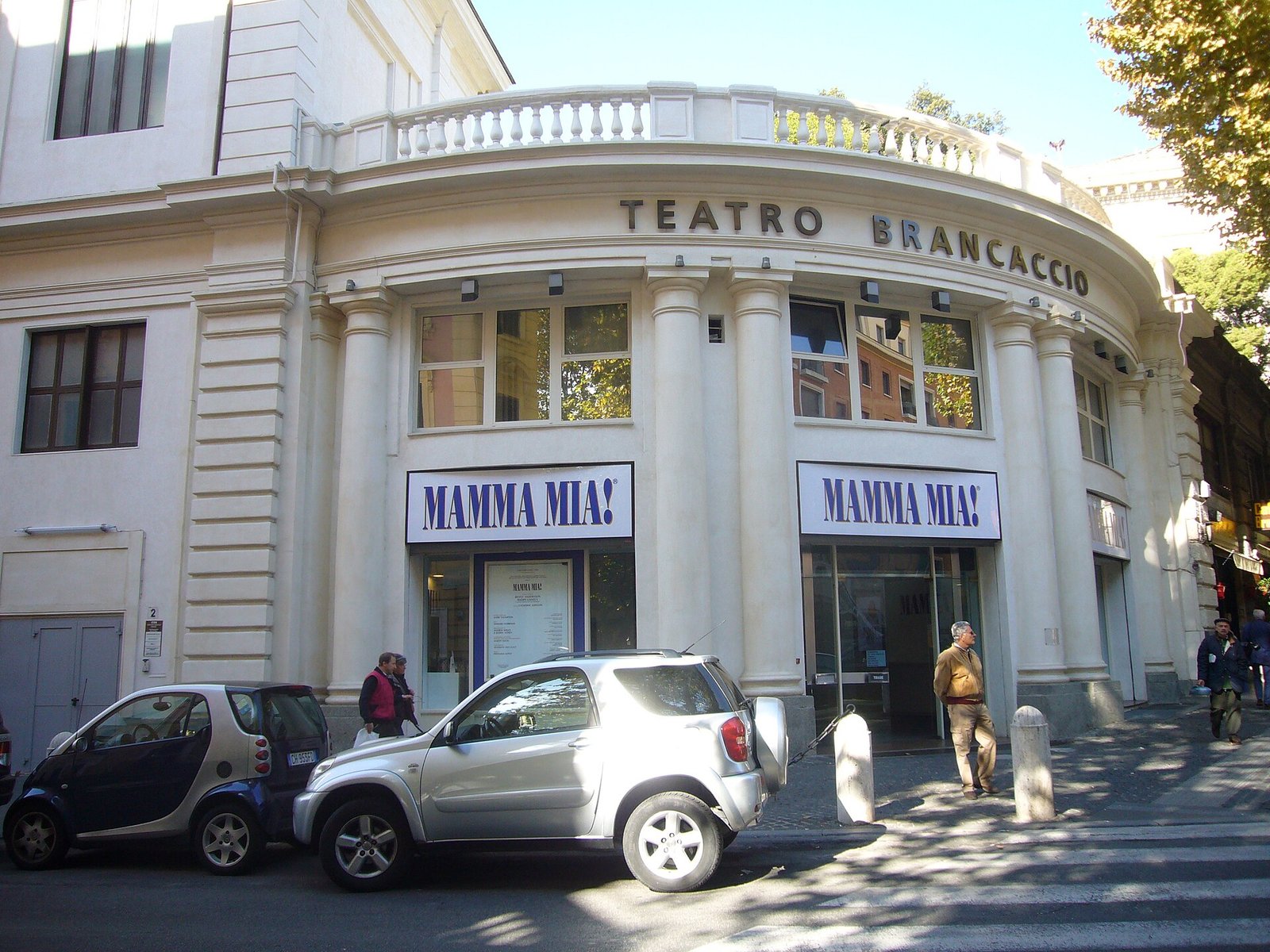
Fuori di tela, the new comedy show by Filippo Caccamo, comes to Teatro Brancaccio, at Via Merulana 244 (00185 Rome), on Thursday, February 4, 2027 at 21:00, for one night only. The theater is reached by Metro Line A, Vittorio Emanuele stop, a few minutes' walk away, or by the buses that run along Via Merulana, stops Merulana/Brancaccio and Merulana/Mecenate. The price list published by the theater has 43 euros for Poltronissima, 39 euros for Poltrona, 34 euros for first balcony A and 29 euros for second balcony A. Tickets are bought on the official Teatro Brancaccio website, with the purchase button on the show page that links to the presale network authorized by the organizer, or at the box office on Via Merulana, open Tuesday to Saturday from 16:00 to 19:00.
Language: performed in Italian. No English version or English surtitles are announced.
Fuori di tela at the Brancaccio: date, time and prices
Fuori di tela by Filippo Caccamo is scheduled at Teatro Brancaccio in Rome on Thursday, February 4, 2027 at 21:00, on a single date, with tickets from 29 to 43 euros.
One night only
The theater's calendar lists a single performance, on Thursday evening. The Brancaccio places the show in its 2026/2027 season under the labels Comedy and Content Creator: two words that sum up the comedian's path well, born on social media and arrived in the big theaters.
Prices
The price list published by the theater gives 43 euros for Poltronissima, 39 euros for Poltrona, 34 euros for first balcony A and 29 euros for second balcony A. The booking system also shows other sections, from Poltronissima Gold to the B tiers of the balconies, with no price in the list. For those, check at the time of purchase.
Where to buy
The show page on the Teatro Brancaccio website has a purchase button linked to the presale network authorized by the organizer. Alternatively, you can buy at the box office at Via Merulana 244, open Tuesday to Saturday from 16:00 to 19:00. It is closed on Monday, and on Sunday it opens only during show hours. For assistance the theater lists the box office email address and an online help page.
A Thursday evening
Thursday is a convenient evening for people who work downtown and want to start the weekend early. If you teach, and Caccamo has a very loyal audience among teachers, you know that Friday morning means back to the classroom, so plan your return home before going out.
Fuori di tela: what you will see
Fuori di tela is presented by Teatro Brancaccio as a completely new show, an original and unpublished project by Filippo Caccamo, which starts from art to build a comic stage universe made of gags, dialogue, original music, characters and sets.
Art as a starting point
The theater's presentation explains that Caccamo starts from art to make the audience think almost without their noticing. In interviews given at the debut of the tour, the comedian made clear that the works and the artists, from Giotto to Caravaggio, are a narrative pretext for talking about everyday life, reread in a comic key.
The pace
The theater speaks of a tight pace made of lightning-fast gags, hilarious dialogue, surreal situations, original music, characters and surprising sets. It is a comedy show that alternates moments of pure comedy with more intimate glimpses, without losing the lightness and sincerity that mark the artist.
A mosaic
Fuori di tela, says the presentation, is a colorful and unpredictable mosaic, in which every tile, a song, a joke, a memory, a laugh, helps create a lively theatrical experience outside the usual patterns. The theater calls it a shameless confession disguised as a comedy, or maybe the other way around.
The meaning of the title
The wordplay of the title is stated in the closing of the presentation: more than a show, an invitation to let go, to laugh, to recognize yourself and to look at your own flaws as part of a unique and unrepeatable work. A canvas, off the canvas. To be "fuori di tela," as one is "fuori di testa" (out of one's mind): the painting leaves the frame and the comedian leaves the character of the teacher.
Not a lecture
Caccamo made a point of saying, speaking about the show, that he does not feel like a popularizer but a comedian. The difference matters for ticket buyers: you are not going to an art history lecture with a few jokes, but to a comic monologue that uses art as material. The comedian explained that his show is not a long video but a monologue designed for the theater.
Who Filippo Caccamo is: his biography
Filippo Caccamo, born in Sant'Angelo Lodigiano in 1993, is a comedian, actor, director and author. A former literature teacher, he turned school life into comedy, and his parodies of teachers and students earned him more than 2 million followers across Instagram, TikTok, YouTube and Facebook.
His Lodi origins
Born in Sant'Angelo Lodigiano and raised in Lodi, Caccamo holds degrees in Cultural Heritage Studies and in Art History and Criticism. It is precisely this training, long in the background of his comedy, that becomes the heart of Fuori di tela.
School
Before full-time comedy there was school, where he taught literature. From the teachers' lounge came the characters that made him famous: the endless faculty meetings, the electronic gradebook, the anxiety of competitive exams, school bureaucracy. Many Italian teachers recognize themselves in those videos, and write to him the way you write to a colleague.
From the web to the stage
The official website counts five theater shows and as many tours, from Mai una laurea to Fuori di tela. The first told the world of university students, the following ones that of teachers. The latest brings his field of study to the stage, art history.
Television, film and books
Besides theater, Caccamo has worked on television with Zelig On, Le Iene and Comedy Central, has done film and has published two novels with Mondadori. The official website presents him as one of the most followed comedians in Italy, with a recognizable comedy that starts from everyday life and makes whole generations laugh.
The Fuori di tela tour
Fuori di tela debuted on November 7, 2025 at Teatro Verdi in Montecatini Terme and in its first season stopped in Milan, Naples, Turin, Bologna and many other cities. In Rome, in December 2025, it played at Teatro Olimpico. The tour continues in the 2026/2027 season, and the Brancaccio date is the new Roman chance.
Caccamo and art history: why it works in the theater
Art history, Caccamo observed while presenting the show, is often explained in a very institutional way, far from the listener. His solution is to look for as many meeting points as possible between the works and people's lives.
A comic school trip
In the show the comedian leads the audience as if on a school trip, with works of art as the pretext. It is the situation every student remembers: the museum trip, the teacher explaining, the class getting distracted. Caccamo flips it, and gets laughs exactly where school was boring.
From 90 seconds to 90 minutes
The challenge, the comedian explained, is to convince people who follow him online to go from the 90 seconds of a video to 90 minutes live. That is why the show is built as a comic monologue with music, characters and sets, and not as a collection of videos.
Art in Rome
For a show that talks about Giotto and Caravaggio, Rome is a natural stage. If you want to extend the evening with a museum, a few steps from the Brancaccio you will find Palazzo Merulana, a venue for art exhibitions. In the rest of the city there are the Caravaggios described in our page on Caravaggio in Rome, starting with the Contarelli Chapel.
A curiosity about Fuori di tela by Filippo Caccamo at Teatro Brancaccio, February 4, 2027
The most interesting curiosity is that Fuori di tela is the show in which Filippo Caccamo stages his own degree. The comedian who made Italy laugh talking about substitute teachers, competitive exams and faculty meetings holds degrees in Cultural Heritage Studies and in Art History and Criticism: a training that stayed in the background for years and now becomes the main theme of his work.
The second curiosity concerns the title of the first show, Mai una laurea, which told the world of university students. From the title of the first to that of the latest there is a whole journey: from the student who never finishes university to the art history graduate who brings Giotto and Caravaggio on stage.
The third curiosity is in the distinction that Caccamo wanted to make publicly. In an era of teachers who have become famous online as popularizers, he said he admires colleagues like Vincenzo Schettini, author of La Fisica che ci piace, and Barbascura X, but that he feels like a comedian. For him art is not the goal of the evening but a pretext for making people laugh: a statement of intent that helps in understanding the show.
Teatro Brancaccio, the hall on Via Merulana
Teatro Brancaccio, at Via Merulana 244, is one of the largest halls in Rome. In its 1937 configuration it has two foyers, a wide orchestra section and two balcony levels, for about 2,000 seats at the time.
The hall
The orchestra is divided into the Poltronissima and Poltrona sections, with tiers A and B and with the Gold tier that appears in the booking system. Above are the first balcony, divided into A and B, and the second balcony. The balconies are reached on foot, without an elevator.
A big hall for a monologue
A comic monologue in a hall of this size works if the voice reaches the back clearly and if the performer knows how to fill the stage. Caccamo, who has already played very large theaters on the tour, builds Fuori di tela with music, characters and sets for exactly this reason. For those who want to catch the facial expressions, the orchestra remains the best place.
Via Merulana complex
The main hall is part of a complex that includes the Brancaccino, a theater of about 100 seats, a training area and a terrace on Via Merulana. The full page about the venue is on our page dedicated to Teatro Brancaccio.
One thing nobody tells you about Fuori di tela by Filippo Caccamo at Teatro Brancaccio, February 4, 2027
What is not said is that Fuori di tela is not the show about school. If you know Caccamo only from the videos about teachers and faculty meetings, you expect to find those characters again. The new show instead changes subject and brings art history to the stage. The style stays the same, recognizable, but the material is different. Those who arrive with the right expectations have more fun.
The second thing concerns the audience. Caccamo has a very strong following among teachers, and a Brancaccio hall full of teachers on a February evening is a show within the show: the laughter starts at the points where people who live school recognize themselves. For those coming from outside that world, some jokes land a second late, but they land.
Third, a practical point: the Brancaccio rules provide that children under 14 enter only with an adult and that no one enters once the show has started. With a 21:00 start on a Thursday, a few minutes' delay in Esquilino traffic can cost you your entry.
How to get to Teatro Brancaccio
Teatro Brancaccio is at Via Merulana 244, in the Esquilino district, less than a kilometer from Termini station and a few steps from the Vittorio Emanuele stop of metro line A.
Metro
The nearest stop is Vittorio Emanuele, on Line A. You exit onto Piazza Vittorio Emanuele II and reach Via Merulana in a few minutes. Alternatively there is the Cavour stop on Line B, with a longer walk.
Bus
The theater lists three stops. On Via Merulana, at the Merulana/Brancaccio and Merulana/Mecenate stops, lines 16, 75, 714, 717 and C3 pass. At the Labicana/Merulana stop, lines 3, 53, 75, 85, 87, 186, 571, 810, C3 and the night line N10 pass, useful for the trip home at the end of the evening.
Taxi
The taxi stands listed by the theater are in Largo Brancaccio, in Piazza Vittorio Emanuele II at number 113, at Via Principe Amedeo 138, at Via Giolitti 6 and in Via Venosta. At the end of the show the stand in Largo Brancaccio empties quickly: it is better to move toward Piazza Vittorio or book the ride.
Car
The theater lists no partner car parks, and evening parking in the Esquilino is difficult. Those coming from outside Rome do better to leave the car near a metro station and continue by metro, checking the schedules first on the Atac route planner.
The advice I give you for visiting Fuori di tela by Filippo Caccamo at Teatro Brancaccio, February 4, 2027
My advice is to choose the orchestra, with the 39 euro Poltrona as the best compromise. Fuori di tela is a comic monologue with music and characters. The laughter comes through the voice, but also through the comedian's face, the timing of the pauses, the glances at the audience. From the second balcony, at 29 euros, you save money and see the whole stage, but you lose part of the facial expression.
The second piece of advice is for teachers: go with your colleagues. Caccamo became famous by describing the teachers' lounge, and seeing his new show with people who share the same school days multiplies the fun. The next day, in the teachers' lounge, there will be plenty to talk about.
Third piece of advice: review a few paintings. You do not need any preparation, because the show is not a lecture. But knowing who Giotto and Caravaggio are, and remembering a couple of their most famous works, makes it easier to get the jokes. Rome, after all, offers the original Caravaggios a few kilometers from the theater. In our view, a visit the afternoon before the show is the best way to prepare for the evening.
Another well-known fact, yet rarely mentioned
It is well known that Filippo Caccamo is the comedian of teachers, the one behind the videos about the electronic gradebook and faculty meetings that circulate in the chats of teachers all over Italy. It is mentioned much less that his theater path began by describing university students, with Mai una laurea, and that his résumé also includes television, with Zelig On, Le Iene and Comedy Central, film and two novels published by Mondadori.
A second little-cited fact concerns the move from the web to the theater. Many content creators bring a long version of their videos to the stage. Caccamo has said clearly that he wants to do the opposite, a comic monologue designed for the theater, with its own narrative arc. The presence of original music and sets in the presentation of Fuori di tela should be read that way: it is theater, not a video projected on a big screen.
Finally, a fact about the hall. Teatro Brancaccio was born as a variety theater and for 15 years hosted the Fondazione dell'Opera di Roma: comedy and music are part of its genetic code, and a comedian who sings and tells stories feels at home.
Brancaccio house rules: what to know
The rules of Teatro Brancaccio apply to every evening: arrive well ahead of time, no entry once the show has started, no photos or filming, no food in the hall.
Bags, umbrellas and coat check
The theater has a coat check and a bar. Umbrellas are not allowed in the hall and must be left at the coat check, useful to know on a February evening. Plastic bottles over half a liter, glass containers, motorcycle helmets, professional cameras, tripods and selfie sticks are not allowed.
Seats and dress
You take only your assigned seat. The theater asks for dress suited to the decorum of the hall, with no real dress code: for a comedy evening, neat clothes are enough.
Phones
At the Brancaccio photos and filming are forbidden. For a comedian born on social media, the temptation to film a few jokes is strong, but the hall's rule applies to everyone, and the material of a touring show is the artist's capital.
The right photo to take at Fuori di tela by Filippo Caccamo at Teatro Brancaccio, February 4, 2027
No photos during the show: the Brancaccio rules forbid photographing and filming, even with a cell phone. The right photo is taken before and after.
The first is the theater's facade on Via Merulana, in the evening, with the show's title lit up. The advice is to cross the street and shoot from the opposite sidewalk, so that both the front of the theater and a stretch of the street are in the frame. In early February it gets dark early: the hour before the show, with the audience arriving, is the best moment.
The second photo ties in with the theme. Fuori di tela is about paintings that leave the frame: a photo with a real or drawn frame, standing in front of the theater, is the most ironic way to remember the evening. If you want a real painting, you can spend the afternoon at Palazzo Merulana, a few steps from the theater, and then walk to the hall.
The third photo is taken in the neighborhood: the Porta Alchemica in Piazza Vittorio, a few minutes from the theater, is one of the most photographed corners of the Esquilino, and in the evening it has a mysterious air.
Around the Brancaccio: Esquilino, Monti and Via Merulana
Teatro Brancaccio is on Via Merulana, between the Basilica of Santa Maria Maggiore and the Basilica of San Giovanni in Laterano, in the Esquilino district.
Two basilicas and an ancient auditorium
Via Merulana runs between Santa Maria Maggiore and the Basilica of San Giovanni in Laterano. Along the same street is Palazzo Merulana and, a little further on, the Auditorium of Maecenas, the hall from Roman times that bears the name of the patron of Horace and Virgil.
Piazza Vittorio
Toward the north, beyond the metro stop, is Piazza Vittorio Emanuele II, the heart of the multiethnic Esquilino. The Nuovo Mercato Esquilino is its mirror, but it is a daytime market.
The Monti district
To the west the street descends into the Monti district, with its downhill streets toward the Forums. To discover it before the show, there is our page on the Monti district. In February it is better to stroll in the afternoon, while there is still light.
Some important events that took place here in history
The history of Teatro Brancaccio begins in January 1916, when the hall was inaugurated under the name Teatro Morgana. It stands right next to the gardens of the Field-Brancaccio palace, the noble family that takes its name from Isabella Field, married to Prince Brancaccio: the link with the neighboring Palazzo Brancaccio is physical even before it is nominal.
The decisive step is 1937, when the hall was inaugurated in its present configuration, with two foyers, a wide orchestra level and two balconies for about 2,000 seats, and took the name Teatro Brancaccio. In 1985 it became the seat of the Fondazione dell'Opera di Roma, where it stayed until 2000: for 15 years Via Merulana hosted the capital's opera and ballet.
After the Opera, the Comune di Roma took over, entrusting the direction to Gigi Proietti until 2007. This was followed by the management of Maurizio Costanzo until 2010 and that of Stage Entertainment Italia until 2012. Since September 2012 the artistic direction has been in the hands of Alessandro Longobardi, who turned the theater into a cultural hub with the Brancaccino, the training area, the terrace on Via Merulana and the academies. In recent years the program has also opened its doors to content creators who came from the web. Caccamo is one of them, in a hall that has always hosted the popular phenomena of its time.
Who has played Fuori di tela by Filippo Caccamo at Teatro Brancaccio, February 4, 2027
Some of the biggest names in Italian and international entertainment have passed through the Brancaccio stage. The theater remembers several: Totò, Anna Magnani, Aldo Fabrizi and Gigi Proietti among the actors, and Fabrizio De André, Louis Armstrong and Jimi Hendrix among the musicians.
For a comedian, the list carries particular weight. Totò and Aldo Fabrizi are the masters of popular Roman and Italian comedy. Gigi Proietti, who was also the Brancaccio's director until 2007, brought the monologue, the song and the character to the same stage, the very ingredients that Fuori di tela mixes. Caccamo comes from another road, the internet, but the underlying formula, one performer making a huge hall laugh with words and music, is the same.
In the same season the Brancaccio hosts other comedians and artists who came from the web or television, such as Paolo Ruffini with Il babysitter and Benji e Fede with Sempre in due. On February 4, 2027 it is the turn of a former literature teacher with a degree in art history, with Giotto and Caravaggio as stage companions.
Accessibility at Teatro Brancaccio
Teatro Brancaccio declares that it has no architectural barriers for access to the orchestra level: there is a ramp, an area reserved for wheelchairs and an accessible restroom on the ground floor, reachable from the foyer.
Wheelchairs and reduced mobility
The theater provides, while available, orchestra seats for people in wheelchairs and with walking difficulties. The balconies cannot be reached in a wheelchair, because there are no elevators. Seats are booked by writing to the box office with the appropriate form and the required documentation.
Visual and hearing disabilities
For spectators with visual and hearing disabilities the theater reserves, on request, orchestra seats while they last. Anyone with a service dog can ask the box office to enter the hall with the animal.
Fuori di tela with teenagers
Fuori di tela is an evening comedy show suitable for a wide audience, from high schoolers to adults. The theater states no age limits.
Students
Caccamo is also hugely popular with students, who recognize their teachers in his videos. For a high schooler, seeing live the comedian from his favorite videos, and discovering him at grips with art history, can be an unexpected way to get closer to the subject.
The rules
The Brancaccio rules provide that children under 14 enter only with an adult. With the 21:00 start on a Thursday, the return home is late and the next day there is school, so it is better to plan it beforehand.
Where to eat before the show
Around the Brancaccio there are three options: the neighborhood bars and venues on Via Merulana, suited to a quick meal. The multiethnic Esquilino around Piazza Vittorio, with cuisines of many countries and modest prices. And the Monti district, a quarter of an hour on foot away, with trattorias, osterias and wine bars.
Before or after
With a 21:00 start and arrival required well in advance, dinner should be moved up to around 19:00. After the show Monti stays lively even on Thursday, for those who want a drink or a late dinner.
With colleagues
If you come with a group of colleagues, book the table ahead: on Thursday evening the places in Monti fill up early.
February in Rome: the Brancaccio week
At the beginning of February Roman theaters are in the middle of the season, and the Brancaccio lines up, in the same week, very different evenings.
The weather
February evenings are cold and often damp: a coat and an umbrella in your bag are essential, and the umbrella has to be left at the theater's coat check.
The week on Via Merulana
After Fuori di tela, the Brancaccio hosts La mente in scena by Stefania Andreoli on Friday, February 5, PFM with On the Road Again on Saturday, February 6, and the show by Roby, Jenny and Lorenzist on Sunday, February 7. The season also includes musicals such as Mrs Doubtfire. The full program is on the official website of Teatro Brancaccio.
Frequently asked questions about Fuori di tela at the Brancaccio
When does Fuori di tela by Filippo Caccamo play in Rome?
Fuori di tela by Filippo Caccamo plays at Teatro Brancaccio in Rome, at Via Merulana 244, on Thursday, February 4, 2027 at 21:00, on a single date. The theater's official calendar does not list other Roman performances in the 2026/2027 season.
How much do Fuori di tela tickets cost?
Tickets for Fuori di tela at Teatro Brancaccio cost 43 euros for Poltronissima, 39 euros for Poltrona, 34 euros for first balcony A and 29 euros for second balcony A, according to the theater's price list. They are bought on the Brancaccio website, which links to the authorized network, or at the box office.
What is Fuori di tela about?
Fuori di tela is the comedy show in which Filippo Caccamo starts from art, from Giotto to Caravaggio, to talk about everyday life. Teatro Brancaccio describes it as a mosaic of gags, dialogue, original music, characters and sets, with more intimate moments.
Who is Filippo Caccamo?
Filippo Caccamo is a comedian, actor, director and author born in Sant'Angelo Lodigiano in 1993. A former literature teacher with a degree in art history, he became famous with parodies of teachers and students, followed by more than 2 million people, and has taken five shows on tour.
Is Fuori di tela about school?
Fuori di tela by Filippo Caccamo is not a show about school: the theme is art history, used as a comic pretext. The style stays that of the videos about teachers, but the comedian has made clear that he is a comedian and not a popularizer.
How do I get to Teatro Brancaccio?
Teatro Brancaccio, at Via Merulana 244, is reached by metro line A, Vittorio Emanuele stop, a few minutes on foot. Lines 16, 75, 714, 717 and C3 run along Via Merulana. At the Labicana/Merulana stop the night line N10 also runs, useful for the return.
Can you take photos during the show?
At Teatro Brancaccio you cannot take photos or film during the show, not even with a cell phone. Photos are taken outside, in front of the facade on Via Merulana, or in the foyer before the start.
The final advice on Fuori di tela
One night only, a Thursday in February, to see in a large Roman theater the comedian of teachers grappling with his real subject, art history. My advice is to choose the orchestra so as not to miss the facial expressions, to go with colleagues if you teach or with a teenage child if you follow him online, and to spend the afternoon in front of a real painting, maybe a Caravaggio. In the evening, at the Brancaccio, you will laugh at that same canvas seen from the outside.
Article written by the editorial team of Tour Leader Pro, contact them for Private/Corporate/V.I.P. Tours and Experiences.
Planning a trip to Rome? The English guides to visiting the city are on ItalyPlanner.com.