Frida Opera Musical, Viva la Vida at Teatro Brancaccio in Rome, March 17 to 21, 2027
https://www.estateromana.com/en/rome/trip-planner/frida-opera-musical-viva-la-vida-at-teatro-brancaccio-in-rome-march-17-to-21-202/
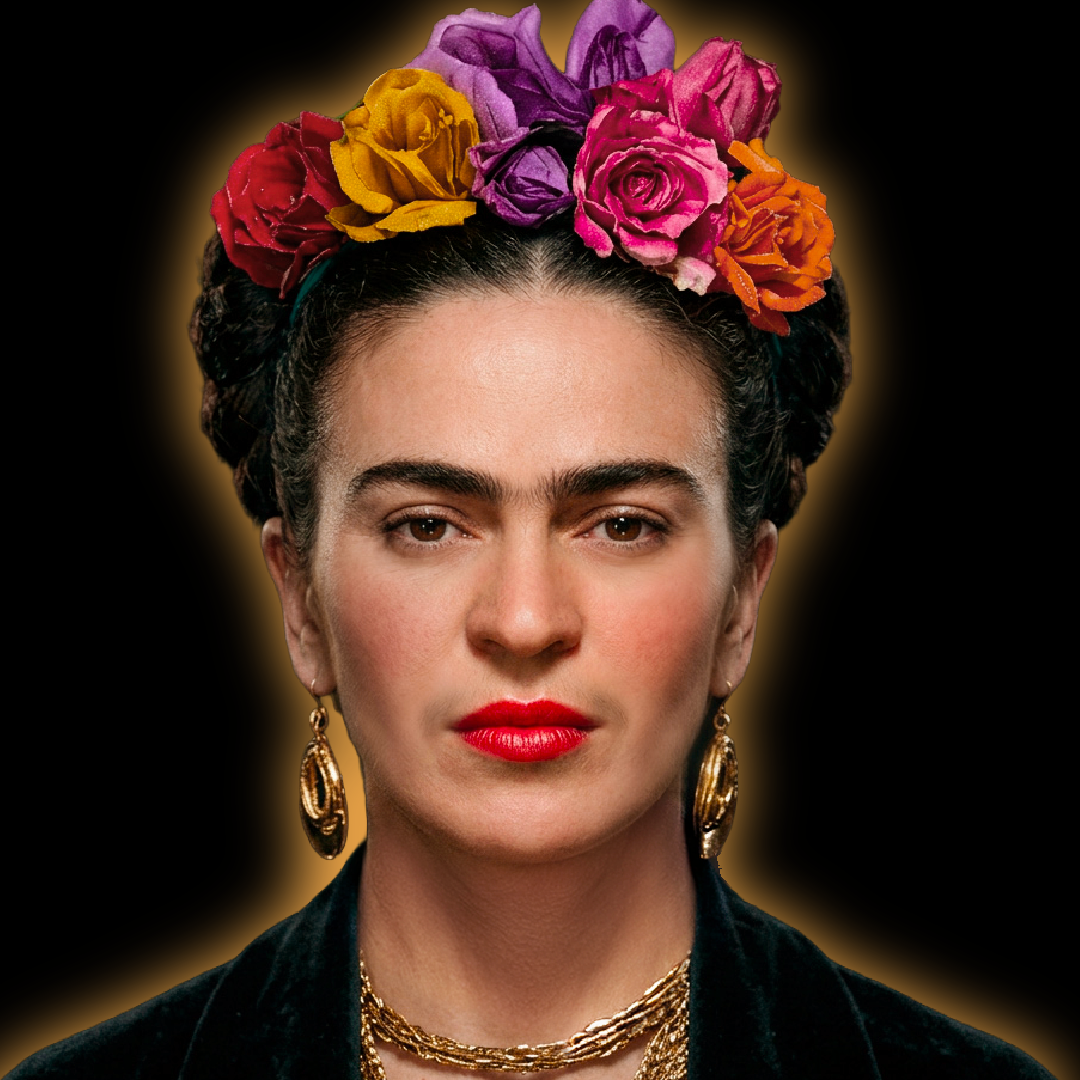
Frida Opera Musical, the show about the life of Frida Kahlo written by Andrea Ortis and Gianmario Pagano with music and lyrics by Vincenzo Incenzo, plays at Teatro Brancaccio in Rome, Via Merulana 244 (00185 Rome), from March 17 to 21, 2027. The performances are Wednesday, March 17, Thursday, March 18 and Friday, March 19 at 20:30, Saturday, March 20 at 16:00 and 20:30, Sunday, March 21 at 16:00. On stage are Federica De Riggi, Andrea Ortis, who also directs, and Floriana Monici. The production is by Mic International Company. You get there by Metro Line A, stop Vittorio Emanuele, by Metro Line B, stop Cavour, or by buses 16, 75, 714, 717 and C3, which stop on Via Merulana at the theater. The prices published by the theater range from €29 (Poltrona B) to €65 (Poltronissima Gold). Tickets are bought at the box office on Via Merulana and on the authorized ticketing network listed on the official website of Teatro Brancaccio.
Language: opera sung in its original language; no English surtitles are announced, so check with the theater.
Art, revolution, passion: that's the subtitle the Brancaccio gives the show, next to the motto Viva la Vida. Let's say it right away: it's one of the Italian musicals best suited to an evening when you want to leave with something to tell: a great figure of the 20th century, an original score, a theater built for big shows.
Frida Opera Musical at the Brancaccio: dates, times and prices
Frida Opera Musical stays at the Brancaccio for six performances, from Wednesday, March 17 to Sunday, March 21, 2027, with two matinees on the weekend.
The performance calendar
The theater publishes these times: Wednesday, March 17 at 20:30, Thursday the 18th at 20:30, Friday the 19th at 20:30, Saturday the 20th at 16:00 and 20:30, Sunday the 21st at 16:00. If you're going with children you have two matinees available. If you work, you have three weeknight evenings and one on Saturday.
Prices by section
The price list published by the Brancaccio has Poltronissima Gold at €65, Poltronissima A at €55, Poltronissima B at €45, Poltrona A at €39 and Poltrona B at €29, full prices. The early bird promotion with a 30 percent discount was valid until June 30, 2026.
Where to buy tickets
The official channels are the box office at Via Merulana 244, the theater's website, which leads to the authorized ticketing network, the official call center and the authorized points of sale. The theater warns that tickets bought from unauthorized channels may not grant access to the hall.
What Frida Opera Musical is
Frida Opera Musical tells the life and works of Frida Kahlo, the Mexican artist, between art, revolution and passion. After the 2025 launch tour, Mic International Company brings it back on stage, and Rome hosts it at the Brancaccio.
Frida's life at the center
According to the theater's presentation, at the center of everything is the life of Frida Kahlo: the tormented love with Diego Rivera, the strength of her wounded body, resistance and the will to live, the fight for identity and freedom. It's the portrait of a painter who knew how to turn pain into color and fragility into creative power.
La Catrina, death that dances
Accompanying Frida's journey is La Catrina, a figure of Mexican popular imagination, an icon of death and life, of satire and beauty. She embodies the spirit of deep Mexico: a colorful, cheerful and irreverent Mexico, where life and death dance together and music wraps everything in a continuous song to life. The dramaturgical choice is intelligent: instead of a neutral narrator, a guide who belongs to the protagonist's culture.
Post-revolutionary Mexico
The spectator is taken into post-revolutionary Mexico, among ideological ferment, mural art, European influences and key figures such as Zapata, Trotsky, Breton and Tina Modotti. The presentation calls it a choral journey in an era marked by the desire for change, in which Frida lives with brazen authenticity.
Frida and Diego
The relationship between Frida and Diego Rivera is the core of the narrative: an immeasurable, radical, imperfect love that becomes alliance and clash, passion and ideology, and that goes through infidelity, success and personal and collective revolutions. Anyone who knows the painter's biography knows there's no way to tell it without him.
Musical or opera?
The title holds the two words together, and not out of affectation. The production describes a show that moves between the power of musical theater and the visual force of the painterly world, with a video design and a lighting design meant to bring the colors of the paintings on stage. It's the opera musical model that Ortis and Pagano successfully tried out on the Divine Comedy, applied to a 20th-century biography.
Frida Opera Musical and Mexico: the Casa Azul and the Anahuacalli
Frida Opera Musical was born with the exclusive collaboration of the Museo Frida Kahlo Casa Azul and the Museo Diego Rivera Anahuacalli in Mexico City, the two museums devoted to the protagonists of the story.
The Casa Azul
The Casa Azul is the house in Coyoacán where Frida Kahlo was born, and where her ashes are kept today: it is the home of the Museo Frida Kahlo. That an Italian show obtained the collaboration of that museum is an element that sets this production apart from the many tributes to the painter.
The patronages
The show has the patronage of the Embassy of Mexico in Italy and the Mexican Cultural Institute in Italy, named after Tina Modotti. The choice of name is not neutral: Modotti, a photographer and Communist activist in 1920s Mexico and a friend of Frida's, is one of the figures who appear in the story.
Who Frida Kahlo was
Magdalena Carmen Frida Kahlo y Calderón was born on July 6, 1907 in Coyoacán, then a village on the outskirts of Mexico City, and died in the same city on July 13, 1954. She is one of the best-known painters of the 20th century.
Family and youth
She was the daughter of Guillermo Kahlo, a German photographer born in Pforzheim who immigrated to Mexico in 1891, and of Matilde Calderón y González, a Mexican of Spanish and Amerindian origin. She liked to say she was born in 1910, to feel like a child of the Mexican revolution. In 1922, with the idea of becoming a doctor, she enrolled at the Escuela Nacional Preparatoria, where she began painting her classmates' portraits for fun.
The 1925 accident
On September 17, 1925, at 18, the bus she was taking home collided with a streetcar. The consequences were very serious: her spine broken in three places, multiple fractures, 30 operations in the following years. Confined to bed in a plaster corset, she began to paint. Her parents gave her a four-poster bed with a mirror on the ceiling: this is how the long series of self-portraits was born.
Diego Rivera
She decided to show her paintings to Diego Rivera, the best-known painter in Mexico at the time, who was struck by her style and introduced her to the political and cultural scene. In 1928 she joined the Mexican Communist Party, in 1929 she married Rivera. The years in the United States followed, where Rivera worked on the murals of Rockefeller Center and Chicago, the return to Mexico, the two separate houses connected by a bridge, the divorce in 1939 and a second marriage in San Francisco in 1940.
Breton, Paris, surrealism
In 1938 André Breton saw her paintings and proposed an exhibition in Paris, where Frida went in 1939. Breton considered her a surrealist, she rejected the label: she said she painted her own reality, not dreams. Three major exhibitions were devoted to her, in New York in 1938, in Paris in 1939 and in Mexico City in 1953, a year before her death.
Viva la vida
The show's motto is the title of one of her last paintings: Viva la vida, painted around 1954 and kept at the Museo Frida Kahlo. In August 1953 her right leg had been amputated. She died on July 13, 1954, at 47, and her ashes are kept in the Casa Azul. The musical uses those words as the title and as a key to interpretation: a declaration of love for life, even when it hurts.
A figure of our times
Frida Kahlo was the first Latin American woman portrayed on a United States postage stamp, in 2001. Her life has been told in cinema, by Julie Taymor's 2002 film Frida with Salma Hayek, and in dozens of documentaries. In Italy, songs have been dedicated to her by Brunori Sas and by Marco Mengoni with Adriano Celentano. Ortis and Pagano's musical joins this popularity, with a language of its own.
The authors: Andrea Ortis, Gianmario Pagano and Vincenzo Incenzo
Frida Opera Musical is written by Andrea Ortis and Gianmario Pagano, with music and lyrics by Vincenzo Incenzo and direction by Ortis himself: a team that comes from the Divina Commedia Opera Musical.
Andrea Ortis, actor, author, director
Andrea Ortis was born in San Vito al Tagliamento on August 16, 1972. Since 1998 he has worked across street art, experimental theater and research theater. The general public knows him for La Divina Commedia Opera Musical, written with Gianmario Pagano and with music by Marco Frisina, of which since 2017/2018 he has been director and performer in the role of Virgil. The show received the gold medal of the Società Dante Alighieri and in 2021 the recognition of artistic product of excellence from Senato e Cultura. Between April and September 2025 it toured 15 cities in China, including Beijing, Shanghai and Hong Kong.
Ortis's other works
Ortis wrote, directed and performed Il Vajont di tutti, riflessi di speranza, Novelle per un anno da Pirandello, Van Gogh Café, Vivaldi, la bella stagione with a live baroque orchestra, Dante in Musica. He won the Premio Persefone for best musical direction in 2019 and 2020. At the matinees of his shows he meets school groups with the cast: for him theater can stand alongside school.
Gianmario Pagano
Gianmario Pagano is the co-author of the texts, with Ortis, of both the Divina Commedia Opera Musical and Frida. With him Ortis also wrote the 2023 docufilm Francesco Longano, l'arte del pensare.
Vincenzo Incenzo, music and lyrics
Vincenzo Incenzo was born in Rome on January 24, 1965: singer-songwriter, lyricist, composer, director and theater author. He studied piano at the Conservatorio di Santa Cecilia and graduated from the DAMS in Bologna. He made his debut at the Folkstudio in Rome, opening concerts for Francesco De Gregori and Francesco Guccini. As an author he has worked with Renato Zero, in a partnership lasting 20 years, with Michele Zarrillo, Lucio Dalla, the PFM, Sergio Endrigo, Antonello Venditti, Patty Pravo, Ornella Vanoni, Massimo Ranieri and many others.
Incenzo and musical theater
For the theater Incenzo wrote the libretto and lyrics of Dracula Opera Rock with the PFM, the Italian version of Romeo e Giulietta, ama e cambia il mondo, and the Italian version of Cole Porter's songs for Vacanze romane, recognized by the Cole Porter Society. He wrote and directed Diana e Lady D and Rosso Napoletano with Serena Autieri, and with Renato Zero the libretto of the symphonic opera Zerovskij. He has won the Premio Lunezia three times and the Premio SIAE. He is a Roman coming home with a score about Mexico.
The cast and creative team of Frida Opera Musical
The Brancaccio lists three names on its bill: Federica De Riggi, Andrea Ortis and Floriana Monici, with an ensemble of 16 performers.
The ensemble
The company includes Antonello Angiolillo, Valeria Belleudi, Leonardo Di Minno, Giulia Maffei, Debora Boccuni, Jacopo Siccardi, Antonio Sorrentino, Arianna Talè, Omar Barole, Rebecca Erroi, Matteo Ammoscato, Lara Ferrari, Enrico Cava, Gioele Mazza, Leonardo Mazzarotto and Samuel Perinotto.
Choreography, costumes, sets
The choreography is by Marco Bebbu, the costumes by Erika Carretta, the sets by Gabriele Moreschi. The lighting design is by Valerio Tiberi and Virginio Levrio, the video design by Virginio Levrio: in a show that wants to bring painting on stage, the visual side carries particular weight.
The production
The production is by Mic International Company, with Lara Carissimi as executive producer, Luisa Iandolo as company manager and Federica Zangari as production assistant.
A curiosity about Frida Opera Musical, Viva la Vida at Teatro Brancaccio in Rome, March 17 to 21, 2027
The curiosity is that Frida Opera Musical returns to the Brancaccio. In the 2025/2026 season the bill of Via Merulana theater already announced Frida Opera Musical, with Federica Butera, Drusilla Foer and Andrea Ortis. The return a year later, in the same hall, with a partly renewed company, is the clearest sign that the show has found its Roman audience. Anyone who saw it then has a good reason to come back: finding the same structure with different performers is one of the pleasures of musical theater.
The second curiosity is about the title. Viva la vida is not an invention of advertisers: it is the title of one of Frida Kahlo's last works, painted around 1954 and kept today at the Museo Frida Kahlo, the Casa Azul museum that collaborates with the production. The show takes its name from a painting held by its own partner.
The third is Roman. Vincenzo Incenzo, who signs the music and lyrics, was born in Rome, studied at the Conservatorio di Santa Cecilia and grew up artistically at the Folkstudio in Rome. And he wrote for years for Michele Zarrillo and Patty Pravo, two artists the Brancaccio hosted in concert in the 2025/2026 season. For him, Via Merulana theater is a bit of a family theater.
Teatro Brancaccio: the hall and how it is laid out
Teatro Brancaccio, at Via Merulana 244, has had its current configuration since 1937: two foyers, a large orchestra and two balconies, for about 2,000 seats at the time. It is one of the largest halls in Rome for musicals.
Orchestra and balconies
The orchestra is divided into the Poltronissima and Poltrona sections, in bands A and B, plus the Gold and Gold Vip bands. Above are the first and second balconies. For Frida Opera Musical the published prices cover the orchestra sections, from €29 to €65.
Where to sit for Frida
In our view, for a show that relies on video projections, colors and ensemble choreography, sitting too close under the stage means losing the overall design. Poltronissima A or B, in the central rows, is the best compromise between closeness to the faces and a view of the whole. Poltrona A, at €39, is the sensible choice for those who want to spend less without giving up too much.
A cultural hub
The Brancaccio is the main hall of a complex that includes the Brancaccino, a theater of about a hundred seats, a training area and a terrace on Via Merulana. It is home to the production center Viola Produzioni and hosts the BMA Brancaccio Musical Academy: anyone going to see a musical here enters a building where the musical is taught every day.
Something nobody tells you about Frida Opera Musical, Viva la Vida at Teatro Brancaccio in Rome, March 17 to 21, 2027
What nobody says is written in the theater's rules, and almost nobody reads them: the Brancaccio asks spectators to show up at least an hour before the start. For the 20:30 evening performances that means being on Via Merulana at 19:30. For the 16:00 matinees, at 15:00. With a hall this big, checks on bags and backpacks and a coat check where umbrellas must also be left, the line at the entrance on full nights is real.
The rules are strict with latecomers: entry to the hall once the show has started is forbidden, and latecomers wait in the foyer until the first suitable intermission. In a biographical musical this means missing the childhood, the accident, the meeting with Diego: the part without which the rest loses meaning.
Second thing left unsaid: backpacks. The rules forbid bringing into the hall bulky containers over 17 liters not authorized by the staff. Small bag, folding umbrella, coat on your lap. Third: tickets are issued in the buyer's name, after a registration, and cannot be transferred without an agreement with the theater. Anyone buying for a group should know this beforehand.
How to get to Teatro Brancaccio for Frida
Teatro Brancaccio is at Via Merulana 244, in the Esquiline Hill neighborhood, less than a kilometer from Termini station and a few steps from the Vittorio Emanuele stop on Metro Line A.
By metro
Metro Line A, stop Vittorio Emanuele, is the closest: you come out on Piazza Vittorio Emanuele II and reach Via Merulana in a few minutes. Metro Lines B and B1, stop Cavour, are the alternative for those arriving from the Monti or Colosseum side.
By bus
On Via Merulana, at the Merulana/Brancaccio and Merulana/Mecenate stops, lines 16, 75, 714, 717 and C3 run. At the Labicana/Merulana stop run lines 3, 53, 75, 85, 87, 186, 571, 810, C3 and the night line N10, useful for getting back after the evening performance.
By taxi
The theater points to the taxi stands at Largo Brancaccio, Piazza Vittorio Emanuele II, Via Principe Amedeo, Via Giolitti and Via Venosta.
By car
The theater lists no affiliated parking, and the Esquiline Hill district at night is a hard neighborhood for parking. If you come from outside Rome you're better off leaving the car near a metro station and continuing to Vittorio Emanuele or Cavour.
My advice for visiting Frida Opera Musical, Viva la Vida at Teatro Brancaccio in Rome, March 17 to 21, 2027
My advice is to arrive prepared on the painting, not on the plot. Many people know Frida Kahlo's life in broad strokes. What makes the difference, in a show that wants to bring the colors of her paintings on stage, is having the works in your eyes. Before leaving home look at five paintings: The Two Fridas, The Broken Column, Self-Portrait with Thorn Necklace, Frida and Diego Rivera from 1931, Viva la vida. 10 minutes is enough, and the projections and the sets will speak to you in another language.
Second piece of advice: choose the performance by the company. With kids, the Saturday or Sunday matinee at 16:00. For an evening for two, the Friday evening performance, which leaves Saturday free. Wednesday is the night of the Roman debut.
Third: respect the hour of advance the theater asks for, and use it. The Brancaccio has a bar and two foyers: the wait passes well, and you sit down without hurry. And on the way out, if it's an evening performance, don't look for a taxi at Largo Brancaccio: it empties in a few minutes. Move toward Piazza Vittorio.
Tickets for Frida Opera Musical: box office, presale, groups
Tickets for Frida Opera Musical at Teatro Brancaccio cost from €29 to €65 and are bought on the official channels listed by the theater.
The box office
The box office of Teatro Brancaccio, at Via Merulana 244, is open to the public Tuesday to Saturday from 16:00 to 19:00. On Sunday it opens at show time, if a performance is scheduled. On Monday it's closed.
Online and by phone
From the purchase button on the show page of the theater's website you reach the authorized ticketing network. A registration is required and tickets are issued in the buyer's name. The theater reminds you that resale at a marked-up price is forbidden by law.
Groups and schools
For groups, companies and agreements the Brancaccio has a dedicated Promotions Office. Anyone organizing an outing for a class or an association should start there, not from the online network. For schools, Ortis's work with school groups makes the show particularly suitable for an educational outing.
Changes and refunds
The theater's rules are clear: tickets are not exchanged and not refunded, except in case of cancellation of the event or legal provisions. The theater reserves the right to change dates, times and cast.
Another well-known fact, yet rarely cited
That the Brancaccio is the musical theater of Rome everybody knows. Less often mentioned is that for 15 years, from 1985 to 2000, this hall hosted the Fondazione dell'Opera di Roma. The stage where Frida's life is told was for a decade and a half one of the homes of opera in the capital.
For a show called an opera musical, the detail has a particular flavor. A theater that has hosted opera has a wide orchestra, two deep balconies and a stage able to take productions with many people on it: exactly what a company of about 20 performers with choreography, projections and sets needs.
And there's another fact rarely told: the Brancaccio wasn't born with this name. It was inaugurated in January 1916 as Teatro Morgana, and took its current name only in 1937. The name comes from the palace of the Field Brancaccio family, and in particular from Isabella Field, married to Prince Brancaccio. An American woman, a Roman prince, a theater on the embankment of their gardens: the Brancaccio too, like Frida's life, is a story of meetings between distant worlds.
The right photo to take at Frida Opera Musical, Viva la Vida at Teatro Brancaccio in Rome, March 17 to 21, 2027
No photos during the show: the Brancaccio's rules forbid photographing and filming the performance, even with a cell phone. The right photo is taken before and after.
The first is the theater's facade on Via Merulana with the lit Frida poster. Cross the street and shoot from the opposite sidewalk, with a wide lens: the whole front of the theater fits, and a piece of Via Merulana, one of the longest and straightest streets in the center. In mid-March, at 19:00, the light is sunset light: for a 20:30 evening performance it's the perfect moment.
The second is the hall from above, before the lights go down, with the orchestra filling up and the curtain closed. No flash, and put the phone back in your pocket as soon as the lights begin to dim.
The third is a practical idea. Frida Kahlo portrayed herself all her life, and her signature is the self-portrait. On your way out, take a portrait of yourself in front of the poster, opposite, as in a self-portrait. It's a game, but it's also the most direct way to remember the show: in its spirit, with irony and color.
Frida Opera Musical with children and young people
Frida Opera Musical has two matinees, Saturday, March 20 and Sunday, March 21 at 16:00: these are the performances best suited to those going with children.
Ages and theater rules
The Brancaccio's rules provide that minors under 14 enter only accompanied by an adult. Children under 3 enter free if they don't occupy a seat, with a document proving their age. Access remains at the production's discretion.
What to expect
Frida's story contains hard moments: the accident, the physical pain, a tormented love. For the youngest, La Catrina, the colors and the music hold attention, but some passages need explaining. From 11 or 12 up the show works, especially if the kids have already seen some of Frida's paintings at school. For a high school student it's a good hook to 20th-century history and art history.
Food and breaks
Food is not allowed in the hall: have a snack at the theater's bar before the start, and a half-liter water bottle in your bag, because the rules forbid larger ones.
Accessibility of Teatro Brancaccio
Teatro Brancaccio states that it has no architectural barriers for access to the orchestra: there is a ramp, an area dedicated to wheelchairs and an accessible restroom on the ground floor.
Wheelchairs and reduced mobility
For performances organized by the operator, the theater makes available, while seats last, four orchestra seats for wheelchair users with a companion and two for people with walking difficulties. The balconies are not accessible by wheelchair. Seats must be booked by sending the box office the dedicated form with the required documentation.
Visual and hearing disability
For spectators with visual and hearing disabilities the theater reserves, on request, orchestra seats while they last. Anyone with a service dog can ask to enter with the animal by writing to the box office.
Some important events that happened here in history
The history of Teatro Brancaccio begins in January 1916, when the hall was inaugurated under the name Teatro Morgana, next to the embankment of the gardens of Palazzo Brancaccio, the residence of the Field Brancaccio family.
The decisive step is 1937: the hall is inaugurated in its current configuration, with two foyers, a large orchestra and two balconies for about 2,000 seats, and takes the name Teatro Brancaccio.
In 1985 it became the home of the Fondazione dell'Opera di Roma, which stayed until 2000. The City of Rome took over, entrusting the direction to Gigi Proietti until 2007. The management of Maurizio Costanzo followed until 2010 and that of Stage Entertainment Italia until 2012. From September 2012 the artistic direction is by Alessandro Longobardi, and the theater becomes the home of the production center Viola Produzioni.
The most recent years are those of the transformation into a cultural hub: the Brancaccino, the training area, the academies, the Spazio Impero inaugurated in 2014 with nine rehearsal rooms. In this history, big musical premieres have become the norm: from Il Principe d'Egitto in fall 2026 to Mrs Doubtfire and Raffaella il musical in 2027. Frida, which returns here for the second season in a row, is now part of it.
Around the Brancaccio: Esquiline Hill, Monti and Via Merulana
Teatro Brancaccio is on Via Merulana, between the Basilica of Santa Maria Maggiore and that of San Giovanni in Laterano. Anyone arriving an hour early has around them one of the densest areas of history in the city.
What's a few steps away
Via Merulana connects Santa Maria Maggiore and St. John Lateran. On the same street is Palazzo Merulana: for those going to see a show about a painter, a museum on the same street is the most natural pairing for the afternoon. A little farther, the Auditorium of Maecenas. To the north, Piazza Vittorio with the Porta Alchemica. To the west the Monti district.
Where to eat before or after
Via Merulana and the surrounding streets have neighborhood bars and venues for an aperitivo or a quick meal before the evening performance. Piazza Vittorio and surroundings are the multiethnic Esquiline Hill, with cuisines from half the world and low prices. The Monti district, a quarter of an hour on foot, has trattorias, osterias and wine bars, and is the best choice for a dinner after the theater. On full nights it's best to book: a whole hall comes out at the same time and looks for a table in the same blocks.
Who has performed at Frida Opera Musical, Viva la Vida at Teatro Brancaccio in Rome, March 17 to 21, 2027
On the Brancaccio stage have appeared some of the biggest names in Italian and international entertainment. The theater itself recalls Totò, Anna Magnani, Aldo Fabrizi and Gigi Proietti among the actors. Fabrizio De André, Louis Armstrong and Jimi Hendrix among the musicians. Roman variety and cinema, songwriter music, jazz and rock had a home here even before the musical.
Proietti was not just a passing actor: after 2000 he directed the theater on behalf of the City until 2007. After him, until 2010, the management was Maurizio Costanzo's.
The 2025/2026 season gives an idea of who comes through Via Merulana today: Anastasia, Aggiungi un posto a tavola with Giovanni Scifoni and Lorella Cuccarini, Singin' in the Rain, the Rocky Horror Show, Topo Gigio il musical. In dance, Akram Khan. In music, Roberto Vecchioni, Patty Pravo and Michele Zarrillo. And, of course, Frida Opera Musical, with Federica Butera, Drusilla Foer and Andrea Ortis.
The link with Frida's story runs through here too. Patty Pravo and Michele Zarrillo, guests of the Brancaccio, have sung songs by Vincenzo Incenzo. When Frida's score resounds on Via Merulana, it resounds in a hall that knows its author's hand.
March in Rome, Frida's season
The second half of March is one of the best times to visit Rome: longer days, mild temperatures, the city not yet crowded by the Easter flows. The evenings stay cool, and a light overcoat is needed. Anyone coming from out of town for Frida can devote the afternoon to the Esquiline Hill and Monti, with a visit to Santa Maria Maggiore or Palazzo Merulana, and end the day at the theater. For those arriving by train, Termini is less than a kilometer away: a Roman weekend built around the Sunday matinee lets you head home in the evening.
Frequently asked questions about Frida Opera Musical at the Brancaccio
When is Frida Opera Musical in Rome?
Frida Opera Musical plays at Teatro Brancaccio in Rome from March 17 to 21, 2027: Wednesday the 17th, Thursday the 18th and Friday the 19th at 20:30, Saturday the 20th at 16:00 and 20:30, Sunday the 21st at 16:00. The theater is at Via Merulana 244.
How much do tickets for Frida Opera Musical at the Brancaccio cost?
Tickets for Frida Opera Musical at Teatro Brancaccio cost, at full price, €65 in Poltronissima Gold, €55 in Poltronissima A, €45 in Poltronissima B, €39 in Poltrona A and €29 in Poltrona B. They are bought at the box office on Via Merulana and on the authorized network listed on the theater's website.
Who is in the cast of Frida Opera Musical?
The cast of Frida Opera Musical at the Brancaccio is led by Federica De Riggi, Andrea Ortis and Floriana Monici, with an ensemble of 16 performers. The direction is by Andrea Ortis, the music and lyrics by Vincenzo Incenzo, the choreography by Marco Bebbu. The production is by Mic International Company.
Who wrote Frida Opera Musical?
Frida Opera Musical is written by Andrea Ortis and Gianmario Pagano, the same authors as the Divina Commedia Opera Musical, with music and lyrics by the Roman singer-songwriter Vincenzo Incenzo, who has written for Renato Zero, Michele Zarrillo and Lucio Dalla. The show was created in collaboration with the Museo Frida Kahlo Casa Azul.
Is Frida Opera Musical suitable for children?
Frida Opera Musical is suitable above all for kids from 11 or 12 up, because of the themes of pain and tormented love. For families there are the matinees on Saturday, March 20 and Sunday, March 21 at 16:00. At the Brancaccio minors under 14 enter only accompanied by an adult.
How do you get to Teatro Brancaccio by public transit?
Teatro Brancaccio is reached by Metro Line A, stop Vittorio Emanuele, or by Metro Line B, stop Cavour. On Via Merulana buses 16, 75, 714, 717 and C3 stop. At the Labicana/Merulana stop the night line N10 also runs, useful after the evening performance.
What time do you need to arrive at the Brancaccio?
The rules of Teatro Brancaccio ask you to show up at least an hour before the start: for the 20:30 evening performances at 19:30, for the 16:00 matinees at 15:00. Entry to the hall once the show has started is forbidden until the first suitable intermission.
Final advice on Frida Opera Musical
Frida Kahlo spent her life painting herself so as not to succumb to pain, and among her last works is a painting titled Viva la vida. A show that takes those words as its title deserves to be seen with open eyes: look at her paintings before heading out, choose a central Poltronissima, arrive an hour early as the theater asks and take a walk on Via Merulana at sunset. Then let La Catrina do the rest.
Article written by the Tour Leader Pro editorial team, contact them for Private/Corporate/V.I.P. Tours and Experiences.
Planning a trip to Rome? The English guides to visiting the city are on ItalyPlanner.com.