Feroci at Spazio Diamante, April 21 to 24, 2027
https://www.estateromana.com/en/rome/trip-planner/feroci-at-spazio-diamante-april-21-to-24-2027/
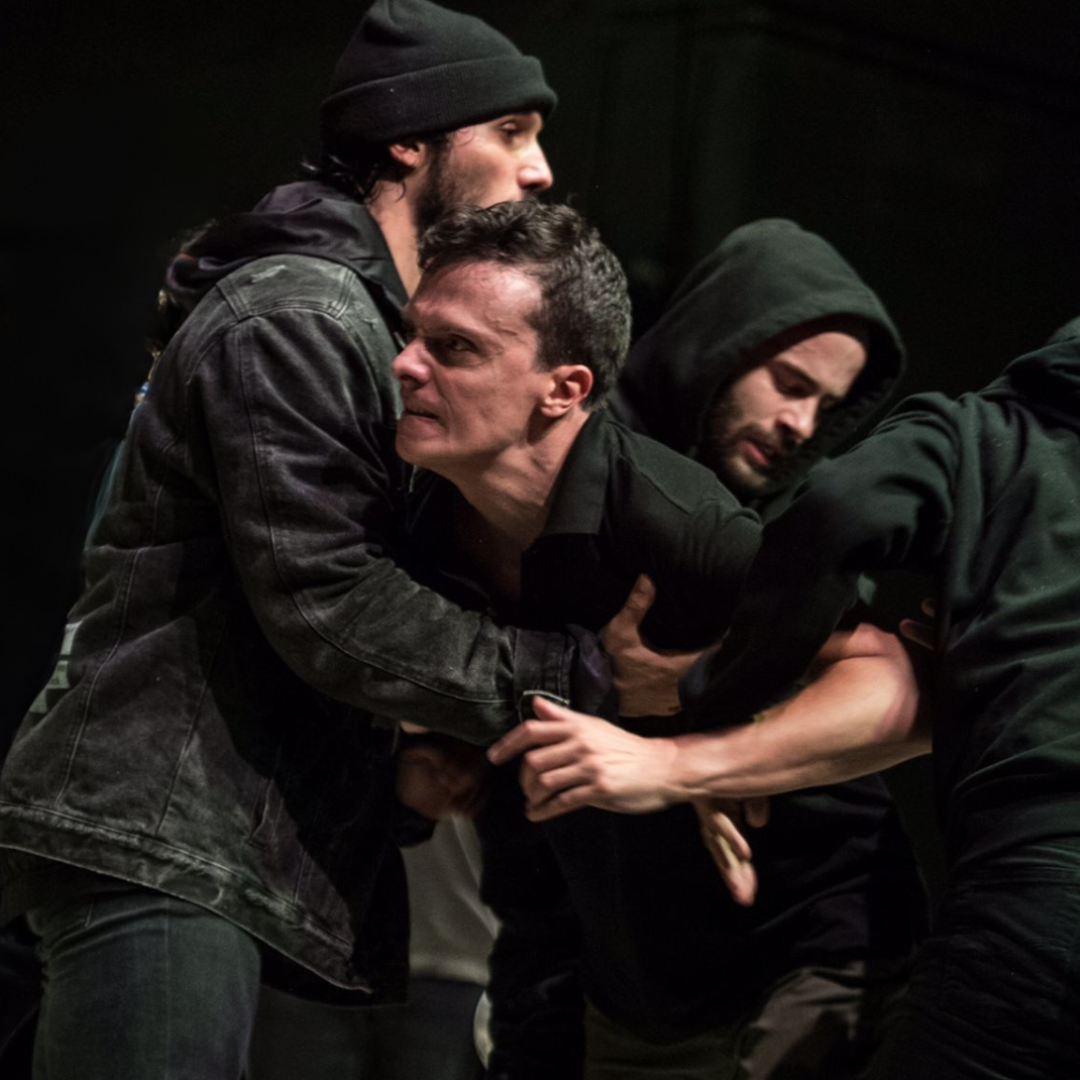
Feroci at Spazio Diamante: the Dogma Theatre Company show (its title means "ferocious"), written by Tobia Rossi and directed by Gabriele Colferai, is on at Spazio Diamante in Rome from April 21 to 24, 2027, in Sala Black at Via Prenestina 230/B, 00176 Rome, at the edge of Pigneto, Wednesday, Thursday and Friday at 20:30 and Saturday at 19:00. The theater is reached by trams 5, 14 and 19 and bus 150F, Prenestina/Conti stop, or by Metro C, Pigneto and Malatesta stops. Spazio Diamante publishes three rates: supporter ticket €19, standard €16, reduced €12, as part of the flexible ticket campaign through which the venue lets audiences choose their price. Tickets are sold on the official Spazio Diamante website and on the presale network authorized by the organizers.
Language: performed in Italian. No English version or English surtitles are announced.
Feroci at Spazio Diamante: dates, times and prices
Feroci is on at Spazio Diamante for four nights, from April 21 to 24, 2027, with tickets from €12 to €19. It's an independent production with 10 actors on stage, in one of the city's most versatile halls. The show is in Italian.
The four performances
Wednesday, April 21 at 20:30, Thursday the 22nd at 20:30, Friday the 23rd at 20:30, Saturday the 24th at 19:00. That's the schedule published on the show page of the Spazio Diamante website. The sales network names Sala Black, the largest in the complex.
The flexible ticket
Spazio Diamante runs a campaign it calls the flexible ticket: theater, the organizers explain, is a common good and not a luxury for the few, and nobody should be shut out for financial reasons. Those who can pay the standard ticket, €16, or the supporter ticket, €19, and so help keep the reduced ticket at €12. Prices refer to the season launch and may change.
Who organizes
The organizer is Viola Produzioni, the company that runs Spazio Diamante and belongs to the same group as Teatro Brancaccio. For information the theater answers by phone at 06 27858101 and on WhatsApp at 345 1474533.
Who produces
Feroci is a project and production of Dogma Theatre Company, supported by MiX, the International LGBTQ+ Film and Queer Culture Festival, the Sentinelli di Milano and the Tempio del Futuro Perduto.
Feroci: the story of Daniel and Edo
Feroci tells the story of Daniel, a leading figure in a neo-fascist group in a northern Italian province, and his meeting with the enigmatic Edo, who awakens in him an instinct he has always denied: attraction to another man. The sexual, and then emotional, tension between the two short-circuits the rules of the pack.
A local and universal story
The company presents the show as a story both local and universal. Local, because it's set in a specific province, with its small-town dynamics of belonging, and universal, because the conflict between who you are and who your surroundings allow you to be concerns anyone.
Fresco, adventure, dark fable
In the presentation's words, Feroci hovers between sociological fresco, romantic adventure and dark fable. It deals with the relationship between society and nature, instinct and rule, impulse and dogma, and it goes through the dynamics of the pack and the blinding mechanisms of totalitarianism.
Masculinity
The theme the company highlights, last but not least, is masculinity: its models, its perception, its representation. 10 male actors on stage, a pack and two young men who drift away from it: the show uses the collective body to question what it means to be a man inside a pack that imposes its own rules.
The poster line
The company's page opens the show with an exchange: "What if we left? Who? The two of us." It's the most effective summary of the story: the temptation of escape, the "us" breaking away from the pack.
Feroci between spoken drama and physical theater
Feroci blends spoken drama and physical theater, where the movement of bodies tells as much as words do. The company presents it as an unprecedented fusion, and the show's structure depends on it: dialogue scenes alternate with sequences of movement, fighting and collective choreography.
Stage movement
Stage movement is by Claudia Mangini. In a show with 10 actors, building the ensemble movements is decisive: you see the pack before you hear it speak, in bodies moving in unison or clashing.
The soundtrack
The soundtrack is by Orion. In the reviews the company has collected, music and choreography are among the most cited elements: the rhythm with which the bodies mark the different moments is singled out as the show's strength.
Sala Black as a space
For a physical work, Spazio Diamante's Sala Black is a fitting choice: a 12 by 6 meter stage, a free floor of 16 by 12 meters, ceilings almost 10 meters high. It's a hall built to hold bodies in motion, not just actors standing at a lectern.
Dogma Theatre Company, Tobia Rossi and Gabriele Colferai
Dogma Theatre Company is an independent theater company behind the project and production of Feroci. Its repertoire, alongside Feroci, includes shows such as Due Segreti, Deep, La Belva Giudea, A long way down, Norway Today and the Scratch Night format.
Gabriele Colferai's direction
Gabriele Colferai directs Feroci, with Roberto Marraffa as assistant director. His is a direction that works on the ensemble: 10 actors, a pack, and two figures who break away. The Spazio Diamante presentation names him as the show's director and the anchor of the staging.
Tobia Rossi's script
The text is by Tobia Rossi. His script builds a love story inside an environment that makes it impossible, and uses that contrast to show the violence of the pack and the struggle to break free of it.
The cast
On stage are Valerio Ameli, Mauro Conte, Filippo Panigazzi, Simone Leonardi, Michele Savoia, Alessio Ingravalle, Angelo Di Figlia, Antonio Catalano, Daniele Palumbo and Angelo Curci: 10 actors, a rare number for an independent production, giving the show the weight of a real chorus.
Support
The show is supported by MiX, the international LGBTQ+ film and queer culture festival, the Sentinelli di Milano and the Tempio del Futuro Perduto. These are groups tied to the world of civil rights and independent culture, and they show the context the show was born in.
Reviews collected by the company
On the show page, Dogma Theatre Company collects comments from several LGBTQ+ outlets and groups, including Cromatica LGBT, Gaystatalemilano and the Sentinelli di Milano themselves. The verdicts stress three things: the rhythm with which the bodies mark the scenes, the soundtrack, and the choreography of the fights. It's a useful hint of what to expect: a show where movement counts as much as text, and where the harshness of the subject is deliberate.
The creative team
The company's credits list the full creative team: direction by Gabriele Colferai, script by Tobia Rossi, stage movement by Claudia Mangini, soundtrack by Orion, assistant direction by Roberto Marraffa. With the 10 performers, that's 15 names for an independent show: a scale you see on stage, in the care of the ensemble movements and the build of the sound.
Spazio Diamante in the 2026 and 2027 season
Feroci arrives in a season in which Spazio Diamante has hosted experimental theater, comedy, dance and poetry, with a program mixing established companies and young productions.
The fall
In October 2026 the season opened with the Interazioni Festival, followed by Pelle di fiaba, Vocifero's poetry evenings and Lavinia Savignoni's Il corpo perfetto, running alongside Carrozzeria Orfeo's Cuore di porco.
A recognizable line
In our opinion many of the season's shows revolve around bodies, identity and relationships: Feroci fits that line with a strong theme and a physical form, and it's one of the shows that best represents the venue's calling.
A hall for physical theater
Sala White, with mirrors and barres, and a Sala Black with a floor suited to movement explain why Spazio Diamante often hosts dance and physical theater: it's a space built for bodies on stage.
A curious fact about Feroci at Spazio Diamante, April 21 to 24, 2027
The most obvious curious fact is in the title. Feroci, "ferocious", is an adjective that applies as much to the pack as to the love born within it: ferocious is the pack's violence, ferocious is the desire Daniel has always denied. The title doesn't take sides, and leaves the audience to work out who, in the end, the ferocious ones are.
The second curious fact concerns the protagonist. Daniel is described as the "punta di diamante", the spearhead, of the neo-fascist group in his area. And the show is staged at Spazio Diamante: a coincidence of words the audience will notice, giving the four Rome evenings a particular flavor.
The third concerns the production. 10 actors on stage is a demanding choice for an independent company. Such a large cast serves the theme, because the pack has to be visible, physical, present. But it's also a financial gamble, and Spazio Diamante's flexible ticket lets those who wish support it with the supporter ticket.
Finally, the line that opens the show page, "What if we left? Who? The two of us", sums up a story many in the audience will recognize: the desire to leave a place that won't let you be yourself.
Spazio Diamante and Sala Black
Spazio Diamante is a theater production center with three main halls at Via Prenestina 230/B, in Municipio V, run by Viola Produzioni. Sala Black, where Feroci is staged, is the largest: two-meter-high wood paneling, anthracite walls and ceiling, heights of five meters and 9.60 meters, and four motorized lighting bars at 7.60 meters.
Stage and seating
The stage measures 12 by 6 meters, with retractable seating for 150 to 200 and a free floor of 16 by 12 meters when the seating is closed. The floor is carply, suited to dance and physical work.
The other halls
Alongside Sala Black are Sala White, with wood paneling and white walls, parquet, mirrors and dance barres, and the smaller Sala Grey, with excellent soundproofing. The complex also includes coworking spaces and the Sala Secret, and hosts series such as Diamante dei Piccoli and the inDivenire Festival.
An efficiency project
Spazio Diamante underwent an energy efficiency upgrade funded by Italy's National Recovery and Resilience Plan.
Something nobody tells you about Feroci at Spazio Diamante, April 21 to 24, 2027
What you won't read in the presentations is that Feroci is a tough show. It depicts a neo-fascist milieu, with its physical and verbal violence, and presents it unfiltered: the reviews the company has collected speak of a punch in the gut, of fight scenes and frantic movement. If you're looking for a light evening, know this beforehand.
The second thing concerns the flexible ticket. Spazio Diamante leaves the choice of rate to the audience: it's an act of trust. The system works if those who can afford it choose standard or supporter. In our opinion, for an independent production with 10 actors on stage, the supporter ticket is a concrete way to support a theater that would otherwise struggle to exist.
The third concerns the box offices. According to the venue's directions, tickets are sold online or at the Sala Umberto box office, Via della Mercede 50, and the Teatro Brancaccio box office, Via Merulana 244, on Friday and Saturday from 16:00 to 19:00. If you want to pay cash, plan ahead.
My tip for Feroci at Spazio Diamante, April 21 to 24, 2027
My first tip is to choose the Saturday show, at 19:00, if you want to pair it with an evening in Pigneto. You come out at dinnertime, with Via del Pigneto pedestrian zone a few minutes' walk away: the best way to discuss a show that leaves a lot to talk about.
The second is to come by tram. Lines 5, 14 and 19 stop at Prenestina/Conti, a few steps from the theater, and parking in Pigneto at night is hard. From Termini and Porta Maggiore the tram is the most direct option.
The third is to sit in the center of the seating bank. In a physical theater show, with 10 actors and ensemble movement, a frontal, slightly raised view lets you catch the geometry of the bodies, partly lost from the side rows.
The fourth is not to bring young teens: the themes, pack violence, homophobia and neo-fascism, are handled frankly, and the show is designed for an adult audience.
How to get to Spazio Diamante
Spazio Diamante is reached by trams 5, 14 and 19 and bus 150F, Prenestina/Conti stop, or by Metro C, Pigneto and Malatesta stops. From Termini the tram is the most direct option.
By tram
Trams 5, 14 and 19 run along Via Prenestina and stop at Prenestina/Conti, a few steps from the theater. These are the lines linking the neighborhood to Porta Maggiore and the Termini area.
By metro
Line C stops at Pigneto and, farther east, at Malatesta, and from either station you reach Via Prenestina on foot in a few minutes. Line C crosses line A at San Giovanni.
By bus and at night
The 150F runs along the Prenestina, Prenestina/Conti stop. For the trip home late at night there's the N12, with the same stop: check times on the transit company's website.
By car
Parking in Pigneto at night is hard, with narrow streets and part of the neighborhood pedestrianized. Tram and metro remain the sensible choice.
Another well-known fact, yet one rarely mentioned
It's well known that Pigneto was one of the sets of postwar Italian cinema, and less often remembered that it's right here that Pier Paolo Pasolini set Accattone, with Franco Citti. Decades later, a few hundred meters from those streets, Feroci tells of other men on the margins and another form of exclusion: in our opinion, a pairing the neighborhood's audience will catch.
The second rarely mentioned fact concerns the neighborhood's history during the war. Pigneto, a working-class district, was active in the anti-fascist resistance and suffered Allied bombing in 1943 and 1944. Bringing a show about today's neo-fascist milieu here has a precise meaning: the memory of the place and the theme on stage face each other.
The third concerns the Prenestina. The road where Spazio Diamante stands was, in the 20th century, a road of factories: the viscose plant operated there from 1923 to 1954. Spazio Diamante's large volumes, with their warehouse-like heights, still recall that industrial calling turned into a space for culture.
Tickets for Feroci: prices and how to buy
Tickets for Feroci at Spazio Diamante cost €19 at the supporter rate, €16 standard and €12 reduced, and are sold online on the Spazio Diamante website, on the presale network authorized by the organizers or at the Sala Umberto and Teatro Brancaccio box offices.
Buy or reserve
The show page on the Spazio Diamante website offers two routes, with Buy and Reserve buttons: either way you choose the date and the rate.
The rates
The three rates, supporter, standard and reduced, are the heart of the flexible ticket campaign: the theater asks those who can to pay more, so that those with less can still get in.
Changes
Spazio Diamante warns that the listed prices refer to the season launch and may change, as may availability: check the official page when you buy.
The right photo to take at Feroci at Spazio Diamante, April 21 to 24, 2027
The right photo is taken outside, on Via Prenestina, with the Spazio Diamante entrance and the Feroci poster. It's the image of a theater born in a building of industrial proportions, on one of the historic roads of the eastern outskirts, between tram tracks and public housing.
The second is taken inside, before the start: the empty Sala Black, with its anthracite walls, wood paneling and lighting bars hanging at seven and a half meters. Under low lights the space already has an atmosphere, and the show will turn it into the pack's territory. During the performance, avoid photos and filming: in a physical work, with 10 actors in motion, a lit screen in the seating distracts.
The third comes afterward, in Pigneto: Via del Pigneto pedestrian zone in the evening, with tables and people out on the street. After a show about the closed world of the pack, an image of an open neighborhood.
Pigneto and the Prenestina
Spazio Diamante stands on Via Prenestina, at the edge of Pigneto, the area of Municipio V between Via Prenestina, Via Casilina and Via di Acqua Bullicante, in a triangle that starts at Porta Maggiore.
Origins
The name Pigneto is recorded as early as the 17th century, when the area was made of vegetable gardens, villas and vineyards. The first residential core formed after 1870, joining settlements such as Prenestino, Torrione, borgata Galliano, Acqua Bullicante, Marranella and Casilino.
The neighborhood today
Its closeness to La Sapienza university and its many out-of-town students have made Pigneto one of the centers of Roman nightlife, and since 2015 the pedestrianization of Via del Pigneto has changed its rhythm. The area is part of the Ecomuseo Casilino ad Duas Lauros.
Porta Maggiore
To the west, a few tram stops away, is Porta Maggiore, with the underground basilica of Porta Maggiore.
Some important events that happened here in history
In little more than a century, the Spazio Diamante area went from countryside outside Porta Maggiore to a working-class neighborhood and then to a cultural district. Until the 19th century there were vegetable gardens, villas and vineyards, crossed by the ancient Via Prenestina and dotted with Roman tombs.
After 1870, with Rome as capital, the first settlements appeared. At the end of the 19th century the depot for horse-drawn omnibuses and trams arrived in Piazza Caballini, electrified in 1904. The 20th century brought industry: the Pantanella pasta factory, the Istituto Serono in 1909, and the viscose plant on the Prenestina from 1923 to 1954.
During World War II, Pigneto, a working-class district, was active in the anti-fascist resistance and suffered Allied bombing in 1943 and 1944. After the war the neighborhood became a film set, from Rossellini to Pasolini.
In 2015 the pedestrianization of Via del Pigneto changed the area's nightlife. With Spazio Diamante the Prenestina gained a three-hall theater production center, which in the 2026 and 2027 season hosts theater, dance, poetry and children's series, and in April 2027 the four performances of Feroci.
Who has passed through Feroci at Spazio Diamante, April 21 to 24, 2027
An important part of Italian cinema has passed through the streets around Spazio Diamante: Pier Paolo Pasolini set Accattone here with Franco Citti, and Anna Magnani shot scenes of Roberto Rossellini's Rome, Open City here with Aldo Fabrizi. Alberto Sordi came back several times, and Paolo Villaggio shot scenes of Fantozzi here.
In the 2026 and 2027 season, very different companies and artists come through Spazio Diamante: Carrozzeria Orfeo with Cuore di porco, the Interazioni Festival, the poetry evenings of Vocifero, and the monologues of Ivan Talarico and Davide Cirri.
From April 21 to 24, Dogma Theatre Company, Tobia Rossi and Gabriele Colferai come to Sala Black, with Valerio Ameli, Mauro Conte, Filippo Panigazzi, Simone Leonardi, Michele Savoia, Alessio Ingravalle, Angelo Di Figlia, Antonio Catalano, Daniele Palumbo and Angelo Curci. 10 actors who, a few steps from the streets of Accattone, tell another story of men on the margins.
How to plan your Feroci evening
The four performances of Feroci fall in a spring week, from a Wednesday to a Saturday: plan the evening around the start time and the Prenestina trams.
On weeknights
For the 20:30 shows on Wednesday, Thursday and Friday, get to Pigneto around 19:15, grab a bite in the pedestrian zone and be at the theater by 20:10. On the way out, around 22:30, trams and Metro C take you back toward the center, and later there's the N12.
Saturday
The Saturday 19:00 show lets you have dinner afterward, with Pigneto at its liveliest of the week. It's the best date if you're coming from another part of town and want a full evening.
Coming from farther away
From Termini the Prenestina trams arrive in a few minutes, and if you're on line A you can change at San Giovanni for Metro C to Pigneto.
Where to eat before and after Feroci
Pigneto, a few minutes' walk from Spazio Diamante, is one of the Roman neighborhoods with the most places to eat and drink.
Before the show
For the 20:30 shows, arrive in Pigneto around 19:00: a stroll along Via del Pigneto pedestrian zone and a quick plate, then on to the theater. Along the street and the side streets there are trattorias, pizzerias, osterias, bistros and cuisines from many countries.
After the show
On Saturday, with a 19:00 start, the show ends at dinnertime: Pigneto is still full of life, and booking is wise. On weeknights choose beforehand where to stop, because many kitchens close early.
Accessibility and practical information
For accessibility needs, contact Spazio Diamante beforehand, by phone at 06 27858101 or on WhatsApp at 345 1474533, so the box office can arrange your visit.
Age
Feroci has no published age guidance. In our opinion it's a show for adults: pack violence, homophobia and neo-fascist ideology are portrayed without softening.
Rome in April
The four performances fall in the week of April 21, Rome's birthday, and end the day before Sunday, April 25. It's a week when the city is very busy: allow extra margin for transit and restaurants.
Frequently asked questions about Feroci at Spazio Diamante
When is Feroci on at Spazio Diamante?
Feroci is on at Spazio Diamante in Rome from April 21 to 24, 2027: Wednesday, Thursday and Friday at 20:30 and Saturday at 19:00, in Sala Black. It's a Dogma Theatre Company production with 10 actors on stage.
How much are tickets for Feroci?
Tickets for Feroci at Spazio Diamante cost €19 at the supporter rate, €16 standard and €12 reduced. With the flexible ticket campaign, audience members choose the rate according to their means.
What is Feroci about?
Feroci tells the story of Daniel, a leading figure in a neo-fascist group in a northern Italian province, who falls for the enigmatic Edo. Their story throws the pack's rules into crisis, and the show reflects on masculinity, the pack and totalitarianism.
Who wrote and directed Feroci?
Feroci is written by Tobia Rossi and directed by Gabriele Colferai, with stage movement by Claudia Mangini and a soundtrack by Orion. It's produced by Dogma Theatre Company, supported by MiX, the Sentinelli di Milano and the Tempio del Futuro Perduto.
How do you get to Spazio Diamante?
Spazio Diamante, at Via Prenestina 230/B, is reached by trams 5, 14 and 19 and bus 150F, Prenestina/Conti stop, or by Metro C, Pigneto and Malatesta stops. For the trip home late at night there's the N12.
Is Feroci suitable for teens?
Feroci has no stated age limit, but it tackles pack violence, homophobia and neo-fascism very frankly. In our opinion it's a show for adults and for older teens who come with an adult they can talk it over with afterward.
What is Spazio Diamante's flexible ticket?
Spazio Diamante's flexible ticket is the campaign through which the venue lets audiences choose among three rates, supporter, standard and reduced. For Feroci they cost €19, €16 and €12: those who can pay more to keep the reduced ticket affordable.
Which hall is Feroci staged in?
Feroci is staged in Spazio Diamante's Sala Black, the largest in the complex, with a 12 by 6 meter stage and retractable seating for 150 to 200. It's a hall suited to physical theater and big ensemble movement.
Final tip on Feroci at Spazio Diamante
My tip is to see Feroci for what independent theater does best: take an uncomfortable theme and stage it with bodies, unprotected. 10 actors, a pack, a love story that shouldn't exist: it's an evening you remember. In our opinion the Saturday at 19:00 is the one to choose: arrive by tram, sit in the center of the seating, pay the supporter ticket if you can, and stay in Pigneto afterward to talk about it. A few steps from Pasolini's streets, it's a way of seeing Rome no postcard shows.
Article written by the editorial team of Tour Leader Pro, contact them for Private/Corporate/V.I.P. Tours and Experiences.
Planning a trip to Rome? The English-language guides for visiting the city are on ItalyPlanner.com.