Fabrizio Bosso Quartet, Routes at Auditorium Parco della Musica, January 2, 2027
https://www.estateromana.com/en/rome/trip-planner/fabrizio-bosso-quartet-routes-at-auditorium-parco-della-musica-january-2-2027/
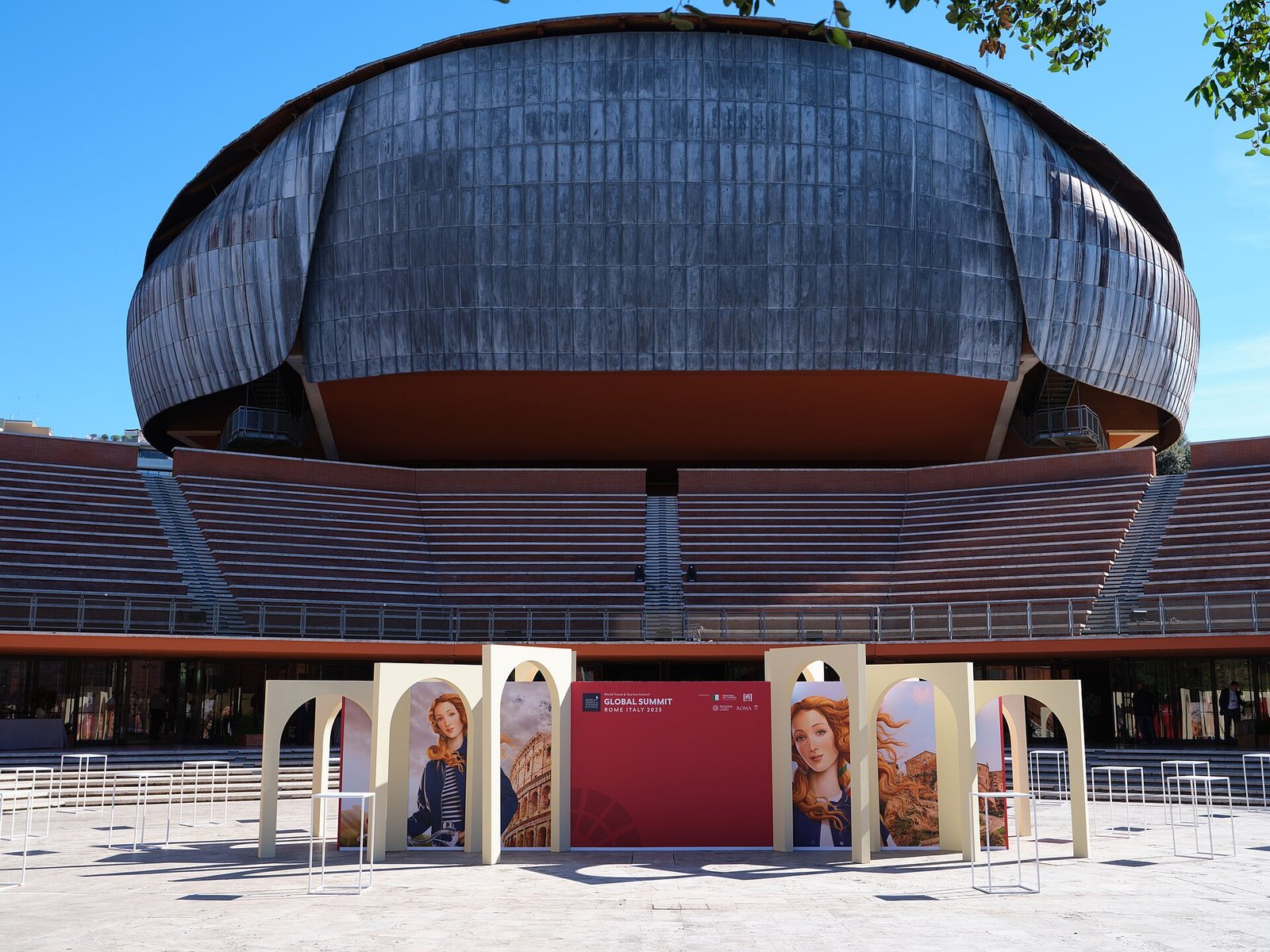
The Fabrizio Bosso Quartet presents Routes at Auditorium Parco della Musica Ennio Morricone on Saturday, January 2, 2027 at 20:00, in Sala Sinopoli, at Viale Pietro de Coubertin 30 (00196 Rome). On stage are Fabrizio Bosso on trumpet, Julian Oliver Mazzariello on piano, Jacopo Ferrazza on double bass and Nicola Angelucci on drums, with the repertoire of the new album, released by Warner on June 12, 2026. You get there by metro A to Flaminio and then tram 2 (stops Flaminia/Reni or Apollodoro), or by bus 910 from Termini. Tickets start from 23 euros, according to the official event page, and are bought on the Auditorium's website, which links to the presale network authorized by the organization, or at the complex's box office.
Routes is the sixth album by this quartet, which has played together for over 10 years. The official presentation describes it as a project that puts dialogue at the center, and jazz as a culture in constant motion: new roads, new musical routes, a repertoire almost entirely original. As the first Saturday of 2027, it is one of the first jazz concerts of the year at the Auditorium.
Fabrizio Bosso in Rome: date, time and tickets
The Fabrizio Bosso Quartet's Routes concert is scheduled for Saturday, January 2, 2027 at 20:00 in Sala Sinopoli, at Auditorium Parco della Musica Ennio Morricone, in the Jazz program of Fondazione Musica per Roma.
The price
The event page lists tickets from 23 euros. The map of the sections of Sala Sinopoli, between stalls and galleries, and the corresponding rates appear at the time of purchase.
Where to buy
From the purchase button on the official page you go to the presale network authorized by the organization. The physical box office is inside the complex, at Viale Pietro de Coubertin 30: from October to March the website lists hours from 11:00 to 20:00, Sundays and holidays included. The Auditorium's regulations warn that tickets bought on unauthorized secondary platforms may not be valid.
A holiday Saturday
January 2 is a Saturday, still within the Christmas holidays. For those in Rome for the holidays, it is the chance for an evening of jazz between New Year's and Epiphany. For Romans, the first concert of the new year.
Routes: the quartet's new album
Routes is the sixth album by the Fabrizio Bosso Quartet, released by Warner Italy on June 12, 2026, with an entirely original repertoire signed by each of the four musicians and by all together, with a single exception: Love Dance by Ivan Lins.
From bop to modal openings
According to the presentation, the pieces range from echoes of bop to modal openings, passing through more rarefied and suspended atmospheres. Bosso's trumpet moves with great expressive freedom, between echoes of the great masters and a personal and contemporary search for timbre.
A collective work
The key word is dialogue. Every note and every solo, says the presentation, is never a solitary action but a collective game: the quartet shapes the sound material with a mobile rhythmic fabric that relaunches and supports everyone's ideas. It is the fruit of years of concerts together and of a distinctive sound built album after album.
The cover
The album cover reproduces the work Icona 21, Per strade diverse, by the painter Enrico Lombardi. The title of the painting and that of the record answer each other: roads, routes, directions to choose.
The six records of the Fabrizio Bosso Quartet
Before Routes the quartet released five albums: Duke in 2015, State of the Art in 2017, Merry Christmas Baby in 2017, We4 in 2020 and We Wonder in 2022.
Duke
Duke, from 2015, is the tribute to Duke Ellington, the most influential composer of the 20th century according to the concert presentation: recorded with a sextet of winds and arrangements by Paolo Silvestri.
State of the Art
State of the Art, a live album from 2017, is indicated by the presentation as one of the brightest moments of the trumpeter's career.
Merry Christmas Baby, We4, We Wonder
In 2017 the quartet also released a Christmas record, Merry Christmas Baby. In 2020 We4, in 2022 We Wonder, devoted to the musical genius of Stevie Wonder, recorded with the participation of Nico Gori. Routes, in 2026, closes the series for now with the first almost entirely original album.
The quartet's musicians
The Fabrizio Bosso Quartet is made up of Fabrizio Bosso on trumpet, Julian Oliver Mazzariello on piano, Jacopo Ferrazza on double bass and Nicola Angelucci on drums, who have shared a common artistic path for over 10 years.
Julian Oliver Mazzariello
The pianist Julian Oliver Mazzariello is Bosso's most stable partner. With him the trumpeter recorded in duo Tandem in 2014, Non smetto di ascoltarti with Fabio Concato in 2016, Tandem Live at Umbria Jazz Winter in 2019 and Il cielo è pieno di stelle, a tribute to Pino Daniele, in 2024. Mazzariello is also among the musicians Enrico Rava helped bring to prominence, and he played in the Enrico Rava Standards lineup.
Jacopo Ferrazza and Nicola Angelucci
The double bass player Jacopo Ferrazza and the drummer Nicola Angelucci form the quartet's rhythm section, with whom Bosso has shared an intense artistic path for over 10 years, according to the presentation. Their role, in the presentation of Routes, is that of a mobile rhythmic fabric that continually relaunches the soloists' ideas.
One quartet, four authors
In Routes the pieces are signed by each of the four and by all together. It is the main difference from the previous records, built on tributes to authors such as Ellington and Stevie Wonder.
Who Fabrizio Bosso is: the biography
Fabrizio Bosso was born in Turin on November 5, 1973 and is one of the most recognized trumpeters of the European jazz scene, with over 30 albums under his name, according to the official presentation.
The beginnings
He picked up his first trumpet at five, to imitate his father, also a trumpeter. In a family of music lovers he began to improvise on the songs of the Italian singer-songwriters, from Lauzi to Tenco, from Vanoni to Paoli, and discovered Clifford Brown, Miles Davis and Dizzy Gillespie. At 15 he graduated in trumpet at the Conservatorio Giuseppe Verdi in Turin. He perfected his studies in Saluzzo with Pierre Thibaut, first trumpet of the Opéra de Paris.
Jazz and the prizes
He defines himself as a hard bop jazzman and plays at Italian and European festivals, a constant presence at Umbria Jazz. In 1999 the Musica Jazz magazine poll elected him best new Italian talent. In 2008 he won the Italian Jazz Awards as Best Jazz Act. In 2019 he received the Ettore Montanaro prize as best musician. On August 19, 2026 the mayor of Montecorice handed him the keys to the city, at the Montecorice DiWine Jazz Festival.
The collaborations
He has played with Stefano Di Battista, Paolo Fresu, Aldo Romano, Flavio Boltro, Randy Brecker, Bob Mintzer, Gianni Basso, Javier Girotto, with whom he recorded Sol, Latin Mood in 2008 and Desde cuando in 2025, and with the London Symphony Orchestra in Enchantment, a tribute to Nino Rota from 2011.
Italian song
He is one of the jazz musicians most present in popular music. At the Sanremo Festival with Sergio Cammariere in 2003 and 2008, with Raphael Gualazzi in 2011, when Follia d'amore won among the Newcomers, with Nina Zilli in 2012, with Dargen D'Amico and Pupo in 2026. He has played on records by Claudio Baglioni, Renato Zero, Mario Biondi, Tiziano Ferro and Bruno Lauzi.
Fabrizio Bosso's records outside the quartet
Besides the quartet's six records, Fabrizio Bosso's discography includes dozens of titles as leader, co-leader and guest, from the first Fast Flight in 2000 to the projects of 2025.
The 2000s
The debut is Fast Flight, from 2000, for the Red label, under the name Fabrizio Bosso Quintet. Then come Rome After Midnight in 2004, Trumpet Legacy with Flavio Boltro in 2006, the two chapters of Five Brothers with Gianni Basso in 2007, You've Changed for Blue Note in the same year, Sol, Latin Mood with Javier Girotto in 2008, Four for Jazz with Irio De Paula in 2010.
The 2010s
In 2011 comes Enchantment, with the London Symphony Orchestra and Stefano Fonzi, devoted to Nino Rota. In 2012 Memorie di Adriano with Peppe Servillo, Rita Marcotulli and Javier Girotto. In 2013 Face to Face with the accordionist Luciano Biondini and Purple for Verve. In 2014 Tandem, in duo with Mazzariello.
Recent years
In 2021 Bosso released Connection with Rosario Giuliani's quartet. In 2024 Il cielo è pieno di stelle, a tribute to Pino Daniele with Mazzariello. In 2025 Welcome back, with the Spiritual Trio of Alberto Marsico and Alessandro Minetto, and Desde cuando, a new chapter of Latin Mood with Javier Girotto.
A curiosity about the Fabrizio Bosso Quartet, Routes at Auditorium Parco della Musica, January 2, 2027
The curiosity most tied to the place concerns a record. In 2008 Fabrizio Bosso recorded Stunt with Antonello Salis for the Parco della Musica label, whose name already tells the link with the complex. The trumpeter who goes on stage in Sala Sinopoli on January 2 has therefore been, for almost 20 years, part of the catalog of the complex that hosts him.
The second curiosity comes from his Roman history. In 2016 Bosso released Spiritual live, a live record taped on March 14 of that year at the Casa del Jazz in Rome, the other jazz venue run by Fondazione Musica per Roma. Between Casa del Jazz and the Auditorium, the Turin trumpeter has built a long relationship in Rome.
The third is a cartoon curiosity. In 2010 Bosso appears in the compilation Club Jazz Digs Lupin The Third with the piece Toward the Patrol Line, devoted to the music of Lupin III. A detail to remember for those who think of jazz as music far from popular culture.
The Auditorium's Sala Sinopoli
Sala Sinopoli is one of the three large halls of Auditorium Parco della Musica Ennio Morricone, with 1,133 seats, and was the first to open, on April 21, 2002, Rome's birthday, together with Sala Petrassi.
Giuseppe Sinopoli
The hall bears the name of Giuseppe Sinopoli, conductor and composer, permanent conductor of Santa Cecilia, among those who fought hardest for Rome to have a hall built for music. The acoustic design of the complex was handled by Jürgen Reinhold of the Müller-BBM studio of Munich.
The right size for a quartet
A little over a thousand seats is a size suited to an acoustic quartet: large enough for the energy of a rhythm section, intimate enough that the nuances of the trumpet and the double bass can be heard. Stalls and galleries stay close to the stage.
A hall for jazz
Sala Sinopoli is one of the halls that Fondazione Musica per Roma devotes to jazz. In autumn 2026 it hosts, for the Roma Jazz Festival, Paolo Fresu's concert Kind of Lives, who then returns in December with Christmas Songs. For a quartet that built its sound live, it is a stage suited to letting the interplay be heard.
The complex
For the full history of Renzo Piano's complex, its halls and the cavea, there is the page on the Auditorium Parco della Musica.
Something nobody tells you about the Fabrizio Bosso Quartet, Routes at Auditorium Parco della Musica, January 2, 2027
What few people say is that Routes marks a turning point in the quartet's path. The previous records were almost all tributes: to Duke Ellington, to Stevie Wonder, to the Christmas repertoire. Routes is instead a record of original pieces, with a single cover, Love Dance by Ivan Lins. Those who know the quartet from the tributes will find in Sala Sinopoli new music, written by them.
The second little-said thing concerns the evening itself. On January 2, at the Auditorium, Luca Barbarossa begins the Pepita Live Club series of concerts at Teatro Studio, at 20:00 like Bosso. Two different audiences in the same foyers: the parking and the coat check fill up earlier than usual.
Third thing: Bosso has a long familiarity with Italian song, from Sanremo to the records of Baglioni and Renato Zero, but the January 2 concert is not a concert of songs. It is quartet jazz, with long solos and interplay. Those who know him only from television should know it beforehand.
The advice I give you for visiting the Fabrizio Bosso Quartet, Routes at Auditorium Parco della Musica, January 2, 2027
My advice is to listen to Routes before the concert, at least a couple of pieces. It is a new record, of original music, and recognizing the themes makes it much more interesting to follow how the quartet transforms them live. For comparison, a listen to We Wonder shows the quartet tackling a tribute.
The second piece of advice concerns the seat. In Sala Sinopoli the central stalls give the most balanced sound between the trumpet and the rhythm section. The frontal galleries offer an overview of the quartet and normally cost less.
The third concerns the evening. The concert is on a Saturday at 20:00, in the middle of the holidays. It is best to arrive at the Auditorium around 19:15, take a turn on the cavea, get something at the bar and enter calmly. Afterward, Ponte Milvio is a few minutes away for a Saturday night dinner, to be booked.
How to get to the Auditorium for Fabrizio Bosso
Auditorium Parco della Musica Ennio Morricone is reached by tram 2, stops Flaminia/Reni or Apollodoro, and by buses 910, 53, 982 and 168. The nearest metro station is Flaminio, on line A.
Metro A and tram 2
From Flaminio station you exit onto Piazzale Flaminio and take tram 2 along Via Flaminia. You get off at Flaminia/Reni or Apollodoro and walk a few minutes through the Olympic Village to the entrance.
The 910 from Termini
Bus 910 leaves from Piazza dei Cinquecento, in front of Termini station, and stops in front of the Auditorium with no changes. The 53 links Piazza Mancini with the center, the 982 arrives from Quattro Venti station, the 168 from Tiburtina station. On holiday days the times should be checked on Atac's journey planner.
By car and the return
The complex has paid internal parking, with limited spaces. On January 2, with two concerts at the same time, it is best to arrive early. After the concert tram 2 takes you back to Piazzale Flaminio. Alternatively, a taxi booked a few minutes before the end.
Another well-known fact, yet rarely mentioned
It is well known that Fabrizio Bosso is one of the most requested trumpets in Italian music. Less often remembered is how precocious he was: first trumpet at five, conservatory diploma at 15, the title of best new talent of Italian jazz in 1999, at 25. A career begun as a child and built on a rigorous classical training, with the first trumpet of the Opéra de Paris.
Another little-cited fact: Bosso has devoted entire records to singer-songwriters and to song. Italian Songs with Paolo di Sabatino in 2002, Non smetto di ascoltarti with Fabio Concato in 2016, Il cielo è pieno di stelle, a tribute to Pino Daniele, in 2024. The boy who improvised on Lauzi and Tenco has never stopped doing it.
And a fact about television. In 2012 Bosso took part as a musician in the program Panariello non esiste on Canale 5, and in 2017 he was a guest on Gazebo on Rai 3. The jazz musician who plays in Sala Sinopoli on January 2 has also passed through the large television audience, without changing instrument.
The right photo to take at the Fabrizio Bosso Quartet, Routes at Auditorium Parco della Musica, January 2, 2027
You do not take photos during the concert: in a silent hall, with an acoustic quartet, a lit screen disturbs those sitting behind. The right photo is taken before or after, outside the hall.
The subject is Renzo Piano's Auditorium, with the large lead-covered shells of the halls around the cavea. In January, at 19:00, it has been dark for a while, and the lit halls against the dark sky give the most recognizable image of a concert evening. The best spot is the cavea itself, the stepped square at the center of the complex.
The second photo is the one of the stage before the start, from your own seat: the grand piano, the double bass leaning, the drums, the trumpet's music stand. At a quartet concert the empty stage is already the portrait of the evening. Then the phone gets switched off.
Some important events that took place here in history
The history of this area is older than the complex. During excavations for the foundations the remains of a Roman villa of the 3rd century BC emerged, built on the site of an archaic farm of the 6th century BC. Renzo Piano changed the design to preserve them. The finds are displayed in a small museum under the cavea.
Modern history begins with a demolition. In 1936 the Augusteo, Rome's great concert hall, was torn down, and for over 60 years the city remained without an auditorium built for music. In 1992 the city council chose the Olympic Village area, and in 1993 Renzo Piano won the invitational competition.
On April 21, 2002 Sala Sinopoli, the hall of Bosso's concert, and Sala Petrassi opened. On December 21 of the same year, Sala Santa Cecilia. Since 2003 the Auditorium has been the home of the Accademia di Santa Cecilia season, since 2006 it has hosted the Film Festival, and in 2020 it was named after Ennio Morricone. In the meantime it has become one of the homes of jazz in the city, with the autumn Roma Jazz Festival and with a label, Parco della Musica, which in 2008 published Bosso and Salis's Stunt.
Who has passed through the Fabrizio Bosso Quartet, Routes at Auditorium Parco della Musica, January 2, 2027
Through Sala Sinopoli the great names of jazz pass every season. In autumn 2026, for the Roma Jazz Festival, Paolo Fresu plays here with Kind of Lives, on November 1, and returns on December 12 with Christmas Songs. In the nearby halls have passed Kurt Elling with the Yellowjackets, Steve Coleman with the Five Elements, Hamilton de Holanda with Gonzalo Rubalcaba.
Through Fabrizio Bosso's career have passed musicians of every genre: Stefano Di Battista, Paolo Fresu, Aldo Romano, Flavio Boltro, Gianni Basso, Franco D'Andrea, Antonello Salis, Javier Girotto, Rosario Giuliani, Randy Brecker, Bob Mintzer, the London Symphony Orchestra. And in song Sergio Cammariere, Raphael Gualazzi, Tiziano Ferro, Claudio Baglioni, Renato Zero, Mario Biondi, Nina Zilli, Fabio Concato.
On the evening of January 2, in Sala Sinopoli, Julian Oliver Mazzariello, Jacopo Ferrazza and Nicola Angelucci pass through. At Teatro Studio, Luca Barbarossa with his Pepita Live Club.
The neighborhood around the Auditorium
The Auditorium occupies an area of about 55,000 square meters between the hill of Villa Glori, the Olympic Village, the Corso di Francia viaduct and Viale Maresciallo Pilsudski.
The MAXXI and Teatro Olimpico
Near the Flaminia/Reni stop is the MAXXI, the national museum of 21st-century arts. A short distance away is the Teatro Olimpico. Inside the Auditorium, for those who arrive early, is the Museum of Musical Instruments of the Accademia di Santa Cecilia.
Toward the Tiber and Ponte Milvio
From the Auditorium you go down to the river and the Ponte della Musica, the footbridge leading to the Foro Italico. Farther north, beyond Piazza Mancini, is Milvian Bridge, one of the evening meeting points of northern Rome.
The holidays in the city
Those in Rome in the first days of the year find ideas in the pages on Christmas in Rome and New Year's Eve in Rome. With tram 2 you are back in a few minutes at Piazza del Popolo.
Accessibility, age and practical information
The Auditorium is a modern complex on several levels among terraces, foyers and halls. For accessibility needs at the concert it is best to contact Fondazione Musica per Roma in advance at info@musicaperroma.it, to find out which entrance to use and which seats to choose.
Parking
The Auditorium's paid parking, open-air and multistory, has spaces reserved for people with disabilities.
With young people
The concert suits young people who study an instrument or are approaching jazz. Seeing a classic quartet live, trumpet, piano, double bass and drums, is the clearest lesson in how this music works. The rules for minors are those indicated by the Auditorium at the time of purchase.
How to organize the evening of January 2
January 2 falls in the middle of the holiday period. Many Romans are still out of town, many visitors are around Rome, and the evening at the Auditorium is organized with a few extra precautions.
Before the concert
Those who arrive early can visit the small archaeological museum under the cavea or the Museum of Musical Instruments, if open at that hour, and then stop at the foyer bar. With two concerts at the same time, the coat check gets crowded in the half hour before 20:00, so it is best to go there right away.
After the concert
On the way out, on a Saturday night, Ponte Milvio is the nearest destination for a dinner or a drink. Those returning to the center find tram 2 to Piazzale Flaminio. Those with a car in the internal parking should avoid leaving at the same moment as the Teatro Studio audience, waiting a few minutes on the cavea.
Where to eat before or after the concert
Inside Auditorium Parco della Musica there are a bar and a cafeteria in the foyers and a restaurant bar with street access too. Between the Olympic Village, Via Flaminia and Piazza Mancini you find pizzerias, trattorias and neighborhood bars. For a concert at 20:00 a dinner beforehand is possible by booking early, around 18:30. Those who prefer to dine afterward find the widest choice at Ponte Milvio. On a Saturday night, during the Christmas holidays, a reservation is essential.
The start of 2027 at the Auditorium
Bosso's concert is among the first appointments of the new year at the Auditorium, together with Luca Barbarossa's Pepita Live Club, at Teatro Studio from January 2 to 9. Those in Rome in the days between New Year's and Epiphany can build a week of concerts between jazz and singer-songwriter music. In the following months the complex's jazz program continues, and the Casa del Jazz offers a more intimate alternative.
Weather and what to wear
In early January Roman evenings are cold and often damp, and the stretch from the tram to the Auditorium is outdoors. A coat to leave at the coat check and a folding umbrella are advisable. On clear January days, though, the early sunset gives a beautiful light on the cavea even before 17:00.
Frequently asked questions about Fabrizio Bosso in Rome
When does Fabrizio Bosso play at Auditorium Parco della Musica?
The Fabrizio Bosso Quartet plays at Auditorium Parco della Musica Ennio Morricone on Saturday, January 2, 2027 at 20:00, in Sala Sinopoli, with the concert Routes. It is a single date in the Jazz program of Fondazione Musica per Roma.
How much do tickets for Fabrizio Bosso's Routes cost?
Tickets for the Fabrizio Bosso Quartet's Routes at the Auditorium start from 23 euros, according to the official event page. They are bought on the Auditorium's website, which links to the authorized presale network, or at the complex's box office at Viale Pietro de Coubertin 30.
Who plays in the Fabrizio Bosso Quartet?
The Fabrizio Bosso Quartet is made up of Fabrizio Bosso on trumpet, Julian Oliver Mazzariello on piano, Jacopo Ferrazza on double bass and Nicola Angelucci on drums, who have played together for over 10 years.
What is Fabrizio Bosso's Routes?
Routes is the sixth album by the Fabrizio Bosso Quartet, released by Warner Italy on June 12, 2026: an original repertoire written by the four musicians, with the sole exception of Love Dance by Ivan Lins, between echoes of bop and modal openings.
What other records has the Fabrizio Bosso Quartet made?
Before Routes the Fabrizio Bosso Quartet released Duke in 2015, a tribute to Duke Ellington, State of the Art and Merry Christmas Baby in 2017, We4 in 2020 and We Wonder, devoted to Stevie Wonder, in 2022.
How many seats does Sala Sinopoli have?
Sala Sinopoli at Auditorium Parco della Musica has 1,133 seats between stalls and galleries. It was the first hall of the complex to open, on April 21, 2002, together with Sala Petrassi, and bears the name of the conductor Giuseppe Sinopoli.
Has Fabrizio Bosso already recorded in Rome?
Yes, Fabrizio Bosso recorded the live album Spiritual live in Rome, on March 14, 2016 at the Casa del Jazz, and in 2008 released Stunt with Antonello Salis for the Parco della Musica label. On January 2, 2027 he returns to the Auditorium with Routes.
Where does Fabrizio Bosso come from?
Fabrizio Bosso was born in Turin on November 5, 1973. He began playing the trumpet at five, graduated at 15 from the Conservatorio Giuseppe Verdi in Turin and in 1999 was elected best new talent of Italian jazz by the magazine Musica Jazz.
How do you get to Auditorium Parco della Musica by public transport?
Auditorium Parco della Musica is reached by metro A to Flaminio and then tram 2, stops Flaminia/Reni or Apollodoro. From Termini there is bus 910, with no changes. Lines 53, 982 and 168 also pass nearby.
The final advice on Fabrizio Bosso and Routes
One of the most recognizable trumpets of European jazz, a quartet that has played together for over 10 years, a record at last of its own music, in a hall of 1,000 seats on the first Saturday of the year: in our judgment it is the best way to start 2027 with jazz in Rome. The advice is to listen to Routes in the preceding days, buy tickets in good time, choose the central stalls and arrive at the Auditorium half an hour early, because on the same evening the complex also hosts Luca Barbarossa.
Article written by the editorial team of Tour Leader Pro, contact them for Private/Corporate/V.I.P. Tours and Experiences.
Planning a trip to Rome? The English-language guides to visiting the city are on ItalyPlanner.com.