Fabio Concato at Auditorium Parco della Musica, December 27, 2026
https://www.estateromana.com/en/rome/trip-planner/fabio-concato-at-auditorium-parco-della-musica-december-27-2026/
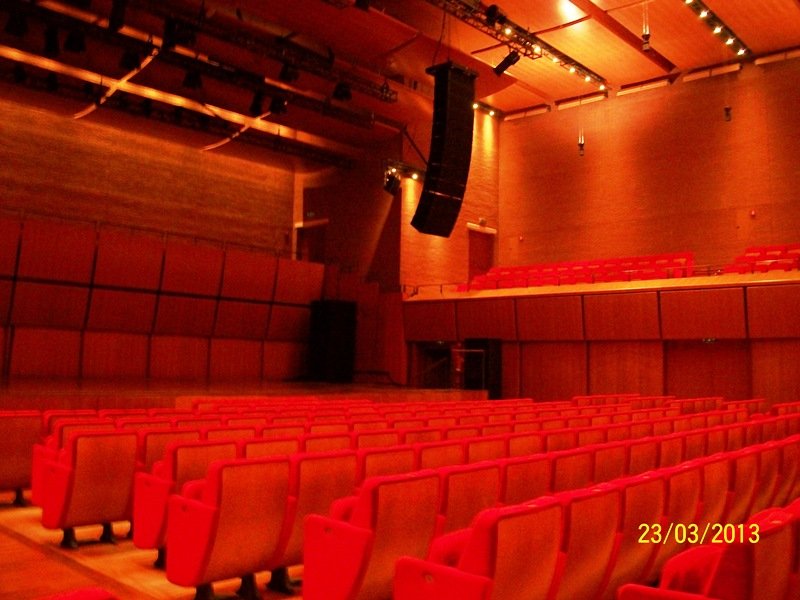
Fabio Concato at Auditorium Parco della Musica Ennio Morricone brings the concert “Altro di me” on Sunday, December 27, 2026 at 18:00, in Sala Santa Cecilia, at Viale Pietro de Coubertin 30. It is the Rome date of the tour produced by Ventidieci, which continues in January in Turin and Genoa and then in Bologna and Latina. You get to the Auditorium on metro line A to Flaminio and then tram 2, stops Flaminia/Reni or Apollodoro, or on bus 910 from Termini and lines 53 and 982. Tickets start at 39 euros and are bought on the authorized presale network indicated by the organizer, to which the official concert page links. Children up to 3 years old held on a lap get in free.
A Sunday afternoon between Christmas and New Year's, the largest hall of the Auditorium, a Milanese singer-songwriter who has lived through 50 years of Italian song with a lightness that was never superficiality. The title of the concert already tells the program: alongside the hits everyone knows, the songs that stayed in the shadows.
Fabio Concato at the Auditorium: date, time and hall
Fabio Concato's concert is scheduled for Sunday, December 27, 2026 at 18:00, in Sala Santa Cecilia of Auditorium Parco della Musica Ennio Morricone. It is a single date in Rome.
The time
18:00 on a holiday Sunday is a time designed for families and for those who work the next day: the concert ends in time for dinner, and getting home is not late. Those who come from outside Rome can leave again in the evening.
The tour
After Rome, “Altro di me” stops at Teatro Colosseo in Turin on January 8, 2027, Politeama Genovese on January 26, Teatro Duse in Bologna on February 11 and Teatro D'Annunzio in Latina on April 16. Among the published dates, the Rome one is the first on the calendar.
Who organizes it
The concert is produced by Ventidieci, the agency that handles Concato's theater tours. The official page has information on tickets, accessibility and conditions for children. In the archive of the same site appears the singer-songwriter's previous tour, “Il musico ambulante”: “Altro di me” is the project that follows it, and the official calendar announces 16 dates in Italy in all between 2026 and 2027.
“Altro di me”: what you will hear
The show takes its title from a song, “L'Altro di Me”, the most introspective track on the album “Tutto qua”, released in 2012. According to the official presentation, it expresses the wish to rediscover, in a catalog of about 150 songs, pieces the author had not performed for a long time.
Alongside the hits
The presentation promises a musical journey in which, besides the big hits, room is made for the “old, dear friends”: the lesser-known songs, the B-sides, the tracks from the less fortunate albums. For those who know Concato only from the radio it is a chance to discover a wider repertoire. For those who have followed him for years, to hear again pages that were no longer heard live.
A long story
Ventidieci presents “Altro di me” as a new chapter in Concato's long artistic story, born as a show of the 2024 and 2025 theater tour and now brought back to the hall. An official setlist has not been published, and that is fine: the point of the concert is precisely the surprise of finding again “small and great masterpieces”, as the presentation calls them.
The classics you can expect
The titles that made Concato popular are well known: “Domenica bestiale”, “Fiore di maggio”, “Ti ricordo ancora”, “Guido piano”, “Speriamo che piova”, “M'innamoro davvero”. Which ones will make the setlist has not been published. But a concert that promises “his classic great hits” will hardly do without all of them.
Who is Fabio Concato
Fabio Concato, stage name of Fabio Piccaluga, is a singer-songwriter born in Milan on May 31, 1953, author of some of the best-loved songs of the 1980s and winner of the Premio Tenco in 2022.
A family of musicians
He is the son of Luigi Piccaluga, a jazz guitarist and songwriter known as Gigi Concato. His paternal grandparents were the opera singers Nino Piccaluga and Augusta Concato. The stage name comes precisely from his grandmother's surname, as his father had already done.
The Derby and the early years
In 1974 he forms the cabaret group “I Mormoranti” with Bruno Graceffa and Giorgio Porcaro, for which he writes lyrics and music, and performs at the Derby in Milan. Discovered by Walter Guertler, he records in 1977 for Harmony the album “Storie di sempre”, with the single “A Dean Martin”. In 1978 he sings in the backing vocals of the theme of Atlas Ufo Robot, and is the soloist on two tracks of the series album.
The 1980s
The first real success comes in 1982 with the album “Fabio Concato” and the single “Domenica bestiale”, presented at the Festivalbar and included in the soundtrack of Marco Risi's “Vado a vivere da solo”. In 1984 a second self-titled album brings “Ti ricordo ancora”, “Tienimi dentro te”, “Sexy Tango”, “Rosalina”, “Guido piano” and “Fiore di maggio”, dedicated to his daughter Carlotta. “Senza avvisare”, in 1986, reaches second place on the chart. In 1988 the single dedicated to Telefono Azzurro, with all proceeds donated to the association, reaches first place.
From the 1990s to today
In 1990 comes “Giannutri”, led by “Speriamo che piova”. Then came “In viaggio” in 1992, “Blu” in 1996, and a self-titled album in 1999 with “M'innamoro davvero”, with José Feliciano. In 2001 he goes to Sanremo with “Ciao ninìn”, which opens “Ballando con Chet Baker”, a turn toward jazz. In 2007 he returns to the Festival with “Oltre il giardino”, about the difficulties of those who lose their job at 50. In 2012 he releases “Tutto qua”, his first album of new songs in 11 years. In 2016 comes “Non smetto di ascoltarti” with the pianist Julian Oliver Mazzariello and the trumpeter Fabrizio Bosso. In 2017 comes “Gigi”, with arrangements by Paolo di Sabatino.
The two times at Sanremo
Concato's relationship with the Sanremo Festival has been sporadic and always outside the mold. In 2001 he arrived there by surprise with “Ciao ninìn”, a song that served as a forerunner to an openly jazz album. In 2007 he returned with “Oltre il giardino”, a text about job loss at 50, far from the usual themes of the Festival. On the evening of March 1 he sang it as a duet with Michele Zarrillo, received an excellent response from critics and released, right afterward, an anthology of rearranged hits. In both cases Sanremo was for him a starting point for a record, more than a goal.
The awards
In 2018 he receives the Premio Note da Oscar for songs in cinema and appears in a cameo in Paolo Sorrentino's “Loro 1”, singing “Domenica bestiale”. In 2020 he receives the Ambrogino d'oro for donating to charity the proceeds of “L'umarell”, a tribute in Milanese dialect to his city hit by the pandemic. In 2022 he wins the Premio Tenco, the Club Tenco's recognition for artists who have made a significant contribution to the singer-songwriter tradition. In his career he has released 125 tracks written and sung by him and more than 40 covers, duets and collaborations.
Fabio Concato's discography, from “Storie di sempre” to today
Fabio Concato has released 14 studio albums between 1977 and 2016, plus compilations, live records and albums of reinterpretations: a catalog that the concert “Altro di me” sets out to explore beyond the best-known titles.
The studio albums
The sequence is this: “Storie di sempre” in 1977, “Svendita totale” in 1978, “Zio Tom” in 1979, two albums titled simply “Fabio Concato” in 1982 and 1984, “Senza avvisare” in 1986, “Giannutri” in 1990, “In viaggio” in 1992, “Blu” in 1996, a third “Fabio Concato” in 1999, “Ballando con Chet Baker” in 2001, “Oltre il giardino” in 2007, “Tutto qua” in 2012 and “Non smetto di ascoltarti” in 2016.
Live records and reinterpretations
Alongside the studio albums are the first official compilation, “Punto e virgola”, after “Giannutri”. “Vita quotidiana”, with duets such as “Chiama piano” together with Pierangelo Bertoli. “Scomporre e ricomporre” from 1994, with re-recorded songs and the new track “Troppo vento”. The first live album, “Voilà”, from 2003. And “Gigi”, in 2017, which rereads the hits with arrangements by Paolo di Sabatino. In 1994 Concato also wrote the music for an audiobook version of The Little Prince.
The possible “old, dear friends”
Which lesser-known songs will make the setlist has not been published. The catalog does offer many candidates: “A Dean Martin”, the first single from 1977. “Zio Tom”, later covered by Mina. “Rosalina”, “Sexy Tango” and “Tienimi dentro te”, from 1984. “Troppo vento”, from 1994. “Binario 3”, born from the collaboration with Samuele Bersani. “Un trenino nel petto”, one of the singles that preceded “Tutto qua”. “Ventiventi”, the 2022 tribute to Enzo Jannacci. “Automobilisti”, the 2025 song with Federico Stragà. Those who know some of them will enjoy recognizing them, those who do not, discovering them.
A curiosity about Fabio Concato in concert at Auditorium Parco della Musica, December 27, 2026
The most surprising curiosity concerns a voice that very many Italians have heard without knowing it. In 1978, before his success, Concato took part in recording the backing vocals of the 45 rpm “Ufo Robot” and “Shooting Star”, the themes of Atlas Ufo Robot, the first Japanese robot TV series to reach Italy. On the series album he is also the soloist on two songs, “Procton” and “Rigel”. A few days before this concert, on December 23, the Auditorium hosts Cartoon Heroes, dedicated precisely to the cartoon themes of those years.
The second curiosity concerns Mina. “Zio Tom”, the lead track of the 1979 album recorded for Philips, was covered in 1990 by the singer for the record “Ti conosco mascherina”. No small recognition, for a singer-songwriter who had not yet found the wide public at the time.
The third is a thread leading to the Auditorium in January. The trumpeter Fabrizio Bosso, Concato's partner on the 2016 jazz record “Non smetto di ascoltarti”, plays at the same venue on January 2, 2027 with his quartet, in the concert Routes. Two appointments a week apart that tell, from different sides, the same season of jazz and Italian song.
Sala Santa Cecilia
Sala Santa Cecilia is the largest of the Auditorium's three halls designed by Renzo Piano: 2,756 seats, inaugurated on December 21, 2002, home to the symphonic season of the Accademia di Santa Cecilia since 2003. For a singer-songwriter it is an important stage, rarely granted to song.
An orchestra hall
The ceiling is made of 26 American cherry wood shells of about 180 square meters each, and the reverberation measures 2.2 seconds: a hall built for the acoustic sound of the orchestra. For an amplified song concert, the sound technicians' job is to tame that reverberation. For the listener, position matters most.
Where to sit
Regulars of the hall observe that sound intensity drops up to the tenth row and then stays constant: the rows closest to the stage give the best view of the singer, the farther central ones the most balanced listening. The side and front galleries offer an overview of the stage.
Renzo Piano's complex
The three halls are lead-clad volumes on a brick base, arranged in a fan around the cavea named after Luciano Berio. Piano won the competition in 1993, joined by the acoustician Jürgen Reinhold of the studio Müller-BBM and the landscape architect Franco Zagari. The full history is on the page about Auditorium Parco della Musica.
Something nobody tells you about Fabio Concato in concert at Auditorium Parco della Musica, December 27, 2026
What few remember is how tied Concato's songwriting is to civic commitment, behind the light image of “Domenica bestiale”. In 1988 he recorded a song whose title was the number of Telefono Azzurro, the helpline for minors, and which spoke of domestic violence against children. All proceeds from the single went to the association, and the track reached first place among best-selling singles. In 2007 “Oltre il giardino” told of the difficulties of those who lose their job at 50. In 2010 he recorded “Amico mio” to raise funds for a solidarity center in Milan, and in 2020 he donated the proceeds of “L'umarell”.
The second thing is that Concato is a musician who grew up in jazz. His father was a jazz guitarist, and from 2001, with “Ballando con Chet Baker”, his music has moved more and more in that direction, up to the record with Mazzariello and Bosso. Those who go to the concert expecting only the radio songs would do well to keep this in mind: in our judgment the live Concato is also a jazz musician.
The third is practical. December 27 is a Sunday between two holidays: traffic toward Flaminio can be light or unpredictable, and public transport runs on holiday schedules. It is best to check the runs before leaving and arrive half an hour early.
The advice I give you for visiting Fabio Concato in concert at Auditorium Parco della Musica, December 27, 2026
My advice is to prepare with a less obvious listen: the 2012 album “Tutto qua”, from which comes “L'Altro di Me”, the song that gives the concert its title. It is the first album of new songs after 11 years of silence, and in our judgment it helps understand the spirit of the show better than any collection of hits.
Second: bring someone who lived those songs. “Fiore di maggio”, “Ti ricordo ancora”, “Guido piano” are songs tied to seasons of many people's lives. A concert in the holiday days is the right moment to hear them together, perhaps across three generations.
Third: arrive early and stop in the foyer. The Auditorium's music bookstore has records and books. The cavea, at a December sunset, is one of the most beautiful places in contemporary Rome. Finally, after the 18:00 concert there is plenty of time for dinner: book ahead, because in the week between Christmas and New Year's the restaurants are full.
Tickets for Fabio Concato at the Auditorium
Tickets for Fabio Concato's concert at the Auditorium start at 39 euros, according to the official page of Ventidieci. Prices for the different sections are published on the authorized presale network.
Where to buy
Tickets are bought on the authorized presale network indicated by the organizer, reachable from the purchase button on the concert's official page. The Auditorium lists the same network as the box office for its own events.
Children
According to the conditions published by Ventidieci, children up to 3 years old get in free if held on a lap. For any discounts for those buying several tickets together, the organizer invites you to contact its switchboard.
Instructions for the spectator
Ventidieci makes available free of charge on its website a document with guidance for making the most of the event, to download before the concert.
How to get to the Auditorium for Concato's concert
Auditorium Parco della Musica Ennio Morricone, at Viale Pietro de Coubertin 30, is reached by metro line A and tram 2 or by buses 910, 53 and 982. The metro does not reach the entrance.
Metro A and tram 2
From Flaminio station on metro line A, tram 2 runs along Via Flaminia to the Flaminia/Reni and Apollodoro stops. From there you walk a few minutes toward Viale Pietro de Coubertin, through the Villaggio Olimpico.
Buses
The 910 links Piazza dei Cinquecento, in front of Termini station, with the Auditorium with no transfers. The 53 comes from Piazza Mancini and the center, the 982 from Viale XVII Olimpiade area. The 168, which comes from Tiburtina, is a weekday line and on Sundays it is best not to count on it. On holidays schedules change: better to check them on the transit company's website.
By car
The stretch of Viale Pietro de Coubertin in front of the entrance is closed to traffic, and the complex's paid parking has limited spaces. On concert evenings cars spill into the streets of the Villaggio Olimpico. A holiday Sunday afternoon can be quieter, but it is better not to count on it.
Another well-known fact, yet rarely mentioned
It is well known that “Domenica bestiale” is Concato's signature song. It is less often remembered what road it took: presented at the Festivalbar in the summer of 1982, it entered the soundtrack of Marco Risi's “Vado a vivere da solo”, with Jerry Calà, and 36 years later Paolo Sorrentino had Concato himself sing it in a cameo in “Loro 1”. A song that crossed Italian cinema from the comedy of the 1980s to the portrait of a political era.
The second fact concerns “Fiore di maggio”, dedicated to his daughter Carlotta. Years later, in 2021, Concato dedicated “L'aggeggino” to his granddaughter Nina, Carlotta's first daughter: a small family saga in song, almost 40 years long.
The third concerns his audience and his colleagues. In 2004 Concato toured as a pair with Anna Oxa, the Viceversa Tour, in which the two swapped and reinterpreted each other's hits. In 2014 the Sicilian singer Cristina Russo dedicated an entire album of his reinterpreted songs to him. A sign of a repertoire that other musicians have wanted to make their own.
How to organize the afternoon
For a concert at 18:00 it is best to arrive at the Auditorium around 17:15: ticket pickup, checks and coat check take time in a hall of over 2,700 seats.
Before the concert
The foyer has a bar, a coffee shop and a large music bookstore. From the terrace around the halls you can see the remains of the Roman villa discovered during the works. A late December afternoon is the right time for a walk in the cavea before the start.
The length
The length of the concert has not been published. For a singer-songwriter with a catalog of 150 songs, it is reasonable to expect a full concert.
After the concert
On the way out the cavea lets the crowd flow out. Those who have parked in the side streets of the Villaggio Olimpico should allow a few minutes of queue.
The right photo to take at Fabio Concato in concert at Auditorium Parco della Musica, December 27, 2026
The right photo, for a concert at 18:00 at the end of December, is taken on arrival: at that hour it is already dark, and from the top of the cavea Renzo Piano's three lead volumes reflect the evening lights, with the audience entering Sala Santa Cecilia. It is the image that tells the evening better than a blurry close-up of the stage.
In the hall, before the start and if the staff allow it, the shot to take is upward: the cherry wood shells of the ceiling, with the lit stage below. During the concert the phone should be kept low, without flash, out of respect for those listening. The moment for the photo of the singer is the final bows.
On the way out, the volumes of the halls seen from below, on Viale Pietro de Coubertin side, give the least obvious framing. For a family keepsake, the lit cavea behind you is the best backdrop.
Some important events that took place here in history
The ground of the Auditorium holds the remains of a Roman villa from the 3rd century BC, built on the site of an archaic farmhouse from the 6th century BC. They emerged during the works and forced Renzo Piano to move two of the three volumes westward, almost to the Corso di Francia viaduct. The finds are displayed in a small museum under the cavea.
The birth of the Auditorium fills a gap opened in 1936, when the Augusteo, Rome's great concert hall, was demolished: for over 60 years the city had no hall designed for music. In 1992 the City chose the area of the Villaggio Olimpico, and in 1993 Piano won the competition.
Sala Sinopoli opened on April 21, 2002, and Sala Santa Cecilia on December 21, 2002 with the Academy Orchestra conducted by Myung-Whun Chung. Since 2003 it has hosted the Academy's season, and since 2006 the Rome Film Festival. In 2020 the complex was named after Ennio Morricone. This same December the Auditorium hosts the Academy's Bach Christmas Oratorio, the Bollani and Rava duo, and Concato: the variety the project wanted.
Who has passed through Fabio Concato in concert at Auditorium Parco della Musica, December 27, 2026
Through Sala Santa Cecilia have passed the great conductors of symphonic music, from Myung-Whun Chung, who inaugurated it, to Antonio Pappano and Daniel Harding, and soloists such as Evgeny Kissin. Goffredo Petrassi and Luciano Berio belong to the founding history of the complex. Wolfgang Sawallisch criticized its acoustics in the first months, and the hall was corrected.
But the Auditorium is also Rome's home for the singer-songwriter tradition and jazz. In this same December 2026, Stefano Bollani and Enrico Rava play in Sala Santa Cecilia on December 23, and in the days around Concato the Auditorium hosts Max Gazzè from December 26 to 30.
In Concato's story pass names that made Italian music: Mina, who recorded his “Zio Tom”. Pierangelo Bertoli, with whom he sang “Chiama piano”. José Feliciano, guest on “M'innamoro davvero”. Michele Zarrillo, his duet partner at Sanremo 2007. Anna Oxa, Samuele Bersani, Fabrizio Bosso and Julian Oliver Mazzariello. On December 27, on the stage of the largest hall in Rome, all this is there.
Accessibility and families
For people with disabilities Ventidieci invites you to contact its switchboard, or to fill in the form in the contacts area of the site, to learn the arrangements planned in the hall. It is best to do so in advance.
The hall
Sala Santa Cecilia is built on a raised floor, because beneath it lie the remains of the Roman villa, and the galleries have only two elevators. Those with mobility difficulties and a gallery seat must arrive well ahead of time.
With kids
A concert at 18:00 on a holiday Sunday also suits families. Children up to 3 years old get in free on a lap. For older ones, songs like “Fiore di maggio” or “L'ocona sgangherona”, written by Concato for the 1990 Zecchino d'Oro, are a natural way in.
The neighborhood around the Auditorium
The Auditorium occupies about 55,000 square meters between Villa Glori, the Villaggio Olimpico, the Corso di Francia viaduct and Viale Maresciallo Pilsudski, a 20th-century neighborhood where contemporary architecture coexists with greenery.
The MAXXI
A few minutes' walk toward Via Guido Reni is the MAXXI by Zaha Hadid, which with the Auditorium forms the pair of the city's most important contemporary buildings. On holidays you can combine an exhibition with the concert.
Milvian Bridge
Farther north, Milvian Bridge is the evening meeting point of northern Rome, with many places open late.
Where to eat after the concert
Inside the Auditorium there are a bar and coffee shop in the foyer and a restaurant bar with access from the street too. Between the Villaggio Olimpico, Via Flaminia and Piazza Mancini you find neighborhood pizzerias, trattorias and bars. After the concert, Ponte Milvio offers the widest choice, while toward Piazzale Flaminio and the Tridente the choice is that of the historic center. In the week between Christmas and New Year's, reservations are essential.
Late December in Rome
The days between Christmas and New Year's are among the liveliest of the year in Rome, and the Auditorium is one of its centers: after Concato come Max Gazzè and, on December 31, Edoardo Leo with “Ti racconto una storia”. The city's other offerings in this period are gathered on the page about Christmas in Rome. The evenings are cold and the Auditorium is an open complex: a coat and a folding umbrella are useful.
Frequently asked questions about Fabio Concato at the Auditorium
When does Fabio Concato sing at Auditorium Parco della Musica in Rome?
Fabio Concato sings at Auditorium Parco della Musica Ennio Morricone on Sunday, December 27, 2026 at 18:00, in Sala Santa Cecilia, at Viale Pietro de Coubertin 30. It is the only Rome date of the “Altro di me” concert.
What is the “Altro di me” concert?
Fabio Concato's concert takes its title from “L'Altro di Me”, a track on the album “Tutto qua”. According to the official presentation, it combines the big hits with songs from his catalog of about 150 tracks that the author had not performed for a long time.
How much do tickets for Fabio Concato in Rome cost?
Tickets for Fabio Concato at Auditorium Parco della Musica start at 39 euros, according to the official page of the organizer Ventidieci. They are bought on the authorized presale network. Children up to 3 years old held on a lap get in free.
In which hall of the Auditorium does Concato sing?
Fabio Concato sings in Sala Santa Cecilia, the largest of the three halls of Auditorium Parco della Musica designed by Renzo Piano, with 2,756 seats, inaugurated in December 2002 and home to the symphonic season of the Accademia di Santa Cecilia.
How do you get to Auditorium Parco della Musica on a Sunday?
You get to Auditorium Parco della Musica on metro line A to Flaminio and then tram 2, stops Flaminia/Reni or Apollodoro, or on buses 910 from Termini, 53 and 982. On holidays schedules change: it is best to check them before leaving.
What are Fabio Concato's most famous songs?
Fabio Concato's most famous songs are “Domenica bestiale”, from 1982, “Fiore di maggio”, “Ti ricordo ancora” and “Guido piano”, from 1984, “Speriamo che piova”, from 1990, and “M'innamoro davvero”, from 1999. In 2022 the singer-songwriter won the Premio Tenco.
The final advice on Fabio Concato at the Auditorium
A singer-songwriter honored with the Tenco, raised between the cabaret of the Derby and his father's jazz, in the largest symphonic hall in Rome, on a Sunday afternoon between the holidays, with a concert that promises to reopen the drawer of forgotten songs. In our judgment it is one of the warmest ways to spend the days after Christmas in the city. It is worth listening first to “Tutto qua”, bringing someone who lived those songs, arriving at 17:00 to see the lit cavea and booking dinner for afterward.
Article written by the editorial team of Tour Leader Pro, contact them for Private/Corporate/V.I.P. Tours and Experiences.
Planning a trip to Rome? The English-language guides to visiting the city are on ItalyPlanner.com.