Eugenio Bennato at Auditorium Parco della Musica, January 16, 2027
https://www.estateromana.com/en/rome/trip-planner/eugenio-bennato-at-auditorium-parco-della-musica-january-16-2027/
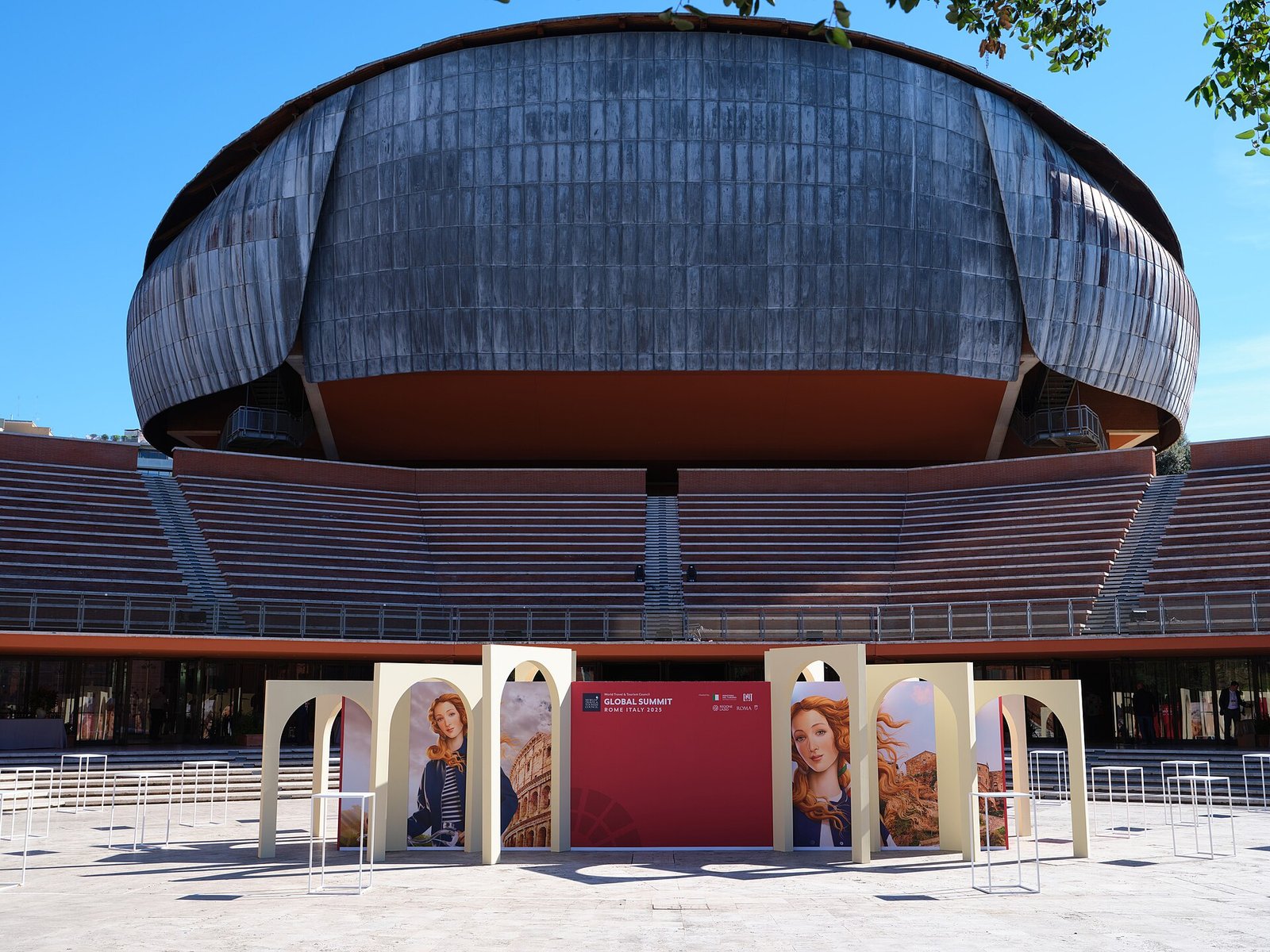
Eugenio Bennato plays Auditorium Parco della Musica Ennio Morricone on Saturday, January 16, 2027 at 20:00, in Sala Petrassi, Viale Pietro de Coubertin 30 (00196 Rome). It is a concert by the Neapolitan singer-songwriter who founded Taranta Power, whom the official page presents as the great master of Italian folk music, now close to 50 years of career. You get there by metro line A to Flaminio and then tram 2, or by bus 910 from Termini, with no transfers. The complex has paid parking. Tickets start at 25 euros according to the official Auditorium page and are bought on the venue's official website, which links to the authorized presale network, or at the box office.
Bennato returns to Rome with a repertoire that spans six decades: from the Nuova Compagnia di Canto Popolare to the tarantella put back into circulation around the world, to songs about migration and the Mediterranean. Sala Petrassi, the most intimate of the three large halls, is the right size for a concert that lives on rhythm and storytelling.
The Eugenio Bennato concert in Sala Petrassi
The Auditorium's presentation describes a journey in music that continues: rhythms and words born on the southern shores of the Mediterranean, from southern thought and from encounters with different stories and cultures.
The themes
According to the official page, Bennato remains a reference for the modernity of his sounds and the relevance of his lyrics, centered on the hottest topics of the present: migration, respect for diversity, solidarity, dangers of globalization and extreme capitalism. It is folk music that does not look back, but uses tradition to speak about today.
Taranta Power
The heart of the concert is the legacy of Taranta Power, the movement founded in 1998 that, the presentation says, gave new life to the great musical traditions of our Souths and opened international markets to them. Pizzica and tarantella, in this key, are not postcard folklore but a living language.
The setlist
The setlist is not published, and neither is the lineup that will be on stage. Bennato's repertoire includes the hits of the 1980s, such as Le città di mare, the Taranta Power pieces and the songs from the most recent albums, from Sponda sud to Da che Sud è Sud.
Date, time and tickets
There is only one concert: Saturday, January 16, 2027 at 20:00, in Sala Petrassi, with tickets starting at 25 euros.
Where to buy
Tickets are bought from the button on the event page of the Auditorium's official website, which links to the authorized presale network, or at the complex's box office. In the winter months the box office, according to the site, is open from 11:00 to 20:00, Sundays and holidays included.
The price
The page lists prices starting at 25 euros. The fare for each seat appears on the hall map when you choose.
The same evening, in the next hall
At the same hour, in Teatro Studio Borgna, Kay McCarthy sings La voce dell'Irlanda. Two folk concerts at once: southern Italy and Ireland a few meters apart, on the same evening.
Eugenio Bennato: biography
Eugenio Bennato was born in Naples on March 16, 1948. A singer-songwriter, musician and multi-instrumentalist, he plays voice, guitars, mandolin, mandola, mandoloncello, accordion and tammorra.
Family and studies
The son of Carlo Bennato and Adele Zito, he is the brother of Edoardo Bennato and Giorgio Zito, and belongs to the school of Neapolitan singer-songwriters along with Pino Daniele, Tony Esposito, Alan Sorrenti and James Senese. After classical high school he earned a degree in physics at the Federico II University of Naples: a detail that always surprises those who discover it.
The Nuova Compagnia di Canto Popolare
In 1967 he was among the founders of the Nuova Compagnia di Canto Popolare, with which he recorded five albums between 1971 and 1975, from Lo Guarracino to Tarantella ca nun va 'bbona. It is the season of the rediscovery of Campanian folk music, which brought to the national stage songs that until then lived only in the villages.
Andrea Sacco and Musicanova
After the Nuova Compagnia, Bennato apprenticed in the circle of Andrea Sacco and his chitarra battente, in Carpino, on the Gargano. In 1976 he founded Musicanova with Carlo D'Angiò and released Garofano d'ammore, in which he pays homage to the three styles of the music of Carpino: montanara, rodianella and viestesana.
Soundtracks
With Carlo D'Angiò he wrote the music for the TV drama L'eredità della priora (1980), from which came the record Brigante se more, and for Sergio Staino's Cavalli si nasce, Ciak d'oro 1989. In 1999 he won the Nastro d'argento for the soundtrack of Maurizio Sciarra's La stanza dello scirocco. He also wrote the music for Maurizio Nichetti's Domani si balla! and, with his brother Edoardo, for Totò Sapore e la magica storia della pizza.
Le città di mare and Sanremo
The commercial successes came in the 1980s: Sole sole in 1986, in the soundtrack of Rimini Rimini, and above all Le città di mare in 1989, sung as a duet with Edoardo. In 1990 he went to the Sanremo Festival with Tony Esposito and Novecento aufwiedersehen. In 2008 he returned with Grande Sud and placed tenth.
Taranta Power and the Mediterranean
In 1998 Eugenio Bennato founded Taranta Power, a movement to promote the taranta through music, film and theater. The album of the same name came out in 1999.
The tour in Eastern Europe
The first Taranta Power tour, in 1999, stopped in Belgrade, Sarajevo, Dubrovnik, Tallinn, Warsaw, Prague, Pristina and Skopje: cities just out of wars and regime changes, where the tarantella of southern Italy arrived as music of celebration and encounter.
The tarantella school
In the following years he released Lezioni di tarantella and Tarantella del Gargano, and founded in Bologna the Scuola di tarantella e danze popolari del Mediterraneo, the first in Italy devoted to recovering, studying and spreading the dances of the South. In 2006 he taught at the Ethnomusicology Laboratory of the Suor Orsola Benincasa University in Naples.
Che il Mediterraneo sia
In 2002 Che il Mediterraneo sia came out, followed by an international tour that ended in 2004 at the Cairo Opera. In 2007 Sponda sud widened the gaze to Africa. In 2011 came Questione meridionale, in 2017 Da che Sud è Sud.
20 years of Taranta Power
On December 1, 2018, Bennato celebrated the movement's 20 years in Piazza del Plebiscito in Naples, with the masters of the taranta and the voices of Arisa, Dolcenera and Pietra Montecorvino. In 2023 the show Vento popolare, with the Orchestra della Magna Grecia conducted by Roberto Gianola, was presented in Taranto for the centenary of the Province.
Cologne and German radio
On April 28, 2022, the Italian Cultural Institute of Cologne, with the radio station WDR Cosmo, organized a concert by Eugenio Bennato and Taranta Power in the Großer Sendesaal of the WDR, for the 60 years of the Italian-language radio program. For Italian emigrants in Germany, an evening of tarantella in one of the historic halls of German public radio: the music of the South arriving where the South had emigrated.
The essential discography of Eugenio Bennato
Eugenio Bennato's discography counts five albums with the Nuova Compagnia di Canto Popolare, four with Musicanova and 13 studio albums as a solo artist, plus compilations and soundtracks.
The years of research
With the Nuova Compagnia di Canto Popolare, three self-titled albums, Li sarracini adorano lu sole and Tarantella ca nun va 'bbona came out between 1971 and 1975. With Musicanova came Garofano d'ammore (1976), Musicanova (1978), Quanno turnammo a nascere (1979) and Festa festa (1981), plus the soundtrack Brigante se more (1980).
The singer-songwriter
As a soloist Bennato debuted in 1983 with an album bearing his name, for CGD. Eughenes (1986), Le città di mare (1989), Novecento, auf Wiedersehen (1990) and Mille e una notte fa (1997) followed: the years in which the researcher also became a writer of chart songs.
Taranta Power and beyond
From 1999 the discography follows the movement: Taranta Power, Che il Mediterraneo sia (2002), Da lontano (2004), Sponda sud (2007), Grande Sud (2008), Questione meridionale (2011), Da che Sud è Sud (2017) and Qualcuno sulla terra (2020), with Le Voci del Sud. The compilations Lezioni di tarantella, Eugenio Bennato collection and Canzoni di contrabbando sum up the path.
Awards
Besides the 1999 Nastro d'argento and the 1989 Ciak d'oro with Carlo D'Angiò, Bennato received the Lunezia award in 2008 for the musical and literary value of Grande Sud, the Armando Gill award in 2011 and the Gatta Cennerentola award in 2019.
How to plan the evening
A concert at 20:00 on a Saturday in Flaminio lends itself to a full evening: an aperitivo in the neighborhood, the concert, dinner afterward in Ponte Milvio.
For those from outside Rome
Those arriving by car can leave it in the Auditorium's parking lot and not move it until the return. Those arriving by train at Termini have bus 910, which takes you to the complex with no transfers.
For those staying in the center
Tram 2 from Piazzale Flaminio is the simplest solution, going and coming back. On the way out, with two halls emptying together, a taxi booked in advance avoids the wait.
When to buy
A hall of 673 seats, on a Saturday night, with an artist who has a devoted audience: in our view it is worth buying as soon as you decide, to avoid ending up in the side seats.
Sala Petrassi
Sala Petrassi is the most intimate of the three large halls of Auditorium Parco della Musica: 673 seats, inaugurated on April 21, 2002 together with Sala Sinopoli.
The name
The hall bears the name of Goffredo Petrassi, one of the major Italian composers of the 20th century. On the day of the inauguration, already very old, he wanted to be present, and in the complex his Ouverture da concerto for orchestra, written in 1931, was given its world premiere.
The cherry wood
The walls of the Petrassi are lined with cherry wood, which gives the hall a warm color. Fewer than 700 seats make contact with the stage direct. For a concert that lives on rhythm and clapping hands, it is almost an indoor town-square party in scale.
Where to sit
In Sala Petrassi the center rows of the orchestra level give the best balance between voice and instruments. Very lateral seats lose part of the sound, and with a tammorra on stage the balance matters.
Auditorium Parco della Musica Ennio Morricone
The Auditorium Parco della Musica Ennio Morricone is Renzo Piano's complex in Flaminio, opened in 2002: Sala Santa Cecilia, Sala Sinopoli with 1,133 seats, Sala Petrassi with 673, Teatro Studio Borgna with about 300, and the open-air cavea.
A city of music
Around the halls are the cavea named after Luciano Berio, the hanging gardens dedicated to Claudio Abbado, the Museum of Musical Instruments of the Accademia di Santa Cecilia and a small archaeological museum with the finds of a Roman villa discovered during the works.
Music of every genre
The Fondazione Musica per Roma pairs jazz, singer-songwriters and world music with Santa Cecilia's symphonic season. The Bennato concert falls in this section of the program, together with Kay McCarthy's the same evening.
How to get to the Auditorium
The Auditorium is at Viale Pietro de Coubertin 30. From the center you take metro line A to Flaminio and then tram 2 to the Flaminia/Reni or Apollodoro stops.
By bus
From Termini, bus 910 arrives with no transfers. Lines 53, 168 and 982 also pass nearby. For Saturday-night schedules the ATAC planner is useful.
By train
The Roma-Nord railway stops at Piazza Euclide, from which the Auditorium is reached on foot or with a short bus ride.
By car
The complex has paid parking, surface and multi-level, with spaces reserved for people with disabilities. With two concerts at the same hour, it is best to arrive early.
What is around the Auditorium
The Auditorium sits between Villa Glori, the Olympic Village and the Corso di Francia viaduct. A few minutes away are the MAXXI and the Teatro Olimpico.
Toward the river
Going down toward the Tiber you cross the Ponte della Musica and arrive at the Foro Italico. Farther north, Milvian Bridge is the Saturday-night gathering spot.
Toward the center
Tram 2 takes you in a few minutes to Piazzale Flaminio, where Piazza del Popolo and Villa Borghese begin.
Where to eat before or after the concert
In the Auditorium are a bar and a café in the foyer and a bar-restaurant with access from the street as well. Between Via Flaminia, the Olympic Village and Piazza Mancini you find trattorias, pizzerias and bars.
Before 20:00
To eat first you need to sit down around 18:30 and book: on Saturdays the places in the area fill up.
After the concert
After the concert the widest choice is in Ponte Milvio, where on Saturday night places stay open late. After an evening of tarantella, a Neapolitan pizza is the most coherent way to close.
Accessibility, age and practical information
For accessibility at Sala Petrassi, it is best to write in advance to the Fondazione Musica per Roma, info@musicaperroma.it, to find out which entrance to use and which seats to choose.
With teenagers
The Bennato concert is suitable for teenagers and families too: the rhythm of the tarantella involves everyone, and the lyrics about migration and the Mediterranean speak to the young. The access rules for minors are those indicated by the Auditorium at the time of purchase.
Arriving on time
It is best to be in the complex at least 20 minutes early: the halls are reached by crossing the cavea, and on Saturday with two concerts the foyer is crowded.
Mid-January in Rome
On January 16 the city has gotten through the holidays, the museums breathe and hotel prices drop: it is a good weekend for a short trip.
The weather
In January the evenings are cold and damp. The stretch between the tram and the entrance is outdoors. A coat and a folding umbrella are the minimum equipment.
A Saturday in Flaminio
Morning at the MAXXI, afternoon between Piazza del Popolo and Villa Borghese, evening in Sala Petrassi: a Saturday entirely north of the center, without ever taking the car.
A curiosity about Eugenio Bennato at Auditorium Parco della Musica, January 16, 2027
The curiosity that always surprises is his degree. Eugenio Bennato, the master of the tarantella, earned a degree in physics at the Federico II University of Naples. The researcher of village melodies, who spent years in the circle of a singer from the Gargano to learn the chitarra battente, comes from a scientific background. Perhaps that is also why his work on folk music has always had a method, made of field research, cataloguing of styles, teaching.
The second curiosity concerns a citizenship. On September 1, 2018, Bisignano, in the province of Cosenza, named him an honorary citizen as one of the singer-songwriters who have done the most to spread around the world the luthier's art of the chitarra battente, an ancient tradition of the town carried on by the De Bonis family. The instrument that Bennato learned from Andrea Sacco in Carpino gave him back, 40 years later, a recognition from a workshop of Calabrian luthiers.
The third is a stance: in 2009, on a radio program, he said he was in favor of Esperanto, as a neutral language able to protect languages and dialects from the weight of English. For a musician who sings in Neapolitan, it is a coherent choice.
Something nobody tells you about Eugenio Bennato at Auditorium Parco della Musica, January 16, 2027
What is not often said is how much Eugenio Bennato's career has passed through film and television. The public knows him for Le città di mare and for the tarantella, but his too are the music for Anton Giulio Majano's TV drama L'eredità della priora, Maurizio Nichetti's film Domani si balla!, Sergio Staino's Cavalli si nasce, awarded the Ciak d'oro, Claudio Fragasso's Teste rasate, Maurizio Sciarra's La stanza dello scirocco, which earned him the Nastro d'argento in 1999, and the cartoon Totò Sapore, signed with his brother Edoardo.
The second detail concerns Africa. After 2017 Bennato took his chorale on the nativity, Qualcuno sulla terra, to six North African capitals: Rabat, Cairo, Tunis, Algiers, Oran, Tangier. And in 2018 the European Parliament invited him to play in Brussels on Human Rights Day. The Mediterranean he sings about, in short, is not a metaphor: it is a network of real concerts, on both shores.
The third detail is practical: the same evening Kay McCarthy plays in Teatro Studio. On the way out the cavea fills with two different audiences, so it is best not to be in a hurry.
The advice I give you for visiting Eugenio Bennato at Auditorium Parco della Musica, January 16, 2027
My advice is to choose the central orchestra level of Sala Petrassi, at a medium distance from the stage. A Bennato concert mixes voice, guitars, accordion and traditional percussion like the tammorra. From the center rows the balance among the instruments is best, and you can see clearly who plays what. The side seats, in this hall, lose part of the sound.
Second piece of advice: listen first to Taranta Power and Le città di mare. The first record will give you the rhythm of the movement Bennato founded in 1998. The song with his brother Edoardo will remind you of his pop singer-songwriter side, which many have forgotten. You will arrive knowing what to expect from the two souls of the concert.
Third: leave room for movement. The tarantella is music to dance to, and even in a concert hall the audience often ends up clapping and standing. Comfortable shoes and a coat left at the coat check help.
Finally, in our view, it is worth booking dinner after the concert, not before: you come out wanting to stay together, and Ponte Milvio on Saturday night is a few minutes away. Those with friends who love Irish folk can propose the double evening: each at their own concert, then everyone together at the table.
Another well-known fact, yet rarely mentioned
It is well known that Eugenio Bennato is Edoardo's brother, and that the two sang Le città di mare together in 1989. It is less often remembered that Eugenio was among the founders of the Nuova Compagnia di Canto Popolare, in 1967, that is, of one of the laboratories from which the rediscovery of Italian folk music in the second half of the 20th century was born. The first records of the Nuova Compagnia, between 1971 and 1975, put back into circulation Campanian songs that survived only in the memory of the villages. Many of the tarantellas danced today at festivals come through those records.
A second fact known to enthusiasts but rarely cited is the apprenticeship. After the Nuova Compagnia, Bennato joined the circle of Andrea Sacco, a singer and chitarra battente player from Carpino, on the Gargano. The first Musicanova record, Garofano d'ammore from 1976, pays homage to precisely the music of Carpino, with its three styles: the montanara, the rodianella and the viestesana. It is a way of working more like an ethnomusicologist than a singer-songwriter.
The third concerns teaching: the Scuola di tarantella e danze popolari del Mediterraneo, founded in Bologna, was the first in Italy devoted to these dances. The master, in short, was one in the literal sense too, up to teaching at the Ethnomusicology Laboratory of Suor Orsola Benincasa in 2006.
The right photo to take at Eugenio Bennato at Auditorium Parco della Musica, January 16, 2027
You don't take photos or film during the concert: a raised phone bothers those seated behind and takes attention away from music that asks to be lived. Photos are taken before and after.
The nicest is the one of the cavea in the dark, before going in. At 19:30 in mid-January Renzo Piano's three halls are lit, the foyer windows come on and the stone steps of the cavea become an empty square. Position yourself high on the steps and frame the Petrassi and the Sinopoli together, with the dark sky above. It is the winter image of the Auditorium.
Inside Sala Petrassi, before the lights go down, it is worth photographing the cherry wood walls, which give the hall its warm color. It is a detail that conveys the intimate atmosphere well in a photo. With the hall still lit and the stage ready, the instruments of the tradition waiting under the lights, you get the most honest image of the evening: that of village music arrived in a concert hall designed by a world-famous architect.
On the way out, with the audiences of the two concerts meeting in the cavea, a wide photo from the edge of the steps captures the moment when the Auditorium truly becomes a square. If the evening is clear, the night view toward the Olympic Village closes the story.
Some important events that took place here in history
For more than 60 years Rome remained without a hall built for music: in 1936 the Augusteo had been demolished, and the orchestras had made do with makeshift spaces. In 1992 the city council chose the area next to the Olympic Village, and in 1993 Renzo Piano won the invitation-only competition. The excavations brought to light a Roman villa of the 3rd century BC, built on an archaic farm of the 6th century. The project was modified and the finds are now displayed under the cavea.
On April 21, 2002, Rome's birthday, Sala Petrassi and Sala Sinopoli were inaugurated, with Goffredo Petrassi present at the opening of the hall that bears his name. On December 21 of the same year Sala Santa Cecilia opened, with the orchestra conducted by Chung Myung-whun. Since 2003 the Auditorium has hosted the season of the Accademia di Santa Cecilia, since 2006 the Rome Film Festival. In 2020 it was named after Ennio Morricone.
Folk music entered early, alongside jazz and the singer-songwriter tradition. Bennato himself played there on March 28, 2025, in a concert titled Musica dal mondo. The return on January 16, 2027, confirms a relationship that lasts.
Who has passed through Eugenio Bennato at Auditorium Parco della Musica, January 16, 2027
Over more than 20 years, the conductors of the Santa Cecilia season, the jazz players of the Roma Jazz Festival, and the protagonists of Italian and international song have passed through the Auditorium's halls. This season, among others, Daniel Harding and Jakub Hrůša for the symphonic series, Paolo Fresu and Giovanni Tommaso for jazz, the Nomadi for song, at the end of January in Sala Sinopoli.
In Eugenio Bennato's career there are traveling companions who explain his place here: Carlo D'Angiò, with whom he founded Musicanova and wrote soundtracks. Andrea Sacco, the master of the chitarra battente from Carpino. Tony Esposito, his companion at Sanremo in 1990. His brother Edoardo. Pietra Montecorvino, voice of Qualcuno sulla terra. Arisa and Dolcenera, guests at the party for the 20 years of Taranta Power in Piazza del Plebiscito.
On January 16, 2027, Eugenio Bennato passes through Sala Petrassi, with the musicians who join him on tour. In the next hall, at the same hour, Kay McCarthy with her ensemble. Two folk traditions, that of southern Italy and the Irish one, in the same complex on the same evening: a coincidence of the calendar that tells well what the Auditorium has become.
Frequently asked questions about Eugenio Bennato at the Auditorium
When does Eugenio Bennato play in Rome in 2027?
Eugenio Bennato plays at Auditorium Parco della Musica Ennio Morricone on Saturday, January 16, 2027 at 20:00, in Sala Petrassi. It is a single date in Rome in the Auditorium's calendar.
How much do tickets for Eugenio Bennato cost?
Tickets for the Eugenio Bennato concert at the Auditorium start at 25 euros according to the official page. You buy them online from the Auditorium website, which links to the authorized presale network, or at the complex's box office.
Who is Eugenio Bennato?
Eugenio Bennato is a singer-songwriter and multi-instrumentalist born in Naples in 1948, among the founders of the Nuova Compagnia di Canto Popolare and of Musicanova, creator in 1998 of the Taranta Power movement. He won the 1999 Nastro d'argento for La stanza dello scirocco.
What is Taranta Power?
Taranta Power is the movement founded by Eugenio Bennato in 1998 to promote the taranta through music, film and theater. The album of the same name is from 1999, and the first tour stopped in Eastern European cities such as Belgrade, Sarajevo, Prague and Warsaw.
How many seats does Sala Petrassi have?
Sala Petrassi at Auditorium Parco della Musica has 673 seats and is the most intimate of the three large halls. Inaugurated in 2002, it has walls lined with cherry wood.
How do you get to Auditorium Parco della Musica?
Auditorium Parco della Musica is at Viale Pietro de Coubertin 30. You get there by metro line A to Flaminio and then tram 2, or by bus 910 from Termini. Lines 53, 168 and 982 also pass nearby. There is paid parking.
What other concerts are there the same evening?
On Saturday, January 16, 2027 at 20:00, while Eugenio Bennato plays in Sala Petrassi, in the Auditorium's Teatro Studio Borgna Kay McCarthy sings La voce dell'Irlanda, a concert of traditional Irish music.
The final advice on Eugenio Bennato at the Auditorium
The Eugenio Bennato concert is the right evening for those who want to warm up a January Saturday with the rhythm of the South: tarantella, songs about the Mediterranean, almost 50 years of career in a hall of fewer than 700 seats. In our view it is worth buying early a center seat in the orchestra level, listening again to Taranta Power and Le città di mare in the days before, arriving with the cavea already lit and booking a pizza in Ponte Milvio for afterward. If you have friends who love Irish music, bring them: in the next hall is Kay McCarthy.
Article written by the editorial team of Tour Leader Pro, contact them for Private/Corporate/V.I.P. Tours and Experiences.
Planning a trip to Rome? The English-language guides to visiting the city are on ItalyPlanner.com.