È ancora troppo presto with Isabella Ragonese and Rodrigo D’Erasmo at Teatro dell’Opera, May 23, 2027
https://www.estateromana.com/en/rome/trip-planner/e-ancora-troppo-presto-with-isabella-ragonese-and-rodrigo-derasmo-at-teatro-dell/
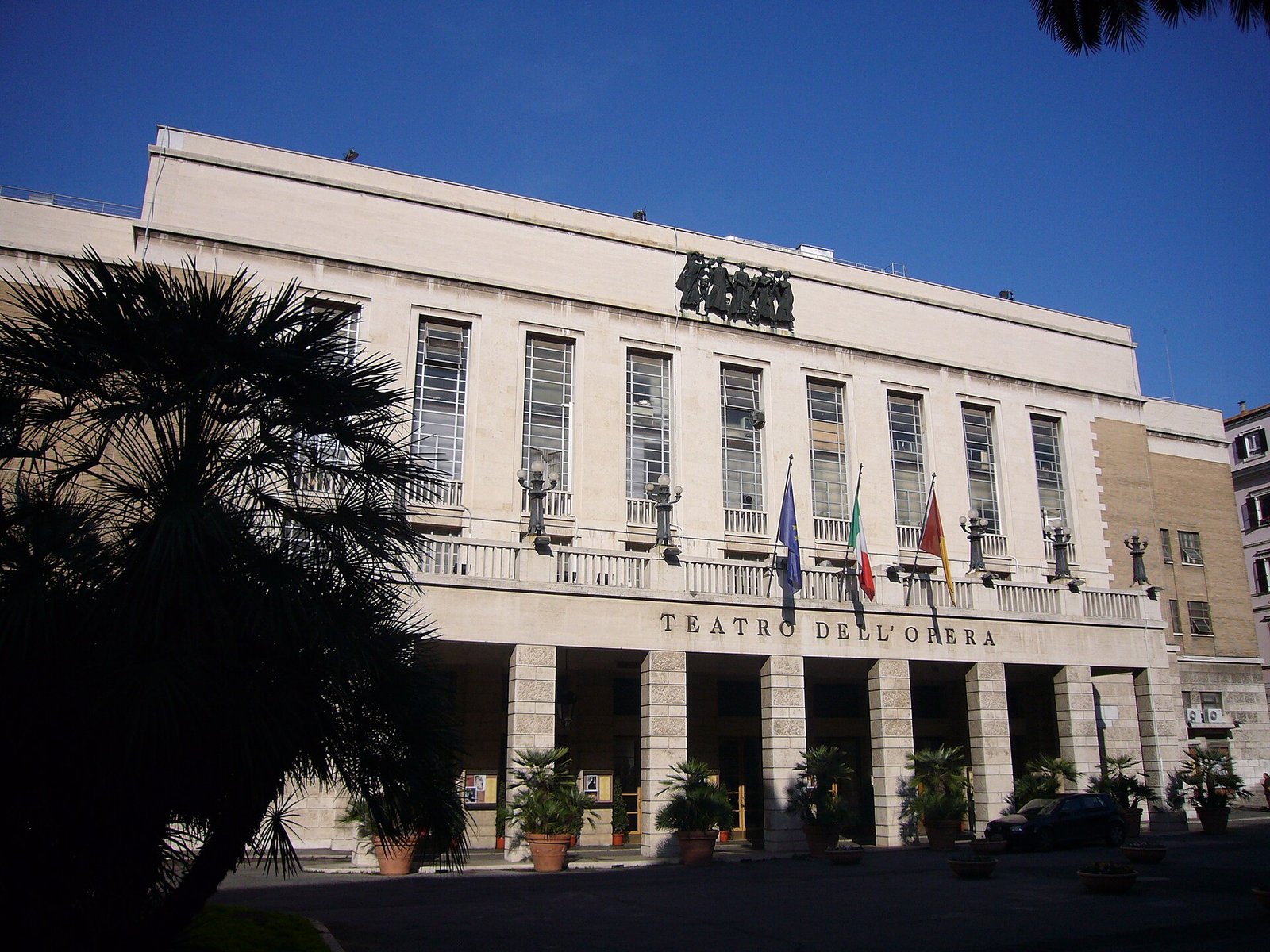
È ancora troppo presto with Isabella Ragonese, who directs and narrates, with texts by Gery Palazzotto and original music by Rodrigo D'Erasmo performed live, is on at Teatro Costanzi, the main hall of Teatro dell'Opera di Roma at Piazza Beniamino Gigli 7, on Sunday, May 23, 2027 at 18:00. The show marks the 35th anniversary of the Capaci and Via D'Amelio massacres. The theater is reached by Metro A, Repubblica Teatro dell'Opera stop, or by the buses running along Via Nazionale and Via Depretis. Prices are published on the official Teatro dell'Opera di Roma website. Tickets are sold on the venue's official website and at the box office at Piazza Beniamino Gigli 1.
Language: performed in Italian. No English version or English surtitles are announced.
È ancora troppo presto at Costanzi: date, time and tickets
È ancora troppo presto, It's still too early, has a single performance: Sunday, May 23, 2027 at 18:00, at Teatro Costanzi.
A single date
The official Teatro dell'Opera page lists one single performance, Sunday, May 23 at 18:00. There are no repeats: if you want to be there, plan ahead, also because the date coincides with an anniversary that in Rome, as across Italy, draws many events.
Tickets and prices
Tickets are sold on the official Teatro dell'Opera website and at the foundation's box office at Piazza Beniamino Gigli 1, next to the theater. Prices by section are published on the Prices page of the website. The theater asks you to buy only through authorized channels. For information, the numbers are 06 48160255 and 06 4817003.
Length
The length of the show isn't published. To plan your evening, ask the box office, especially if you're thinking of combining the show with other events on the same Sunday.
The address
Teatro Costanzi, Piazza Beniamino Gigli 7, 00184 Rome, between Via del Viminale and Via Nazionale, a few minutes from Piazza della Repubblica and Termini station.
What you'll see in È ancora troppo presto
È ancora troppo presto is a story for voice and live music that runs through some of Italy's darkest mysteries, from the murder of Aldo Moro to the 1992 mafia massacres.
A journey through Italian mysteries
The Teatro dell'Opera presentation traces the show's path: from the murder of Aldo Moro to the killing of Piersanti Mattarella, from the 1992 mafia massacres to the blanket of institutional cover-ups that the theater calls still highly relevant. The theater describes it as a painful journey with no shortcuts.
Judicial truth and historical truth
The heart of the text is a distinction. According to the presentation, in many cases judicial truths have served to soften the hunger for historical truth: the verdicts closed the trials, but not the questions. The title, It's still too early, reads in this key: too early to say we know everything, too early to close the file.
Voice and music
On stage there's a narrating voice, Isabella Ragonese's, who also directs, and the original music composed and played live by Rodrigo D'Erasmo. It's a pared-down form, between narrative theater and concert, in which words and sound build the story together.
The 35th anniversary
The show is presented on the 35th anniversary of the Capaci and Via D'Amelio massacres. On May 23, 1992, on the A29 highway near Capaci, a bombing killed judge Giovanni Falcone, his wife Francesca Morvillo and the bodyguards Vito Schifani, Rocco Dicillo and Antonio Montinaro. On July 19 of the same year, on Via D'Amelio in Palermo, judge Paolo Borsellino and five bodyguards died: Agostino Catalano, Emanuela Loi, Vincenzo Li Muli, Walter Eddie Cosina and Claudio Traina.
A form of civic theater
Narrating voice and live music are the classic tools of civic narrative theater, the form in which a performer tells the audience about real events, with few stage resources and many words. Brought into a 1,560-seat opera house, this intimate form asks the audience for focused listening, and gives back in return a closeness that big shows rarely offer.
Gery Palazzotto, author of the texts
Gery Palazzotto, born Gerlando, was born in Palermo on January 14, 1963: a journalist and writer, he has devoted an important part of his theater work to the mysteries of the 1992 massacres.
Journalism
A rock and jazz guitarist in his youth, Palazzotto began working in 1984 with Radio Rai Sicilia and Giornale di Sicilia as a music critic. In 1988 he was hired by the newspaper, becoming deputy managing editor in 1995, until 2008. Since 2012 he has been a columnist for the Sicilian edition of la Repubblica.
Novels
In 2004 he published the noir Di nome faceva Michele, featuring Inspector Giovanni Porzio, translated into Spanish, and in 2006 Giù dalla rupe, a semifinalist for the Scerbanenco Prize. He then cowrote, with Giacomo Cacciatore and other authors, Fotofinish, republished by Einaudi in 2011, and the novel Salina, la sabbia che resta.
Investigative operas
From 2015 to 2019 Palazzotto ran communications at Teatro Massimo in Palermo, and from 2019 to 2022 he ran its web TV. For Teatro Massimo he wrote, with Salvo Palazzolo, three investigative operas on the massacres: Le parole rubate in 2017, on the mysteries of Capaci and Via D'Amelio, I traditori in 2019, on the cover-up of Via D'Amelio investigation, and Cenere in 2022, which closes the trilogy. In 2023 he wrote L'Altro, his fourth opera for Teatro Massimo.
Recognition from Libera
On March 21, 2018, for the National Day against the mafia organized by the association Libera, Palazzotto received about 20,000 votes and the award for most popular journalist of the year. He is also the author of many true crime podcasts.
Isabella Ragonese, director and voice
Isabella Ragonese was born in Palermo on May 19, 1981: an actress, playwright and stage director, she is one of the most recognized faces of Italian cinema of the last 20 years.
Beginnings in theater
In 2000 she graduated in acting from the Teatès school in Palermo, run by Michele Perriera. She wrote, directed and performed her own plays such as Che male vi fo, Bestino and Mamùr, and in 1998 she won first prize in the national competition of the Istituto Nazionale del Dramma Antico with an essay on the figure of Hecuba.
Film
She made her film debut in 2006 with Emanuele Crialese's Nuovomondo. In 2008 she starred in Paolo Virzì's Tutta la vita davanti, which earned her a Nastro d'argento nomination. In 2010 she won the Nastro d'argento for best supporting actress for Daniele Luchetti's La nostra vita and Due vite per caso, and was host of the Venice Film Festival. In 2014 she played Paolina Leopardi in Mario Martone's Il giovane favoloso, and since 2016 she has played Marina, the deputy police chief's wife, in Rocco Schiavone.
Letizia Battaglia
In 2022 Ragonese played Palermo photographer Letizia Battaglia in the miniseries Solo per passione. It's a role that brings her directly close to the themes of È ancora troppo presto: Battaglia was the photographer who documented the mafia's most violent years in Palermo.
Civic theater
Her stage career also includes socially engaged work: Stefano Massini's staged reading on the murder of Ilaria Alpi in 2012, Massini's African Requiem in 2013, and more recently Colm Tóibín's Clytemnestra directed by Roberto Andò, in 2023.
Rodrigo D'Erasmo, the live music
Rodrigo D'Erasmo was born in São Paulo, Brazil, on November 13, 1976: a violinist, composer, arranger and multi-instrumentalist, Italian by adoption, he has been a member of Afterhours since 2008.
Collaborations
In his career he has worked with a great many Italian artists, including PFM, Simone Cristicchi, Il Teatro degli Orrori, Calibro 35, Daniele Silvestri, Nada and Le luci della centrale elettrica, and with international names like Steve Wynn, John Parish, Rokia Traoré and Piers Faccini. He played the introduction to Muse's Survival, the anthem of the London 2012 Olympic Games.
Sanremo and television
At the Sanremo Festival he conducted the orchestra for Diodato in 2014 and in 2020, when Fai rumore won the festival, and in 2021 he conducted four songs in competition. In 2016 he was a producer on X Factor alongside Manuel Agnelli.
The composer
D'Erasmo has also written film scores, like the one for Terapia di coppia per amanti in 2017. In È ancora troppo presto he composes and performs the original music live, in dialogue with Ragonese's voice.
A curious fact about È ancora troppo presto with Isabella Ragonese and Rodrigo D'Erasmo at Teatro dell'Opera, May 23, 2027
The strongest curious fact lies in the time. È ancora troppo presto begins on Sunday, May 23, 2027 at 18:00. The Capaci massacre happened on May 23, 1992 at 17:58: the show starts, 35 years later, two minutes after the time of the explosion. Teatro dell'Opera doesn't comment on the choice, but anyone entering the hall at that hour knows what was happening, at that same moment, on the A29 highway at the gates of Palermo.
The second curious fact concerns the performers. Gery Palazzotto and Isabella Ragonese are both from Palermo, and each in their own way has already gone through the history of the mafia in Palermo: he with the investigative operas written for Teatro Massimo, she by playing Letizia Battaglia. È ancora troppo presto brings this Sicilian memory into the capital's main opera house.
The third is about the venue. It's rare for an opera house to host a civic narrative show for voice and live music. That it happens at Costanzi, and on a date so charged with meaning, says how much Teatro dell'Opera sees the memory of those years as a shared heritage.
Teatro Costanzi, the show's hall
Teatro Costanzi today seats 1,560, across the orchestra level, three tiers of boxes, the balcony and the gallery, under a dome frescoed by Annibale Brugnoli. When it opened in 1880 it could hold up to 2,212 spectators.
A hall designed for sound
The builder Domenico Costanzi commissioned the design in 1879 from Milanese architect Achille Sfondrini, a theater specialist, who conceived the horseshoe hall as a sounding board. Construction took only 18 months. For a show of voice and live music, the shape of the hall is a concrete advantage: the words reach all the way to the gallery.
Piacentini and the chandelier
In 1926, when the City bought it, Marcello Piacentini renovated the theater and moved the entrance onto Piazza Beniamino Gigli. For the second inauguration, on February 27, 1928, the chandelier with 27,000 crystal drops was lit. In 1958, ahead of the 1960 Olympics, Piacentini designed the makeover that gave the building its current look.
The foundation and its halls
Teatro dell'Opera di Roma also runs Teatro Nazionale at Via del Viminale 51 and, in summer, the Baths of Caracalla. The full profile of the theater is on the Rome Opera House page.
Something nobody tells you about È ancora troppo presto with Isabella Ragonese and Rodrigo D'Erasmo at Teatro dell'Opera, May 23, 2027
What almost nobody mentions is that the week of È ancora troppo presto is one of the busiest of the Teatro dell'Opera season. Until May 22, at Costanzi, Shostakovich's Lady Macbeth of the Mtsensk District is on, and from May 19 to 26, at Teatro Nazionale, Nicola Sani's Code: Unknown has its world premiere. On Sunday the 23rd, Code: Unknown is at 16:30 at Teatro Nazionale and È ancora troppo presto at 18:00 at Costanzi: the two halls are a few minutes apart on foot, but check the length of the opera before booking both.
The second thing concerns the tone of the evening. È ancora troppo presto isn't an official commemoration, and it isn't a comforting show: the presentation speaks of a painful journey, with no shortcuts, and of cover-ups that are still relevant. If you arrive expecting a ritual evening of remembrance, you'll find instead a text that asks questions.
The third concerns the Costanzi house rules: the cloakroom is mandatory for umbrellas, bags, helmets and recording devices, no phones or photos in the hall, and once the show has started you can't get into the orchestra seats.
How to get to Teatro Costanzi
Teatro Costanzi is reached by Metro A, Repubblica Teatro dell'Opera stop, a few minutes' walk from Piazza Beniamino Gigli.
By metro
Line A stops at Repubblica Teatro dell'Opera, in Piazza della Repubblica. From the square you reach the theater in a few minutes on foot. From Termini you can take the same line or walk.
By bus
The theater lists these lines: on Via Nazionale H, 40, 60, 64, 70, 71, 170, 116T. On Via Depretis 70 and 71. On Via Cavour 16, 75, 84, 150 (holidays), 360, 590, 649, 714. At Termini station 16, 38, 75, 86, 90, 217, 310, 360, 649, 714. On Sundays frequencies and routes may change: check them on the transit company's journey planner.
By taxi
There's a taxi service for the audience at the theater entrance, with Radio Taxi 6645. The theater also lists the number 06 6696.
By car
Driving isn't recommended: the area between Via Nazionale, Via del Viminale and Termini is central and congested, and the theater doesn't list its own parking. If you're coming from out of town, leave your car at a park-and-ride along line A.
My tip for È ancora troppo presto with Isabella Ragonese and Rodrigo D'Erasmo at Teatro dell'Opera, May 23, 2027
My first tip is to arrive early and take a few minutes of silence before going in. The show starts at 18:00 on May 23, exactly 35 years after the Capaci massacre: it's an evening that asks for attention, and the Costanzi foyer, with its stucco, is the right place to leave the noise of Sunday outside.
My second tip concerns the seat. For a show of voice and music, the view matters less than the sound: even a side box, usually cheaper, gives full sound in Sfondrini's horseshoe hall. If you want to see the rapport between Ragonese and D'Erasmo up close, choose the orchestra level.
The third is to prepare, if you like, with some reading. Accounts of the Capaci and Via D'Amelio massacres, or Palazzotto's investigative operas for Teatro Massimo, are a good way to arrive at the hall knowing what will be evoked. It's not essential: the text is built to speak even to those who weren't yet born in 1992.
Another well-known fact, yet one rarely mentioned
It's well known that the Capaci and Via D'Amelio massacres marked Italy in 1992, and that the names of Giovanni Falcone and Paolo Borsellino became the symbol of the fight against the mafia. It's mentioned less often that eight bodyguards also died in those two massacres, and that among them was Emanuela Loi, one of the first Italian policewomen assigned to a protection detail and the first woman of the State Police killed on duty.
The fact says something about how memory is built. Everyone remembers the judges' names, while those of the officers, of Francesca Morvillo, a magistrate and Falcone's wife, and of the wounded often stay in the background. A show that insists on the gap between judicial truth and historical truth is also an invitation to remember the names mentioned less often.
There's a second rarely mentioned fact. The text of È ancora troppo presto doesn't stop at 1992: it starts from the murder of Aldo Moro and passes through that of Piersanti Mattarella, president of the Sicilian Region, killed in Palermo on January 6, 1980. It's a genealogy of Italian mysteries, not a single story.
Around Teatro Costanzi: Viminale, Repubblica and Monti
Teatro Costanzi stands between Via del Viminale, Via Nazionale and Piazza della Repubblica, a few minutes from Termini station: an area built after 1870 for the new capital, with a lot to see on foot.
Repubblica and the Baths
Walking up toward Piazza della Repubblica you find the Baths of Diocletian and the Basilica of Santa Maria degli Angeli. Toward Termini is Palazzo Massimo alle Terme, with the collections of the Museo Nazionale Romano.
Via Nazionale and Monti
Walking down Via Nazionale you reach Palazzo delle Esposizioni and, further down, the Monti neighborhood, with its narrow streets and evening life: the right direction for dinner after the show.
Santa Maria Maggiore
On the other side, across Via Cavour, you reach the Basilica of Santa Maria Maggiore in a quarter of an hour: a sensible stop in the afternoon, before going to the theater.
The right photo to take at È ancora troppo presto with Isabella Ragonese and Rodrigo D'Erasmo at Teatro dell'Opera, May 23, 2027
The right photo is taken in Piazza Beniamino Gigli, before going in: the Costanzi facade remodeled by Piacentini, with the show's poster. At 17:30 in late May the light is still high, and the square is as quiet as only Roman Sundays can be.
Photos are forbidden in the hall, with or without flash, and for a show of this kind the rule should be respected with particular care: silence is part of the evening. Before the lights go down, from your seat, it's worth looking up at Brugnoli's dome and the crystal chandelier, without taking pictures.
The third photo is for the way out, in Piazza della Repubblica, with the lit-up Fountain of the Naiads: an image of Rome to close an evening devoted to Palermo.
Some important events that happened here in history
Teatro Costanzi opened on November 27, 1880 with Rossini's Semiramide and became Teatro dell'Opera di Roma in 1946. In between came two world premieres that made opera history.
1880, the opening
On November 27, 1880 the theater opened with Rossini's Semiramide, in the presence of Umberto I and Queen Margherita.
1890 and 1900, Cavalleria and Tosca
On May 17, 1890 Costanzi hosted the world premiere of Pietro Mascagni's Cavalleria rusticana, and on January 14, 1900 that of Giacomo Puccini's Tosca.
1926-1928, Teatro Reale dell'Opera
In 1926 the City of Rome bought the theater, which became Teatro Reale dell'Opera. On February 27, 1928 came the second inauguration, with Arrigo Boito's Nerone.
1946 and 1958
In 1946 the theater took the name Teatro dell'Opera di Roma. In 1958 Marcello Piacentini designed the final makeover ahead of the 1960 Olympics.
Who has passed through È ancora troppo presto with Isabella Ragonese and Rodrigo D'Erasmo at Teatro dell'Opera, May 23, 2027
Teatro Costanzi has welcomed Umberto I and Queen Margherita at the 1880 opening, and then Pietro Mascagni, Giacomo Puccini and Ottorino Respighi, whom the theater names as the musicians who shaped its destiny. There's Emma Carelli, who from 1912 brought La fanciulla del West, Turandot and Diaghilev's Ballets Russes to Rome. There's Marcello Piacentini, who reworked the building in 1926 and 1958. There are conductors like Victor de Sabata, Herbert von Karajan, Carlo Maria Giulini and Riccardo Muti.
On May 23, 2027 Isabella Ragonese and Rodrigo D'Erasmo come to Costanzi, with Gery Palazzotto's texts, and with them, evoked, Giovanni Falcone, Francesca Morvillo, Paolo Borsellino, the bodyguards, Piersanti Mattarella and Aldo Moro. In our opinion it's one of the rare cases in which an opera house becomes, for one evening, a place of civic memory.
Accessibility and practical information
For accessibility needs at Teatro Costanzi, contact the box office before you buy, at 06 48160255 or 06 4817003: it's the surest way to get a suitable seat and updated information on entrances and services.
The gallery
The theater excludes the gallery from the accessible route of its tours: if you have limited mobility, choose the orchestra level, boxes or balcony, following the box office's advice.
With teens
È ancora troppo presto is a valuable show for high school students studying recent Italian history: the 1992 massacres, the Moro case and the Mattarella murder are chapters covered at school, and hearing them told by an actress in a great theater leaves a mark. The official page lists no age limits, but the themes are harsh.
Where to eat before and after the show
Around Teatro dell'Opera the options are concentrated on Via Nazionale, Via del Viminale, the streets toward Termini and the Monti neighborhood. The theater allows food and drink only in the bars inside.
Before 18:00
With an 18:00 start on a Sunday, you can have a relaxed lunch and a coffee nearby before going in. Palazzo Massimo alle Terme, a few minutes away, is a good stop for the early afternoon.
After the show
Monti is the most natural choice for dinner: walk down from Via Nazionale and you'll find osterias, wine bars and pizzerias. On Sunday evenings many kitchens close early: book ahead.
House rules and dress code at Costanzi
At Teatro dell'Opera di Roma dark attire is appreciated on opening nights and at premieres. For other evenings the theater doesn't list a dress code. For a Sunday afternoon, neat clothes are enough.
Cloakroom and phones
Umbrellas, hats, bags, helmets, cameras and recording devices must be left in the cloakroom. In the hall cell phones may not be used, and photos, with or without flash, and any recording are forbidden. Food and drinks are allowed only in the theater's bars.
Latecomers
Once the show has started you can't get into the orchestra seats or the numbered seats in the balcony and gallery: latecomers wait in the foyer. For a spoken show, coming in after the start means losing the thread of the story: be in Piazza Beniamino Gigli by 17:30.
May 2027 at Teatro dell'Opera
È ancora troppo presto falls in the middle of the Teatro dell'Opera di Roma spring season, between two very different titles.
Before, Shostakovich
From May 14 to 22, 2027 Costanzi presents Shostakovich's Lady Macbeth of the Mtsensk District. If you come to Rome for the weekend of May 22 and 23, you can see the opera's last performance on Saturday and Ragonese's show on Sunday, in the same hall.
On the same days, a new opera
At Teatro Nazionale, from May 19 to 26, Nicola Sani's Code: Unknown, commissioned by Teatro dell'Opera, has its world premiere. It's another form of contemporary theater, which shares with È ancora troppo presto the idea of an opera stage open to the languages of today.
After, Il trovatore
In June Costanzi returns to the great repertoire with Verdi's Il trovatore, from June 22 to July 1, 2027.
Frequently asked questions about È ancora troppo presto
When is È ancora troppo presto on at Teatro dell'Opera?
È ancora troppo presto is on at Teatro Costanzi, the main hall of Teatro dell'Opera di Roma, on Sunday, May 23, 2027 at 18:00, for a single performance, on the 35th anniversary of the Capaci and Via D'Amelio massacres.
Who is on stage?
In È ancora troppo presto Isabella Ragonese directs and is the narrating voice, and Rodrigo D'Erasmo composes and performs the original music live. The texts are by Palermo journalist and writer Gery Palazzotto.
What is È ancora troppo presto about?
È ancora troppo presto runs through some of Italy's darkest mysteries, from the murder of Aldo Moro to that of Piersanti Mattarella, from the 1992 mafia massacres to the institutional cover-ups, questioning the gap between judicial truth and historical truth.
Where do you buy tickets?
Tickets for È ancora troppo presto are sold on the official Teatro dell'Opera di Roma website and at the box office at Piazza Beniamino Gigli 1, next to Costanzi. Prices by section are published on the Prices page of the website.
How do you get to Teatro Costanzi?
Teatro Costanzi, at Piazza Beniamino Gigli 7, is reached by Metro A, Repubblica Teatro dell'Opera stop, or by the buses on Via Nazionale and Via Depretis. From Termini it's a few minutes on foot.
Is it suitable for teens?
È ancora troppo presto is suitable for high school students interested in recent Italian history: it tells the story of the 1992 massacres and other Italian mysteries with voice and live music. The official page lists no age limits, and the themes are painful.
How long is the show?
The length of È ancora troppo presto isn't published on the Teatro dell'Opera di Roma page. If you want to combine the 18:00 performance at Costanzi with other Sunday events, ask the box office at 06 48160255 and 06 4817003.
Final tip on È ancora troppo presto
My tip is to book early, because there's only one date, and to arrive at Costanzi with time for a moment of reflection: the show starts at 18:00 on May 23, 2027, 35 years after the Capaci massacre. È ancora troppo presto brings into the main hall of Teatro dell'Opera the voice of Isabella Ragonese, the music of Rodrigo D'Erasmo and the texts of Gery Palazzotto, three different ways of refusing to close the file. In our opinion it's the evening of the Roman season that asks the most of its audience, and gives back the most.
Article written by the editorial team of Tour Leader Pro, contact them for Private/Corporate/V.I.P. Tours and Experiences.
Planning a trip to Rome? The English-language guides for visiting the city are on ItalyPlanner.com.