Dominguinho at Auditorium Parco della Musica, February 20, 2027
https://www.estateromana.com/en/rome/trip-planner/dominguinho-at-auditorium-parco-della-musica-february-20-2027/
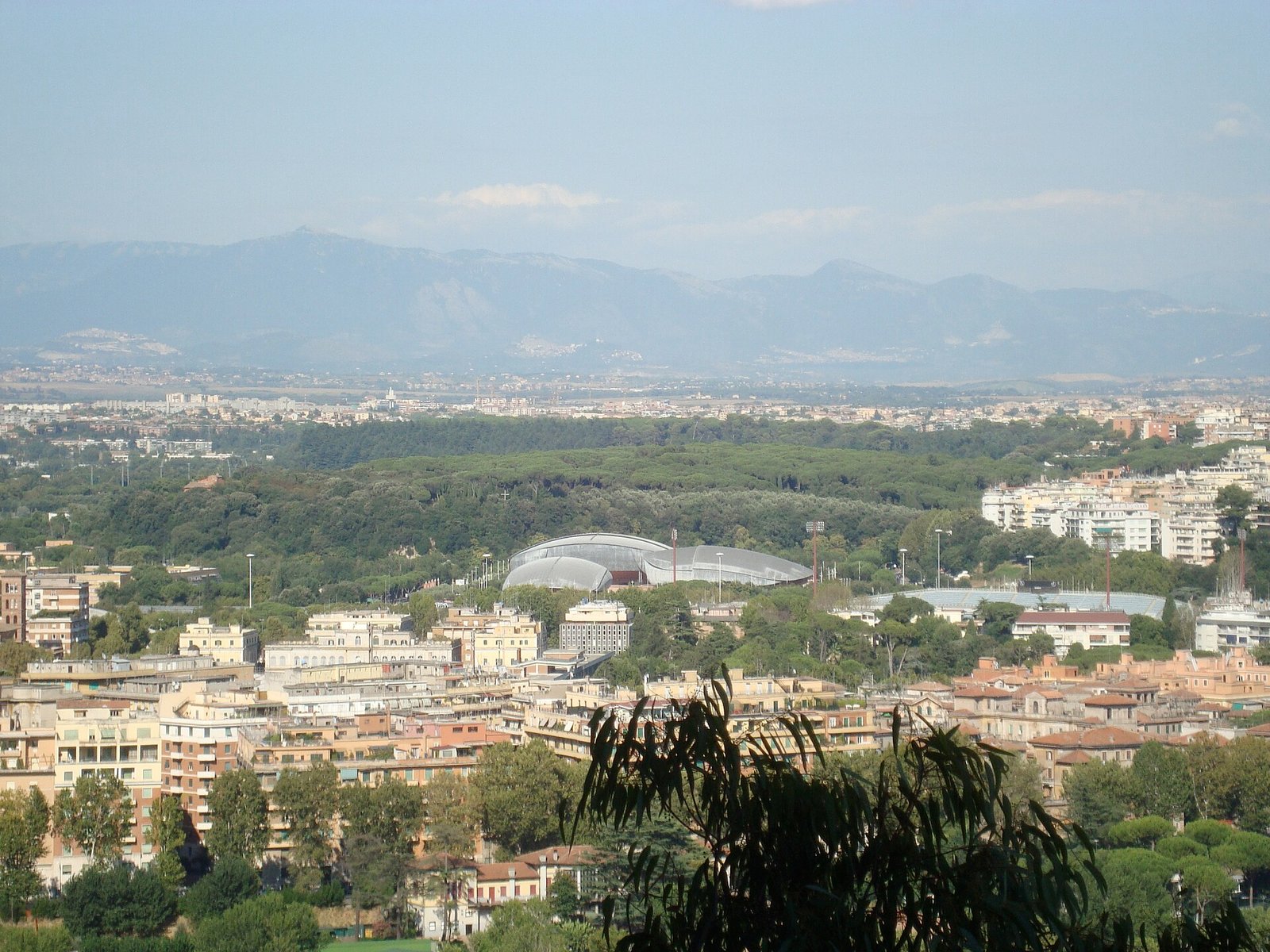
Dominguinho, the Brazilian trio made up of singers João Gomes and Jota.pê and accordionist Mestrinho, plays at Auditorium Parco della Musica Ennio Morricone on Saturday, February 20, 2027 at 20:00, in Sala Sinopoli, at Viale Pietro de Coubertin 30 (00196 Rome). It is the only Rome date, announced after the sell-out in Milan. On the Auditorium's website tickets start at €63.25. They are bought from the concert's official page, which links to the authorized presale network, from the website of the organizer MC2 Live, or at the complex's box office. You get there with tram 2 from Piazzale Flaminio (metro A, Flaminio station), getting off at the Flaminia/Reni or Apollodoro stops, or with buses 910 from Termini, 53 and 982.
Dominguinho is the acoustic project with which three protagonists of new Brazilian music, a boy from the sertão turned piseiro phenomenon, a Latin Grammy-winning singer-songwriter from Osasco and a sanfoneiro raised alongside the great Dominguinhos, have brought forró, baião and singer-songwriter song back to the center. The 2025 album won a Latin Grammy. The second volume, from 2026, was recorded in the Pelourinho in Salvador de Bahia.
Dominguinho at Auditorium in brief
Dominguinho plays at Auditorium Parco della Musica Ennio Morricone on Saturday, February 20, 2027 at 20:00, in Sala Sinopoli, with tickets starting at €63.25.
Date and time
A single night in Rome: Saturday, February 20, 2027, starting at 20:00. Auditorium includes the concert in its world music programming. The length isn't published.
Prices
Auditorium's official page lists tickets starting at €63.25. The individual seat categories and their prices are shown at the time of purchase on the authorized presale network.
Tickets
They are bought from the purchase button on the concert page on Auditorium's website, from the website of MC2 Live, which organizes the date, or at the complex's box office, open from October to March every day from 11:00 to 20:00.
After Milan
MC2 Live announces the Rome date as a response to public demand, after the sell-out of the Milan concert. For a trio that sings in Portuguese and plays forró, it's a sign of how far the project has traveled beyond Brazil.
Dominguinho: what the project is
Dominguinho is the collaborative acoustic album recorded in 2025 by João Gomes, Jota.pê and Mestrinho: a meeting of piseiro, MPB and traditional forró that has had enormous reach on digital platforms and won the Latin Grammy for best roots music album in Portuguese.
The streaming success
At its peak the project exceeded 1 million daily plays on Spotify, with growth of about 200,000 new followers on the singer-songwriter's profiles. Unusual numbers for an acoustic record built on voice, guitar and accordion.
Television
In September 2025 the three presented songs from the project on Altas Horas, one of the most-watched music programs on Brazilian television. It's the step that took Dominguinho from the internet audience to families.
The second volume
In 2026 Dominguinho Vol. 2 came out, recorded in the Pelourinho, the historic center of Salvador de Bahia. The Rome concert thus arrives with two albums behind it and an already wide repertoire.
The name
The project's name is almost identical to that of Dominguinhos, the great Pernambuco sanfoneiro whose pupil Mestrinho is considered to be. In our view it's a declaration of belonging: the accordion of the Northeast is the center of the sound.
João Gomes, the voice of the sertão
João Gomes, born in Serrita, in Pernambuco, on July 31, 2002, is a forró, piseiro and MPB singer and songwriter who in 2021, with his first album, became the most-listened-to singer in Brazil.
Origins
The son of a farmer and a barber, he carries Fernando as a middle name in honor of a cowhand uncle, according to a tradition of the sertão. At seven he moved to Petrolina, where he sang in the church choir. He studied as an agricultural technician at the Federal Institute of the Sertão Pernambucano, where he began posting videos online.
The 2021 explosion
On July 1, 2021 he reached first place among the most-listened-to songs in Brazil on Spotify. Meu Pedaço de Pecado, Se For Amor and Eu Tenho a Senha are the hits of the first album. In the same period he was the only Brazilian artist among the 50 most-listened-to in the world on the platform and reached 40th place on the Billboard Global 200.
The big stages
On August 17, 2022, he recorded his first DVD at Marco Zero in Recife, in front of 150,000 people, with Vanessa da Mata, L7nnon and Fagner. In September 2022 he made his debut at Rock in Rio. In February 2023 he was among the main attractions of the Recife carnival, alongside Lenine, Alceu Valença and Elba Ramalho.
Awards
In 2023 he became the first piseiro singer nominated for a Latin Grammy, with the album Raiz. In 2024 he was nominated again with De Norte a Sul. In 2025 he won with Dominguinho. In December 2025 he triumphed at the Prêmio Multishow as artist, album, cover and forró and piseiro record of the year.
Influences
Although he mostly sings piseiro and vaquejada forró, he names Belchior and Cartola as his main influences. In October 2025 he opened NPR Music's Tiny Desk Brasil.
Jota.pê, the singer-songwriter from Osasco
Jota.pê, whose full name is João Paulo Gomes da Silva, was born in Osasco, in the state of São Paulo, on February 14, 1993. He is a singer, composer and guitarist, and in 2024 he won three Latin Grammys.
A family of musicians
His grandfather played the seven-string guitar and played choro all his life, an uncle was an orchestra conductor, and his father opened concerts for the Originais do Samba. He had his first guitar lessons at eight, then percussion.
The Voice Brasil
In 2017 he took part in the sixth season of The Voice Brasil, chosen by Lulu Santos after singing Sampa by Caetano Veloso. In the competition he also performed Chico Buarque, Moacir Santos and Djavan. Lulu Santos called him one of the best voices of all the seasons.
The albums
After his 2015 debut Crônicas de um Sonhador, he formed the duo Àvuà with Bruna Black. Onze, from 2021, collects previously unreleased songs by Adoniran Barbosa and was nominated for a Latin Grammy. In 2024 came Se o Meu Peito Fosse o Mundo, which won the Latin Grammy for best MPB album and for recording, while Ouro Marrom won best song in Portuguese.
The roots
Among his influences he cites Djavan, Caetano Veloso, Chico Buarque, Gal Costa, Lenine and Jorge Ben Jor, and among his contemporaries Emicida and Luedji Luna. He played as an ogan in a candomblé terreiro, an experience he describes as fundamental to his relationship with percussion.
Mestrinho, the heir of the sanfona
Mestrinho, the stage name of Erivaldo Júnior Alves de Oliveira, born in Itabaiana on November 18, 1988, is a Brazilian sanfoneiro, singer, composer and arranger, often introduced as Dominguinhos's pupil.
A family of accordionists
His grandfather played the eight-bass accordion, his father and brother are sanfoneiros, and his sister Thaís Nogueira is a singer. He received his first accordion at five and started playing at six. The first piece he learned was Asa Branca. At 12 he was already on tour.
With Dominguinhos
In 2006 he moved to São Paulo with his sister and founded the Trio Juriti. At 20 he was called by Dominguinhos to play at a few concerts and became a regular musician of the maestro.
The solo career
He made his solo debut in 2014 with Opinião. In 2017 came É Tempo pra Viver, with Ivete Sangalo and Dominguinhos. Grito de Amor followed in 2019 and Solitude in 2021. He has collaborated with Gilberto Gil, Hermeto Pascoal and Elba Ramalho, and he was the first sanfoneiro to give a solo concert at Rock in Rio.
The awards
In 2024 he won the Latin Grammy for best roots music album in Portuguese with Mariana e Mestrinho, recorded with Mariana Aydar. He also won the Prêmio da Música Brasileira as best regional singer.
A curiosity about Dominguinho at Auditorium Parco della Musica, February 20, 2027
The best curiosity is the chain of masters and pupils that the name of the project carries with it. Dominguinhos, José Domingos de Morais, born in Garanhuns in 1941, met Luiz Gonzaga, the king of baião, as a child, playing with his brothers in front of the hotel where the musician was staying. A few years later, in Rio de Janeiro, Gonzaga gave him an 80-bass accordion. Decades later Dominguinhos called a 20-year-old from Itabaiana, Mestrinho, to play with him. The Saturday night at the Auditorium is the latest link in this chain.
The second curiosity is about the awards. The three musicians came to Dominguinho already loaded with Latin Grammys: three for Jota.pê in 2024, one for Mestrinho in the same year. João Gomes, after two nominations, won his first with this project, in 2025. Three generations of Brazilian music, one gramophone in common.
The third is about birthdays: Jota.pê was born on February 14, Dominguinhos on February 12. The Rome concert falls in a week of birthdays for Nordeste music.
Forró, baião, piseiro: what you will hear
The music of Dominguinho comes from the tradition of the Brazilian Nordeste: the forró and baião made famous by Luiz Gonzaga, the piseiro that conquered the streaming platforms in the 2020s, and the singer-songwriter tradition of MPB.
The accordion at the center
The sanfona, the accordion of the Nordeste, is the instrument that ties together the three souls of the project. Mestrinho is one of the virtuosos of his generation. With Dominguinhos he learned to make it sing alongside the voice.
Two different voices
João Gomes brings the voice of the sertão and of vaquejada forró. Jota.pê brings that of urban MPB, raised on choro, samba and Djavan. The meeting of the two timbres, in our view, is the heart of the album's success.
Acoustic
The project was born as an acoustic album: voice, guitar, accordion, percussion. In a concert hall like the Sinopoli, built for unamplified music, this choice finds the ideal setting.
Sala Sinopoli, where Dominguinho plays
Sala Sinopoli is one of the three large halls of Auditorium Parco della Musica Ennio Morricone. It is named after Giuseppe Sinopoli and was opened on April 21, 2002, the birthday of Rome, together with Sala Petrassi.
A hall for live music
In the Auditorium's programming, the Sinopoli hosts pop, world and singer-songwriter concerts. In the 2026/27 season, among others, the Nomadi and Neri per Caso have played or will play there.
Renzo Piano's beetles
From the outside the three halls look like three enormous lead-clad beetles on brick bases, arranged in a fan around the cavea named after Luciano Berio. Renzo Piano won the invitation-only competition in 1993 and worked with the acoustician Jürgen Reinhold of the Müller-BBM studio in Munich. The page on the complex is the one about Auditorium Parco della Musica.
Numbered seats
The Sinopoli has numbered seats. For an acoustic concert it is the best condition for listening, even though forró, in Brazil, is danced.
Something nobody tells you about Dominguinho at Auditorium Parco della Musica, February 20, 2027
What is rarely said, outside Brazil, is that forró is dance music. At parties in the Nordeste people dance in couples. In a hall with numbered seats, the Brazilian audience living in Rome may not stay seated for long. In our view it is part of the show, and it is best taken cheerfully.
The second thing is about language. The lyrics are in Portuguese, and many are about love, nostalgia, the sertão. Anyone who doesn't know the language loses the words but not the emotion. If you want to arrive prepared, you can listen to the album first and look up the translations of the main titles.
The third is about the calendar. On Saturday, February 20, the day before, at Teatro Parioli Costanzo there is Parole di Faber, dedicated to Fabrizio De André, and the day after at Largo Venue the Dirty Honey play: three very different evenings, in three different neighborhoods of the city.
My advice for visiting Dominguinho at Auditorium Parco della Musica, February 20, 2027
My advice is to listen to both albums first, Dominguinho from 2025 and Dominguinho Vol. 2 from 2026. The concert rests on songs that the Brazilian audience knows by heart. If you arrive prepared, you will feel part of a party, not a spectator at someone else's rite.
The second piece of advice is about the ticket. With prices starting at €63.25 and only one date after a sold-out show, it is best not to put it off. The cheapest categories are the first to go.
The third is about the time. The start is at 20:00 on a Saturday. Arriving around 19:15 lets you go up to the cavea, see Renzo Piano's beetles lit up and have a drink in the foyer without rushing.
Last piece of advice: bring a light scarf. February evenings are cool, but inside, if the audience starts dancing, it gets warm quickly.
How to get to Auditorium Parco della Musica
You can reach Auditorium Parco della Musica Ennio Morricone by tram 2, stops Flaminia/Reni or Apollodoro, and by buses 910, 53 and 982. The nearest metro station is Flaminio, on line A.
Metro A and tram 2
From Flaminio station you come out onto Piazzale Flaminio and take tram 2, which runs along Via Flaminia toward Piazza Mancini. Get off at Flaminia/Reni or Apollodoro and walk across the Villaggio Olimpico to Viale Pietro de Coubertin.
The 910 from Termini
Bus 910 leaves from Piazza dei Cinquecento, in front of Termini station, and reaches the Auditorium without changes.
The 53 and the 982
The 53 connects Piazza Mancini and the center of Rome. The 982 comes from the area of Viale XVII Olimpiade. Atac's route planner helps you choose the best combination.
By car
The stretch of Viale Pietro de Coubertin in front of the Auditorium is closed to cars. The complex has a paid internal parking lot with spaces reserved for people with disabilities.
Getting back
Tram 2 toward Piazzale Flaminio and then metro A, or a taxi booked in advance. On Saturday night, with several halls full, there is often a line at the exit.
Another well-known fact, yet rarely mentioned
It is well known that Brazil gave the world bossa nova and samba. Much less often mentioned is how vast and alive the tradition of the Nordeste is, which has Luiz Gonzaga as its father and Dominguinhos as its most beloved heir. Dominguinhos, born in Garanhuns on February 12, 1941, and died in São Paulo on July 23, 2013, started as a child playing at fairs and in front of hotels with his brothers, in the trio Os Três Pinguins. At 13 he left with his father for Rio de Janeiro, an 11-day journey, to look for Gonzaga, who at their first meeting gave him an 80-bass accordion and wanted him with him at concerts, rehearsals and recordings. His training brought together baião, bossa nova, choro, forró, xote and jazz.
A second rarely mentioned fact is about the spread of piseiro. João Gomes's songs exploded first on TikTok and then on Spotify. In our view Dominguinho is the meeting point between that digital success and the oldest tradition of the accordion.
The third is about the Auditorium itself: its world music programming regularly brings music from all over the world, from the Radiodervish on October 29 to the Nubras Ensemble on February 27, 2027.
The right photo to take at Dominguinho at Auditorium Parco della Musica, February 20, 2027
The right photo is taken before the concert, from the top of the cavea, with the three lead beetles lit up in the February dark. It is the image that tells the story of the Auditorium better than any postcard.
The second is taken in the hall, before the start: the stage of the Sinopoli with Mestrinho's accordion waiting. During the concert it is best to keep your phone in your pocket. At the end, at the encores, a photo of the trio on stage is the right souvenir.
The third is taken on the terrace overlooking the remains of the Roman villa discovered during the works, next to Sala Sinopoli: more than 22 centuries of Rome before an evening of Nordeste music.
Some important events that happened here in history
The area of the Auditorium has a history much older than the complex. During the excavations for the foundations, the remains of a Roman villa emerged, built in the 3rd century BC on the site of a small archaic farm of the 6th century BC. Renzo Piano had to change the design: two of the three halls were moved to the west.
The modern story starts with a demolition. In 1936 the Augusteo hall, the great Roman concert hall, was torn down, and for more than 60 years Rome was left without an auditorium built for music. In 1992 the city council chose the area of the Villaggio Olimpico, and in 1993 Renzo Piano won the invitation-only competition.
On April 21, 2002, Sala Sinopoli, where Dominguinho plays, and Sala Petrassi were opened, and on December 21 of the same year Sala Santa Cecilia. Since 2003 the Auditorium has been the home of the season of the Accademia Nazionale di Santa Cecilia, since 2006 it has hosted the Rome Film Festival, and in 2020 the city council decided to name it after Ennio Morricone.
Who has been through Auditorium Parco della Musica, February 20, 2027
In more than 20 years, musicians of every genre have passed through the halls of the Auditorium. In the world music programming of the 2026/27 season there are the Radiodervish in Sala Petrassi on October 29, the Ottobrata Romana in Sala Sinopoli on October 31, Indaco at Teatro Studio Borgna on December 23, Kay McCarthy and Eugenio Bennato on January 16, 2027, and the Nubras Ensemble on February 27.
In the other halls, in the same season, among others come Patti Smith and Macy Gray: a program that mixes continents and genres.
With Dominguinho, ideally, the masters of the trio also pass through the Sinopoli: Luiz Gonzaga and Dominguinhos for Mestrinho's accordion, Belchior and Cartola for João Gomes, Djavan, Caetano Veloso, Chico Buarque and Adoniran Barbosa for Jota.pê. And their fellow travelers: Gilberto Gil, Hermeto Pascoal, Elba Ramalho, Ivete Sangalo, Mariana Aydar, Lulu Santos.
Accessibility and practical information
For information on access to the halls and on seats for people with disabilities, the reference is the Fondazione Musica per Roma, at info@musicaperroma.it, to be contacted before buying. The internal parking lot has reserved spaces.
People with reduced mobility
It is best to arrive well in advance and ask the staff for the most comfortable route to Sala Sinopoli. Between the entrance on Viale Pietro de Coubertin and the halls there are spaces to cross.
With kids
A concert of acoustic Brazilian music also suits kids. The 20:00 start on a Saturday makes the evening manageable. The access rules for minors are those of the Auditorium's ticketing regulations.
The neighborhood around the Auditorium
The Auditorium occupies about 55,000 square meters between Villa Glori, the Villaggio Olimpico, the Corso di Francia viaduct and Viale Maresciallo Pilsudski.
The Villaggio Olimpico
The Villaggio Olimpico is the neighborhood you walk through coming down from the tram. Not far away is Teatro Olimpico.
Toward the Tiber and Ponte Milvio
From the Auditorium you go down toward the river and the Ponte della Musica, which leads to Foro Italico. Farther north is Milvian Bridge, with venues open late on Saturday night.
Toward the center
With tram 2 you go back to Piazzale Flaminio, the gateway to Villa Borghese.
Where to eat before or after the concert
Inside the Auditorium there are a bar and a cafe in the foyer and a restaurant bar with access from the street too, the most convenient solution for those who arrive early.
In the neighborhood
Between the Villaggio Olimpico, Via Flaminia and Piazza Mancini there are pizzerias, trattorias and bars frequented mostly by residents.
Milvian Bridge
If you prefer to have dinner afterward, you will find the widest choice at Ponte Milvio. On Saturday night it is crowded, so booking is essential.
How to organize Dominguinho's Saturday night
With the start at 20:00 on a Saturday, the evening of Dominguinho is organized around an aperitivo or a light dinner beforehand, and a return by tram 2 or by taxi after 22:00.
From the center
If you are in the center, take metro A to Flaminio and then tram 2. On Saturday afternoon the center is crowded, so it is best to leave around 18:45 to arrive with time to spare.
From Termini
If you are staying near the station, you have the 910, which reaches the Auditorium without changes. It is also the simplest solution for those who arrive in Rome by train on the afternoon of the concert itself.
For the Brazilian audience
A concert by João Gomes, Jota.pê and Mestrinho in Rome also draws many Brazilians who live in Italy or in neighboring countries. If you are coming from out of town, you can make the Saturday a small Roman weekend, with Sunday free for a walk in Villa Borghese or along the Tiber.
The day before and the day after
On Friday, February 19, Teatro Parioli Costanzo, a short distance away, hosts a tribute to Fabrizio De André. On Sunday the 21st at Largo Venue the American rock of the Dirty Honey is on. Three evenings in three days for those who love live music.
What to listen to before the concert
Before the Dominguinho concert it is best to listen to the two albums of the project and at least one solo record by each of the three musicians, to recognize the three souls of the sound.
Dominguinho, 2025
The first album, acoustic, winner of the Latin Grammy for best roots music album in Portuguese: the obligatory starting point.
Dominguinho Vol. 2, 2026
Recorded in the Pelourinho of Salvador de Bahia, it expands the repertoire that the trio brings on tour.
Raiz by João Gomes
The album nominated for the Latin Grammy in 2023, the first by a piseiro singer to reach that nomination.
Se o Meu Peito Fosse o Mundo by Jota.pê
The 2024 record awarded best MPB album at the Latin Grammys, with Ouro Marrom, best song in Portuguese.
Mariana e Mestrinho
The album recorded by Mestrinho with Mariana Aydar, Latin Grammy in 2024: the sanfona in the foreground, at the highest level.
February in Rome: the time of the concert
In mid-February Rome is in a low tourist season, with lengthening days and still cool evenings: a good time for museums, theaters and concerts without big crowds.
The weather
February evenings are cool and sometimes damp. A heavy jacket is useful for the wait at the entrance and for the ride back on the tram. Inside the hall the heating is on, and with Nordeste music the temperature rises on its own.
A Saturday of music
On Saturday, February 20, the Auditorium is one of the liveliest destinations in the city. Arriving early avoids the lines at the coat check and at the entrance of Sala Sinopoli.
Frequently asked questions about Dominguinho in Rome
When does Dominguinho play in Rome?
Dominguinho, the trio of João Gomes, Jota.pê and Mestrinho, plays at Auditorium Parco della Musica Ennio Morricone in Rome on Saturday, February 20, 2027, at 20:00, in Sala Sinopoli, at Viale Pietro de Coubertin 30.
How much do tickets for Dominguinho at the Auditorium cost?
Tickets for Dominguinho at Auditorium Parco della Musica start at €63.25, according to the official page of the concert. You can buy them on the Auditorium's website, which links to the authorized presale circuit, on the MC2 Live website or at the complex's box office.
Who are Dominguinho?
Dominguinho is the project of three Brazilian musicians: João Gomes, voice of forró and piseiro, Jota.pê, an MPB singer-songwriter and winner of three Latin Grammys, and Mestrinho, an accordionist regarded as Dominguinhos's pupil. The 2025 album won a Latin Grammy.
What kind of music does Dominguinho play?
Dominguinho plays an acoustic repertoire that combines forró, baião, piseiro and MPB, the Brazilian singer-songwriter song, with Mestrinho's accordion at the center and the voices of João Gomes and Jota.pê.
Is Dominguinho playing other dates in Italy in 2027?
Dominguinho returns to Italy in 2027 with the Rome date at Auditorium Parco della Musica, announced by MC2 Live after the sold-out Milan concert. Other Italian dates are not indicated in the organizer's announcement.
How do you get to Auditorium Parco della Musica?
You can reach Auditorium Parco della Musica by tram 2 from Piazzale Flaminio, metro A, getting off at Flaminia/Reni or Apollodoro, or by buses 910 from Termini, 53 and 982. In front of the entrance, Viale Pietro de Coubertin is closed to cars.
In which hall does Dominguinho play?
Dominguinho plays in Sala Sinopoli of Auditorium Parco della Musica Ennio Morricone, one of the three large halls designed by Renzo Piano, opened on April 21, 2002, with numbered seats.
The final advice on Dominguinho
Dominguinho brings three generations of Brazilian Nordeste music to the Auditorium, with an accordion that is the direct heir of Dominguinhos and two voices that fill squares and charts in Brazil. My advice is to buy early, listen to the two albums before the evening, arrive at 19:15 for the lit-up cavea and let the audience's energy catch you: forró is listened to with the ears, but understood with the feet.
Article written by the editorial team of Tour Leader Pro, contact them for Private/Corporate/V.I.P. Tours and Experiences.
Planning a trip to Rome? The English guides to visiting the city are on ItalyPlanner.com.