Divina d’Acciaio, the portrait statue of Maria Callas at the Barracco Museum, September 24 to November 15, 2026
https://www.estateromana.com/en/rome/trip-planner/divina-dacciaio-the-portrait-statue-of-maria-callas-at-the-barracco-museum-septe/
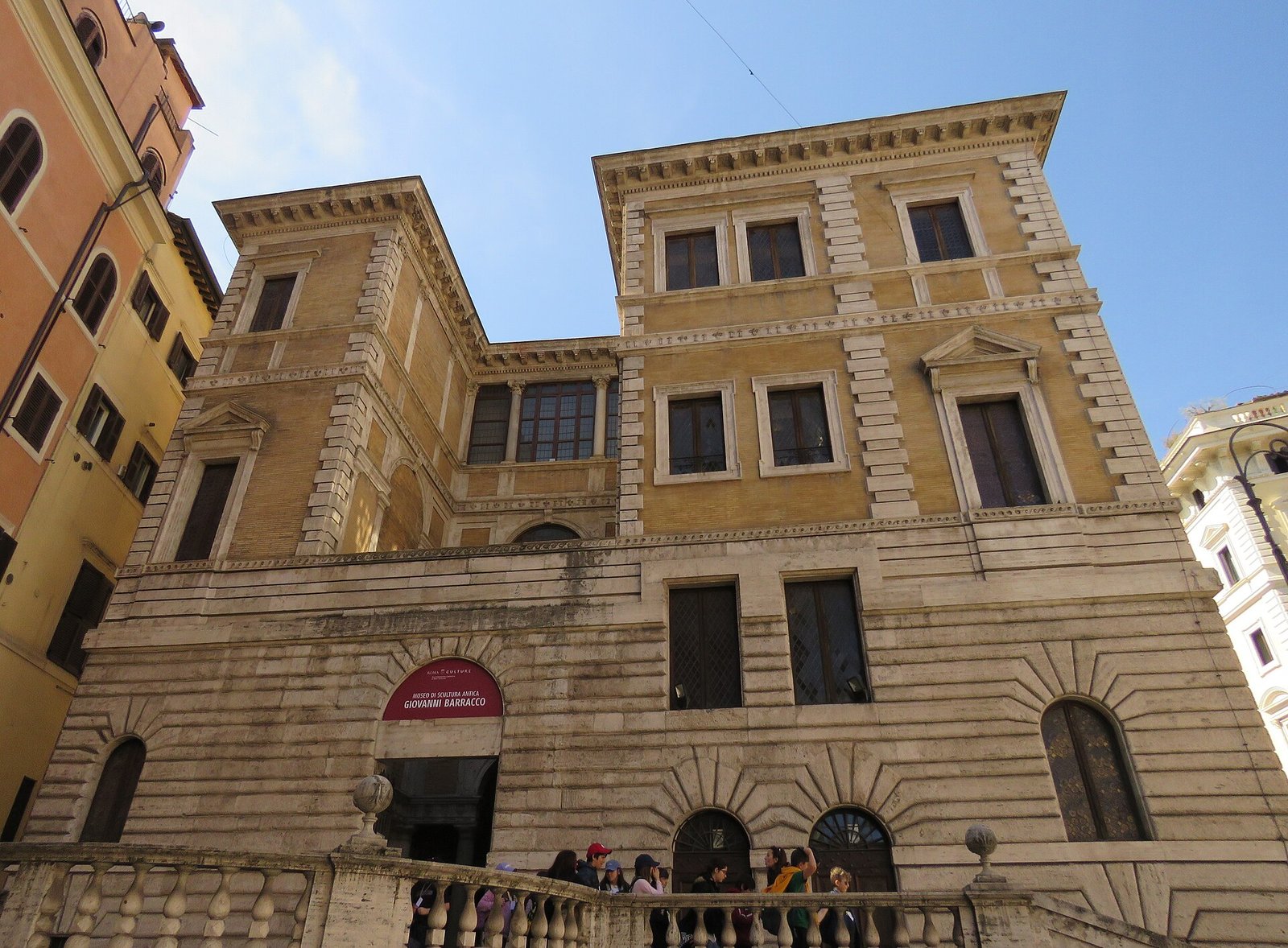
Divina d'Acciaio, the portrait statue of Maria Callas signed by the Greek sculptor Nikos Floros, is on display from September 24 to November 15, 2026 at Museo di Scultura Antica Giovanni Barracco, at Corso Vittorio Emanuele II 166/A, in the Parione district, between Piazza Navona and Campo de' Fiori. The museum is open Tuesday to Sunday from 10:00 to 18:00, with last entry at 17:15, and is closed on Monday. You get there on foot from the historic center or by the buses that run along Corso Vittorio Emanuele II, stops C.so Vittorio Emanuele/Navona and C.so Vittorio Emanuele/S. A. della Valle. Lines and times for the day can be checked on the ATAC route planner. The work can be seen with the museum admission ticket at the current rate, and admission is free for MIC card holders. Tickets are bought at the museum ticket office or through the advance-sales network indicated on the official Musei in Comune website. For information there is the number 060608, active every day from 9:00 to 19:00.
Divina d'Acciaio at the Barracco Museum: the exhibition in brief
Divina d'Acciaio is a single-work exhibition: a monumental stainless steel statue portraying Maria Callas as a female figure of Greek antiquity, placed for seven weeks among the Egyptian, Assyrian, Cypriot, Greek and Roman sculptures of the Barracco collection. The formula is rare and, in our view, the most honest possible for such a small museum: no rooms of filler, no inflated route, a single contemporary object set against 25 centuries of sculpture.
Who promotes it and who curates it
The initiative is promoted by Roma Capitale, Department of Culture and Coordination of the initiatives connected to Holocaust Remembrance Day, and by the Capitoline Superintendency for Cultural Heritage. The organization is by N.F. Art Company. The curation is by Nikos Floros himself, with Nicoletta Capasso as co-curator. The museum services are provided by Zètema Progetto Cultura. The official press release is dated September 23, 2026, the day before the opening.
Dates and hours
The statue stays at the Barracco from September 24 to November 15, 2026. The hours are those of the museum: Tuesday to Sunday, from 10:00 to 18:00, last entry at 17:15, closed Monday. The Superintendency recommends always checking the museum's notices page before planning your visit, because in the civic museums changes of hours for holidays, events or technical reasons are published there.
How much time you need
For Floros's work 10 minutes is enough, if you look carefully. For the whole museum, which is small but dense, plan on an hour. My advice is not to enter just for Callas: the statue makes sense precisely because it is surrounded by ancient originals, and seeing it without the rooms around it is like listening to an aria without the orchestra.
What you see: the portrait statue of Maria Callas
Floros's work depicts Maria Callas wrapped in an ancient-style drapery, inspired by the female figures of classical art, in explicit dialogue with the Caryatids and Korai of Hellenic antiquity. It is made of stainless steel, a material that the official presentation calls luminous and imperishable, and it is of monumental size.
The sonogram of Casta Diva
The detail to look for is in the palm of a hand. There Floros reproduced the sonogram of Callas's voice in the aria Casta Diva, from Vincenzo Bellini's Norma. It is the central idea of the work: the voice, which by nature vanishes the instant it is produced, becomes a form fixed in metal, visible beside the face of the person who produced it. In the words of the press release, the ephemeral nature of sound is transformed into eternal matter. It's a simple idea and, frankly, a very effective one: anyone who knows that aria won't be able to keep from hearing it in their head while looking at the hand.
Epidaurus, August 1960
The work's declared inspiration is a specific evening: August 1960, when Maria Callas sang Norma in the ancient theater of Epidaurus, in the Argolid, before thousands of spectators. Callas's biography published by the free encyclopedia recalls that this Norma turned into an unprecedented society event, amplified by the singer's return to her land of origin and by the presence of Aristotle Onassis. Her voice already had a marked vibrato and a weakened upper register, but the symbolic value of that evening remained enormous. The following year Callas returned to Epidaurus with a new staging of Medea.
Why the Barracco
The museum explains it with two arguments. The first is one of coherence: the Barracco is devoted to ancient sculpture by the will of its founder, and it welcomes a contemporary work that recalls Greek statuary. The second, more interesting, concerns Callas herself: the presence of the Divina in these rooms is meant to tie in with her Greekness, with her tragic sensibility for insoluble conflict and with the figure of the abandoned but chosen heroine. The press release also recalls that Luchino Visconti dreamed of seeing Callas on the stage at Epidaurus in a tragedy by Euripides or Sophocles. The Barracco, in short, offers the statue the Greek theater that the singer never had for spoken tragedy.
Who is Nikos Floros, the sculptor of the Divina d'Acciaio
Nikos Floros is a Greek sculptor born in Tripoli, in Arcadia, raised in Athens, where he studied classical piano and ancient drama, and later trained at the École nationale des Beaux-Arts in Paris. The detail of his musical and theatrical training explains a lot about a work that brings together sculpture, voice and tragedy.
The aluminum can technique
Floros is known above all for a technique of his own: sculptures and sculptural garments made from the aluminum of soft drink cans, used as raw material. The technique was developed and patented by the artist in New York in 2003. From this research come his metal costumes, true wearable sculptures that reinterpret historical dress and regal figures. The move to the stainless steel of the Divina is consistent with this path: always metal, always a surface that reflects light, always an industrial material bent to a classical form.
The solo shows
The artist's solo shows include the Foundation of the Hellenic World in Athens in 2008, the Archaeological Museum of Thessaloniki in 2011, two shows in Monte Carlo in 2012, among them Grace: Symbol of Change, and in the same year the National Museum of Women in the Arts in Washington. In 2013 Floros exhibited at Villa Melas of the National Bank of Greece in Athens, at Teatro Comunale in Bologna, at the Grand Hotel Majestic già Baglioni in Bologna and at the Tsaritsyno museum reserve in Moscow. In 2015 he arrived at the Palace of the Grand Master of the Knights in Rhodes, in 2021 in Kalamata with Heroes Made of Metal. He has also exhibited in the Syntagma station of the Athens metro, at the Greek Consulate in New York and at the Hofburg imperial palace in Vienna.
Group shows and recognitions
In group shows his name appears alongside the Whitney Museum of American Art, the Benaki Museum in Athens, the Hofburg in Vienna, the Pierides Museum in Athens and the Historical and Folklore Museum of Aegina. Among the prizes: the Grand Prize for the sculpture costume Red Queen Elizabeth awarded in the context of the Costume Institute of the Metropolitan Museum of Art, the Grand Prize of the Young Friends Heritage Society for Silver Elizabeth I, the gold medal for Arts and Sciences of the Albert Schweitzer Foundation in 2011 and the Global Thinkers Forum Excellence Award for excellence and innovation in 2013. One of his works was chosen by the Brazilian school system for textbooks.
An artist who works with theaters
Running through the list, it's striking how many of Floros's shows took place in theaters and historic palaces rather than in galleries: Teatro Comunale in Bologna, the Hofburg, the Palace of the Grand Master in Rhodes. The Divina d'Acciaio at the Barracco follows the same logic: a work conceived to dialogue with a strong historical setting, not to stand on a neutral pedestal.
Maria Callas: the essential biography of the Divina
Maria Callas, stage name of Maria Anna Cecilia Sofia Kalogeropoulou, was born in New York on December 2, 1923 to Greek parents and died in Paris on September 16, 1977. She was a Greek-American soprano, later naturalized Italian and finally Greek again. She is the singer for whom the critic Eugenio Gara coined the definition of dramatic coloratura soprano.
Athens and the conservatory
In 1937 her mother returned to Greece with Maria and her sister. In Athens the girl entered the conservatory, studied with the Italian soprano Maria Trivella and then with Elvira de Hidalgo, who steered her training toward Norma and bel canto. On April 2, 1939, at 15, she had her first prima donna role, Santuzza in Cavalleria rusticana. During the war years she sang Tosca and Fidelio at the Greek National Opera in Athens, also at the Odeon of Herodes Atticus.
Italy, Serafin and La Scala
On June 27, 1947 Callas arrived by ship in Naples and from there went to Verona, where she debuted at the Arena and met Tullio Serafin and Giovanni Battista Meneghini, later her husband. On January 19, 1949 she replaced Margherita Carosio at the last minute in the role of Elvira in I puritani: a success that changed her career. In December 1951 she opened the La Scala season with I vespri siciliani, and in the following years she gave there Norma, Lady Macbeth, Medea with Leonard Bernstein, Lucia with Herbert von Karajan, La traviata with Carlo Maria Giulini and the productions signed by Luchino Visconti.
The world and retirement
In 1956 she debuted at the Metropolitan in New York as Norma. She sang in Chicago, at Covent Garden in London, at the Opéra in Paris. In 1957 she met Aristotle Onassis, and from 1959 her life became intertwined with that of the shipping magnate. Her last complete opera was Tosca at Covent Garden, on July 5, 1965, in the presence of Queen Elizabeth II. In 1969 she was the lead in Pier Paolo Pasolini's film Medea, shot between Cappadocia, Pisa, Aleppo, Grado and the Cinecittà studios. Between 1971 and 1972 she gave the famous master classes at the Juilliard School. After her death her ashes were scattered in the Aegean Sea.
Callas and Rome
Rome has a specific place in her story. Her Roman debut took place at the Baths of Caracalla in 1948, with Turandot. In 1950 Callas rediscovered Rossini's Il turco in Italia in Rome, thanks to the association L'Amfiparnaso, of which Visconti was also a member. And on January 2, 1958, in Rome, during a gala evening of Norma in the presence of the President of the Republic Giovanni Gronchi, after the first act she did not continue the performance: an episode that the press turned into a scandal and that weighed on her relationship with La Scala. Seeing Callas's Norma celebrated today in polished bronze, or rather steel, a few kilometers from that evening, has a flavor of compensation.
A curiosity about Divina d'Acciaio, the portrait statue of Maria Callas at the Barracco Museum, September 24 to November 15, 2026
The first home of the Barracco Museum was itself a classical temple, and it had something technological that goes well with a steel statue. Baron Giovanni Barracco, who in 1904 donated his collection to the city of Rome and received honorary citizenship in return, obtained an area on Corso Vittorio Emanuele II, opposite the church of San Giovanni dei Fiorentini. The project was entrusted to Gaetano Koch, the same architect with whom Barracco, as quaestor of the Senate of the Kingdom, had followed the works at Palazzo Madama.
The building looked like a small ancient temple, but at the baron's request it was equipped with cutting-edge solutions: the first heating system in an Italian museum, large windows to light the works properly and rotating bases to allow some sculptures to be seen in the round. Barracco followed the construction site personally, moved to live next to the museum and kept buying pieces until the end.
That temple no longer exists: it was demolished in 1938 for the reorganization of Corso Vittorio following the construction of Ponte Vittorio Emanuele II. The collection ended up first in the Osteria dell'Orso, then in the storerooms of the Capitoline Museums, and only in 1948 found its current home. There is a coincidence worth pointing out: 1948 is also the year of Maria Callas's Roman debut at Caracalla. The museum that hosts her today and the singer it celebrates entered the city's cultural life in the same year.
The Barracco Museum and the Piccola Farnesina ai Baullari
Museo di Scultura Antica Giovanni Barracco is housed in the small palazzo known as the Piccola Farnesina ai Baullari, built in 1523 for the Breton prelate Thomas Le Roy, with a facade attributed to Antonio da Sangallo the Younger. It is part of the Musei in Comune system of Rome.
The fleur-de-lis and the name
Le Roy, for his work in drawing up the concordat between Pope Leo X and Francis I after the Battle of Marignano, was authorized by the king to add the fleur-de-lis of France to his coat of arms. That fleur-de-lis recurs throughout the decoration of the small palazzo, and it is most likely from there, through its resemblance to the Farnese emblem, that the name Piccola Farnesina derives.
From the Silvestri to the City
After a succession of inheritance and legal affairs, in 1671 the building passed to the Silvestri, whose emblem with the scorpion appears on the first floor. In 1885 it was expropriated by the City, which was laying out the new axis of Corso Vittorio between Piazza Venezia and St. Peter's. It was saved from demolition, freed of its added upper floors, restored and given a new facade on Corso Vittorio in the same style, with the short entrance staircase. The inscription on the cornice recalls that the works were done at public expense and completed in 1901.
The rooms of the collection
The first two rooms are devoted to Egypt: the stele of the scribe Nofer of the 4th dynasty, a female sphinx attributed to Queen Hatshepsut found in the area of the Iseum Campense, a youthful portrait of Ramses II, the hourglass of Ptolemy Philadelphus. Next come the foundation nails of the third dynasty of Ur, the winged genius from the palace of Nimrud and the Nineveh reliefs from the age of Ashurbanipal. Then Etruscan art, with a female head from Bolsena and a cippus from Chianciano. Cyprus, with the Heracles Melqart and a parade chariot from Amathus. The Phoenicians, with a lion protome from Sant'Antioco and the lid of a sarcophagus from Sidon.
Greece and Rome
The Greek rooms are the most direct context for the Divina d'Acciaio: two heads of Athena in severe style, a Hermes Kriophoros, the bust of the satyr Marsyas from Myron's group in a Roman copy, a head of Apollo of the Kassel type. In the Hellenistic room is the wounded dog, a replica of a bronze original that in Pliny's time was still on the Capitoline. The visit closes with the Roman sculptures, among them a young man of the Julio-Claudian family from Livia's villa at Prima Porta, the funerary stelae from Palmyra and a 12th-century mosaic fragment commissioned by Innocent III for the old basilica of St. Peter's.
One thing nobody tells you about Divina d'Acciaio, the portrait statue of Maria Callas at the Barracco Museum, September 24 to November 15, 2026
Beneath the feet of the Callas statue lies a Roman house. In 1899, during the excavations to consolidate the foundations of the Piccola Farnesina, structures of a 4th-century building came to light which, unlike so many similar finds that emerged during the demolitions in the area, were preserved.
About four meters below the current street level you can make out the white marble paving of a courtyard, the base of a circular fountain with the basin left in place, two sides of a peristyle with reused 1st-century columns, frescoes with aquatic subjects and hunting scenes, traces of opus sectile floors. The purpose of the building is unclear and most likely changed over time. One hypothesis links it to the nearby basilica of San Lorenzo in Damaso, founded in the area of the stables of one of the late antique circus factions.
The sources indicate that these underground rooms can be visited only on weekends. The practical advice is therefore to choose a Saturday or Sunday and ask the staff at the entrance if the underground level is open that day. That way the visit becomes a lesson in Roman stratigraphy on three levels: a 4th-century house, a 16th-century small palazzo, a 21st-century steel work dedicated to a 20th-century voice. Few museums in Rome allow such a leap in less than 100 square meters.
Hours and tickets for Divina d'Acciaio
Divina d'Acciaio is visited with the regular admission ticket to the Barracco Museum, at the current rate, Tuesday to Sunday from 10:00 to 18:00, with last entry at 17:15.
MIC card
The exhibition's official page indicates free admission with the MIC card, the card of the civic museums of Roma Capitale. For those who live in Rome or pass through often it is the most sensible choice: with a single card you enter the whole Musei in Comune system, and the visit to Callas becomes one stop in a longer afternoon.
Where to buy them
The ticket is bought at the museum ticket office or online through the advance-sales network indicated on the official Musei in Comune website. Updated rates, discounts and free admissions are published on the Musei in Comune tickets page, which is worth checking before you leave. For any doubt there is the contact center 060608, every day from 9:00 to 19:00.
Closing day
On Monday the museum is closed. It's worth remembering because it is the most common mistake of people organizing a day in the historic center: many civic museums share the same closing day, and whoever arrives on a Monday finds a series of closed doors.
The advice I give you for visiting Divina d'Acciaio, the portrait statue of Maria Callas at the Barracco Museum, September 24 to November 15, 2026
Before you go in, listen to Casta Diva. It sounds like advice from a fan, and it is actually the most practical. Floros's statue is built around a sound idea: the sonogram of the aria engraved in the palm of a hand. Whoever arrives with that aria in their ears looks at the hand differently, searches for the point where the shape rises and falls, tries to imagine where the long notes and the breaths are.
The second piece of advice concerns the order of the visit. Don't go straight to the statue. Start from the Egyptian and Assyrian rooms, pass through Cyprus and the Etruscans, and arrive at the Divina after seeing the heads of Athena and the Hermes Kriophoros. The meaning of the museum's operation is precisely this comparison: the draped female figures of antiquity on one side, Callas's steel drapery on the other. Seen without the route, the polished steel risks looking merely scenographic. Seen after the marbles, it becomes a serious question about what remains of a body and a voice.
Third: choose a weekday in late morning. The Barracco is not a crowded museum, and the statue deserves to be walked around slowly, also to see how the light from the windows moves across the metal surface. If instead you want to go down into the Roman house, the weekend is mandatory.
How to get to the Barracco Museum
The Barracco Museum is at Corso Vittorio Emanuele II 166/A, at the corner with Via dei Baullari, about 50 meters from Museo di Roma at Palazzo Braschi and a couple of steps from Campo de' Fiori.
On foot
It's the best way. From Piazza Navona you cross Piazza di San Pantaleo and you are on the Corso. From Campo de' Fiori just take Via dei Baullari northward.
By bus
On Corso Vittorio Emanuele II there are the stops C.so Vittorio Emanuele/Navona and C.so Vittorio Emanuele/S. A. della Valle, a short walk from the entrance. The lines serving the stops and their times should be checked on the ATAC route planner before you leave, because in the historic center the routes often change because of roadworks and demonstrations.
By tram and metro
The nearest tram stop is Arenula/Cairoli, in Piazza Benedetto Cairoli, from which you can walk in about 10 minutes. No metro station is within a short distance: it's best to combine metro and bus, or get off and walk through the center.
By car and taxi
A private car is not recommended: the area is a limited traffic zone and parking is very scarce. The taxi is the solution for those who have difficulty walking.
Another well-known fact, yet rarely mentioned
That the Barracco Museum is a private collection that became public many people know. Much less is said about the story of its first curator. Ludwig Pollak, an archaeologist known worldwide for having found by chance in 1906 the missing marble arm of the Laocoön group, was curator of the museum founded by Barracco. The baron named him in his will as well, leaving instructions for his heirs to buy publications for the museum's library.
Pollak remained in office until 1943, when he was deported by the Gestapo. It's a page that makes it less accidental than it seems that the Divina d'Acciaio is promoted by the department that also coordinates the initiatives for Holocaust Remembrance Day. The history of the Barracco is intertwined with that of Rome in the 20th century: Koch's temple demolished in 1938, the curator deported in 1943, the reopening in 1948 in the new home.
The takeaway for the visitor is simple: this is a museum born from the generosity of a private individual with no heirs, looked after by a scholar who paid the highest price for it, and rebuilt after the war. Entering for the Callas statue and leaving knowing this as well changes the way you look at every single display case.
Accessibility, children and groups at the Barracco Museum
The Barracco Museum is a small museum, spread over several levels in a 16th-century building, and the visit has to be organized with a little more care than at large modern museums.
People with disabilities
The small palazzo has a short entrance staircase on Corso Vittorio and historic interiors. Before the visit it's best to call 060608 to find out which routes are accessible and which aids are available, and if the area where the statue is placed can be reached without barriers. The underground levels of the Roman house, by their nature, should be considered separately.
With children
A single work, shiny and monumental, is a good chance to bring children to a museum without tiring them. The trick is to turn the visit into a game: look for the hand with the sonogram, then go hunting in the rooms of the sphinx, the winged genius with its wings, the wounded dog. 20 minutes well spent, and an excellent introduction to what ancient sculpture is.
Groups and schools
For organized groups the museum is ideal precisely because of its small size, provided you don't exceed reasonable numbers in the rooms. Educational visits to the civic museums are booked through the Musei in Comune system. Information is on the official website and at 060608.
The right photo to take at Divina d'Acciaio, the portrait statue of Maria Callas at the Barracco Museum, September 24 to November 15, 2026
The photo worth the visit is not the whole statue. It's the hand. The sonogram of Casta Diva engraved in the palm is the detail that tells the work, and photographed up close, with Callas's face out of focus in the background, it says everything Floros wanted to say: the voice in the foreground, the person behind it.
The second photo is the comparison one. Look for a framing in which the Divina d'Acciaio appears and, in the same field, one of the collection's ancient sculptures: a head of Athena, a marble drapery. The contrast between the matte, worn surface of the stone and the reflective one of the steel is the visual synthesis of the exhibition. Watch out for reflections: the steel gives back everything in front of it, including the photographer, and it's best to step a few paces to the side to avoid ending up in the image.
Outside, the right photo is the facade of the Piccola Farnesina seen from Corso Vittorio, with the staircase and the inscription on the cornice. The best time is the morning, when the sun is not yet high and the facade is not backlit. Before shooting inside, always ask the staff if photography is allowed and with what limits: in the civic museums the rules can change from exhibition to exhibition, and flash is generally to be avoided.
Around the Barracco Museum: what to see in the Parione district
The Barracco Museum is in the Parione district, one of the densest stretches of monuments in the historic center. Within a few minutes' walk you can easily combine other visits in the same half day.
Palazzo Braschi and Keith Haring
About 50 meters away is the Museo di Roma at Palazzo Braschi, which from October 6, 2026 hosts the large Keith Haring exhibition. Two such different exhibitions, a steel statue dedicated to a voice and the graffiti of a street artist, go well together in the same day precisely because of the contrast.
Pasquino and Piazza Navona
A little further on, in the square of the same name, is Pasquino, the most famous of Rome's talking statues. From there you enter Piazza Navona, with the Fountain of the Four Rivers and Sant'Agnese in Agone.
The Cancelleria and Sant'Andrea della Valle
The Palazzo della Cancelleria is a few steps away, with the basilica of San Lorenzo in Damaso next to it, also tied to the history of the Roman house beneath the Barracco. On the Corso, toward Largo di Torre Argentina, stands the basilica of Sant'Andrea della Valle.
Campo de' Fiori and Palazzo Altemps
To the south, Campo de' Fiori is a few minutes away. To the north, beyond Piazza Navona, is Palazzo Altemps: for those who want to continue with ancient sculpture, it is the natural complement to the Barracco.
Some important events that happened here in history
The place where the Divina d'Acciaio is displayed today has gone through almost 17 centuries of documented history. In the 4th century, about four meters below the current level, a Roman house stood here with a white marble courtyard, fountain and peristyle, rediscovered in 1899 during consolidation works.
In 1523 the Breton prelate Thomas Le Roy had the small palazzo built, with the facade attributed to Antonio da Sangallo the Younger and the fleur-de-lis of France granted by Francis I as an emblem. In 1671 the building passed to the Silvestri. In 1885 the City of Rome expropriated it to open Corso Vittorio Emanuele II, the axis that was to connect Piazza Venezia to St. Peter's: an intervention that erased entire blocks of the district, while the Piccola Farnesina was saved, restored and given a new facade on the Corso, with works completed in 1901.
In those same years, on the other side of history, Baron Giovanni Barracco donated his collection to the city in 1904. The museum built for him by Gaetano Koch was demolished in 1938. The collection wandered between the Osteria dell'Orso and the Capitoline storerooms. In 1943 the curator Ludwig Pollak was deported. In 1948 the sculptures found a home right here, in Le Roy's small palazzo. Since September 24, 2026, for the first time, a contemporary work dedicated to a singer has entered among those ancient sculptures: a choice that the museum has justified with the coherence of its own history of classical sculpture.
Who has passed through Divina d'Acciaio, the portrait statue of Maria Callas at the Barracco Museum, September 24 to November 15, 2026
The first name is that of the founder. Giovanni Barracco, baron and senator of the Kingdom, never married and had no children, and decided to leave to Rome his collection of ancient sculpture. It was he who followed the project of the first museum with Gaetano Koch, and it was he who moved to live next to his sculptures in his last years.
The second is Ludwig Pollak, curator of the museum, the man who in 1906 found the arm of the Laocoön, who remained in his post until the deportation of 1943. Even earlier, in the 16th century, the small palazzo was the home of Thomas Le Roy, a Breton diplomat who had worked on the concordat between Leo X and Francis I, and his name remains tied to the emblems carved on the walls.
Then there are the most recent passages. In 2026 Nikos Floros brought his Divina d'Acciaio here, with co-curator Nicoletta Capasso, and with it Maria Callas symbolically entered the museum, who had debuted at Caracalla in Rome and in Rome had lived the most talked-about evening of her career. With the statue also passes, ideally, Luchino Visconti, cited by the museum for his never-realized dream of seeing Callas in a Greek tragedy at Epidaurus.
Where to eat near the Barracco Museum
The area between Campo de' Fiori and Piazza Navona offers a lot, but it asks for a little method so as not to spend too much for too little.
Quick lunch
Between Campo de' Fiori and Corso Vittorio there are bakeries, pizza-by-the-slice shops and small places for a standing lunch. For those combining the Barracco with Palazzo Braschi, a light lunch between the two visits is the most rational choice.
Trattorias
In the side streets of Parione you'll find trattorias serving Roman cuisine. The usual advice: a short menu, written in Italian, tied to the season. Avoid the tables with a direct view of Piazza Navona, where you mostly pay for the panorama.
A coffee first
The museum opens at 10:00: a coffee at the counter nearby and then inside among the first, when the rooms are empty and the light still enters low from the windows on the Corso.
Autumn in Rome: the season of Divina d'Acciaio
The Callas statue stays at the Barracco between the end of September and mid-November, the period that in our view is the best for visiting the historic center on foot: days still long at the beginning, mild temperatures, fewer tourists than in spring.
The other exhibitions of the civic museums
In the same period the Musei in Comune offer several exhibitions that can be combined. Besides Keith Haring at Palazzo Braschi from October 6, at the Capitoline Museums the Diego Rivera exhibition is open until December 13, 2026, and at Centrale Montemartini until November 15, the same closing date as the Divina d'Acciaio, there is Moda in luce 1955-1975.
The last days
November 15, 2026 is a Sunday. Those who put it off to the last weekend will probably find more people than usual: better to plan the visit in the first half of November, or better still in October.
Frequently asked questions about Divina d'Acciaio
Until when is the statue of Maria Callas on display at the Barracco Museum?
Divina d'Acciaio, Nikos Floros's portrait statue of Maria Callas, is on display at the Barracco Museum from September 24 to November 15, 2026. The museum is open Tuesday to Sunday from 10:00 to 18:00, with last entry at 17:15. On Monday it is closed. It's worth checking the museum's notices page before leaving for any changes.
How much does it cost to see Divina d'Acciaio?
Divina d'Acciaio is seen with the admission ticket to the Barracco Museum at the current rate, with no separate ticket for the exhibition. Admission is free with the civic museums' MIC card. Updated rates, discounts and free admissions are published on the official Musei in Comune website and can be asked about at 060608.
Where is the Barracco Museum?
Museo di Scultura Antica Giovanni Barracco is at Corso Vittorio Emanuele II 166/A, in the Parione district, at the corner with Via dei Baullari. It is a few minutes' walk from Piazza Navona and Campo de' Fiori, and about 50 meters from Palazzo Braschi. The nearest bus stops are on Corso Vittorio Emanuele II.
Who is the author of the statue of Maria Callas?
The statue Divina d'Acciaio is the work of Nikos Floros, a Greek sculptor born in Tripoli, in Arcadia, trained in Athens in piano and ancient drama and then at the École des Beaux-Arts in Paris. He is known for a technique patented in New York in 2003 that uses the aluminum of cans as raw material for sculptures and costumes.
What is in the hand of the Callas statue?
In the palm of a hand of the Divina d'Acciaio is the sonogram of Maria Callas's voice in the aria Casta Diva, from Vincenzo Bellini's Norma. It is the heart of the work: the voice, ephemeral by nature, is fixed in metal beside the image of the singer. The inspiration is the Norma sung by Callas at Epidaurus in August 1960.
How long does the visit to the Barracco Museum take?
To see Divina d'Acciaio carefully about 10 minutes is enough, but the Barracco Museum deserves at least an hour: the collection includes Egyptian, Assyrian, Etruscan, Cypriot, Greek and Roman sculptures. Floros's statue gains meaning precisely in comparison with the female figures of antiquity displayed in the Greek rooms.
Can you see the Roman house beneath the Barracco Museum?
Beneath the Barracco Museum are preserved the remains of a 4th-century Roman house, discovered in 1899, with a marble courtyard, fountain and peristyle. The sources indicate that they can be visited only on weekends: those who want to go down must therefore choose Saturday or Sunday and ask the staff at the entrance for confirmation.
Final advice on Divina d'Acciaio
Exhibitions built around a famous name are generally to be distrusted. In our view this one is an exception, for a precise reason: the Barracco doesn't use Callas to fill its rooms, it uses her to make people look better at its ancient sculptures. My advice is to go on a weekday, listen to Casta Diva on your phone before going in, walk through the whole museum and arrive at the statue last. Then it's worth stepping out onto Corso Vittorio and walking to Palazzo Braschi: in half an hour you see two opposite ways of telling the 20th century.
Article written by the editorial team of Tour Leader Pro, contact them for Private/Corporate/V.I.P. Tours and Experiences.
Planning a trip to Rome? English-language guides to visiting the city are on ItalyPlanner.com.