Daniel Harding conducts Mahler’s Fifth at Auditorium Parco della Musica, April 15 to 17, 2027
https://www.estateromana.com/en/rome/trip-planner/daniel-harding-conducts-mahlers-fifth-at-auditorium-parco-della-musica-april-15/
Daniel Harding conducts Mahler's Fifth, Gustav Mahler's Symphony No. 5, with the Orchestra dell'Accademia Nazionale di Santa Cecilia for three nights in Sala Santa Cecilia at Auditorium Parco della Musica Ennio Morricone, Viale Pietro de Coubertin 30 (00196 Rome): Thursday, April 15, 2027 at 19:30, Friday, April 16 at 20:00 and Saturday, April 17 at 18:00. The Auditorium is reached by Metro A to Flaminio and then tram 2, Flaminia/Reni or Apollodoro stops, or by bus 910 from Termini. Tickets cost from €23 to €54 depending on the section and are sold from the concert's official page on the Accademia website, which links to the authorized presale network, or at the box offices at the Auditorium and at Via Vittoria 6. Presale for concerts from March to the end of the season opens on January 12, 2027.
Mahler's Fifth with Harding: dates, times, series
Mahler's Fifth Symphony conducted by Daniel Harding can be heard three times in Sala Santa Cecilia: Thursday, April 15, 2027 at 19:30 (series G-G1), Friday, April 16 at 20:00 (series V-V1) and Saturday, April 17 at 18:00 (series S-S1).
Thursday, Friday or Saturday
The three performances follow the usual pattern of the Accademia's symphonic season. Thursday at 19:30 is the night for people coming from work. Friday at 20:00 leaves more margin. Saturday at 18:00 is the best time if you are coming from outside Rome and want to leave in the evening, or have a relaxed dinner after the concert.
When they go on sale
The Accademia has split presale for the 2026/2027 season into two periods: from September 10, 2026 for concerts until February 27, 2027, and from January 12, 2027 for those from March to the end of the season. Mahler's Fifth falls in the second block.
Orchestra only
On stage is only the Orchestra dell'Accademia Nazionale di Santa Cecilia, with no chorus or soloists: the Fifth is a purely instrumental symphony, and the program is devoted entirely to it.
Mahler, Symphony No. 5: what you'll hear
Gustav Mahler's Symphony No. 5 was composed in Maiernigg, in Carinthia, in the summers of 1901 and 1902. It has five movements grouped in three parts and lasts almost 70 minutes.
Part I: the funeral march
The symphony opens with a trumpet solo, which introduces a funeral march, Trauermarsch, to be played "at a measured pace, strictly, like a cortege." It is followed by a stormy second movement, to be played with the greatest vehemence, which takes up many elements of the first and in which at one point a triumphant chorale bursts in, only to dissolve at once.
Part II: the Scherzo
The long central Scherzo, vigorous and not too fast, makes up the second part on its own. It develops waltz and Ländler themes, with horn solos, and abruptly changes the mood: from the pessimism of the first two movements to a lighter, more affirmative tone, driven by dance rhythms.
Part III: Adagietto and Rondo
The third part begins with the Adagietto, very slow, for strings and harp alone, and closes with the brilliant, energetic final Rondo. It's the path the Accademia's presentation describes as a journey from the pain of the opening funeral march to the light of the finale.
A symphony without a key
Mahler preferred that no key be given for the symphony as a whole: the first movement is in C-sharp minor, the second in A minor, the Scherzo and finale in D major and the Adagietto in F major.
The Fifth, a new phase in Mahler's symphonic writing
With the Fifth Mahler leaves behind the human voices of the three symphonies linked to the Wunderhorn and relies on the orchestra alone: the Accademia's presentation calls it the start of a new phase in his symphonic language.
After the Wunderhorn symphonies
Mahler's first four symphonies have strong ties to vocal music. The Fifth, Sixth and Seventh, written in the same years, are instead purely orchestral works, tauter and leaner by the composer's standards.
Counterpoint and Bach
From the Fifth on, counterpoint becomes a more important element in Mahler's music. In those years the composer subscribed to the edition of Bach's complete works being published around the turn of the century, and later he conducted and arranged music by Bach. The interest can be heard above all in the second, third and fifth movements.
The summer of 1901
The Fifth was born at a turning point in Mahler's life. In February 1901 the composer had suffered a sudden, severe hemorrhage, and his doctor later told him he had been an hour from death. After his convalescence, in June 1901 he moved to his lakeside villa in Carinthia, happy to be its owner: he was director of the Vienna Court Opera and principal conductor of the Vienna Philharmonic, and his music was also starting to succeed. Later that year he met Alma Schindler. When he returned to the villa in the summer of 1902 they were married and she was expecting their first child.
The score that was never finished
It's the only symphony Mahler went back to again and again until the end of his life, because he was never fully satisfied with the orchestration. He revised it repeatedly before and after the premiere, on October 18, 1904 in Cologne with the Gürzenich Orchestra conducted by the composer. The last revisions, from 1911, were published only in 1964.
Daniel Harding and the complete Mahler cycle at Santa Cecilia
With the Fifth Daniel Harding continues the complete cycle of Mahler's symphonies with the Santa Cecilia Orchestra, performed in chronological order.
A multiyear project
A complete cycle in chronological order lets the audience follow a composer's development symphony by symphony. Arriving at the Fifth, the cycle crosses the divide between the symphonies with voices and the purely orchestral ones: it's the moment the project changes color.
Harding and the Mahler Chamber Orchestra
Harding's bond with Mahler also runs through an orchestra that bears the composer's name: he was principal guest conductor of the Mahler Chamber Orchestra from 1998 to 2003, music director from 2003 to 2008, principal conductor until 2011, and he is its conductor laureate.
April with Harding
The Fifth opens a busy month for the music director: the following week, from April 22 to 24, Harding conducts Beethoven's Ninth, and in May Leoncavallo's Pagliacci.
Who Daniel Harding is
Daniel Harding was born in Oxford on August 31, 1975 and is music director of the Orchestra dell'Accademia Nazionale di Santa Cecilia: appointed on March 6, 2023, he took up the post in October 2024.
Rattle and Abbado
He studied trumpet at Chetham's School of Music in Manchester and joined the National Youth Orchestra at 13. At 17 he gathered a group of musicians, conducted Schönberg's Pierrot lunaire and sent the recording to Simon Rattle, who took him on as assistant at the City of Birmingham Symphony Orchestra for the 1993-1994 season. In 1996 Claudio Abbado called him to be his assistant at the Berlin Philharmonic, and the same year he took the podium at the Proms, at 21 the youngest conductor in the festival's history up to then.
The orchestras
He has been music director of the Trondheim Symphony Orchestra, the Norrköping Symphony Orchestra, the Deutsche Kammerphilharmonie Bremen and the Orchestre de Paris, from 2016 to 2019. Since 2006 he has been principal guest conductor of the London Symphony Orchestra and since 2007 music director of the Swedish Radio Symphony Orchestra.
Opera
In 2005 he conducted the Mozart Idomeneo that opened the season at Teatro alla Scala, where he returned with Salome, Dallapiccola's Il prigioniero, Pagliacci, Cavalleria rusticana and Falstaff. He has conducted at the Salzburg Festival, in Aix-en-Provence, at the Royal Opera House and at the Vienna State Opera.
Venice and Sanremo
He has conducted La Fenice's New Year's Concert in Venice several times, from 2011 on. On February 16, 2013 he was a guest on the final night of the Sanremo Festival, conducting the orchestra in excerpts from Wagner's Die Walküre and in the Triumphal March from Aida. In 2002 France named him a Knight of the Order of Arts and Letters.
A curious fact about Daniel Harding conducting Mahler's Fifth at Auditorium Parco della Musica, April 15 to 17, 2027
The most unusual curious fact about Daniel Harding concerns the sky. Santa Cecilia's music director is also a professional airline pilot, employed by Air France: a second life few conductors in the world can claim. The precision of the cockpit and that of the podium may have something in common, but for the Auditorium audience it's enough to know that the person conducting Mahler's Fifth can also fly an airliner.
The second curious fact concerns the Adagietto. The fourth movement of the Fifth is very probably Mahler's most famous page, and the most performed. In Britain the Adagietto was conducted on its own by Henry Wood at the Proms in 1909, 36 years before the British premiere of the whole symphony, in 1945. Leonard Bernstein conducted it on June 8, 1968 at Robert Kennedy's funeral Mass, in St. Patrick's Cathedral in New York. And Luchino Visconti made it popular beyond classical music in 1971, using it as the soundtrack of Death in Venice.
Sala Santa Cecilia: acoustics and seats
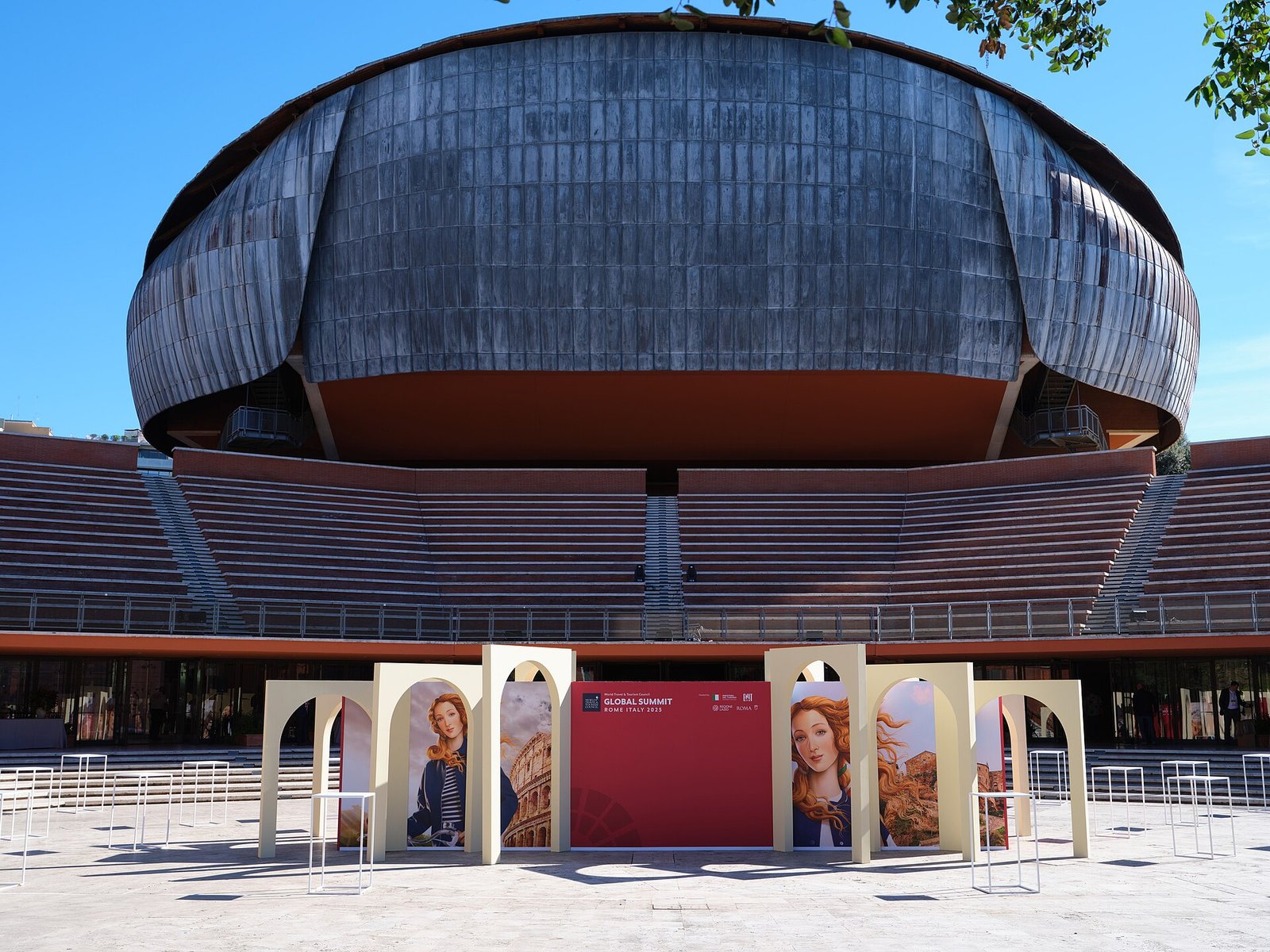
With its 2,756 seats Sala Santa Cecilia is the largest hall of Auditorium Parco della Musica Ennio Morricone: designed by Renzo Piano for the symphonic repertoire, it opened on December 21, 2002.
The cherrywood soundbox
The ceiling is made of 26 shells of American cherry, on average about 180 square meters each. Together they work like a soundbox, designed for a large symphony orchestra: the hall was meant to be used only for classical music, and the only sound pressure to fill more than 2,700 seats is that of the instruments.
Where to sit for Mahler
For a full orchestra like the one the Fifth requires, the central orchestra seats and the front gallery offer the best balance between sections. The gallery behind the orchestra is ideal for watching Harding's gestures and the work of the winds, less so for the overall sound.
Three halls around a cavea
Outside, the three halls are lead-covered volumes, shaped like a scarab, arranged in a fan around the cavea named after Luciano Berio. Piano's design won the 1993 competition.
Something nobody tells you about Daniel Harding conducting Mahler's Fifth at Auditorium Parco della Musica, April 15 to 17, 2027
What is rarely said about the Fifth is that the famous Adagietto has no fixed length. Mahler and Willem Mengelberg performed it in about seven minutes. Some conductors have stretched it to almost 12, and the longest commercial recording, by Bernard Haitink with the Berlin Philharmonic in 1988, reaches almost 14. Listening to how much time Harding takes is one of the small pleasures of the evening. According to a letter from Alma to Mengelberg, the movement was the composer's declaration of love to his wife, whom Mahler had met in 1901 and married before the summer of 1902.
The second thing concerns punctuality. The Accademia warns that the doors of Santa Cecilia close at the start time: latecomers don't enter the hall and follow the concert from the listening rooms, while seats last. The Fifth begins with a trumpet solo: arriving late means missing exactly its most recognizable opening. The third is practical: the hall's galleries have only two elevators, and if you have trouble with stairs, arrive well ahead of time.
My tip for Daniel Harding conducting Mahler's Fifth at Auditorium Parco della Musica, April 15 to 17, 2027
My advice is to listen to the Fifth at least once before the concert, paying attention to three moments: the opening trumpet solo, which begins the funeral march, the triumphant chorale that bursts into the second movement and fades at once, and the passage from the Adagietto to the final Rondo. These are the points where you grasp the journey the Accademia's presentation describes, from pain to light. If you want a reference, start from the recordings of the essential discography, from John Barbirolli to Leonard Bernstein, from Simon Rattle to Claudio Abbado, two of Harding's mentors.
The second tip concerns which performance. In our view Saturday at 18:00 is the best option if you are coming from outside or want to turn the concert into a full evening, with dinner in Ponte Milvio or in the center. The third concerns the seat: for a full orchestra, the front gallery often gives a more balanced sound than the front rows of the orchestra, at a lower price. If you're staying in Rome for a week, you can come back for Beethoven's Ninth, from April 22 to 24.
Tickets for Mahler's Fifth at Santa Cecilia
Tickets for Mahler's Fifth conducted by Daniel Harding cost €54 in section I, €47 in II, €37 in III, €35 in IV, €30 in V and €23 in VI. The only authorized sellers are the Auditorium box office, the one at Via Vittoria 6 and the sales points of the presale network authorized by the Accademia.
The box offices
The Auditorium box office is in the greenhouse space, and the one at Via Vittoria 6 is between Via del Corso and Piazza del Popolo. To buy online, click the button below your chosen date on the concert's official page.
Young people
Discounts for young people are listed at santacecilia.it/giovani. Check conditions and availability there or at the infoline 06 8082058.
Information
For questions about seats and reductions you can write to info@santacecilia.it or biglietteria@santacecilia.it. The Accademia is not responsible for markups applied by unauthorized resellers.
How to get to the Auditorium for Mahler's Fifth
For Harding's concert at Auditorium Parco della Musica the simplest combination is Metro A to Flaminio and then tram 2 to the Flaminia/Reni or Apollodoro stops. Alternatively there are buses 910, 53, 982 and 168.
From the center by tram
Tram 2 leaves from Piazzale Flaminio and runs along Via Flaminia toward Piazza Mancini. From the Flaminia/Reni and Apollodoro stops you walk to Viale Pietro de Coubertin through the Olympic Village in a few minutes.
From Termini by the 910
If you're staying near the station or arriving by train you can take the 910 in Piazza dei Cinquecento: it takes you to the Auditorium with no changes and is the most convenient line for the Saturday afternoon concert.
Other lines and cars
The 53 goes via Piazza Mancini, the 982 serves Viale XVII Olimpiade area and the 168 comes from Tiburtina station. For evening times, use the ATAC route planner. In front of the Auditorium, Viale Pietro de Coubertin is closed to cars, and on concert nights the streets of the Olympic Village fill up early.
Another well-known fact, yet one rarely mentioned
It's well known that the Adagietto from the Fifth became famous thanks to Luchino Visconti's Death in Venice, in 1971. Less often mentioned is why that music suited the film so well: Visconti turned the protagonist of Thomas Mann's novella from a writer into a composer, with traits in common with Mahler himself. Since then the Adagietto has been used in advertising, figure skating, television and other films, until it became the best-known page of Mahler's entire output, and it has taken on an elegiac meaning in collective memory, linked to commemorations.
A second rarely mentioned fact concerns the opening. The trumpet solo that opens the symphony quotes the Generalmarsch, the Austro-Hungarian army's military signal, and has a rhythmic motif similar to the opening of Beethoven's Fifth. Two Fifths, a century apart, that start with a signal: the Santa Cecilia audience, which the following week hears Beethoven's Ninth with the same Harding, can enjoy looking for the similarities.
How to plan the evening
For Mahler's Fifth it's best to be at the Auditorium at least 40 minutes early: between ticket pickup, security checks and the cloakroom, in a hall of more than 2,700 seats things quickly take longer.
Before the concert
In the shared foyer there's a bar, a café and a large shop of music books and records. From the terrace between Sala Santa Cecilia and Sala Sinopoli you can see the remains of the Roman villa that came to light during construction, and the finds are displayed in the small museum beneath the cavea.
Length
The Fifth lasts almost 70 minutes. The official page gives no interval or overall length of the evening: if you have a train after the Saturday concert, leave yourself a margin anyway.
On the way out
On the way out, the cavea is the best place to wait for the crowd to thin. If you parked in the Olympic Village, allow a few minutes of traffic in the side streets.
The right photo to take at Daniel Harding conducting Mahler's Fifth at Auditorium Parco della Musica, April 15 to 17, 2027
The best photo of this evening is taken before the start, from the gallery, when the full orchestra is already on stage: the music stands, the harp, the rows of winds under the cherrywood shells of the ceiling. During the concert your phone stays off, as the Accademia asks.
Outside, in mid-April, the evening light lasts a long time: for the Saturday concert at 18:00 you arrive in sunshine, and from the cavea Renzo Piano's three halls, with the lead reflecting the sky, make a sharp, almost graphic image. When the Thursday or Friday concert lets out, the same lit roofs make an equally recognizable night shot.
During the final applause, without flash, you can photograph Harding calling the principals to their feet, starting with the solo trumpet and the solo horn of the Scherzo: it's the only moment of the evening when doing so disturbs no one.
Some important events that happened here in history
Long before the Auditorium, a Roman villa from the 3rd century BC stood on this ground, built where there had been a small archaic farm from the 6th century BC. The remains emerged during construction and forced Renzo Piano to revise the design, shifting two of the three halls westward. The finds are now in the museum beneath the cavea.
The modern story starts with the demolition of the Augusteo, in 1936, which left Rome without a symphony hall for more than 60 years. In 1992 the city council chose the Olympic Village area, and in 1993 Piano won the competition. On April 21, 2002 Sala Sinopoli opened, with Goffredo Petrassi present at the world premiere of his 1931 Ouverture da concerto. On December 21, 2002 Sala Santa Cecilia was inaugurated, with the Accademia's orchestra conducted by Myung-Whun Chung.
Since 2003 the Accademia's season has been based here, since 2006 the complex has hosted the Rome Film Fest and since 2020 it has borne the name of Ennio Morricone. On March 6, 2023 Daniel Harding was appointed music director of the Santa Cecilia Orchestra, and in October 2024 he took up the post.
Who has passed through Daniel Harding conducting Mahler's Fifth at Auditorium Parco della Musica, April 15 to 17, 2027
Sala Santa Cecilia was inaugurated by Myung-Whun Chung on December 21, 2002. Goffredo Petrassi was present at the opening of Sala Sinopoli, and the cavea bears the name of Luciano Berio, who was then president of the Accademia. Since then the Accademia's music directors have taken the hall's podium, Antonio Pappano and Daniel Harding, who opened the 2026/2027 season with Wagner's Siegfried. The same season brings Kirill Petrenko, star of the concert with Benjamin Bernheim, and Evgeny Kissin plays in a duo with András Schiff in their concert.
Legendary conductors run through the history of the Fifth: Mahler himself, who conducted its premiere in Cologne in 1904, Willem Mengelberg, recipient of Alma's letter about the Adagietto, Henry Wood, Leonard Bernstein, John Barbirolli, Herbert von Karajan, Bernard Haitink, Simon Rattle and Claudio Abbado. Harding's career includes Rattle and Abbado as mentors, the Mahler Chamber Orchestra, the London Symphony Orchestra and Teatro alla Scala.
Accessibility and families
For people with walking disabilities who hold the Disability Card, the Accademia offers a 15% reduction on two tickets, to be bought at the box office. Wheelchair users pay €10 and their companion enters free, while dedicated spaces last.
Booking in time
For people who cannot walk, booking is required, from 15 days before the concert until the day before, at 06 8082058 or biglietteria@santacecilia.it. For the April 15 concert you can book from March 31.
Elevators and arriving early
The galleries have only two elevators and the hall is raised: arriving well in advance and asking staff for the route right away is the most relaxed choice.
With kids
70 minutes of music without words are demanding for the youngest, but a teenager who studies music will hardly forget the opening trumpet solo or the Adagietto heard live with a full orchestra. Saturday at 18:00 is the best time.
What's around the Auditorium
The Auditorium stretches between Villa Glori, the Olympic Village, the Corso di Francia viaduct and Viale Maresciallo Pilsudski, in a part of Rome marked by 20th-century architecture and greenery.
MAXXI a few steps away
Toward Via Guido Reni, a few minutes' walk away, is Zaha Hadid's MAXXI. For the Saturday concert you can pair it with an exhibition in the afternoon.
The river and the bridges
Going down toward the Tiber you come to Ponte della Musica, the footbridge between Flaminio and Foro Italico. A little farther north, Milvian Bridge is one of the liveliest evening spots in the north of the city.
Back toward the center
Tram 2 takes you back to Piazzale Flaminio, at the entrance to Villa Borghese: an afternoon on the Pincio and then the tram to the concert is the most relaxed combination.
Where to eat before or after the concert
Inside the Auditorium, the bar, the foyer café and the bar-restaurant, which also has a street entrance, solve a quick dinner for people coming straight from the office on Thursday.
Olympic Village and Flaminio
In the streets between the Olympic Village, Via Flaminia and Piazza Mancini there are pizzerias, trattorias and bars frequented mostly by local residents. For the Thursday and Friday dates it's best to eat beforehand, with a booking.
After the Saturday concert
On Saturday, after the concert, the widest choice is in Ponte Milvio, where places stay open late. Toward Piazzale Flaminio and Piazza del Popolo you enter the historic center's range of options instead.
Frequently asked questions about Mahler's Fifth with Harding
When does Daniel Harding conduct Mahler's Fifth in Rome?
Daniel Harding conducts Mahler's Fifth in Sala Santa Cecilia at Auditorium Parco della Musica on Thursday, April 15, 2027 at 19:30, Friday, April 16 at 20:00 and Saturday, April 17 at 18:00, with the Orchestra dell'Accademia Nazionale di Santa Cecilia.
How much are tickets for Mahler's Fifth?
Tickets for Mahler's Fifth conducted by Harding cost from €23 to €54: €54 in section I, €47 in II, €37 in III, €35 in IV, €30 in V and €23 in VI. There are discounts for young people listed on the Accademia website.
How long is Mahler's Symphony No. 5?
Mahler's Symphony No. 5 lasts almost 70 minutes and is divided into five movements grouped in three parts. The concert's official page gives no interval or overall length of the evening.
Is it the Adagietto from Death in Venice?
Yes, the Adagietto from Mahler's Fifth is the music Luchino Visconti chose for Death in Venice in 1971. It's the fourth movement of the symphony, for strings and harp alone, and will be performed as part of the complete symphony.
Where do you buy tickets?
Tickets for Mahler's Fifth at Santa Cecilia are sold from the concert's official page on the Accademia website, which links to the authorized presale network, or at the Auditorium box office and the one at Via Vittoria 6. Sales for the spring concerts open on January 12, 2027.
Can you go in after the concert has started?
At Accademia di Santa Cecilia concerts the doors close at the start time: latecomers follow the concert from the listening rooms, while seats last. The Fifth begins with a trumpet solo, best not to miss it.
How do you get to Auditorium Parco della Musica?
Auditorium Parco della Musica, at Viale Pietro de Coubertin 30, is reached by Metro A to Flaminio and then tram 2 to the Flaminia/Reni or Apollodoro stops. From Termini there's bus 910, with no changes.
My final tip on Mahler's Fifth with Harding
Mahler's Fifth conducted by Daniel Harding is, in our view, one of the symphonic concerts to mark in Santa Cecilia's spring 2027: a symphony that goes from mourning to joy, an Adagietto that cinema made universal, a conductor whose bond with Mahler goes back almost 30 years, from the Mahler Chamber Orchestra to the Rome cycle. My advice is to buy tickets as soon as the January sale opens, choose the front gallery for the balance of sound and arrive early, because the doors close on time. If you can, come back the following week for Beethoven's Ninth.
Article written by the editorial team of Tour Leader Pro, contact them for Private/Corporate/V.I.P. Tours and Experiences.
Planning a trip to Rome? The English-language guides for visiting the city are on ItalyPlanner.com.