Daniel Harding and Beatrice Rana at Auditorium Parco della Musica, March 4 to 6, 2027
https://www.estateromana.com/en/rome/trip-planner/daniel-harding-and-beatrice-rana-at-auditorium-parco-della-musica-march-4-to-6-2/
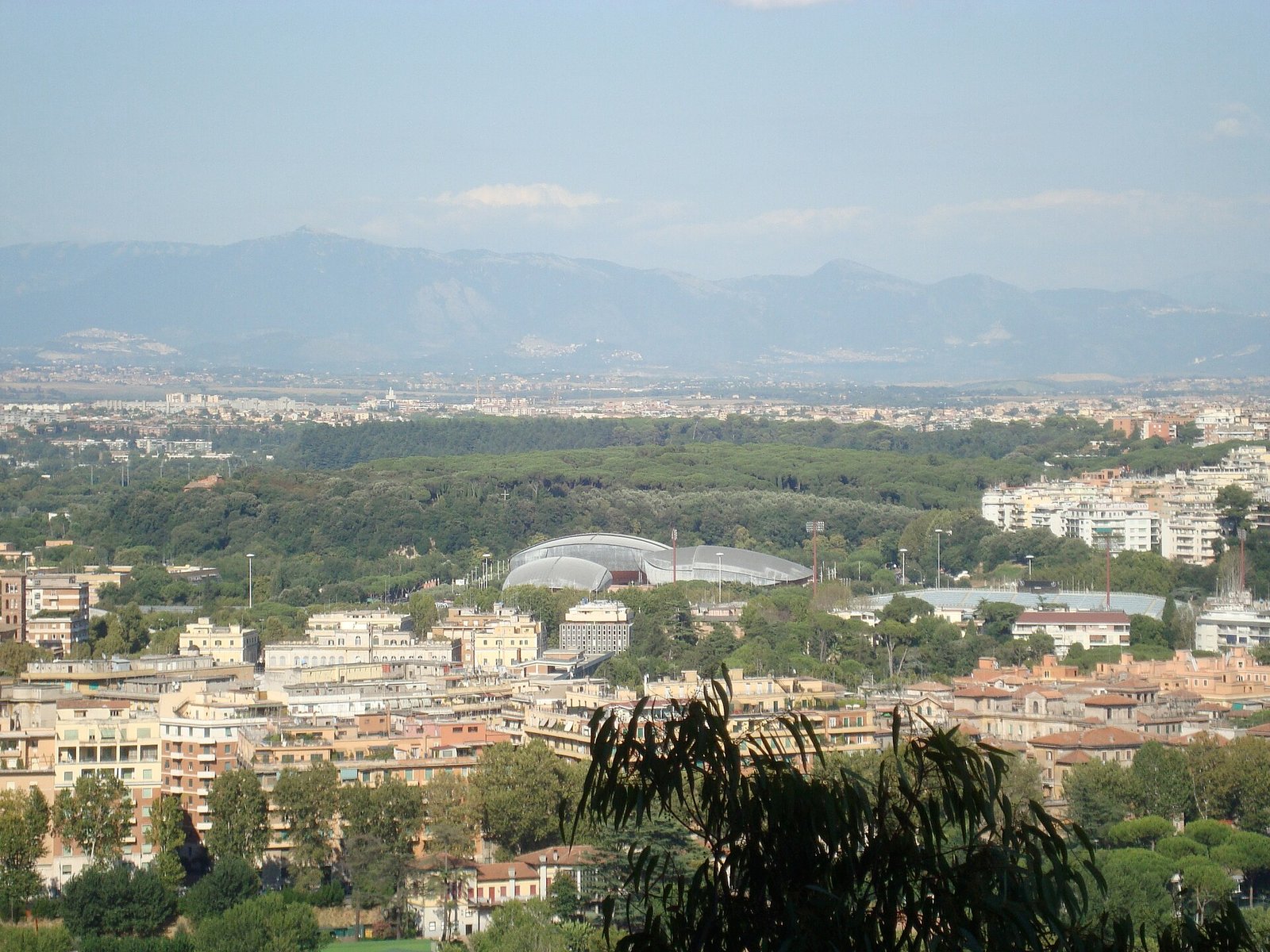
Daniel Harding conducts the Orchestra dell'Accademia Nazionale di Santa Cecilia with pianist Beatrice Rana on Thursday, March 4, 2027 at 19:30, Friday, March 5 at 20:00 and Saturday, March 6 at 18:00, in Sala Santa Cecilia of Auditorium Parco della Musica Ennio Morricone, at Viale Pietro de Coubertin 30 (00196 Rome). The program is Tchaikovsky's fantasy-overture Romeo and Juliet, Prokofiev's Piano Concerto No. 3 and Sibelius's Symphony No. 2. Tickets cost from €23 to €54 depending on the section, have been on sale since January 12, 2027 and are bought at the box offices of the Auditorium and of Via Vittoria 6 and through the presale network authorized by the Accademia, reachable from the official concert page. You get to the Auditorium by tram 2 from Flaminio station on Metro Line A, stops Flaminia/Reni or Apollodoro, and by buses 910 from Termini, 53, 982 and 168.
The Accademia's music director and one of the most celebrated Italian pianists of her generation, who lives in Rome and has already recorded an album with this orchestra: the program crosses, as the Accademia writes, three different European musical traditions, from the Romantic Russia of Tchaikovsky to the Prokofiev of the 1920s to the Finland of Sibelius.
Daniel Harding and Beatrice Rana: dates, times and performers
The concert by Daniel Harding and Beatrice Rana is scheduled over three evenings in Sala Santa Cecilia: Thursday, March 4, 2027 at 19:30 for the G-G2 series, Friday, March 5 at 20:00 for the V-V2 series and Saturday, March 6 at 18:00 for the S-S2 series.
The performers
Orchestra dell'Accademia Nazionale di Santa Cecilia, conductor Daniel Harding, piano Beatrice Rana.
The program
Pyotr Ilyich Tchaikovsky, Romeo and Juliet. Sergei Prokofiev, Concerto for Piano and Orchestra No. 3. Jean Sibelius, Symphony No. 2.
Which evening to choose
The three performances have the same program and the same performers. Thursday at 19:30 is the choice for people coming from work. Friday at 20:00 is the most classic evening. Saturday at 18:00 is for those coming from outside Rome or who want to have dinner at a relaxed pace after the concert.
The program: three European traditions
The Accademia's presentation describes the concert as a program that crosses three different European musical traditions: Tchaikovsky's fantasy-overture, Prokofiev's Third Concerto with Beatrice Rana and Sibelius's Second Symphony.
Tchaikovsky, Romeo and Juliet
It begins with Romeo and Juliet, which the Accademia defines as a fantasy-overture able to reread Shakespeare's famous tragedy in a Romantic key.
Prokofiev, Concerto No. 3
At the center, Beatrice Rana is the soloist in Prokofiev's Third Piano Concerto, which the Accademia describes as a piece marked by a strong rhythmic component and a tight dialogue between soloist and orchestra.
Sibelius, Symphony No. 2
Sibelius's Second Symphony closes the program, in which, according to the presentation, the Finnish composer develops a personal language starting from motifs and atmospheres of the Nordic tradition.
Prokofiev's Third Concerto
The Concerto for Piano and Orchestra No. 3 in C major, Op. 26 is the most famous and most performed of Sergei Prokofiev's five piano concertos: composed between 1917 and 1921, it was first presented at Orchestra Hall in Chicago on December 16, 1921 and lasts about half an hour.
A long gestation
The concerto was written over a long time, partly because of the composer's wanderings in search of a stable home. Some themes are much earlier, others show the influence of The Love for Three Oranges, the opera Prokofiev was working on in those same years. It was published in Paris in 1923 and is dedicated to the poet Konstantin Balmont.
The first movement
The concerto opens with a solo clarinet presenting the first theme, pianissimo and slow, then the strings, a sudden crescendo and the darting entrance of the piano. It is one of the most recognizable openings in the 20th-century concert repertoire.
The theme with variations
The second movement is a theme with five variations: the clarinet presents the melody again, and the piano transforms it into episodes of opposite character, from an energetic march to a mysterious, meditative fourth variation, perhaps the most famous.
The finale
The third movement, Allegro ma non troppo, alternates a bassoon theme with the strings' pizzicato, a lyrical melody entrusted to the winds and strings, and passages of great virtuosity, up to a fortissimo close on C major. Compared with the Second Concerto it is less showy, but it demands exceptional and very varied virtuosic skills from the soloist.
Sibelius's Second Symphony
Jean Sibelius's Symphony No. 2 in D major, Op. 43, composed between 1900 and 1902, is the most popular and most performed of his symphonies. The premiere, conducted by the composer, took place in Helsinki on March 8, 1902, and the definitive version in Stockholm on November 10, 1903 under the direction of Armas Järnefelt.
Four movements from one motif
The symphony grows out of a rising three-note motif presented at the beginning, which reappears in different forms in all four movements and becomes the dramatic theme in the finale. Sibelius said he admired its severity of style and the deep logical coherence of the motifs.
The Andante
The second movement opens with a long pizzicato of cellos and double basses. The bassoon offers the first theme, in a mood of growing anxiety, countered by a calmer theme. In Sibelius's sketches one of the two themes was associated with the figure of Christ, the other with the meeting between Don Giovanni and death, but the composer later abandoned any programmatic intent.
The scherzo and the finale
The Vivacissimo is impetuous, with a trio that begins with eight repetitions of the same note entrusted to the first oboe. Without a pause it moves into the finale, in which the trumpets take up the three-note motif and the violins sing a broad, solemn theme. The symphony ends in a luminous mood.
The liberation symphony
In Finland the Second has become a national symbol: written during Russian rule, it was read by audiences as a patriotic message for independence and renamed the Symphony of Liberation. The conductor Georg Schnéevoigt even attached a program to it, from pastoral life to the hope of liberation.
Who Beatrice Rana is
Beatrice Rana is an Italian pianist born in Copertino on January 22, 1993, winner at 18 of the Montréal International Competition and in 2013 of the second prize and the audience prize at the Van Cliburn Competition. She lives in Rome.
The beginnings in Puglia
She was born into a family of musicians and started playing very young. At nine she made her debut with an orchestra, conducted by Francesco Libetta. She studied for eight years with the pianist Benedetto Lupo at the Nino Rota Conservatory in Monopoli, where she graduated with honors and special mention and studied composition further with Marco Della Sciucca. She then continued her training with Arie Vardi at the Hochschule für Musik, Theater und Medien in Hannover.
The competitions
At 18 she won first prize at the Montréal International Competition, the youngest winner of the competition and the first Italian. In Italy she had already won the Muzio Clementi in Lastra a Signa, the Yamaha Del Rio Giovani Talenti in Cesenatico, the first Repubblica di San Marino International Competition, the Marco Bramanti in Forte dei Marmi and the Premio delle Arti 2005. In 2013, at the Van Cliburn in Fort Worth, the second prize and the audience prize.
The international career
Since then she has played with many orchestras and conductors and at the major festivals, from La Roque d'Anthéron to the Radio France Festival in Montpellier to the Folle Journée in Nantes. In 2014 International Piano magazine included her among the 30 best pianists under 30. In 2018 she was nominated for the Classic BRIT Awards as best female artist for the Goldberg Variations.
Beatrice Rana on record
Beatrice Rana's discography runs from Chopin's Preludes in 2012 to Bach's Keyboard Concertos with the Amsterdam Sinfonietta in 2025, by way of an album recorded in Rome with the Santa Cecilia Orchestra.
The first albums
In 2012 she released for ATMA Classique Chopin's 26 Preludes and Scriabin's Sonata No. 2. In 2013, for Harmonia mundi, Schumann's Symphonic Etudes, Ravel's Gaspard de la nuit and Bartók's Out of Doors.
Warner Classics
Since 2016 she has recorded for Warner Classics: Prokofiev's Second Concerto and Tchaikovsky's First with the Orchestra dell'Accademia di Santa Cecilia and Antonio Pappano in 2016. The Goldberg Variations in 2017. Ravel's Miroirs and La valse with Stravinsky's Petrushka and The Firebird in 2019. Chopin's Etudes Op. 25 and the four Scherzi in 2021.
The latest years
In 2023 she recorded the piano concertos of Clara Wieck Schumann and Robert Schumann with the Chamber Orchestra of Europe conducted by Yannick Nézet-Séguin. In 2024, Chopin's Sonata No. 2 and Beethoven's Hammerklavier. In 2025, Bach's Keyboard Concertos BWV 1052, 1053, 1054 and 1056 with the Amsterdam Sinfonietta.
Daniel Harding, music director of Santa Cecilia
Daniel Harding, born in Oxford on August 31, 1975, has been music director of the Orchestra and Chorus of the Accademia Nazionale di Santa Cecilia since the 2024/2025 season, and from the 2027/2028 season will also be music director of the Los Angeles Philharmonic.
Rattle and Abbado
He studied trumpet at Chetham's School of Music, and at 13 he played in Britain's National Youth Orchestra. At 17 he sent Simon Rattle a recording of Schoenberg's Pierrot lunaire conducted by himself, and Rattle took him on as an assistant at the City of Birmingham Symphony Orchestra for the 1993/1994 season. Then Claudio Abbado wanted him as an assistant at the Berliner Philharmoniker, which he conducted for the first time at 21. In 1996, at his Proms debut, he was the youngest conductor ever to step onto that podium.
The orchestras of a career
He has been music director of the Trondheim Symphony Orchestra, the Deutsche Kammerphilharmonie Bremen and the Mahler Chamber Orchestra, which gave him the lifetime title of honorary conductor. From 2007 to 2025 he led the Swedish Radio Symphony Orchestra, from 2016 to 2019 the Orchestre de Paris. From 2007 to 2017 he was principal guest conductor of the London Symphony Orchestra. In 2005 he conducted Idomeneo for the opening of La Scala.
The pilot conductor
Harding is also a licensed airline pilot: since 2022 he has flown Airbus aircraft on medium-haul routes for about a week a month. He has been a Commander of the Order of the British Empire since 2021 and is a foreign member of the Royal Swedish Academy of Music.
Harding's Roman season
In Rome Harding opened the season in October with Wagner's Siegfried and will return after this concert with Beethoven's Ninth in April and with Leoncavallo's Pagliacci in May 2027.
A curiosity about Daniel Harding and Beatrice Rana at Auditorium Parco della Musica, March 4 to 6, 2027
The nicest curiosity concerns the relationship between Beatrice Rana and the orchestra that welcomes her. In 2016 the pianist recorded for Warner Classics Prokofiev's Second Concerto and Tchaikovsky's First with this very orchestra, the Orchestra dell'Accademia Nazionale di Santa Cecilia, then conducted by Antonio Pappano. 11 years later she returns with the same orchestra, with a new music director, for Prokofiev's Third Concerto, in a program that opens with Tchaikovsky. The circle closes, with one more concerto.
The second curiosity is Italian. Sibelius began the Second Symphony during a stay in Rapallo, in 1900, funded by Baron Axel Carpelan. The themes of the Andante were sketched in Liguria in February 1901. Finland's best-loved symphony, which became a symbol of national independence, was thus also born from a winter on the Ligurian Riviera.
The third is a coincidence of the calendar: the first performance of the Second Symphony, conducted by Sibelius himself in Helsinki, took place on March 8, 1902. The Roman evenings of March 4, 5 and 6, 2027 fall a few days short of exactly 125 years since that premiere.
Sala Santa Cecilia at Auditorium Parco della Musica
Sala Santa Cecilia is the largest of the three concert halls of Auditorium Parco della Musica Ennio Morricone: 2,756 seats, designed by Renzo Piano for symphonic music and opened on December 21, 2002 with the Accademia orchestra conducted by Myung-whun Chung. The general page on the complex is the one on Auditorium Parco della Musica.
The cherry-wood ceiling
The ceiling is made of 26 American cherry wood shells, each with an average surface area of about 180 square meters, and the whole hall works as a sounding board. Around the stage, including behind the orchestra, runs a gallery with more seats. The reverberation time is 2.2 seconds.
Where to sit for a piano concerto
The sound intensity seems to drop up to the tenth row and then stay constant: you don't need to sit right up against the stage. For the Prokofiev Concerto, in our opinion, a seat on the left side of the hall is best, from which you see the soloist's hands. For the Sibelius symphony, a central seat gives you a better balance between strings and brass.
Renzo Piano's beetles
From the outside the three halls look like three large beetles, clad in lead sheets on a brick base and arranged in a ray pattern around the open-air cavea, named after Luciano Berio. Renzo Piano worked with the acoustician Jürgen Reinhold of the Müller-BBM firm and with the landscape architect Franco Zagari.
One thing nobody tells you about Daniel Harding and Beatrice Rana at Auditorium Parco della Musica, March 4 to 6, 2027
The first thing few people mention is that the concert falls at the start of the season's second presale period. The Accademia split the sales into two phases: from September 10, 2026 for concerts up to February 27, 2027, from January 12, 2027 for the later ones. Tickets for Harding and Rana therefore go on sale January 12, and for an artist who is Roman by adoption with such a large following, it's best not to wait.
The second is that the doors of Santa Cecilia really do close at the stated time. The Accademia warns that latecomers cannot enter the hall and follow the concert in the listening rooms, while seats last. Romeo and Juliet opens the program: if you arrive late you miss it, and you risk waiting outside until the piano concerto.
The third concerns the Sibelius Symphony. In the finale, according to the musicologist Erkki Salmenhaara, there is one precise moment to wait for: the rising three-note motif that runs through the whole symphony finally reaches, for the first time, the fourth note. If you know it, you hear it coming, and the finale takes on a new meaning.
Tickets for Harding and Rana
Tickets for the concert by Daniel Harding and Beatrice Rana cost €54 in the first section, €47 in the second, €37 in the third, €35 in the fourth, €30 in the fifth and €23 in the sixth, and have been on sale since January 12, 2027.
Where to buy them
According to the Accademia, the only authorized sellers are the outlets of the presale network that the official concert page links to, the box office of Auditorium Parco della Musica Ennio Morricone and the one at Via Vittoria 6. The Accademia is not responsible for surcharges applied by unauthorized parties.
Young people and information
Discounts for young people are collected in a dedicated section of the Accademia's website. The infoline answers at 06 8082058. For the ticket office there is the address biglietteria@santacecilia.it.
My advice for visiting Daniel Harding and Beatrice Rana at Auditorium Parco della Musica, March 4 to 6, 2027
The first piece of advice is to listen first to the 2016 album in which Beatrice Rana plays Prokofiev's Second Concerto with the Santa Cecilia Orchestra. It's the best way to come to the Third with your ear ready: same composer, same orchestra, same soloist, 11 years apart.
The second is to pay attention to the start of the Concerto: a solo clarinet, pianissimo, before the piano enters. It's a moment, and to catch it you have to be seated and quiet when the orchestra begins.
The third concerns Sibelius: follow the three-note motif that opens the symphony and go back to it in your mind at every movement. It's the thread of the composition, and finding it transformed in the finale is one of the pleasures of listening.
The fourth is practical: arrive at least half an hour early, because the doors close on time, and choose the evening based on your trip home. Saturday at 18:00 is the most comfortable choice for those coming from out of town.
How to get to Auditorium Parco della Musica
You get to Auditorium Parco della Musica Ennio Morricone by tram 2, stops Flaminia/Reni or Apollodoro, and by buses 910, 982, 168 and 53. The metro doesn't come this far: the nearest station is Flaminio, on Line A.
Metro A and tram 2
From Flaminio station you exit onto Piazzale Flaminio and take tram 2, which runs along Via Flaminia. Get off at Flaminia/Reni or at Apollodoro and walk a few minutes toward Viale Pietro de Coubertin, crossing Villaggio Olimpico.
Bus 910 from Termini
The 910 leaves from Piazza dei Cinquecento, in front of Termini station, and takes you to the Auditorium without changes: the most direct solution for those arriving by train.
The other lines and driving
The 53, the 982 and the 168 complete the connections. For the evening trip back, it's worth checking the times on the ATAC route planner. The stretch of Viale Pietro de Coubertin in front of the Auditorium is closed to traffic. The complex has an internal paid parking lot with limited spaces.
Another well-known fact, yet rarely cited
It's well known that the Third is Prokofiev's most performed piano concerto. It's less often remembered that it debuted far from Russia: the first performance took place in Chicago, at Orchestra Hall, on December 16, 1921, and the score was published in Paris in 1923. Prokofiev had started it in 1917 and finished it after years of moving between continents: a Russian concerto born on the road.
A second rarely cited fact concerns the dedication. The Third Concerto is dedicated to the poet Konstantin Balmont: a literary tribute for a piece that, unlike the two early concertos, is structured in a classical three-movement form.
And one more: the first recording of Sibelius's Second Symphony was made by Robert Kajanus with the London Symphony Orchestra for HMV in May 1930.
The right photo to take at Daniel Harding and Beatrice Rana at Auditorium Parco della Musica, March 4 to 6, 2027
The right photo at a Santa Cecilia concert is not taken during the performance: the silence between one movement and the next is part of the music, and a lit screen in the hall is a disturbance. The moment is the applause after the Prokofiev Concerto, with Beatrice Rana standing next to the piano and Harding pointing her out to the audience.
Before the concert, the photo to take is the Auditorium lit up, with the three large lead-clad volumes that Renzo Piano arranged around the cavea. On early March evenings, at 19:00, it's already dark, and the foyer lights outline the shapes of the buildings well.
If you arrive early you can look for a less obvious detail: from the terrace between Sala Santa Cecilia and Sala Sinopoli you can see the remains of the Roman villa discovered during construction, an image that places the ancient and the contemporary side by side.
Some important events that happened here in history
The ground of the Auditorium has a much longer history than the complex. During construction the remains of a Roman villa from the 3rd century BC emerged, built on the site of a small archaic farm from the 6th century BC. The discovery forced Renzo Piano to change the design, moving two of the three halls. The finds are displayed in a small museum under the cavea.
The modern history begins with a demolition: in 1936 the Augusteo hall was torn down, and for more than 60 years Rome was left without an auditorium built for symphonic music. In 1992 the city council chose Villaggio Olimpico area, and in 1993 Renzo Piano won the competition. On April 21, 2002 Sala Sinopoli opened. On December 21, 2002 Sala Santa Cecilia was inaugurated with the Accademia orchestra conducted by Myung-whun Chung.
Since 2003 the Auditorium has been the permanent home of the Accademia's season, since 2006 it has hosted the Rome Film Festival, and since 2020 it has been named after Ennio Morricone. Since 2024 Sala Santa Cecilia has been Daniel Harding's home.
Who has passed through Daniel Harding and Beatrice Rana at Auditorium Parco della Musica, March 4 to 6, 2027
From the first day, Sala Santa Cecilia has seen the conductors who have led the Accademia orchestra: Myung-whun Chung, who inaugurated it in December 2002, and Antonio Pappano, for a long time music director, before the arrival of Daniel Harding. In its first months the hall was also criticized, among others by the conductor Wolfgang Sawallisch, and acoustic corrections followed. Luciano Berio gave his name to the cavea.
In the line of the Accademia's permanent conductors are Bernardino Molinari, Franco Ferrara, Fernando Previtali, Igor Markevitch, Thomas Schippers, Giuseppe Sinopoli, Daniele Gatti, Myung-whun Chung and Antonio Pappano. Harding is the latest in this series.
Beatrice Rana is at home: with Pappano and the Accademia orchestra she recorded Prokofiev and Tchaikovsky for Warner in 2016. Also passing through the careers of the two performers are Simon Rattle and Claudio Abbado, Harding's masters. Benedetto Lupo and Arie Vardi, Rana's masters. And Yannick Nézet-Séguin and the Chamber Orchestra of Europe, with whom the pianist recorded Schumann.
Accessibility and kids
For accessibility needs in Sala Santa Cecilia, it's worth contacting the Accademia's ticket office in advance at the infoline 06 8082058 or at biglietteria@santacecilia.it, to choose the most suitable seat and learn the access route.
With kids
A program with Romeo and Juliet, a very rhythmic piano concerto and a symphony with a triumphant finale is among the most suitable for taking a kid to a first symphonic concert. Saturday at 18:00 is the best time. Discounts for young people are published by the Accademia.
The neighborhood around the Auditorium
The Auditorium stands between Villa Glori, Villaggio Olimpico, the Corso di Francia viaduct and Viale Maresciallo Pilsudski: a piece of modern Rome where contemporary architecture dialogues with greenery.
MAXXI and Ponte della Musica
Near the Flaminia/Reni stop of tram 2 is MAXXI, the national museum of 21st-century arts. Toward the Tiber, Ponte della Musica connects Flaminio to Foro Italico.
Toward the center
Tram 2 takes you back to Piazzale Flaminio, where Villa Borghese begins: a walk to the Pincio on Saturday afternoon and the tram to the Auditorium are a restful way to arrive. Inside the complex there is also the Accademia's Museum of Musical Instruments.
Where to eat before or after the concert
Inside the Auditorium there are a bar and a café in the foyer and a bar-restaurant with access from the street as well. Between Villaggio Olimpico, Via Flaminia and Piazza Mancini there are pizzerias, trattorias and neighborhood bars. If you prefer to have dinner after the concert, the widest choice is in the Ponte Milvio area, a few minutes away, where several places stay open late.
Early March in Rome
The week of the concert is one of the richest of the season: on March 3 Mikhail Pletnev plays Beethoven and Tchaikovsky in Sala Sinopoli. On the 4th, the same evening as the Harding and Rana opening, the Accademia Filarmonica Romana brings the Prometeo Quartet and Claudio Pasceri to Teatro Argentina. On March 17 the Jussen duo returns to the Auditorium. The days are getting longer, but the evenings are still cool: you'll need a heavy jacket on the way out.
Frequently asked questions about Harding and Rana at Santa Cecilia
When do Daniel Harding and Beatrice Rana play in Rome?
Daniel Harding and Beatrice Rana are scheduled in Sala Santa Cecilia of Auditorium Parco della Musica on Thursday, March 4, 2027 at 19:30, Friday, March 5 at 20:00 and Saturday, March 6 at 18:00, with the Orchestra dell'Accademia Nazionale di Santa Cecilia.
What is the program of the Harding and Rana concert?
The program of the Harding and Rana concert includes Tchaikovsky's Romeo and Juliet, Prokofiev's Piano Concerto No. 3 with Beatrice Rana as soloist and Sibelius's Symphony No. 2.
How much do tickets for Harding and Rana cost?
Tickets for the concert by Daniel Harding and Beatrice Rana cost from €23 in the sixth section to €54 in the first, with intermediate sections at €47, €37, €35 and €30. They have been on sale since January 12, 2027 at the box offices of the Auditorium and of Via Vittoria 6 and through the network authorized by the Accademia.
Who is Beatrice Rana?
Beatrice Rana, soloist of the Harding concert at Santa Cecilia, is a pianist born in Copertino in 1993 who lives in Rome. She won the Montréal Competition at 18 and the second prize at the Van Cliburn in 2013, and records for Warner Classics.
Who is Daniel Harding?
Daniel Harding, born in Oxford in 1975, has been music director of the Orchestra and Chorus of the Accademia di Santa Cecilia since the 2024/2025 season and from 2027/2028 will also lead the Los Angeles Philharmonic.
How do you get to Auditorium Parco della Musica?
Auditorium Parco della Musica, at Viale Pietro de Coubertin 30, can be reached by tram 2 from Flaminio station on Metro Line A, stops Flaminia/Reni or Apollodoro, and by buses 910 from Termini, 53, 982 and 168.
Final advice on Harding and Rana at Santa Cecilia
The Accademia's music director, a Roman-by-adoption pianist returning with the orchestra with which she recorded Prokofiev in 2016, the Third Concerto and one of the best-loved symphonies of the 20th century: in our opinion it's one of the most successful symphonic concerts of the Roman spring. The advice is to buy the ticket as soon as the presale opens, on January 12, listen again to the 2016 album, sit on the keyboard side and follow, in Sibelius, the three-note motif up to its fourth note.
Article written by the editorial team of Tour Leader Pro, contact them for Private/Corporate/V.I.P. Tours and Experiences.
Planning a trip to Rome? The English guides for visiting the city are on ItalyPlanner.com.