Crime and Punishment at Piccolo Eliseo, November 17 to 29, 2026
https://www.estateromana.com/en/rome/trip-planner/crime-and-punishment-at-piccolo-eliseo-november-17-to-29-2026/
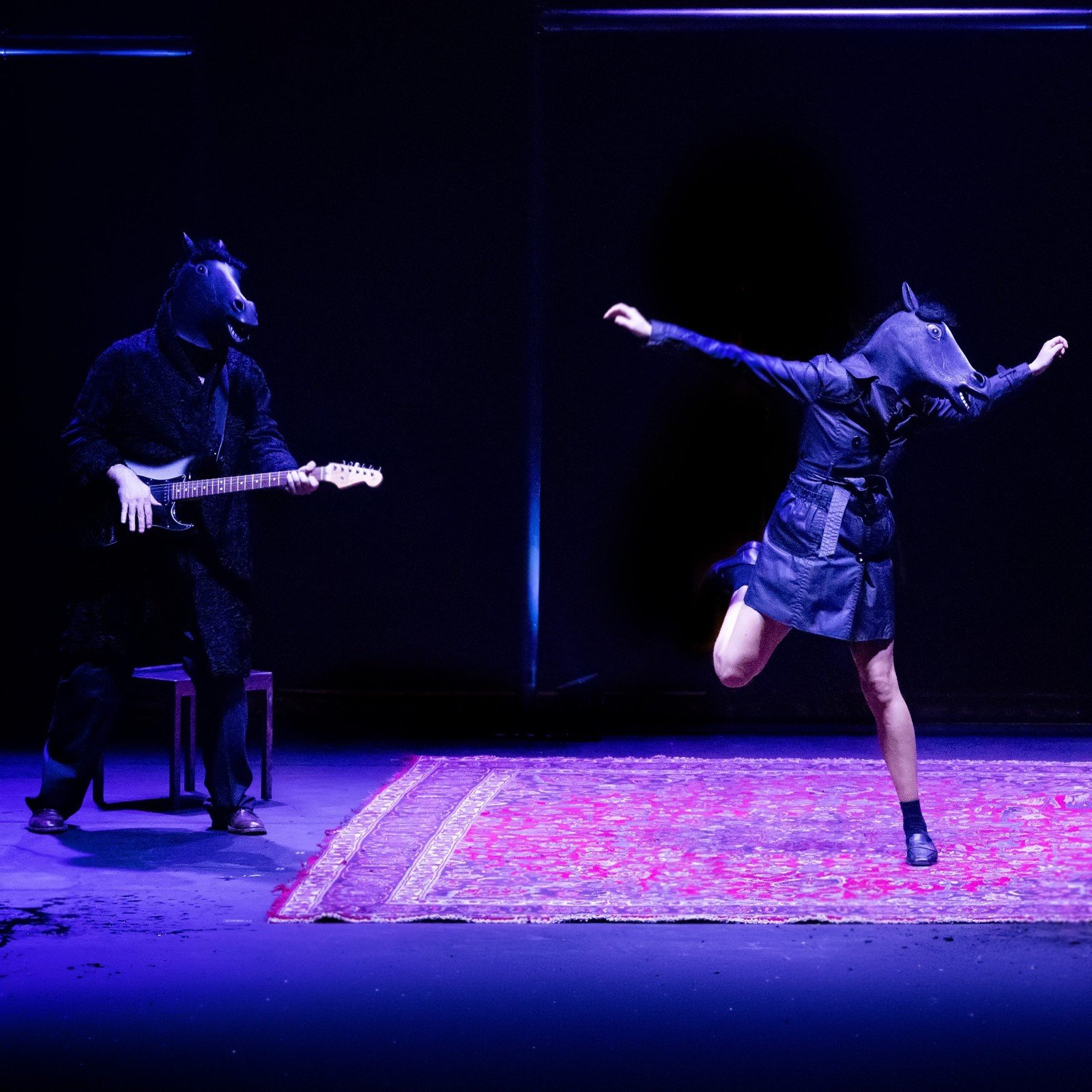 Immagine dalla pagina ufficiale dello spettacolo, Teatro Eliseo
Crime and Punishment by Fyodor Dostoevsky, in the stage adaptation by Glauco Mauri and directed by Andrea Baracco, is on stage at Piccolo Eliseo, the most intimate hall of the Eliseo complex, at Via Nazionale 183, between Piazza della Repubblica and Palazzo delle Esposizioni. There are 12 performances, from November 17 to 29, 2026: Tuesday to Friday at 20:00, Saturday and Sunday at 17:00, with no show on Monday the 23rd. On stage are Francesco Sferrazza Papa, Paolo Zuccari, Woody Neri, Giulio Petushi, Aurora Spreafico and Anna Bisciari. The production is by Compagnia Mauri Sturno. The official page lists for the stalls section a full-price ticket at 28 euros and a reduced one at 20 euros. For the other sections (front stalls and three tiers of balcony) prices are not published. The same page announced a launch promotion valid until October 19 on the ticketing circuit linked to the website. Tickets can be bought from the theater's official website, which links to online sales, or by writing to the box office at botteghino@eliseoteatro.it. Box office hours and phone number don't appear on the show page. To get there by public transport, plan your route with the ATAC journey planner, entering Via Nazionale 183 as your destination.
Language: performed in Italian. No English version or English surtitles are announced.
Crime and Punishment: the show
The show has a double nature, and it's worth keeping in mind. On one hand it's a revival: Glauco Mauri's adaptation of Crime and Punishment premiered in 2005, and the official presentation points out that this rewriting turns 20. On the other it's a debut, because it's the first show of the new chapter of Compagnia Mauri Sturno, born after the death of its two historic founders. The company chose to begin this chapter with one of the greatest novels ever written, keeping the line that defined it for decades: bringing the great novels to the stage.
An obsessive question
In the presentation Raskolnikov appears shut in his room near Haymarket Square, one of the most disreputable places in Petersburg, for days, repeating the same question to himself in different words: how much am I worth? The formula that sums it up is the famous one that sets the louse against Napoleon. The protagonist is a penniless 23-year-old student who spends his days lying down wondering who he is and how to escape a material and moral poverty that is suffocating him.
A new kind of hero
The director's note reads Raskolnikov as a figure who breaks with the many superfluous men of 19th-century Russian literature. He isn't content to stay still: he wants to act, to make a mark, to overturn an order he doesn't accept. After endless torment he gets up from the couch and transgresses, crossing the line he was assigned. The crime, in this reading, is the act of someone who wants to rewrite history because he doesn't like the existing one.
Performers the age of the characters
One of the director's declared choices concerns the company: actors who are the same age as the characters. The idea is to ask how Dostoevsky's words sound today to a generation that grew up in the 2000s, and how much it costs young people to challenge the established order. It's an approach that changes the temperature of the text, because Raskolnikov's fever is conveyed by bodies close to his 23 years.
Dostoevsky's novel
Crime and Punishment was published in 1866. Dostoevsky had discussed the project in a letter to the editor of the magazine Russky Vestnik, The Russian Messenger. The story takes place in St. Petersburg during a sweltering summer, and the epilogue moves to a prison fortress on the banks of the Irtysh, in Siberia.
The plot in a few lines
Raskolnikov, a former law student, kills the old pawnbroker Alyona Ivanovna to get hold of her money, and also kills Lizaveta, the woman's half-sister, who happens to walk in. From that moment the novel follows his torment: fever, guilt, paranoia, isolation. His encounter with Sonya leads him to confess. He is sentenced to eight years of hard labor in Siberia, and Sonya follows him.
The characters around the protagonist
Around Raskolnikov move memorable figures. Sonya, a devout young woman forced into prostitution to support her family, is decisive for his redemption. Porfiry Petrovich, the examining magistrate, pushes him toward confession with a subtle psychological game. Svidrigailov, rich and depraved, preys on Dunya, the protagonist's sister, and ends up taking his own life. Razumikhin is the loyal friend, who in the end will marry Dunya.
The theory of the extraordinary man
The philosophical heart of the novel is Raskolnikov's conviction that an exceptional person can justify an immoral act if it leads to a greater good. The examples he gives himself are Napoleon, Newton, Kepler. Dostoevsky shows the failure of this idea in the consequences of the crime: the real punishment isn't the sentence, but the inner torment that runs through the whole book.
Why the theater loves this novel
The novel is largely built on tight dialogues, one-on-one confrontations, interrogations, confessions. It's a structure that lends itself to the stage, and indeed Mauri's adaptation, like many others, works on the great verbal duels: Raskolnikov and Porfiry, Raskolnikov and Sonya, Raskolnikov and his own conscience.
Compagnia Mauri Sturno and Glauco Mauri
The company was born in 1981 from the partnership between Glauco Mauri and Roberto Sturno. Mauri, born in Pesaro on October 1, 1930, trained at the Accademia d'Arte Drammatica directed by Silvio D'Amico, where his teachers included Orazio Costa, Sergio Tofano and Wanda Capodaglio. He died in Rome on September 28, 2024, three days before turning 94.
A long engagement with Dostoevsky
Mauri's bond with the Russian author goes back a long way. National fame came to him with the role of Smerdyakov in The Brothers Karamazov, in 1954, directed by André Barsacq. Half a century later, in 2005, he himself wrote the adaptation and directed Crime and Punishment, the text the company is now reviving.
Other chapters of a career
In 1961 Mauri had founded the Compagnia dei Quattro with Valeria Moriconi, Franco Enriquez and Emanuele Luzzati. He acted in Luca Ronconi's Oresteia at the 1972 Venice Biennale and won the Premio Ubu for best actor for Brecht's Mr Puntila and His Man Matti. In film he appeared among others in Deep Red, Ecce bombo and China Is Near.
The company's motto
The company has adopted a line by the French politician Jean Jaurès on tradition, understood as a flame to keep alight and not as ashes to guard. It's the meaning of the new chapter: taking up the founders' work without embalming it.
The creative team
Direction is by Andrea Baracco, who also wrote the director's note published by the theater. Sets are by Marta Crisolini Malatesta, costumes by Laura Giannisi, original music and sound by Giacomo Vezzani and Vanja Sturno, lighting design by Umile Vainieri. Dramaturgy is entrusted to Maria Teresa Berardelli, executive production to Aldo Allegrini.
The cast
On stage are Francesco Sferrazza Papa, Paolo Zuccari, Woody Neri, Giulio Petushi, Aurora Spreafico and Anna Bisciari. The official page doesn't list the casting: who plays Raskolnikov, Sonya or Porfiry you find out in the hall.
Six actors for an ensemble novel
The novel has dozens of characters, and six performers mean drastic choices: some roles will be condensed, others sacrificed. It's one of the reasons why the stage adaptation of a great novel is always, first and foremost, a critical act.
The reopened Eliseo: the context of the season
The show arrives in a special season. The Eliseo and the Piccolo Eliseo stayed closed from 2020, the year of the pandemic, for about six years. The reopening was announced at the Campidoglio by Mayor Roberto Gualtieri, who called the Eliseo one of the most important private theaters in Rome, with more than 100 years of history.
Who runs the theaters today
Management has been entrusted to Alessandro Longobardi, who is also artistic director and already runs Sala Umberto, Teatro Brancaccio and Spazio Diamante. According to Artribune the agreement is a lease for one season, with an option for six more. The Piccolo Eliseo reopened on October 2, 2026 with Lucia Calamaro's Turbati come siamo, pallidi di preoccupazioni, and the main hall on October 28 with Dylan Dog. Horror Show.
A program built in a few weeks
According to the AGI news agency, the program was put together in about 60 days. In the small hall, after Crime and Punishment, the announced shows include La vasca with Anna Bonaiuto, from December 2 to 13, and in 2027 Lezione d'amore with Milena Vukotic.
How to bring a great novel to the stage
Every stage version of Crime and Punishment has to face the same problem: the novel lives largely inside the protagonist's head. The most famous pages are interior monologues, feverish ravings, dreams, aimless walks through the streets of Petersburg. The theater, on the other hand, needs bodies talking to each other. Glauco Mauri's adaptation, which the company takes as its basis, chooses to focus on the encounters, and that's the key to keep in mind in the stalls.
The city as a presence
In the official presentation the starting space is Raskolnikov's den near Haymarket Square, one of the most disreputable places in the city. Marta Crisolini Malatesta's work on the sets and Umile Vainieri's on the lighting will have to convey this claustrophobia: a room that becomes the world, and a world that shrinks down to a room.
The sound of fever
The original music and sound are by Giacomo Vezzani and Vanja Sturno. In a text dominated by obsession, the soundscape has a precise task: to make the audience feel the pressure the protagonist feels, the noise of the city, the silence after the crime.
The dramaturgical work
The presence of a dramaturg, Maria Teresa Berardelli, signals that the revival isn't a simple rerun of the 2005 production. Mauri's text is the starting point, but the company's new chapter rereads it for a different generation of performers.
Glauco Mauri beyond drama
To understand the weight of the legacy the young actors are taking up, it's worth remembering how wide Mauri's path was. Besides the great roles of the repertoire, he directed opera: a Verdi Macbeth in Treviso in 1996 and in Naples in 1998. He received the Premio Flaiano for his theater career in 1998 and was named Grand Officer of the Order of Merit of the Italian Republic. In 2009 his hometown, Pesaro, made him an honorary citizen.
A company actor
The long history of Compagnia Mauri Sturno, founded in 1981, is that of a repertory theater that has spanned more than 40 years while staying true to the idea of touring great plays and great novels. The choice to start again from Dostoevsky, the first author who made him famous with Smerdyakov, has the value of a statement of continuity.
Revival as a critical act
Reviving an adaptation 20 years after its premiere, with a new director and new performers, means questioning the original text instead of preserving it. It's the meaning of the motto adopted by the company, which urges keeping tradition alive rather than guarding its ashes.
The Eliseo's difficult years
The 2026 reopening comes after a long and troubled story. In November 2014 activity was suspended. The theaters reopened in 2015 under Luca Barbareschi, who bought the building in 2018. After the 2020 lockdown, according to Artribune's account, the owning company decided not to reopen, was put into liquidation and 21 workers were laid off.
The rescue attempts
In December 2023 the Lazio Region announced its intention to buy the theater on Via Nazionale, but the deal didn't go through. In November 2024 Barbareschi launched an appeal to the institutions to keep the theater alive and resume activity.
A reopening that looks ahead
At the season presentation Alessandro Longobardi spoke of giving the theater back to the city and added that defending the theater means going to it. According to Artribune he also guaranteed that the theater will stay open even if ownership changes. Besides the program of drama, musical comedy, contemporary theater and dance, the two theaters host educational projects for schools, social activities and theater in prisons.
Practical information for the evening
The performances are spread over two weeks, with the same pattern: four weekday evenings at 20:00 and two weekend afternoons at 17:00. The 20:00 start, earlier than the 21:00 used by other halls in the center, lets you come out at a reasonable hour even on working days, a useful detail if you're coming from out of town or from distant neighborhoods.
The hall's sections
The show page lists five sections: front stalls, stalls, first, second and third balcony. The only price published is for the stalls, with full price at 28 euros and reduced at 20. For the other sections the figure isn't published, and it's best to check it when choosing your seat.
Writing to the box office
The contact given by the theater for the box office is the email address botteghino@eliseoteatro.it. For questions about discounts, groups or accessibility it's the most direct channel, until the website publishes the box office hours and phone numbers for the new season.
The day off
There's no performance on Monday, November 23. If you're planning a visit to Rome over several days, you can choose between the first week, November 17 to 22, and the second, November 24 to 29.
Why it's worth seeing
The reasons are several and they add up. There's the novel, which remains one of the high points of 19th-century literature and one of the few that hold up in any era. There's Glauco Mauri's adaptation, which has already had a long stage life and is put to the test here by new performers. There's Andrea Baracco's direction, which chooses to look at Raskolnikov as a peer of today's young people, suspended between paralysis and the desire to break out. And there's the hall, just given back to the city.
A protagonist who resembles the present
The portrait of Raskolnikov offered by the director's note, a poor student who spends his days lying down wondering how much he's worth, has something very contemporary about it. The question about one's own worth, measured against unattainable models, doesn't belong only to the Petersburg of 1866.
Piccolo Eliseo in brief
Piccolo Eliseo is the smaller hall of Via Nazionale complex, with 265 seats. Since the 2000s it has specialized in new Italian and foreign playwriting and in emerging performers and directors. The show page lists the sections front stalls, stalls and three tiers of balcony.
A foyer that became a theater
The hall grew out of the main theater's foyer. The foyer was separated as early as 1912 and run as a café-concert under the name Sala Apollo. Many decades later it was completely rebuilt and renamed Piccolo Eliseo, at the start of the new season in October 1977.
The right size for Dostoevsky
A hall of this size favors texts built on close confrontation. For a novel made of interrogations and confessions, the physical closeness between actors and audience is an obvious advantage.
A curious fact about Piccolo Eliseo
Before becoming the stage for Dostoevsky, Pirandello and contemporary playwriting, the Piccolo Eliseo space was a café-concert. In 1912, when the complex was still called Teatro Apollo, the foyer was split off from the main hall and given separate management as Sala Apollo, while the rest of the building became Teatro Cines and showed films, with the occasional operetta.
Cinema, operetta and variety
Via Nazionale complex has therefore known almost every form of early 20th-century entertainment: the open-air arena, operetta, variety, cinema, café-concert. Only later did it establish itself as a drama theater.
Something nobody tells you about Piccolo Eliseo
The name Eliseo, which today seems inseparable from Roman drama, was chosen through a competition. In May 1918 the theater dropped the name Cines and took its current one, proposed by Prosperi. Piccolo Eliseo inherited the name only decades later, when the old foyer became a performance hall again.
Two street numbers
If you look up the address, you may find more than one street number. The show page gives Via Nazionale 183, but 183 E and nearby numbers also circulate. The reliable reference is the one on the official website.
My advice for visiting Piccolo Eliseo
My advice is to choose one of the weekend afternoon performances, at 17:00, and to arrive a little early, walking along Via Nazionale from Piazza della Repubblica. The street is one of the great thoroughfares of late 19th-century Rome, and the sequence of palazzi between the square and Palazzo delle Esposizioni is a good introduction to a theater born with the new capital.
Reread a chapter
For a show based on such a well-known novel, it's worth rereading, before you go, one of the confrontations between Raskolnikov and Porfiry or one of the conversations with Sonya. You'll better notice the cuts and choices of the adaptation.
Another well-known fact, yet rarely mentioned
It's well known that the Eliseo is linked to Eduardo De Filippo. Less often do people remember that Natale in casa Cupiello was performed right at the Eliseo in 1936, and that Eduardo later made this theater his only Roman base. The link between Via Nazionale complex and great Neapolitan playwriting is therefore as old as the current hall.
Lines at dawn
Another detail shows how successful the theater was after the war: for the shows of Nino Manfredi and Monica Vitti, the lines at the box office started at six in the morning.
The right photo to take at Piccolo Eliseo
The most recognizable photo is taken from the opposite sidewalk of Via Nazionale, framing the theater entrance with the posters of the reopening season. It's an image that, after six years of lowered shutters, has documentary value: it tells of the return of a theater many Romans feared was lost.
The long view down Via Nazionale
If you prefer a wider shot, move toward Piazza della Repubblica and photograph the perspective of the street sloping down toward Piazza Venezia, with the theater's sign halfway along.
Some important events that happened here
1900: the Arena Nazionale
In spring 1900 an open-air theater opened, with a stage and a small canopy, called Arena Nazionale and then simply Nazionale.
1910: Teatro Apollo
On September 24, 1910 the masonry Teatro Apollo was inaugurated, with operetta, variety and opera.
1918: the Eliseo is born
In May 1918 the theater took its current name, chosen through a competition.
1938: the rebuilt hall
On January 5, 1938, after six months of radical work, the Eliseo we know opened, directed for almost 40 years by Vincenzo Torraca.
1945: Visconti and Cocteau
On January 30, 1945 Luchino Visconti directed Jean Cocteau's Les Parents terribles. From that experience came his Compagnia italiana di prosa, with Rina Morelli, Paolo Stoppa, Giorgio De Lullo and Tatiana Pavlova.
1961: the seizure of L'Arialda
On February 23, 1961 the staging of Giovanni Testori's L'Arialda was seized for alleged obscenity: an episode that marked the end of that company.
1977: Piccolo Eliseo
In October 1977 a new season began, with an Enrico IV directed by Valli and De Lullo, and the old foyer was reborn as Piccolo Eliseo.
2026: the reopening
After six years of closure Piccolo Eliseo reopened on October 2, 2026, followed by the main hall on October 28.
Who has passed through Piccolo Eliseo
The history of the complex is packed with names. The Compagnia del Teatro Eliseo brought together Andreina Pagnani, Gino Cervi, Rina Morelli, Paolo Stoppa, Carlo Ninchi, Aroldo Tieri and Luigi Gatti. Artribune recalls that Totò, Anna Magnani and Eduardo De Filippo performed on Via Nazionale stage, and that Visconti directed one of his first productions here.
The artistic directors
In the 1980s and 1990s the theater was run by Rossella Falk and Umberto Orsini, with Gabriele Lavia for some seasons. From 1997 to 2001 the artistic director was Maurizio Scaparro. In 2002 came Giuseppe Patroni Griffi, alongside Antonio Calbi.
The most recent managements
After Patroni Griffi, who died suddenly, the direction passed to Antonio Calbi in 2005 and to Massimo Monaci in 2007. Then came Luca Barbareschi, from 2015, and finally, from spring 2026, Alessandro Longobardi. In little more than a century the complex has changed hands many times, without ever losing its place in the city's theater geography.
Today it's the turn of a young company, grown up in Glauco Mauri's tradition, to take on one of his best-loved shows, on the stage of the hall that more than any other in Rome has welcomed new playwriting.
Before or after the show: the surroundings
Via Nazionale links Piazza della Repubblica to Piazza Venezia, and the theater is halfway along. It's a convenient location if you're coming from the station: Termini is a short walk away.
Piazza della Repubblica and Santa Maria degli Angeli
Heading north you reach Piazza della Repubblica and the Basilica of Santa Maria degli Angeli, two stops that combine easily with an afternoon performance.
Palazzo delle Esposizioni and San Vitale
In the opposite direction you come to Palazzo delle Esposizioni, with its exhibitions, and the Basilica of San Vitale, which faces the same Via Nazionale.
The complex's other shows
The main hall reopened with Dylan Dog. Horror Show, while in the small hall 2027 will bring Lezione d'amore.
Frequently asked questions about Crime and Punishment
When is Crime and Punishment on at Piccolo Eliseo?
From November 17 to 29, 2026, for 12 performances. Tuesday to Friday the show starts at 20:00, Saturday and Sunday at 17:00. Monday, November 23 is a day off. The dates are those published on the official show page, which is worth checking again when you buy in case of changes.
How much is a ticket?
The official page lists for the stalls section a full price of 28 euros and a reduced price of 20 euros. The other sections, namely front stalls and the three tiers of balcony, are listed, but their prices aren't published. The same page announced a launch promotion valid until October 19.
Where do you buy tickets?
From the official Teatro Eliseo website, which links to the online ticketing circuit, or by contacting the box office at botteghino@eliseoteatro.it. Box office opening hours and the phone number aren't given on the show page: the information isn't published there, and it's best to check the contacts section of the website.
Who are the performers?
Francesco Sferrazza Papa, Paolo Zuccari, Woody Neri, Giulio Petushi, Aurora Spreafico and Anna Bisciari. Direction is by Andrea Baracco, the adaptation is the one written by Glauco Mauri, and the production is by Compagnia Mauri Sturno. The official page doesn't specify which role each actor plays.
How long is the show?
The running time isn't given on the official page: the information isn't published. To plan your evening, especially for the 20:00 weekday performances, it's useful to ask the box office. A novel of this size, cut down for the stage, still calls for the timing of a full-length play.
Do you need to have read the novel?
It's not necessary. The essential story, a young man who commits a murder convinced he's entitled to it and is then devoured by it, is clear even if you don't know the book. If you have read it, you'll be able to appreciate the cuts and the structure of Mauri's adaptation, which focuses the story on the great one-on-one confrontations.
Is it suitable for students?
The theater doesn't give a recommended age. The choice of young performers, the same age as the characters, and the question of how Dostoevsky sounds to those who grew up in the 2000s make the show particularly interesting for high school and university students.
How do you get to Piccolo Eliseo?
The theater is at Via Nazionale 183, a short walk from Piazza della Repubblica and Termini station. For public transport, the most up-to-date route is calculated with the ATAC journey planner.
Final advice on Crime and Punishment
This Crime and Punishment holds three stories together: Raskolnikov's, that of a company starting again after the loss of its founders, and that of a theater reopening after six years of darkness. It's hard to imagine a more fitting coincidence for a novel about the fall and the possibility of rebirth. My advice is to go with curiosity about the choice of young actors, which is the real gamble of Andrea Baracco's direction, and to pause for a moment in the foyer before going in: the small hall on Via Nazionale has seen a good part of contemporary Italian theater pass through.
Article written by the editorial team of Tour Leader Pro, contact them for Private/Corporate/V.I.P. Tours and Experiences.
Planning a trip to Rome? The English-language guides to visiting the city are on ItalyPlanner.com.