Circolo Arca
https://www.estateromana.com/en/rome/trip-planner/circolo-arca-rome/
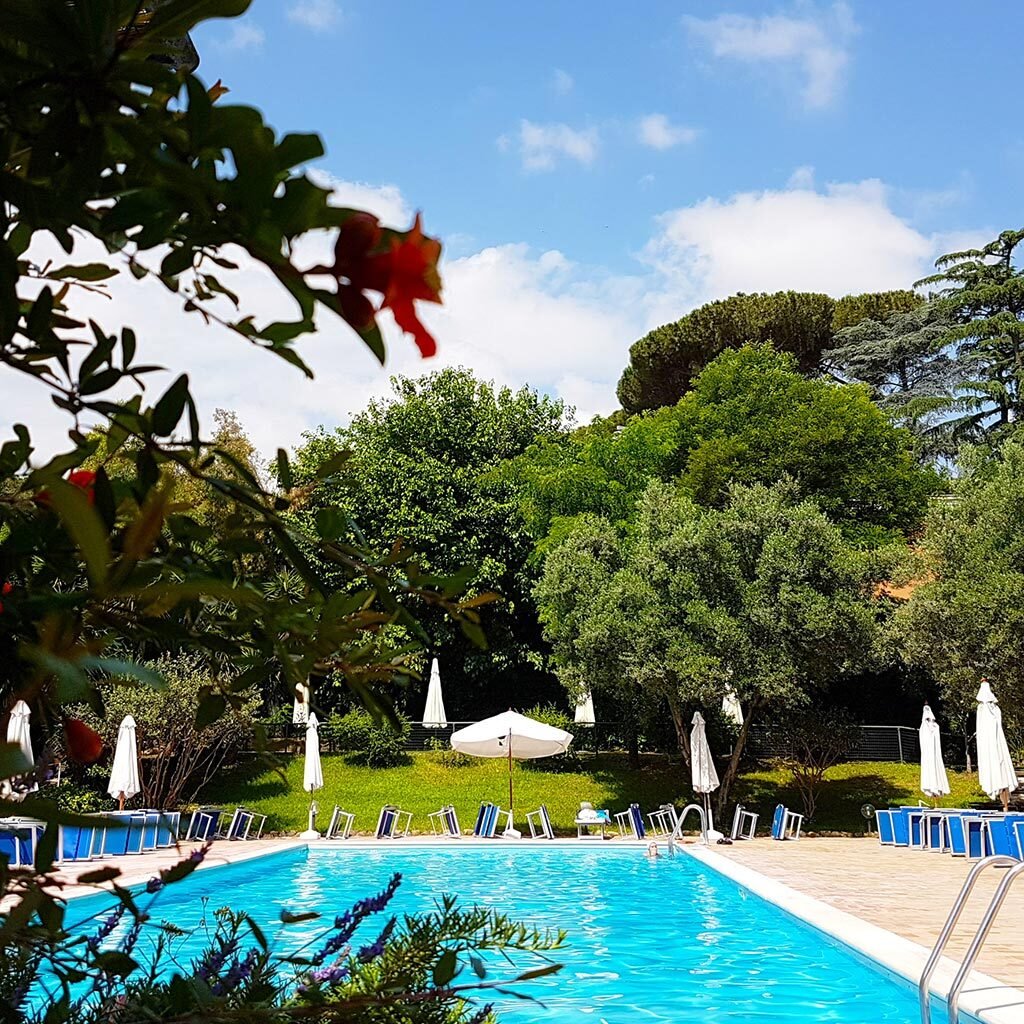 Circolo Arca
Frequently asked questions about Circolo Arca
Where is Circolo Arca?
Circolo Arca is listed at Via degli Angeli 146, in the Arco di Travertino area, on the border with Porta Furba, in Municipio Roma VII. The Metro A stop Arco di Travertino is a short distance away.
What is Circolo Arca?
Circolo Arca is, going by how it is located and named, a neighborhood club of Municipio VII, one of the associative outposts that dot the peripheral and semi-peripheral areas of Rome, with a social function even before a sports one: a place where you sign up, pay a membership fee and become part of a local community.
Does Circolo Arca have a pool or tennis courts?
The public sources available do not allow a certain list of the internal sports facilities of Circolo Arca, which may vary over time: for an up-to-date list it's best to go directly to the association's headquarters.
How do you join Circolo Arca?
As with most Roman neighborhood clubs, joining Circolo Arca happens through a members' assembly, an annual or seasonal enrollment fee and, often, a membership card with a sports promotion body. For up-to-date conditions it's best to contact the headquarters directly.
What is near Circolo Arca?
Near Circolo Arca is Parco degli Acquedotti, about 240 hectares of open meadow crossed by the arches of the Claudian Aqueduct and the Anio Novus, with free admission at no charge. Not far away are also the Quadraro neighborhood and the archaeological area of the Tombs of Via Latina.
When is it advisable to go to Circolo Arca?
The most suitable months for a visit to Circolo Arca area remain the late spring and summer ones, when the activities of Roman neighborhood clubs are most likely under way and the nearby Parco degli Acquedotti is at its best.
Where Circolo Arca is and how to get there
Circolo Arca is listed at Via degli Angeli 146, in the Arco di Travertino area, on the border with Porta Furba, within the boundaries of Municipio Roma VII. It is a stretch of the city between Via Tuscolana and Via Appia Nuova, southeast of the historic center, in an urban quadrant born in the second postwar period around the great arches of the Roman aqueducts. Getting there isn't complicated: the Metro A stop Arco di Travertino is a few minutes' walk away, and anyone who prefers to get off one stop later can use Porta Furba-Numidio Quadrato, equally convenient depending on the entry point to the neighborhood. Both stops are on the same axis of Via Tuscolana, which in this stretch runs parallel both to the subway tracks and to the remaining arches of the Acqua Felice Aqueduct, offering anyone walking from the station to Via degli Angeli a route that crosses in a few minutes a good part of the historical layering of the neighborhood. By car the area is reached from Via Tuscolana or from the large tangle of roads that surrounds Appio Claudio, with street parking in the surrounding residential streets, easier on weekday daytime hours than on a summer weekend, when traffic toward Parco degli Acquedotti increases noticeably. The area is also served by several surface bus lines, which connect Arco di Travertino and Porta Furba both with the rest of Municipio VII and with the neighboring districts, useful above all for those arriving from areas not directly served by Metro A or for those traveling outside the evening hours of greatest frequency of the line. Anyone organizing a Roman stay from out of town and wanting an itinerary that also includes this less touristy corner of the capital can rely on a local guide through Tour Leader Pro, useful for getting around the peripheral neighborhoods with someone who knows the real geography of the city in depth, beyond the postcard monuments. Anyone arriving in the area for the first time often notices how the street layout still follows, in stretches, the course of the old connecting roads between the farmhouses that occupied this part of the Roman countryside before the building expansion of the twentieth century, with streets that curve around natural obstacles instead of following a regular grid as happens in other neighborhoods planned at a drafting table.
The name of the area already tells its story: Arco di Travertino takes its name from an arch of the Claudian Aqueduct built, in fact, of travertine blocks, while Porta Furba owes its own to an opening in the Acqua Felice Aqueduct that runs along Via Tuscolana. They are two hydraulic structures of different eras, the first imperial Roman and the second sixteenth-century, which over the centuries have drawn the perimeter of a neighborhood that grew around them instead of around a square or a church, as happens more often in the historic districts of the center. Circolo Arca fits into this urban fabric made of public-housing buildings, residual vegetable plots and large through roads, a context very different from the scenic one of the central neighborhoods but just as dense with layers.
What Circolo Arca is: a neighborhood club between Arco di Travertino and Porta Furba
Circolo Arca is, going by how it is located and named, a neighborhood club of Municipio VII, one of those associative outposts that dot the peripheral and semi-peripheral areas of Rome and that over time have performed a social function even before a sports one: a place where you sign up, pay a membership fee and become part of a local community that meets continuously, not just in passing. Information on hours, enrollment fee and seasonal activities does not appear to be published in a systematic and updated way, so for the most recent operational details it's best to go to Via degli Angeli headquarters rather than rely on indirect sources. What can be said with greater certainty concerns the context: a club with this name and this location moves in the same groove as other similar entities listed in the same area of Municipio VII, where neighborhood sports and recreational clubs coexist with larger and more structured municipal facilities. In the same area are listed, for example, other entities with sports facilities aimed at the residents of Municipio VII, from the municipal pool to the neighborhood tennis clubs, an ecosystem made more of small locally rooted associations than of large chains of sports clubs, as happens instead more often in the central areas of the city where the prevailing model is the paid private club with a recognizable brand.
It's worth clarifying right away a point that easily generates confusion. There is in fact also an Arca Swimming Club, a different facility based in Via dei Monti Tiburtini, in the Pietralata area, therefore in a completely distinct quadrant of the city, northeast instead of southeast. The two names are similar, the word Arca recurs in both, but they are two separate entities, with different addresses, neighborhoods and municipi: anyone looking for the Pietralata pool must turn to that page, while anyone looking for the club on Via degli Angeli stays in the Arco di Travertino and Porta Furba area. Keeping them distinct avoids taking a bus to the wrong side of the city. The distinction is not only geographic but also one of urban context: Pietralata, where the Arca Swimming Club is based, belongs to a quadrant that grew around a different system of twentieth-century infrastructure, among rail yards and large arteries toward the Tiburtina, while Arco di Travertino and Porta Furba remain tied, as already seen, to the system of the ancient aqueducts and to Via Tuscolana. Two historic Roman peripheries, then, but with different urban genealogies, which the mere name shared by the two clubs risks flattening in the eyes of those who don't know the city's geography well. The associative model, too, is after all a trait common to very many Roman clubs born in the second half of the twentieth century: small autonomous entities, often affiliated with national sports promotion bodies such as CONI or with wider recreational associative networks, born to give a growing neighborhood a space of its own for gathering, distinct both from municipal facilities and from the high-end private clubs of the city center.
Municipio VII between ancient aqueducts and the historic periphery
Municipio Roma VII includes an arc of neighborhoods running from Tuscolano to Quadraro, passing through Cinecittà and Appio Claudio, a territory deeply marked by the passage of several Roman aqueducts: the Acqua Claudia, the Anio Novus, the Acqua Marcia and, later, the Acqua Felice built by Pope Sixtus V in the sixteenth century to supply the upper part of the city after centuries of neglect of the ancient pipelines. The arches that can still be seen today crossing the meadows of Parco degli Acquedotti and looking out along Via Tuscolana are not random urban decorations, but the working remains of a hydraulic system that for centuries brought water to Rome from dozens of kilometers away, from the springs of the Alban Hills and the Aniene valley. The Acqua Claudia and the Anio Novus in particular share for a long stretch the same masonry support, with the two channels stacked on the same arch, an engineering solution that made it possible to bring two different flows of water to Rome while reducing to a minimum the bulk of the masonry structures, in a countryside area that at the time was still almost entirely without stable settlements. Walking in this area means moving inside an open-air museum that few tourists frequent, because it is far from the classic circuits of the center, but which for anyone living in or staying in Rome with a bit of time available tells the story of ancient engineering better than many museum halls.
The quadrant around Circolo Arca grew above all in the twentieth century, with public and middle-class housing that filled the spaces between one aqueduct and the next, while leaving intact the large green strips that today make up the lung of Municipio VII. It is a historic periphery, not a recent one: the first houses around Arco di Travertino date to the years between the two wars, with a very strong acceleration in the second postwar period, when the demographic growth of the capital pushed the city far beyond the ancient Aurelian Walls. A physical reference point of this layering is the Torre del Fiscale, the medieval tower that gives its name to the nearby Parco di Tor Fiscale and that stands right at the point where the course of the Claudian Aqueduct crosses at an angle that of the Acqua Felice Aqueduct: a geographic and building node that sums up well, in a single place, the overlapping of ancient Roman engineering, medieval fortification and Renaissance reuse that characterizes this whole sector of Municipio VII. The park that bears its name, Parco di Tor Fiscale, is today a neighborhood green area less frequented than the nearby Parco degli Acquedotti, but for that very reason it offers a more intimate perspective on the same arches, without the comings and goings of visitors and athletes that characterize instead the better-known and most photographed portion of the Roman aqueduct system.
A curiosity about Circolo Arca
The name Arca, applied to a sports and recreational club, calls to mind in the common imagination the idea of a refuge, of a protected space inside the chaos of the city, an image that many neighborhood associations in Rome have chosen over the years precisely to signal their function as a close-knit community. It's not an isolated case: in the same city there are other entities that bear the same name for similar reasons, including the already mentioned Arca Swimming Club of Pietralata, a sign that the choice is not random but belongs to a small recurring linguistic vein among Roman sports associations of local size. The same goes for other names common among Roman clubs, often chosen for their evocative force or for a more or less explicit link with the history of the place where the facility stands: a simple but effective way of building a recognizable identity even without structured advertising. Another curiosity concerns the street naming: degli Angeli is a name that recurs in several points of Rome, often tied to small chapels or votive shrines that disappeared over time, and which in the Arco di Travertino area is interwoven with a network of streets dedicated to minor religious themes, typical of twentieth-century Roman popular urbanism, when streets were named quickly to fill an expanding master plan. In Rome the phenomenon of streets named after minor religious themes in the neighborhoods of twentieth-century expansion doesn't concern only Arco di Travertino: it is found, with similar logic, in many areas that grew rapidly between the 1920s and the 1960s, when the Comune had to assign hundreds of new place names in a hurry to freshly laid-out streets, often drawing from saints, local devotions or small sacred shrines that building growth had in the meantime partly erased from the landscape.
Anyone looking out on this corner of Rome for the first time often notes a curious contrast: the name of the club evokes water and an ark, and the surrounding area is literally defined by the presence of running water, the water channeled for 2,000 years in the Roman aqueducts that gave it its name. It is not an officially documented link, simply an observation that anyone who knows the area can make while strolling between Via degli Angeli and the arches not far away, but it is still an effective way of reminding first-time visitors that here water and its engineering history are not a museum theme, but an integral part of the neighborhood's everyday landscape. A linguistic coincidence that is not documented as intentional, but that makes the location even more coherent with the context in which it stands. The street numbers of the area also tell of rapid growth: many streets of this quadrant, including Via degli Angeli, were laid out and numbered within a few years during the postwar building expansion, when the Comune di Roma had to chase with planning a housing growth already under way on the ground, rather than guide it in advance. The same pattern is found in many other areas of Municipio VII that grew in the same decades, from Quadraro to Cinecittà, where the road structure still follows today a logic of successive lots more than a unitary urban design conceived from the start, and where the presence of the ancient aqueducts has often conditioned the orientation of the streets, forced to go around the arches instead of crossing them.
Parco degli Acquedotti and the Acqua Felice Aqueduct, a stone's throw away
A few minutes from Via degli Angeli stretches the Aqueducts Park, about 240 hectares of open meadow crossed by the arches of the Claudian Aqueduct and the Anio Novus, with its main entrance from Via Lemonia in the nearby Appio Claudio neighborhood. Access is free and at no charge, with no ticket or closing time, and it is reached on foot or by bicycle from several gates along the perimeter, or by metro getting off at Giulio Agricola or Subaugusta, both Metro A stops convenient depending on the side from which you want to enter. It is the most photographed portion of the Appia Antica Regional Park, the place where the postcards of Rome meet the everyday life of those who take the dog running under 2,000-year-old piers or spread a blanket on the grass on summer evenings. Besides the Claudian Aqueduct, the Acqua Marcia also passed through the same area, one of the oldest among the major aqueducts, built in the second century BC and considered for centuries among the best waters to reach Rome for quality, its course, less visible today than that of the Claudian, ran parallel to the other conduits in a bundle of hydraulic infrastructure that made this strip of the Roman countryside one of the most densely crossed by public works in the whole ancient suburban area.
Parallel to Via Tuscolana runs instead the Acqua Felice Aqueduct, the one that gave Porta Furba its name: built at the end of the sixteenth century partly reusing the courses and the springs of the ancient Roman aqueducts, it remains one of the clearest examples of how Rome continued for centuries to readapt its ancient hydraulic engineering instead of replacing it entirely. The construction of the Acqua Felice Aqueduct was one of the first great public works of post-medieval Rome, part of a broader urban program of Pope Sixtus V that also included the opening of new straight streets toward the city's main basilicas, a plan that profoundly changed the layout of the city and that, indirectly, laid the foundations for the later building expansion toward the southeast and east quadrants, including that of Arco di Travertino. Its arches, lower and less scenic than those of Parco degli Acquedotti, can still be glimpsed at several points between Porta Furba and Quadraro, often incorporated into the residential blocks built around them during the twentieth century. Anyone walking along Via Tuscolana with a minimum of attention can recognize them even without looking for them on purpose: a few minutes of walking between Porta Furba and Cinecittà are enough to notice that several postwar apartment buildings were literally built leaning against the surviving piers of the Acqua Felice Aqueduct, in an urban short circuit that in Rome repeats itself in many peripheral neighborhoods grown up against ancient structures never entirely dismantled.
One thing nobody tells you about Circolo Arca
One thing that is rarely told about clubs like this is that their survival almost always depends on a base of longtime members, often residents of the neighborhood for generations, who keep the association going more with continuous presence than with big investments. In the local clubs of Municipio VII this means that the atmosphere you find is not the polished one of a high-end city sports club, but the more informal one of a local outpost, where the added value doesn't lie in the facility itself but in the network of relationships that keeps it alive. Anyone coming from outside expecting competition-level facilities risks being disappointed, anyone instead looking for an authentic observation point on the neighborhood life of the Roman historic periphery finds here a much more genuine context than its scant visibility online suggests. It's also worth remembering that the perception of digital anonymity of a place almost never coincides with its real relevance for those who live it: a club can have very few traces online and at the same time be a solid daily reference point for dozens of families in the neighborhood, a discrepancy that concerns very many Italian associations born before a web presence became an almost obligatory standard.
Another little-told aspect concerns precisely the scarcity of digital information: many associations of this size, born before the widespread diffusion of the internet, never invested in structured online communication, and keep functioning mostly by word of mouth among residents. This doesn't mean the activity has stopped, it only means it has to be sought with other tools, such as a direct phone call or a physical visit to the headquarters, more than with a web search. In this sense Roman neighborhood clubs resemble a family calendar shared by a community more than an advertised service: information circulates, but follows informal channels, from word of mouth among neighbors to the physical bulletin boards hung at the entrance, tools that remain effective for those who live in the area permanently but that remain almost entirely invisible to those who look for information from outside through search engines alone. It's also worth remembering that this type of entity, in many cases, doesn't aim at a polished image toward the outside because its target audience is not the occasional visitor but the regular member, who already knows hours and procedures from direct experience: an informal communication model that works well within the local community but makes it more complicated for those arriving from outside to understand, at a glance, how the club really works.
The advice I give you for visiting Circolo Arca
The most useful advice is to consider the visit to Circolo Arca as part of a wider itinerary in the Arco di Travertino and Porta Furba quadrant, rather than as an isolated stop: on its own, without the context of the surrounding neighborhood, the club's headquarters alone tells little to anyone who isn't already a member or resident. It is therefore best to plan the exit from Metro A at Arco di Travertino, devote part of the day to a walk along the arches of the nearby Parco degli Acquedotti, and only afterward, if you're interested in understanding the local associative life better, drop by Via degli Angeli at the hours when the club is most likely to be frequented, usually late afternoon and evening in the warm months, when Roman neighborhood clubs tend to come alive. It's also best not to underestimate the time needed to get oriented the first time: neighborhood signage in this area is minimal, designed for those who already know the streets, and anyone arriving for the first time may find it easier to locate Via degli Angeli using as a visual reference the arches of the Acqua Felice Aqueduct along Via Tuscolana, a landmark much more visible from afar than the street signs of the neighborhood. It's also useful to allow for the fact that, as with most neighborhood associations, the activity may follow a seasonal calendar that isn't always linear, with a more intense resumption in the warm months and a quieter phase in the rest of the year: finding out in advance avoids finding the headquarters closed after organizing yourself on purpose for a visit.
Before setting out it's always best to phone and confirm it's actually open, because for a small association the hours can change seasonally and are not always reliable if taken from indirect sources not continuously updated. Anyone planning the whole day in the area can combine the stop at the club with a visit to Parco degli Acquedotti in the cooler hours of the morning or late afternoon, avoiding the middle hours of the Roman summer when the open meadow offers very little shade. Another useful tip concerns movement within the quadrant: the distances between Via degli Angeli, Parco degli Acquedotti and Quadraro are comfortably walkable for those with a decent habit of walking, but for those who prefer to move more quickly both Metro A and the surface bus lines that cross Municipio VII in several directions remain available.
Quadraro, the working-class memory next to the club
A few steps from Arco di Travertino lies Quadraro, one of the most distinctive working-class neighborhoods of Rome, grown from the 1920s as a semi-illegal borgata and later become a symbol of popular Roman resistance during the German occupation. On April 17, 1944 the neighborhood was surrounded by Nazi troops in a roundup that led to the deportation of hundreds of men to forced labor camps in Germany, an episode that Rome still remembers today with plaques, public initiatives and the very name of the neighborhood's collective memory, often cited as the Quadraro of the Resistance. This story doesn't directly concern the club on Via degli Angeli, but belongs to the social fabric of the same area of Municipio VII in which the club sits, and helps explain why so many neighborhoods of this quadrant have such a marked popular identity, made of shared memory more than postcard monuments. In the last 15 years the neighborhood has found an original way to keep this memory alive: the MURo project, a museum of diffuse urban art born inside Quadraro starting in 2010, which brought a series of murals along some streets of the neighborhood, many of them dedicated precisely to the theme of memory, deportation and emigration, themes that the story of the 1944 roundup has made especially deeply felt by those who live here. Over the years the project has brought several artists, some of international standing, to work on the blind facades of the neighborhood's public housing buildings, turning anonymous walls into narrative surfaces that can be visited free of charge and at any time of day, simply by strolling the residential streets of Quadraro with a minimum of attention upward.
Today Quadraro lives alongside diffuse street art, small neighborhood markets and a neighborhood life still very tied to local associations, in the same years in which entities like Circolo Arca continue to represent, on a smaller scale, that same gathering function that ran through all of Municipio VII over the twentieth century. Walking the stretch that separates Arco di Travertino from the heart of Quadraro therefore means passing, within 10 or 15 minutes, from a neighborhood born around the ancient aqueducts to another that grew as a spontaneous borgata and was then transformed into a place of public memory, two different ways in which the twentieth-century Roman periphery built, each in its own way, a recognizable identity of its own.
Another well-known fact, yet rarely cited
A widely known fact but rarely connected to this corner of the city is that Line A of the Rome metro, the one that directly serves Arco di Travertino and Porta Furba, was the first metro line opened in the capital after the short stretch of the old Roma-Lido that was reconverted, and entered service in February 1980 after years of excavations complicated by the presence of archaeological finds along the whole route. Its opening profoundly changed the mobility of neighborhoods like this one, which until then depended almost exclusively on surface buses to reach the center, and brought with it the birth of terminals, small neighborhood shopping centers and the very multistory residential building that now surrounds Circolo Arca. The excavations for the construction of Line A returned, along the whole route between the center and Cinecittà, many archaeological finds that several times slowed the works and that today, in some cases, are visible in the metro stations themselves, a concrete reminder of how hard it is to dig under Rome without meeting traces of the ancient city, even in peripheral stretches like this one.
It is a fact that those who visit Rome for the monuments of the center rarely connect to the daily life of the historic periphery, but that for those who live in or regularly frequent areas like Arco di Travertino remains a precise watershed: a before and an after in the urban history of the quadrant, which turned isolated peripheral neighborhoods into areas connected in a few minutes to the rest of the city.
The right photo to take at Circolo Arca
The most coherent photo to take in this area is not that of the entrance of the club itself, often not very photogenic as is the case with most neighborhood association headquarters, but the one that frames the contrast between the twentieth-century residential building that surrounds Via degli Angeli and the ancient arches glimpsed not far away, toward Parco degli Acquedotti or along Via Tuscolana in the direction of Porta Furba. It is in this visual gap, between the public-housing buildings of the 1950s and 1960s and the 2,000-year-old remains of the Roman aqueducts, that the true nature of this piece of the city is best told: a periphery built literally on top of and beside the ancient history of Rome, without the rhetoric of the more touristy neighborhoods. Even a simple vertical shot, relating the upper floors of a public-housing building with the top of a Roman arch visible in the background, returns in a single image the double time scale of this piece of the city, much more effective than a frontal photograph of the club's facade alone.
Anyone who instead wants a more classic photograph can move a few minutes to the arches of Parco degli Acquedotti, where the light of late afternoon, when the sun is low and passes through the arches in backlight, remains the most photographed moment of the whole area, much more reliable in terms of result than a shot taken directly in front of the club's headquarters. Early morning too, before the park fills with families and athletes, offers a softer light and a more intimate atmosphere for those who prefer to photograph the aqueducts without other people in the frame. The stretch of Via Tuscolana toward Porta Furba also offers a useful framing: from there, with a wide-angle lens, you can take in the same image the busy street of the contemporary city and the sixteenth-century arch of the Acqua Felice Aqueduct that towers over it, a composition that tells the neighborhood better than any caption.
Some important events that happened here in history
Over the centuries this area has gone through precise and documented historical passages: the construction of the Claudian Aqueduct, completed under the emperor Claudius in AD 52, after being begun by his predecessor Caligula, the later construction of the Acqua Felice Aqueduct wanted by Pope Sixtus V at the end of the sixteenth century, which partially reused the ancient courses to bring water back to the upper part of the city after centuries in which the Roman aqueducts had been out of use, the nineteenth-century excavation campaigns conducted between 1857 and 1858 by Lorenzo Fortunati in the archaeological area of the Tombs of Via Latina, not far away, which brought to light a funerary complex of the second century AD among the best preserved in the Roman countryside, the Nazi roundup of Quadraro on April 17, 1944, a dramatic moment in the recent history of the quadrant, and finally the opening of Metro A in February 1980, which stably connected these neighborhoods to the rest of the modern city.
They are passages different in era and nature, one ancient engineering, one religious and hydraulic Renaissance, one nineteenth-century archaeological, one dramatically historical twentieth-century and one contemporary infrastructural, but all contribute to explaining why the area around Circolo Arca, even without big isolated monuments to visit, is in reality one of the stretches of Rome densest in continuous historical layering, from the imperial era to the late twentieth century. One further piece can be added to this list, more recent but still part of the collective memory of the quadrant: the founding of the Cinecittà studios in 1937, a few kilometers away along the same axis of Via Tuscolana, which in the 1950s and 1960s turned the whole southeast area of Rome into an international film production hub, so much so as to earn the nickname Hollywood on the Tiber. That season too, though tied above all to the film studios and not directly to the club, helped bring work, related business and new population to a sector of the city that until a few decades earlier was still predominantly agricultural.
The Tombs of Via Latina and the minor archaeology of the quadrant
Not far from Parco degli Acquedotti, toward the course of the ancient Via Latina, is the archaeological area of the Tombs of Via Latina, a funerary complex of the second century AD brought to light by the nineteenth-century excavations of Lorenzo Fortunati and today among the best-preserved Roman burial grounds outside the city center, with multistory structures and interior decorations that return a detailed picture of the funeral rites of the well-off families of the imperial era. It is a site less known than the great necropolises of Via Appia Antica proper, but for that very reason it is visited in a more intimate context, without the lines and crowds that characterize the more famous monuments of the historic center.
This kind of minor archaeology, widespread and little advertised, is in reality a common feature of the whole southeast sector of Rome among Arco di Travertino, Quadraro and Appio Claudio: an area in which the great monuments coexist with dozens of minor finds, often incorporated into neighborhood public gardens or signaled only by an information panel, a testimony of how far the ancient city extended well beyond the boundaries of the Aurelian Walls that today conventionally delimit the historic center. Even just knowing that these finds exist, without necessarily visiting them all, changes the way you cross the quadrant: what at first glance seems an ordinary set of twentieth-century residential neighborhoods reveals, on closer look, a historical density that is rarely told in the general tourist guides devoted to Rome.
Who passed through Circolo Arca
A club of this size and this nature lives above all on those who attend it continuously rather than on documentable famous presences: longtime members from the neighborhood, families who signed up over several generations, kids who grew up between Arco di Travertino and Porta Furba and spent their summers in a local associative setting instead of in larger and more anonymous city facilities. This kind of attendance, made of continuity more than exceptional events, is probably the most characteristic trait of Roman neighborhood clubs as a whole: different generations of the same family who followed one another as members, instructors who stayed tied to the same facility for decades, groups of friends who met right there as kids and who keep seeing each other as adults, perhaps bringing their own children in turn. It is the same pattern found in many neighborhood clubs of Municipio VII, where the value doesn't lie in a well-known name who passed through the headquarters, but in the sum of many daily visits that over time build the real identity of a place.
There are no public sources documenting visits by well-known personalities at this address, and it is right not to claim it so as not to attribute to the club a notoriety that cannot be verified. What can be said with certainty is that, like all associations of this size, its real history is written in the lesser-known names: the members who kept it open over the years, the instructors who followed the neighborhood kids, the residents who consider it a fixed point of their social life in Arco di Travertino. It is an attendance profile common to dozens of similar entities scattered around Rome: clubs that don't appear in tourist guides and rarely in city news, but that remain a precise daily reference for those who live nearby, often for periods much longer than the fads tied to the more visible venues of the center last.
The fabric of sports clubs in Municipio VII
Around Arco di Travertino and Porta Furba, Municipio VII hosts a rather dense network of neighborhood sports entities, among summer pools, tennis clubs and multipurpose centers born over the twentieth century to answer the demand for a local recreational space in an era when large municipal facilities were still few and concentrated above all in the central areas of the city. Circolo Arca belongs to this same generation of associative entities, together with others present in the same urban sector, from clubs with pools tied to the summer season to clubs born around a specific sport such as tennis or basketball, often supported by nonprofit amateur sports associations more than by private investors.
This model, widespread across the Roman historic periphery, has a mirrored advantage and limit: on one hand it guarantees cheaper access and a more familial dimension compared to the large city clubs, on the other it makes it much harder, for those who don't live in the area, to find up-to-date and complete information online, because digital communication was never the priority of entities designed above all for an audience of regular residents. It is the same reason why many of these entities, including the one on Via degli Angeli, remain little documented compared to more recent facilities or those more oriented to a tourist audience. Anyone comparing the different sports entities listed in the same area of Municipio VII often notices the same recurring pattern: short names, often tied to an evocative image more than to a commercial brand, headquarters modest from the architectural point of view but with a history of attendance that in some cases exceeds 40 or 50 years, and institutional communication reduced to the essentials, when not entirely absent.
When to go to Circolo Arca and when to avoid it
The most suitable months for a visit to this area remain the late spring and summer ones, when the activities of Roman neighborhood clubs are most likely under way and when the nearby Parco degli Acquedotti is at its best, with green meadows and long days that allow combining several stops in the same afternoon. To avoid, if possible, are the middle hours of the hottest days of July and August, when the dry heat typical of the Roman summer makes any walk in the area unpleasant, lacking large trees along the residential streets.
In the winter months the quadrant remains visitable anyway, but with an offer of neighborhood activities generally smaller than in the warm season, in line with what happens in most Roman sports and recreational clubs tied to a seasonal clientele. Anyone who wants to combine the associative part with the nature side of Parco degli Acquedotti finds, all year round, free and unrestricted access, with no closing-time limits. The Quadraro neighborhood too, with its murals and its local fabric, is well worth visiting in every season, while the period around the anniversary of April 17 generally brings public initiatives tied to the memory of the 1944 roundup, a useful occasion for those who want to understand more deeply the recent history of this sector of the city and not only its archaeological geography. Spring too, with mild temperatures and days already long, remains a good moment to explore the whole quadrant on foot, from Parco degli Acquedotti to Quadraro, before the summer heat makes long walks less pleasant under the direct sun of residential streets lacking trees.
Cinecittà, the Hollywood on the Tiber a stone's throw away
Continuing along the same axis of Via Tuscolana, in a few minutes of Metro A you reach Cinecittà Studios, founded in 1937 and become, over the postwar period, one of the most important film production hubs in Europe. In the 1950s and 1960s the studios hosted large-scale Hollywood productions, so much so as to earn the journalistic nickname Hollywood on the Tiber, an expression that has remained in common use in Rome to this day to indicate that season of international cinema shot in the studios of the capital instead of in the United States.
The link between this film history and the Arco di Travertino quadrant is above all geographic, not direct: the same Via Tuscolana that runs alongside Porta Furba and the arches of the Acqua Felice Aqueduct leads, continuing southeast, to the Cinecittà studios, and the same Line A that serves the club on Via degli Angeli is the one that takes visitors to the Cinecittà stop, from which both the studios and the neighborhood that bears its name can be reached on foot. For anyone organizing a day in this sector of the city, the direct metro connection makes it natural to combine in a single itinerary the historic periphery of Arco di Travertino and Porta Furba with the best-known film hub in Italy. Cinecittà today is no longer just a production studio: part of the complex hosts routes and exhibitions open to the public dedicated to the history of Italian cinema, an offer that over the years has made the neighborhood a destination in itself, distinct from the rest of Municipio VII but reachable with the same transport line that also serves Circolo Arca area, a useful detail for those who want to organize in a single day both the more historical and archaeological part of the quadrant and the one tied to cinema.
What's around Circolo Arca
Within a radius of a few minutes on foot or a short metro ride there are several useful reference points to complete the visit: the already mentioned Aqueducts Park, the archaeological area of the Tombs of Via Latina, the Quadraro neighborhood with its diffuse street art, and the Cinecittà Studios hub, reachable with the same Line A a few minutes farther toward Subaugusta and Cinecittà. In the same area of Municipio VII, toward Appio Claudio, there is also the Appio Claudio Tennis Club, another neighborhood sports club with a view of the aqueduct arches, useful as a term of comparison for those who want an idea of the network of local sports clubs spread across this sector of the city. Parco di Tor Fiscale too, with the medieval tower that gives the park its name and with the clearly visible crossing between the Claudian Aqueduct and the Acqua Felice Aqueduct, fits comfortably into an itinerary on foot or by bicycle that starts from Via degli Angeli and crosses in sequence the different points of interest of the quadrant, without need for motorized trips.
For those arriving from outside Rome who want to fit this lesser-trodden area into a wider itinerary of the city, including stops in the central neighborhoods, it may be useful to set up the stay program with a tool like Italy Planner, designed precisely to organize in an orderly way the stops of a trip to Italy that also includes the less postcard corners of the capital, like this quadrant between ancient aqueducts and historic periphery.
The greenery of the quadrant: from Parco degli Acquedotti to Tor Fiscale
The system of green areas that surrounds Circolo Arca does not end with Parco degli Acquedotti alone: between Porta Furba, Quadraro and Appio Claudio there extends in fact a sequence of minor parks and archaeological areas connected to one another, which are part, in one way or another, of the wider Appia Antica Regional Park. Parco di Tor Fiscale, with its medieval tower and the crossing between the Claudian Aqueduct and the Acqua Felice Aqueduct, is probably the most significant from the historical point of view, but in the same area there are also small neighborhood green spaces, less known and less frequented, that still offer glimpses of the ancient arches without the flow of visitors typical of the weekend in the main park.
This continuity of public green is one of the aspects that makes Municipio VII a particular case in the panorama of the Roman periphery: rarely has an area grown so rapidly in the postwar period kept within itself such extensive strips of archaeological countryside, precisely because the presence of the aqueducts and the related protection restrictions prevented, over the decades, total building on the territory, leaving intact green corridors that today physically separate the different neighborhoods of the quadrant from one another. For those getting around by bicycle, these green corridors also offer an alternative route to the busy streets of the quadrant, connecting several points of interest continuously without necessarily having to return to the big arteries like Via Tuscolana or Via Appia Nuova, a not-obvious advantage in a city where bike lanes often remain discontinuous.
How neighborhood clubs work in Rome
For those who aren't Roman, or have never frequented entities of this kind, it may be useful to understand in general how a neighborhood club works before trying to contact one like Circolo Arca. In most cases they are amateur sports associations or nonprofit recreational clubs, with a members' assembly, an annual or seasonal enrollment fee and, often, a membership card with a national sports promotion body that allows organized physical activity to be carried out legally even in small facilities not open to the general public. Access, in many cases, is not free as in a public park: it requires enrollment as a member, a step that serves both to cover management costs and to maintain the community dimension that has characterized this type of entity since its birth.
The concrete terms vary a lot from club to club, and for that very reason, when official information isn't easily found online, the most reliable way to know how a specific club works remains direct contact: a phone call to the secretary's office, when one exists, or an in-person visit during the hours when the headquarters is most likely open. It's a different approach from the one most city tourist services accustom you to, designed to be bookable online in a few clicks, but it is consistent with the very nature of these associations, born to serve a neighborhood and its residents more than a passing public. Even when a club has a social profile or a minimal web page, these channels are often updated in a discontinuous way, tied more to seasonal events than to a constant communication strategy: one more reason to consider any information found online as a starting point to verify, never as a definitive datum on which to base your visit entirely.
Quick questions about Circolo Arca
Where exactly is Circolo Arca?
At Via degli Angeli 146, in the Arco di Travertino area, on the border with Porta Furba, in Municipio Roma VII.
Does the club have a pool or tennis courts?
The public sources available do not allow a certain list of the internal sports facilities, which may vary over time: for an up-to-date list it's best to go directly to the headquarters.
Is Circolo Arca the same as Arca Swimming Club?
No. They are two distinct entities: Circolo Arca is in Arco di Travertino, while Arca Swimming Club is based in Via dei Monti Tiburtini, in Pietralata, in another quadrant of the city.
How do you get to Circolo Arca by metro?
With Line A, getting off at the Arco di Travertino stop or at Porta Furba-Numidio Quadrato, both a few minutes' walk from the area.
What is there to see near Circolo Arca?
Parco degli Acquedotti with the arches of the Claudian Aqueduct, the archaeological area of the Tombs of Via Latina, the Quadraro neighborhood and, a little farther on the same metro line, Cinecittà Studios.
Is Circolo Arca currently open?
The up-to-date activity status is not reliably documented by public sources available: to find out it's best to contact Via degli Angeli headquarters directly.
What kind of entity is Circolo Arca?
It is located and named as a neighborhood club of Municipio VII, a type of local association widespread across the Roman historic periphery, distinct both from municipal facilities and from the private clubs of the city center.
What is there to see on foot starting from Circolo Arca?
The arches of Parco degli Acquedotti and of the Acqua Felice Aqueduct along Via Tuscolana, the Torre del Fiscale in the park of the same name, and the Quadraro neighborhood with its murals, all reachable in a few minutes of walking or Metro A.
Is it worth visiting the area even without entering the club?
Yes: the main value of the area for those arriving from outside lies in the historical and archaeological context that surrounds it, from Parco degli Acquedotti to the memory of Quadraro, regardless of the possibility of directly accessing the club.
Contact Information
Via degli Angeli, 146
Roma Roma Città, Roma Città