Chuck Ragan at Auditorium Parco della Musica, December 12, 2026
https://www.estateromana.com/en/rome/trip-planner/chuck-ragan-at-auditorium-parco-della-musica-december-12-2026/
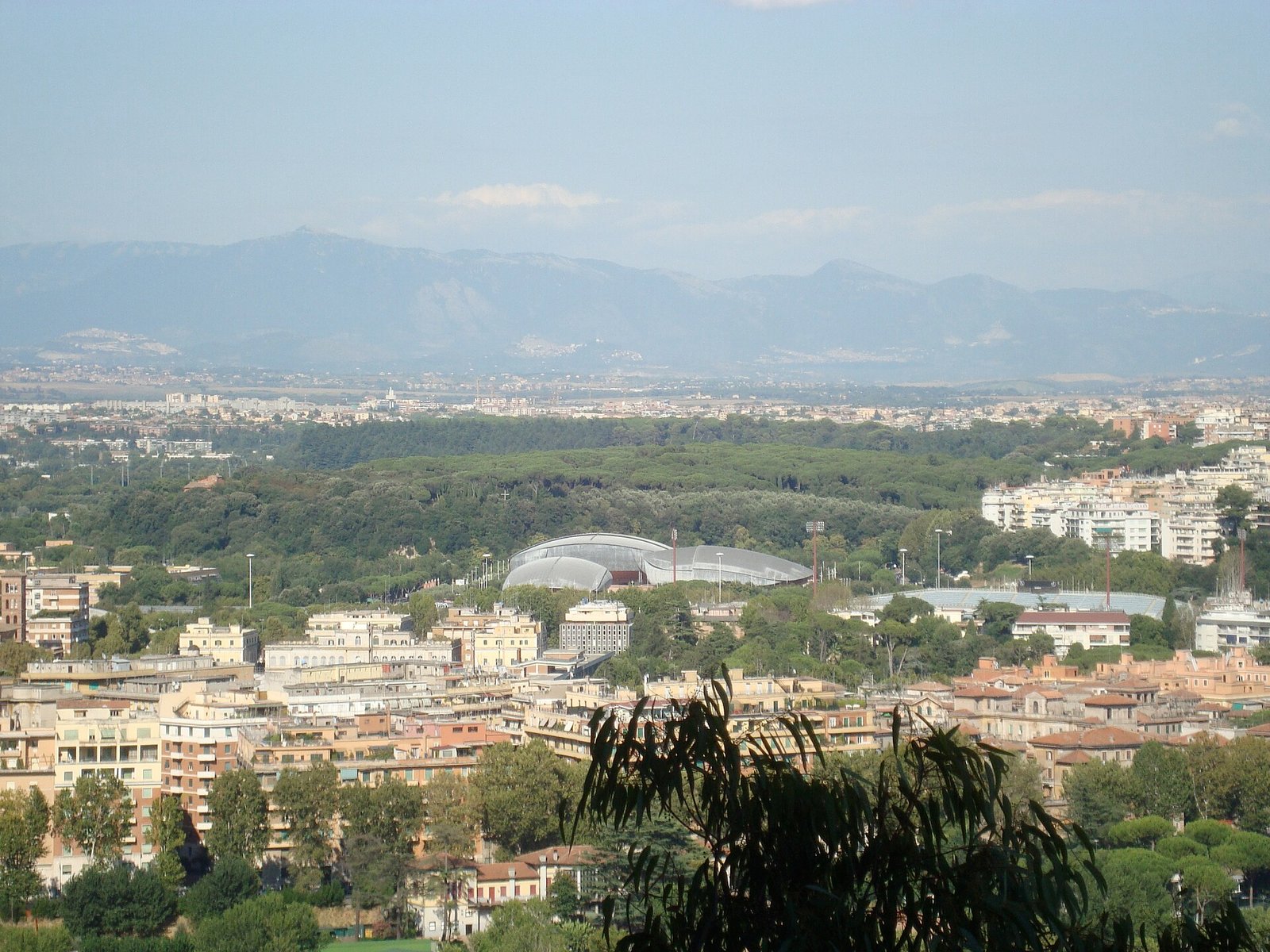
Chuck Ragan plays in Rome on Saturday, December 12, 2026 at 20:00 at Teatro Studio Borgna of Auditorium Parco della Musica Ennio Morricone, at Viale Pietro de Coubertin 30 (00196 Rome), with a solo concert, guitar and voice. You get there on metro line A to Flaminio and then tram 2 (stops Flaminia/Reni or Apollodoro), or on bus 910, which leaves from Termini. Tickets start at 23 euros, according to the Auditorium's official page, and are bought from the venue's official website, which links to the presale network authorized by the organizers, or at the complex's ticket office. The Fondazione Musica per Roma presents it as the American singer-songwriter's big return to Italy after 12 years away.
The historic voice of Hot Water Music, the punk band from Gainesville, Florida, and creator of the Revival Tour, Ragan brings to Rome the songs of Love and Lore, his first solo album in 10 years, along with a repertoire that crosses folk, punk and Americana. The hall chosen is the smallest in Renzo Piano's complex, about 300 seats: the right size for a rough voice and an acoustic guitar.
Chuck Ragan in Rome: date, time, hall and tickets
Chuck Ragan's concert is scheduled for Saturday, December 12, 2026 at 20:00 in Teatro Studio Borgna, according to the official page of Auditorium Parco della Musica Ennio Morricone, which places it in the Fondazione Musica per Roma's Pop/Rock program.
When
Saturday, December 12, 2026, starting at 20:00. It's a single date, a mid-December Saturday night, when Rome has already entered the holiday mood and the Auditorium alternates concerts of very different genres in its halls.
The price
The event page lists tickets starting at 23 euros. Any higher tiers appear at the time of purchase, on the seat map. In a hall of this size the difference in view between rows is minimal, and even the cheapest seat stays close to the stage.
Where to buy
From the purchase button on the Auditorium's official site you go to the authorized presale network. The complex's ticket office is at Viale Pietro de Coubertin 30 and, from October to March, opens from 11:00 to 20:00, including Sundays and holidays. The ticket office rules are published on the venue's site.
What you hear: a guitar and voice tour
Chuck Ragan's Rome concert is a date of his solo guitar and voice tour, according to the Fondazione Musica per Roma's presentation: no band on stage, only the songwriter with his songs.
The songs of Love and Lore
At the center is Love and Lore, released on October 25, 2024 on Rise Records. The presentation cites two pieces: Echo the Halls, which highlights the more melodic side of Ragan's voice, and Reel My Heart, which tells of the pain of living far from loved ones and the need to find balance again in nature and in affections. The full setlist isn't published.
Old songs in a new guise
The same presentation observes that even the older songs find new life thanks to their emotional charge, still intact. It's fair to expect pieces from the albums released on SideOneDummy between 2007 and 2014, from Feast or Famine to Till Midnight, reinterpreted with only the acoustic guitar.
The solo form
Guitar and voice is the form with which Ragan built his career outside Hot Water Music: songs born to be played alone, standing, with the voice carrying the weight of the arrangement. In a hall of about 300 seats, without stadium amplification, it's also the form that is heard best.
Love and Lore, the comeback record
Love and Lore is Chuck Ragan's fifth studio album and the first solo one in 10 years: conceived in 2016, planned for 2019, delayed by the pandemic and completed in 2023, according to the official presentation of the concert.
A long gestation
Seven years between the idea and the closing of the record. In November 2023 Ragan signed with Rise Records, which released the album in October 2024. The record came out while Hot Water Music were celebrating the success of Vows, their most recent album: two parallel roads traveled in the same period.
Beyond folk
The presentation describes a songwriter who pushes past traditional folk and explores new sonic territories. Todd Beene, a longtime collaborator, tells how the musicians chose to start over from zero, freely following what felt most natural. George Rebelo and Spencer Duncan also play on the record, contributing to a broader, more dynamic sound.
The themes
Relationships, family, distance, the emotional weight of everyday life: these are the themes the presentation identifies in the album. For Ragan, again according to the presentation, finishing a record means freeing yourself of it: listening to it one last time, putting it on the shelf and letting go of what you had put into it.
Who Chuck Ragan is: the biography
Charles Allen Ragan, known to all as Chuck, was born on October 30, 1974: an American singer, songwriter, guitarist and writer, he is the voice and guitar of Hot Water Music and has released five solo studio albums, two soundtracks and several live records.
A family between sport and gospel
He is the son of Dave Ragan, a professional golfer who also played the Ryder Cup, and of Geraldine Ragan, a gospel singer and missionary. A childhood split between sport and American religious music, which helps explain the almost preacher-like stamp of his voice.
Hot Water Music
Since October 1994 he has been one of the voices of Hot Water Music, a punk rock band from Gainesville, Florida. The band broke up on good terms in the mid-2000s. The other three members founded The Draft, while Ragan began his solo career. In 2007 Hot Water Music reunited for a tour in the United States and Europe, and in 2012 they released a new album, Exister.
Rumbleseat and the acoustic road
Ragan's solo music, mostly acoustic and folk-inspired, has a precedent: Rumbleseat, an acoustic side project born within the Hot Water Music circle. For his solo career he signed with SideOneDummy Records.
Fly fishing and California
The concert presentation recalls that many people got to know Ragan in different ways: through the band, the solo career, the Revival Tour or even his fly fishing activity in California. What stands out, in any case, is the authenticity, the quality that runs through Love and Lore too.
Chuck Ragan's solo discography
Chuck Ragan's solo discography counts five studio albums: Feast or Famine (2007), Gold Country (2009), Covering Ground (2011), Till Midnight (2014) and Love and Lore (2024).
The SideOneDummy years
The first four albums come out on SideOneDummy, joined from time to time by labels such as No Idea, TenFour and Dine Alone. Till Midnight, from 2014, was made with a lineup of heavyweight musicians: Todd Beene of Lucero, Jon Gaunt, Joe Ginsberg, David Hidalgo Jr. of Social Distortion, Rami Jaffee of the Wallflowers and the Foo Fighters, Christopher Thorn of Blind Melon.
The 7-Inch Club
Between 2006 and 2007 Ragan released with No Idea Records a series of seven singles, one a month, called The 7-Inch Club: the records went only to those who had reserved the whole series. The same recordings later came out on a CD, The Blueprint Sessions.
Live and in soundtracks
Among the live records are Los Feliz (2007), Live at Cafe Du Nord (2010) and The Winter Haul Live (2016). He also signed two soundtracks: It's Better in the Wind (2013) and that of the video game The Flame in the Flood (2016).
The Revival Tour: music played together
In 2005 Chuck Ragan conceived the Revival Tour, a collective acoustic event with musicians from punk rock, bluegrass and alt country. Ragan explained that the tour serves to share the music and bring it to people in an extremely honest, grassroots way.
The first editions
The first edition in 2008 brought together Tim Barry of Avail and Ben Nichols of Lucero, with guests such as Laura Jane Grace of Against Me!, Jesse Malin, Chris McCaughan of the Lawrence Arms and Frank Turner. In 2010 the tour crossed Australia.
The stage companions
In 2011 Brian Fallon of the Gaslight Anthem, Dave Hause of the Loved Ones and Dan Andriano of Alkaline Trio took the stage. In 2012 came Laura Jane Grace, Cory Branan, Ben Kweller and Nathaniel Rateliff. Every tour had a fiddler, Jon Gaunt, and a double bass player. It's the idea of shared music that is also found in Ragan's solo concerts.
A curiosity about Chuck Ragan at Auditorium Parco della Musica, December 12, 2026
The most interesting curiosity about Chuck Ragan's career is a book. In 2012 the songwriter published The Road Most Traveled, a collection of tour stories that is at once a manual on how to behave on tour and a cautionary tale about what not to do if you want to sustain that lifestyle for years. It's rare for a punk musician to put the rules of the road in writing: Ragan did it, and his career is largely a career of miles.
The second curiosity concerns a video game. In 2014 Ragan began working on the soundtrack of The Flame in the Flood, an indie game developed by the studio The Molasses Flood, then released in 2016. The American folk of his songs, made of rivers, journeys and survival, suited a game set along a waterway.
The third concerns his father. Dave Ragan was a professional golfer who played the Ryder Cup, the contest between the United States and Europe. His son chose a very different stage, but the discipline of the professional on the road seems to have stayed in the family. On Saturday, December 12, after 12 years away from Italy, that journey passes through a hall of about 300 seats north of Flaminio.
Teatro Studio Borgna, the most intimate hall
Teatro Studio Borgna is the smallest hall of Auditorium Parco della Musica Ennio Morricone: about 300 seats, no curtain, with the stage almost at the same level as the audience. Alongside the three big halls, Santa Cecilia, Sinopoli and Petrassi, it's the space designed for smaller-scale productions.
Cherry wood
The walls are covered in cherry wood, the same as Sala Petrassi, and the warm color of the wood gives the hall a homey atmosphere. The movable acoustic panels allow the room to be adapted to the type of show: for a voice and a guitar it means hearing every word.
The name
The hall bears the name of Gianni Borgna, a former Rome councilor for cultural policy and president of the Fondazione Musica per Roma, the foundation that runs the complex.
Why it's the right hall
A guitar and voice concert asks for closeness. At Teatro Studio even the last rows are a few meters from the artist, and the listening resembles that of a club. For a musician used to small punk venues and the shared stages of the Revival Tour, it's a familiar dimension.
Something nobody tells you about Chuck Ragan at Auditorium Parco della Musica, December 12, 2026
What few people say is that Chuck Ragan's audience in Rome will probably be of two different kinds. On one side those who wore out the Hot Water Music records in the 1990s and 2000s and arrive with the memory of electric guitars and shouted choruses. On the other those who discovered him later, through folk and Americana, perhaps following Frank Turner or Brian Fallon. The December 12 concert is guitar and voice: anyone expecting the power of the band will find something else, barer and closer.
Second point rarely made: at the Auditorium the halls are separate buildings, arranged around the cavea, and Teatro Studio doesn't have the entrance of the big halls. Anyone who arrives at the last moment and takes the wrong path between the cavea and the foyers easily loses a few minutes. The rules allow entry up to five minutes before the start. Once the concert has begun, staff may seat latecomers in seats different from the ones purchased.
Third point: the same Saturday, in Sala Petrassi, at the same time, Ghemon's show goes on. Two different audiences cross paths in the foyers and at the bar. Arriving half an hour early makes everything simpler.
The advice I give you for visiting Chuck Ragan at Auditorium Parco della Musica, December 12, 2026
The advice is to come to the concert with Love and Lore in your ears. The record is the reason for the tour and the official presentation cites two pieces from it, Echo the Halls and Reel My Heart: listening to them in the preceding days lets you recognize them immediately in the guitar and voice version, and notice what changes from the record, where Todd Beene, George Rebelo and Spencer Duncan play.
The second piece of advice concerns the seat. In a hall of about 300 seats everyone sees well, but in a solo concert the first rows give something extra: you see the work of the right hand on the guitar, you hear the voice even when it drops below the volume of the room, you catch the stories between pieces. In our judgment it's best to buy early and aim for the central part of the orchestra, in the first rows.
The third concerns the evening. The concert is on a Saturday at 20:00: it's best to arrive at the Auditorium around 19:15, get something at the foyer bar and take a turn around the cavea before going in. After the concert, Milvian Bridge is a few minutes away for those who want to close the evening with dinner or a drink, as you would after a club show.
How to get to the Auditorium for Chuck Ragan
Auditorium Parco della Musica Ennio Morricone is reached by tram 2, stops Flaminia/Reni or Apollodoro, and by buses 910, 53, 982 and 168. The metro doesn't come this far: the nearest station is Flaminio, on line A.
Metro A and tram 2
From Flaminio station you exit onto Piazzale Flaminio and take tram 2 along Via Flaminia toward Piazza Mancini. Get off at Flaminia/Reni or at Apollodoro and walk a few minutes through the Villaggio Olimpico to Viale Pietro de Coubertin.
Bus 910 from Termini
The 910 leaves from Piazza dei Cinquecento, in front of Termini station, and reaches the Auditorium without changes. For those arriving in Rome by train on the day of the concert it's the most straightforward choice.
The other lines
The 53 connects Piazza Mancini with the center, the 982 and the 168 come from other parts of the city. There's also the Roma Nord railway to Piazza Euclide. For evening times and the return it's best to consult the Atac route planner before going out.
By car
The complex has paid internal car parks, with limited spaces. On concert nights the streets of the Villaggio Olimpico fill up early. On Saturday night, with more events in the different halls, public transport is the calmest solution.
Another well-known fact, and yet rarely mentioned
It's well known, among those who follow American punk, that Hot Water Music are one of the most influential bands to come out of Gainesville, Florida. Less often remembered is how intertwined Chuck Ragan's solo career is with that of other musicians the Italian audience knows well. In 2010 Ragan opened Frank Turner's UK tour and followed the Gaslight Anthem on their autumn European tour. At the start of 2011 he opened the West Coast dates of Social Distortion. In an interview in February 2010 he told of working on a record with Brian Fallon, the Gaslight Anthem's singer, whose voice then appears on Ragan's song Meet You in the Middle.
The second little-cited fact concerns the very structure of the Revival Tour. In every edition the musicians were supported by a fiddler, Jon Gaunt, and a double bass player: in 2008 and 2009 the German Americana singer Digger Barnes, from 2011 to 2013 Joe Ginsberg. Gaunt and Ginsberg then also joined the lineup of Till Midnight, the 2014 album.
The third concerns the catalog. Ragan has released with the Australian Poison City Records, the British Specialist Subject and the Swiss Leech Records: a network of small independent labels that tells of a way of working far from the big majors.
The right photo to take at Chuck Ragan at Auditorium Parco della Musica, December 12, 2026
In a hall of about 300 seats, with the stage a few meters away, a lit screen is noticed from every row, and in a guitar and voice concert the moments of silence are part of the music. The right photo in the hall is just one, without flash, perhaps on the first piece or the last, when the audience sings: Ragan on stage, the first rows in the foreground. Then the phone goes back in the pocket.
The second photo is taken outside, before going in. The subject is Renzo Piano's Auditorium, with the lead-clad shells of the three big halls arranged in a fan around the cavea. The best spot is the cavea itself, the open-air amphitheater named after Luciano Berio: on December 12 at 19:00 it's already dark, and the lit halls against the dark sky give the most recognizable image of the complex.
The third is for those who arrive well ahead of time: from the terrace between the halls you see the remains of the Roman villa uncovered during the works. 2,000 years of Rome under a concert of American folk punk: it's a frame that says a lot about the city.
Some important events that happened here in history
The ground on which the Auditorium stands has a much longer history than the complex. During the works, the remains of a Roman villa of the 3rd century BC emerged, built on the site of a small archaic farm of the 6th century BC. The discovery forced Renzo Piano to modify the project, and the finds are displayed in a small museum under the cavea.
The modern story begins with a demolition. In 1936 the Augusteo, Rome's great concert hall, was torn down to free the Mausoleum of Augustus, and for over 60 years the city was left without an auditorium built for music. The competition for the new complex was won by Piano in the 1990s, and the construction site was long and complicated: the contract with the first contractor was terminated and a new tender had to be called.
On April 21, 2002, the birthday of Rome, Sala Sinopoli and Sala Petrassi were inaugurated. On December 21 of the same year, Sala Santa Cecilia, with the Academy's Orchestra conducted by Myung-whun Chung. Since 2003 the Auditorium has been home to the season of the Accademia Nazionale di Santa Cecilia, since 2006 it has hosted the Rome Film Festival, and in 2020 the city council decided to name it after Ennio Morricone. In the same years the complex was opening, Chuck Ragan was touring the United States with Hot Water Music: the two stories meet now, for one evening.
Who has passed through Chuck Ragan at Auditorium Parco della Musica, December 12, 2026
The great names of music have passed through the Auditorium since day one. The inaugural concert of Sala Santa Cecilia was conducted by Myung-whun Chung. Goffredo Petrassi, by then elderly, wanted to be present at the opening of Sala Sinopoli and heard the first performance in the new hall of his Ouverture da concerto of 1931. Luciano Berio, who in those years led the Accademia di Santa Cecilia, gave his name to the cavea. Alongside classical music, the Fondazione Musica per Roma has brought pop, rock, jazz and the singer-songwriter tradition here, and Teatro Studio has become the hall for concerts that ask for closeness.
Through Chuck Ragan's career, instead, pass many names from punk and Americana: his Hot Water Music bandmates, Frank Turner and Brian Fallon, also cited by the official presentation, Tim Barry of Avail, Ben Nichols and Todd Beene of Lucero, Laura Jane Grace of Against Me!, Dave Hause, Dan Andriano of Alkaline Trio, Nathaniel Rateliff, Cory Branan, Jesse Malin. And, among the musicians of Till Midnight, David Hidalgo Jr., Rami Jaffee and Christopher Thorn.
In the following weeks, at the Auditorium, come among others Max Gazzè with his late December concerts and, at Teatro Studio, La rivolta della gioia by Silvia Gallerano and Cristian Ceresoli, from December 18 to 20.
The neighborhood around the Auditorium
The Auditorium occupies an area of about 55,000 square meters between Villa Glori, the Villaggio Olimpico, the Corso di Francia viaduct and Viale Maresciallo Pilsudski: a piece of modern Rome where contemporary architecture and greenery alternate.
MAXXI and the Villaggio Olimpico
Near the Flaminia/Reni tram stop is MAXXI, the national museum of 21st-century arts. A short distance away, toward the Tiber, is Teatro Olimpico. The general listing on Piano's complex is the one on Auditorium Parco della Musica.
Toward the river
From the Auditorium you go down toward the Tiber and the Ponte della Musica, the footbridge that leads to the Foro Italico. Farther north, beyond Piazza Mancini, is Ponte Milvio, the ancient bridge that in the evening becomes one of the most popular meeting points in northern Rome.
Toward the center
With tram 2 you return to Piazzale Flaminio and Piazza del Popolo, from where you climb to Villa Borghese or enter the Tridente.
Where to eat before or after the concert
Inside the Auditorium there are a bar and a café in the foyer and a bar restaurant with street access too, plus a large bookstore: the most convenient solution for those who arrive in a rush.
In the neighborhood
Between the Villaggio Olimpico, Via Flaminia and Piazza Mancini you'll find pizzerias, trattorias and neighborhood bars, frequented more by residents than by tourists. For a concert at 20:00, dinner beforehand is only possible by booking early, around 18:30.
Milvian Bridge
Anyone who prefers to eat afterward finds the widest offering at Ponte Milvio, a few minutes away, where on Saturday nights the places stay open late. In the holiday period it's best to book.
Accessibility, age and practical information
The Auditorium is a modern complex with routes between the halls that are also outdoors, on the terrace and around the cavea. For accessibility needs at Teatro Studio it's best to write in advance to the Fondazione Musica per Roma, at the address info@musicaperroma.it listed on the official site, to know which entrance to use and which seats to choose.
Parking
The Auditorium's paid car parks have spaces reserved for people with disabilities.
Minors
The venue's rules provide that minors under 16 enter with an adult holding a ticket, at a ratio of one adult per two minors. For a kid who plays guitar, seeing up close a musician who carries a whole concert alone is a concrete lesson.
A mid-December concert
On December 12 Rome is already in the holiday season, with lights on in the streets of the center and a dense calendar of indoor concerts. For an idea of the season's events there's the listing on Christmas in Rome.
Weather and clothing
In December Roman evenings are cool and often damp, and the walk from the tram to the Auditorium is outdoors. A coat to leave at the coat check and a folding umbrella are a good idea.
An idea for the day
Anyone coming from outside Rome can devote the afternoon to MAXXI or to a walk between Piazza del Popolo and the Pincio, and then take the tram to the Auditorium. It's the most relaxing way to arrive at an evening concert.
Frequently asked questions about Chuck Ragan in Rome
When does Chuck Ragan play in Rome?
Chuck Ragan plays in Rome on Saturday, December 12, 2026 at 20:00, at Teatro Studio Borgna of Auditorium Parco della Musica Ennio Morricone, at Viale Pietro de Coubertin 30. It's a single date of his solo guitar and voice tour, his return to Italy after 12 years away.
How much do tickets for Chuck Ragan at the Auditorium cost?
Tickets for Chuck Ragan at Auditorium Parco della Musica start at 23 euros, according to the official event page. They are bought from the venue's site, which links to the authorized presale network, or at the complex's ticket office, open from October to March from 11:00 to 20:00.
Does Chuck Ragan play with a band?
No, Chuck Ragan's concert in Rome is solo: the Fondazione Musica per Roma presents it as a guitar and voice tour. At the center is Love and Lore, the 2024 album, with pieces such as Echo the Halls and Reel My Heart. The full setlist isn't published.
Who is Chuck Ragan?
Chuck Ragan is an American songwriter born in 1974, voice and guitar of Hot Water Music, a punk band from Gainesville, Florida. As a solo artist he has released five albums, from Feast or Famine in 2007 to Love and Lore in 2024, and he created the Revival Tour.
What is Chuck Ragan's Revival Tour?
The Revival Tour is a collective acoustic event created by Chuck Ragan in 2005, with musicians from punk, bluegrass and alt country on the same stage. Among those who took part were Frank Turner, Brian Fallon, Tim Barry, Ben Nichols, Laura Jane Grace and Nathaniel Rateliff.
How many seats does Teatro Studio Borgna have?
Teatro Studio Borgna is the smallest hall of Auditorium Parco della Musica, with about 300 seats, cherry wood walls and movable acoustic panels. It bears the name of Gianni Borgna, a former Rome councilor for culture and president of the Fondazione Musica per Roma.
How do you get to Auditorium Parco della Musica by public transport?
Auditorium Parco della Musica is reached by metro A to Flaminio and then tram 2, stops Flaminia/Reni or Apollodoro. From Termini there is bus 910, with no changes. Lines 53, 982 and 168 also pass nearby.
The final advice on Chuck Ragan at the Auditorium
12 years away, a record awaited for seven years, a guitar and a voice in a hall of about 300 seats: in our judgment the evening of December 12 is the right occasion for those who loved Hot Water Music and for those who know Ragan through folk and Americana. The advice is to listen to Love and Lore in the preceding days, buy the ticket in good time, aim for the first rows and arrive at the Auditorium half an hour early, because the same Saturday the complex's halls are full.
Article written by the editorial team of Tour Leader Pro, contact them for Private/Corporate/V.I.P. Tours and Experiences.
Planning a trip to Rome? The English guides for visiting the city are on ItalyPlanner.com.