Chiara Camoni, I fiori del male at Società delle Api, October 9, 2026 to January 26, 2027
https://www.estateromana.com/en/rome/trip-planner/chiara-camoni-i-fiori-del-male-at-societa-delle-api-october-9-2026-to-january-26/
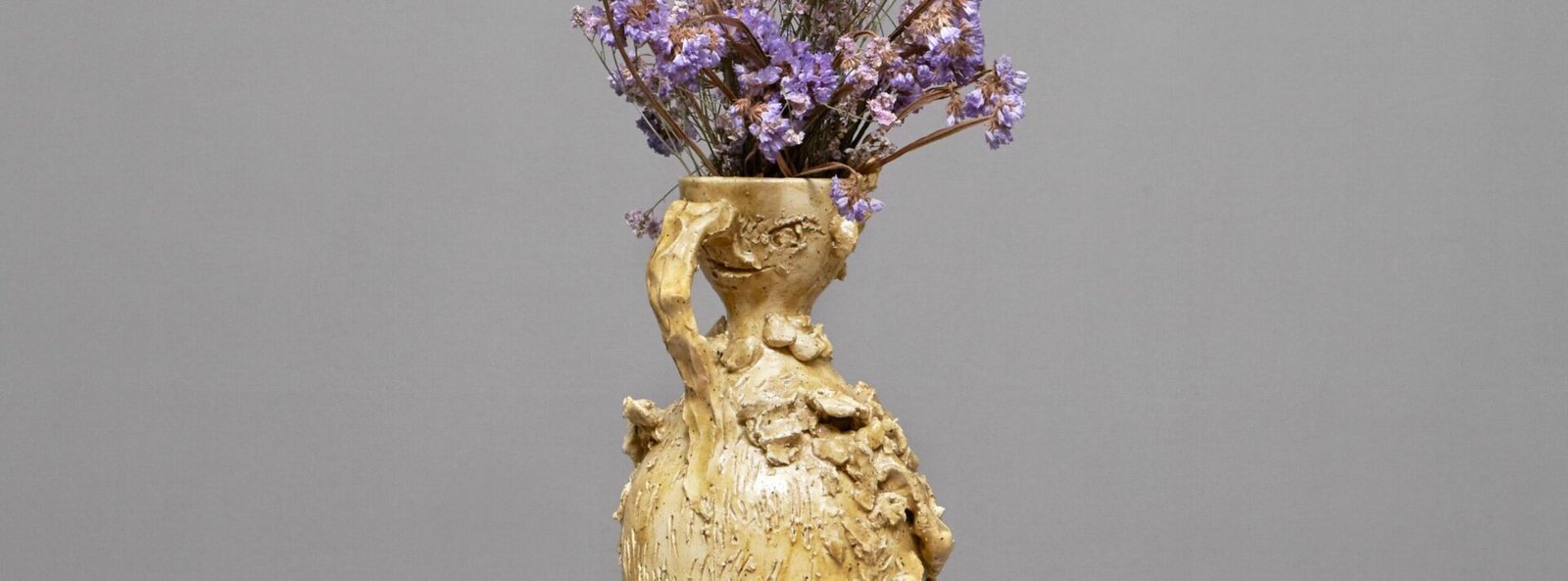
I fiori del male, the exhibition dedicated to Chiara Camoni and curated by Alice Motard, is open from October 9, 2026 to January 26, 2027 at the Società delle Api, at Via Gregoriana 40 (00187 Rome), a few steps from the Trinità dei Monti staircase. The opening is Friday, October 9 from 18:00 to 20:00. After the opening, visits are by appointment only, Monday to Friday from 11:00 to 18:00, by writing to visit@societadelleapi.org or calling the number given by the Foundation (+39 342 9911143). Group visits are scheduled on Tuesday and Thursday from 14:00 to 18:00. You get there by subway line A, Spagna or Barberini stop, and then on foot along Via Sistina or up the staircase. Entry conditions are agreed directly with the Foundation when you book, on the official website of the Società delle Api.
Via Gregoriana is one of those streets that Romans know by name and almost nobody walks in full: it climbs quietly from Via Capo le Case to Piazza della Trinità dei Monti, parallel to Via Sistina, with tall doorways and plaques recalling painters and writers. Since February 2026, at number 40, the new Roman seat of the Società delle Api has opened, the foundation created in 2018 by Silvia Fiorucci. I fiori del male is the second exhibition project of the space, and for those who follow contemporary art it is the chance to see up close, in rooms with Renaissance grotesques and coffered ceilings, the work of the artist who in 2026 represents Italy at the Venice Biennale.
Chiara Camoni, I fiori del male: The Exhibition in Brief
The exhibition brings together a selection of works by Chiara Camoni from the collection of Silvia Fiorucci, new productions conceived for the rooms on Via Gregoriana and works by seven guest artists. The starting point is the collection: Fiorucci has followed Camoni's work since her beginnings and has gathered her works over the years. From this nucleus the curator Alice Motard isolates a precise motif, the flower, which in the artist's practice is both subject and material.
The title comes from Charles Baudelaire, from the collection Les Fleurs du mal published in 1857. The choice is not decorative. The Foundation's press release explains that the project wants to question the less pacified nature of the flower: what happens when we stop considering it merely a symbol of life, delicacy and beauty? The answer proposed by the exhibition is a chthonic, cryptic, destructive, artificial, spiritual flower. A flower that also belongs to the underground.
The Route, Room by Room
Opening the exhibition are two pencil drawings of lilies, flowers known for their toxicity. They are part of a larger series made during the pandemic: in the first lockdown Camoni sent the image of one of her drawings every day to a circle of friends, and among the recipients was Silvia Fiorucci. From sheet to sheet, the press release says, the flower loses its original form and takes on the likeness of bodies, organs, animals, faces, in almost hallucinatory images that recall the sick flowers of the French poet.
The following rooms break this force down into as many manifestations: the flower as poison, as language, as precious ornament to wear, as threat, as apparition. Baudelaire's verses accompany the works along the route and guide how they are read. It is a display that asks for time: the rooms are few, but each room has a theme, and it's best to read them in sequence.
The Guest Artists
Consistent with Camoni's habit of welcoming other voices into her own practice, the exhibition brings together works by Fantine Andrès, Maria Loboda, Marianne Marić, Vibeke Mascini, Lionel Sabatté, Adrianna Wallis and Yuyan Wang. The press release calls them counterpoints: presences that broaden and sharpen the reflections begun by the artist's works. They are names rarely seen in Italy, and this is one of the concrete reasons to book the visit.
The Dialogue with the Historic Rooms
The works enter into a relationship with the spaces of Via Gregoriana 40: the Renaissance grotesques that decorate the vaulted compartments, the coffered ceilings, the inlays of the parquet floors, the marbles. For an exhibition on the flower as an ambiguous ornament, finding yourself inside rooms painted with plant scrolls and fantastic figures is almost a second text. The exhibition will be accompanied by a public program with in-depth meetings on the themes of the project. The calendar is published by the Foundation.
Who Chiara Camoni Is: Biography and Career
Chiara Camoni was born in Piacenza in 1974 and lives and works in the Apuan Alps, in a mountain village overlooking the Versilia coast, in northern Tuscany. Her practice runs through drawing, plant printing, video and above all sculpture, with particular attention to ceramics. Her work often arises from collaborative processes and forms of shared authorship, which in recent years have taken the name Il Centro di Sperimentazione: friends, family members, spontaneous groups or organized seminars take part in making the works.
The 2026 Venice Biennale
In 2026 Camoni represents Italy at the Italian Pavilion at the Venice Biennale International Art Exhibition (61st edition), with the project Con te con tutto, curated by Cecilia Canziani, open until November 22, 2026. The Società delle Api accompanied this work with a residency of the artist and her group at the Foundation's Venetian seat, Palazzo Campo Santo Stefano, from April to October 2026. Anyone visiting the Roman exhibition in October and November therefore has the rare chance to see the artist in two cities at once: the national pavilion at the Arsenale and a more intimate project, built on a private collection.
Materials and Method
The gallery that represents her, Andrew Kreps of New York, describes a practice that links handcraft to the spiritual world. Camoni uses materials traditionally tied to the domestic sphere: ceramics, dyed textiles, loom weaving. She works by typologies, that is, by series that share a recognizable visual language. Large terracotta figures, rich in detail, recall ancestral deities. Small-format works call to mind Egyptian canopic jars. Hanging silks dyed with vegetation evoke the female figure and leave room for chance. The materials are often gathered in the landscape around the studio, and the making involves a wider community, often of women.
The Cenere di Montelupo Series
The images released for the Roman exhibition show works from the series La Cenere di Montelupo, from 2017: white terracotta, ash glaze, dried vegetation. The process says a lot about the artist. The ash of the plants becomes glaze, the dried plant remains as a trace on the surface: the flower is at once subject and firing material. It is the point where the Baudelairian title stops being a quotation and becomes a technical description.
Solo Exhibitions
Camoni's works have been presented in Italian and international institutions. Among the recent solo shows listed by the gallery: Erguidas, yacentes at Museo Patio Herreriano in Valladolid in 2025. The large exhibition at the Pirelli HangarBicocca in Milan in 2024. murmur, buzz, hiss and rub at Cample Line, in Scotland, in 2024. Inizio fine. Rotondo. Tutte le cose del mondo at Palazzo Collicola in Spoleto in 2024. Whispers, world above, world below at A Tale of A Tub in Rotterdam in 2023. La Meraviglia at the CEAAC in Strasbourg and Deux Soeurs at the CAPC in Bordeaux, both in 2021. Sisters at the MIMA in Middlesbrough in 2018.
Group Shows and Collections
Among the group shows: the Bangkok Art Biennale and Manifesta 15 in Barcelona in 2024, Colorescenze at the Centro Pecci in Prato, Panorama in L'Aquila in 2023, Becoming Flower at the MAMAC in Nice in 2022. In Rome her work has been seen in And the flowers too at Orto Botanico, in IO DICO IO at Galleria Nazionale d'Arte Moderna in 2021 and in the Quadriennale Fuori at Palazzo delle Esposizioni in 2020. Her works are in the permanent collections of the GAM in Turin, the MAMbo in Bologna, MACRO in Rome, the Frac Bretagne, the IAC in Villeurbanne and the MIMA. In autumn 2026 a work of hers is also in Pollen at the CAPC in Bordeaux, until January 31, 2027.
Alice Motard, the Curator
Alice Motard is a curator and writer, with 20 years of institutional posts between the United Kingdom and France. She was deputy director and exhibition organizer at Raven Row in London from 2008 to 2013, curator at Spike Island in Bristol from 2014 to 2016, chief curator at the CAPC Musée d'art contemporain in Bordeaux from 2016 to 2021, and director of the CEAAC, the contemporary art center in Strasbourg, from 2021 to 2026. Since 2025 she has been a member of the committee for the support of publishing and research in art theory and criticism of the Centre national des arts plastiques.
She has curated more than 30 exhibitions, with artists including Caroline Achaintre, Luca Bertolo, Isabelle Cornaro, Lubaina Himid, Anna Franceschini, Takako Saito and Endre Tót. She holds a master's in Curating Contemporary Art from the Royal College of Art in London and one in art history from the Sorbonne and the Freie Universität in Berlin. Her link with Camoni is not new: Deux Soeurs at the CAPC and La Meraviglia at the CEAAC were presented in precisely the two institutions that Motard led. Anyone who knows those exhibitions will find a continuity of viewpoint.
The Artists in Dialogue with Chiara Camoni
The seven guest artists of the exhibition come in large part from the French and northern European scene, and each brings a different way of treating the flower and nature. The biographies released by the Foundation help you get your bearings before the visit.
Fantine Andrès and Maria Loboda
Fantine Andrès, born in 1983, lives in Strasbourg. She works starting from graphite drawing and develops it into installations with ceramics, wood and glass. Her theme is monstrosity read through still life, in ambiguous forms that swing between attraction and repulsion. She has exhibited at the Kunsthalle Basel and at the Łaźnia Centre in Gdańsk. Maria Loboda, born in 1979, works between Berlin, Nuremberg and Kraków: installations and sculptures that investigate cultural codes through signs and objects, a contemporary archaeology aimed at power structures. She studied at the Städelschule with Mark Leckey, teaches sculpture at the Nuremberg Academy, and took part in documenta 13 and in the 2019 Venice Biennale.
Marianne Marić and Vibeke Mascini
Marianne Marić, born in 1982, lives between Paris and Strasbourg and works mainly with analog photography, with a performative approach that looks to painting. She has exhibited at the Palais de Tokyo and at the Museum of Modern Art in Warsaw. Vibeke Mascini, born in 1989, lives between The Hague and Mexico City: sculpture, installation, video and text to translate abstract phenomena into sensory experience, in collaboration with scientists and engineers. In 2026 she had solo shows at the Hammer Museum in Los Angeles and at Z33 in Hasselt.
Lionel Sabatté, Adrianna Wallis and Yuyan Wang
Lionel Sabatté, born in 1975, a graduate of the Beaux-Arts in Paris, works with unusual materials such as dust, oxidation, natural pigments and dead skin. In 2025 he was among the finalists for the Prix Marcel Duchamp. Adrianna Wallis, born in 1981, lives in the Vercors and builds performances, sculptures and sound installations starting from archives of personal stories. She has exhibited at the Musée Carnavalet. Yuyan Wang, born in 1989, a filmmaker and video artist in Paris, edits materials from the image industry. Her works have been shown at the Tate Modern, the Palais de Tokyo, the Berlinale and the International Film Festival Rotterdam.
The Società delle Api and the Seat at Via Gregoriana 40
The Società delle Api is a nonprofit foundation created in 2018 by Silvia Fiorucci, a Roman entrepreneur and collector, who in 2026 moved its main seat to Rome, to Via Gregoriana 40. The new Roman home opened on February 14, 2026, with an evening in which artists, designers and curators were invited to leave a work on paper in A4 format.
A Nomadic Foundation
Before Rome, the Foundation had its base in the Principality of Monaco and built a network of places made available to artists: Palazzo Campo Santo Stefano in Venice, Le Moulin des Ribes in Grasse, the Chalet Mont Tamalpaïs in Megève, La Casa dell'Ulivo and La Porta Rossa on the Greek island of Kastellorizo, and even a vintage sailboat, the Suhail, sailing the Mediterranean. The Foundation describes itself as a community of practices built around hospitality: exhibitions, residencies and public programs are conceived as parts of one and the same space.
Silvia Fiorucci
Born in Rome, Silvia Fiorucci worked in the family business, first in the United States and then as head of financial assets. For more than 20 years she competed in equestrian sport, winning the Italian dressage title. She is a Knight for culture of the Principality of Monaco, a patron of the Nouveau Musée National de Monaco for more than 10 years, and supports institutions such as Castello di Rivoli, Museo Madre in Naples, the Triennale in Milan and the Serpentine in London.
The First Roman Year
The 2026 program of the Roman seat started with Soglia / Common Acts, curated by the artist Francis Offman, who turned the Fiorucci collection into an environment to inhabit rather than to look at, open from April to September 23. There were the residencies of Pol Taburet in spring, in parallel with Villa Medici, and of Valentine Prissette in summer, and the poetry cycle Langue Lost, Language Found curated by Allison Grimaldi Donahue. The Camoni project closes the year and opens 2027. A private space that lines up this calendar in eight months deserves attention.
Via Gregoriana: The Street, the History, the Neighbors
Via Gregoriana was opened for the Jubilee of 1575 by Pope Gregory XIII Boncompagni, who wanted a link between the church of Trinità dei Monti and the Renaissance city below. A few years later Sixtus V opened Strada Felice, today's Via Sistina, more convenient and straighter, and Via Gregoriana became a secluded street, though still very central. It has stayed that way.
The Street of the Artists
Thanks to its position and good air, Via Gregoriana attracted artists and intellectuals for centuries. The first was Federico Zuccari, who at the top of the street built the Palazzetto Zuccari, called the House of Monsters for its portal and windows shaped like gaping mouths. Today it houses the Bibliotheca Hertziana, the art history institute of the Max Planck Gesellschaft. In the palazzetto lived the sculptor Pietro Bracci, the painter Angelica Kauffman, Johann Joachim Winckelmann, and the painter Friedrich Overbeck. Plaques on the facades recall other residents, including the historian Ferdinand Gregorovius and Jean Auguste Dominique Ingres.
The Surrounding Neighborhood
The street belongs to the Campo Marzio district. In five minutes on foot you reach the square and church of Trinità dei Monti, the staircase and Piazza di Spagna, the Pincio and Villa Medici. Heading down toward Via del Tritone you meet the world of commercial galleries, with international names a short distance apart. It is one of the few areas of Rome where, in the space of an afternoon, you go from the Renaissance to today's art without taking any transportation.
How to Get to the Società delle Api
The easiest way to reach Via Gregoriana 40 is subway line A, getting off at the Spagna or Barberini stop. From Spagna you exit into Piazza di Spagna and climb the staircase to Trinità dei Monti, then take Via Gregoriana, which starts right from the square. From Barberini you go up Via Sistina and come down the parallel street. Either way it's 10 minutes on foot, with a change in elevation.
On Foot from the Center
From Via del Corso you walk up Via Due Macelli to Via Capo le Case: Via Gregoriana begins there and climbs toward Trinità dei Monti. Number 40 is along the uphill stretch. It is the most comfortable route for those who don't want to take on the steps of the staircase, and it runs past shop windows and workshops of the Tridente.
By Car and Taxi
Via Gregoriana is inside the limited traffic zone of the historic center: with an unauthorized private car you can't enter during the hours when the gate is active. The nearest public parking is the underground garages in Villa Borghese and Pincio area. A taxi can drop you at Trinità dei Monti or on Via Sistina. For an appointment at a fixed time, the subway remains the most reliable choice.
How to Organize Your Visit to the Exhibition I fiori del male
The visit to the Chiara Camoni exhibition is booked in advance, because the Società delle Api is not free walk-in: you write to visit@societadelleapi.org or call, giving the day and time slot. Visits are Monday to Friday, from 11:00 to 18:00. On Saturday and Sunday the space is closed to the public. Groups can be accommodated on Tuesday and Thursday afternoon.
How Much Time You Need
A careful visit takes an hour: the rooms are few, but the Baudelaire texts that accompany the route and the presence of eight artists ask you to stop. If you add the walk among Trinità dei Monti, the Pincio and Villa Medici, you easily get a well-spent half day.
The October 9 Opening
The opening evening, Friday, October 9 from 18:00 to 20:00, is when the space fills with artists and insiders. If you want to look at the works calmly, you'll do better to come back on a weekday. If you want to understand the community that the Foundation has built in a few months, the opening is the most direct answer.
Accessibility and Children
The space occupies a historic building: ask for information on elevators and access when you book. It is the right thing to do for anyone with mobility difficulties, because the street itself is uphill. With children the exhibition works if you turn it into a hunt for flowers in the grotesques of the ceilings. Some images along the route, among bodies and organs, should however be judged by parents.
Where to Eat Near Via Gregoriana
The area between Trinità dei Monti and Via del Tritone has a wide but touristy offer: it's best to go down a few streets to find trattorias and cafes that Romans frequent too. Toward Via Capo le Case and Via della Mercede there are cafes for a quick coffee before your appointment. In the side streets of Via Due Macelli and toward the Trevi Fountain you find trattorias serving Roman cuisine and pizza-by-the-slice shops. Via Sistina and the streets around Piazza di Spagna offer more formal places and historic-center prices. For a quiet lunch after an 11:00 visit, my advice is to move away from the staircase by at least five minutes.
A Curiosity About Chiara Camoni, I fiori del male at the Società delle Api, October 9, 2026 to January 26, 2027
The first nucleus of the exhibition was born as a daily message between friends, during the lockdown of spring 2020. The two drawings of lilies that open the route belong to the series that Camoni made every day in those weeks and sent as a photograph to a small group of people. Silvia Fiorucci was among them. That silent correspondence, made of images and not words, became part of the collection and is now the starting point of an exhibition.
The curiosity concerns the method more than the anecdote. Camoni has always worked in dialogue with others, and even in isolation she found a way to share the work. The lily, which in the Christian tradition is the flower of purity and of the Annunciation, is also a plant toxic to many pets. Choosing the lily to open an exhibition named after Baudelaire is a statement of intent: the beauty that offers itself to the eye carries a poison with it. Look at the sheets in the order in which they are displayed: the transformation of the flower into something else is gradual, and you only catch it in the sequence.
Something Nobody Tells You About Chiara Camoni, I fiori del male at the Società delle Api, October 9, 2026 to January 26, 2027
You don't walk into the Società delle Api by chance: the door at Via Gregoriana 40 opens only with an appointment made beforehand, even on weekdays. Many visitors used to civic museums arrive at the doorway, find it closed and leave convinced that the exhibition isn't open yet. You book with an email or a phone call, and the reply generally comes for the day you chose.
The second thing concerns the weekend. On Saturday and Sunday the space doesn't receive the public, and anyone arriving in Rome for a weekend has to plan for Friday afternoon or Monday morning. Third thing: the dates in Venice and Rome overlap until November 22. For those who love Camoni's work, a trip in October lets you see the Italian Pavilion at the Arsenale and, with a fast train, the Roman exhibition in the same long weekend. After November 22 only Rome remains, until January 26.
My Advice for Visiting Chiara Camoni, I fiori del male at the Società delle Api, October 9, 2026 to January 26, 2027
Book for 11:00 on a Tuesday or a Wednesday, and make the trip on foot from Piazza di Spagna, climbing the staircase. It is the quietest time slot, the light in the historic rooms is still good, and after the visit you have the whole afternoon ahead for the Pincio and Villa Medici.
Before going in, read three or four poems from Les Fleurs du mal: 10 minutes is enough, and they completely change the way you look at the rooms. Bring a notebook, because the verses on display are in dialogue with the works and it's worth writing them down. In the show, look up: the grotesques on the ceilings are as much a part of the story as the works on the floor, and the curator built the display on them too. Finally, if you're traveling in a group, take advantage of the Tuesday and Thursday afternoon slots set aside for group visits: the rooms are domestic in size, and with 10 people the space is already full if you don't agree on a time.
Another Well-Known Fact, Yet Rarely Cited
Via Gregoriana exists because a pope wanted to make it easier for pilgrims to climb to the Pincio for the Jubilee of 1575, but it was overtaken almost at once by Via Sistina. Everyone knows the Trinità dei Monti staircase, built in the 18th century. Few know that before the staircase there were other attempts to connect the lower city with the height, including a ramp built by Domenico Fontana along the same line as Via Gregoriana.
When Sixtus V opened Strada Felice, which joined Santa Maria Maggiore to Trinità dei Monti, framing the perspective between two obelisks, Via Gregoriana lost its role as an artery and became a residential street. This very demotion made its fortune: artists and foreigners found quiet homes there, good air and a view over the city. The Palazzetto Zuccari, with its gaping monster mouth as a portal, is the best-known sign of that season. The Società delle Api, arriving here in 2026, joins a tradition of four centuries of hospitality to artists that the street practiced even before residencies existed.
The Right Photo to Take at Chiara Camoni, I fiori del male at the Società delle Api, October 9, 2026 to January 26, 2027
The right photo is taken outside, at the start of Via Gregoriana, with the facade of Trinità dei Monti in the background and the street descending. It is a framing few people choose, because everyone photographs the church from the staircase. From Via Gregoriana, on the other hand, you get a side perspective, with the flank of the Palazzetto Zuccari and the tall doorways of the street.
Inside the space, always ask permission from whoever is accompanying you before photographing: in a private foundation the rules on images can change from exhibition to exhibition. If it's allowed, the photo that best tells the exhibition is the one that puts in the same frame a ceramic from the La Cenere di Montelupo series and a stretch of grotesque from the ceiling. The dried flower in the ash glaze and the flower painted five centuries ago are the same motif, treated in two opposite ways: one material and mortal, the other ornamental and motionless. Avoid the flash, which flattens glazed surfaces and reflects off the marbles.
Some Important Events That Happened Here in History
In 1575 Pope Gregory XIII had the street opened for the Jubilee, and at the end of the 16th century Federico Zuccari built his own house and studio there. Zuccari was the founder of Accademia di San Luca, and his palazzetto at the top of the street became over the centuries a reference point for foreign artists in Rome.
In the 18th and 19th centuries the street was the address of painters and scholars: Angelica Kauffman, Winckelmann and Overbeck lived in the palazzetto, and a plaque recalls the presence of Ingres, who spent long periods in Rome first as a pensionnaire and then as director of the French Academy at Villa Medici, a few steps away. The German historian Ferdinand Gregorovius, author of the monumental History of the City of Rome in the Middle Ages, lived there during his long Roman stay. In the 20th century the Palazzetto Zuccari became the seat of the Bibliotheca Hertziana, and in the early 2000s it underwent a long renovation. On February 14, 2026 the Società delle Api inaugurated its new seat at number 40, and on April 22 it opened the first exhibition, Soglia / Common Acts.
Who Has Passed Through Chiara Camoni, I fiori del male at the Società delle Api, October 9, 2026 to January 26, 2027
Through the seat at Via Gregoriana 40, in its first year of activity, have passed artists, curators and writers of the Società delle Api's international network. The artist Francis Offman, born in Rwanda and active in Bologna, curated the inaugural exhibition Soglia / Common Acts, which closed on September 17 with a conversation with the curator Francesco Manacorda. The French painter Pol Taburet was in residence in Rome between April and May, working in parallel with Villa Medici. Valentine Prissette made a site-specific work in the summer.
The poet and translator Allison Grimaldi Donahue brought to Via Gregoriana the cycle Langue Lost, Language Found, three evenings of poetic interventions between May and July. On September 23 the space hosted a conversation with Gaia Bobò, Teresa Ranchino, Valentine Prissette and Federica Di Pietrantonio. With I fiori del male, Chiara Camoni and Alice Motard arrive in Rome and, through the works, seven artists who work between Paris, Strasbourg, Berlin, The Hague and Mexico City. On the same street, centuries earlier, Zuccari, Kauffman, Winckelmann, Ingres and Gregorovius had passed: the vocation has remained.
What to See Around the Chiara Camoni Exhibition
A visit to the exhibition on Via Gregoriana combines easily with other art places between the Pincio and the Quirinale. Villa Medici, seat of the French Academy, offers in autumn a program of exhibitions that opens on the same October 9: it is covered in the page dedicated to the Villa Medici exhibitions of autumn 2026. Farther down, toward Via Nazionale, the Scuderie del Quirinale host the major art history exhibitions.
A Walk Between the Pincio and the Tridente
From Trinità dei Monti you continue along Viale della Trinità dei Monti to the Pincio, with the terrace over Piazza del Popolo and the Pincio Obelisk. Coming back down, Via dei Condotti leads toward Via del Corso. It is a walk of an hour and a half that puts together the places of the Grand Tour and today's galleries.
Contemporary Art in the City in Autumn
October is the month when the Roman exhibition season gets going: foundations, foreign academies and galleries almost all open between late September and mid-October. An exhibition by reservation like this one fits well into a two-day itinerary built on contemporary art, alternating major museums and private spaces.
Rome Between October and January: The Period of the Exhibition
The exhibition covers the Roman autumn and the start of winter, from October 9 to January 26: four months that change the city a great deal. In October the days are still mild and the walk from the Pincio to Via Gregoriana is pleasant even in the early afternoon. November brings the heaviest rains of the year: bring an umbrella, because the wet staircase is slippery. From December the Tridente fills up for the holidays, and Piazza di Spagna becomes one of the most crowded places in the city. A weekday visit in mid-January, close to the closing, is the quietest. Remember that on midweek holidays, such as December 8, December 25 and 26, and January 1 and 6, it's best to ask the Foundation if visits are scheduled.
Frequently Asked Questions About I fiori del male by Chiara Camoni
When is the exhibition I fiori del male by Chiara Camoni open in Rome?
The exhibition I fiori del male by Chiara Camoni is open at the Società delle Api in Rome from October 9, 2026 to January 26, 2027. The opening is Friday, October 9 from 18:00 to 20:00. In the following months visits take place Monday to Friday, from 11:00 to 18:00, by appointment only. On Saturday and Sunday the space doesn't receive the public.
Where is the Società delle Api in Rome?
The Società delle Api is at Via Gregoriana 40, 00187 Rome, in the Campo Marzio district, between Piazza della Trinità dei Monti and Via Capo le Case. It is the Roman seat of the foundation created by Silvia Fiorucci, opened in February 2026. The nearest subway line A stops are Spagna and Barberini, about 10 minutes on foot.
How do you book a visit to the Società delle Api?
You book a visit to the Società delle Api by writing to visit@societadelleapi.org or by calling the number published on the Foundation's official website. You give the day and the preferred time between 11:00 and 18:00, Monday to Friday. For groups, Tuesday and Thursday afternoon are reserved, from 14:00 to 18:00.
How much does admission to the Chiara Camoni exhibition cost?
The conditions of entry to the Chiara Camoni exhibition at the Società delle Api are agreed directly with the Foundation when you book. The official press release does not indicate a paid ticket or a fee. To get confirmation, it's best to ask in the same email you use to set the appointment.
Who is Chiara Camoni?
Chiara Camoni is an artist born in Piacenza in 1974, who lives and works in the Apuan Alps. She works with drawing, plant printing, video and above all ceramic sculpture, often with collective processes. In 2026 she represents Italy at the Italian Pavilion of the Venice Biennale with the project Con te con tutto, curated by Cecilia Canziani.
Which other artists are shown in the exhibition I fiori del male?
In the exhibition I fiori del male, alongside the works of Chiara Camoni, works by Fantine Andrès, Maria Loboda, Marianne Marić, Vibeke Mascini, Lionel Sabatté, Adrianna Wallis and Yuyan Wang are on display. The curator Alice Motard presents them as counterpoints that broaden the themes of the route: the flower as poison, language, ornament, threat and apparition.
Is the Società delle Api exhibition suitable for children?
The Società delle Api exhibition can interest older children, especially if the visit becomes an observation game among the grotesques of the ceilings and the flowers in the works. Some works depict bodies and organs in an allusive form: parents should know that. The space is a historic building, so for strollers it's useful to ask for information about access.
The Final Advice
Between Trinità dei Monti and the Pincio it rarely happens that you can open a door on Via Gregoriana. This time you can, with an email. Go on a weekday, read Baudelaire on the subway, and give the exhibition the hour it deserves. If Camoni's work convinces you, plan Venice before November 22: seeing the same flower treated in a national pavilion and in four private rooms is the best way to understand an artist.
Article written by the editorial staff of Tour Leader Pro, contact them for Private/Corporate/V.I.P. Tours and Experiences.
Planning a trip to Rome? The English-language guides to visiting the city are on ItalyPlanner.com.