Barutz in Due ore d’aria at Teatro Sala Umberto, March 8, 2027
https://www.estateromana.com/en/rome/trip-planner/barutz-teatro-sala-umberto/
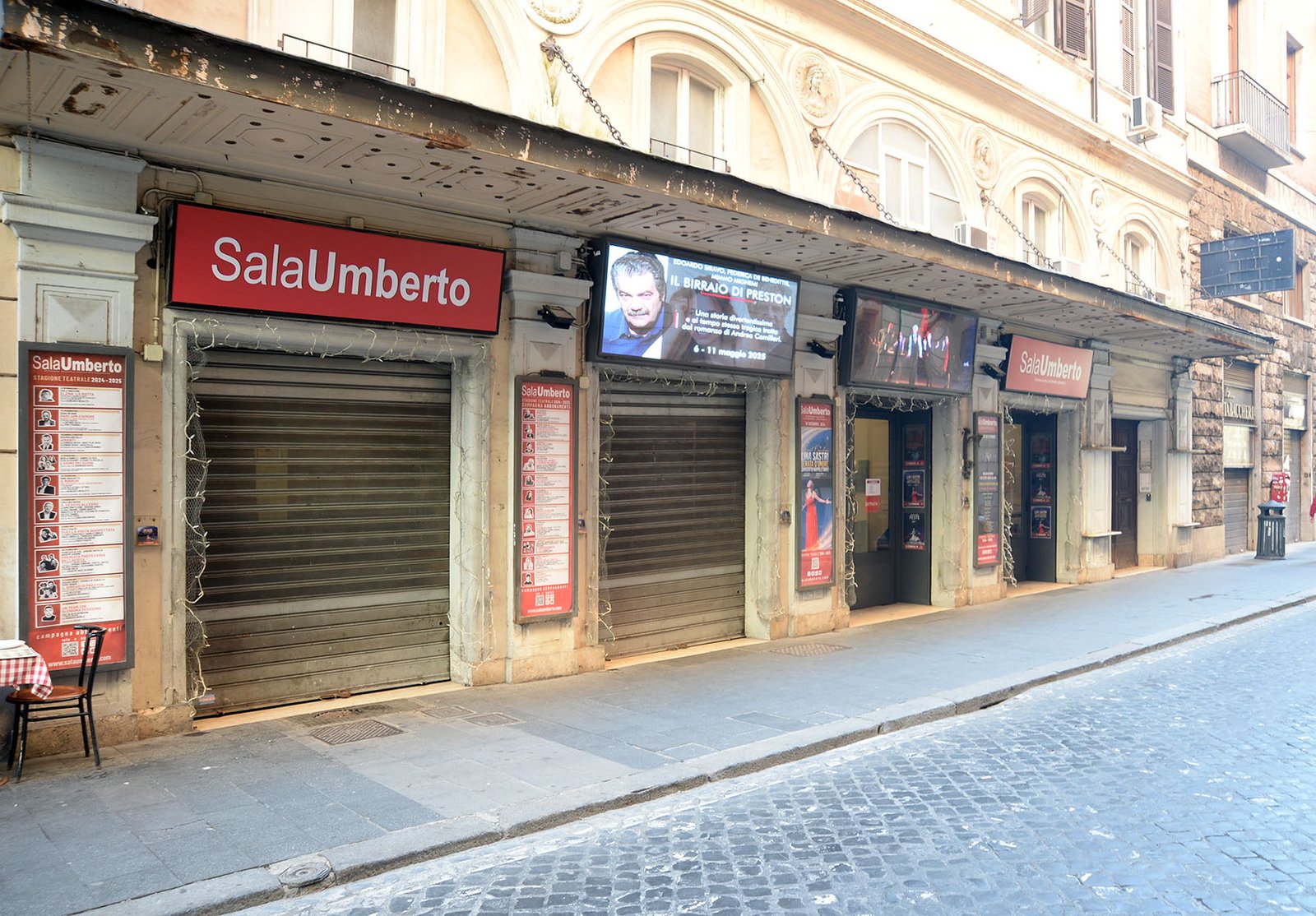
Barutz, the Veneto comedian Francesco Baruto, brings Nonna Marisa in Due ore d'aria to Teatro Sala Umberto, Via della Mercede 50 (00187 Rome), on Monday, March 8, 2027 at 21:00, for one evening only. The show is written and directed by Charlie Tango, produced by Hoouse Agency and Brave Agency, and runs about 90 minutes in one act. The prices published on the theater's official page are €32 for the poltrona and €23 for the first balcony A. The hall is in the Colonna district, between Piazza di Spagna and the Trevi Fountain, about a 10-minute walk from the Spagna and Barberini stops on Metro Line A. Tickets are sold on the official Sala Umberto website, salaumberto.com, which links to the presale network authorized by the organizer, or at the box office. The theater also accepts the teacher card.
Language: performed in Italian. No English version or English surtitles are announced.
A grandmother who goes back over the past to understand the present, a Generation Z grandson on a video link, a surreal scam of which the elderly lady becomes an unwitting victim: Due ore d'aria is the show with which Barutz brings to Rome the character that made him popular, Nonna Marisa. A single evening, on a Monday, in a hall in the center that dates from 1882.
Barutz in Rome: date, time and tickets
Barutz's evening at Sala Umberto is Monday, March 8, 2027, starting at 21:00. It is the only Rome date listed on the theater's official page.
Time and running time
The show starts at 21:00 and runs about 90 minutes, in a single act: you get out around 22:30. For an evening of comedy it's best to be in the hall 15 minutes early, to pick up your tickets and leave your coat at the coat check without rushing.
Prices
According to the table on the official page, the full-price ticket costs €32 in the poltrona, in the orchestra, and €23 in the first balcony A. There are only two sections, with a difference of €9.
Where to buy
Tickets are bought on the official Sala Umberto website, from the button on the show page, which links to the authorized presale network, or at the box office. For bookings and information the theater lists the phone number 06 6794753, the WhatsApp number 345 9409718 and the address prenotazioni@salaumberto.com.
The teacher card
Sala Umberto accepts the teacher card: teachers can use it for an evening of comedy too.
Due ore d'aria: what the show is about
In Due ore d'aria Nonna Marisa goes back over her past to try to understand the present, and finds in her grandson Filippo, a perfect representative of Generation Z, her privileged vantage point.
Two eras face to face
The theater's presentation describes a comic story built between memories of another era and today's dynamics, often incomprehensible to someone who grew up without a smartphone. The engine of the comedy is the comparison: the grandmother looks at her grandson's world with the eyes of her own time, and a series of misunderstandings comes out of it.
Misunderstandings and gags
The official text speaks of irresistible misunderstandings, stories bordering on the absurd, disorienting reflections on current themes and situations that degenerate into unpredictable gags. It is the structure of the comic character monologue: a single, recognizable voice that moves across different topics while staying true to itself.
The scam
The narrative thread leads to a surreal scam, of which Grandma herself becomes an unwitting victim. The detail is not secondary: scams against the elderly are a daily news topic, and tackling it in a comic key, from the victim's point of view, is a choice that in our opinion gives the show a core of truth.
The grandson on video
What makes the evening more dynamic are the video links with Filippo, which bring direct dialogues on stage, and according to the presentation hilarious and unfiltered ones, amplifying the contrast between generations. The show thus alternates monologue and multimedia content.
The title: why two hours of fresh air
The title plays on the expression "ora d'aria," the time prisoners in jails spend outdoors, and multiplies it by the length of the show.
A grandmother in the yard
The presentation ends with a promise: to give the audience two hours of pure fresh air, able to make people laugh and think. For a grandmother who experiences the present as a somewhat hostile place, going out to the theater becomes a real breath of fresh air: the title is about her, and about those who watch her.
The mug shot
The show's official image takes the prison metaphor seriously. Nonna Marisa is pictured as in a mug shot, in front of a wall height chart, with a sign in her hands: first name Marisa, last name Scheggi, a birth date in 1950, and two notes, friend of Fernanda and a dimwit grandson. White curly hair, red glasses, green cardigan: the character is all there.
Laughing and thinking
The closing formula, making people laugh and think, is the one of a lot of popular Italian comedy. In Due ore d'aria the thinking comes through the comparison between generations: anyone who has a grandmother, or a grandson, will recognize themselves in it.
Grandparents and grandchildren: the theme of the show
The heart of Due ore d'aria is the relationship between a grandmother and a Generation Z grandson: a theme that runs through almost every Italian family and that the show tackles with the language of comedy.
Two languages
On one side the memories of another era, on the other today's dynamics, which the presentation calls often incomprehensible. The comedian stages the gap between the two worlds without taking sides: you laugh at the grandmother who doesn't understand, and at the grandson who doesn't explain.
Comedy without malice
The tour sheet insists on the everyday affection, made of love and symbolic gestures, that the character embodies. It is the tone that sets Nonna Marisa apart from a lot of contemporary comedy: a laugh that humiliates no one, and that for this reason can be shared across generations in the same row of seats.
The scam as a mirror
The finale with the scam, of which Nonna Marisa is an unwitting victim, brings on stage a concrete fear of many families. Laughing about it together, grandparents and grandchildren, is also a way to talk about it on the way out of the theater.
Who is Barutz: Francesco Baruto and Nonna Marisa
Francesco Baruto, known on stage as Barutz, is a Veneto comedian who in recent years has won over audiences with a style that his tour sheet calls brilliant, intelligent and contemporary.
The style
The presentation of his show speaks of a refined but accessible comedy, able to combine irony, social observation and great empathy with the audience. His evenings, according to the same source, are often sold out in the main Veneto theaters and involve spectators of all ages.
Nonna Marisa
Among his best-loved characters is Nonna Marisa, whom the sheet describes as an emotional imagery able to embody the memory of the family, wisdom and roots: an everyday affection made of love and symbolic gestures. It is a comic character who doesn't make fun of the elderly, but speaks through them.
Between laughter and nostalgia
The show, according to the tour presentation, makes people laugh and moves them, between laughter and nostalgia, winning over audiences of every generation. It is the double register that sets character comedy apart from pure stand-up: behind the grandmother's mask there is a family story that everyone can fill in with their own.
The tour
Due ore d'aria is on tour in the 2026/2027 season in several Italian cities. Among the published dates are Teatro Dehon in Bologna on February 27, Teatro Nuovo in Ferrara on March 25 and Teatro Michelangelo in Modena on April 1, 2027. The Rome evening at Sala Umberto falls between the Bologna date and those at the end of March.
From the Veneto to Rome
For a comedian who grew up in the theaters of one region, a date in a historic theater in the center of Rome marks a widening of the audience. Nonna Marisa speaks a family language that, in the intentions of the presentation, reaches every generation: the evening on Via della Mercede is the test.
Who is behind the show
Due ore d'aria is written and directed by Charlie Tango and produced by Hoouse Agency and Brave Agency.
Writing and direction
Giving text and direction to the same signature is a frequent choice in character shows: whoever writes knows the character's timing and builds it to measure for the performer. The result, in the intentions of the presentation, is a brilliant and contemporary show.
The role of video
The links with the grandson Filippo require direction that also pays attention to the multimedia part: the dialogue between the grandmother on stage and the boy on the screen is the mechanism that short-circuits the two generations, and its success depends on the rhythm between stage and video.
A curiosity about Barutz in Due ore d'aria at Teatro Sala Umberto, March 8, 2027
The most obvious curiosity is the date. Monday, March 8, is International Women's Day, and Sala Umberto celebrates it, intentionally or not, with a female lead: a grandmother, played by a man. It is a paradox that the comic tradition knows well, that of the en travesti character, and that here takes on an affectionate meaning. Nonna Marisa, friend of Fernanda, with a grandson she herself calls a dimwit, is the portrait of a generation of women who have held Italian families together.
The second curiosity concerns the sign on the poster. Nonna Marisa's last name is Scheggi, and the birth date written on the sign falls in 1950: so the grandmother is 76 years old in 2027. She is a young grandmother compared with the stereotype, raised in the years of the economic boom, close enough to the present to try to understand it and far enough away not to succeed.
The third concerns the theater. In 1928 Sala Umberto was turned by the Marino brothers into a variety theater, with comedians, chanteuses and vedettes. The character comedian, with the costume, the wig and a recognizable voice, is the direct heir of that world: almost a century later, Nonna Marisa brings the spirit of variety back to Via della Mercede.
Sala Umberto, the theater on Via della Mercede
Teatro Sala Umberto has 485 seats in a rectangular hall with a sloping orchestra and one balcony. Born in 1882 on the ground floor of a building on Via della Mercede, it has been artistically directed by Alessandro Longobardi since 2002.
From 1882 to variety
The hall was commissioned by Andrea Busiri Vici and decorated by Alessandro Bazzani. It hosted concerts, operettas and comedies. In 1890 the architect Giulio Podesti enlarged it to 650 seats, and in 1913 it became a movie theater. In 1928 the Marino brothers, owners of the Salone Margherita, brought it back to variety and gave it the king's name.
From cinema to drama
Around 1930 cinema came back. In 1981 the hall reopened as a theater with the Ente teatrale italiano, in 1991 it went back to cinema, and since 2002 it has been steadily a theater, with drama, comedy, music and shows for young people.
An intimate hall
The size of Sala Umberto suits a character show: the voice reaches the balcony without effort, and the details of the costume and the expressions are easy to read from the orchestra. For the video links, a screen in a hall of this size stays visible from every seat.
Something nobody tells you about Barutz in Due ore d'aria at Teatro Sala Umberto, March 8, 2027
What goes unsaid is that Barutz comes to Rome as a comedian from a specific area. His presentation speaks of evenings often sold out in the main Veneto theaters: his comedy was born and grew in one region, with its audience, its references, maybe its accent. The Rome date is a different test, in front of an audience the character has to win over from scratch. Whoever goes to Sala Umberto on March 8 witnesses this step.
The second thing is that Nonna Marisa is a character who crosses over. The presentation insists on an audience of all ages, and the structure of the show, with a grandmother and a grandson, speaks to two generations together. In our opinion it is one of the few comedy evenings of the season where it makes sense to go with your grandparents or with teenage kids.
The third is practical: March 8 is a Monday, and in many families it is the evening of Women's Day. Going to the theater with your mother, or with your grandmother, to see a grandmother on stage is an idea the calendar suggests all by itself.
How to get to Sala Umberto
Sala Umberto is inside the ZTL of the historic center: you get there by Metro Line A, getting off at Spagna or Barberini and continuing on foot for about 10 minutes.
From Spagna or Barberini
From Spagna you cross the square and take Via di Propaganda toward Sant'Andrea delle Fratte. From Barberini you go down Via del Tritone and turn toward Via della Mercede. These are flat or gently downhill routes, suitable for slow walkers too.
By bus
Many surface lines run along Via del Tritone and Via del Corso: for the exact route it's best to use the Atac planner, which takes into account the detours in the center.
By car and taxi
The car should be left outside the ZTL, in the garages. For those going to the theater with elderly people, a taxi to Piazza San Silvestro, a few steps from the entrance, is the most comfortable solution, both ways.
My advice for seeing Barutz in Due ore d'aria at Teatro Sala Umberto, March 8, 2027
My advice is to go as a family, mixing the generations. A show built on the dialogue between a grandmother and a grandson is enjoyed more if both are in the hall: the grandparents will recognize their own reactions in front of technology, the grandchildren their own impatient replies. March 8, Women's Day, is the perfect occasion to take a grandmother or a mother to the theater.
The second piece of advice is about the seat. The poltrona, in the orchestra, costs €32, the first balcony A €23. For those going with elderly people the orchestra avoids stairs and guarantees the best view of the character. For those going with kids who want to spend less, the balcony is fine, because the video content can be seen anyway.
The third is to arrive prepared. Videos of Barutz and Nonna Marisa circulate online, and watching a few beforehand lets you get to know the character and enjoy the callbacks more. But not too many: in the theater, live, the character has timing and pauses that a screen doesn't deliver.
Another well-known fact, yet rarely mentioned
It is well known that Italian comedy has a long tradition of elderly characters, grandmothers and grandfathers who look at the present with suspicion: a gallery the audience knows from cinema and television. It is mentioned less often that these characters work when they are built with affection and not with contempt, and that their strength lies in the truth of the details: the cardigan, the glasses, the friends named by name. Nonna Marisa's sign, with her friend Fernanda and the dimwit grandson, says exactly this.
A second rarely mentioned fact concerns Sala Umberto: the name doesn't come from an impresario, but from the king. In 1928 the Marino brothers, bringing it back to variety, named it after Umberto, in homage to the ruling house. The name has stayed through cinema, the closure, the reopening in 1981 and the final one in 2002.
The third concerns technique. In character comedy the costume does part of the work, but the voice and the posture do most of it: a young comedian playing an elderly woman has to change rhythm, breathing, the way of standing. It is an actor's job, even before it is a matter of jokes.
The right photo to take of Barutz in Due ore d'aria at Teatro Sala Umberto, March 8, 2027
During the show you don't photograph and you don't film: recording disturbs the people on stage and those sitting next to you, and the jokes are the comedian's property. The right photo is taken before and after.
The funniest one takes its cue from the poster: a mug shot, in front of the entrance of Sala Umberto on Via della Mercede, with a makeshift sign with your own name and two notes, like Nonna Marisa's. With the real grandmother, if she came to the theater, the photo becomes a family keepsake.
On the way out, after 22:30, the lit-up Trevi Fountain, a few minutes on foot away, is less crowded on a Monday night than on the weekend: it's the right moment for a family photo without the crowd. Alternatively, the staircase of Trinità dei Monti above Piazza di Spagna.
Around Sala Umberto: the Colonna district
Via della Mercede is in the Colonna district, between the Trevi Fountain and Piazza di Spagna, a stone's throw from Via del Corso.
The nearby churches
A few meters away is Piazza San Silvestro, with San Silvestro in Capite. A little farther up, on Via di Capo le Case, is Sant'Andrea delle Fratte, with Borromini's dome and bell tower and Bernini's angels.
Piazza Colonna and the Galleria
Along Via del Corso you reach Piazza Colonna, with the column of Marcus Aurelius and Palazzo Chigi, and Galleria Alberto Sordi, useful on rainy evenings.
Teatro Quirino
10 minutes on foot away is Teatro Quirino: if you are staying in Rome a few days, you can alternate comedy and drama without taking transportation.
Some important events that happened here in history
Sala Umberto was born in 1882, on the ground floor of a building on Via della Mercede, at the wish of Andrea Busiri Vici, with interiors decorated by Alessandro Bazzani: concerts, operettas, comedies. In 1890 the architect Giulio Podesti enlarged it to 650 seats. Perhaps in that period it was known as Sala della Piccola Borsa. In 1913 it became a movie theater.
In 1928 the Marino brothers, owners of the Salone Margherita, brought it back to the stage with variety and named it after the king: Sala Umberto. For a couple of years comedians, chanteuses and vedettes performed there. Around 1930 cinema came back, and it would stay for half a century.
In 1981 the hall reopened as a theater after a renovation, under the direction of the Ente teatrale italiano and with a drama program. In 1991 it went back to cinema. Since 2002, with the artistic direction of Alessandro Longobardi, it has been steadily a theater. A comedian who turns into a grandmother, in a theater born for variety, brings back to Via della Mercede one of the oldest forms of popular comedy.
Who has passed through: Barutz in Due ore d'aria at Teatro Sala Umberto, March 8, 2027
Between the two wars, the variety artists hired by the Marino brothers passed through Sala Umberto: comedians, chanteuses, vedettes, the same world that animated the Salone Margherita. The sources don't preserve a reliable list of names, but the picture is of a Rome that went to Via della Mercede in the evening to laugh and listen to songs.
Since 2002 the hall has hosted mostly drama, comedy and music. In the 2026/2027 season, on its stage pass, among others, Francesco De Gregori, Francesco Montanari with Storia di un cinghiale, Giulio Corso and Federica De Benedittis with Cime Tempestose. Five days after Barutz, on March 13, the same hall hosts the stand-up of Carlotta Spallino.
On March 8, 2027, Francesco Baruto and Nonna Marisa pass through Via della Mercede, with Fernanda evoked by the sign, the grandson Filippo on a video link and the surreal scam that closes the story. A Veneto comedian and his imaginary grandmother, for one evening, in the center of Rome.
How to plan the family evening
An evening with Nonna Marisa at Sala Umberto is easy to organize with three generations together: an early dinner, the show at 21:00, a comfortable ride home by taxi or metro.
The afternoon
With the March light, the afternoon can begin with a short walk between Piazza Colonna and Galleria Alberto Sordi, where you can stop indoors if it rains. These are flat routes, a few minutes from the theater, suitable for slow walkers too.
Dinner
For those going to the theater with elderly people, dinner around 19:00 in a place near Via della Mercede avoids long trips. On Mondays some restaurants are closed: a phone call the day before saves surprises.
Getting back
After the show, around 22:30, a taxi from Piazza San Silvestro is the simplest solution for those who have trouble walking. For everyone else, the metro from Spagna or Barberini, checking the time of the last run on the Atac website.
Orchestra or balcony: how to choose your seat
For Due ore d'aria Sala Umberto sells two sections, poltrona at €32 and first balcony A at €23: the choice depends on who is going to the theater.
The orchestra
In the orchestra you are close to the character and you catch the details of the costume and the expressions, which in a character show make half the comedy. It is also the obvious choice for those who can't climb stairs.
The balcony
From the balcony you get an overview of the stage and the screen for the video links, at a lower price. For a big family with kids it can be the most convenient solution.
One date only
With a single Rome performance there is no second chance: it's best to buy early and, if you're bringing your grandparents, ask the box office for the most comfortable seats.
Where to eat before or after the show
The Colonna district offers every kind of dining. On Mondays some places are closed for their day off, and it's best to check first.
Before 21:00
With the start at 21:00, a dinner around 19:15 in the streets between Via della Mercede, Via del Pozzetto and Via della Vite leaves time to reach the hall without rushing. With elderly people, it's better to pick a place close to the theater.
After the show
On the way out, around 22:30, many kitchens in the center are still open. For a dessert or a coffee, the bars around Via del Corso and Piazza di Spagna.
March 8
On the evening of Women's Day many restaurants offer themed dinners: if you want to eat out before or after the show, you should book ahead.
Accessibility, recommended age and practical information
For Sala Umberto's accessibility for people with reduced mobility and for access to the balcony, it's best to contact the theater's box office, at 06 6794753, before buying: it is the most important step for those going to the theater with their grandparents.
Age
Due ore d'aria is presented as a show that involves spectators of all ages. In our opinion it suits kids from 10 or 12 years old, who will recognize something of themselves in the grandson Filippo, and of course grandparents.
Phones and recording
It is good manners to keep your phone off during the show: recording disturbs the people on stage and the audience nearby.
A week of comedy in Rome
Barutz's evening falls in the middle of a very rich week for live comedy in Rome.
The other evenings
From March 3 to 7 Cornacchione, Quartullo and Faiella are at Parioli Costanzo with the farce Basta poco. On March 7 and 8 Michela Giraud is at Brancaccio. On March 9 Pierluca Mariti is at Ambra Jovinelli. On March 13 Carlotta Spallino returns to Sala Umberto. Nonna Marisa is the best choice for an evening with the whole family.
The weather
In early March the evenings are still cool: a heavy jacket for the walk from the metro, to leave at the coat check, is the most sensible choice, especially with elderly people.
Frequently asked questions about Due ore d'aria
When is Barutz at Sala Umberto?
Barutz brings Due ore d'aria, with the character of Nonna Marisa, to Teatro Sala Umberto in Rome on Monday, March 8, 2027 at 21:00. It is the only Rome date listed on the theater's official page.
How much do tickets for Due ore d'aria cost?
Tickets for Due ore d'aria at Sala Umberto cost €32 in the poltrona and €23 in the first balcony A, according to the official page. They are bought on the theater's website or at the box office, also with the teacher card.
Who is Barutz?
Barutz is the stage name of Francesco Baruto, a Veneto comedian known for the character of Nonna Marisa, who embodies the memory of the family and its roots. His evenings are often sold out in the theaters of the Veneto.
What is Due ore d'aria about?
In Due ore d'aria Nonna Marisa goes back over the past to understand the present, watching her grandson Filippo, a Generation Z kid, on a video link, amid misunderstandings, gags and a surreal scam of which she herself becomes a victim.
How long is the show?
Barutz's Due ore d'aria runs about 90 minutes, in a single act. With the start at 21:00 at Sala Umberto, you get out around 22:30.
Where is Teatro Sala Umberto?
Teatro Sala Umberto is at Via della Mercede 50, in the Colonna district, between Piazza di Spagna and the Trevi Fountain. The most convenient stops are Spagna and Barberini on Metro Line A. The theater is in the ZTL.
Final advice on Due ore d'aria
A grandmother in a mug shot, a grandson on a video link, a surreal scam and 90 minutes of comparison between generations, in a hall in the center born for variety: Due ore d'aria is the comedy evening best suited to the whole family in that Roman week. My advice is to go on March 8 with a grandmother or a mother, take the orchestra and, on the way out, stop at the Trevi Fountain for the family photo.
Article written by the editorial team of Tour Leader Pro, contact them for Private/Corporate/V.I.P. Tours and Experiences.
Planning a trip to Rome? The English guides to visiting the city are on ItalyPlanner.com.