Antonio Pappano conducts Petrassi and Tchaikovsky at Santa Cecilia, Auditorium Parco della Musica, November 19, 20 and 21, 2026
https://www.estateromana.com/en/rome/trip-planner/antonio-pappano-conducts-petrassi-and-tchaikovsky-at-santa-cecilia-auditorium-pa/
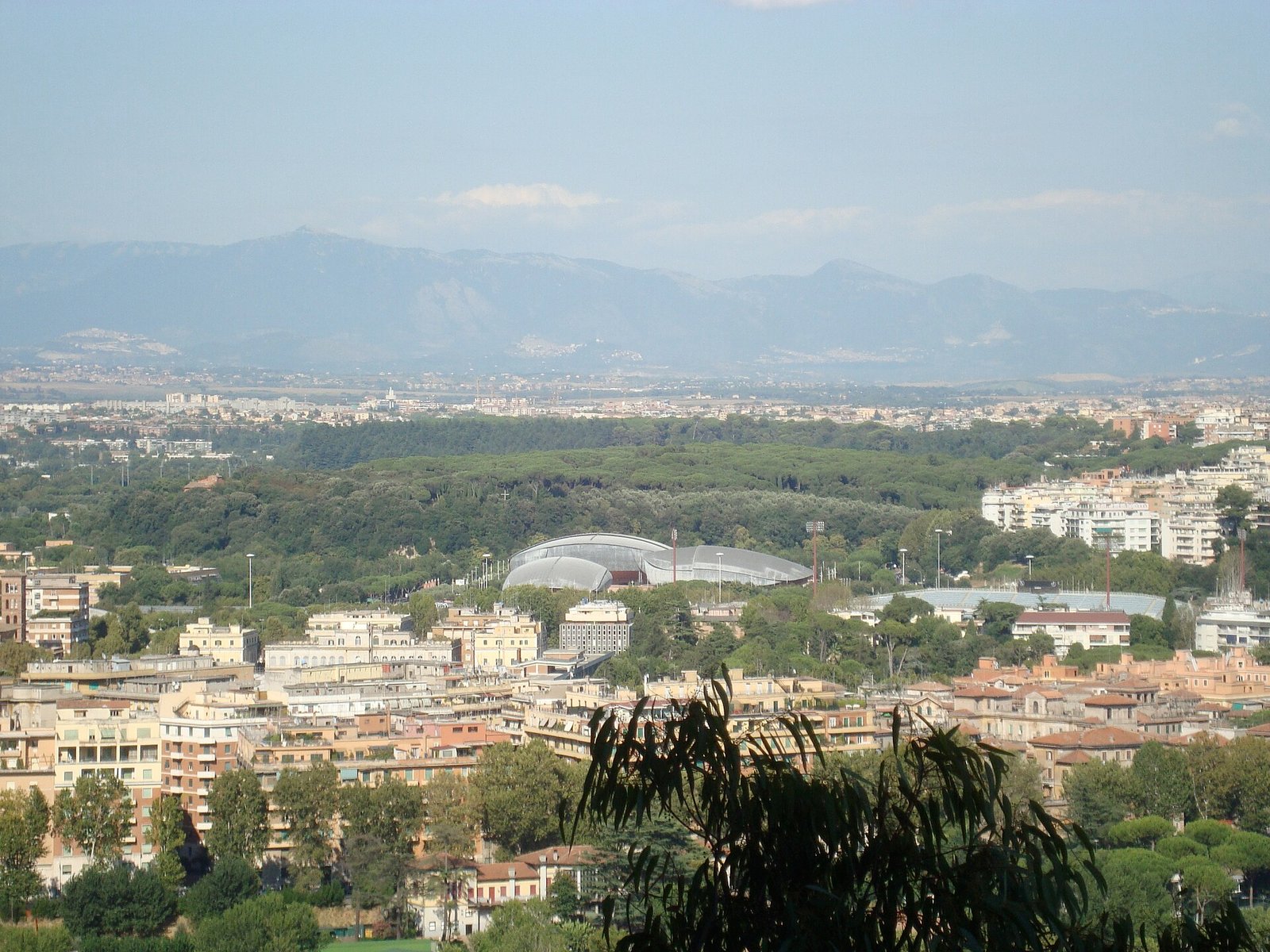
Pappano conducts Petrassi and Tchaikovsky at Santa Cecilia: Antonio Pappano, Conductor Emeritus of the Accademia Nazionale di Santa Cecilia, returns to the podium of the Accademia's Orchestra and Chorus on Thursday, November 19, 2026 at 19:30, Friday, November 20 at 20:00 and Saturday, November 21 at 18:00, in Sala Santa Cecilia at Auditorium Parco della Musica Ennio Morricone, Viale Pietro de Coubertin 30. The program features Goffredo Petrassi's Psalm IX, with the chorus prepared by Andrea Secchi, and Tchaikovsky's Symphony No. 6 «Pathétique». You get there on metro line A to Flaminio and then tram 2 to the Flaminia/Reni or Apollodoro stops, or on buses 910 from Termini, 53, 982 and 168. Tickets cost from 23 to 54 euros depending on the section and are sold at the Auditorium box office, at the box office on Via Vittoria 6 and through the presale network authorized by the Accademia, reached from the official concert page. Concerts start on time: latecomers are not admitted to the hall.
It is the first of the two programs Pappano conducts in the Accademia's 2026/2027 season, the orchestra he led as music director starting in 2005. Next to one of the best-loved symphonies in the repertoire, the Pathétique, Pappano brings a choral work by a Roman composer who made Santa Cecilia history, Goffredo Petrassi. Below you'll find the program, the performers, the hall and everything you need to plan the evening.
Pappano at Santa Cecilia: the three November evenings
Antonio Pappano conducts the Orchestra and Chorus of the Accademia Nazionale di Santa Cecilia on three evenings, November 19, 20 and 21, 2026, in Sala Santa Cecilia, with Petrassi's Psalm IX and Tchaikovsky's Sixth Symphony.
Dates and series
Thursday, November 19 at 19:30 for the G-G2 series, Friday, November 20 at 20:00 for the V-V2 series, Saturday, November 21 at 18:00 for the S-S2 series. The program is the same on all three evenings: the choice depends only on the most convenient day and time.
Who is on stage
The Orchestra and Chorus of the Accademia Nazionale di Santa Cecilia, with Antonio Pappano on the podium and Andrea Secchi as chorus master. Psalm IX calls for a large ensemble, with chorus, large orchestra, percussion and pianos: on the stage of Sala Santa Cecilia it will be one of the largest lineups of the season.
Its place in the season
The concert comes right after the three evenings with Kirill Petrenko, November 12 to 14, and precedes those with Daniel Harding with Brahms and Strauss, from November 26. The season had opened in October with Wagner's Siegfried conducted by Harding. The full calendar is on the page for the Santa Cecilia 2026/2027 concert season.
Punctuality
The Accademia points it out on the concert page: the doors close at the start time. Latecomers can follow the concert in the listening rooms, while places last, but they don't enter the hall. With Psalm IX at the start, arriving late means missing half the program.
The program: Petrassi and Tchaikovsky
The program pairs two works distant in period and language: Goffredo Petrassi's Psalm IX, composed between 1934 and 1936 for chorus and large orchestra, and Pyotr Ilyich Tchaikovsky's Symphony No. 6 «Pathétique», from 1893.
Two worlds side by side
The Accademia presents the concert as the meeting of two works distant in period and language. On one side a song of praise to God written by a 30-year-old Roman composer in the 1930s, on the other the last symphony of a Russian composer, completed a few months before his death. What unites them is a dramatic tension running through both scores.
First half: Psalm IX
In the first half Pappano conducts Petrassi's Psalm IX, entrusted to the chorus and a large orchestral ensemble. The Accademia's presentation describes it as a song of praise to God charged with dramatic tension, in which the role of the percussion and the pianos stands out for its modernity.
Second half: the Pathétique
In the second half, Tchaikovsky's Sixth Symphony. In the Pathétique, according to the Accademia's note, the Russian composer takes the symphonic form toward a personal and introspective expression, built on contrasts, dramatic surges and sudden lyrical pauses.
Length
The total length of the concert isn't given on the official page. The Pathétique lasts on average around 45 minutes. With Psalm IX and the intermission, the evening takes about two hours, but the figure should be taken as a guide.
Petrassi's Psalm IX
Psalm IX is one of Goffredo Petrassi's most important choral works, written between 1934 and 1936, in the years when the Roman composer was beginning his international career.
The years of composition
In 1934 Alfredo Casella conducted Petrassi's Partita at the Festival of the International Society for Contemporary Music in Amsterdam: it was the start of the composer's international career. Psalm IX came right after, between 1934 and 1936, and it is the work of a musician who has found his own voice.
A modern ensemble
The Accademia's note stresses the role of the percussion and the pianos, which give the score a modern, almost metallic color. The chorus sings the text of the psalm, a song of praise, with a power that Renzo Piano's hall conveys in full.
A composer at home
Performing Petrassi at Santa Cecilia means playing a composer who had a lifelong bond with the Accademia and with the conservatory of the same name. Psalm IX comes home, in the hall that stands next to the one named after its author.
Goffredo Petrassi, the Santa Cecilia composer
Goffredo Petrassi, born in Zagarolo on July 16, 1904 and died in Rome on March 3, 2003, was a composer and teacher, who taught for decades at the conservatory and at the Accademia di Santa Cecilia and trained generations of composers.
Training in Rome
Having moved from Zagarolo to Rome as a boy, Petrassi was a choirboy in the Schola of San Salvatore in Lauro. At 15 he became a clerk in a music store, and it was that experience that sparked his passion for music. He enrolled at the Santa Cecilia conservatory, where he earned his diplomas in organ and composition in the early 1930s under Fernando Germani and Alessandro Bustini.
La Fenice and the professorship
In 1937 he was appointed superintendent of Teatro La Fenice in Venice, a post he left after three years. In 1939 he got the chair of composition at the Santa Cecilia conservatory. In 1946 he founded the magazine Movimento Nuovo with Filiberto Sbardella and Raoul Ricciardi.
The Accademia
In 1960 Petrassi left his conservatory chair for the advanced composition courses at the Accademia Nazionale di Santa Cecilia, which he taught until 1978, choosing his successor himself, Franco Donatoni.
The students
His students include Aldo Clementi, Franco Oppo, Peter Maxwell Davies, Cornelius Cardew, Boris Porena, Domenico Guaccero, Daniele Paris and Ennio Morricone. The Auditorium where Psalm IX is performed is now named after Morricone himself: teacher and student meet again in the same building.
Tchaikovsky's Sixth Symphony, the Pathétique
Tchaikovsky's Symphony No. 6 in B minor, Op. 74, known as the Pathétique, was composed in 1893 and first conducted by the composer himself in Saint Petersburg on October 28, 1893 of the Gregorian calendar, nine days before his death.
The composition
The sketches were begun in February 1893 and the symphony was completed over the course of the year, in several stages of work. Tchaikovsky dedicated it to his nephew Vladimir Davydov.
The premiere
On October 16, 1893 by the Julian calendar then in use in Russia, the 28th by ours, Tchaikovsky conducted the first performance in the Hall of the Assembly of the Nobility in Saint Petersburg. Nine days later he died. The coincidence has weighed on how the symphony is heard for more than a century.
The title
The symphony was published in 1894 with the title Pathétique, perhaps suggested by the composer's brother, Modest, the day after the premiere.
A symphony that ends quietly
The Accademia's note speaks of contrasts, dramatic surges and sudden lyrical pauses. If you're hearing it for the first time, be ready for the finale: the Pathétique doesn't end in triumph, and the silence that follows the last note is part of the work.
Who Antonio Pappano is, Conductor Emeritus of Santa Cecilia
Sir Antonio Pappano, born in Epping on December 30, 1959 to Italian parents, is the conductor who from October 1, 2005 led the Orchestra of the Accademia Nazionale di Santa Cecilia as music director, succeeding Myung-Whun Chung, and who is now its Conductor Emeritus.
His roots
Pappano's parents came from Castelfranco in Miscano, a small village in the Campanian Apennines in the province of Benevento, and emigrated to London. His father, a lover of Italian opera, played the piano for pleasure and passed on to his son a passion for music, especially for Puccini. At 12 Antonio was already accompanying young voice students on the piano.
The United States
In 1973 the family moved to the United States, where Pappano continued private studies in piano with Norma Verrilli, composition with Arnold Franchetto and conducting with Gustav Meier. He trained outside music institutions and never earned a diploma. He started as a piano accompanist for singers and as an assistant to guest conductors at the Chicago opera. In 1981 he began working with New York City Opera.
Oslo, Brussels, London
After his conducting debut in Norway in 1987, in 1990 he became music director of Den Norske Opera. In 1992 he took on the music directorship of Théâtre de La Monnaie in Brussels, which he held until 2002. In 1999 he was appointed music director of the Royal Opera House in London, a post that took effect in September 2002.
Santa Cecilia
From October 1, 2005 Pappano was music director of the Orchestra of the Accademia Nazionale di Santa Cecilia. On April 16, 2007 he was named a full Academician of the Accademia. On July 17, 2009 he conducted a Verdi gala in Naples, in Piazza del Plebiscito, with the choruses and orchestras of Santa Cecilia and Teatro San Carlo. Today the Accademia presents him as Conductor Emeritus.
Other orchestras
Pappano has regularly conducted the London Symphony Orchestra, the Cleveland Orchestra, the Chicago Symphony Orchestra, the Berliner Philharmoniker and the Concertgebouw Orchestra. In opera houses he has been a guest of the Metropolitan Opera, Lyric Opera of Chicago, San Francisco Opera and the Berlin Staatsoper, among others.
A curious fact about Antonio Pappano conducting Petrassi and Tchaikovsky at Santa Cecilia, Auditorium Parco della Musica, November 19, 20 and 21, 2026
The curious fact concerns Petrassi and the hall. When Sala Sinopoli opened in 2002, the first of the Auditorium's three halls to be inaugurated, Goffredo Petrassi wanted to be there to hear the first performance in the new hall of his Concert Overture from 1931. He was almost 98 and would die the following year. The smallest hall in the complex now bears his name, Sala Petrassi.
So Psalm IX is played a few meters from the hall named after its author, in the building named after his most famous student, Ennio Morricone, and under the baton of the conductor who led the Santa Cecilia orchestra for almost 20 years. These are coincidences that show how the musical history of Rome, in the 20th century, passed in large part through the Accademia and its conservatory.
The second curious fact concerns Pappano. The conductor who today leads the world's major orchestras never earned a conservatory diploma. He trained privately, first as a piano accompanist for singers, then as an assistant. It's a rare path, and it explains his direct relationship with voices and his taste for the choral and operatic repertoire.
Sala Santa Cecilia, home of the orchestra
Sala Santa Cecilia is the largest of the three concert halls of Auditorium Parco della Musica Ennio Morricone: 2,756 seats, designed by Renzo Piano for symphonic music and inaugurated on December 21, 2002. Since 2003 it has been the permanent home of the Accademia's season.
The cherry wood
The ceiling is made of 26 shells of American cherry, each with an average surface of about 180 square meters. The hall works like a large soundboard, with a reverberation time of 2.2 seconds: for a work for chorus and large orchestra like Psalm IX, and for the pianissimos of the Pathétique, it's an ideal condition.
Where to sit
In a hall this size you don't need orchestra seats right up against the stage: the sound intensity stays constant in the middle rows too. If you want to see the conductor's gestures from the front, you can pick the gallery behind the orchestra, if on sale: with a choral program it's worth asking the box office where the chorus will sit.
Renzo Piano's beetles
Seen from outside, the halls are three large lead-clad volumes on a brick base, arranged in a fan around the open-air cavea named after Luciano Berio. Piano won the 1993 competition and worked with acoustician Jürgen Reinhold of the Müller-BBM firm in Munich. The page on the complex is Auditorium Parco della Musica.
Something nobody tells you about Antonio Pappano conducting Petrassi and Tchaikovsky at Santa Cecilia, Auditorium Parco della Musica, November 19, 20 and 21, 2026
What nobody says is that Psalm IX deserves the same attention as the Pathétique that follows it. Many concertgoers buy a ticket for Tchaikovsky and treat the first half as an appetizer. That's a mistake: Psalm IX is a score of great impact, with an ensemble rarely heard live, and the percussion and pianos the Accademia stresses in its note give the first half an energy that surprises anyone who doesn't know Petrassi. Our advice is to listen to a recording of it before the concert.
The second thing concerns the finale of the Pathétique. The last movement fades out slowly, and the more experienced audience waits a few seconds of silence before applauding. Applause that starts on the last note breaks the effect Tchaikovsky built. It's best to wait until Pappano lowers his arms.
The third concerns the hall: Sala Santa Cecilia is built on a raised level above the ground, because the remains of a Roman villa came to light during construction. There are only two elevators for the galleries: if you have limited mobility and a gallery seat, arrive well ahead of time.
My advice for attending Antonio Pappano conducting Petrassi and Tchaikovsky at Santa Cecilia, Auditorium Parco della Musica, November 19, 20 and 21, 2026
My advice is to pick the Saturday evening at 18:00 if you're coming from out of town or want to make the concert the center of a day: a morning at MAXXI or Villa Borghese, a quiet lunch, the concert in the late afternoon and dinner afterward, at Ponte Milvio or toward the center. Thursday at 19:30 and Friday at 20:00 are the evenings for people coming from work: in that case allow a half-hour margin for the Flaminio traffic.
The second piece of advice is about seats. With a choral program, the central orchestra sections and the front rows of the side galleries offer the best balance between chorus and orchestra. On a tighter budget, the cheapest sections, at 23 and 30 euros, give you a hall that sounds good almost everywhere.
The third piece of advice is to listen to a recording of Psalm IX before the evening: it's a less familiar work than the Pathétique, and knowing it makes the concert richer. As for the Pathétique, it's enough to remember the story of the premiere.
In our view this is the concert of the season for anyone who followed Santa Cecilia in the Pappano years: the return of the conductor who built the sound of this orchestra, with a program that combines a great classic and a home composer.
Tickets for Pappano at Santa Cecilia: prices and discounts
Tickets for the Antonio Pappano concert cost 54 euros in section I, 47 in II, 37 in III, 35 in IV, 30 in V and 23 in VI, and are sold only by resellers authorized by the Accademia.
Where to buy them
The only authorized resellers are the box office of Auditorium Parco della Musica Ennio Morricone, the box office on Via Vittoria 6 and the outlets of the presale network named by the Accademia. Online you start from the buy button under the chosen date, on the official concert page, which links to the ticketing page for the event.
Presale
Presale for the 2026/2027 season is split into two periods: from September 10, 2026 for concerts from October 14, 2026 to February 27, 2027, and from January 12, 2027 for those from March 3, 2027 to the end of the season. So tickets for the Pappano evenings are already on sale.
Young people
The Accademia collects all its discounts for young people on a dedicated page, santacecilia.it/giovani. For subscription concerts, under-26s get a discount on tickets and under-14s with an adult get in at a token price. Reduced fares are sold at the box offices, while promotional seats last.
Information
The Accademia's info line answers at 06 8082058, and the email addresses are info@santacecilia.it and biglietteria@santacecilia.it. The Accademia warns that it isn't responsible for markups on tickets sold by unauthorized parties.
Getting to the Auditorium for the Pappano concert
Auditorium Parco della Musica Ennio Morricone can be reached by metro line A to Flaminio and then tram 2, stops Flaminia/Reni or Apollodoro, or on buses 910, 53, 982 and 168. The metro doesn't go all the way to the entrance.
Metro A and tram 2
From Piazzale Flaminio, tram 2 runs up Via Flaminia toward Piazza Mancini. Get off at Flaminia/Reni or Apollodoro and walk for a few minutes toward Viale Pietro de Coubertin, through the Villaggio Olimpico.
The 910 from Termini
The 910 leaves from Piazza dei Cinquecento, in front of Termini station, and reaches the Auditorium without changes. If you arrive by train for the Saturday afternoon concert, it's the line to pick.
Other lines
The 53 links Piazza Mancini and the center, the 982 comes from Viale XVII Olimpiade area and Quattro Venti station, the 168 from Tiburtina station. The 168 is a weekday line: on Saturday check the timetables on the transit company's website.
By car
The stretch of Viale Pietro de Coubertin in front of the Auditorium is closed to traffic. The complex has paid parking with limited spaces, and on concert evenings cars spill into the streets of the Villaggio Olimpico. Drive only if there's no alternative, and early.
Another well-known fact, yet one that is rarely mentioned
It's well known that Tchaikovsky died a few days after the premiere of the Pathétique, and for more than a century the symphony has been read as a farewell. It's less often mentioned that the title itself wasn't there at the first performance. The symphony was conducted by the composer on October 28, 1893, and the name Pathétique, perhaps suggested by his brother Modest the day after the premiere, appeared in the 1894 publication. So the title we all know it by is, at least in part, a later reading, which came when the composer was no longer alive.
A second rarely mentioned fact concerns the date. In Russia, in 1893, the Julian calendar was still in use: the premiere took place on October 16 by the Russian calendar, the 28th by the Gregorian one. That's why Tchaikovsky biographies give different dates for the same event, and the composer's death also appears with two dates.
The third concerns Petrassi and the Auditorium. The chair of composition at the Santa Cecilia conservatory, which Petrassi got in 1939, and the advanced courses at the Accademia, which he taught from 1960 to 1978, trained a whole generation of Italian and foreign composers. Among them was Ennio Morricone, after whom the Auditorium has been named since 2020: when you enter the hall to hear Psalm IX, you enter a building that bears the name of the composer's student.
The right photo to take at Antonio Pappano conducting Petrassi and Tchaikovsky at Santa Cecilia, Auditorium Parco della Musica, November 19, 20 and 21, 2026
During the concert your phone stays off: in such a sensitive hall every shot can be heard, and a program that ends in silence, like the Pathétique, doesn't forgive distractions. Take your photo before and after.
Before the concert, in November, it gets dark early: from the top of the cavea you can frame Renzo Piano's three beetles with the lead reflecting the lights, and the entrance to Sala Santa Cecilia with the audience going in. For the Saturday concert at 18:00 you arrive in the last light of day, the best moment for this picture.
In the hall, before the lights go down and if the staff allows it, the shot to take is toward the stage, with the chorus and orchestra already in place and the cherry-wood shells of the ceiling above. It's the image that tells the story of a symphonic choral concert.
After the concert, during the final applause, a photo of Pappano with the orchestra and chorus is the keepsake of the evening, without flash. Outside, the hall seen from below, on Viale Pietro de Coubertin side, gives an almost abstract image of Piano's volumes.
Some important events that happened here in history
The land the Auditorium stands on has a much longer history than the complex. During construction the remains of a Roman villa from the 3rd century BC came to light, built on the site of a small archaic farm from the 6th century BC. The discovery forced Renzo Piano to change the design, shifting two of the three beetles to the west. The finds are on display in a small museum under the cavea.
The modern history begins with a demolition. In 1936 the Augusteo, Rome's great concert hall, was torn down, and for more than 60 years the capital had no auditorium built for symphonic music. Those were the same years in which Petrassi was writing Psalm IX. Only in 1992 did the city council choose the Villaggio Olimpico area, and in 1993 Piano won the competition.
On April 21, 2002 Sala Sinopoli opened, with Petrassi in attendance, and on December 21, 2002 Sala Santa Cecilia, with the Accademia's Orchestra conducted by Myung-Whun Chung. Since 2003 the Auditorium has been the permanent home of the Accademia's season. On October 1, 2005 Antonio Pappano succeeded Chung as music director. In 2020 the city council approved naming the Auditorium after Ennio Morricone, Petrassi's student.
Who has passed through the hall of Antonio Pappano conducting Petrassi and Tchaikovsky at Santa Cecilia, Auditorium Parco della Musica, November 19, 20 and 21, 2026
Sala Santa Cecilia has had major guests from day one. The inaugural concert on December 21, 2002 was conducted by Myung-Whun Chung. A few months earlier, at the opening of Sala Sinopoli, Goffredo Petrassi wanted to be there to hear one of his compositions in the new hall. Luciano Berio, then head of the Accademia, gave his name to the cavea.
Since then the hall has become the home of the Santa Cecilia Orchestra and its music directors, from Antonio Pappano, who led it from 2005, to Daniel Harding. Among the soloists who are regulars is Evgeny Kissin, who played Liszt's Second Concerto with Pappano in this hall in 2019, and who returns on November 9, 2026 with András Schiff.
In the 2026/2027 season Kirill Petrenko, Martha Argerich with Charles Dutoit and Daniil Trifonov with Jakub Hrůša appear on the same stage. On November 19, 20 and 21 it's Pappano's turn again, with Andrea Secchi's chorus and the music of a composer who taught at this institution for decades.
Accessibility and children at the Pappano concert
The Accademia offers discounts for people with disabilities and a mandatory booking service for people who cannot walk, from 15 days before the concert until the day before, at 06 8082058 or at biglietteria@santacecilia.it.
Booking
For the November 19 concert the booking window for people who cannot walk opens on November 4. The updated conditions are in the notices published on the Accademia's website, at santacecilia.it/concerti/avvertenze.
Arriving early
The hall is raised above the ground and the galleries have only two elevators: arriving with an hour's margin and asking the staff for the route right away avoids the bottleneck of the minutes before the start.
With kids
For a young person who studies music, a program with a large chorus and a famous symphony is an excellent introduction to live symphonic music. The Saturday concert at 18:00 is the best suited to families, because it ends in time for a not-too-late dinner.
The neighborhood around the Auditorium
The Auditorium occupies an area between Villa Glori, the Villaggio Olimpico, the Corso di Francia viaduct and Viale Maresciallo Pilsudski: a piece of 20th-century Rome, where contemporary architecture coexists with greenery.
MAXXI
A few minutes' walk away, toward Via Guido Reni, is Zaha Hadid's MAXXI. If you have the afternoon free before the Saturday concert, you can see an exhibition and walk to the hall.
Toward the Tiber
From the Auditorium you walk down to the Ponte della Musica, the footbridge that links Flaminio to the Foro Italico. Farther north is Milvian Bridge, in the evening one of the busiest meeting points in north Rome.
The Accademia's museum
At the Auditorium the Accademia keeps the Bibliomediateca and the Museum of Musical Instruments. The patron saint of music is venerated in the Basilica of Santa Cecilia in Trastevere, which is worth a visit by day.
Where to eat before or after the concert
Inside the Auditorium there are bars and a café in the foyer and a bar-restaurant that can also be entered from the street: the easiest option if you're coming from work on Thursday and don't want to risk the doors closing.
In the neighborhood
Between the Villaggio Olimpico, Via Flaminia and Piazza Mancini there are pizzerias, trattorias and neighborhood bars, frequented more by residents than by tourists. For Thursday and Friday it's best to book early and have a relaxed dinner beforehand.
After the Saturday concert
On Saturday, with an 18:00 start, you come out at the right time for dinner. The widest choice is at Ponte Milvio, a few minutes away. In the opposite direction, toward Piazzale Flaminio and Piazza del Popolo, you have the choice of the historic center.
November in Rome: the time of year
In November Rome's concert seasons get into full swing and the evenings turn cool: for travelers it's an excellent time, with less crowded museums by day and great concerts at night.
A week of music
If you stay in Rome a few days, the same week brings the Pappano concert, the IUC season at the Aula Magna of Sapienza and the last events of the Roma Jazz Festival, which is also held at the Auditorium until November 24.
The weather
November evenings can be damp and rainy, and the Auditorium is an open complex, where you walk outdoors from one entrance to another. A folding umbrella and a jacket to leave at the cloakroom avoid surprises.
Frequently asked questions about Pappano at Santa Cecilia
When does Antonio Pappano conduct at Santa Cecilia in November 2026?
Antonio Pappano conducts the Orchestra and Chorus of the Accademia Nazionale di Santa Cecilia on Thursday, November 19, 2026 at 19:30, Friday the 20th at 20:00 and Saturday the 21st at 18:00, in Sala Santa Cecilia at Auditorium Parco della Musica Ennio Morricone. The program is the same on all three evenings.
What is on the program at the Pappano concert?
At the Pappano concert at Santa Cecilia you'll hear Goffredo Petrassi's Psalm IX, written between 1934 and 1936 for chorus and large orchestra, and Tchaikovsky's Symphony No. 6 «Pathétique», from 1893. The chorus is prepared by chorus master Andrea Secchi.
How much do tickets for Pappano at Santa Cecilia cost?
Tickets for the Pappano concert at Santa Cecilia cost from 23 to 54 euros: 54 in section I, 47 in II, 37 in III, 35 in IV, 30 in V and 23 in VI. They're sold at the box offices of the Auditorium and on Via Vittoria 6 and through the network authorized by the Accademia.
What happens if I arrive late at the Santa Cecilia concert?
Concerts of the Accademia Nazionale di Santa Cecilia start on time and the doors close at the start time. Latecomers don't enter the hall and can follow the concert in the listening rooms, while seats last.
Who is Antonio Pappano?
Antonio Pappano is a conductor born in Epping in 1959 to parents from Campania, music director of the Orchestra of the Accademia Nazionale di Santa Cecilia from 2005 and now its Conductor Emeritus. He was music director of the Royal Opera House in London and of Théâtre de La Monnaie in Brussels.
How do you get to Auditorium Parco della Musica?
Auditorium Parco della Musica Ennio Morricone, at Viale Pietro de Coubertin 30, can be reached by metro line A to Flaminio and tram 2 to the Flaminia/Reni or Apollodoro stops, or on bus 910 from Termini or lines 53, 982 and 168.
Which of the three evenings should I pick?
For the Pappano concert at Santa Cecilia, Saturday at 18:00 is the most convenient evening if you're coming from out of town or with kids, because it leaves time for dinner afterward. Thursday at 19:30 and Friday at 20:00 suit people coming from work, with a margin for traffic.
Final advice on Pappano at Santa Cecilia
The final advice is not to miss Antonio Pappano's return to the podium of the orchestra he led for almost 20 years, and to come with open ears for the first half too. Petrassi's Psalm IX is a chance to hear live a choral work by a composer who made Rome's musical history, in a hall where his name and that of his student Morricone are written on the walls. The Pathétique needs no introduction: with Pappano on the podium it promises an intense evening. In our view Saturday at 18:00 is the best choice to enjoy it without rushing, with dinner afterward and tram 2 to head back toward the center.
Article written by the editorial team of Tour Leader Pro, contact them for Private/Corporate/V.I.P. Tours and Experiences.
Planning a trip to Rome? The English guides for visiting the city are on ItalyPlanner.com.