All You Need Is Love with Jacopo Sarno and Chiara Canzian at Teatro Brancaccio, January 28, 2027
https://www.estateromana.com/en/rome/trip-planner/all-you-need-is-love-with-jacopo-sarno-and-chiara-canzian-at-teatro-brancaccio-j/
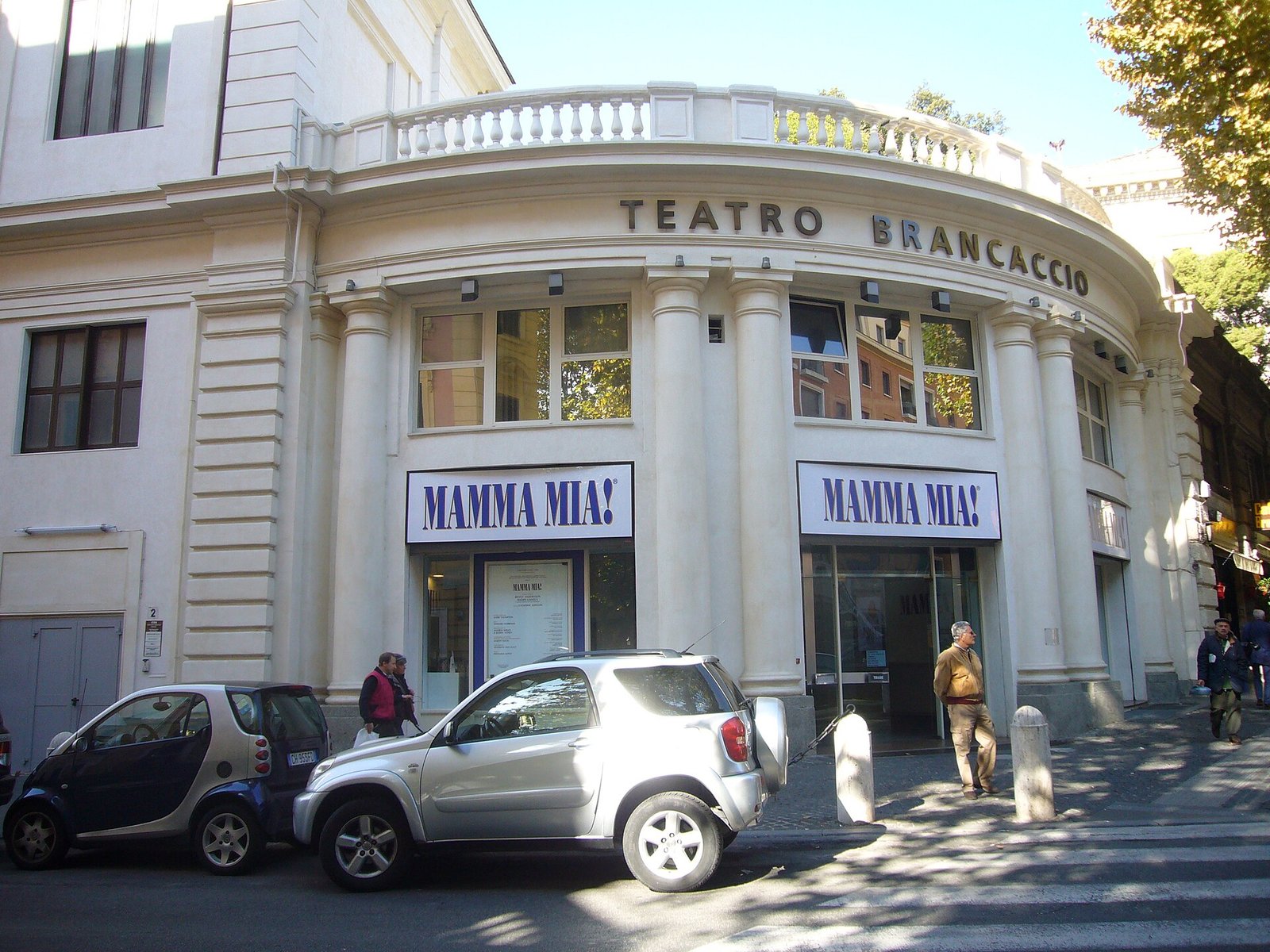
All You Need Is Love, the show between drama and music with Jacopo Sarno and Chiara Canzian built on the songs of the Beatles, is staged at Teatro Brancaccio, at Via Merulana 244 (00185 Rome), on Thursday, January 28, 2027 at 21:00, for one night only. The running time given by the theater is 75 minutes. Direction is by Carolina Fanelli, dramaturgy by Sandro Cisolla, production by Coloriamo i Sogni. The theater can be reached by Metro line A, Vittorio Emanuele stop, a few minutes on foot, or by the buses that run along Via Merulana. Prices are shown on the official Teatro Brancaccio website at the time of booking. Tickets are booked from the show page on the theater's website, choosing date and sector, or bought at the box office on Via Merulana, open Tuesday to Saturday from 16:00 to 19:00.
Language: performed in Italian. No English version or English surtitles are announced.
All You Need Is Love at Brancaccio: date, time and tickets
All You Need Is Love is scheduled at Teatro Brancaccio on Thursday, January 28, 2027 at 21:00, on a single date, with a running time of 75 minutes and no intermission indicated.
A short evening
75 minutes is the length of a short film: the show starts at 21:00 and you are out shortly after 22:15. It is an advantage for those who work the next day and for those who want to have a leisurely dinner afterward.
How to book
The show page on the Brancaccio website has a booking form in which you choose the date and the sector: poltronissima, poltrona, first and second balcony, with their respective bands. The price list is not published on the page and appears during booking.
The box office
At the box office at Via Merulana 244 you buy Tuesday to Saturday from 16:00 to 19:00. It is closed on Monday, and on Sunday it opens only during show hours. January 28 is a Thursday: the box office is open in the afternoon of the same day too.
The production
The show is produced by Coloriamo i Sogni. Brancaccio presents it in the 2026/2027 season in the musicals category, even though the formula is that of a play with live music and dance.
The story of All You Need Is Love
All You Need Is Love tells, according to the Teatro Brancaccio description, the meeting in a park at dawn between a man overwhelmed by the failure of his emotional and professional life and a street musician who, also through the music and the words of the songs, tries to give him hope again.
A man and a dawn
The protagonist has reached the lowest point: the official synopsis says he has decided to end it all, but still wants to see the beauty of a dawn in a park. There fate makes him meet the musician, a deep connoisseur of life, who puts all her strength into him.
Serious themes, treated seriously
The theater does not hide the themes of the show: mental health, the sense of failure, depression. The description explains that they will be approached with an approach close to life coaching, analytical and emotional, and in relation to the support that music can give, often able to become a therapeutic tool and an emotional channel to find a true relationship with one's inner self.
The hidden map of the Beatles
The concept of the show revolves around a hypothesis: that the Beatles, knowingly or not, placed a small hidden map in their discography. The songs, put in chronological order, would seem to draw the stages of an evolutionary path, with a single guiding star, love, in all the forms it can take.
Live music and dance
The Beatles songs are played live by a band, with musical direction and arrangements by Phil Mer. On stage is a dance troupe of four dancers with choreography by Mattia Fazioli. Manuela Zanier takes part as the voice of Anima. The original idea is by Chiara Canzian and Sandro Cisolla.
A show to live
The description suggests two ways of watching it: as spectators who love musical theater and Beatles songs, or as a personal experience, in which each person reflects on their own life. The two levels do not exclude each other, and the short running time helps keep them together.
Jacopo Sarno and Chiara Canzian: who they are
Jacopo Sarno, from Milan, born September 1, 1989, is an actor, singer and voice actor active since childhood. Chiara Canzian, born in Vittorio Veneto on December 13, 1989, is a singer-songwriter and blogger, the daughter of Red Canzian, bassist of Pooh.
Sarno, from sitcoms to musicals
Sarno debuted in 1996 in the Canale 5 sitcom Io e la mamma, alongside Gerry Scotti and Delia Scala. In 1999 he is in the cinema in Fantozzi 2000, la clonazione. A long series of sitcoms follows, from Don Luca to Quelli dell'intervallo for Disney Channel, up to the series Non smettere di sognare in 2011. He has hosted Arriva lo Zecchino and the Zecchino d'Oro Show.
Sarno in the theater
In the theater Sarno toured with the musical Datemi tre caravelle, with Alessandro Preziosi, from 2005 to 2007. Then he was the lead in the Italian version of High School Musical, the show, in The Full Monty in 2013, in Mamma mia in 2017 and in the pop opera Casanova in 2022. As a voice actor he has lent his voice to Harry Potter in the series' video games.
Sarno the singer
After studying singing, solfège, guitar and blues harmonica, he took part in the Castrocaro Festival in 2004. In 2009 he released the album 1989, in 2010 an EP with the single Tommy e la sedia vuota, written with Niccolò Agliardi. In 2017, under the pseudonym Jake Sarno, the album Chapter 1.
Chiara Canzian, from Sanremo to writing
Chiara Canzian started singing as a child with her father and Phil Mer. In 2009 she took part in the Sanremo Festival with Prova a dire il mio nome, written with Giuliano Sangiorgi, and released the album of the same name. In 2011 Il mio sangue came out. With her father she wrote the cookbook Sano vegano italiano, published by Rizzoli in 2017. She runs a vegetarian recipe blog, Radici, the same title as the autobiographical novel written in 2019 with her partner Sandro Cisolla.
A family team
The show is also the work of an extended family: the idea is by Chiara Canzian and Sandro Cisolla, who signs the dramaturgy. The musical direction is by Phil Mer, the son of Red Canzian's second wife, with whom Chiara has sung since she was little.
All You Need Is Love, the Beatles song
All You Need Is Love is a Beatles song released as a single in July 1967, with Baby You're a Rich Man on the B side. Written by John Lennon, it is credited, like all the group's songs, to the duo Lennon-McCartney.
Our World, the first worldwide live broadcast
The song was written for Our World, the first television program broadcast live around the planet, on June 25, 1967, via satellite in 26 countries. The BBC had asked the Beatles for a song with a simple message, understandable to viewers of all languages. It is estimated that between 150 and 350 million people saw it.
A song in seven-four time
The song is largely in an unusual seven-four time and contains quotations from other pieces: the beginning of La Marseillaise, a two-part invention by Bach, the English folk melody Greensleeves, In the Mood. In the finale Yesterday and She Loves You resurface.
The anthem of the flower children
In the studio, for the broadcast, the chorus included Mick Jagger and other musician friends of the group. The song became an anthem of the flower children: choreography, clothes and chorus were prepared to send the world a message of peace and love.
Lennon and the power of slogans
All You Need Is Love widened a message that Lennon had already tried to express in The Word, two years earlier. Lennon was fascinated by the power of slogans able to unite people and was never afraid of socially and politically engaged art. In the following years, as a solo artist, he would write Give Peace a Chance and Power to the People. The 1967 song is the first of those sung slogans, and the simplest.
A fan legend
Around the song circulates one of the best-known legends among fans, the one according to which Paul McCartney had died and been replaced by a lookalike. Some fans believed they heard revealing phrases in the finale. It is a curiosity to tell at dinner, certainly not a fact.
A curiosity about All You Need Is Love with Jacopo Sarno and Chiara Canzian at Teatro Brancaccio, January 28, 2027
The best curiosity is about the title, which for the Italian audience has a double history. All You Need Is Love was the theme of Stranamore, the television program first broadcast on Canale 5 on Sunday evenings with Alberto Castagna, then on Rete 4. For a generation of Italian viewers that song stayed tied to weekend television. The Brancaccio show takes the same title to tell a love of an entirely different kind: not the one between two lovers, but the one that can give a person back the will to live.
The second curiosity is musical. In 1967, a few months after its release, the group I Soliti Ignoti recorded the Italian version, with lyrics by Mogol, titled Cerchi solo amore. It is one of the many adaptations of Beatles songs that in the 1960s passed through Italian orchestras and bands.
The third is about the cast. Chiara Canzian is the daughter of Red Canzian, bassist of Pooh, and started singing as a child together with her father and Phil Mer, who today signs the musical direction of the show: the Beatles songs arrive on stage through a family that has lived on music for two generations.
Teatro Brancaccio, the big hall on Via Merulana
The Teatro Brancaccio is one of the largest halls in Rome: opened in 1916 as Teatro Morgana, it took its present form and name in 1937, with two foyers, a wide orchestra section and two balconies, for about 2,000 seats at the time.
Orchestra and balconies
The orchestra includes the poltronissima and poltrona sectors, with bands A and B, and the Gold band that appears in the booking system. Above are the first and second balconies. The balconies are reached only on foot.
A stage for musicals
Brancaccio has hosted big musical theater titles for years and has a musical academy. The stage, born for variety and used for 15 years by the Opera ballet, is equipped for live bands and dance troupes. For a show with four dancers and a band, in our opinion the central poltrona offers the best balance between the actors' voices and the sound of the instruments.
Beyond the hall
The complex also includes the Brancaccino, a hall of about 100 seats for contemporary drama and children's theater, the training spaces and a terrace on Via Merulana.
One thing nobody tells you about All You Need Is Love with Jacopo Sarno and Chiara Canzian at Teatro Brancaccio, January 28, 2027
What is not said is that All You Need Is Love is not a Beatles tribute concert, nor a biographical musical about the band. If you expect a setlist of hits one after another, as in cover nights, you will find instead an acted story, in which the songs arrive as stages of an inner path. The description speaks of a chronological order of the discography that draws a kind of map: the songs, then, are there, but they serve the story.
The second thing is about the theme. The synopsis is explicit: the protagonist, at the start, has decided to take his own life, and the show addresses depression and mental health. The register is that of hope and rebirth, but for some spectators, or for those going through a difficult period, the starting point may be painful. In our opinion it is best to know this beforehand, especially if you plan to bring teenagers.
The third is practical: the official page does not publish a price list and points to the booking form. If you want to compare sector prices before choosing, you can do so directly in the form or ask the box office, open in the afternoon of the day of the show too.
How to get to Teatro Brancaccio
Teatro Brancaccio is at Via Merulana 244, in Esquilino. The nearest stop is Vittorio Emanuele on Metro line A, a few minutes on foot, and from Termini you can also walk for less than a kilometer.
Metro A and B
From the Vittorio Emanuele stop you exit on Piazza Vittorio Emanuele II and reach Via Merulana in a few minutes. From line B the useful stop is Cavour, with a longer walk. From Termini you pass by Santa Maria Maggiore.
Surface buses
The theater lists the Merulana/Brancaccio and Merulana/Mecenate stops, served by lines 16, 75, 714, 717 and C3, and the Labicana/Merulana stop, with lines 3, 53, 75, 85, 87, 186, 571, 810, C3 and the N10 night bus.
Taxi
The stands listed by the theater are in Largo Brancaccio, in Piazza Vittorio Emanuele II at number 113, at Via Principe Amedeo 138, at Via Giolitti 6 and on Via Venosta. With the show ending shortly after 22:15, it is best to book beforehand.
Car
The theater lists no partner parking, and in the evening street parking in Esquilino is difficult. Better to leave the car near a metro station and check the route on the ATAC planner.
The advice I give you for visiting All You Need Is Love with Jacopo Sarno and Chiara Canzian at Teatro Brancaccio, January 28, 2027
My advice is to arrive with a few Beatles songs in your ears, listened to in chronological order. The idea of the show is that the band's discography, from the first singles to the last albums, draws a path: listening again in the days before to some songs from 1963, 1965 and 1967, up to the title song, lets you catch the path that Sandro Cisolla's dramaturgy builds, and recognize how the words of the songs become lines of the dialogue.
Second piece of advice, on site. For a 75-minute show that lives on voice, band and dance, the central poltrona in the orchestra is the most balanced choice. If you want to see the choreography of the four dancers in full, you will find in the first balcony a more complete view of the stage. The price list is consulted in the booking form.
Third piece of advice: take a moment afterward. The theme of the show, depression and rebirth, touches personal chords. The short running time leaves time for dinner or a walk on Via Merulana to talk about it. If the show stirred something serious, talking about it with someone you trust is always the right choice.
Finally, as for any evening at Brancaccio, it is best to arrive early: the rules do not allow entry once the show has started, and in a short show missing the beginning means missing an important part.
Another well-known fact, yet rarely mentioned
It is well known that All You Need Is Love was sung by the Beatles in front of a worldwide television audience, on the program Our World on June 25, 1967. It is mentioned far less that the song was born on commission: it was the BBC that asked the group for a song as the United Kingdom's contribution to the program, with the explicit request for a simple message, understandable to viewers of every nationality. Lennon, who was fascinated by the power of slogans able to unite people, answered with a four-word title. The song then came out as a single and was included in the American version of the album Magical Mystery Tour.
A second little-mentioned fact is about its musical construction. Behind the apparent simplicity of the chorus is a complex piece: much of the song is in seven-four time, an unusual meter for pop, and the arrangement quotes La Marseillaise, Bach, Greensleeves and In the Mood, as well as two songs by the Beatles themselves, Yesterday and She Loves You. It is the same idea of a hidden map in the discography that the Brancaccio show takes as its starting point.
The third fact is about its fortune. The song was included in the soundtrack of Yellow Submarine, in many posthumous compilations and in 2025 in Anthology 4. In 2009 a Playing for Change version was released for a campaign against AIDS in Africa.
The right photo to take at All You Need Is Love with Jacopo Sarno and Chiara Canzian at Teatro Brancaccio, January 28, 2027
During the show you do not photograph or film: Brancaccio's rules forbid it, even with a cell phone, and the phone must be turned off before the start. Even in the moments when the band plays the best-loved songs, the rule applies to everyone. The photo is taken before and after.
The first photo is the facade of the theater on Via Merulana, in the evening, with the show's title lit up: a title everyone recognizes, written on the front of one of the big halls of Rome. The advice is to shoot from the opposite sidewalk with a wide lens, including a stretch of the street and the audience going in.
The second photo, for Beatles lovers, is the one of the foyer before the hall opens, with the poster: a simple memento of the evening. The third is taken in Piazza Vittorio, a few minutes away, where in the gardens you find the Porta Alchemica, with its enigmatic inscriptions: a closed door that nobody has ever known how to open, in keeping with a show that speaks of hidden maps.
Some important events that took place here in history
Teatro Brancaccio was born in January 1916 as Teatro Morgana, next to the embankment of the gardens of the neighboring Palazzo Brancaccio, residence of the Field-Brancaccio family. The name comes from Elizabeth Field, wife of Prince Brancaccio. In 1937 the present hall was inaugurated, with two foyers, a wide orchestra section and two balconies, for about 2,000 seats at the time, and the theater took the family's name.
From 1985 to 2000 it was the home of the Fondazione dell'Opera di Roma: for 15 years it hosted the capital's opera and ballet. After the Opera the city entrusted the direction to Gigi Proietti, who held it until 2007. Then came Maurizio Costanzo until 2010 and Stage Entertainment Italia until 2012, the years in which Brancaccio became the home of the big musicals. Since September 2012 the artistic direction has been Alessandro Longobardi's, who built around the hall a cultural hub with the Brancaccino, the terrace, and acting and musical academies.
In this history musical theater has a central place, and All You Need Is Love fits in the line of titles that combine drama, songs and dance on this stage: a theater that saw Jimi Hendrix pass through now welcomes the songs of the band of Lennon and McCartney.
Who has played at All You Need Is Love with Jacopo Sarno and Chiara Canzian at Teatro Brancaccio, January 28, 2027
On the stage at Brancaccio have passed, according to the theater's memory, Totò, Anna Magnani, Aldo Fabrizi and Gigi Proietti among the actors, Fabrizio De André, Louis Armstrong and Jimi Hendrix among the musicians. Hendrix, in particular, is the name that ties this hall to the rock season in which the Beatles were protagonists.
In the history of the song pass Mick Jagger and the musicians who formed the chorus in the live broadcast of Our World, George Martin who produced it and conducted its orchestra, Mogol who wrote the Italian version for I Soliti Ignoti, Alberto Castagna who made it the theme of Stranamore. In the path of the performers are Gerry Scotti and Delia Scala, Sarno's co-stars as a child in Io e la mamma, Alessandro Preziosi in Datemi tre caravelle, Giuliano Sangiorgi, co-author of Chiara Canzian's Sanremo song, and Red Canzian of Pooh.
On January 28, 2027 Jacopo Sarno, Chiara Canzian, Manuela Zanier, Mattia Fazioli's four dancers, Phil Mer's band and Carolina Fanelli's direction pass through Via Merulana.
House rules and accessibility
The rules of Teatro Brancaccio ask you to arrive well ahead of time, do not allow entry once the show has started and forbid photos, filming and food in the hall.
What not to bring
Umbrellas must be left at the coat check, plastic bottles over half a liter, glass, helmets, professional cameras, tripods and selfie sticks are not allowed.
Accessibility
The orchestra level is free of architectural barriers, with a ramp, an area for wheelchairs and an accessible restroom on the ground floor, the balconies cannot be reached by wheelchair. For spectators with visual and hearing disabilities the theater reserves orchestra seats on request.
Minors
Children under 14 enter only with an adult. Given the themes, in our opinion the show suits teenagers from 14 up, best together with a parent to talk it over with afterward.
Around Brancaccio and where to eat
Via Merulana links Santa Maria Maggiore and St. John Lateran, along the street are Palazzo Merulana and the Auditorium of Maecenas.
Before the show
With the start at 21:00 and an early arrival, it is best to have dinner around 19:00 in the places on Via Merulana or in the many ethnic kitchens around Piazza Vittorio.
After the show
With the exit shortly after 22:15 there is time for a late dinner in the Monti district, a 15-minute walk away, where osterie and wine bars stay open.
How to organize the evening of All You Need Is Love
All You Need Is Love is a short show on a Thursday night: the evening is organized around dinner, before or after, and the trip home, which with the exit shortly after 22:15 is still easy by public transport.
For those coming from work
If you work downtown you can reach Esquilino on Metro A, have an aperitivo around Piazza Vittorio and eat after the show. 75 minutes of theater, between 21:00 and 22:15, leave the evening still open.
For those coming from outside Rome
The theater is less than a kilometer from Termini: if you arrive by train you can walk there by way of Santa Maria Maggiore. With the show ending shortly after 22:15, the evening regional trains remain a possible option, to be checked beforehand in the timetables.
For couples and families
The show lends itself to a shared evening: the Beatles songs bring together different generations, and the themes of the story give you material for conversation at dinner. With kids from 14 up, it is best to explain beforehand what it is about.
The ride home
Metro A from Vittorio Emanuele, the buses on Via Merulana and, later, the N10 night bus from Labicana/Merulana cover the return, a taxi from Piazza Vittorio is the most comfortable alternative.
Late January in Rome
The week of January 28 is quiet for the city: visitors are fewer than in peak months and the theaters are in the thick of the season.
The weather
Late January evenings are cold and damp: a heavy coat for the walk and an umbrella, to be left at the theater's coat check, are the minimum kit.
A week of theater in Esquilino
In the same days, a few minutes' walk away, the Ambra Jovinelli hosts Incendi by Wajdi Mouawad with Filippo Dini, and Brancaccio closes the week with Prima della prima by Filippo Bisciglia, on January 30 and 31.
More Beatles in Rome this season
Beatles fans can find in Rome, in the same season, Beatlestory at Teatro Olimpico, dedicated to the 60 years of Sgt. Pepper: another way to pay homage to the band, while All You Need Is Love uses the songs to tell a story. In the week of January 28, at Brancaccio, the evening before there is Il Cantico by Angelo Branduardi. The full schedule is on the official Teatro Brancaccio website.
Frequently asked questions about All You Need Is Love at Brancaccio
When is All You Need Is Love at Teatro Brancaccio?
All You Need Is Love with Jacopo Sarno and Chiara Canzian is staged at Teatro Brancaccio in Rome on Thursday, January 28, 2027 at 21:00, on a single date. The running time given by the theater is 75 minutes.
How much do tickets for All You Need Is Love cost?
Ticket prices for All You Need Is Love at Teatro Brancaccio are not published on the show page: they appear in the booking form on the theater's website, after choosing date and sector, or you can ask at the box office on Via Merulana.
Is it a Beatles tribute concert?
All You Need Is Love is not a tribute concert: it is a show between drama and music in which a man in crisis meets a street musician, and the Beatles songs, played live by a band, mark their path. There are also four dancers on stage.
Who wrote All You Need Is Love with Chiara Canzian?
All You Need Is Love comes from an idea by Chiara Canzian and Sandro Cisolla, the dramaturgy is by Cisolla, the direction by Carolina Fanelli, the musical direction and arrangements by Phil Mer, the choreography by Mattia Fazioli, with Manuela Zanier as the voice of Anima.
Is the show suitable for teenagers?
All You Need Is Love deals with depression, the sense of failure and mental health, with a message of hope. At Brancaccio, children under 14 enter only with an adult, in our opinion it suits ages 14 and up, together with a parent to talk it over with afterward.
How do I get to Teatro Brancaccio?
Teatro Brancaccio, at Via Merulana 244, is reached by Metro A, Vittorio Emanuele stop, a few minutes on foot. On Via Merulana run lines 16, 75, 714, 717 and C3, at the Labicana/Merulana stop there is also the N10 night bus.
The final advice on All You Need Is Love
75 minutes, a single night, to hear the Beatles songs inside a story of falling and rebirth, with two performers who grew up between television, musicals and singer-songwriter music and a live band. The advice is to arrive having replayed a few Beatles songs in chronological order, to choose the central poltrona or the first balcony, to know that the starting point is painful, and to give yourself time after the curtain to talk about it: the thesis of the show, after all, is the one in the title, and Lennon wrote it in four words.
Article written by the editorial team of Tour Leader Pro, contact them for Private/Corporate/V.I.P. Tours and Experiences.
Planning a trip to Rome? The English guides to visiting the city are on ItalyPlanner.com.