Museum of Archaeology for Rome – APR
In short. The Museum of Archaeology for Rome - APR is housed in the farmhouse of Villa Gentile, Via Columbia, inside the campus of the University of Rome Tor Vergata, 00133 Rome, and since July 14, 2026 that farmhouse has housed the MAUT, the…
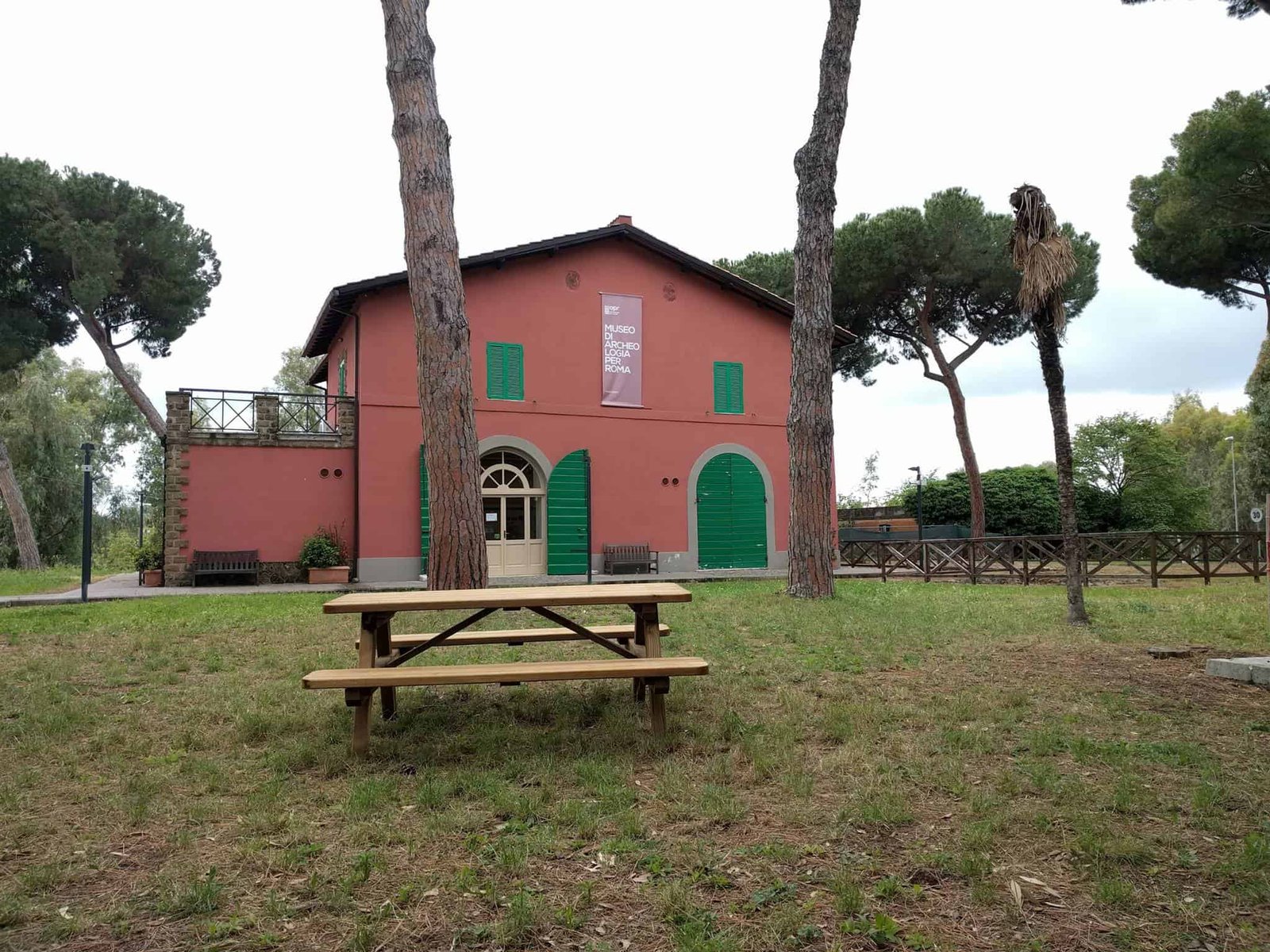
The Museum of Archaeology for Rome - APR is housed in the farmhouse of Villa Gentile, Via Columbia, inside the campus of the University of Rome Tor Vergata, 00133 Rome, and since July 14, 2026 that farmhouse has housed the MAUT, the University Archaeological Museum of the Territory, which takes over the APR's collections, premises and mission after three years of construction work: the public opening of the new installation is set for September 2026. Admission is free and the visit is booked. The Department of History, Cultural Heritage, Education and Society, which has the museum's scientific direction, gives the number 06 7259 5167. The contacts in use in the APR years were 06 2024732 and 339 178 7383, with the email address museoapr@gmail.com. You get there by Metro Line A to the Anagnina terminus and then by the 20 Express bus, which runs along Via Columbia and stops in front of the Macroarea di Lettere e Filosofia. Those using Metro Line C get off at Torre Angela, walk 260 meters to the Cambellotti/Casilina stop and take the same 20 Express. By car, exit the Grande Raccordo Anulare at La Romanina following the signs for the university. The university also maintains a free shuttle between the Anagnina terminus and the campus. Exact hours and opening days of the new installation should be confirmed on the university's page dedicated to the museum before setting out.
To get oriented among the city's other museums and archaeological sites, the starting point is tourist attractions in Rome.
It's worth saying right away, because it's the kind of place people get wrong twice. The first time they skip it because it's a suburban university museum, and university museums have a reputation for being storerooms with yellowed captions. The second time they go and discover it's one of the very few places in Rome where they explain to you how a date is obtained, not just which date it is. They are two different things. On the Palatine they tell you that wall is from the 2nd century. Here they show you the reasoning that leads to saying 2nd century, and put in your hand the potsherd that proves it. For those with children between six and 14, and for anyone who ever believed archaeology consists of finding the golden object, it's a morning worth the trip out to the Romanina.
What the Museum of Archaeology for Rome - APR is
The Museum of Archaeology for Rome - APR was born from a simple and uncomfortable idea: the history of Rome doesn't end inside the Aurelian Walls. Outside the walls, in the countryside we now call the periphery, the density of settlements was comparable to that of a contemporary metropolis, and that density left villas, necropolises, aqueducts, roads, cisterns, kilns. The museum gathers the materials that come from that world and uses them to tell two things together: what was happening in Rome's southeastern suburbium between the Republican age and late antiquity, and what remains today of that landscape under the apartment blocks of the 1970s.
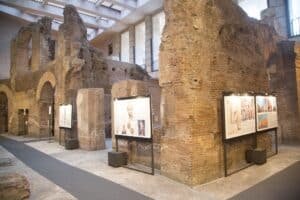
The museum occupies the ground floor of the farmhouse and is arranged in four sections, which the historical installation called room A, room B, room C and room D. The first deals with the relationship between ancient remains and the contemporary city. The second deals with death. The third, domestic life in the villa. The fourth, the archaeologist's trade. It's not a random order: you enter from the present, pass through the burials, arrive at the houses, and leave knowing how it is possible to know. The new installation has reorganized spaces and displays, with Roman-era finds from the territory and multimedia and interactive supports, but the thematic quadrilateral remains the same: contemporary city, necropolises, villas, archaeological methodology.
Why the Museum of Archaeology for Rome - APR is not just any museum
An ordinary archaeological museum displays beautiful objects and orders them by era. Here the beautiful object is not the criterion. The criterion is context: which layer the piece comes from, what was around it, which question it lets you answer. It's a reversal that seems technical and yet changes the tone of the whole visit, because it forces you to stop looking at the display case like a jeweler's shop and to read it like a written page.
The second difference concerns provenance. In the great majority of Roman museums the material comes from antiquarian collections, purchases, 19th-century excavations poorly and sparsely documented. Here it all comes from excavations conducted by the university, with complete documentation: notebooks, plans, sections, stratigraphic matrices, stratigraphic unit sheets. It means that for every fragment you know where it lay, under what and over what. It's a rare condition and it's worth far more than the beauty of any single piece.
The relationship between the Museum of Archaeology for Rome - APR and the MAUT
MAUT, the University Archaeological Museum of the Territory, is the name under which the museum presents itself today, under the direction of Marco Fabbri, associate professor of Methodologies of Archaeological Research in the Department of History, Cultural Heritage, Education and Society. The July 14, 2026 inauguration brought together the rector Nathan Levialdi Ghiron, the department director Lucia Ceci and, for the Ministry of Culture, Massimo Osanna and Caterina Bova. In the university's communication the museum is presented as the direct heir of the installation conceived and curated by Andreina Ricci: the continuity is declared, not implied.
Whoever looks for the Museum of Archaeology for Rome - APR will therefore find, at the same address, a museum with a new name, a redone route and an extra piece nobody in 2014 knew it owned: the medieval Torre Vergata, which re-emerged inside the farmhouse walls during the works. The change of acronym isn't a cosmetic renaming. The thematic perimeter has widened from the Roman archaeology of the suburbium to the entire stratification of the territory, from ancient villas and aqueducts to medieval towers, from the place names of the modern estates to the building fabric of the contemporary periphery.
Where the Museum of Archaeology for Rome - APR is and how to get there
Villa Gentile farmhouse is one of the rural buildings of the Agro Romano embedded in the nearly 600 hectares owned by the university. 600 hectares is an enormous area, and it's worth putting it in terms of comparison: we're talking about an extent on the order of Villa Doria Pamphilj and a half. Inside that perimeter live together faculties, laboratories, fallow fields, ancient remains, road routes and this farmhouse with the tower inside. The postal address is Via Columbia, the same street on which the Macroarea di Lettere e Filosofia faces.
To the Museum of Archaeology for Rome - APR by Metro Line A and bus
The simplest and also best-tested way: Metro Line A toward Anagnina, get off at the terminus, take the 20 Express bus and get off on Via Columbia at the Lettere e Filosofia stop. From Termini to Anagnina the metro takes a little over 20 minutes. The bus leg asks for another 10 or 15 depending on traffic. Allow generously the first time, because the campus is vast and the farmhouse isn't immediately recognizable from the road.
By Metro Line C
Those coming from the east have a second option: Metro Line C to Torre Angela, then 260 meters on foot, a bare four minutes, to the Cambellotti/Casilina stop, where the same 20 Express passes. It's the option I recommend to those starting from Pigneto, Centocelle or Torre Maura, because it avoids the wide detour via Anagnina.
By intercity coaches and the shuttle
The Anagnina terminus is also the terminal for the intercity coaches linking the towns of the Castelli and the Sacco valley. Many runs call directly at the campus and stop on Via Columbia. The university also provides a free shuttle between Anagnina and the campus: it's meant for students, anyone uses it, and at peak hours it's the quickest choice.
To the Museum of Archaeology for Rome - APR by car
From the Grande Raccordo Anulare exit at La Romanina and follow the signs for the University of Rome Tor Vergata. Those arriving from the A1, from either north or south, and those arriving from the A24 take the Raccordo and use the same exit. Parking inside the campus isn't a problem, and it's one of the very rare Roman cases where I can say the car is the sensible choice: no limited traffic zone, no blue lines at every corner, abundant spaces. The exact opposite of what I'd tell you for the center.
On foot inside the campus
Once you arrive, count on a walk. The Tor Vergata campus isn't a city block, it's a territory: between the bus stop and the farmhouse run a few hundred meters, often in the sun, on paths that in summer become severe. A hat and water are not a whim. With a school class allow a quarter of an hour just for the internal move, and put it in the schedule.
Villa Gentile, the home of the Museum of Archaeology for Rome - APR
The building that houses the museum is a farmhouse from the early 1900s. Put like that it sounds like little. In reality Villa Gentile is one of those artifacts archaeologists call a palimpsest: each era has written over the previous one without erasing it entirely. At the base are the remains of a Roman villa. On those remains, between the late 12th and early 13th centuries, a tower was erected. Around the tower, in the modern age, a rural farmhouse of the Agro Romano grew. The farmhouse was then renovated at the beginning of the 20th century and took the form we see today.
This vertical stratigraphy is why the university's museum project considers the building part of the exhibition route and not a mere container. It's not a ritual formula: it means the walls are a find just like the amphorae in the display cases, and that part of the story is told by looking up instead of bending over the captions.
From Roman villa to farmhouse
The passage from Roman villa to tower to farmhouse is the typical biography of dozens of buildings in the Agro Romano, and it's worth understanding because it explains half the landscape of Lazio. Roman villas were well built, with thick walls and deep foundations. When the empire crumbles and the countryside empties, those walls remain standing and become quarries of already squared material, as well as ready-to-use bases. In the Middle Ages, in an unsafe territory, whoever had to control a road or an estate planted the tower right there, on a solid ruin. Then, when the countryside is cultivated again and the great Roman families organize their estates, stables, barns and lodgings cluster around the tower: the farmhouse is born. The last layer is the 19th- and 20th-century one, with renovations suited to modern agriculture.
The result is that in a single building you can read 2,000 years. The exact opposite of the isolated monument restored to a single era, which abounds in Rome and which has the flaw of telling only one story.
The name of the farmhouse and the name of the university
The place name Tor Vergata, which today indicates a neighborhood, a teaching hospital, a university and a stop, comes from a tower. For centuries that tower was only a name: the structure had vanished from sight, absorbed or demolished, and the word remained. The 2026 discovery has reunited the word with the object. These are things that rarely happen and are worth noting, because most place names in the Roman countryside name structures that no longer exist.
The Torre Vergata found inside the Museum of Archaeology for Rome - APR
The most striking discovery of recent years in this corner of Rome didn't come from a dig in open countryside, but from the walls of the farmhouse. During the nearly three years of renovation and re-installation work, archaeological investigations brought to light the remains of the medieval tower of Tor Vergata, datable between the late 12th and early 13th centuries, embedded in the masonry of Villa Gentile. Marco Fabbri called it a discovery of extraordinary value, and for once the formula isn't a formality: it restores the origin of the name of the university and of the neighborhood.
A tower in white and black bands
The feature that makes the Torre Vergata recognizable is the masonry in alternating white and black bands, obtained by alternating courses of limestone and courses of basalt. It's a construction choice typical of medieval Lazio, where basalt, that is, the volcanic selce of the Lazio hills, and the white limestone of the Apennines were both available and were often salvaged from ancient monuments. The bands are not mere ornament: they made the tower visible from afar on the plain, and in a signal tower visibility is the function.
It's worth pausing on this point, because it helps read the whole landscape of the Agro Romano. The medieval towers of the countryside around Rome were a system, not isolated episodes: they guarded crossroads, fords, estates and stretches of road, and communicated with one another by sight. Whoever knows the Aqueducts Park has already seen the same principle at work: towers planted on ancient structures, arranged so as to control open space.
The ancient little tower in the middle of the meadows
The last image of the Torre Vergata in the open air, already partly ruined, comes from an 18th-century record that mentions it as an ancient little tower amid the meadows near the fontanile, with a tiled roof in good condition. These are a few words of 18th-century bureaucratic prose, but they're worth a drawing: in the 1700s the tower still existed, had a roof in tiles kept decently, and nearby was a fontanile, the Carcaricola one. Then silence: the tower disappears from documents and from sight, and the place name remains.
Here is a lesson in method that I recommend taking home. In archaeology written sources don't replace excavation, but they direct it: that 18th-century line tells whoever digs where to look and what to expect. The 2026 discovery closes a circle opened by an administrative document.
What a signal tower means
A signal tower isn't there to defend a castle and isn't the tower of a noble palace. It serves to see and to be seen. In 12th- and 13th-century Lazio the territory was fragmented among great families, abbeys and the chapter of St. Peter's: control passed through the possession of high, visible points. A tower of this type could house a few men, store tools and supplies, give the alarm signal. Its size matters less than its position. The fact that the Torre Vergata was later embedded in a farmhouse, instead of being torn down, is proof that it was well built: nobody demolishes a solid structure if they can live inside it.
The route of the Museum of Archaeology for Rome - APR, room by room
What follows is the layout of the historical installation, the conceptual frame on which the museum grew and which the new route preserves in its four thematic areas: introduction to the contemporary city, necropolises, villas, archaeological methodologies. Whoever enters with this map in mind understands where they're going.
Room A of the Museum of Archaeology for Rome - APR: ancient remains and the contemporary city
The first room contains no spectacular finds, and that's why some walk through it quickly. They're wrong. It's the room that poses the question all the others answer: what do we do with the ancient remains we find inside our home? The theme is addressed from 1871 onward, that is, from when Rome becomes the capital and begins to expand, devouring the countryside. The Umbertine demolitions, the borgate of the Fascist era, the building of the boom, the illegal construction of the 1960s and 70s: each wave met ancient remains and treated them in its own way, preserving them, embedding them, burying them or destroying them.
In the room there were also design proposals at the site-specific and inter-municipal scale, that is, concrete hypotheses for enhancing single sites and thematic itineraries: villas, roads, tombs, towers. Four words that are the summary of the ancient landscape of the suburbium. At the center of the layout was the shared archaeology project, an interactive mapping of the remains visible in the fabric of the built city, designed so that a citizen could recognize the ruin in front of their own front door.
Our firm opinion: this is the most political room of any Roman archaeological museum, and also the most useful. You go in convinced that archaeology concerns the historic center and come out knowing it concerns your own neighborhood. It's a change of perspective no room of sculptures can produce.
Room B of the Museum of Archaeology for Rome - APR: death and funerary rites
The second room gathers materials from four necropolises excavated by the CeSTer, the Interdepartmental Center for the Study of the Transformations of the Territory, between 1994 and 2009: Carcaricola, the Passolombardo estate, the Città dello Sport area and Boccone del Povero. Four country burial grounds, not monuments on the Appian Way: ordinary people, peasants, servants, artisans, families tied to the villas of the area.
The approach is right. The monumental necropolises of the consular roads tell the self-representation of the rich. These burial grounds tell the real demography of the suburbium. In the room you'll find grave goods, ceramics, educational reconstructions, three-dimensional models and films illustrating funerary rituals. Ritual, in archaeology, is read in details: the position of the body, the presence or absence of coffin nails, the orientation of the pit, coins, oil lamps, drinking vessels left beside the deceased.
The four necropolises of the Museum of Archaeology for Rome - APR
Carcaricola is the place name that recurs also in the 18th-century document on the tower, tied to a fontanile: a water point, that is, a place for stopping and settling. The Passolombardo estate is the same one the great villa displayed in the next room comes from, which gives the museum a rare juxtaposition: in the same museum you see the house of the living and the cemetery of those who worked there. The Città dello Sport area is that of the never-completed building site designed by Santiago Calatrava, and the preventive archaeology tied to that site yielded burials. Boccone del Povero, finally, gave a cemetery area of the 1st and 2nd centuries AD, studied in an interdisciplinary way also by the university's Department of Biology.
The point I want to underline is the word preventive. Much of what you see in the display cases exists because someone was building something else: a faculty, a stadium, a road. In Italy preventive archaeology is the main factory of knowledge about the past, and this museum is one of the few that says so openly instead of hiding it behind the word discovery.
Bones that speak: bioarchaeology at the Museum of Archaeology for Rome - APR
A group from Tor Vergata's Department of Biology worked on the human remains from Boccone del Povero, in a study signed among others by Cristina Martinez Labarga, Angelo Gismondo, Michela Rustici, Andreina Ricci and Olga Rickards. It's the kind of collaboration that 10 years ago was still an exception and today is the norm in serious projects.
What can be drawn from a Roman skeleton? Much more than you'd imagine. Age at death is estimated from the fusion of the epiphyses, dental wear, the auricular surface of the ilium. Sex is read on the pelvis and the skull. Pathologies leave traces: cavities, abscesses, the lines of enamel hypoplasia that record a famine or a childhood illness, the enthesopathies that say which gesture that man repeated for 20 years. Stable isotopes of carbon and nitrogen tell the diet, those of strontium say if a person was born where they were buried. Ancient DNA, when preserved, adds kinship and origins.
Put together, this apparatus turns a country necropolis into a census. And it's here that the museum does its best: in front of a display case of bones the right question isn't who this person was, but what life the community they belonged to had.
Room C of the Museum of Archaeology for Rome - APR: domestic life in the villa
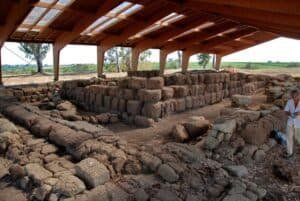
The third room is devoted for the most part to the Passolombardo villa, the teaching site on which generations of Tor Vergata students have learned to dig. The building arises in the 2nd century BC and stays in operation until the 6th century AD: 800 years of continuous life, with renovations, changes of use, expansions and contractions. No single monument in the center of Rome offers an equally legible sequence of the transformation of a country house.
The museum concentrates attention on two moments. The first is the phase of greatest splendor, between the late 1st and the 2nd century AD, when the villa has mosaic floors, painted plaster and an articulated bath complex. The second is the late antique phase, when the villa specializes in wine production and acquires a wine cellar of oversize dimensions.
The phases of the Passolombardo villa displayed at the Museum of Archaeology for Rome - APR
The construction sequence, reconstructed from the excavations, is articulated in four main moments. In the 2nd century BC the original core is in tuff opus quadratum and repeats the model described by Cato: pars urbana to the south, where the owner lives, pars rustica to the north, where the work is done, clearly separated. Between the 1st century BC and the 1st century AD the whole building undergoes a major renovation, with walls in opus reticulatum, the construction of a peristyle and the first bath rooms. Between the 1st and 2nd century AD come the walls in brickwork, the atrium receives a monochrome mosaic floor with white tesserae and the bath complex grows more complex with apodyterium, frigidarium and calidarium. Between the 4th and 6th century, finally, the villa converts to wine production on an industrial scale.
Those who don't chew on Roman building terminology can use the masonry as a calendar. Opus quadratum, squared blocks of tuff laid dry or with little mortar, is the oldest technique. Opus reticulatum, with pyramidal tuff blocks arranged in a net on the facing, dominates between the 1st century BC and the 1st century AD. Brickwork, opus latericium, takes over from the 1st century AD onward. Looking at the texture of a wall and knowing what century you're in, within a few decades, is one of the most immediate satisfactions Roman archaeology offers to those who study it.
The rooms of the villa
The excavation yielded a rich floor plan. In the pars urbana you can recognize the atrium, the cubicula, the tablinum, the peristyle and a private garden. The bath complex includes the changing room, the cold room, the hot room and a laconicum, that is, the dry-heat bath. In the pars rustica there are a porticoed courtyard, a storeroom for the dolia, a press and, in late antiquity, the enormous wine cellar.
The layout tells everything about how a suburban villa worked: on one side representation, that is, the rooms where the owner receives and displays his rank. On the other, production, that is, the economic reason that house exists. Private baths, in a villa of this size, aren't an extravagant luxury: they're the social tool with which guests are entertained. Whoever visits the room should keep in mind that the two parts were physically separate but economically inseparable.
The wine cellar, the showpiece of the Museum of Archaeology for Rome - APR
If I had to point to a single reason to come all the way out here, I'd point to this. In the late antique phase the Passolombardo villa acquires a wine cellar occupying more than 800 square meters, with a basilica-style three-aisle plan about 50 meters by 17, an apse and a raised area reachable by four steps. In the side aisles 108 dolia were buried in two rows, each with a capacity on the order of 2,000 liters: about 216,000 liters of wine storable at one time.
Pause a moment on that number. 216,000 liters is the equivalent of nearly 300,000 modern bottles. It's not a family's cellar: it's an industrial plant in the full sense of the term, built at a time, late antiquity, that the school vulgate describes as an age of decline and abandonment of the countryside. The Passolombardo wine cellar says the opposite, and says it with numbers.
Palladius, the agronomist who describes what is seen here
There's a detail that makes this complex a textbook case. In the second half of the 5th century a Latin agronomist, Palladius, writes a treatise on agriculture, the Opus agriculturae, in which he describes how a wine cellar should be made: the form of a true basilica, a raised area for pressing between two vats, masonry channels to distribute the must to the buried dolia, north orientation so the room stays cool and dark.
The structure excavated at Passolombardo corresponds point by point to that description: basilica plan, apse with raised area and four steps, side parapets that work as distribution channels. The dating of the excavation places the building in the first half of the 5th century, with use attested at least until the 6th. It means that the text is not the blueprint for the structure, but the written codification of an already mature building practice. Andreina Ricci published this comparison in the Annali of the university's Department of History in 2005, and it remains one of the most elegant cases of the meeting between a literary source and an excavated context in the Roman suburbium.
If you can take home only one idea from a visit, let it be this. An ancient text and an excavated wall say the same thing, and neither is enough alone. Whoever reads only texts believes antiquity is made of words. Whoever looks only at walls believes it's made of stones. The Passolombardo wine cellar is the proof that the double reading is needed.
Floors, plasters and the pantry
The room devoted to domestic life also displays pavements and wall coverings, with graphic reconstructions of the decorative schemes curated by E. Paparatti. These are materials that usually end up in storage, because they're fragmentary and not showy, and that here are used to reconstruct the real look of a room. A Roman painted plaster is never a flat color: it has a dado, fields, frames, fake marbles, figured panels. Seeing the reconstruction next to the original fragments is the best way to grasp how little traditional museums show us of how the interior of an ancient house really was.
Beside the coverings, the reconstruction of a pantry with storage and transport containers for foodstuffs. Amphorae, jars, dolia, common-ware containers: the room where food was kept. It's a display case children adore because it's the only thing from antiquity they recognize at once, and which tells adults something serious: most ancient pottery isn't decorated, isn't precious and was for eating, cooking, storing. It's the food container of its era.
Room D of the Museum of Archaeology for Rome - APR: the work of the archaeologist
The fourth room is the one that makes this museum different from all the others in the city. It illustrates stratigraphic methodology and the systems for studying movable finds, with interactive teaching tools. Put plainly: it explains how you dig and how you turn a box of potsherds into a date.
It's the room where you need to spend the most time, even if that's an unpopular position. The temptation, in a museum, is to run to the cases with whole objects. But it's here that the visitor acquires a tool to take away and reuse everywhere: at the Forum, at Ostia, at Villa dei Quintili, in front of an excavation site in the center. After this room you'll look at the signs of archaeological sites with different eyes.
How archaeology is really done, explained by the Museum of Archaeology for Rome - APR
The archaeologist's trade, in the collective imagination, coincides with the moment of discovery. In reality the discovery occupies a tiny fraction of the time, and the rest is method. It's worth telling at length, because it's exactly the content this museum puts at the center and that no other Roman museum displays so explicitly.
Stratigraphic excavation explained at the Museum of Archaeology for Rome - APR
The principle is simple and implacable: you dig in the opposite way from how things were deposited. Every human or natural action leaves a deposit, and deposits pile up over time. The most recent is on top, the oldest at the bottom, apart from the complications that make the trade interesting. Excavating stratigraphically means removing one deposit at a time, in the reverse order of formation, and recording each one before destroying it.
The method, formalized in British archaeological practice of the 1970s and adopted in Italy in the following decades, has a heavy ethical consequence: excavation is the only experimental science in which the experiment cannot be repeated. Once removed, a layer doesn't come back. That's why documentation isn't a bureaucratic formality but the only way to make the work verifiable. A poorly documented dig is a destruction, not research. This sentence, said to first-year students, explains why on a site you spend more time writing and drawing than digging.
The stratigraphic unit and the sheet
The basic unit is called a stratigraphic unit, abbreviated US. It is any recognizable action: a layer of earth, the pit dug for a tomb, the fill of that pit, a wall, the robbing trench of a removed wall. Each US receives a progressive number and a sheet recording composition, color, consistency, inclusions, thickness, and above all the relationships with neighboring units: cuts, is cut by, covers, is covered by, abuts, is abutted by.
Those relationships, put in order, generate the stratigraphic diagram, the so-called matrix. It is a graph that puts in relative sequence all the actions of the site: it says what came before and what after, without yet saying when. Absolute chronology comes later, from the materials. Whoever visits the method room should dwell on this distinction, because it is the heart of the discipline: first you build the order, then you hang the dates on the order.
Graphic and photographic documentation
For every unit a plan is made, with elevations measured from fixed benchmarks. Sections record the vertical sequence along chosen cuts. Photography, once on film and in black and white for conservation reasons, now digital and increasingly three-dimensional, documents the state of each phase. For at least a decade photogrammetry and three-dimensional models have made it possible to reconstruct an excavation plane after it has been removed, and to measure it afterward.
The excavation notebook, finally, is the diary of the site: it notes doubts, decisions, mistakes. It is the most valuable part and the least regarded. An honest notebook, which records uncertainties instead of hiding them, is worth more than 10 polished reports.
Post-excavation, that is, 90 percent of the work
When the site closes, the long part begins. The materials arrive at the lab in boxes and bags, each labeled with site, year, trench, stratigraphic unit. They are washed, dried, marked one by one with the excavation code and the US number. They are divided by class: fine tableware, common kitchen ware, transport ware, building material, glass, metals, animal bones, human bones, coins.
Then they are counted, weighed, quantified by minimum number of individuals, that is, estimating how many different vessels those fragments represent. Diagnostic pieces are selected, rims, bases, handles, decorations, and drawn in ink in the standard convention: section on the left, elevation on the right. Only at this point are the layers dated.
Put plainly: for one month of excavation you need many months of lab work. It's the reason serious digs publish after years and not after weeks, and the reason a museum like this one, born inside a university, can afford to display complete contexts instead of chosen pieces.
Pottery, the archaeologist's clock
If an archaeologist could carry only one dating tool, they would choose pottery. The reason is brutally practical: fired ceramic is almost indestructible, it breaks but doesn't degrade, it's produced in enormous quantities, it changes shape continuously and travels with trade. A rim fragment the size of a fingernail can date a layer to within half a century.
The principle is that of fashion. The shapes of vessels change over time the way the cuts of clothes change: a certain workshop produces a certain rim for a few decades, then modifies it. Whoever built the typologies dated those shapes by crossing them with contexts closed and dated by other means, for example by coins or by historically known destructions. Since then the shape works as a clock.
What you read in a potsherd
In the materials of the Passolombardo villa, for example, the oldest phase yielded black-gloss ware of Campanian types, kitchen ware of Roman-Latian production and Adriatic oil amphorae of the Lamboglia 2 form. These are three different pieces of information. The black gloss places the phase in the Republican age, between the 3rd and 1st century BC. The local kitchen ware says that people ate from vessels produced in the surroundings. The Adriatic amphorae say that the oil, or the wine depending on the content, arrived from the other coast of the peninsula: an economic datum a coin would not have given.
In the following centuries the repertoire changes. Black gloss gives way to Italic terra sigillata, with its glossy coral red and the potter's stamps impressed on the base. Later come African red slip wares, which dominate the Mediterranean for centuries and allow fine dating in late antiquity. Amphorae tell of routes: the Baetican ones the oil of southern Spain, the African ones the oil and salted fish of North Africa, the eastern ones the wine of the Aegean. The most anonymous potsherd, in the hands of someone who can read it, is a commercial document.
Stamps, coins and the other hands of the clock
Pottery is not alone. Stamps on bricks are a Roman specialty: between the 1st and 3rd century AD the brickworks of the Tiber area marked their products with stamps naming the owner of the estate, the brickmaker and sometimes the consuls of the year. A consular stamp dates a wall to the year. It is a luxury archaeology has in very few regions of the ancient world.
Coins give a point after which the layer formed, never before: a coin of Trajan in a layer says that layer is of Trajan's time or later, and coins circulated for a long time. Wood, when preserved, is dated with radiocarbon and, if the sequence is good, with dendrochronology. Botanical and faunal remains tell about environment and diet. The museum lines up these tools and makes them manageable even for a 12-year-old: it isn't watered-down outreach, it's the program of a university course translated into objects to touch.
Andreina Ricci and the idea that gave rise to the Museum of Archaeology for Rome - APR
Behind this museum there is a person, and not naming her would be unfair. Andreina Ricci, full professor of Classical Archaeology at the University of Rome Tor Vergata, conceived and curated the installation and directed the museum from 2014 to 2020. She passed away on Tuesday, November 12, 2024. The funeral took place on Friday, November 15 in the basilica of Santa Maria in Trastevere.
Her work shifted the axis of Roman archaeology in a direction that then seemed eccentric and has now become common sense: dealing with the margins instead of the center, and considering the relationship between ancient remains and contemporary society an archaeological problem in its own right, not an outreach appendix. In 1994 she founded the Interdepartmental Center for the Study of the Transformations of the Territory, the CeSTer, from which almost all the displayed materials come. She was a member of the Higher Council for Cultural and Landscape Heritage, of ministerial commissions on archaeological parks and of the scientific councils of the Appia Antica Park and the Central Institute for Archaeology. She also founded a university spin-off, Cester Impresa, when the transfer of research toward the territory was still a conference topic.
Why the Museum of Archaeology for Rome - APR was born from a political question
The question that gave rise to this museum is one rarely asked in public: why does a city that lives off archaeology treat as nothing the remains that surface in its peripheries? The historic center has museums, ticket offices, restorations, guides, lines. The periphery has fenced ruins between two apartment blocks, when things go well, and heaps under the brambles when they go badly. The Museum of Archaeology for Rome - APR was built to overturn that hierarchy, giving a face back to places the city passes through every day without seeing them.
On this our opinion is precise: the Roman periphery is not without history, it is without a story. The difference isn't academic. A ruin with no story is an urban planning obstacle and is perceived as such by residents. The same ruin, explained, becomes a reason for belonging. This museum has shown that the operation works, and the attendance numbers of the best years confirm it.
The CeSTer and 20 years of digs behind the Museum of Archaeology for Rome - APR
The Interdepartmental Center for the Study of the Transformations of the Territory is the research structure from which the museum descends. Its vocation, as the full name says, brings together cultural heritage, environmental questions and computer science: a combination that in the 1990s was a gamble and today corresponds to the way work really gets done, among digital surveys, territorial information systems and laboratory analyses.
Between 1994 and 2009 the center conducted the campaigns in the four necropolises displayed in room B. On the Passolombardo villa the story is longer: the first investigation dates to 1982 and was by the Archaeological Superintendency of Rome, while from the mid-1990s the area became the university's annual teaching dig, under the chair of Methodology of Archaeological Research directed by Andreina Ricci, for a good decade. The stratigraphies cover a span between the 3rd century BC and the 6th century AD.
The teaching digs behind the Museum of Archaeology for Rome - APR
A teaching dig is a site where you dig to train, as well as to learn. Students learn to grip the trowel, to recognize the passage between two layers by color and consistency, to fill in a sheet, to take an elevation, to draw a plan to scale. They make mistakes, and by making mistakes they understand why the rules exist.
Those who have never dug tend to imagine a monkish job on their knees with a brush. The brush is of little use and comes late. You work with a small pick and a trowel, you move earth with wheelbarrows, you sweat, you stay bent over, you go home with a wrecked back. Whoever accompanies visitors should say so, because it's the part of the trade no documentary tells and that explains why archaeologists look the way they do.
The territory as object of study
The word territory, in the center's acronym, isn't generic. Studying a territory means not stopping at the single site but reconstructing the system: where the roads run, where the springs are, how villas are distributed relative to routes, where the dead end up, which lands are cultivated and which left as pasture. Surface surveys, historical aerial photographs, old cartography, land registers and remote sensing are used.
In the southeastern suburbium this approach has produced a clear picture: a countryside densely occupied by villas of different sizes, served by the great consular roads, crossed by the aqueducts that brought water to the city, dotted with burial grounds. Not a periphery of antiquity, but its pantry and its productive lung.
The Museum of Archaeology for Rome - APR as a place of teaching
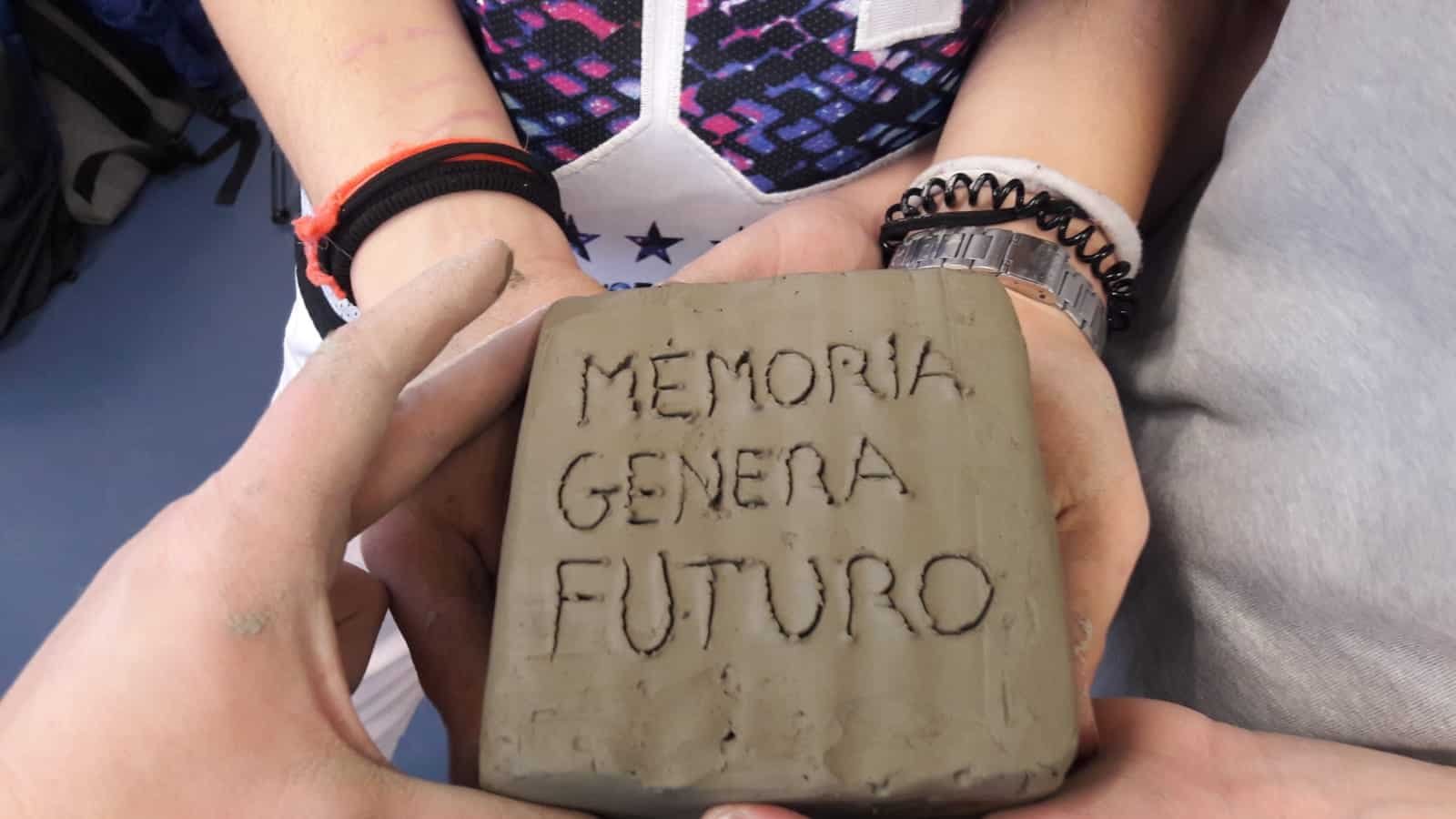
The teaching vocation is not an accessory: it is the museum's core purpose, which the university presents as the first teaching and interactive museum dedicated to archaeology in Rome. The workshops for primary school have titles that say everything about the method: let's make a Roman oil lamp, the archaeological dig, the first potters, let's build a Roman road, let's play with the ancients.
In the nine months between October 2015 and June 2016, 1032 students aged six to 18 took part in the activities, spread over 58 teaching activities, and the museum recorded about 3470 total attendances, with more than half children under 12 and a significant share of visitors returning a second time. They are modest numbers compared with the Vatican Museums and very high for a free-admission suburban university museum.
The simulated dig workshop at the Museum of Archaeology for Rome - APR
The most effective workshop is the simulated dig. A crate is prepared with different layers of earth, materials are hidden in sequence, and the kids dig following the real rules: one layer at a time, you record, you draw, you number. After half an hour they understand on their own the principle that in words requires a lesson: if you mix the layers, the information disappears and doesn't come back.
The second workshop I recommend is the oil lamp. A Roman mold-made lamp is produced in two halves, assembled, finished, fired. Making one with your hands teaches in 10 minutes why lamps all look alike, why they date well and why they cost so little: they were serially produced objects, the light bulb of antiquity.
The Museum of Archaeology for Rome - APR for university students
For students enrolled in archaeology courses the museum is a classroom. They practice classifying materials, cataloging, installation, communicating to the public. It's a function that university museums have always performed and that almost nobody talks about: behind every display case there is a thesis, behind every caption a discussion between those who wanted to write more and those who wanted to write less.
The new setup strengthens this vocation: the museum presents itself as an active center of research, training and outreach aimed first of all at the community that lives in and frequents the territory. Translated: it isn't a museum that waits for tourists, it's a museum that works on the neighborhood.
The Museum of Archaeology for Rome - APR and the other university museums of Rome
Rome has a network of university museums that almost no Roman has visited in full, and that is worth far more than its reputation. At Sapienza the Polo Museale brings together collections in the natural, medical, physical and archaeological fields spread between the university city and the historic sites. At Tor Vergata the archaeological collection of the territory now has a home of its own, freshly reinstalled.
If the theme interests you, the natural route includes the Museum of Etruscan and Italic Antiquities, the Museum of the Ancient Near East, Egypt and the Mediterranean and the Giuseppe Sergi Museum of Anthropology, all at Sapienza. I would add the Herbarium Museum and the Museum of Physics for those who want to understand how a university preserves and tells its scientific collections.
Why university museums are different
A university museum isn't born for the public: it's born for research and teaching, and the public comes after. This has positive and negative consequences. Among the negative: reduced hours, scarce staff, weak communication, often no sign visible from the street. Among the positive, which in our judgment weigh more: collections with complete documentation, installations built by those who dug or studied those materials, absence of tourist rhetoric and of compulsory routes toward the shop.
The two worlds are different. In university museums the visitor asks harder questions and gets more honest answers. It's worth the extra hour of bus.
The territory around the Museum of Archaeology for Rome - APR
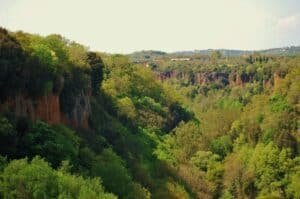
To understand the museum you have to look out the window. The university campus occupies a strip of that countryside that rises from Rome's southern gates toward the Alban Hills, a landscape of tuff ridges, ditches, springs and ancient paths. It's the territory the university itself describes as the outcome of centuries of stratification: remains of Roman-era villas and aqueducts, medieval towers, place names of the modern estates, building fabric of the contemporary periphery.
The ancient roads
The quadrant is stitched by three great consular roads. Via Latina, the oldest of the three, climbs toward the Sacco valley and Campania passing at the foot of the Alban Hills. Via Labicana, later Casilina, runs farther north toward Labico and Cassino. Via Tuscolana links Rome to Tusculum, the Latin city on the hill overlooking present-day Frascati. Whoever travels by bus today between Anagnina and Torre Angela follows, with good approximation, ancient routes.
The roads explain the distribution of settlements. Villas line the routes for obvious reasons of transporting produce, burial grounds sit at the edges of roads because Roman law forbade burial inside the settlement and because a tomb on the road was seen. It's a logic well observed on the Appian Way and which here, on a smaller scale and without famous monuments, works the same way.
The aqueducts
The stretch of countryside between Capannelle and Tor Vergata is crossed by the conduits that supplied Rome. The springs of the Subiaco area and the Aniene valley fed the aqueducts that descended toward the city converging in exactly this quadrant, and their arches still draw the landscape a few stops away. Whoever wants to see them in decent condition should go to the Aqueducts Park, which is the most photographed showcase of this system.
The aqueducts weren't only urban infrastructure. Along their route they gave water to villas and estates, and rights of diversion were the object of concession and litigation. A villa with a water intake was worth far more than a villa without. When you visit the room of the Passolombardo villa, keep in mind that a private bath complex and a 200,000-liter wine cellar presuppose a stable water supply.
The towers and the estates
After antiquity the landscape reorganizes around towers and, later, estates. The names still say so: Torre Angela, Torre Maura, Torrenova, Tor Bella Monaca, Tor Vergata. Each tower guards a piece of countryside. The castelletto di Torre Angela is the nearest and most visible example of this family of structures, and it's a few stops from the museum.
The modern estates, large properties of the Roman nobility and ecclesiastical bodies, gave the countryside its physiognomy until the 20th century: farmhouses, barns, fontanili, drainage ditches, rows of trees. The periphery built from the 1950s on overlaid that mesh without erasing it entirely, and that is why even today, between two apartment blocks, you come across a farmhouse with a tower inside.
A curiosity about the Museum of Archaeology for Rome - APR
The strongest curiosity concerns the name. For generations Tor Vergata was a word without a referent: it indicated an estate, then a zone, then a teaching hospital and a university, but the tower from which the name descends had vanished from sight. Nobody knew where it was, and whoever dealt with the territory took it for demolished. The discovery made during the renovation and reinstallation work on the farmhouse restored the remains of the medieval tower, datable between the late 12th and early 13th centuries, embedded in the masonry of the building that houses the museum. The museum's home, that is, was the find and didn't know it.
I find it an exemplary episode of how urban archaeology really works. There was no stroke of luck in open countryside: there was a restoration site, conducted with accompanying archaeological investigations, in which someone looked at the walls with attention instead of just plastering them. The difference between a restoration and a discovery, in Italy, is often all here.
Then there's a detail that adds flavor to the story. The last description of the tower in the open air is an 18th-century note speaking of an ancient little tower amid the meadows near the fontanile, with a tiled roof in good condition. In the 1700s, then, the tower not only existed: it still had a tile roof in acceptable condition. Between that line and 2026 more than two centuries of oblivion run, during which the tower was absorbed by the farmhouse that grew around it.
The curiosity, if you want to put it in one sentence to take away, is this: the University of Rome Tor Vergata took over 40 years from its founding to find, inside its own house, the object it's named after. And it found it not by digging a field, but by restoring a wall. The best discoveries almost always work like this: they don't come from where you expect, they come from where you look best.
One thing nobody tells you about the Museum of Archaeology for Rome - APR
What nobody tells you is that this museum was not born from a collection, but from a refusal. The refusal to accept that Roman archaeology coincides with the historic center and the great monuments. All the displayed materials come from emergency digs and teaching sites in the southeastern suburbium: no purchases on the antiquarian market, no collector's donations, no pieces transferred from other museums. It is a museum composed entirely of what the territory gave back when it was dug with method.
The practical consequence, not very intuitive, is that you won't find the masterpiece here. There's no statue that ends up in the guidebooks, no mosaic for the cover. Anyone who arrives looking for that is disappointed, and I think it's right to warn them. What you'll find is something else: whole contexts. The complete grave goods of a tomb, not the finest vase from those grave goods. The sequence of a house from the 2nd century BC to the 6th century AD, not the best-preserved room. It's a choice that gives up effect and gains in understanding.
The second element that usually gets left out of the stories concerns the bureaucratic origin of the museum. The agreement that assigns the farmhouse of Villa Gentile to cultural activities dates to the 1980s and bears the signatures of rector Enrico Garaci and superintendent Adriano La Regina. The museum opened to the public only on October 16, 2014, after 2013 funding that made the emergency restoration and the interior fit-out possible. 30 years between the agreement and the ribbon cutting. It's a fact that rarely makes it into official presentations and that explains, better than any commentary, how hard it is for Italian public museums.
The third element is social. Among the collaborations the museum has built over the years, there's one with a day center in Torre Maura that involved young people with mental disabilities in documenting the archaeological sites of the area, and a memorandum of understanding with the 6th Municipio signed in June 2015. The museum, in short, has brought archaeology into libraries, municipal offices and even shopping centers. It's not marketing. It's the practical translation of the idea that ancient remains belong to the people who live next to them.
My advice for visiting Museo di Archeologia Per Roma - APR
The first piece of advice is organizational and matters more than all the others: call ahead. This is not a free-admission museum with a ticket office open all day. Admission is free but the visit has to be booked, opening hours depend on the academic calendar and on staff availability, and the new exhibition opens to the public starting in September 2026. Showing up without warning, on a campus of 600 hectares, is the best way to make a trip for nothing.
The second piece of advice is about time. Allow at least an hour and a half inside the museum, and no less than half a day overall counting the transfers. If you're coming from the center, the round trip by metro and bus takes a good hour and a half. Don't squeeze it between two appointments. It's a place to visit without hurry, because almost everything that matters has to be read, not looked at.
The third piece of advice is about method, and it comes from a mistake I see made often. Don't start with the display cases of objects. Start with the section on the archaeologist's trade, the one on stratigraphy and the study of materials. It will take 20 minutes and change the meaning of everything else. Afterward, in front of the funerary pottery, you'll know why that fragment is there and not somewhere else. Done the other way around, the visit stays a stroll among old things.
The fourth piece of advice is for those who bring children. Ask explicitly, when you book, whether a workshop can be added. They're the ingredient that turns a visit into a memory. A child who has modeled an oil lamp or dug a stratigraphic box doesn't forget the museum. A child who has only looked at the display cases forgets it before reaching the bus.
The fifth, obvious and overlooked: water, a hat, comfortable shoes. The campus is open, windy in winter and scorching in summer, and between the stop and the farmhouse there's an uncovered stretch. In July and August I recommend early morning. The best time of all, if I can choose, is autumn: the right temperature, teaching activities under way, the surrounding countryside back to color after the summer.
Another well-known fact, yet rarely cited
That the suburbium of Rome was densely inhabited is known to everyone in the field, and you can read it in any handbook. Yet almost nobody says it out loud when talking about the ancient city, and the result is that the public keeps imagining Rome as a circle of walls surrounded by empty fields. It wasn't like that. Outside the Aurelian Walls stretched a continuous belt of villas, estates, burial grounds, production facilities and service structures that ran for kilometers and that, in terms of density, held its own against a contemporary metropolis. The territory of today's Tor Vergata campus, which you now cross by car without noticing anything, was full of people at work.
The well-known fact, then, is this: the ancient city did not end at the walls. The walls were for defense, not for marking the limits of the settlement. The population of the suburbium produced the food, the wine, the bricks and the lime that fed the city, and its dead rested along the roads that led in. Anyone who visits the museum with this idea in mind understands why a wine cellar of 216,000 liters is not an anomaly, but a cog in the urban food machine.
There's a second part of the fact, cited even less. That countryside did not empty out with the fall of the empire, and it did not empty out right away. The villa of Passolombardo stays in operation until the 6th century AD, and it was precisely in the late antique phase that it acquired its largest production facility. It's an observation that scales back the usual narrative of decline: that world changes owners, changes scale, changes the way it organizes work, but it keeps producing. The real crisis comes later and has no single culprit.
One last consideration, and not a consoling one. The fact that all of this is well known among specialists and unknown outside is the responsibility of Italian archaeological communication, which for decades cultivated the monument and neglected the landscape. Museums like this one exist to correct that imbalance, and they should be supported for exactly that reason. Whoever visits it isn't doing the university a favor: they're getting rid of a prejudice.
The right photo to take at Museo di Archeologia Per Roma - APR
The photograph to take home is not one of a display case. Display cases, with their glass and reflections, are the enemy of anyone without a polarizing filter, and a case shot head-on always gives back your own reflection in the foreground. The right photo here is the one of the black and white banded masonry of the Torre Vergata, the alternation of limestone and basalt courses that is the visual signature of the monument and the reason the tower could be recognized from far away across the plain.
How to do it well. Move in close until the facing fills the frame, with no sky and no ground: what should read is the rhythm of the bands, not the context. Keep the camera or phone perfectly parallel to the wall, otherwise the courses diverge and the image loses its only subject. If the light is raking, even better: it brings out the texture of the blocks and the mortar. Flat frontal light, on the other hand, flattens everything and turns a medieval wall into an anonymous texture.
The second shot I recommend is the exterior of Villa Gentile farmhouse seen from the lawn, so as to keep the countryside in. It's the photograph that tells the sense of the place: a rural building in the middle of the green, with a university campus and a periphery of apartment blocks around it. The best time is the first hour after dawn or the last before sunset, when the low light warms the color of the plaster and lengthens the shadows of the pines.
The third, for those who love details, is about the materials. A dolium, the rim of an amphora, a mosaic tessera photographed very close up with side light give stronger images than any wide shot of a room. A technical tip that applies everywhere in museums: turn off the flash. Not only because it's almost always forbidden, but because frontal flash cancels volume and gives back flat objects. Rest the phone on a stable surface and lengthen the exposure time.
One last piece of common-sense advice: before photographing, ask. In university museums the rules vary from room to room, some materials are being studied and awaiting publication, and in that case photography is not a whim to be granted. A reasoned no in a research museum is more frequent than elsewhere, and has serious grounds.
Some important events that happened here in history
The first event worth telling is the construction of the wine cellar in the villa of Passolombardo, between the end of the 4th and the first half of the 5th century AD. It's not an event with a date and a name, but it's a historical fact of the first magnitude: someone, at that moment, decides to invest capital in a facility able to store over 200,000 liters of wine, and does it in a countryside that everyone imagines in ruins. That decision says that the urban market was still alive, that the labor existed and that the wine of the area had buyers.
The second event is the construction of the Torre Vergata between the end of the 12th and the beginning of the 13th century. It's the moment when the countryside, after centuries of insecurity, is reorganized around control points. A signal tower with white and black bands planted on the remains of a Roman villa sums up in a single gesture the whole history of the place: the ancient is reused, the space is garrisoned, the territory is given a name. That name has lasted 800 years and has made it all the way to the sign of a university.
The 1700s and the disappearance
The third event is less showy and is documentary. In the 18th century a note describes the tower as an old little tower in the middle of the meadows near the watering trough, with a tiled roof in good condition. It's the last time we see it in the open air. After that, silence. The tower is absorbed, the farmhouse grows, the name survives the structure. This passage is an event in every sense, because it marks the transformation of a monument into a place name.
The 1900s and the farmhouse
The fourth event is the construction of the farmhouse in its present form, in the early 1900s, and the area's later entry into the university's holdings. The University of Rome Tor Vergata was founded in the early 1980s and settled into a district of almost 600 hectares of countryside. In those same 1980s an agreement between rector Enrico Garaci and superintendent Adriano La Regina assigned Villa Gentile farmhouse to cultural activities. It's the act that makes everything else possible.
October 16, 2014
The fifth event has a precise date: October 16, 2014, the day Museo di Archeologia Per Roma - APR opened, after 2013 funding that allowed the emergency restoration and the interior fit-out. 30 years after the initial agreement, the farmhouse becomes a museum. Anyone who has followed a public file in Italy knows how much that date is worth.
July 14, 2026
The sixth event is the most recent. On July 14, 2026 the restored Torre Vergata and the new museum are unveiled to the public, with the participation of rector Nathan Levialdi Ghiron, of the director of the Department of History, Cultural Heritage, Education and Society Lucia Ceci, of director Marco Fabbri and, for the Ministry of Culture, of Massimo Osanna and Caterina Bova. The works, which lasted almost three years, were also supported with funds from the National Recovery and Resilience Plan earmarked for removing physical and cognitive barriers in places of culture. The opening to the public of the new route is announced for September 2026.
The excavation campaigns, events spread out over time
It's worth adding a category of events that don't make the news and that produced everything you see in the display cases: the excavation campaigns. The first investigation of the villa of Passolombardo dates to 1982, carried out by the Archaeological Superintendency of Rome. From the mid-1990s the area becomes the university's annual teaching dig. Between 1994 and 2009 the CeSTer excavates the four necropoleis of Carcaricola, Passolombardo, Città dello Sport and Boccone del Povero. That's 15 years of fieldwork, 1,000 days of digging, tens of thousands of fragments washed and labeled. Nobody ever made a newspaper headline out of a teaching excavation campaign. And yet that's where knowledge is built.
Who has passed through Museo di Archeologia Per Roma - APR
First of all, the person without whom this museum would not exist. Andreina Ricci, full professor of Classical Archaeology at Tor Vergata, conceived the exhibition, directed the excavations the materials come from and led the museum from 2014 to 2020. She founded the CeSTer in 1994 and brought the same idea to the places where decisions are made: the Higher Council for Cultural and Landscape Heritage, the ministerial commissions on archaeological parks, the scientific councils of the Appian Way Regional Park and of the Central Institute for Archaeology. She passed away on November 12, 2024, and today's museum explicitly presents itself as the heir to her work.
Today it is directed by Marco Fabbri, associate professor of Archaeological Research Methodologies in the Department of History, Cultural Heritage, Education and Society, who guided the restoration and re-exhibition phase and announced the discovery of the medieval tower. He is the one who explains that the suburbium hides monumental remains able to become tools of knowledge and of informed management of the territory.
The scientists and researchers of Museo di Archeologia Per Roma - APR
Scholars from different disciplines have passed through the museum and its materials. On the human remains from Boccone del Povero worked Cristina Martinez Labarga, Angelo Gismondo, Michela Rustici and Olga Rickards of the university's Department of Biology, in an interdisciplinary study of the individuals from that burial area of the 1st and 2nd centuries AD. Emanuele Bertolini and Michela Rustici, with Andreina Ricci, signed the scientific presentation of the museum published in the Ministry's Bollettino di archeologia online. The reconstructions of the wall decoration bear the signature of E. Paparatti.
The authorities
At the inauguration of July 14, 2026 the people present were rector Nathan Levialdi Ghiron, department director Lucia Ceci and, representing the Ministry of Culture, Massimo Osanna and Caterina Bova. Going further back, the history of the site crosses two names known to anyone who deals with cultural heritage in Rome: Enrico Garaci, rector of the university in the 1980s, and Adriano La Regina, archaeological superintendent of Rome for 20 years and a central figure in the protection of the city. It was their agreement that assigned the farmhouse to cultural activities.
The thousands of visitors who have no name
But the most honest answer to the question of who has passed through here is not about famous names. It's about the 1,032 students between the ages of 6 and 18 who, in the nine months alone between October 2015 and June 2016, took part in 58 teaching activities, and the roughly 3,470 attendances recorded in the same period, more than half of them children under 12. It's about the young people from the Torre Maura day center who documented the archaeological sites of the area together with the museum. It's about the families of Torre Angela, Tor Bella Monaca and Torrenova who discovered they live on top of a Roman villa.
In a museum of this kind the list of illustrious visitors counts for less than usual. The public that made it come alive is that of the southeast quadrant, and it is exactly the public it was designed for. Few Roman museums really manage that.
When to go to Museo di Archeologia Per Roma - APR
The best season is autumn, and not only for meteorological reasons. From September on the academic calendar restarts, the museum returns to full operation with teaching activities, and the countryside around the farmhouse, scorched by summer, takes on color again. October and November, with temperatures still civil and low light, are the months when the place pays off most.
Spring is the second choice and has the advantage of long days. March, April and the first half of May let you combine the visit with a walk in the district or a stop in a park in the area. From mid-May on the campus starts to get quite hot, and the uncovered stretch between the stop and the farmhouse becomes tiring in the middle hours.
Summer is the season to handle with caution. July and August, on a university campus, mean reduced activities, staff on vacation and sun straight overhead. If you have to go then, make the appointment in the earliest slot of the morning and bring water. Winter, on the other hand, works well for the rooms but is windy outdoors: the countryside southeast of Rome takes the north wind with nothing in the way.
Days and hours of Museo di Archeologia Per Roma - APR
Since it's a university facility, the opening follows a different logic from that of the city museums. In the period of the previous exhibition the declared window ran from 10:30 to 16:00, Monday to Friday, with Saturday and Sunday openings on request for groups of at least 10 people. The new arrangement goes into operation with the opening to the public in September 2026 and should be checked on the university's website, along with the booking procedures.
The practical advice for university museums applies all the more here: don't trust the aggregators. Call the number given by the department, 06 7259 5167, and have them confirm day, time and meeting point inside the campus. The time spent on that call saves you a wasted afternoon.
Museo di Archeologia Per Roma - APR with children
This is one of the museums in Rome that I recommend most gladly to families, and I say it after having seen many that declare themselves suitable for children and are not. The difference is that here the teaching is not an add-on but the reason for the exhibition: the university presents it as the first teaching and interactive museum dedicated to archaeology in Rome, and the visitor numbers say that more than half of the attendances in the best years were children under 12.
The workshops designed for primary school have explicit titles: let's make a Roman oil lamp, the archaeological dig, the first potters, let's build a Roman road, let's play with the ancients. They're hands-on activities, with real materials, run by people who do that job for a living. If you go as a family, ask at booking whether you can add one: it completely changes what you get out of the day.
What age works best at Museo di Archeologia Per Roma - APR
The ideal range, from experience, is between 7 and 13. Under 6 the exhibition part holds up poorly and the workshop becomes the only anchor. Over 14 the section on archaeological method works well, and at that age it's perceived as something for adults and not as a game: it's the right moment to explain that archaeology is a science with rules and not a treasure hunt.
An honest warning: the room dedicated to death and funerary rites contains materials from burials. Children are usually more interested than frightened, but parents should make their own judgment and prepare the ground with a couple of words before going in.
How to keep attention high
A trick that works with the youngest: turn the visit into a dating exercise. You pick a display case, ask the kids to guess how old an object is, and then you read the caption together. After three tries the interesting part begins, the one where they ask how you can know. At that point the method room becomes the answer to a question of their own, and not an explanation handed down from above.
Accessibility at Museo di Archeologia Per Roma - APR
The topic is central to the new layout. The renovation works were also supported with funds from the National Recovery and Resilience Plan earmarked specifically for removing physical and cognitive barriers in places of culture, and the museum project declares it aims at an accessible visitor route, able to adapt to different needs.
Cognitive barriers, for those not familiar with the expression, are the ones that keep you from understanding: texts that are too technical, no hierarchy in the information, a lack of alternatives to reading. The multimedia and interactive installations of the new exhibition serve this purpose too. The fact remains that the museum occupies a historic farmhouse and that the setting is a sprawling campus: if you use a wheelchair or accompany someone with mobility difficulties, do mention it when booking, to be told the closest route and parking.
What to see around Museo di Archeologia Per Roma - APR
The quadrant is not one of the postcard walks, and there's no point pretending otherwise. But with a little method you can build a sensible day, all within the same theme: the Roman countryside and its remains.
The aqueducts and the countryside
A few stops away, on Line A, the Aqueducts Park offers the monumental version of what the museum tells in its display cases: the conduits that supplied Rome, still standing in the middle of the meadows. Go in the late afternoon, with raking light. It's the perfect visual complement to a morning spent on the materials.
The towers of the periphery
Anyone who got hooked on the story of the Torre Vergata will find in the castelletto di Torre Angela a second specimen of the same family, and in the place names Torre Maura, Torrenova and Tor Bella Monaca the proof that the system was dense. An itinerary of the towers of the eastern quadrant is one of those ideas nobody proposes and that works very well with a curious group.
The Appia and the Caffarella
Moving west you enter the territory of the Appian Way Park and of the Caffarella, where the relationship between tombs, villas and consular road can be read on the ground. It's the famous, monumental version of what the museum shows in its everyday, weekday version. Seeing them in sequence, museum first and Appia after, is the best way to understand that it's the same world, with patrons of different incomes.
The Castelli
If you have a car you can end the day by heading up to the Castelli. Frascati is a quarter of an hour from the campus and completes the picture: the suburban villa of the Roman age, of which the museum shows one excavated example, has its direct heir in the Tusculan villas of the 16th and 17th centuries. Same logic, same hill, 15 centuries apart.
Where to see the same archaeology in Rome
If the approach of this museum has convinced you, there are other places in the city where you can find the same approach again, that is stratigraphy and context instead of the isolated masterpiece.
Urban stratigraphy
The Crypta Balbi is the Italian forerunner of museums of urban stratigraphy: a city block excavated from antiquity to the modern age and told in phases, with the materials of each period. Anyone who understood the method room here finds it applied to the historic center. It's perhaps the smartest museum in Rome and the one that gets talked about least.
Prehistory under the city
The Museo di Casal de' Pazzi preserves in situ a deposit of gravels from an ancient watercourse with Pleistocene fauna remains and stone tools, inside a residential neighborhood. It's the demonstration, in another sector of the periphery, that the Roman subsoil has a memory far older than the age of the Caesars.
The walls and the borders
The Museum of the Walls, inside the Porta San Sebastiano, explains the defensive system and lets you walk on the patrol walkway. It's the right place to understand, physically, that boundary that the Tor Vergata museum invites you to cross in the mind.
The port and the goods
For those who have developed a taste for amphorae and trade, Ostia Antica remains the most complete lesson in Italy on how a city lived off traffic, and the Museo della Via Ostiense, inside Porta San Paolo, is its short premise. I would add the Imperial Forums Museum for the comparison between the archaeology of the monumental center and the archaeology of the suburbium, and the Museum of Civilizations in EUR for the way it gathers and rethinks collections of very different origins.
Quick questions about Museo di Archeologia Per Roma - APR
How much is a ticket to Museo di Archeologia Per Roma - APR
Nothing. Admission is free, as is traditional for Italian university museums, which have no ticket office and earn nothing from visits. Free, however, does not mean open access: the visit has to be booked.
Do you need to book to visit Museo di Archeologia Per Roma - APR
Yes. It's the point I insist on most. Booking is the rule declared by the department that holds the scientific direction of the museum, and on the Tor Vergata campus showing up without an appointment almost certainly means finding the door closed.
Where exactly is Museo di Archeologia Per Roma - APR
In Villa Gentile farmhouse, Via Columbia, inside the grounds of the Università degli Studi di Roma Tor Vergata, 00133 Roma. The street is the same as the Macroarea of Letters and Philosophy.
Is Museo di Archeologia Per Roma - APR open now
The new exhibition, presented on July 14, 2026, opens to the public starting in September 2026. Exact days and hours should be confirmed on the university's website or by phone before setting out.
Why is Museo di Archeologia Per Roma - APR now called MAUT
MAUT is the acronym of Museo Archeologico Universitario del Territorio, the name under which the collection presents itself after the re-exhibition. The thematic scope has widened from the Roman archaeology of the suburbium to the entire stratification of the territory, medieval towers and modern landscape included.
How long does a visit to Museo di Archeologia Per Roma - APR take
An hour and a half is the right measure for an attentive visit. With a children's workshop it easily goes to two and a half hours. If you're coming from the center, count on half a day overall, travel included.
How do you get to Museo di Archeologia Per Roma - APR by public transport
Metro A to the Anagnina terminus, then the 20 Express bus to Via Columbia stop in front of Letters and Philosophy. Alternatively, metro C to Torre Angela, a four-minute walk to Cambellotti/Casilina and then the same 20 Express. A free university shuttle also leaves from Anagnina.
Can you get to Museo di Archeologia Per Roma - APR by car
Yes, and it's one of the few Roman destinations where the car is really convenient. Exit the Grande Raccordo Anulare at La Romanina and follow the signs for the university. The parking lot in the grounds is large and free.
Is Museo di Archeologia Per Roma - APR suitable for children
It's one of the most suitable in Rome, because the teaching is not an accessory but the criterion of the exhibition. The age range that works best is 7 to 13, and the hands-on workshops make the difference.
Are there educational workshops at Museo di Archeologia Per Roma - APR
The museum has an established tradition of workshops for primary school, from making a Roman oil lamp to the simulated dig, from the first potters to building a Roman road. They have to be requested when booking, because they require dedicated staff.
Can you take photographs inside Museo di Archeologia Per Roma - APR
In university museums the rules vary and some materials may be under study. Ask at the entrance. In any case turn off the flash: it's almost always forbidden and anyway gives flat images.
Is Museo di Archeologia Per Roma - APR wheelchair accessible
The work funded by the National Recovery and Resilience Plan was specifically about removing physical and cognitive barriers, and the project declares an accessible visitor route. Since it's a historic farmhouse inside a sprawling campus, it's still a good idea to mention your needs when booking.
Where do the finds of Museo di Archeologia Per Roma - APR come from
All from excavations carried out in the territory around the university, in the southeastern suburbium of Rome: four necropoleis excavated between 1994 and 2009 and the great villa of Passolombardo, investigated since 1982 by the Superintendency and then for years as a university teaching dig.
What is the wine cellar of Passolombardo
A late antique facility for the production and storage of wine, with a basilican plan with three aisles, about 50 meters by 17, over 800 square meters, with 108 buried dolia of about 2,000 liters each: in the order of 216,000 liters of total capacity.
What's the difference between this museum and an archaeological museum in the center
The museum in the center usually displays works selected for quality, often of antiquarian provenance. Here whole contexts from documented excavations are displayed, with the emphasis on method. The first shows you the finest things the ancients produced, the second how we know what we know.
How long is the wait in line at Museo di Archeologia Per Roma - APR
There's no waiting. There are no lines, because access is by reservation and the groups are limited. It's one of the few archaeological places in Rome where the problem of the line doesn't arise.
Is it free on the first Sunday of the month at Museo di Archeologia Per Roma - APR
The first Sunday formula applies to state and city museums. Here the question doesn't arise, because admission is already free every day it's open. What does need checking are the days the museum receives visitors.
Is there a coat check or luggage storage
It's a university museum of modest size and doesn't offer the services of a large facility. Show up traveling light, with no roller bags and no trekking backpacks.
Is there a bar or a place to eat nearby
Inside the university grounds the bars and canteens of the different macroareas operate, with hours tied to the academic calendar. Outside the campus, the neighborhoods of Torre Angela and Romanina offer the normal supply of neighborhood bars. Don't expect a literary café.
How far is Museo di Archeologia Per Roma - APR from the center of Rome
As the crow flies it's about a dozen kilometers from the Colosseum, but the useful figure is the time: between metro and bus it takes from an hour to an hour and a quarter door to door, a little less by car outside rush hours.
What can you see of the Torre Vergata
The portion of the medieval tower absorbed into Villa Gentile farmhouse, brought back to light during the works: masonry datable between the end of the 12th and the beginning of the 13th century, with the alternation of white and black courses due to the use of limestone and basalt.
Does Museo di Archeologia Per Roma - APR offer guided tours
The accompanied visit is the normal way in, since entry is by reservation and the museum was born as a teaching facility. Ask when booking whether your time slot includes an escort and in which language.
Are there explanations in English at Museo di Archeologia Per Roma - APR
The museum works first of all with schools and with the public of the area, so the reference language is Italian. If you're accompanying foreign visitors, ask in advance: it's a university museum, and the people who run it chew on English for a living.
How much time do you need to see the surroundings too
A full day lets you combine the museum, the aqueducts and a stop in the Castelli. Half a day is enough for the museum alone at an easy pace. I advise against squeezing it into an afternoon that's already full: travel time is the variable that ruins plans.
Is it really worth going to Museo di Archeologia Per Roma - APR
Yes, but with the right expectations. If you're looking for the masterpiece, no. If you want to understand how archaeology works and what was under the periphery where you live or that you pass through, this is the best place in Rome to do it, and it has no rivals in its category.
One last consideration
It's wise to distrust museums that promise emotions. This one promises none, and that's exactly why it works. It puts in front of you a row of washed and labeled potsherds, an excavation plan, a stratigraphic matrix, the rim of an Adriatic amphora, the remains of a tower nobody could find anymore, and leaves you the job of putting the pieces together. Whoever accepts that job leaves with a tool in hand, and the tool stays.
The final advice is to go there sooner or later with someone who has never dealt with antiquity. Not an enthusiast: a skeptical relative, a bored teenager, a friend convinced that archaeology is stuff for documentaries. The method room, with its stubbornness in explaining how you arrive at a date, has converted more people than any walk through the Forum. And when you come out, look at the farmhouse from the outside: inside those walls there was a tower that for eight centuries existed only as a name on a map. Rome is full of things like that, and almost all of them are in the periphery.
Article written by the editorial team of TourLeaderPro, contact them for Private/Corporate/V.I.P. Tours and Experiences.
Planning a trip to Rome? The English-language guides to visiting the city are on ItalyPlanner.com.