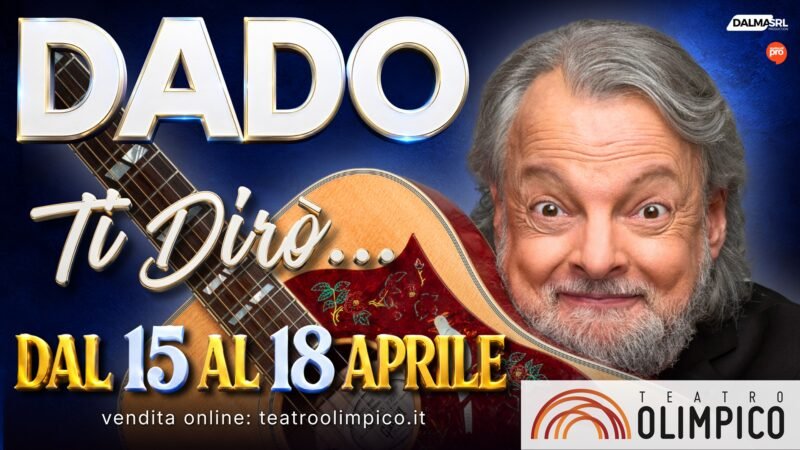
Massimo Bagnato at Teatro Olimpico, Io mi chiamo Massimo Bagnato, May 4 and 5, 2027
In short. Massimo Bagnato at Teatro Olimpico: the comedian brings Io mi chiamo Massimo Bagnato, "My name is Massimo Bagnato", to Teatro Olimpico in Rome on Tuesday, May 4 and Wednesday, May 5, 2027, starting at 20:30.
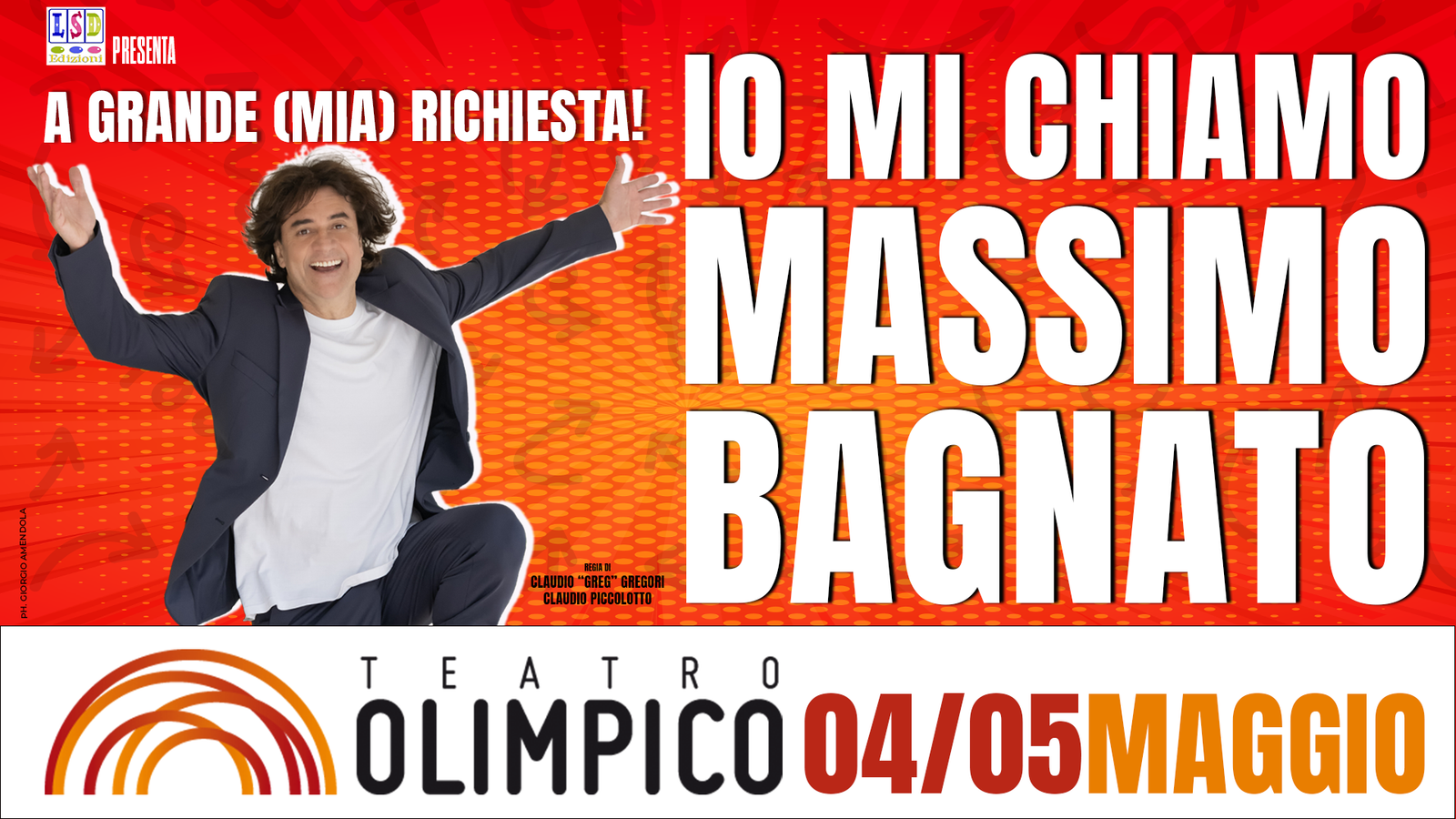
Massimo Bagnato at Teatro Olimpico: the comedian brings Io mi chiamo Massimo Bagnato, "My name is Massimo Bagnato", to Teatro Olimpico in Rome on Tuesday, May 4 and Wednesday, May 5, 2027, starting at 20:30. The theater is at Piazza Gentile da Fabriano 17, in the Flaminio neighborhood: take Metro A to Flaminio and then tram 2 to Piazza Mancini terminus, from where it's about five minutes on foot along Viale del Pinturicchio. Prices published by the theater range from €23 (side balcony with railing) to €34 (gold premium orchestra), plus a presale fee of €3.50 to €5 depending on the section, and a €2 fee for each ticket bought online. There are reduced rates for kids under 12 in almost all sections. Tickets are sold at the box office and on the official Teatro Olimpico website.
Language: performed in Italian. No English version or English surtitles are announced.
A Roman comedian who started in a cabaret in the Ostiense district in 1990 and who, after almost 30 years of television, brings his first big one-man stage show to his own city. That's how the theater itself presents it, and the description is accurate: Io mi chiamo Massimo Bagnato is an anthology of his most famous appearances, from Zelig to LOL, from Tale e quale show to Festivallo. If you love nonsense comedy, you have two nights to see it in its purest form, with no TV editing to cut the pauses.
Massimo Bagnato at Teatro Olimpico: dates, time, tickets
Io mi chiamo Massimo Bagnato is on at Teatro Olimpico on Tuesday, May 4 and Wednesday, May 5, 2027, at 20:30, in the theater's 2026/2027 season.
Two nights
The official page lists the start on May 4 and the end on the 5th: two performances, both in the evening. They're two weekdays in early May, and the second night, judging from comedians' double dates, is the one that fills up last: if you decide late, that's your best chance.
The shows around it
In the theater's calendar Bagnato's date comes after Roberta Bruzzone with Menti in trappola and before Lillo e Greg with MOVIe ERCULeO. It's the tail end of the season, when the Olimpico lines up big-name comedians before the summer break.
Where to buy tickets
Tickets are sold at the box office on Piazza Gentile da Fabriano and on the theater's official website, which links to the Olimpico's online box office. For groups, special needs or questions about seats, the theater answers at biglietti@teatroolimpico.it, and the box office is open every day from 10:00 to 19:00.
Prices for Io mi chiamo Massimo Bagnato
Tickets for Massimo Bagnato at Teatro Olimpico cost from €23 to €34 plus presale fee, according to the price list published by the theater. The presale fee is always charged when the ticket is issued, and buying online adds €2 per ticket.
The price list, section by section
Gold premium orchestra €34 plus €5 presale fee. Side premium orchestra €30 plus €4.50. Orchestra €26 plus €4. Balcony €26 plus €4. Balcony with railing €25 plus €3.80. Side balcony €24 plus €3.60. Side balcony with railing €23 plus €3.50. Between the most and least expensive sections there's €11: for a big Roman hall it's a narrow range.
Under-12 rates
For kids under 12 the theater publishes reduced prices in every section except the gold premium orchestra: €21 plus €3.20 in the side premium orchestra, €18.20 plus €2.70 in the orchestra and balcony, €17.50 plus €2.60 in the balcony with railing, €16.80 plus €2.50 in the side balcony, and €16.10 plus €2.40 in the side balcony with railing. It's a clear signal: the show is also designed for families.
Io mi chiamo Massimo Bagnato: what kind of show it is
Io mi chiamo Massimo Bagnato is Massimo Bagnato's first big one-man stage show, an anthology gathering the best-known moments of his career: his appearances on Zelig, LOL, Tale e quale show and Festivallo.
A statement of identity
The Olimpico's presentation starts from the title: it isn't just a name, it's a statement of comic identity, the starting point and often also the end point of a journey into the absurd, refined and unwittingly brilliant world of one of the most unpredictable comedians on the Italian scene. The joke is obvious: the comedian introduces himself, and with the introduction he's already said it all.
An anthology, not nostalgia
The theater stresses the distinction, and rightly so. An anthology of TV comedy risks becoming a scrapbook. The promise here is different: putting the best pieces back on stage in front of a real audience, with stage timing. Television cuts, theater lets things run: for a comedian who lives on waits and silences, that's a decisive advantage.
The audience as accomplice
The presentation speaks of an audience that's both spectator and accomplice, in an evening that defies every conventional comedy logic. If you know Bagnato you know what that means: his most famous running gag asks the audience to raise their arm when they're called upon. In a hall of more than 1,400 seats, the raised arm becomes a collective choreography.
Who Massimo Bagnato is: biography
Massimo Bagnato, born in Rome on June 11, 1972, is an Italian comedian and TV personality, known for a nonsense comedy that overturns the modern comedian cliché and for his raised-arm running gag.
Paying his dues in Rome
His apprenticeship began in 1990 at Al Fellini, Marcello Casco's cabaret in the Ostiense district, which stayed open until 2012, when the space was renovated and turned into an entertainment and dining venue. From 1993 to 1999 he hosted a music show at Talent Scout, also in Rome, where he impersonated Gianni Morandi, Renato Zero and Al Bano. In 1998 he was a contestant on Sarabanda.
Costanzo, Libero and radio with Lillo e Greg
Fame with the wider public came with his first appearances on the Maurizio Costanzo Show and Libero, in 1999 and 2000. From 2004 he worked with Lillo e Greg on 610, their Radio 2 show, and the following year he followed them to Rai Due in Bla Bla Bla.
The Scorie and Quelli che il calcio years
In 2007 he was on Matinée and Soirée, the flip side of Matinée, and started working on Scorie, the variety show hosted by Nicola Savino. From 2008 he appeared on Quelli che il calcio on Rai 2, both on location and in the studio. In fall 2009 he cohosted Seratona with Thais Wiggers, comedy sketches between commercials presenting the GXT channel's lineup.
Zelig
On December 27, 2009 he debuted on Zelig Off. In January 2010 he joined the cast of Zelig on Canale 5, with Claudio Bisio and Vanessa Incontrada, in 2011 and 2012 he returned to Zelig with Bisio and Paola Cortellesi, and in 2011 he was also on Zelig Off with Teresa Mannino and Federico Basso. In December 2013 he was in the cast of Zelig 1. In the four special episodes of Zelig 2021/2022 he returned to the Teatro degli Arcimboldi stage with Incontrada and Bisio.
Fenomenal, The Call and more
In 2010 he was part of Fenomenal on Italia 1 and a regular guest on The Call, Chi ha paura di Teo Mammucari?, and from March 2011 he returned to Fenomenal with Mammucari and Mago Forest. That same year he appeared on Sketch Up, a kids' comedy show on Disney XD, and on Stalk Radio on Sky Uno with Dario Cassini. In 2014 he took part in Palco doppio palco on Comedy Central.
Theater before the one-man show
Since 2010 he has toured theaters, parties and events with Quanti pensano?, a show built entirely on the raised-arm gag. It's the workshop from which, 15 years later, the big anthology show at the Olimpico was born.
Radio and film
From September 2014 he cohosted A qualcuno piace Cult on Radio 2 with Savino Zaba. On screen he acted in Pupi Avati's Gli amici del bar Margherita in 2009, Luca Rea's Cacao in 2010, Alessio Maria Federici's Tutte lo vogliono in 2015 and Fausto Brizzi's La mia banda suona il pop in 2020.
Colorado, Battute?, Sconcert
Since 2019 he has been in the cast of Colorado on Italia 1 and of Giovanni Benincasa's Battute? on Rai 2, and a guest on several editions of I soliti ignoti on Rai 1. In 2022 and 2023 he was a frequent guest on Nicola Savino's 100% on La 8, in 2023 he appeared with Nino Frassica in Sconcert, on Amazon Prime, and from April of that year he was in the cast of Stefano De Martino's Bar Stella.
The most recent season
For the 2024 European Championship he took part in Benincasa's Gli Europlay on RaiPlay, and that same year he competed on Tale e quale show, finishing eighth. He was a guest on Rai duo with Ale e Franz and on Amadeus's Chissà chi è on Nove. In 2025 he was on De Martino's Stasera tutto è possibile, from March 27, 2025 he was in the cast of LOL, Chi ride è fuori in the role of the troublemaker, and from April 2025 he appeared on Nino Frassica's Festivallo on Rai 2 and, in the same period, was assistant chef on Cook40' with Flavio Montrucchio.
Bagnato's nonsense and the raised-arm gag
Massimo Bagnato's comedy is pure nonsense: monologues that seem to be going somewhere and never get there, interrupted by requests to the audience, delivered with unflappable seriousness.
The arm
The raised-arm gag works like this: during his monologues Bagnato asks the audience to raise their arm when they're called upon. The request comes back, gets more complicated and turns absurd. On television it's a gag, and in a theater, with hundreds of arms actually going up, it's a ritual.
The comedian who doesn't act like a comedian
The description that circulates about him is that of an artist who has overturned the modern comedian cliché. No punchline closing the piece, no outrage over current events, no autobiographical confession: the laugh comes from disappointed expectation, from reasoning that spirals in on itself. It's a comedy that divides, and those who love it love it enormously.
The impersonator
Few remember that Bagnato started out impersonating singers, Morandi, Renato Zero and Al Bano, at Talent Scout in the 1990s. Tale e quale show, in 2024, was a return to his roots more than something new.
A curious fact about Massimo Bagnato at Teatro Olimpico, Io mi chiamo Massimo Bagnato, May 4 and 5, 2027
The loveliest curious fact is about the calendar. In Teatro Olimpico's lineup, right after Massimo Bagnato's two nights, come Lillo e Greg with MOVIe ERCULeO. They're the same Lillo e Greg Bagnato worked with from 2004 on 610, their Radio 2 show, and then in 2005 on Bla Bla Bla on Rai Due. 20 years later, the old collaborator and his hosts of back then pass the baton on the same stage within a few days.
The second curious fact concerns the running gag. Bagnato built an entire show, Quanti pensano?, on the audience's raised arm, and has toured it since 2010 through theaters, parties and events. Io mi chiamo Massimo Bagnato is in a way its heir: the first time that game with the audience lands in a 1,410-seat hall, with an amphitheater-style orchestra where every raised arm can be seen from the stage.
The third concerns his roots. Bagnato was born in Rome and trained in the Roman cabarets of the 1990s, at Al Fellini in Ostiense and at Talent Scout. Success came from Milan, from Zelig and the Arcimboldi. The big one-man show, though, comes home, to Flaminio: for a Roman comedian the Olimpico is the stage of hometown consecration.
Teatro Olimpico: from movie theater to home of comedy
Teatro Olimpico on Piazza Gentile da Fabriano opened as Cine-Teatro Olimpico in 1936 and took its current name in 1981. It stands on Lungotevere Flaminio, opposite the Ponte della Musica, and hosts most of the Accademia Filarmonica Romana's performances.
A 1930s block
The block containing the theater was built in 1935 and 1936 by the firm Garbarino, Sciaccaluga e Mezzacane for the Società Generale Immobiliare. Those were the years when the Flaminio neighborhood and, on the other bank, Foro Italico were taking shape.
Cinema and variety
Until the 1950s, the war aside, the hall worked mainly as a cinema, with variety artists performing between screenings. It's a lineage that suits Bagnato: the comedian who entertains in between, as he did on Seratona between one commercial and the next.
The citizens' company
After World War II the Accademia Filarmonica Romana rented the theater, and in the late 1970s the building was put up for sale. Adriana Panni, the Filarmonica's president, launched a subscription and brought many citizens together in Teatro Olimpico spa, which bought the building in 1980. Since 1981 the program has opened up to drama, dance and big-name comedy.
Teatro Olimpico's hall and where to sit for Bagnato
Teatro Olimpico's hall has 1,410 seats, 966 in the orchestra and 444 in the gallery, with the orchestra laid out like an amphitheater: for a one-man show that involves the audience it's a favorable layout, because the whole hall can be seen from the stage.
Orchestra
The orchestra seats rise toward the back, so those sitting far away can see over the heads of those in front. The orchestra, at €26, is the section with the best balance of price and view, and the gold premium orchestra is for those who want to be within the comedian's eyeshot, and joke range.
Gallery and balconies
The gallery, which corresponds to the balcony sections on the price list, is horseshoe-shaped with curved tiers. The center sections face the stage head-on, the side ones at an angle, and the railing, where there is one, slightly reduces visibility.
The stage
The stage is about 10 meters deep and 12 wide. For a single performer it's a big space, and filling it is part of the craft.
Something nobody tells you about Massimo Bagnato at Teatro Olimpico, Io mi chiamo Massimo Bagnato, May 4 and 5, 2027
What nobody tells you is that at a Bagnato show the front rows aren't a neutral spot. His game with the audience, the arm to raise, the questions, the call-outs, mostly involves those within his eyeshot. If you love taking part, choose the gold premium orchestra, and if you'd rather laugh without being singled out, go up to the orchestra or the center balcony, where the view is excellent and the risk minimal.
The second thing is that nonsense isn't for everyone, and it's worth knowing beforehand. If you're looking for the joke with a punchline, or the monologue on current events, you may be thrown: Bagnato works on expectation and its disappointment. The advice I give to anyone bringing a group is to watch a few of his TV appearances first, to see if that register suits them.
The third concerns kids. The price list with under-12 rates isn't a detail: Bagnato's nonsense works wonderfully with children, who laugh at the absurd reasoning even before they understand it, and the arm game is made just for them. It's one of the few comedy shows of the season you can really see as a family, as long as you can handle the evening time.
My tip for Massimo Bagnato at Teatro Olimpico, Io mi chiamo Massimo Bagnato, May 4 and 5, 2027
Choose a center orchestra seat and the evening of Wednesday, May 5. The orchestra costs €8 less than the gold premium orchestra and, thanks to the amphitheater slope, is almost as good for a monologue, and the second night usually has more seat choice and an audience already primed by word of mouth from the first.
Second: go by public transit. Metro A to Flaminio, tram 2 to Piazza Mancini terminus, five minutes on foot along Viale del Pinturicchio. It's the recommended combination, and on a May weeknight it avoids Flaminio's only real problem, parking.
Third: arrive with your arm ready. It sounds like a joke, and it's serious advice. The show works if the audience plays along, and if you sit with your arms crossed waiting to be entertained, you'll miss half the evening. Bagnato asks for complicity, and he repays it.
Another well-known fact, yet one rarely mentioned
Teatro Olimpico doesn't belong to a public body or a big group: it's owned by a joint-stock company born in 1980 from a citizens' subscription. Many in Rome know it, few remember it when they walk into the hall. Adriana Panni raised capital among professionals, businesspeople, intellectuals and simple enthusiasts, and Teatro Olimpico spa was born, with a broad shareholder base, which bought the building from the Società Generale Immobiliare. Panni was its first president, from 1980 to 1994.
The consequence shows in the program. A private theater that has to stand on its own needs full houses, and that explains the opening, from 1981, to big-name comedy alongside the Filarmonica's music and international dance. In the 2009/2010 season, according to the Agis rankings, the Olimpico was the second theater in Rome and the seventh in Italy by attendance.
The second rarely mentioned fact concerns Bagnato: before Zelig he went through Sarabanda, in 1998, as a contestant. A music quiz isn't the debut you'd expect from a comedian, yet it fits his path as an impersonator of singers. Television knew him as a guest before it knew him as an artist.
How to get to Teatro Olimpico for Massimo Bagnato
Teatro Olimpico is reached by Metro A to Flaminio and tram 2 to Piazza Mancini terminus, then about 500 meters on foot: these are the directions the theater gives, and the simplest from Termini or the center.
Metro and tram
From Flaminio station on line A, on Piazzale Flaminio, tram 2 takes you to Piazza Mancini terminus. From there walk along Viale del Pinturicchio to Piazza Gentile da Fabriano: five minutes on foot.
Bus
The theater lists lines 220, 232, 233, 280, 301, 446, 48, 910 and 911 as useful, plus tram 2. The 910 leaves from Termini toward Piazza Mancini: get off at the Pannini stop and take Viale del Pinturicchio, about 300 meters. Check routes and evening frequencies on the day on the Rome transit company's journey planner.
Roma Nord railway
If you arrive on the Roma Viterbo railway, get off at Flaminio and take tram 2 to Piazza Mancini, then follow the same route on foot.
By car
From the center take Viale del Muro Torto toward Piazzale Flaminio, then Via Luisa di Savoia, Lungotevere Arnaldo da Brescia and Lungotevere delle Navi to Lungotevere Flaminio. From the north, follow Lungotevere Maresciallo Diaz, cross Ponte Duca d'Aosta and turn right to the square. Parking remains the real obstacle: leave early or leave the car at home.
The right photo to take at Massimo Bagnato at Teatro Olimpico, Io mi chiamo Massimo Bagnato, May 4 and 5, 2027
The right photo for this evening is just one: you in front of the poster, with your arm raised. Anyone who knows Bagnato will get it instantly, and anyone who doesn't will ask for an explanation: it's the best advertising you can give a comedian.
The second is of the theater's lit facade, from Piazza Gentile da Fabriano side. The building is a 1930s reinforced concrete complex, with a tall travertine base and door and window frames in the same stone, and a restoration has brought back its original look, in a late rationalist language that speaks to Foro Italico on the other bank. In the evening, with the sign lit and the audience going in, the facade has the air of an old variety theater.
The third is taken afterward, from the Ponte della Musica: the Tiber below, the lights of the Lungotevere, the theater on the bank like a lit stage wing. Inside, during the show, photos and filming aren't allowed: in there, the arm goes up only when he asks.
Some important events that happened here in history
On March 4, 1965 Pierre Boulez conducted at Teatro Olimpico the Italian premiere of Igor Stravinsky's Abraham and Isaac and the European premiere of his Elegy for J.F.K.: one of the most important evenings in the hall's musical history, linked to the Accademia Filarmonica Romana.
In the following years the Olimpico hosted productions where music and visual arts met: Stravinsky's Histoire du soldat in October 1966 with Giacomo Manzù's backdrop, Niccolò Castiglioni's Tre misteri in October 1968 with a sculpture by Mirko, and Stravinsky's Mass in October 1975 with Corrado Cagli's gilded forms.
1980 marked the corporate turning point with the founding of Teatro Olimpico spa, and from 1981 the hall changed its name and its calling. Moses Pendleton's Momix debuted here in April 1982 and became regular guests, and the Lindsay Kemp Company came in 1989 and 1993. In the 1990s came Mikhail Baryshnikov with the White Oak Dance Project, in October 1995, and the Bolshoi Ballet, in September 1996, and in 2004 the Béjart Ballet Lausanne. In January 1998 Giorgio Gaber brought Un'idiozia conquistata a fatica here. It's in this hall, where great dance and Gaber's theater-song left their mark, that Bagnato's nonsense finds its most important stage.
Who has passed through Massimo Bagnato at Teatro Olimpico, Io mi chiamo Massimo Bagnato, May 4 and 5, 2027
The Teatro Olimpico stage has welcomed musicians like Arturo Benedetti Michelangeli, Jessye Norman, Zubin Mehta, Giuseppe Sinopoli, Luigi Dallapiccola and Pierre Boulez, and for pop music Marillion in 1988, Lucio Dalla and Pooh in 1994, Nomadi and Giorgio Gaber. Dance brought Baryshnikov, Joaquín Cortés, Lindsay Kemp, Maurice Béjart, the Bolshoi, Antonio Gades and Momix, and the theater also lists Dario Fo and Nicola Piovani among its stars.
For comedy, the thread that matters for these May nights: Gigi Proietti with A me gli occhi in 1996, then Enrico Brignano, Vincenzo Salemme, Aldo, Giovanni e Giacomo, Neri Marcorè, Ale e Franz, Gioele Dix, Lillo e Greg and Max Giusti. Some of these names cross Bagnato's bio: Lillo e Greg, with whom he did radio and TV, and Ale e Franz, who hosted him on Rai duo.
In the 2026/2027 season the Olimpico lines up other big-name comedians, from Paolo Cevoli with Figli di Troia to Maurizio Battista and Maccio Capatonda. Bagnato joins this company with his first big solo show, and with a running gag none of the others can copy.
Flaminio around Teatro Olimpico
Teatro Olimpico is in Flaminio, north of Piazza del Popolo, in an area that over the last 20 years has become one of the city's cultural hubs: the theater itself names the Auditorium, MAXXI and the Ponte della Musica as the places that changed the neighborhood's face.
Auditorium and MAXXI
Farther into the neighborhood are Auditorium Parco della Musica and MAXXI. A May afternoon can start with an exhibition and end with Bagnato, without changing neighborhoods.
Milvian Bridge
Heading up the Tiber you reach Milvian Bridge, with its square full of bars: the natural destination if you want a late night after the show.
Toward Villa Giulia and Piazza del Popolo
Along Via Flaminia you pass the National Etruscan Museum of Villa Giulia, on the edge of Villa Borghese, and then Piazza del Popolo. In May, with the long days, it's a lovely way to walk to the theater.
Where to eat before or after Io mi chiamo Massimo Bagnato
Around Teatro Olimpico, between Piazza Mancini, Via Flaminia and Piazza Gentile da Fabriano, there are pizzerias, trattorias and bars frequented by theater and Auditorium audiences: a neighborhood selection, wide-ranging and not aimed at tourists.
Before the show
With a 20:30 start, a quick dinner around 19:00 is the most practical option: a pizza, a plate of pasta, a sandwich at the bar. With kids it's almost a must, so you don't arrive in the hall hungry.
After the show
On a weeknight the Flaminio trattorias have tables more easily at the end of the evening than at 20:00. Ponte Milvio, a few minutes away by taxi, has places open late even midweek.
Accessibility and practical information
If you have reduced mobility and want to see Massimo Bagnato at Teatro Olimpico, contact the box office before buying, at biglietti@teatroolimpico.it: it's the surest way to learn about suitable seats and access arrangements.
The hall
The orchestra slopes like an amphitheater and the gallery is on the upper floor: things to consider when choosing a section. The box office is open every day from 10:00 to 19:00.
With kids
The under-12 rates published by the theater make Io mi chiamo Massimo Bagnato a show designed for families too. The nonsense and the arm game appeal to children, and the only limit is the time, because it starts at 20:30 on a school night.
May in Rome
In early May Roman evenings are mild and the Lungotevere is a pleasure to walk. It's one of the city's busiest months: better to buy tickets early and book dinner.
Frequently asked questions about Massimo Bagnato at Teatro Olimpico
When is Massimo Bagnato at Teatro Olimpico?
Massimo Bagnato at Teatro Olimpico: he's in Rome with Io mi chiamo Massimo Bagnato on Tuesday, May 4 and Wednesday, May 5, 2027, starting at 20:30, according to the theater's official page. They're two evening performances in the 2026/2027 season. The theater is at Piazza Gentile da Fabriano 17, in Flaminio.
How much are tickets for Massimo Bagnato?
Tickets for Massimo Bagnato at Teatro Olimpico cost from €23, side balcony with railing, to €34, gold premium orchestra, plus a presale fee of €3.50 to €5. An orchestra seat costs €26 plus €4. Online there's an extra €2 fee per ticket, and there are reduced rates for under-12s.
What kind of show is Io mi chiamo Massimo Bagnato?
Io mi chiamo Massimo Bagnato is the Roman comedian's first big one-man stage show: an anthology of his most famous appearances on Zelig, LOL, Tale e quale show and Festivallo, with the audience drawn in as an accomplice. The register is the nonsense that made him famous.
Who is Massimo Bagnato?
Massimo Bagnato is a Roman comedian born in 1972 who grew up in the city's cabarets in the 1990s. Known for his nonsense and the raised-arm gag, he has worked with Lillo e Greg on radio, and on Scorie, Quelli che il calcio, Zelig, Colorado, Tale e quale show, LOL and Festivallo.
How do you get to Teatro Olimpico in Rome?
Teatro Olimpico, at Piazza Gentile da Fabriano 17, is reached by Metro A to Flaminio and tram 2 to Piazza Mancini terminus, then about 500 meters on foot along Viale del Pinturicchio. Bus 910 links Termini with the area, Pannini stop.
Is Massimo Bagnato's show suitable for kids?
Io mi chiamo Massimo Bagnato at Teatro Olimpico has reduced rates for under-12s in almost all sections, a sign it's designed for families too. The nonsense and the arm game work with little ones, and the only caveat is the evening start, at 20:30.
Where's the best place to sit for Massimo Bagnato?
For Massimo Bagnato at Teatro Olimpico, a center orchestra seat offers the best balance of price and view, thanks to the amphitheater slope. If you love joining the audience game, choose the gold premium orchestra, and if you'd rather not be involved, the center balcony.
In closing
Many TV comedians struggle with the test of the stage, because without editing the pauses become gaps. With Bagnato it's the opposite: pauses are his raw material, and the theater gives them back to him whole. My advice is clear: a center orchestra seat, the evening of May 5, tram 2 to Piazza Mancini, and your arm ready to go up when the request comes.
Article written by the editorial team of Tour Leader Pro, contact them for Private/Corporate/V.I.P. Tours and Experiences.
Planning a trip to Rome? The English-language guides for visiting the city are on ItalyPlanner.com.
Contact Information
Nearby
 Teatro Olimpico100 m
- Ponte della Musica – Armando Trovajoli200 m
- Flaminio400 m
- MAXXI – National Museum of 21st Century Arts500 m
- Alberto Moravia House Museum700 m
- Villa Mazzanti700 m

Upcoming events nearby
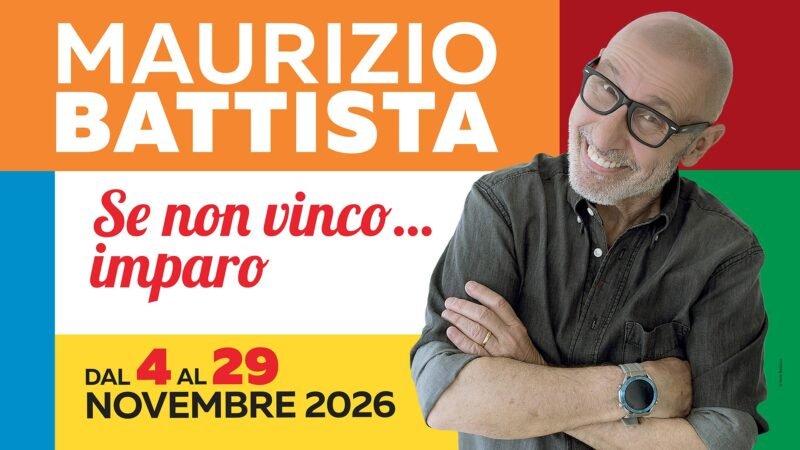
- Maurizio Battista at Teatro Olimpico, Se non vinco… imparo, November 4 to 29, 2026100 m
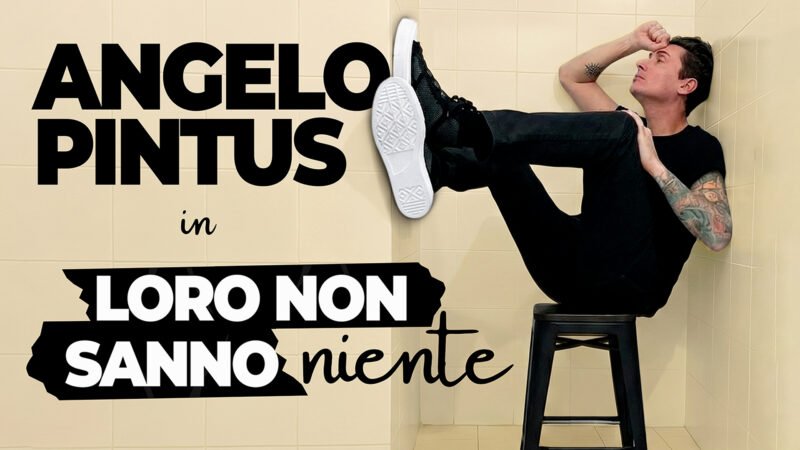
- Angelo Pintus at Teatro Olimpico, Loro non sanno niente, January 14 to February 14, 2027100 m
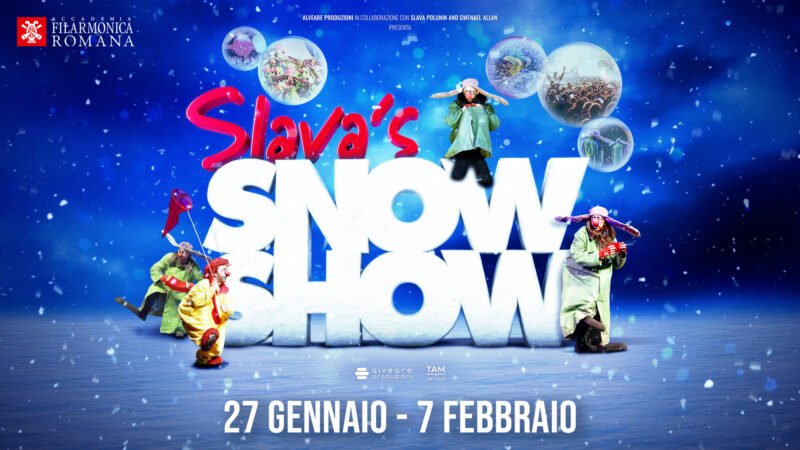
- Slava’s SnowShow at Teatro Olimpico, January 27 to February 7, 2027100 m
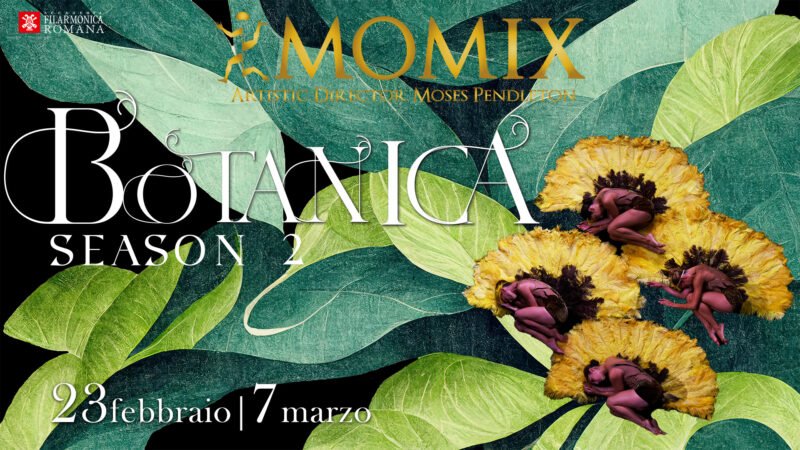
- MOMIX Botanica at Teatro Olimpico, February 23 to March 7, 2027100 m
You might also like
- Le Coliche in 10 anni di Coliche e siamo ancora vivi at Teatro Olimpico, March 25 and 31, 2027
- Marta e Gianluca in Io e Gianlu at Teatro Olimpico, March 23 and 24, 2027
- PanPers, Terapia di coppia at Teatro Olimpico, March 16 and 17, 2027
- Coppia aperta quasi spalancata with Chiara Francini at Teatro Olimpico, March 12 to 14, 2027
- Io Marte Tu Mercole with Scintilla and Federica Camba at Teatro Olimpico, March 10, 2027
- Dado, Ti dirò at Teatro Olimpico, April 15 to 18, 2027