Dente and Guido Catalano in Rome, November 30, 2026
In short. On November 30, 2026 Guido Catalano and Dente share a stage in Rome for an event that is neither entirely a concert nor entirely a literary reading.
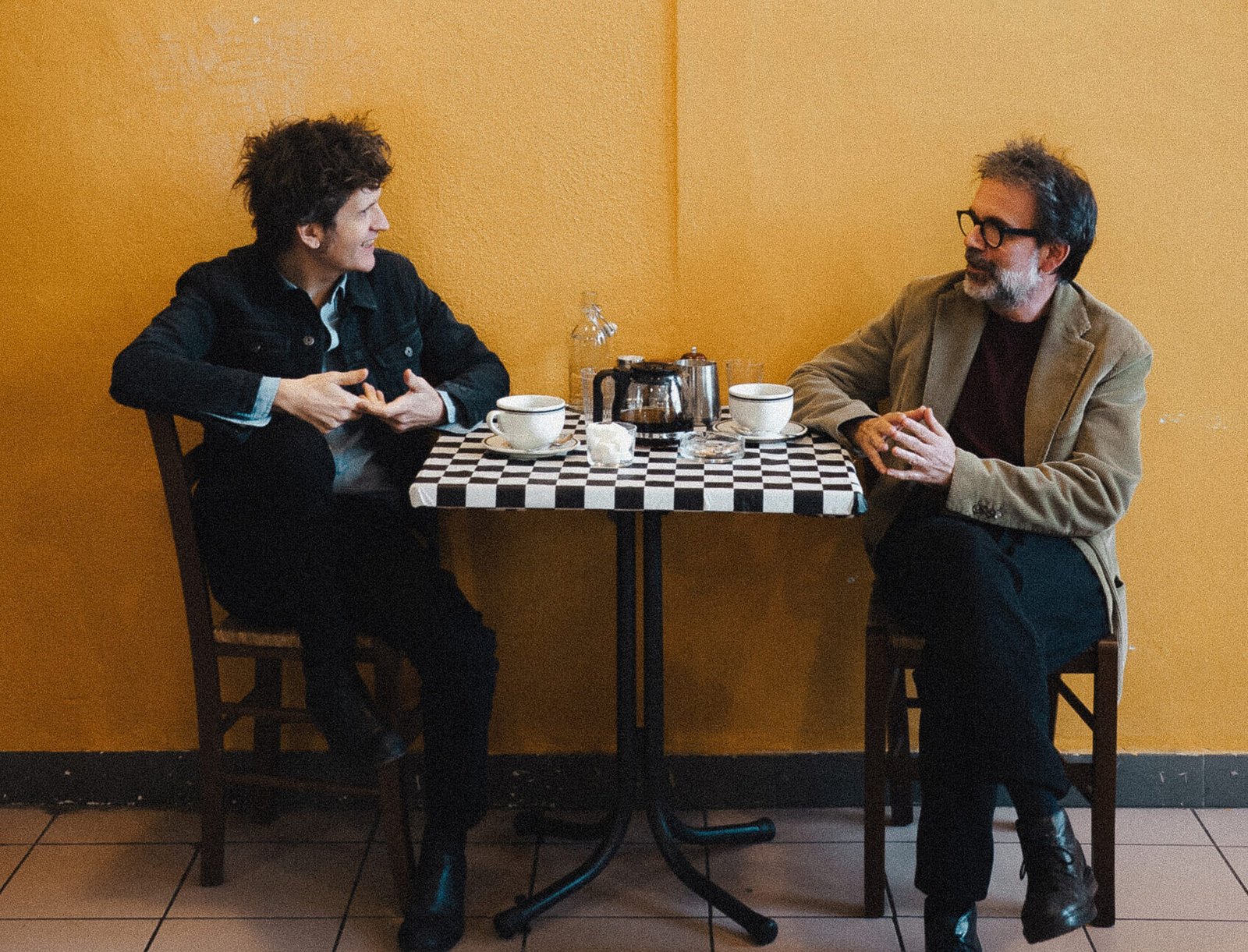
On November 30, 2026 Guido Catalano and Dente share a stage in Rome for an event that is neither entirely a concert nor entirely a literary reading. It's an evening built on alternating singer-songwriter songs and poetry read aloud. The hall listed is Sala Petrassi at the Auditorium Parco della Musica Ennio Morricone, the 673-seat space that the complex on Viale Pietro de Coubertin reserves for projects that need concentration more than power.
It's worth clarifying right away what an evening with two names like this means in practice. It doesn't work like a concert with a guest, where one of the two comes on stage for three songs and then says goodbye. Nor does it work like a book launch with musical accompaniment, a format often seen in Rome that almost always penalizes the music. It works, when it works, like a two-voice dialogue in which words written to be read and words written to be sung constantly swap places, and in which silences count as much as sounds. It's a format that requires a hall with clear acoustics and an audience willing to stay quiet, and the choice of a space of under 700 seats inside a complex that has one of almost 3,000 already says a lot about the intention.
The pages that follow look at the evening from several sides. There's the artistic side, that is, who the two protagonists are, where they come from, what they have published and why their combination isn't new. There's the architectural and practical side, that is, what Sala Petrassi really is, how it differs from the complex's other halls, how you get there on a Monday evening in late November, how entry works and what to expect in terms of accessibility. And there's the surroundings side, that is, what there is around the Auditorium, in the Flaminio neighborhood and in the strip of city that runs down toward the Tiber, before and after the show. In Rome these three levels are almost never separate, because even the city's most modern hall rests on layers you notice as soon as you step out of the foyer.
What this show is
A show that brings together a singer-songwriter and a poet belongs to a specific family, that of the musical reading, and it's worth understanding how it works before setting off for Flaminio. A musical reading isn't a concert with a few readings slipped into the technical breaks, nor is it a poetry recital with a sound bed. It's a form in which two different languages compete for the same stage time, and in which success depends almost entirely on the editing: how long a block of words lasts before a song comes in, how long a song is left to breathe before the speaking voice starts again, how many times the two interrupt each other.
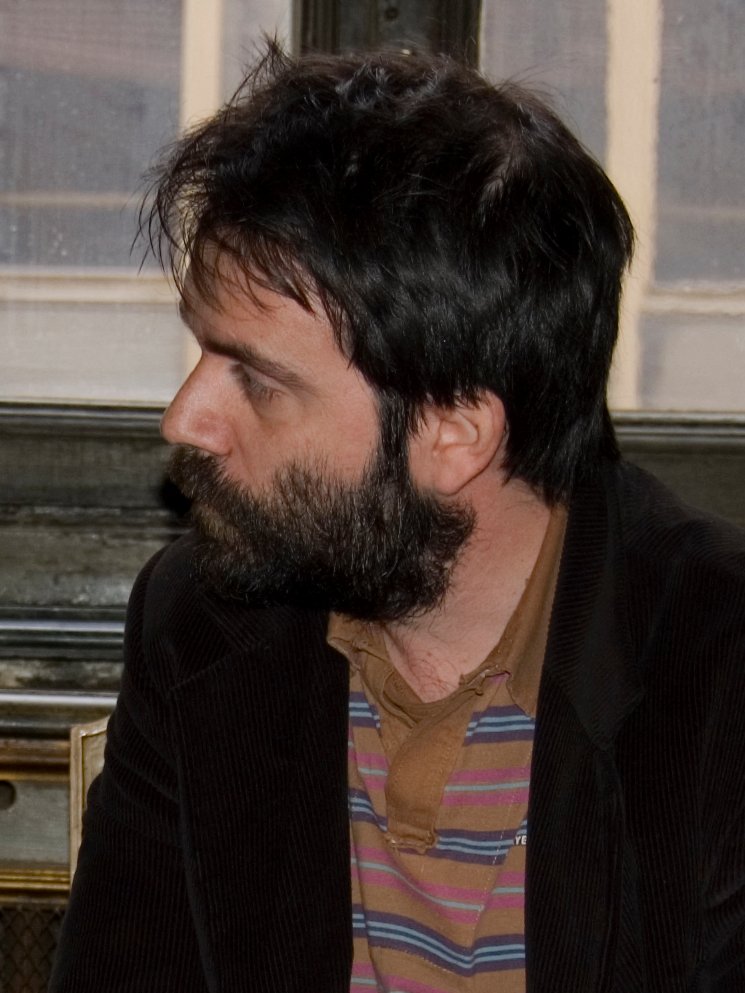
Two crafts less alike than they seem
There's a common idea that the singer-songwriter is a sort of poet with a guitar, and the poet a sort of singer-songwriter who has given up music. Anyone who practices both knows things don't work like that. A song lyric lives inside a metrical and harmonic grid that decides almost everything: the syllable falls where it must fall, the rhyme arrives when the chord progression calls for it, and the voice can lean on the sound to cover any weaknesses in the meaning. Poetry read aloud, on the contrary, has no safety net. There's no bass keeping time, no chorus bringing the listener home, and every pause is a decision the audience registers immediately.
That's why evenings in which the two crafts coexist are harder than they look from the outside. The biggest risk lies in a sort of leveling: if the musician plays too softly so as not to cover the poet and the poet reads too fast so as not to bore those who came for the music, the evening flattens out and the two languages weaken each other. The successful versions of this format do the opposite, that is, they accentuate the differences: the song stays a song, with its dynamics and volumes, and the poetry stays poetry, with its long pacing and its rough edges.
Why the pairing makes sense
Dente and Guido Catalano have in common something that is far from a given in their world: both work with irony without using it as a shortcut. Irony in Italian singer-songwriting often works as a parachute, that is, it serves to close a song that would otherwise feel too exposed. In performance poetry the same thing happens, with the joke arriving to rescue a piece that risked becoming embarrassing. In both cases the result is funny but not memorable. Those who use irony as a precision tool get a different effect: the laugh opens a crack, and through that crack passes something much less amusing. It's in that zone that the two repertoires meet.
Then there's a second point of contact, of a technical nature. Both Dente and Catalano have built a recognizability that comes first and foremost from their delivery. The first has a voice that never strains and tends to sing almost speaking, with phrasing that stays within a narrow range and relies on diction more than on high notes. The second has a way of reading that plays openly on his own physicality and pronunciation, turning into a stylistic signature what a diction manual would consider a flaw. In both cases personality comes before material, and this makes sharing the stage less tiring than it would be for two artists used to filling the space with power.
A project that isn't new
The collaboration between the two isn't a complete novelty of 2026. Materials released by Catalano himself present the joint project as a return, years later, to an earlier show the two shared, and among the poet's Rome dates there's an appearance at the Auditorium in March 2017 with a title that already alluded to more than one voice on stage at the same time. This detail changes the way to look at the November 30 evening: not a first-time experiment, but the revival of a format the two had already broken in when they were younger and less well known, which now returns with a different audience and in a hall of the institutional circuit.
If you buy a seat for an evening like this, don't expect a set list announced in advance. In musical readings the order of the material often changes from one city to the next, because it depends on the mood in the hall and the audience's reactions, and because both artists have repertoires wide enough to allow last-minute substitutions. This is a feature of the format, not an organizational inaccuracy.
Who is Dente
Dente is the stage name of Giuseppe Peveri, born in Fidenza on February 28, 1976. The nickname, as he himself has said several times, dates back to his teenage years and to an uncle. The detail matters little in itself, but it says something about the character, because it's rare to find an Italian singer-songwriter who has chosen as his public identity a family nickname devoid of any poetic ambition. The Emilian province he comes from is the same one that has produced a disproportionate amount of Italian music, and that's no accident: for decades Via Emilia has worked as a corridor where dance halls, ballrooms, clubs and small venues have given generations of musicians a place to play before they became anyone.
His recording career
His full-length debut came in 2006 with “Anice in bocca,” released on a small independent label. The following year came “Non c’è due senza te,” and in 2009 “L’amore non è bello,” the album that won him the Premio Italiano della Musica Indipendente. Then came “Io tra di noi” in 2011, “Almanacco del giorno prima” in 2014, “Canzoni per metà” in 2016, the self-titled “Dente” in 2020 and “Hotel Souvenir” in 2023. Lined up, these titles tell of a path that has gone through almost 20 years of changes in the Italian record market without ever straying too far from its own measure.
The way he writes
Dente's writing has a trait his listeners recognize immediately and that first-time listeners need a few songs to bring into focus: the sentence seems simple until it suddenly isn't. The construction starts from an everyday, almost domestic vocabulary and then introduces a minimal shift, the move of a single word or a verb tense, that overturns the meaning of everything that came before. It's a mechanism that only works if the voice goes along with it without underlining it, and in fact the singing stays deliberately flat, almost indifferent, leaving the text to make the noise.
This approach has a precise effect on the way the repertoire behaves live. In a noisy or overly large hall Dente's songs risk coming across as merely pleasant, because the shift described above needs silence to be perceived. In an intimate, attentive hall, on the other hand, the same songs become cutting. It's one of the reasons why a venue like Sala Petrassi is better suited than a space of thousands of seats.
Beyond the records
Alongside his records, in 2015 Dente published a book with Bompiani titled “Favole per bambini molto stanchi.” The move to the written page isn't a marginal detail for the November 30 evening: an author who has already tested his writing without the support of music has less trouble sharing the stage with someone who writes for the page and for the voice. On the music front, his name comes up in collaborations with very different artists, from Afterhours to Perturbazione, from Brunori Sas to Zen Circus, all the way to names far from the independent circuit like Enrico Ruggeri and Arisa. It's the classic profile of the writer who gets called when a lyric needs a hand, and who has built a cross-genre reputation in that role.
A curious fact about Dente and Guido Catalano in Rome, November 30, 2026
The curious fact concerns the hall, and in particular its original name. When Renzo Piano's complex opened, the space now called Sala Petrassi had a name entirely lacking in romance: it was called Sala Settecento, simply because the number of seats was close to that figure. The other two halls, with the same bureaucratic logic, were identified by their capacities. Only later did the three halls receive the proper names that now appear on every ticket, and Sala Settecento became Sala Petrassi in 2003, following the death of the composer Goffredo Petrassi.
The detail has a value beyond the anecdote. Petrassi was present at the opening of the complex, at a very advanced age, and on that occasion one of his compositions from the 1930s was performed in the largest hall, dedicated to Giuseppe Sinopoli. It means that the man who would give the hall its name lived to see it working, something quite rare in Italian musical place-naming, where namings almost always come decades later. If you enter Sala Petrassi to hear an evening of songs and poems in 2026, you're sitting in a space that has changed identity only once, and for a precise reason.
There's a second curious element, and it concerns the intended use. Of the complex's three halls, the Petrassi is the only one designed not to have an exclusive vocation. The large symphonic hall serves the orchestra, the middle one serves chamber music and the smaller symphonic repertoire, while the third was conceived from the start as a flexible container for opera, jazz, theater, dance and cinema. This versatility, which on paper looks like a compromise, turns out to be the decisive element for a hybrid format like a musical reading, which doesn't fully belong to any of the previous categories.
Who is Guido Catalano
Guido Catalano was born in Turin on February 6, 1971 and describes himself, with a formula he has repeated for years until it became part of the persona, as a living professional poet. The clarification contains an implicit dig at the common idea that poetry is an activity for dead people or for people who make a living from something else. Catalano has instead built a career in which writing verse is his main job, supported by continuous public readings that for years have had him doing as many nights as a touring musician.
The books
His bibliography begins in 2000 with “I cani hanno sempre ragione” and continues with remarkable regularity: “Sono un poeta, cara” in 2003, “Motosega” in 2007, “Ti amo ma posso spiegarti” in 2011, “Piuttosto che morire m’ammazzo” in 2013, “La donna che si baciava con i lupi” in 2014, “Ogni volta che mi baci muore un nazista” in 2017, “Tu che non sei romantica” and “Poesie al megafono” in 2019, “Fiabe per adulti consenzienti” in 2021, “Amare male” in 2022, “Smettere di fumare baciando” in 2023 and “Cosa fanno le femmine in bagno?” in 2024. In 2016 he published a partly autobiographical novel titled “D’amore si muore ma io no.”
The titles, read in sequence, already say a lot about the method. They're phrases that work on their own, built to stick in your head and to be repeated, and that openly declare their belonging to the comic register before the reader even opens the book. Over the years this choice has drawn a certain amount of suspicion from more traditional critics, with the recurring charge of writing verse that's too easy. The most honest answer is that the apparent ease is exactly the point: the poetry Catalano practices is born to be spoken in front of people who haven't studied meter, and its effectiveness is measured in the hall, not on the page.
Background and the stage
Before poetry there was music. As a teenager Catalano was the frontman of a Turin band with a goofy rock style, for which he wrote the lyrics. The detail explains a lot about the way he is on stage: comic timing, handling anticipation, the ability to talk to the audience between pieces belong to the craft of a band singer, not to that of a poet reading while seated. If you've seen one of his readings you recognize the roots immediately: the microphone is used as in a concert, with changes of distance and volume, and the texts are put together in blocks that alternate very short and long pieces, exactly like a set list.
The other recognizable component is physicality. Catalano has made his stage presence, including a way of pronouncing the letter R that any diction school would have tried to correct, a key element of the performance. Instead of hiding it, he puts it center stage, and the result is that the voice becomes instantly identifiable. It's a lesson that applies to anyone who goes on stage: traits that seem like flaws, if they aren't masked, turn into a signature.
The hall as a space
Sala Petrassi holds a particular position within the Auditorium complex, and it's the hall Romans know least well of the three, for the simple reason that it hosts less high-profile programming. It has 673 seats, against the 1,133 of Sala Sinopoli and the 2,756 of Sala Santa Cecilia. The jump in scale is enormous, and it's not just about the number of chairs: it completely changes the relationship between those on stage and those listening.
Shape and materials
Formally, the Petrassi is the most austere of the three. While the larger halls are built around wooden shells with curved surfaces, designed to control the reverberation of large orchestral forces, this one has perpendicular walls and a suspended ceiling. The more regular geometry has an immediate effect on the audience's experience: the space reads at once, without the sense of disorientation that shell halls produce in the first few minutes. When you walk in, you understand where the volume ends, and this helps you concentrate on what happens on stage.
The technical equipment includes an orchestra pit and movable side walls. These are two elements that on paper look like details for insiders and that instead shape the hall's personality. The pit makes it possible to host opera and theater productions with an orchestra. The movable walls make it possible to resize the stage and create space for the wings, that is, to turn a concert space into a theater space in a few hours of work. The result is a hall that changes shape depending on who's using it, and for this reason it's used for opera, jazz, theater, dance and film screenings.
What it means for a musical reading
For an evening built on spoken voice and song, the features just described matter a lot. A hall designed exclusively for symphonic music tends to have long reverberation times, perfect for an orchestra and terrible for speech: consonants blur together and those in the back rows lose a percentage of the text. A hall with more regular surfaces and the ability to change the usable volume, on the other hand, gives a dry sound, where diction arrives intact even in the back rows. Since in a show of this kind the text is the substance, not the accompaniment, the question is anything but secondary.
Then there's the distance factor. With fewer than 700 seats, the last row is still at a distance from the stage that lets you make out facial expressions. In a 3,000-seat hall communication necessarily passes through amplification and screens. Here the relationship stays direct, and an artist who works on nuances of volume can afford to go really quiet without losing the hall. Shows based on irony, in particular, depend on this closeness: collective laughter needs to spread quickly, and in an intimate space it spreads better.
The rest of the complex
It's worth keeping in mind what surrounds the hall, because the complex doesn't work like a traditional theater. The three main halls are arranged in a fan around an open-air space, the Cavea, named after Luciano Berio, which in summer hosts concerts for a few thousand people. There's also a fourth space, the Teatro Studio named after Gianni Borgna, with just over 300 seats, devoted to experimental productions and talks. The whole complex stands on an area of about 55,000 square meters between Villa Glori, the Corso di Francia viaduct and Viale Maresciallo Pilsudski, and includes bookshops, exhibition spaces, cafés and restaurants.
The practical consequence is that an evening at Sala Petrassi doesn't begin at the door of the hall. It begins when you enter the complex grounds, which on a late November evening are lit up and busy even with people who don't have a ticket for any show. If you arrive 40 minutes early you have time to cross the central square, look at the three lead and wood volumes from outside and understand how they're arranged. If you arrive five minutes before, you enter the hall without having seen anything.
Something nobody tells you about Dente and Guido Catalano in Rome, November 30, 2026
The thing almost nobody mentions concerns what lies underground. During construction of the complex, at the end of the 1990s, the excavations uncovered the remains of a Roman villa from the Republican period. The find forced a redesign while work was underway, and the solution adopted was to preserve the remains in place and create a small museum under the Cavea, in the strip between two of the main halls. It means that anyone entering the Auditorium for a show walks over and next to structures 2,000 years old, almost always without knowing it.
The second rarely told thing concerns how a hall like the Petrassi gets assigned. In multipurpose complexes the choice of hall doesn't depend only on expected sales, but also on the type of staging required and the availability of dates, and the same production can end up in different halls depending on the city. If you look at the capacity and automatically deduce the artists' level of fame, you're making a common misreading. For a format based on the spoken word, a medium-sized hall is a technical choice, not a fallback.
Finally there's a third element that rarely appears in presentations: the audience at these evenings tends to be made up largely of readers, not regular concertgoers. This changes behavior in the hall, for better and for worse. For better, because the silence during readings is generally better than in a club. For worse, because the sung part risks being heard with the attitude of someone waiting for the talking to resume. The most successful shows of this kind work precisely to correct that imbalance.
My advice for Dente and Guido Catalano in Rome, November 30, 2026
The main advice concerns your arrival time, and it applies more to this hall than to others. The Auditorium stands in an area whose traffic changes radically in the evening: Viale Pietro de Coubertin and the streets around the Villaggio Olimpico get congested in the half hours before shows start, especially when several halls are running at the same time. Since the complex can have three shows at the same time, the inflow is concentrated in a very narrow window. Arriving 45 minutes early isn't overzealous, it's the difference between going in calmly and going in as the lights go down.
What to wear and where to sit
Late November in Rome means evening temperatures that often range between six and 12 degrees Celsius, with high humidity because of the nearby Tiber. The exposed part of the route, that is, the complex's central square and the walkways between the halls, is outdoors. If you arrive early and want to stay outside looking at the building, you need a real jacket, not a light layer. Inside, on the other hand, the halls are heated and crowded, so wear something you can take off easily. There's a cloakroom, but the line on the way out is the worst moment of the evening.
As for choosing your seat, in a hall of this size the difference between stalls and balcony is less dramatic than elsewhere. For a show based on the spoken word, the central rows of the stalls give the most balanced sound, because they let you catch the diction without being too close to the speakers. The very front rows, which at a rock concert are the coveted spot, can be uncomfortable at a reading: they force you to look up and reduce your sense of the whole, which counts a lot in a two-voice evening.
What to do beforehand
The least obvious tip is to use the time before the show to see the archaeological area under the Cavea, when it's open during public opening hours. It's a short visit, the kind you finish in 15 minutes, and it produces a contrast worth the time: within a few meters you go from the remains of a Republican villa to a concert hall designed in the 1990s. If you'd rather stay above ground, you can spend the same 15 minutes at MAXXI, a short walk away along Via Guido Reni, checking its evening closing time in advance.
A last point, trivial only in appearance: you can eat before or after, but decide in advance. The neighborhood around the Auditorium has fewer restaurants than the center, and on the evening of a show the few places in the area fill up. If you're counting on finding a table when you come out, around 23:00, you risk ending up looking for something open toward Ponte Milvio or Flaminio, with 20 extra minutes of walking.
How to get there
The Auditorium is on Viale Pietro de Coubertin, in the Villaggio Olimpico area, a well-connected zone that nonetheless requires a little planning because no metro station is right by the entrance.
By public transport
The most common option combines metro and tram. Get off at Flaminio station on line A, which corresponds to Piazzale Flaminio and the opening onto Piazza del Popolo, and from there take the tram that runs up Viale Tiziano along the Flaminio axis. The useful stops for the complex are those near Piazza Apollodoro and the Flaminia area, from which it's a few minutes on foot. Alternatively, there are bus lines that serve Viale de Coubertin and the nearby streets directly.
The whole trip from the historic center takes on average between 25 and 35 minutes, depending on the time and the waits. For the evening return, check the times of the last services in advance: surface transport thins out at night, and leaving a show that ends after 23:00 may coincide with reduced frequency. Many audience members solve this by walking to Piazzale Flaminio, which takes about 25 minutes along a lit, busy route.
On foot and by bike
If you're staying in the northern part of the center, you can reach the complex entirely on foot. The route from Piazza del Popolo goes up Viale del Muro Torto or Via Flaminia, passes the Flaminio neighborhood and reaches the Villaggio Olimpico area in just over half an hour of easy walking. From Prati and Borgo there's a variant that crosses the river on the Ponte della Musica, the pedestrian and cycle bridge that links the Flaminio bank to the Foro Italico bank: it's the most pleasant way to arrive, with an open view of the Tiber, and it only requires care on the final stretch, where the lighting gets sparser.
By car
The complex has an underground car park, which fills up quickly on evenings with several shows at once. If you choose the car, allow at least an hour before the start time, because the line at the car park entrance alone can take 20 minutes. Street parking in the Villaggio Olimpico streets exists but is regulated and highly contested. The area isn't part of the historic center's limited traffic zone, so access itself raises no permit issues, but this also makes it a convenient destination for people coming from the northern neighborhoods, with the resulting crowds.
How the evening works
Evenings at Sala Petrassi follow a fairly regular pattern, which is worth knowing so you don't arrive with the wrong expectations.
Before the start
The hall doors usually open shortly before the listed start time, while the complex's common areas are accessible much earlier. Tickets are checked at the entrance to the hall, not at the entrance to the grounds, which means you can stay in the foyer and the square without showing anything. Actual start times, any introductions and the total running time should be checked with the organizers, because they vary from production to production.
During
In a show alternating words and music, the typical structure involves blocks of unequal length. In most cases there's no intermission, and the total running time is around 90 minutes, but this is a habit of the format and not a figure announced for this specific date. Video and photography are generally subject to the rules of the hall and the organizers, which at this type of evening tend to be stricter than at a rock concert, precisely because the click of a shutter in a moment of silence can be heard throughout the hall.
One feature of this kind of show is interaction with the audience. Both in poetry readings and in ironic singer-songwriting, the spoken parts between pieces aren't filler: they're part of the show and often its most memorable portion. If you arrive late you don't just miss the first pieces, you miss the setting of the evening's tone, which is established in the first 10 minutes and then isn't repeated.
After
On the way out, emptying a 670-seat hall is quick, but it adds to the other halls' outflow if the times coincide. If you left your jacket at the cloakroom, allow a few minutes in line. The outside plaza stays lit and busy, and the area has no particular evening problems, although it's a residential area that empties quickly after midnight.
Another well-known fact, yet rarely mentioned
The well-known fact concerns the naming of the whole complex after Ennio Morricone. The official name that appears today on tickets and communications is Auditorium Parco della Musica Ennio Morricone, but in Romans' everyday usage it's still simply called the Auditorium, or Parco della Musica. The double name causes a small recurring confusion, especially for those coming from out of town looking for the address: the existence in the city of other halls with the word auditorium in their name, starting with Auditorium Conciliazione, means that every year a considerable number of people turn up at the wrong place.
There's a second rarely mentioned element, and it concerns the logic of the hall names. All three bear names linked to 20th-century music or to Rome's musical tradition: one recalls the city's historic musical institution, one the conductor Giuseppe Sinopoli and one the composer Goffredo Petrassi. The open-air space bears the name of Luciano Berio, the experimental theater that of Gianni Borgna. It's a consistent internal naming system, built within a few years and with explicit criteria, which is unusual in Italian cultural institutions, where names pile up at random.
Tickets and access in general
Tickets for the complex's shows are sold through the official channels indicated by the organizers, which include the box office at the Auditorium and authorized sales channels. The complex's box office has its own hours, generally long on weekdays and shorter at certain times, and it stays open on show nights too. For a date at the end of November, announced well in advance, the sales window opens several months before.
What to check
Before deciding anything, check three things with the organizers: the actual hall, because in multipurpose complexes a production can be moved from one space to another even after it's been announced. The start time, which at this kind of evening ranges between 20:00 and 21:00. And any discounts offered, which in some halls of the circuit exist for age groups, students and residents, but vary from production to production and aren't a general rule of the complex.
As for prices, it isn't correct to give figures for a specific date unless they're the official ones, because the price bands change depending on the section and the production. The same goes for availability: an announcement many months in advance means that seat availability changes over time, and any statement about a sellout or plenty of seats would be outdated within a few weeks.
House rules
The usual theater customs apply: entry allowed until the listed time, with latecomers possibly admitted during a natural pause in the show. No drinks in glass containers. Phones on silent. At evenings based on the spoken word these rules weigh more than elsewhere, because a late entry in the middle of a reading interrupts the work of those on stage much more noticeably than it would during an amplified song.
If you're bringing minors, keep in mind that both artists' repertoires contain material aimed at an adult audience, in language and themes. It's not an evening designed for families, although it contains nothing particularly offensive. For an audience of children, the complex and the neighborhood offer other options in the daytime, starting with the nearby children's museum of Rome.
Accessibility
The Auditorium complex was designed in the 1990s with accessibility criteria that were already fairly advanced, and this shows in practice: the main routes are level or served by ramps and elevators, and the connection between the underground car park level and the halls is by elevator.
In the hall
Sala Petrassi has seats reserved for audience members with mobility impairments and for a companion, assigned through the box office and to be requested at the time of purchase, not on the evening itself. Since the number of such seats is by definition limited, requesting in advance is the only realistic way. Accessible restrooms are on the halls' service levels.
For people with hearing difficulties, an evening based on spoken voice and light amplification is more challenging than an instrumental concert, and it's best to check directly with the organizers if any aids are available. For those with reduced mobility who don't use a wheelchair, keep in mind that the distance between the entrance to the grounds and the door of the hall involves a route of a few hundred meters, partly outdoors, and that the difference in level between the complex's floors is covered by stairs or elevators depending on the route chosen.
Arriving without barriers
If you're coming by public transport, note that Flaminio station on line A has lifts and escalators whose working order should be checked on the day, and that the tram has steps at the entrance on part of the rolling stock. The safest option for those with specific needs remains arriving by car directly at the underground car park, with elevator access, or taking a taxi to Viale Pietro de Coubertin entrance. The final stretch, from the drop-off point to the door of the hall, is on even paving.
The right photo to take at Dente and Guido Catalano in Rome, November 30, 2026
Inside the hall, during the show, there is no right photo, and not only because of the rules. An evening built on the silence between one word and the next can't bear lit screens, and the photographic result in low theatrical light is mediocre anyway. The photo worth taking home is taken outside, and it should be planned beforehand.
Framing the three volumes
The most recognizable image of the complex is the three lead-clad shells rising from the central square. In the evening, with artificial lighting, the metal surfaces give off a cold light that contrasts with the warmth of the foyer's glazed openings. The best spot is in the square between the halls, holding the camera low and including part of the paving: the low angle emphasizes the volume of the shells and reduces background clutter. Horizontally you get two shells out of three, vertically you isolate one whole.
The best moment isn't full darkness. In the weeks around the end of November, sunset in Rome falls around 16:40, and the blue hour that follows lasts about 20 minutes. If you're coming to the Auditorium for an evening show you'll need to arrive well ahead to catch it, but the result pays off: the sky still keeps some depth of color and the artificial lights are already on, a condition that eliminates the flat black of night photos.
The alternatives
The second interesting shot is from the Cavea, the open-air space between the halls, looking up: the empty winter tiers, closed in by the volumes of the halls, make a geometric image very different from the crowded summer one. The third is outside the complex, on the Ponte della Musica, from which you can frame together the river, the footbridge and the mass of the building in the background. If you have time before the show, you can walk a few hundred meters upriver to Milvian Bridge and photograph the lit ancient bridge, which gives a completely different image of the same part of the city.
Some important events that happened here
The complex's history is short by Roman standards, but dense. It's worth reconstructing point by point, because it helps explain why a 24-year-old building has already become a city landmark.
The construction site and the archaeological find
Renzo Piano's project, developed in the 1990s, involved building a music hub on an area of the Villaggio Olimpico that had remained largely unused after the 1960 Games. During excavation the remains of a Roman villa emerged, leading to the suspension of work and a long phase of redesign. The find, which at the time looked like an obstacle, is today part of the identity of the place: the remains can be seen in a museum area created under the Cavea.
The openings
The opening didn't happen on a single day. The first hall to start operating was the middle one, on April 21, 2002, a date that in Rome coincides with the traditional anniversary of the city's founding. The complex as a whole was inaugurated on December 21 of the same year. The fact that the opening was staggered over eight months tells of the complexity of the project and the desire to get the facility working before it was completed.
The namings
The halls received their final names at different times. The naming of the third hall after Goffredo Petrassi dates to 2003, the year the composer died, who had attended the opening. In the following years the open-air space was dedicated to Luciano Berio and the experimental theater to Gianni Borgna, who had been a central figure in Rome's cultural policy in the 1990s. The naming of the entire complex after Ennio Morricone is the most recent step, which came after the death of the Roman composer.
The programming that changed the neighborhood
Since 2006 the complex has hosted the Rome Film Fest, which in 2026 reached its 21st edition and which for about 10 days a year turns the whole area into a film hub. In summer the Cavea hosts the open-air concert series that brings tens of thousands of spectators to the area, as happens with the Roma Summer Fest. During the rest of the year the programming alternates the symphonic season, jazz, theater, talks and productions like the one on November 30. The combination of these uses has had a long-lasting effect: an area that in 2001 had no reason to be crossed in the evening now has several, every week.
Who has passed through Dente and Guido Catalano in Rome, November 30, 2026
Talking about who has passed through this place means talking about more names than any list could hold, because in little more than 20 years the complex has hosted daily programming across four spaces. It's better to think in categories, which say more than a list.
The names on the doors
The first names to consider are those of the dedications, because they tell of a precise cultural choice. Goffredo Petrassi belongs to the generation of Italian composers who spanned the entire 20th century, from his training in the 1920s to his last works, and his physical presence at the 2002 opening establishes a direct continuity between Italian contemporary music and the building. Giuseppe Sinopoli, conductor and composer, and Luciano Berio, one of the central figures of European musical research after World War II, complete a picture in which none of the dedications is decorative. Ennio Morricone, whose name now accompanies the entire complex, represents the meeting point between Roman academic training and the repertoire that reached the widest audience.
The middle hall's repertoire
Sala Petrassi, as it was conceived, almost never hosts the names that fill stadiums. Its typical programming includes small-scale opera productions, jazz concerts, drama, contemporary dance, screenings and talks. The audience that attends it regularly follows less high-profile paths, and for years the hall has served as a place where a production can grow without having to fill 3,000 seats. For a format like the musical reading, which in Italy established itself mainly in clubs and mid-sized theaters, this placement is a step up in scale and at the same time a confirmation of legitimacy.
Singer-songwriters at the complex
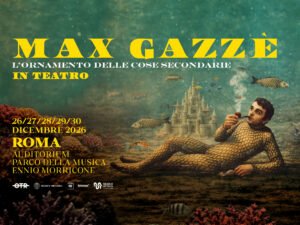
Italian singer-songwriting has a steady relationship with the whole complex, spread across the different halls depending on drawing power: the Cavea in summer, the larger halls for the big draws, the Petrassi for the more intimate projects. In the same 2026 season, to stay in the area, the Auditorium hosts among other things a series of dates by Max Gazzè in late December. The coexistence of these different registers at the same address is exactly why a multipurpose complex works: it allows an evening of poetry and song to exist alongside a 2,000-person concert without either having to adapt to the needs of the other.
The two protagonists' previous visit
Finally, it's worth remembering that Dente and Guido Catalano don't come to the Auditorium as strangers. Among the Turin poet's dates there's a Rome appearance at the Auditorium in March 2017, as part of the shared path the two had started in those years. The November 30, 2026 evening, from this perspective, reads as a return to the same place almost a decade later, with two careers that have grown in the meantime and an audience that has meanwhile changed generation.
What's around
The area around the Auditorium has more to see than its residential look suggests. If you arrive a few hours early or decide to spend the day in the area, you'll find enough to fill it.
Contemporary architecture
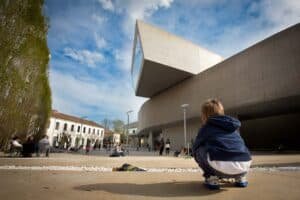
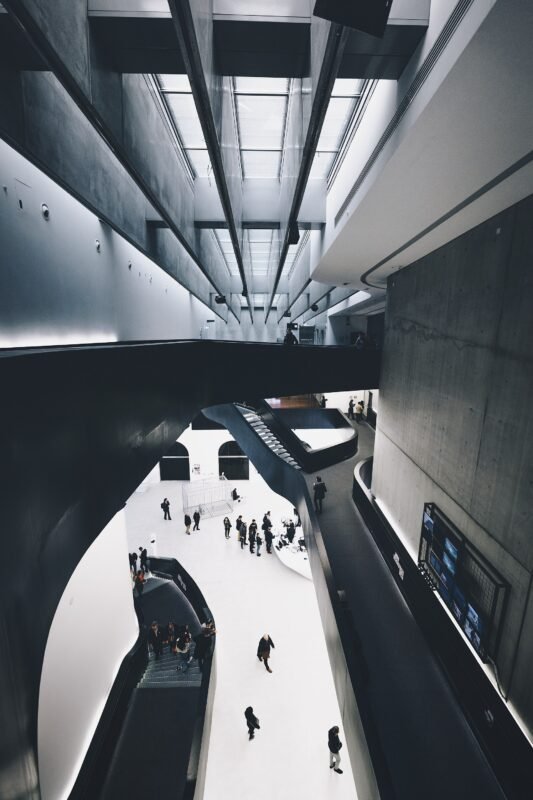
A few hundred meters away, along Via Guido Reni, is MAXXI, the national museum of 21st-century arts designed by Zaha Hadid, which together with the Auditorium forms a pair of contemporary buildings with no equivalent in other Roman neighborhoods. The two projects, built years apart and in opposite languages, tell of two different ways of inserting new architecture into a layered city: Piano's complex works with closed volumes and heavy materials, Hadid's with continuous flows and moving surfaces. Seeing them on the same afternoon is an exercise worth the time.
The river and the bridges
The Tiber flows close by. The Ponte della Musica links the Flaminio bank to that of the Foro Italico, a Fascist-era sports complex that includes the Stadio dei Marmi and the Olympic facilities. Going upriver you reach Milvian Bridge, one of the oldest bridges in the city, scene in 312 of the clash between Constantine and Maxentius and today the center of an area of bars and restaurants that is very busy in the evening.
Toward the center
Heading down along the Flaminio axis, you reach Piazza del Popolo in about 20 minutes on foot, and from there the Pincio and Villa Borghese, with its museums. In the same strip, along the Lungotevere, you come to the Ara Pacis, while inside Villa Borghese, on Viale delle Belle Arti, is the Galleria Nazionale, which holds the largest Italian collection of 19th- and 20th-century art. If you want to stay on the music side, consider Casa del Jazz, in a completely different part of the city but within the same programming circuit.
Eating and drinking
Dining right around the Auditorium includes the outlets inside the complex and a few places along Viale Pietro de Coubertin and in the streets of the Villaggio Olimpico. The widest choice is found heading up toward Ponte Milvio or down toward Flaminio and Via Flaminia, where there are neighborhood trattorias and evening venues. For dinner after the show, keep in mind that in Rome many restaurant kitchens close around 23:00, and an evening that ends at 22:30 leaves a narrow margin. Booking solves the problem.
Quick questions
Which hall is the evening in?
The available information points to Sala Petrassi at the Auditorium Parco della Musica Ennio Morricone, Viale Pietro de Coubertin 30. Since it's a complex with several spaces, confirm the hall through the organizers' official channel, because in multipurpose venues assignments can change even after the announcement.
How many seats does Sala Petrassi have?
673. It's the smallest of the complex's three main halls, after Sala Santa Cecilia with 2,756 seats and Sala Sinopoli with 1,133.
How long does a show of this kind last?
Musical readings usually run around 90 minutes with no intermission, but the actual running time of this date should be checked with the organizers. Not every production announces it in advance.
Is there an announced set list?
No, and it's not an omission. In this format the sequence of material changes from one city to the next and is decided according to the hall and the audience. Anyone who publishes a final set list before the evening is anticipating something that hasn't been decided.
How do you get there without a car?
Metro line A to Flaminio, then the tram along the Flaminio axis to the stops near Piazza Apollodoro, or buses going directly to Viale Pietro de Coubertin. On foot from Piazza del Popolo it takes about 30 minutes on a flat route.
Is there parking?
The complex has an underground car park, which fills up quickly on evenings with several shows at once. Allow plenty of time before the start.
Is the hall accessible to wheelchair users?
Yes, with dedicated seats to be requested when buying through the box office, and with elevator connections between the car park, the service levels and the halls. The number of reserved seats is limited, so requesting in advance is the only reliable way.
Is the evening suitable for children?
Both artists' repertoires are aimed at an adult audience in language and themes. There are no particular reasons to stay away, but it's not a show designed for families.
Can you take photos during the show?
The rules are set by the organizers and at this kind of evening they tend to be strict. Regardless of the rules, in a show built on silences a lit screen in the stalls can be seen from the whole hall.
How much is a ticket?
Price bands vary by section and are set by the organizers. For a date announced well in advance, both prices and availability should be checked on the official channel at the time of purchase.
Had Dente and Guido Catalano worked together before?
Yes. Materials released by the poet present the joint project as the return of a collaboration started years earlier, and among Catalano's Rome dates there's an appearance at the Auditorium in March 2017 linked to that shared path.
If you want to keep track of the rest of the season's Rome programming, you'll find the full picture in the section devoted to concerts and in the list of all events.
Frequently asked questions about Dente and Guido Catalano in Rome, November 30, 2026
When is the Dente and Guido Catalano show?
The show bringing together singer-songwriter Dente and poet Guido Catalano in Rome is on November 30, 2026, at Sala Petrassi of the Auditorium Parco della Musica Ennio Morricone.
Where is the show held?
The event is at Sala Petrassi, Viale Pietro de Coubertin 30, in the Auditorium Parco della Musica. Since it's a complex with several spaces, confirm the hall through the organizers' official channel, because assignments can change even after the announcement.
What kind of show is it?
It's a musical reading, that is, a form in which music and poetry alternate and talk to each other on the same stage: not a concert with a few readings slipped into the breaks, nor a poetry recital with a simple sound bed.
How many seats does Sala Petrassi have?
Sala Petrassi has 673 seats, against the 1,133 of Sala Sinopoli and the 2,756 of Sala Santa Cecilia: it's therefore the smallest of the complex's three large halls.
How do you get to the Auditorium for the show?
The Auditorium is on Viale Pietro de Coubertin, in the Villaggio Olimpico area. The most common option combines metro line A to Flaminio station with the tram, since no metro station is right by the entrance.
Where do you buy tickets?
Tickets are sold through the official channels indicated by the organizers, which include the box office at the Auditorium and authorized sales channels.
Is the Auditorium accessible to people with mobility difficulties?
Yes, the complex's main routes are level or served by ramps and elevators, and the connection between the underground car park level and the halls is by elevator.
Article written by the editorial team of TourLeaderPro, contact them for Private/Corporate/V.I.P. Tours and Experiences. If you'd like a guided walk in the Flaminio neighborhood, between the contemporary architecture of the Auditorium and MAXXI and the 1960 Olympic facilities, with a licensed guide, write via the TourLeaderPro contact page. For agencies and operators building evening, music and theater programs in Rome, a consulting service is available in the area reserved for tour operators.
Planning a trip to the capital? The English-language guides to the city are on ItalyPlanner.com. To plan your days in Rome, the reference is the page on things to do in Rome. If you want to get out of the city, there's the selection of the best day trips from Rome.
Contact Information
Nearby
 Museum of Musical Instruments (MUSA)100 m
- Auditorium Parco della Musica100 m
- Villa Glori500 m
- Fountain of Anna Perenna500 m
- MAXXI – National Museum of 21st Century Arts700 m
- Flaminio700 m
Upcoming events nearby
- Max Gazzè in concert in Rome at Auditorium, December 26 to 30, 2026100 m
- Glen Hansard in Concert in Rome, December 14, 2026100 m
- Steve Hackett tells the story of Genesis in Rome, November 21, 2026100 m
- Noemi in concert in Rome, December 22, 2026100 m
You might also like
- Shiva at Palazzo dello Sport in Rome, November 27, 28 and 29, 2026
- Talco Freek Tour 2027 at Hacienda Roma, April 2, 2027
- The Devon Allman Project at CrossRoads Live Club: March 26, 2027
- Voyage 35 (ex Porcupine Tree) at CrossRoads Live Club, March 10, 2027
- Conigli by Salvo Di Paola at Hacienda Roma, November 30, 2026
- Teatro Marconi 2026-2027 Season, September 28 to December 31, 2026