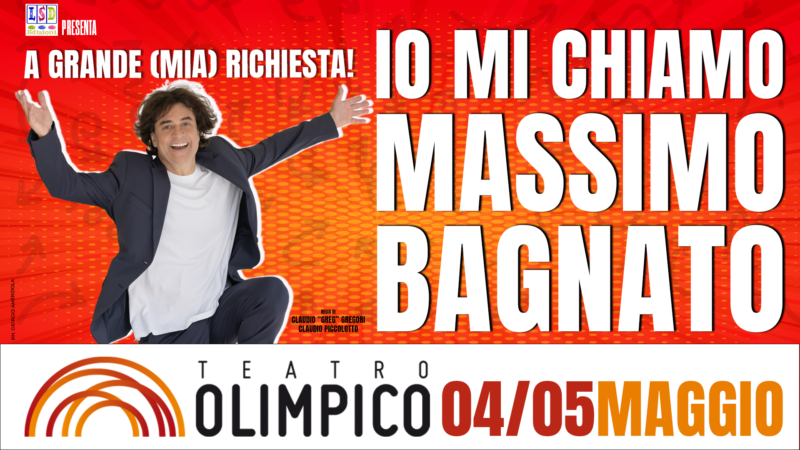
Dado, Ti dirò at Teatro Olimpico, April 15 to 18, 2027
In short. Dado, Ti dirò at Teatro Olimpico: the comedian brings his new show "Ti dirò…" to Piazza Gentile da Fabriano 17 (Flaminio neighborhood) in Rome for four performances from Thursday, April 15 to Sunday, April 18, 2027, all starting at 20:30.
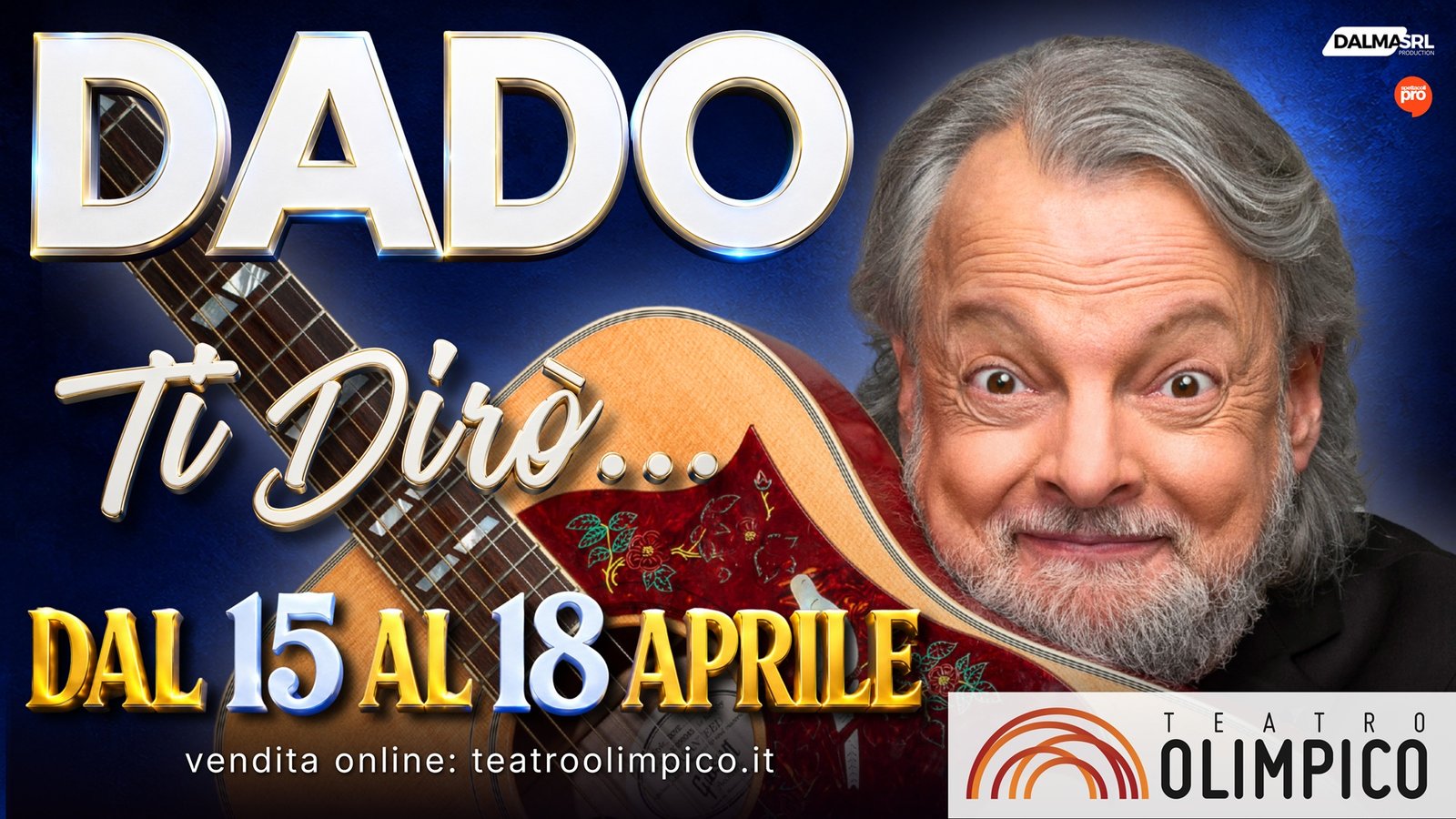
Dado, Ti dirò at Teatro Olimpico: the comedian brings his new show "Ti dirò…" to Piazza Gentile da Fabriano 17 (Flaminio neighborhood) in Rome for four performances from Thursday, April 15 to Sunday, April 18, 2027, all starting at 20:30. You get there by Metro A to Flaminio and then tram 2 along Via Flaminia, walking down toward the Tiber at Ponte della Musica. The price list published by the theater ranges from €22 plus €3.30 presale fee (side balcony with railing) to €33 plus €5 presale fee (gold front orchestra), with a fee of €1.50 per ticket for online purchases. Tickets are sold on the official Teatro Olimpico website, through the online box office linked from the show page, or at the box office in Piazza Gentile da Fabriano.
Language: opera sung in its original language; no English surtitles are announced, so check with the theater.
Dado is Roman, was born in 1973 and has been doing this job for more than 30 years: short songs, parodies, improvisations, a song-theater built on everyone's little obsessions. With "Ti dirò…" he returns to one of the halls that in Rome are synonymous with comedy, for four nights in a row. My view is clear: when a Roman comedian plays at home, at Olimpico, the audience is never just a spectator. It's an accomplice.
Dado and "Ti dirò…": what kind of show it is
"Ti dirò…" is Dado's new show, presented by Teatro Olimpico as a personal comedy show made of songs, parodies, improvisations and stories that capture our times with irony. It comes after more than 30 years of career.
The theme: the age when you give answers
The starting point is a specific age: the one when you stop asking questions and start giving answers, even without knowing them. It's the moment you become the person you used to make fun of as a kid: the one who has an opinion on everything, a better memory of the past than the present and a ready solution for other people's problems. The one who explains to the surgeon how to operate and to the referee how to referee, from the living room couch. And who interrupts everyone with two words: "Ti dirò…" ("I'll tell you…").
The characters
The journey passes among kids who seem born with an instruction manual, parents who pretend to keep up, couples who argue over ever more absurd issues, social media experts who pontificate on everything and nostalgics convinced that in their day everything worked better. Even when it didn't.
A comic mirror
The official presentation describes the show as a mirror in which you recognize yourself while laughing: the manias, the frailties, the daily obsessions, and that universal ability to hand out advice to others while your own life gropes along. The underlying thesis is that nobody really taught us to become adults: we just learned to cover improvisation with a confident tone.
Songs and words
As in all of Dado's shows, music is not an interlude but the structure. Short songs, parodies and mini-covers have been his trademark since the 1990s, and here too the theater announces songs and parodies alongside the monologues. No set list has been published.
Dates and times of Dado at Teatro Olimpico
Dado is at Teatro Olimpico for four nights in a row, from Thursday, April 15 to Sunday, April 18, 2027, and the theater gives the start time as 20:30.
The four performances
Thursday, April 15, Friday, April 16, Saturday, April 17 and Sunday, April 18, 2027. The official page gives a single time for all performances, 20:30, Sunday included: if you are used to Sunday matinees, check carefully before planning your day.
Which night to choose
Thursday is the quietest night if you live in Rome. Saturday has the biggest audience and the liveliest atmosphere. Sunday night, at the end of the weekend, is the choice if you are coming from outside and leaving on Monday morning.
Tickets and prices for Dado at Teatro Olimpico
For "Ti dirò…" Teatro Olimpico publishes seven price levels, from €22 to €33 plus presale fee, with a fee of €1.50 per ticket for online purchases. The presale fee is always applied when the ticket is issued.
The price list section by section
Gold front orchestra €33 plus €5 presale fee, side front orchestra €29 plus €4.40, orchestra €25 plus €3.80, balcony €25 plus €3.80, balcony with railing €24 plus €3.60, side balcony €24 plus €3.60, side balcony with railing €22 plus €3.30. A compact price list, among the most affordable of the season for a comedy night in a hall of this size.
Where to buy them
The show page on the theater's website links to the official online box office. Then there is the box office in Piazza Gentile da Fabriano, open every day from 10:00 to 19:00 without a break, and the address biglietti@teatroolimpico.it.
Which section to choose
For a show of words and songs distance matters: in the orchestra you catch every expression, and with only eight euros between the orchestra and the gold front orchestra it's worth moving closer. If you want to save, note that the central balcony costs the same as the orchestra and gives a better overall view.
Who Dado is: his biography
Dado is the stage name of Gabriele Pellegrini, a comedian, cabaret performer and singer born in Rome on October 31, 1973, who has devoted himself to song-theater for years.
Dado e le Pastine in Brothers
He became known with his band, Dado e le Pastine in Brothers, with whom he appeared on programs such as Seven Show, Zelig, I raccomandati, Top of the Pops, I migliori anni and Made in Sud. In 1995 the album "Vorrei" came out. In 1999, with the band, he performed at Roma Estate at Foro Italico with "La canzone più lunga al mondo" ("The longest song in the world"): a title that, for an artist specializing in very short songs, is already a joke.
Zelig and the Premio Massimo Troisi
In 2000 he took part in Zelig, facciamo cabaret and won the Premio Massimo Troisi. It's the step that took him from the music circuit to national cabaret.
The first stage shows
Theater was there from the start: in 1994 "La vita è fatta a scale, c'è chi le stona e chi le sale," in 1995 "Canzoni cantate in cantina e cantina cantata in canzoni," in 1996 "Dormire supino farà bene a te, ma fa male a Pino," and in 2000 "Bianca 9 per 7 nani = 63 nani." The titles alone say everything about his taste for wordplay.
"Suono, canto, recito e ballicchio"
In 2005 he began the tour of "Suono canto recito e ballicchio," in which he alternated original pieces and mini-covers of big hits. The same year he was in the cast of the film "Tutti all'attacco" by Lorenzo Vignolo. In 2006 he took part in Sanremo contro Sanremo, and on March 21 his first CD of short songs came out, "3/4 della palazzina tua," followed by the tour of the same name.
Choosing song-theater
In 2008 he staged "Onesto ma non troppo," declaring that he had chosen song-theater as his reference point. From there came an unbroken series of titles: "Appeso ad un file" (2009), "Il signor D" (2010), "Dado in 3D" (2012), "SOS Dado" (2013), "Le bugie con la C maiuscola" (2014) and "La società dei magna magna" (2015).
Made in Sud, satire and the web
In 2014 he was in the cast of Made in Sud on Rai Due. From 2015 he worked with Michele Santoro's Servizio Pubblico on LA7 as a satirical comedian, including online. The same year the project "Canta la notizia" was born on YouTube, with TV writer Emiliano Luccisano: current news set to music.
"Menestrello mentre strillo" and the Colorado years
Between March and April 2016 he staged "Menestrello mentre strillo," in which he paired his sketches with the "Canta la notizia" videos projected on stage. From 2017 he took part in Colorado. Then came "Obladì oblaDADO" (2017), "L'impertinente" (2018) and "Il superficiale" (2019). In 2020 he was in the cast of the film "Nemici" by Milo Vallone.
Back to Zelig and Only Fun
In 2021, 2022, 2025 and 2026 he returned to Zelig, and since 2023 he has been one of the comedians on Only Fun on Nove. In 2004 he also published a book, "Alice guarda i gatti, i gatti guardano le alici," with Kovalsky: here too the title is wordplay.
Dado's song-theater: how it works
Dado's song-theater is a hybrid form made of short original songs, parodies, mini-covers of big hits and monologues, held together by a comic thread. It's the formula he himself named as his reference point from 2008.
The short song
Dado's trademark is the very short song: a few lines, an unexpected rhyme, an ending that turns everything around. His first CD was a collection of short songs, and the same taste shows in the titles of his shows, built on alliteration and wordplay.
Parody
The mini-covers are famous songs rewritten with comic lyrics: a genre that requires a musical ear as well as a punch line. For "Ti dirò…" the theater again announces songs and parodies alongside the stories.
Improvisation
The show's presentation also mentions improvisations. In a 1,400-seat hall, dialogue with the audience is a gamble, and the shape of the Olimpico hall, wide and enveloping, makes it possible.
A curious fact about Dado, Ti dirò at Teatro Olimpico, April 15 to 18, 2027
The most Roman curious fact of Dado's career concerns Foro Italico: in 1999, with his band, he performed at Roma Estate right there, with a show titled "La canzone più lunga al mondo." Foro Italico is on the other bank of the Tiber from Teatro Olimpico, connected today by Ponte della Musica. Almost 30 years later, Dado returns a few steps from that stage, this time indoors and solo.
The second curious fact concerns the titles. Dado has built a catalog of shows in which the title is already a joke: "Dormire supino farà bene a te, ma fa male a Pino," "Bianca 9 per 7 nani = 63 nani," "Menestrello mentre strillo," "Obladì oblaDADO." Even the 2004 book, "Alice guarda i gatti, i gatti guardano le alici," plays with a phrase that reads almost the same both ways. "Ti dirò…", by comparison, is a sober title: but it's sober on purpose, because it's the phrase of the adult who pretends to know.
The third concerns the Premio Massimo Troisi, won in 2000 after his appearance on Zelig, facciamo cabaret: it came when Dado already had an album behind him, and marked his entry into national cabaret. Today, with "Ti dirò…", he tells precisely that passage into adulthood that back then was still far away.
Teatro Olimpico, Dado's venue
Teatro Olimpico, in Piazza Gentile da Fabriano 17, was born as a cinema-theater in 1936 and has been a full-time theater since 1981. The hall has about 1,400 seats. It faces Lungotevere Flaminio, opposite Ponte della Musica, and it is also where most concerts of the Accademia Filarmonica Romana are held. The full page is Teatro Olimpico.
The building
The block was built between 1935 and 1936 by the firm Garbarino, Sciaccaluga e Mezzacane for the Società Generale Immobiliare, on land bought by Banca Commerciale Italiana. The structure is reinforced concrete, with travertine on the base and around the window and door frames.
Between variety and cinema
The hall was conceived as something between a variety theater and a cinema. Until the 1950s, war years aside, it worked mainly as a cinema with variety acts during the intervals. For a comedian who comes from cabaret and song, it's a return to the hall's origins.
Orchestra, gallery and stage
The orchestra has 966 seats in a sloping amphitheater, and the horseshoe gallery has 444. The stage is about 10 meters deep and 12 wide. The width of the hall creates an embracing effect: the laughter of the orchestra comes back to the stage without dispersing, a precious condition for anyone who improvises.
The foyer
The circular foyer preserves historic sets: Manzù's backdrop for "Histoire du soldat" (1966), Mirko's sculpture for "Chordination" (1968), and Cagli's gilded sets for Stravinsky's Mass (1975). It's worth arriving early to see them.
Something nobody tells you about Dado, Ti dirò at Teatro Olimpico, April 15 to 18, 2027
What people seldom say about Dado is that before being a comedian he was a musician: his first album, "Vorrei," came out in 1995, five years before the Premio Massimo Troisi. His comedy is born inside the song, not next to it. That's why his shows have a different rhythm from a monologue: they move by verses and choruses, even when he's talking.
The second thing concerns the web. In 2015, long before Italian comedians discovered short videos en masse, Dado launched "Canta la notizia" on YouTube with TV writer Emiliano Luccisano: current news turned into songs. The following year he brought those videos to the theater, projecting them during "Menestrello mentre strillo." Moving from screen to stage, and back, is something he tried before many of his colleagues.
The third concerns the theme of the new show. "Ti dirò…" is about the adult who pretends to know, and Dado writes it after more than 30 years of career, when he has himself become the adult with ready answers. My advice is to go with someone from another generation: a son or daughter, a parent. The show is about both, and you laugh more when you recognize each other.
How to get to Teatro Olimpico for Dado's show
You reach Teatro Olimpico by Metro A to Flaminio and then tram 2 along Via Flaminia. From the stop to the theater it's a few minutes on foot toward the river. The entrance is in Piazza Gentile da Fabriano 17, on Lungotevere Flaminio.
Metro and tram
Line A stops at Flaminio, in Piazzale Flaminio, next to Porta del Popolo. Tram 2 runs along Via Flaminia to Piazza Mancini, for about 2.7 kilometers. In the evening check frequencies on the transport company's route planner, especially for the trip back.
On foot
From Piazza del Popolo you can walk up Via Flaminia or the Lungotevere: a long but flat walk. From Prati and the Della Vittoria neighborhood you cross Ponte della Musica, reserved for pedestrians, bikes and public transport, which arrives in front of the theater from the Foro Italico side.
By car
The Lungotevere connects the theater to the whole city, but on show nights parking in Flaminio is hard. Public transport or a taxi is better.
By taxi
A taxi is the most convenient option for the trip back. Moving a few dozen meters away from the square saves time, when more than a thousand people come out at once.
My tip for Dado, Ti dirò at Teatro Olimpico, April 15 to 18, 2027
My tip for Dado at Olimpico is to choose Friday or Saturday and take an orchestra seat, which costs €25 plus presale fee. For a show that lives on short songs and improvisation, the energy of the hall counts as much as that of the stage, and at the weekend the audience is bigger and more responsive. Thursday is more intimate. Sunday night, starting at 20:30 like the other performances, is convenient only if you don't work on Monday morning.
On choosing a seat: with eight euros between the orchestra and the gold front orchestra, if you want to see the comedian's expressions up close it's worth spending a little more. The gallery, at the same price as the orchestra, is for those who prefer to enjoy the sight of the full hall.
A tip if you come as a group: buy your tickets together, not separately. At comedy nights laughing next to the people you came with is half the show, and for groups the theater offers partner deals and promotions published on the official website. Arrive 20 minutes early: the circular foyer with the historic sets deserves a look, and the lit Ponte della Musica is two steps away.
The Flaminio neighborhood around Dado's show
Flaminio, officially established in 1921, is Rome's first quartiere and stretches between Via Flaminia and the left bank of the Tiber. From an industrial area it has become a hub of sport, culture and entertainment.
A history in three stages
In 1905 the Società Automobili Roma opened its factories here, which later became the Reale Fabbrica d'Armi and finally barracks. The 1960 Olympics brought the Olympic Village and Palazzetto dello Sport, and since the 1990s Auditorium, MAXXI and Ponte della Musica have arrived.
MAXXI and Auditorium
Zaha Hadid's MAXXI is on Via Guido Reni, a few minutes' walk away. Beyond Via Flaminia stands Renzo Piano's Auditorium Parco della Musica. For Saturday or Sunday, an exhibition in the afternoon and Dado in the evening make a full program.
Milvian Bridge
Going up Via Flaminia to the north you reach Milvian Bridge, the bridge built by Marcus Aemilius Scaurus between 110 and 109 BC, today the liveliest evening spot in north Rome.
Another well-known fact, yet one rarely mentioned
Teatro Olimpico is one of the most attended theaters in Italy: in the 2009/2010 season the Agis rankings placed it second in Rome and seventh in Italy by number of spectators. Industry insiders know this, but many Romans still think of it as a neighborhood theater.
Behind those numbers is a choice made from 1981: an eclectic program, with comedy shows for a wide audience alongside music and dance. It's the line that brought Gigi Proietti, Enrico Brignano, Vincenzo Salemme, Maurizio Battista, Aldo, Giovanni e Giacomo, Lillo e Greg, Ale e Franz and Max Giusti here. Dado, Roman like Proietti and Battista, joins this tradition with four performances.
There is a second well-known but rarely mentioned fact, this time about Dado. Everyone remembers him for Zelig and Colorado, few for 1990s music TV: with Dado e le Pastine in Brothers he appeared on Top of the Pops and I migliori anni, programs devoted to music, not cabaret. His career began in the charts, not in comedy clubs, and that explains why in his shows the guitar is never missing.
The right photo to take at Dado, Ti dirò at Teatro Olimpico, April 15 to 18, 2027
The right photo, for Dado at Teatro Olimpico, is taken from Ponte della Musica, with the theater facade framed by the steel arches and the Tiber below. During the show photos and videos are not welcome: in a show made of comic timing and improvisation, a phone switched on ruins the joke for the people around you.
Ponte della Musica, named after Armando Trovajoli since 2013, is 190 meters long, with two large low steel arches leaning slightly outward and wooden side walkways. From the middle of the bridge, looking toward Piazza Gentile da Fabriano, you have the theater framed by the arches. Turning around, you see Foro Italico and Monte Mario.
Then there is a photo that makes sense only for this show: Foro Italico from the bridge. That's where in 1999 Dado sang "La canzone più lunga al mondo" for Roma Estate. A shot toward the other bank, before going in, tells almost 30 years of career in one image.
Inside, before the lights go down, the only photo I recommend is of the circular foyer with the historic sets, without flash and without blocking the way. For the show's poster, look for it at the entrance.
Box office, accessibility and services at Teatro Olimpico
The Teatro Olimpico box office, in Piazza Gentile da Fabriano 17, is open every day from 10:00 to 19:00 without a break. To write, there is biglietti@teatroolimpico.it.
Information
For seats, sections and exchanges, contact the box office. For tickets bought on external networks, the theater says to contact the network itself.
Season and partner deals
"Ti dirò…" is part of the theater's 2026/2027 season. The official website publishes the program, the subscriptions and a section devoted to partner deals and promotions.
Accessibility
The orchestra slopes evenly, and the gallery is on the upper floor. For the needs of people with disabilities or reduced mobility, dedicated seats and companions, contact the box office before buying.
Some important events that happened here in history
On March 4, 1965 Pierre Boulez conducted at Teatro Olimpico the Italian premiere of Stravinsky's "Abraham and Isaac" and the European premiere of his "Elegy for J.F.K." It was the most important evening of the years when the Accademia Filarmonica Romana, renting the theater since the postwar period, brought 20th-century music to Flaminio.
Under the presidency of Adriana Panni the Accademia involved leading artists and composers. From October 11 to 14, 1966 "Histoire du soldat" was staged with Giacomo Manzù's backdrop, from October 2 to 4, 1968 "Chordination" with Mirko's sculpture, and from October 29 to 31, 1975 Stravinsky's Mass with sets by Corrado Cagli. Those materials are still in the foyer.
In 1980 Teatro Olimpico spa was founded, subscribed by citizens, professionals and enthusiasts around the Filarmonica, and it bought the building. From 1981 the hall became a full-time theater.
For comedy and song-theater, two dates weigh more than others: Gigi Proietti with "A me gli occhi" in May 1996 and Giorgio Gaber with "Un'idiozia conquistata a fatica" on January 28, 1998. Proietti is the model of the Roman one-man showman, Gaber the father of Italian song-theater: Dado, Roman and a comic singer-songwriter, has something of both. For dance and music, just recall Baryshnikov in 1995, the Bolshoi in 1996 and Lucio Dalla in 1994.
Who has passed through Dado, Ti dirò at Teatro Olimpico, April 15 to 18, 2027
Gigi Proietti, Giorgio Gaber, Dario Fo, Lucio Dalla, Pierre Boulez, Zubin Mehta, Jessye Norman and Mikhail Baryshnikov have crossed the Teatro Olimpico stage, among the many documented names. For comedy the list is very long.
The theater recalls among its stars Gigi Proietti, Enrico Brignano, Vincenzo Salemme, Maurizio Battista, Aldo, Giovanni e Giacomo, Lillo e Greg, Ale e Franz, Neri Marcorè, Gioele Dix, Cinzia Leone and Max Giusti. It's a gallery that spans the Roman school, Milanese cabaret and TV comedy: the same roads Dado has traveled between Zelig, Colorado, Made in Sud and Only Fun.
Auteur theater had Dario Fo and Giorgio Gaber. Music had Marillion, Nomadi, Pooh, Lucio Dalla, Nicola Piovani and Massimo Ranieri. Classical music had Arturo Benedetti Michelangeli, Jessye Norman, Zubin Mehta and Giuseppe Sinopoli. Dance had Baryshnikov, Joaquín Cortés, Lindsay Kemp, Maurice Béjart, Antonio Gades and Momix.
The theater also reports a remark attributed to Orson Welles, according to whom Olimpico was the only place in Rome able to recall the atmosphere of Broadway. Dado arrives here with four performances in a row: for a Roman comedian, playing at home in a hall with this history is a form of recognition.
How to plan your evening with Dado at Olimpico
All of Dado's performances at Teatro Olimpico start at 20:30, from Thursday, April 15 to Sunday, April 18, 2027: the day is built around the evening.
Thursday and Friday
If you are leaving work you can reach Flaminio by Metro A and tram 2: leaving the center around 19:30 you'll arrive comfortably.
Saturday
Saturday allows an afternoon in Flaminio: an exhibition at MAXXI, a walk over Ponte della Musica to Foro Italico, then dinner and the show.
Sunday
With an evening performance on Sunday too, the day stays free for a visit in the center. Villa Borghese and the Pincio can be reached on foot from Piazza del Popolo, from where you then go up Via Flaminia toward the theater.
With kids
The theme of the show, parents and children grappling with the generations, makes it suited to a family evening with older kids. The theater gives no age limits, and the evening time is the real limit for the youngest.
Where to eat near Teatro Olimpico
To eat before or after Dado at Olimpico, the areas are Flaminio itself, Ponte Milvio to the north and Piazza del Popolo to the south. I don't name specific places: the choice depends on the night.
Before 20:30
Flaminio is a residential neighborhood, with neighborhood trattorias and pizzerias. An early dinner along Via Flaminia avoids the rush. On Friday and Saturday, book ahead.
After the show
Ponte Milvio offers the widest choice for after the theater. If you are heading back toward the center, you'll find places open around Piazza del Popolo.
Quieter
The Della Vittoria neighborhood, on the other side of Ponte della Musica, is a quiet alternative for an unhurried dinner.
What to see around Teatro Olimpico before Dado
Within walking distance of Teatro Olimpico are MAXXI, Auditorium, Ponte della Musica, Foro Italico, Stadio Olimpico and Ponte Milvio.
Foro Italico and Stadio Olimpico
Across Ponte della Musica you reach Foro Italico and Stadio Olimpico, a 1930s complex from the same period as the theater.
Museo Andersen
On Via Pasquale Stanislao Mancini the Hendrik Christian Andersen Museum preserves the sculptor's house and studio: a short visit, and not crowded.
20th-century architecture
Flaminio preserves works by Libera, Moretti, Luccichenti, Vitellozzi and Nervi, as well as the 1920s public housing of Piazza Perin del Vaga. Piazza Gentile da Fabriano recalls the International Gothic painter who died in Rome in 1427.
April 2027 at Olimpico: Dado's week
Dado's performances, from April 15 to 18, 2027, come three days after Giordana Angi's concert on April 12 on the same stage. If you want a week of theater you can combine the two evenings.
Giordana Angi's concert
On Monday, April 12 Giordana Angi plays Teatro Olimpico with her Piano Piano Live Tour: a singer-songwriter born in 1994, far removed from cabaret, but with the same taste for storytelling in music.
Comedy in the season
The theater's 2026/2027 season is full of comedians: among others Maurizio Battista in autumn and Angelo Pintus in winter.
Other theaters
The week before, from April 8 to 11, Teatro Sistina stages the comedy Belle Ripiene, with Rosalia Porcaro, who shared the cast of the film "Tutti all'attacco" with Dado in 2005.
Frequently asked questions about Dado at Teatro Olimpico
When is Dado on at Teatro Olimpico in Rome?
Dado is on at Teatro Olimpico in Rome with "Ti dirò…" for four performances, from Thursday, April 15 to Sunday, April 18, 2027. The theater gives a 20:30 start for every night, Sunday included. The address is Piazza Gentile da Fabriano 17, in the Flaminio neighborhood.
How much are tickets for Dado in Rome?
Tickets for Dado at Teatro Olimpico cost from €22 plus €3.30 presale fee in the side balcony with railing to €33 plus €5 presale fee in the gold front orchestra. Orchestra and balcony cost €25 plus €3.80. For online purchases a fee of €1.50 per ticket is added.
Where do you buy tickets for "Ti dirò…"?
Tickets for "Ti dirò…" are sold on the official Teatro Olimpico website, through the online box office linked from the show page, or at the box office in Piazza Gentile da Fabriano 17, open every day from 10:00 to 19:00. For information you can write to biglietti@teatroolimpico.it.
What is the show "Ti dirò…" about?
Dado's "Ti dirò…" is about the age when you stop asking questions and start giving answers, even without knowing them. Through songs, parodies, improvisations and stories, it puts on stage kids, parents, couples, social media experts and nostalgics: a comic mirror in which you recognize yourself while laughing.
Who is Dado?
Dado is the stage name of Gabriele Pellegrini, a Roman comedian and singer born in 1973. Known for the band Dado e le Pastine in Brothers, he won the Premio Massimo Troisi in 2000, has appeared on Zelig, Made in Sud and Colorado, and since 2023 has been on Only Fun on Nove.
How do you get to Teatro Olimpico?
You reach Teatro Olimpico by Metro A to Flaminio and then tram 2 along Via Flaminia, continuing on foot toward the Tiber. From Prati and Foro Italico you walk across Ponte della Musica, which arrives in front of the theater.
Is Dado's show suitable for kids?
Dado's show at Teatro Olimpico is about parents and children and suits a family evening with older kids. The theater gives no age limits. All performances are in the evening, at 20:30, Sunday included.
The editors' verdict on Dado at Olimpico
Dado is one of those comedians the Rome audience has always known without being sure since when: from 1990s music TV, from Zelig, from Colorado, from the videos going around online. "Ti dirò…" has the merit of a universal theme and the tried-and-tested form of song-theater. Best to choose Saturday, sit in the orchestra and bring someone from the next generation along: the show makes fun of both, and that is its greatest merit.
Article written by the editorial team of Tour Leader Pro, contact them for Private/Corporate/V.I.P. Tours and Experiences.
Planning a trip to Rome? The English-language guides for visiting the city are on ItalyPlanner.com.
Contact Information
Nearby
 Teatro Olimpico100 m
- Ponte della Musica – Armando Trovajoli200 m
- Flaminio400 m
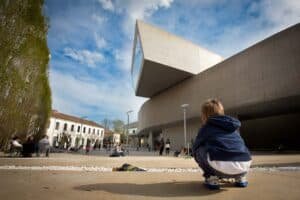
- MAXXI – National Museum of 21st Century Arts500 m
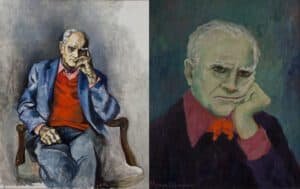
- Alberto Moravia House Museum700 m
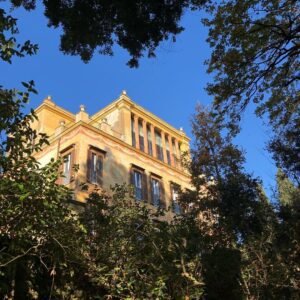
- Villa Mazzanti700 m

Upcoming events nearby
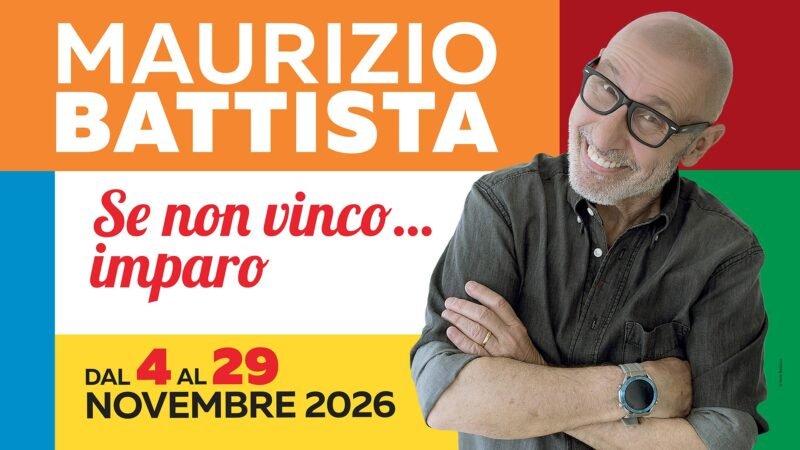
- Maurizio Battista at Teatro Olimpico, Se non vinco… imparo, November 4 to 29, 2026100 m
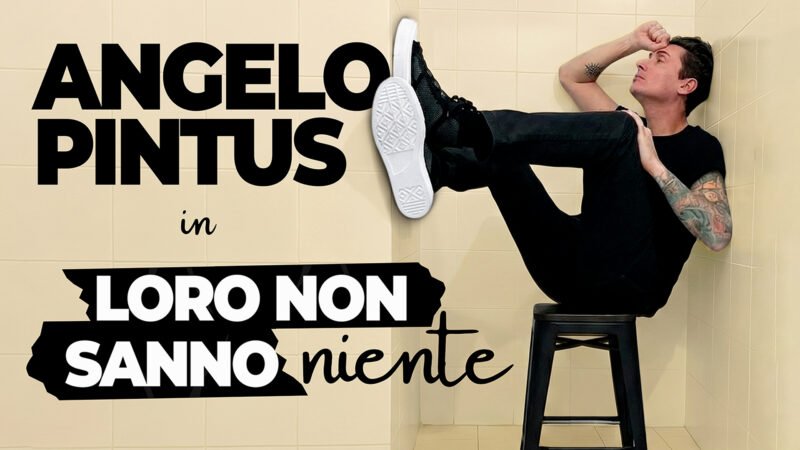
- Angelo Pintus at Teatro Olimpico, Loro non sanno niente, January 14 to February 14, 2027100 m
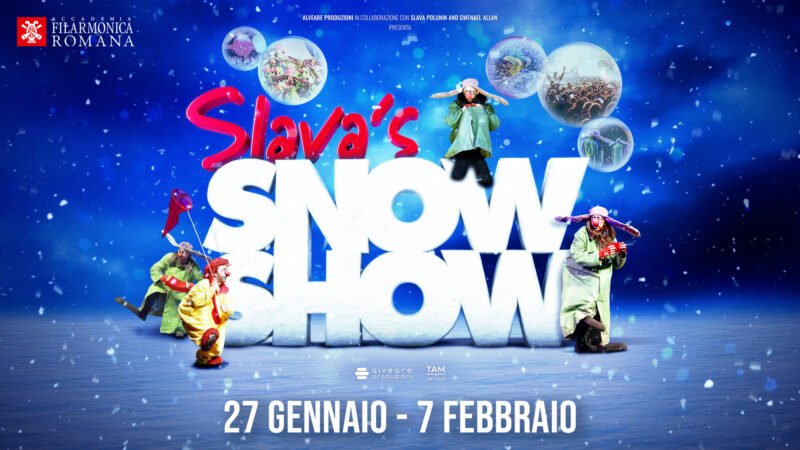
- Slava’s SnowShow at Teatro Olimpico, January 27 to February 7, 2027100 m
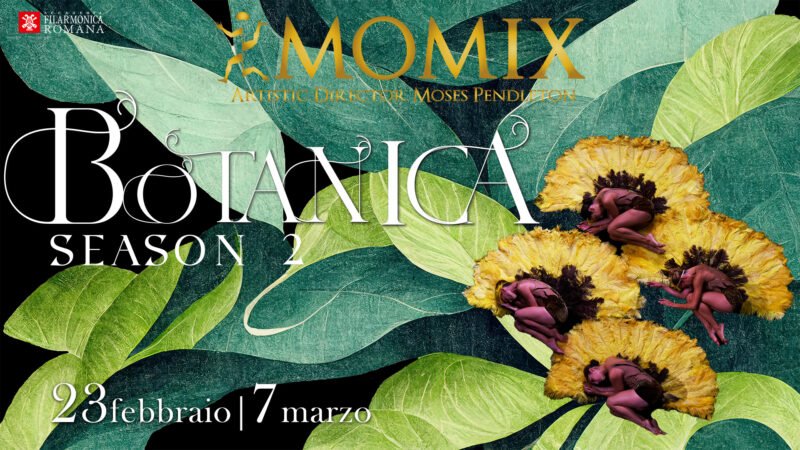
- MOMIX Botanica at Teatro Olimpico, February 23 to March 7, 2027100 m
You might also like
- Le Coliche in 10 anni di Coliche e siamo ancora vivi at Teatro Olimpico, March 25 and 31, 2027
- Marta e Gianluca in Io e Gianlu at Teatro Olimpico, March 23 and 24, 2027
- PanPers, Terapia di coppia at Teatro Olimpico, March 16 and 17, 2027
- Coppia aperta quasi spalancata with Chiara Francini at Teatro Olimpico, March 12 to 14, 2027
- Io Marte Tu Mercole with Scintilla and Federica Camba at Teatro Olimpico, March 10, 2027
- Massimo Bagnato at Teatro Olimpico, Io mi chiamo Massimo Bagnato, May 4 and 5, 2027